Hardest Idaho permit test questions
142 questions that need exact knowledge rather than common sense: the numbers (distances, speeds, fines, limits), the exceptions and the rules that are easy to mix up. We chose them from our Idaho question bank for that reason; they're not statistics from the ITD DMV.
-
Question 1At what age can you first be licensed to drive in Idaho?
Show answer
B: 15. You can be licensed in Idaho at 15, but if you're under 17 you must complete approved driver training and the GDL program. Idaho Driver's Handbook: Introduction, page 3.
-
Question 2At what age can you get an Idaho Driver Training permit to attend driver's education?
Show answer
B: 14½. Driver Training permits allow anyone 14½ and under 17 to attend a public or private driver training program. Idaho Driver's Handbook: Driver Training Permits, page 15.
-
Question 3Who may use a Class D Instruction Permit, and with whom?
Show answer
D: Applicants 17 or older, with a licensed adult 18 or older. Class D Instruction Permits let applicants 17 or older practice for one year with a licensed adult (18+). Idaho Driver's Handbook: Class D Instruction Permits, page 16.
-
Question 4A licensed Idaho driver under 16 may drive outside daylight hours only if:
Show answer
B: A licensed driver at least 21 is in the front seat beside them. Under 16, travel is daylight only unless a licensed driver at least 21 sits in the front seat beside you. Idaho Driver's Handbook: Restriction When Under 16, page 16.
-
Question 5How does Idaho define 'daylight' for drivers under 16?
Show answer
B: 5:00 a.m. to 10:00 p.m. local time. Daylight is defined as 5:00 a.m. to 10:00 p.m. local time. Idaho Driver's Handbook: Restriction When Under 16, page 16.
-
Question 6For the first 6 months, how many passengers under 17 may a newly licensed driver under 17 carry (unrelated)?
Show answer
C: Not more than one. During the first 6 months, passengers under 17 are limited to not more than one, unless related by blood, adoption or marriage. Idaho Driver's Handbook: Restriction When Under 17, page 16.
-
Question 7When does an Idaho license issued to a 16-year-old expire?
Show answer
B: Five days after the 18th birthday. If you are 15 to 17, your license shows 'Under 18 until...' and expires five days after your 18th birthday. Idaho Driver's Handbook: Under 18 and 21 Years of Age, page 17.
-
Question 8During the supervised instruction period, who must accompany the driver?
Show answer
B: A licensed driver at least 21 in the front seat beside the driver. You must be accompanied by a licensed driver at least 21 in the front seat beside you, with no other front-seat passengers. Idaho Driver's Handbook: Graduated Driver's License (GDL) Program, page 19.
-
Question 9How many hours of supervised driving does Idaho's GDL program require?
Show answer
C: 50 hours, 10 at night. You must accumulate at least 50 hours of supervised driving, ten of them at night. Idaho Driver's Handbook: Graduated Driver's License (GDL) Program, page 19.
-
Question 10What happens if you are convicted of a traffic violation during your supervised instruction period?
Show answer
B: The permit is canceled and the 6-month period starts over with a new permit. The permit is canceled, you must reapply, and the minimum 6 months starts over. Idaho Driver's Handbook: Graduated Driver's License (GDL) Program, page 19.
-
Question 11What does an approved Idaho driver training program include?
Show answer
C: 30 hours classroom, 6 hours observation and 6 hours behind the wheel. Approved driver training has 30 hours classroom, 6 hours observing other students in the car, and 6 hours behind the wheel. Idaho Driver's Handbook: Driver Training, page 19.
-
Question 12What happens if the liability signer withdraws consent before the driver turns 18?
Show answer
C: The department cancels the driving credential. Until you turn 18, the parent or guardian who signed for you can take back consent at any time, and ITD will then cancel your credential. Idaho Driver's Handbook: Liability Signer (If Under 18), page 26.
-
Question 13Within how many days must you notify ITD of an address change?
Show answer
C: 30 days. Idaho requires you to report a new address to ITD no later than 30 days after you move. Idaho Driver's Handbook: Address Change, page 29.
-
Question 14How early can a driver 21 or older renew an Idaho Class D license in person?
Show answer
A: Up to 25 months before expiration. Once you are 21 or older you can renew in person as early as 25 months ahead of expiration (not available to CDL holders with a hazmat endorsement). Idaho Driver's Handbook: Renewals, page 30.
-
Question 15Which drivers may choose an eight-year Idaho license renewal?
Show answer
D: Drivers between 21 and 62. Drivers between 21 and 62 may choose the eight-year renewal. Idaho Driver's Handbook: Renewals, page 30.
-
Question 16If your Idaho license has been expired for 25 months or more, you must:
Show answer
D: Take all applicable knowledge and skills tests. If expired 25 months or more, you must take all applicable knowledge and skills tests. Idaho Driver's Handbook: Renewals, page 30.
-
Question 17If you are temporarily out of state when your license expires, how long an extension can you get?
Show answer
B: Up to 12 months for $10. A driver who is temporarily out of state can get a 12-month extension for $10, and one more (final) 12-month extension after that. Idaho Driver's Handbook: Extensions, page 31.
-
Question 18What minimum vision is required for an Idaho driver's license?
Show answer
B: 20/40 in at least one eye, with or without corrective lenses. Idaho's vision minimum is 20/40 in at least one eye. Glasses or contacts may be used, but then a lens restriction goes on the license. Idaho Driver's Handbook: Medical/Visual Screening, page 32.
-
Question 19How many questions are on the Idaho Class D knowledge test?
Show answer
C: 40. The knowledge test consists of 40 questions. Idaho Driver's Handbook: Knowledge Test: Class D (Non-Commercial), page 32.
-
Question 20How many questions can you miss on the Idaho knowledge test and still pass?
Show answer
B: Six. You can miss up to six questions before failing the test. Idaho Driver's Handbook: Knowledge Test: Class D (Non-Commercial), page 32.
-
Question 21If you fail the Idaho knowledge test, how long must you wait to retest?
Show answer
A: Three days. After failing the knowledge test you must wait three days before trying again, and you pay the $5 test fee a second time. Idaho Driver's Handbook: Knowledge Test: Class D (Non-Commercial), page 32.
-
Question 22How many errors can you make on the Idaho skills (driving) test and still pass?
Show answer
C: 12 or fewer. Twelve or fewer errors is a passing score. Idaho Driver's Handbook: Skills Test: Class D (Non-Commercial), page 33.
-
Question 23Which document is NOT accepted as proof of insurance for the Idaho skills test?
Show answer
B: An SR-22. A paper or digital proof of insurance must be in the test vehicle, but an SR-22 does not count as proof of insurance. Idaho Driver's Handbook: Required Documents to Bring for the Skills Test, page 35.
-
Question 24Who may NOT use a rental car for the Idaho skills test?
Show answer
A: An applicant who is not a licensed driver or is under 25. You can't take the skills test in a rental car if you are unlicensed or younger than 25. Idaho Driver's Handbook: Skills Test Examiner Vehicle Inspection, page 36.
-
Question 25During the vehicle-knowledge part of the skills test, how many items can you miss and still continue?
Show answer
C: 3 or fewer. You can miss 3 or fewer vehicle items to continue to the driving portion. Idaho Driver's Handbook: Applicant Vehicle Knowledge & Inspection, page 36.
-
Question 26Making the same scored error how many times on the Idaho skills test counts as a critical driving error?
Show answer
C: 5. A habitual violation, missing 5 or more of the same scored skill, is a critical driving error. Idaho Driver's Handbook: Critical Driving Errors (CDE), page 37.
-
Question 27On the skills test, street parking more than how far from the curb (and impeding traffic) is a critical error?
Show answer
C: 18 inches. Street parking more than 18 inches from the curb and impeding traffic is a critical driving error. Idaho Driver's Handbook: Critical Driving Errors (CDE), page 37.
-
Question 28How much does the Idaho Class D knowledge test cost?
Show answer
A: $5. The knowledge test fee is $5.00, and retest fees are the same as original test fees. Idaho Driver's Handbook: Fees, page 5.
-
Question 29When you move to Idaho and transfer your out-of-state license, which test must you take?
Show answer
A: The Class D knowledge test. Transferring from another state requires passing a Class D knowledge test (and a skills test if expired 25 months or more). Idaho Driver's Handbook: One Driver, One License, One Record, page 12.
-
Question 30Within how many days can you request an administrative hearing after receiving an Idaho ALS notice of suspension?
Show answer
B: 7 days. The ALS notice gives you seven days from the date printed on it to ask for an administrative hearing. Idaho Driver's Handbook: Administrative License Suspension, page 125.
-
Question 31What does Idaho's GDL penalty system give a driver under 17 for a first moving violation conviction?
Show answer
A: A warning letter. Drivers under 17 get a warning letter for the first conviction, 30 days' suspension for the second, and 60 days for the third or more. Idaho Driver's Handbook: Graduated Drivers License (GDL) Penalties, page 125.
-
Question 32A driver under 17 is convicted of a second moving violation. What is the GDL penalty?
Show answer
A: 30-day suspension. A second moving-violation conviction brings a 30-day suspension of driving privileges. Idaho Driver's Handbook: Graduated Drivers License (GDL) Penalties, page 125.
-
Question 33Under Idaho's point system, how many points in 12 months result in a 30-day suspension?
Show answer
B: 12 to 17. 12 to 17 points in any 12 months brings a 30-day suspension; 8 to 11 points brings a warning letter. Idaho Driver's Handbook: Suspension & Point Violations System, page 123.
-
Question 34What is the maximum number of points an ITD-approved Defensive Driving Course can remove?
Show answer
B: 3. A maximum of three points may be removed by completing an ITD-approved DDC, once every three years. Idaho Driver's Handbook: Suspension & Point Violations System, page 123.
-
Question 35Are annual vehicle safety inspections required in Idaho?
Show answer
A: No, but officers can cite you for unsafe vehicles or missing equipment. There is no yearly safety inspection in Idaho, but an officer who finds an unsafe vehicle or missing equipment can still ticket you. Idaho Driver's Handbook: Operating a Vehicle Without the Owner's Consent, page 38.
-
Question 36Idaho requires every vehicle to have two brake systems. Within what distance must the foot brake stop a car going 20 mph on dry pavement?
Show answer
B: 25 feet. Foot brakes must stop a vehicle traveling 20 mph on dry pavement within 25 feet; the parking brake within 55 feet. Idaho Driver's Handbook: Required Equipment, page 38.
-
Question 37High-beam headlights must let you see people and vehicles at least how far away?
Show answer
C: 350 feet. Your high beams must reveal people and vehicles 350 feet or more ahead; low beams must light the road at least 100 feet ahead. Idaho Driver's Handbook: Required Equipment, page 38.
-
Question 38From how far must brake lights be visible to the rear in normal sunlight?
Show answer
B: 100 feet. In normal daylight, brake lights must be visible from 100 feet or more behind the vehicle. Idaho Driver's Handbook: Required Equipment, page 39.
-
Question 39Taillights on most vehicles must be visible from how far to the rear?
Show answer
D: 500 feet. Most motor vehicles must have two red taillights visible from 500 feet to the rear. Idaho Driver's Handbook: Required Equipment, page 39.
-
Question 40How much tread should each tire have in Idaho?
Show answer
B: At least 2/32 inch. Each tire should have at least 2/32 inch of tread. Idaho Driver's Handbook: Required Equipment, page 39.
-
Question 41A vehicle horn must be audible from at least:
Show answer
C: 200 feet. Idaho requires a horn that can be heard from 200 feet or more away; unreasonably loud or harsh horns are banned. Idaho Driver's Handbook: Required Equipment, page 39.
-
Question 42A rearview mirror must provide a view of the highway for at least how far behind you?
Show answer
C: 200 feet. Your rearview mirror must let you see at least 200 feet of road behind you. Idaho Driver's Handbook: Required Equipment, page 40.
-
Question 43Idaho law requires approved child car safety seats for children of what age?
Show answer
A: 6 years of age or younger. Idaho law requires anyone carrying children 6 or younger in a non-commercial vehicle to use approved child safety seats. Idaho Driver's Handbook: Child Restraints are Required, page 41.
-
Question 44According to NHTSA recommendations in the Idaho handbook, children younger than what age should ride in the back seat?
Show answer
C: 13. All children younger than 13 should ride in the back seat. Idaho Driver's Handbook: Child Restraints are Required, page 41.
-
Question 45According to NHTSA studies cited in the handbook, how effective are safety belts at preventing fatalities?
Show answer
C: 60-70%. When worn, safety belts reduce serious injury by 50% and are 60-70% effective in preventing fatalities. Idaho Driver's Handbook: Seat Belts & Shoulder Straps, page 42.
-
Question 46When may studded snow tires be used in Idaho?
Show answer
A: October 1 to April 30 (ITD may adjust dates for weather). Studded tires are legal only from October 1 through April 30, though ITD sometimes shifts these dates because of weather. Idaho Driver's Handbook: Equipment Not Allowed, page 42.
-
Question 47When a load extends four feet or more beyond the rear of a vehicle during the day, what must be displayed?
Show answer
C: A red flag at least 18 inches square. Loads extending 4 feet or more must have a red flag at least 18 inches square; at night a red light visible 500 feet. Idaho Driver's Handbook: Other Laws You Need to Know, page 43.
-
Question 48When stopping behind another vehicle, how much space should you leave?
Show answer
C: Enough to see the rear tires of the vehicle ahead where they touch the ground. Leave enough room to see the rear tires of the vehicle in front where they touch the ground. Idaho Driver's Handbook: Stopping Behind a Vehicle, page 71.
-
Question 49According to the Idaho handbook, driver error causes what share of highway crashes?
Show answer
A: More than 90%. The handbook says over 90% of highway crashes come down to driver error. Idaho Driver's Handbook: The Driving Task, page 86.
-
Question 50How far ahead should good drivers look, according to the Idaho handbook?
Show answer
A: About 10 to 15 seconds (about a block in the city). Keep your eyes about 10 to 15 seconds ahead of your car (roughly one city block) so you can avoid last-second moves. Idaho Driver's Handbook: Defensive Driving, page 89.
-
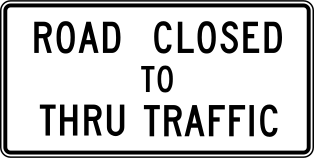
Question 51What does a 'Road Closed to Thru Traffic' sign mean?
Show answer
A: The work zone is open only to local traffic with a reason to stop within it. Only local residential or commercial traffic with a reason to stop in the work zone may enter; continuous trips through are prohibited. Idaho Driver's Handbook: Work Zone Signs, page 47.
-
Question 52An 'Open Range' warning sign means:

Show answer
C: Livestock may roam freely and unfenced and have the right-of-way. Open range means livestock may roam freely and unfenced and have the right-of-way. Idaho Driver's Handbook: Warning Signs, page 49.
-
Question 53On a 'Lane Ends/Merge Left' sign, who must yield?

Show answer
B: Merging traffic. Two lanes will become one; merging traffic must yield. Idaho Driver's Handbook: Warning Signs, page 50.
-
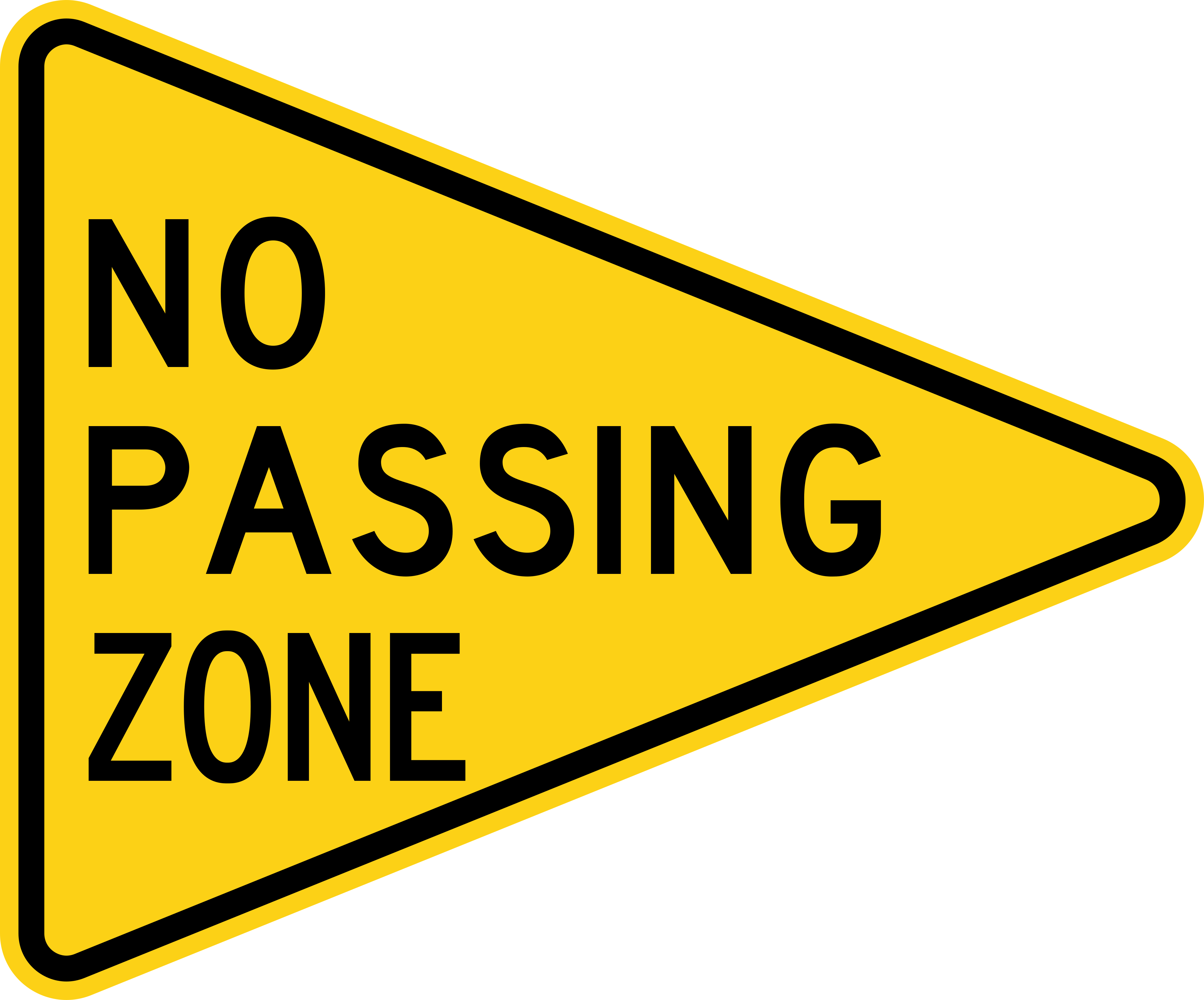
Question 54Where is the pennant-shaped No Passing Zone sign placed?
Show answer
A: On the left side of the road. The pennant-shaped sign is on the left-hand side of the road, in addition to DO NOT PASS signs or markings. Idaho Driver's Handbook: Warning Signs, page 52.
-
Question 55What do red-and-white barricades indicate, compared to orange-and-white ones?
Show answer
C: Red-and-white are permanent; orange-and-white are temporary. Red-and-white barricades are permanent and orange-and-white ones are temporary, but both tell drivers the same thing. Idaho Driver's Handbook: Barricades, page 54.
-
Question 56A barricade has a V-shaped stripe pattern. What does it mean?
Show answer
A: The road is closed; traffic can proceed no further. The V-shaped pattern means the road is closed and traffic can go no further. Idaho Driver's Handbook: Barricades, page 54.
-
Question 57Barricade stripes angle down to the right. Which side should you pass on?
Show answer
A: Right. When the stripes slope down toward the right, go around the barricade on its right side. Idaho Driver's Handbook: Barricades, page 54.
-
Question 58What is a 'doghouse' signal most commonly used for?
Show answer
C: Protected left turns. Doghouse signals are most commonly used for protected left turns; the yellow indicates the protected turn is ending. Idaho Driver's Handbook: Traffic Signals, page 56.
-
Question 59What does a steady red arrow mean in Idaho?
Show answer
C: No turn in the direction of the arrow until a green or yellow indication allows it. While the steady red arrow is displayed, no turn is permitted in that direction until a green or yellow indication allows movement. Idaho Driver's Handbook: Traffic Signals, page 55.
-
Question 60A pedestrian hybrid beacon (HAWK) shows two alternately flashing red lights. What must you do?
Show answer
A: Stop, yield to pedestrians in the crosswalk, then proceed when it's clear. Alternating flashing reds work like a stop sign: stop, let pedestrians in the crosswalk finish, then go when it's clear. Idaho Driver's Handbook: Pedestrian Crossings, page 57.
-
Question 61A pedestrian hybrid beacon shows two solid red lights. What must you do?
Show answer
C: Stop at the stop line and remain stopped. Steady red lights on a pedestrian hybrid beacon require a full stop at the stop line, and you stay stopped while they are lit. Idaho Driver's Handbook: Pedestrian Crossings, page 57.
-
Question 62With one solid yellow line and one dashed yellow line, who may pass?
Show answer
D: Only vehicles in the lane next to the dashed line. Drivers on the side with the broken line may cross to pass; drivers on the side with the solid line may not. Idaho Driver's Handbook: Pavement Markings, page 58.
-
Question 63At dashed bike lane lines near an intersection, if a bicyclist is already in that area, what must a right-turning driver do?
Show answer
A: Yield to the bicyclist. Both users must be aware; if a bike is already there, right-turning drivers must yield. Idaho Driver's Handbook: Pavement Markings, page 59.
-
Question 64When required to stop at a railroad crossing in Idaho, how far from the nearest rail should you stop?
Show answer
A: Within 50 feet but no less than 15 feet. When you have to stop for a crossing, stop no farther than 50 feet and no closer than 15 feet from the nearest rail. Idaho Driver's Handbook: Railroad Crossings, page 60.
-
Question 65How many times greater is the chance of death or serious injury in a train-vehicle collision than in other highway crashes?
Show answer
C: 40 times. A collision with a train is 40 times more likely to kill or seriously injure someone than other highway crashes. Idaho Driver's Handbook: Railroad Crossings, page 60.
-
Question 66How far does a 150-car freight train at 50 mph need to stop?
Show answer
D: 7,000 feet (about 1 1/3 miles). A 150-car freight train going 50 mph needs about 7,000 feet (about 1⅓ miles) to stop. Idaho Driver's Handbook: Railroad Crossings, page 60.
-
Question 67How do you make a left turn at a thru-turn intersection?
Show answer
B: Go through the intersection, make a U-turn at the next signal downstream, come back and turn right. Thru-turns prohibit direct lefts: continue through, U-turn at the next signal as marked, return and turn right. Idaho Driver's Handbook: Thru-Turn, page 63.
-
Question 68You exit the freeway by mistake at a single point urban interchange (SPUI). What should you do?
Show answer
D: Turn left or right onto the crossing highway and find a safe place to turn around. You cannot travel straight across and get back on; turn left or right and find a safe place to turn around. Idaho Driver's Handbook: Single Point Urban Interchange, page 64.
-
Question 69Can driving too slowly violate Idaho's basic rule?
Show answer
B: Yes, if you impede the safe flow of traffic. Driving too slowly for conditions and impeding the safe flow of traffic, even under the posted limit, violates the basic rule. Idaho Driver's Handbook: Speed Limits, page 68.
-
Question 70What is the maximum speed on Idaho interstates unless otherwise posted?
Show answer
C: 75 mph. Unless signs say otherwise, the interstate limit is 75 mph; some posted sections allow 80. Idaho Driver's Handbook: Speed Limits, page 68.
-
Question 71What is the maximum speed on Idaho state highways unless posted higher?
Show answer
C: 65 mph. The state-highway limit is 65 mph unless signs allow up to 70. Idaho Driver's Handbook: Speed Limits, page 68.
-
Question 72What is the maximum speed in any residential, business or urban district in Idaho unless posted?
Show answer
C: 35 mph. Unless a different limit is posted, 35 mph is the top speed in residential, business and urban districts. Idaho Driver's Handbook: Speed Limits, page 68.
-
Question 73Where designated, up to what speed may vehicles travel on Idaho rural interstates?
Show answer
C: 80 mph. Where designated and weather permits, vehicles may travel up to 80 mph on rural interstates and 65 on urban interstates. Idaho Driver's Handbook: Freeway Driving, page 83.
-
Question 74When passing on a two-lane road with a posted limit of 55 mph or more, how much may a passenger car exceed the limit while passing a slower vehicle?
Show answer
C: Up to 15 mph. A passenger vehicle, motorcycle or pickup not towing may exceed the posted limit by up to 15 mph while passing a vehicle going below the limit (not in work zones). Idaho Driver's Handbook: Passing, page 77.
-
Question 75Is it legal to stay in the far left lane in Idaho if you are impeding faster traffic?
Show answer
B: No; you may not drive in the extreme left lane for a time that impedes traffic moving at a lawful speed. You may not stay in the farthest-left lane long enough to hold up traffic that is moving at a legal speed. Idaho Driver's Handbook: Speed Limits, page 69.
-
Question 76How far ahead must you signal before turning in business or residential areas?
Show answer
C: At least 100 feet. In business or residential areas, start signaling 100 feet or more before you turn; on highways and freeways, signal at least five seconds ahead. Idaho Driver's Handbook: Turns, page 72.
-
Question 77How long must you signal before turning or changing lanes on freeways or highways?
Show answer
C: 5 seconds. On freeways or highways, signals must start at least five seconds before you turn or change lanes. Idaho Driver's Handbook: Turns, page 72.
-
Question 78If you plan to turn just beyond an intersection, when should you signal?
Show answer
D: Just after you pass through the intersection. If your turn is just past an intersection, wait until you've cleared the intersection to signal, so others don't think you're turning at it. Idaho Driver's Handbook: Turns, page 72.
-
Question 79Where are U-turns illegal in Idaho?
Show answer
B: On curves or near hilltops where you can't be seen within 500 feet, in no-passing zones, or where signs prohibit them. U-turns are illegal where posted, on curves or hills without 500 feet of visibility, or in a no passing zone. Idaho Driver's Handbook: Turns, page 73.
-
Question 80What do solid pavement markings in the center of the road mean for U-turns?
Show answer
D: A U-turn is prohibited. Solid center-line markings mean you may not make a U-turn there. Idaho Driver's Handbook: Turns, page 74.
-
Question 81At an uncontrolled T intersection where you must turn right or left, you must:
Show answer
A: Stop and/or yield to drivers approaching from the other two directions. At an unmarked T intersection, stop and/or yield to drivers coming from the other two directions. Idaho Driver's Handbook: Yielding to Other Drivers, page 75.
-
Question 82Livestock under controlled movement over an Idaho road:
Show answer
A: Have the right-of-way. Livestock under controlled movement over a highway have the right-of-way; cooperate with the workers in charge. Idaho Driver's Handbook: Open Range, page 108.
-
Question 83Passing is prohibited within how many feet of an intersection or railroad crossing (unless traffic-control devices indicate otherwise)?
Show answer
B: 100 feet. Passing is prohibited within 100 feet of an intersection or railroad crossing. Idaho Driver's Handbook: Passing, page 76.
-
Question 84You must complete a pass before coming within how many feet of oncoming traffic in Idaho?
Show answer
B: 200 feet. Your pass must be finished before you get within 200 feet of an oncoming vehicle. Idaho Driver's Handbook: Passing, page 78.
-
Question 85When may you pass on the right in Idaho?
Show answer
C: When the vehicle you're overtaking on a two-lane road is signaling a left turn, or on a one-way/multi-lane road with two or more lanes your way. Passing on the right is allowed only in those two situations and never by driving off the roadway. Idaho Driver's Handbook: Passing, page 77.
-
Question 86A slow vehicle delaying how many other vehicles in a rural area or on a two-lane highway must pull off to let them pass?
Show answer
D: Three or more. If you are driving slower than normal traffic and three or more vehicles are stuck behind you on a two-lane highway or rural road, pull off where it is safe and let them by. Idaho Driver's Handbook: Slow-Moving Vehicle, page 79.
-
Question 87What is the minimum recommended following distance in Idaho?
Show answer
C: Three seconds. Three seconds is the least following distance the handbook recommends; leave more at high speed or in bad weather. Idaho Driver's Handbook: Following Distances, page 79.
-
Question 88How much following distance should you allow behind a motorcycle?
Show answer
A: More than 3 seconds. Allow more than three seconds of following distance behind a motorcycle. Idaho Driver's Handbook: Motorcycles, page 104.
-
Question 89How far should you stay behind a snowplow truck?
Show answer
A: Two car lengths for every 10 mph you drive. Stay back two car lengths for each 10 mph of speed behind a snowplow; the sand it spreads can also damage your car. Idaho Driver's Handbook: Snow Removal Equipment, page 110.
-
Question 90How close to the curb must you park on an Idaho public road?
Show answer
A: Within 18 inches. Park parallel to the curb or road edge, no more than 18 inches away, facing the same way as traffic on that side. Idaho Driver's Handbook: Parking, page 80.
-
Question 91Parking facing uphill next to a curb, how should you turn your front wheels?
Show answer
D: Sharply away from and against the curb. Facing uphill with a curb, turn your wheels sharply away from and against the curb. Idaho Driver's Handbook: Parking on a Hill or Incline, page 81.
-
Question 92How close to a fire hydrant may you park in Idaho?
Show answer
D: No closer than 15 feet. Parking is not allowed within 15 feet of a fire hydrant. Idaho Driver's Handbook: No-Parking Zones, page 81.
-
Question 93How close to a stop sign, yield sign or traffic signal may you park in Idaho?
Show answer
D: No closer than 30 feet. Keep at least 30 feet away from a stop sign, yield sign or traffic signal when you park. Idaho Driver's Handbook: No-Parking Zones, page 81.
-
Question 94How close to a crosswalk may you park in Idaho?
Show answer
A: No closer than 20 feet. Parking is not allowed within 20 feet of a crosswalk. Idaho Driver's Handbook: No-Parking Zones, page 81.
-
Question 95How close to railroad tracks may you park in Idaho?
Show answer
A: No closer than 50 feet. Parking is not allowed within 50 feet of railroad tracks. Idaho Driver's Handbook: No-Parking Zones, page 81.
-
Question 96A vehicle displaying the handicapped symbol may park in a reserved space:
Show answer
D: Without paying and for unlimited time. A handicapped person may park vehicles displaying the symbol in reserved spaces without paying and for unlimited time. Idaho Driver's Handbook: Handicapped Parking, page 82.
-
Question 97Where is backing always prohibited in Idaho?
Show answer
A: On freeways, expressways and other controlled-access highways, including the shoulder. Never back up on a freeway, expressway or other controlled-access highway, and that includes the shoulder. Idaho Driver's Handbook: Backing, page 82.
-
Question 98Who may use freeway median crossovers?
Show answer
C: Highway maintenance and emergency vehicles only. Only highway maintenance and emergency vehicles may use freeway median crossovers; it is illegal for anyone else. Idaho Driver's Handbook: Entering a Freeway, page 84.
-
Question 99During rush hour on the freeway, which lane should you avoid?
Show answer
C: The right lane, to leave room for entering drivers. At rush hour, stay out of the right lane so drivers coming onto the freeway have space to merge. Idaho Driver's Handbook: Changing Lanes, page 85.
-
Question 100About how far before your freeway exit should you move into the lane nearest the exit?
Show answer
D: About a half mile. If you're not in the exit lane yet, signal and move over roughly half a mile ahead of your exit. Idaho Driver's Handbook: Leaving the Freeway, page 86.
-
Question 101On a narrow mountain road, what should you do when approaching a curve where your view is blocked?
Show answer
D: Sound your horn. Tap your horn as you approach a curve on a narrow road when you can't see around it. Idaho Driver's Handbook: Mountain Driving, page 107.
-
Question 102Idaho's 'Quick Clearance' law requires what after a crash on an interstate with no death or injury?
Show answer
D: Safely move the vehicle to a shoulder, median or emergency lane. Anyone in a crash on an interstate or major divided highway without death or injury must safely move the vehicle out of traffic. Idaho Driver's Handbook: Crashes & the Law, page 121.
-
Question 103Approaching a stopped emergency vehicle, tow truck or incident response vehicle with lights flashing, what must you do?
Show answer
D: Reduce speed below the posted limit and proceed with caution; change to a non-adjacent lane if possible. Immediately slow below the posted limit, proceed with caution, and move to a non-adjacent lane on multi-lane roads when safe. Idaho Driver's Handbook: Emergency Vehicles, page 95.
-
Question 104When are you NOT required to stop for a stopped school bus in Idaho?
Show answer
B: When traveling the opposite direction on a highway with four or more lanes (two each way). You don't have to stop if traveling the opposite direction on a highway with four or more lanes, two in each direction. Idaho Driver's Handbook: Stopping, page 70.
-
Question 105What is the minimum safe passing distance for a bicyclist in Idaho?
Show answer
B: Three feet. A safe margin when passing a bicyclist is at least three feet; higher speeds require more space. Idaho Driver's Handbook: Bicyclists, page 98.
-
Question 106Under Idaho law, must bicyclists come to a complete stop at stop signs?
Show answer
A: No; they must yield to vehicles in or near the intersection and then proceed with caution. Idaho bicyclists need not fully stop at stop signs, but must yield to vehicles in or close to the intersection. Idaho Driver's Handbook: Bicyclists, page 98.
-
Question 107Under Idaho law, may a bicyclist proceed through a red light?
Show answer
C: Yes, with caution after stopping and yielding to vehicles in or near the intersection. Idaho lets bicyclists treat a red light like a stop sign: stop, yield to vehicles in or close to the intersection, then go carefully. Idaho Driver's Handbook: Bicyclists, page 98.
-
Question 108When stopped and about to turn right, which way should you look?
Show answer
D: Left, right and to the rear, checking the right first. Look left, right and behind, checking right first, because a bicyclist could be coming up on your right side. Idaho Driver's Handbook: Bicyclists, page 99.
-
Question 109When turning right at an intersection with a dashed bike lane line, may you move into the bike lane?
Show answer
B: Yes, in the dashed line area after checking for bicyclists. The dashed area lets right-turning drivers merge into the bike lane after checking for bicyclists, which keeps bikes from coming up on your right. Idaho Driver's Handbook: Bicyclists, page 100.
-
Question 110About what share of motorcycle crashes involve another motor vehicle?
Show answer
C: About one-half. Around half of motorcycle crashes involve a collision with another motor vehicle. Idaho Driver's Handbook: Motorcycles, page 103.
-
Question 111How long does a loaded truck with good brakes need to stop from 55 mph on a dry road?
Show answer
D: 450 feet. It takes a loaded truck 450 feet to stop from 55 mph on a dry road. Idaho Driver's Handbook: Large Vehicles, page 105.
-
Question 112You meet an oncoming pilot vehicle escorting a large load. What should you do?
Show answer
A: Reduce speed and move as far right as possible. Slow down and move as far right as you can when an oncoming pilot vehicle signals a large load. Idaho Driver's Handbook: Large Vehicles, page 106.
-
Question 113If you strike livestock on open range in Idaho, who is liable for damage to your vehicle?
Show answer
A: The animal's owner is not liable; you may even be liable for the animal if negligent. The owner of animals on open range or under controlled movement is not liable for your damages; you may be liable if negligent. Idaho Driver's Handbook: Open Range, page 108.
-
Question 114About what share of driving choices are based on what you see?
Show answer
C: 90%. Roughly 90% of the decisions you make while driving depend on what you see, and darkness cuts your vision. Idaho Driver's Handbook: Night Driving, page 108.
-
Question 115At night, about how far ahead can you see with low-beam headlights?
Show answer
B: 100 feet. You can see about 350 feet with high beams and about 100 feet with low beams. Idaho Driver's Handbook: Night Driving, page 109.
-
Question 116When are headlights required in Idaho?
Show answer
A: From sunset to sunrise and when visibility is reduced below 500 feet. Turn on headlights between sunset and sunrise or when visibility is reduced below 500 feet. Idaho Driver's Handbook: Night Driving, page 109.
-
Question 117Within what distance must you dim your headlights before meeting an oncoming vehicle in Idaho?
Show answer
C: 500 feet. Switch to low beams within 500 feet of an oncoming vehicle, and within 200 feet of a vehicle you're coming up behind. Idaho Driver's Handbook: Other Laws You Need to Know, page 43.
-
Question 118When overtaking another vehicle at night, dim your headlights within:
Show answer
B: 200 feet. Dim 200 feet before overtaking another vehicle. Idaho Driver's Handbook: Other Laws You Need to Know, page 43.
-
Question 119Which times of day does the Idaho handbook call the most dangerous?
Show answer
A: The gray hours of twilight and dawn. The handbook names twilight and dawn, the gray hours, as the most dangerous time of day. Idaho Driver's Handbook: Night Driving, page 109.
-
Question 120At about what speed may tires lose all contact with a wet road?
Show answer
C: 55 mph. Up to 35 mph most tires grip a wet road; at 55 mph tires may lose all contact and hydroplane. Idaho Driver's Handbook: Rain & Hydroplaning, page 111.
-
Question 121How much fast-moving water can wash away a vehicle?
Show answer
B: Two feet. Two feet of fast-moving water is enough to sweep a vehicle away; just six inches can knock a person down. Idaho Driver's Handbook: Flash Floods, page 112.
-
Question 122About how many flash floods does Idaho average each year?
Show answer
A: Seven. Idaho averages seven flash floods a year, usually during or right after a severe thunderstorm. Idaho Driver's Handbook: Flash Floods, page 112.
-
Question 123On icy roads, how much sooner should you start slowing for turns and stops?
Show answer
C: At least three times sooner. On slick winter roads, begin slowing at least three times earlier than usual for turns and stops. Idaho Driver's Handbook: Winter Driving, page 113.
-
Question 124During an emergency stop in a car with ABS, you should:
Show answer
C: Apply continuous pressure on the brake pedal. Apply continuous pressure; pumping defeats the ABS and increases stopping distance. Idaho Driver's Handbook: Stopping Quickly, page 116.
-
Question 125Does ABS shorten stopping distance?
Show answer
A: No, but it lets you keep steering control. ABS lets you retain steering control but does not decrease stopping distances. Idaho Driver's Handbook: Stopping Quickly, page 116.
-
Question 126Your car breaks down and you have flares. Where should you place them?
Show answer
C: 200 to 300 feet behind your car. Put flares 200 to 300 feet behind your car to warn approaching drivers. Idaho Driver's Handbook: If You Have Car Trouble, page 117.
-
Question 127You damage an unattended vehicle and can't find the owner. When must you also notify police?
Show answer
C: If the damage is more than $1,500 or someone was injured. Leave a note with your name and number; also notify police if damage is more than $1,500 or someone was injured. Idaho Driver's Handbook: If You Hit an Unattended Vehicle, page 119.
-
Question 128In Idaho, you must report a crash to police if someone is injured or property damage is more than:
Show answer
C: $1,500. You must report to police any crash with injury or property damage over $1,500. Idaho Driver's Handbook: Crashes & the Law, page 121.
-
Question 129In Idaho, a driver under 21 is considered under the influence at what BAC?
Show answer
B: .02 or more. You are considered DUI at .02 or more if under 21, .04 or more in a commercial vehicle, and .08 or more if 21 or older. Idaho Driver's Handbook: Driving Under the Influence, page 131.
-
Question 130What BAC is DUI for a driver operating a commercial vehicle in Idaho?
Show answer
B: .04. A BAC of .04 or more is DUI when operating a commercial vehicle. Idaho Driver's Handbook: Driving Under the Influence, page 131.
-
Question 131Which BAC level carries even stiffer DUI penalties in Idaho?
Show answer
D: .20 or more. A BAC of .20 or higher brings harsher DUI penalties in Idaho. Idaho Driver's Handbook: Driving Under the Influence, page 131.
-
Question 132At a BAC slightly above .05, how does the risk of causing a crash change?
Show answer
B: It doubles. At slightly above .05 the crash risk doubles; at .10 it's six times; at .15 it's 25 times. Idaho Driver's Handbook: How Much is Too Much, page 128.
-
Question 133After about how many drinks does alcohol begin to impair reaction time, coordination and balance?
Show answer
A: Two to four. Reaction time, coordination and balance start to suffer after two to four drinks. Idaho Driver's Handbook: How Drinking Affects You, page 129.
-
Question 134Under Idaho's open container law, where may an unsealed alcoholic beverage be carried?
Show answer
B: In the trunk, or behind the last upright seat if there's no trunk. Any opened alcohol container must ride in the trunk; a vehicle with no trunk must carry it behind the rearmost upright seat. Idaho Driver's Handbook: Open Container Law, page 130.
-
Question 135For a first failed evidentiary test, how long is the Idaho administrative license suspension?
Show answer
B: 90 days (first 30 days with no driving at all). A first failure brings a 90-day suspension with absolutely no driving for the first 30 days, then one year of ignition interlock. Idaho Driver's Handbook: Administrative License Suspension, page 126.
-
Question 136When does an Idaho ALS notice of suspension become effective?
Show answer
D: 30 days after the date of service. The notice of suspension becomes effective thirty days after the date of service. Idaho Driver's Handbook: Administrative License Suspension, page 126.
-
Question 137What is the civil penalty for refusing an evidentiary test in Idaho?
Show answer
B: $250. Refusing the test brings a license suspension and a civil penalty of $250. Idaho Driver's Handbook: Test Refusal for Alcohol, Drugs, or Other Intoxicating Substances, page 126.
-
Question 138How long is the license suspension for a first refusal of an evidentiary test in Idaho (if upheld)?
Show answer
B: One year with absolutely no driving privileges. A first refusal results in a one-year suspension with absolutely no driving privileges; a second within 10 years, two years. Idaho Driver's Handbook: Test Refusal for Alcohol, Drugs, or Other Intoxicating Substances, page 126.
-
Question 139What is the maximum jail term for a first DUI conviction in Idaho?
Show answer
B: Up to six months. A first DUI conviction can mean up to six months in jail, a fine of up to $1,000 and a 90-180 day suspension (one year if under 21). Idaho Driver's Handbook: Driving Under the Influence, page 132.
-
Question 140A third DUI conviction within 10 years in Idaho is:
Show answer
C: A felony. Three or more convictions within 10 years is a felony with mandatory jail and a 1-5 year suspension. Idaho Driver's Handbook: Driving Under the Influence, page 132.
-
Question 141After a suspension for reckless driving or DUI, for how long must you show proof of financial responsibility (SR-22)?
Show answer
D: Three years. For certain serious offenses you must provide proof of financial responsibility for three years. Idaho Driver's Handbook: Getting Your Driving Privileges Back, page 128.
-
Question 142If you violate Idaho's no-insurance law for the first time, how long must you provide proof of financial responsibility?
Show answer
C: One year. A first no-insurance offense requires proof of financial responsibility for one year (three years for a second within five years). Idaho Driver's Handbook: Getting Your Driving Privileges Back, page 128.
Answer every question to see your score.
Remembering the numbers
Most mistakes on the Idaho ITD DMV test are about specifics: how many feet before a turn to signal, how far to park from a hydrant, the alcohol limit for drivers under 21. Write the numbers from these questions on a card and review them before the test, then take the exam simulator.