Idaho ITD DMV permit practice test 2
25 questions written from the Idaho Driver's Handbook, covering sharing the road, hazards, weather and night driving, emergencies, licensing laws and penalties, alcohol and drugs and more. Pick an answer to see straight away whether you're right and why. The real Idaho ITD DMV test has 40 questions and you need 34 right.
-
Question 1Approaching a stopped emergency vehicle, tow truck or incident response vehicle with lights flashing, what must you do?
Show answer
D: Reduce speed below the posted limit and proceed with caution; change to a non-adjacent lane if possible. Immediately slow below the posted limit, proceed with caution, and move to a non-adjacent lane on multi-lane roads when safe. Idaho Driver's Handbook: Emergency Vehicles, page 95.
-
Question 2About what share of driving choices are based on what you see?
Show answer
C: 90%. Roughly 90% of the decisions you make while driving depend on what you see, and darkness cuts your vision. Idaho Driver's Handbook: Night Driving, page 108.
-
Question 3During an emergency stop in a car with ABS, you should:
Show answer
C: Apply continuous pressure on the brake pedal. Apply continuous pressure; pumping defeats the ABS and increases stopping distance. Idaho Driver's Handbook: Stopping Quickly, page 116.
-
Question 4At what age can you get an Idaho Driver Training permit to attend driver's education?
Show answer
B: 14½. Driver Training permits allow anyone 14½ and under 17 to attend a public or private driver training program. Idaho Driver's Handbook: Driver Training Permits, page 15.
-
Question 5What BAC is DUI for a driver operating a commercial vehicle in Idaho?
Show answer
B: .04. A BAC of .04 or more is DUI when operating a commercial vehicle. Idaho Driver's Handbook: Driving Under the Influence, page 131.
-
Question 6High-beam headlights must let you see people and vehicles at least how far away?
Show answer
C: 350 feet. Your high beams must reveal people and vehicles 350 feet or more ahead; low beams must light the road at least 100 feet ahead. Idaho Driver's Handbook: Required Equipment, page 38.
-
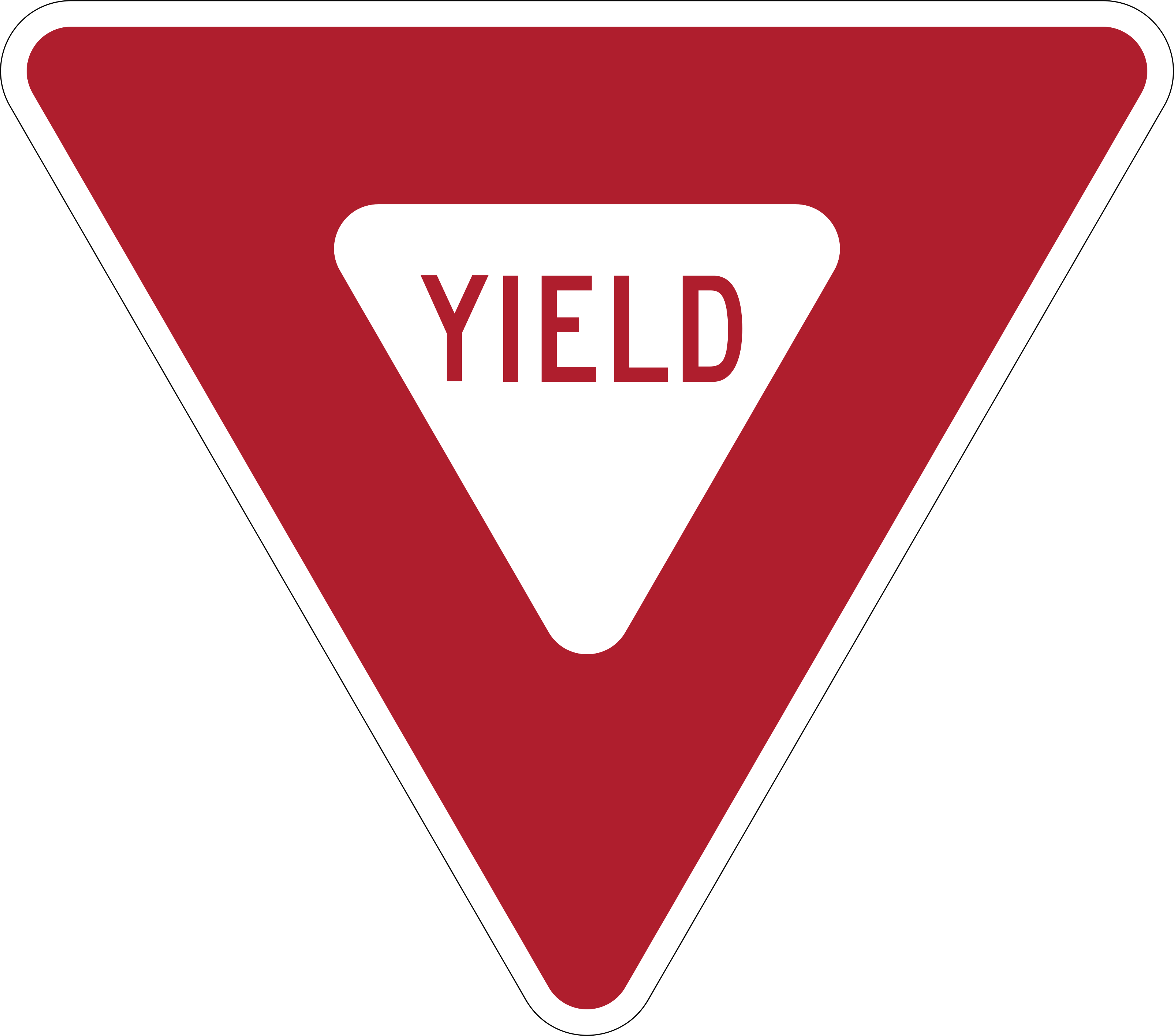
Question 7At a yield sign, pedestrians are in or about to enter the crosswalk. What must you do?
Show answer
C: Stop until they have crossed, then proceed. A yield sign means pedestrians in or entering the crosswalk go first: stop and wait for them to finish crossing, then continue. Idaho Driver's Handbook: Traffic Signs, page 45.
-
Question 8What is a 'doghouse' signal most commonly used for?
Show answer
C: Protected left turns. Doghouse signals are most commonly used for protected left turns; the yellow indicates the protected turn is ending. Idaho Driver's Handbook: Traffic Signals, page 56.
-
Question 9How far does a 150-car freight train at 50 mph need to stop?
Show answer
D: 7,000 feet (about 1 1/3 miles). A 150-car freight train going 50 mph needs about 7,000 feet (about 1⅓ miles) to stop. Idaho Driver's Handbook: Railroad Crossings, page 60.
-
Question 10What is the maximum speed on Idaho interstates unless otherwise posted?
Show answer
C: 75 mph. Unless signs say otherwise, the interstate limit is 75 mph; some posted sections allow 80. Idaho Driver's Handbook: Speed Limits, page 68.
-
Question 11When entering a street from an alley or driveway, you must:
Show answer
C: Stop before the sidewalk and yield to pedestrians and traffic. Coming out of an alley or driveway, stop before you cross the sidewalk and give way to pedestrians and traffic. Idaho Driver's Handbook: Stopping, page 70.
-
Question 12Which of these is a situation where passing is prohibited in Idaho?
Show answer
A: When a vehicle ahead has stopped at a crosswalk to let a pedestrian cross. You may not pass when a vehicle ahead has stopped at a marked or unmarked crosswalk for a pedestrian. Idaho Driver's Handbook: Passing, page 77.
-
Question 13Parking facing uphill next to a curb, how should you turn your front wheels?
Show answer
D: Sharply away from and against the curb. Facing uphill with a curb, turn your wheels sharply away from and against the curb. Idaho Driver's Handbook: Parking on a Hill or Incline, page 81.
-
Question 14What are the three basic parts of a freeway entrance?
Show answer
D: Entrance ramp, acceleration lane, merging area. A typical freeway entrance has a ramp, then an acceleration lane, then a merging area. Idaho Driver's Handbook: Entering a Freeway, page 83.
-
Question 15When must you stop for a school bus in Idaho?
Show answer
C: When it is loading or unloading with red lights flashing and/or stop arm extended. Stop and remain stopped while the red lights flash or the stop arm is extended, until all children are clear. Idaho Driver's Handbook: Stopping, page 70.
-
Question 16At night, about how far ahead can you see with low-beam headlights?
Show answer
B: 100 feet. You can see about 350 feet with high beams and about 100 feet with low beams. Idaho Driver's Handbook: Night Driving, page 109.
-
Question 17Does ABS shorten stopping distance?
Show answer
A: No, but it lets you keep steering control. ABS lets you retain steering control but does not decrease stopping distances. Idaho Driver's Handbook: Stopping Quickly, page 116.
-
Question 18With whom may you drive while holding an Idaho Driver Training (DT) permit during driver's education?
Show answer
B: Only a driver's training instructor. During driver's ed, a DT permit only lets you drive when a driver training instructor is with you. Idaho Driver's Handbook: Driver Training Permits, page 15.
-
Question 19Which BAC level carries even stiffer DUI penalties in Idaho?
Show answer
D: .20 or more. A BAC of .20 or higher brings harsher DUI penalties in Idaho. Idaho Driver's Handbook: Driving Under the Influence, page 131.
-
Question 20From how far must brake lights be visible to the rear in normal sunlight?
Show answer
B: 100 feet. In normal daylight, brake lights must be visible from 100 feet or more behind the vehicle. Idaho Driver's Handbook: Required Equipment, page 39.
-
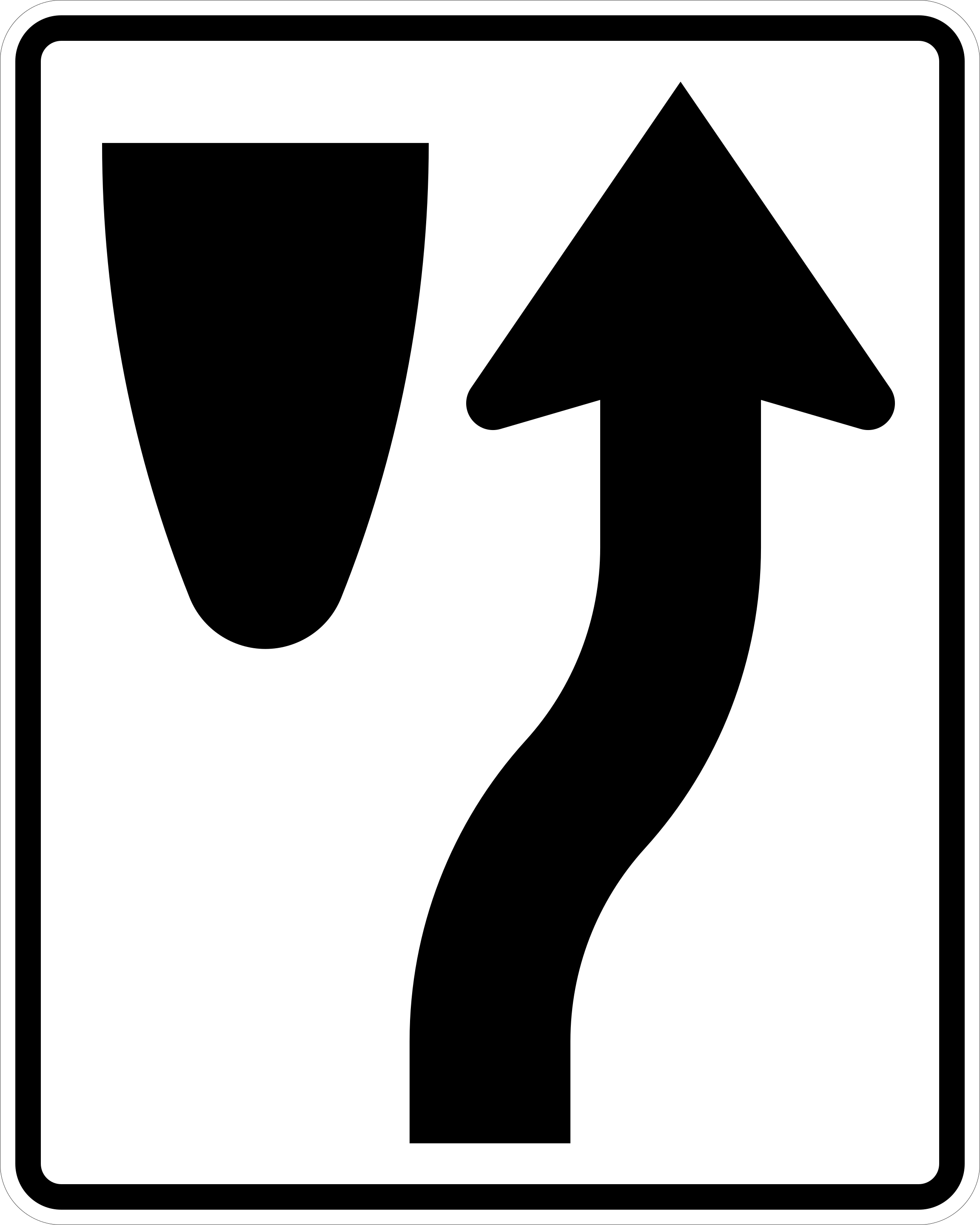
Question 21A 'Keep Right of Island' sign means:
Show answer
C: The road ahead is divided; stay to the right of the island or barrier. This sign tells you the road splits around an island or barrier ahead and you must pass on its right side. Idaho Driver's Handbook: Traffic Signs, page 45.
-
Question 22With a green light, when should you NOT enter the intersection?
Show answer
B: When there isn't room on the other side to completely pass through. Don't enter unless there's enough space on the other side to pass completely through and not block the intersection. Idaho Driver's Handbook: Traffic Signals, page 56.
-
Question 23In traffic at a railroad crossing, when may you cross the tracks?
Show answer
D: Only if there's room on the other side for the full length of your vehicle. Don't start across the tracks in traffic unless there is space on the far side for your whole vehicle. Idaho Driver's Handbook: Railroad Crossings, page 61.
-
Question 24What is the maximum speed on Idaho state highways unless posted higher?
Show answer
C: 65 mph. The state-highway limit is 65 mph unless signs allow up to 70. Idaho Driver's Handbook: Speed Limits, page 68.
-
Question 25When must Idaho motor vehicles yield to pedestrians?
Show answer
D: In marked or unmarked crosswalks at intersections, when entering from an alley or driveway, and for blind pedestrians with a white cane or guide dog. Drivers must yield to pedestrians in marked or unmarked crosswalks, when entering from an alley/driveway, and to blind pedestrians. Idaho Driver's Handbook: Pedestrians & Right-of-Way, page 75.
Answer every question to see your score.
More Idaho practice tests
- Practice test 125 questions
- Practice test 325 questions
- Practice test 425 questions
- Practice test 525 questions
- Practice test 625 questions
- Practice test 725 questions
- Practice test 825 questions
- Practice test 925 questions
- Practice test 1025 questions
- Practice test 1125 questions
- Exam simulatorThe real format, 40 questions
How to use these tests
Read each explanation, even when you get the question right: it tells you the rule and the handbook section, so you can look it up. Your answers are saved in this browser only, so the weak spots mode can give you more questions on the topics you miss. When you're scoring well, take the exam simulator: it uses the same number of questions and passing score as the real test.
Our own questions, written from the Idaho Driver's Handbook and checked against it. Not affiliated with the Idaho Transportation Department, Division of Motor Vehicles (licenses issued through county sheriff driver's license offices). Found a mistake? Tell us.