Hardest Kentucky permit test questions
123 questions that need exact knowledge rather than common sense: the numbers (distances, speeds, fines, limits), the exceptions and the rules that are easy to mix up. We chose them from our Kentucky question bank for that reason; they're not statistics from the KSP / KYTC.
-
Question 1What is the minimum age to take the written and vision tests for a Kentucky learner's permit?
Show answer
A: 15. Kentucky lets you take the vision and knowledge tests and apply for a learner's permit once you turn 15. Kentucky Driver Manual: STEP 1: PERMIT PHASE, page 13.
-
Question 2What score must you make on the Kentucky written knowledge test to pass?
Show answer
D: 80%. Applicants must make a minimum score of 80% to pass the written test. Kentucky Driver Manual: Written Test, page 19.
-
Question 3How long must a Kentucky permit holder age 15 to 20 hold the permit before taking the road test?
Show answer
C: 180 days. Anyone who gets a permit between ages 15 and 20 has to keep it at least 180 days before the road test. Kentucky Driver Manual: STEP 1: PERMIT PHASE, page 13.
-
Question 4How long must a Kentucky permit holder age 21 or older hold the permit before the road test?
Show answer
B: 30 days. Applicants 21 and over must hold the permit for 30 days before they are eligible to take the road test. Kentucky Driver Manual: Applicants Age 21 and Over, page 17.
-
Question 5How many hours of practice driving must a teen log before the intermediate license?
Show answer
C: 60 hours, 10 at night. The Practice Driving Log must show a minimum of 60 hours of practice driving, with 10 hours at night. Kentucky Driver Manual: STEP 1: PERMIT PHASE, page 13.
-
Question 6Who must ride in the front passenger seat with a Kentucky permit holder?
Show answer
B: A licensed driver 21 years of age or older. A permit holder may drive only with a licensed driver who is at least 21 sitting in the front passenger seat. Kentucky Driver Manual: Permit Driving, page 13.
-
Question 7How many unrelated passengers under age 20 may a Kentucky permit holder carry?
Show answer
C: One. Permit holders are limited to one unrelated passenger under 20 years of age. Kentucky Driver Manual: Permit Driving, page 13.
-
Question 8During which hours may a permit holder under 18 not drive without good cause?
Show answer
B: Midnight to 6 a.m.. Permit holders under 18 may not drive between midnight and 6:00 a.m. unless they can demonstrate good cause. Kentucky Driver Manual: Permit Driving, page 13.
-
Question 9A permit holder under 18 gets a moving violation. What happens?
Show answer
D: At least 180 more days are added before they may apply for an intermediate license. For a permit holder under 18, a moving violation, DUI or permit-restriction violation pushes back the intermediate license by at least 180 days, counted from the violation date. Kentucky Driver Manual: STEP 1: PERMIT PHASE, page 14.
-
Question 10A Kentucky driver under 18 may have their license suspended after accumulating more than how many points?
Show answer
C: Six. Drivers under 18 face possible suspension once they have more than six points on their record. Kentucky Driver Manual: STEP 1: PERMIT PHASE, page 14.
-
Question 11How long must a teen hold an intermediate license before getting a full unrestricted license?
Show answer
C: 180 days. Drivers are eligible for a full license after holding the intermediate license for 180 days, completing driver education and reaching age 17. Kentucky Driver Manual: STEP 3: FULL UNRESTRICTED LICENSE PHASE, page 15.
-
Question 12What is the minimum age for a Kentucky full unrestricted license for a driver who started as a teen?
Show answer
B: 17. A full unrestricted license requires the graduated licensing course, 180 days on the intermediate license, and reaching age 17. Kentucky Driver Manual: STEP 3: FULL UNRESTRICTED LICENSE PHASE, page 15.
-
Question 13If a parent withdraws responsibility for a minor's license, when can the minor next get a permit without a new signer?
Show answer
D: At age 18. If the parent withdraws responsibility, the license is canceled and the minor must wait until 18 to obtain a permit and license (unless another application is signed). Kentucky Driver Manual: Cancellation of Your Driving Privilege, page 25.
-
Question 14How long is a Kentucky permit issued to an adult 18 or older valid?
Show answer
B: 3 years. The permit is valid for three years and may be renewed. Kentucky Driver Manual: Applicants Age 18 – 20, page 16.
-
Question 15After failing the Kentucky road skills test, how long must you wait to retake it?
Show answer
A: At least one week. A failed road test means waiting at least a week, counted from the day you failed, before you can test again. Kentucky Driver Manual: Requirements for the Road Test, page 17.
-
Question 16During the Kentucky road test, how many times can you fail to follow the examiner's instructions before being disqualified?
Show answer
A: Two. Ignoring the examiner's instructions twice during the road test disqualifies you. Kentucky Driver Manual: Road Test Scoring, page 21.
-
Question 17Within how many days of moving to Kentucky must a new resident get a Kentucky license?
Show answer
D: 30 days. New Kentucky residents have 30 days after establishing residence to get a Kentucky driver's license. Kentucky Driver Manual: Transferring From Another State, page 21.
-
Question 18Within how many days must you get a duplicate license after changing your address or name in Kentucky?
Show answer
B: 10 days. If you change your address or name, you must obtain a duplicate license within 10 days. Kentucky Driver Manual: Change of Address or Name, page 24.
-
Question 19For a Kentucky driver age 21 or older, when does the license expire?
Show answer
C: 31 days after the driver's birthday. Once you are 21 or older, your license runs until 31 days after your birthday, and you can renew up to six months before that. Kentucky Driver Manual: Renewals and Duplicate Licenses, page 24.
-
Question 20For a Kentucky driver under 21, when does the license expire?
Show answer
C: 90 days after the 21st birthday. If the driver is under 21, the license expires 90 days after the driver's 21st birthday. Kentucky Driver Manual: Renewals and Duplicate Licenses, page 24.
-
Question 21How long can a Kentucky license be expired before you must start over as a new driver?
Show answer
C: More than 5 years. No testing is required if expired less than 5 years; a credential expired more than 5 years means starting over as a new driver. Kentucky Driver Manual: Renewals and Duplicate Licenses, page 24.
-
Question 22How many points within two years can lead to a suspension hearing for a Kentucky driver 18 or older?
Show answer
D: 12. On reaching 12 points (7 points if under 18) within two years, the driver's privilege may be suspended after a hearing. Kentucky Driver Manual: The Kentucky Point System, page 25.
-
Question 23For drivers under 18, how many points within two years trigger a Kentucky point-system hearing?
Show answer
C: 7. The Transportation Cabinet holds a hearing at 12 or more points for drivers 18+, or 7 points for drivers under 18. Kentucky Driver Manual: The Kentucky Point System, page 25.
-
Question 24How long do points stay active on a Kentucky driving record?
Show answer
D: 2 years from the conviction date. Points expire two years from the date of conviction, though the conviction stays on the record for five years. Kentucky Driver Manual: The Kentucky Point System, page 25.
-
Question 25If a driver with 12 points fails to appear for the hearing the first time, how long is the suspension?
Show answer
A: 6 months. Failure to appear means a 6-month suspension for the first 12-point accumulation, 1 year for the second, and 2 years after that. Kentucky Driver Manual: The Kentucky Point System, page 25.
-
Question 26How often can a Kentucky driver attend State Traffic School?
Show answer
A: Once every 12 months. A driver can only complete State Traffic School once every twelve months, and only for minor violations by court referral. Kentucky Driver Manual: Kentucky State Traffic School Program, page 26.
-
Question 27How many reckless driving convictions within 12 months can lead to suspension in Kentucky?
Show answer
C: Three. Reckless driving—three convictions within twelve months—is a reason for suspension or revocation. Kentucky Driver Manual: Suspension or Revocation of License, page 24.
-
Question 28Within how many days must a judgment for damages from a motor vehicle crash be satisfied to avoid suspension?
Show answer
A: 60 days. Failing to satisfy a judgment for damages from operating a motor vehicle within 60 days results in suspension until it's satisfied. Kentucky Driver Manual: Unsatisfied Judgement, page 25.
-
Question 29What are Kentucky's minimum liability insurance limits?
Show answer
C: $25,000/$50,000/$25,000 (or a $60,000 single limit). Minimum coverage is $25,000 per person and $50,000 per accident for bodily injury and $25,000 property damage, or a $60,000 single limit. Kentucky Driver Manual: Insurance Law, page 27.
-
Question 30What is the penalty for failing to maintain insurance on a registered vehicle in Kentucky?
Show answer
D: Registration revoked and a $500-$1,000 fine, up to 90 days in jail, or both. Failure to maintain insurance is a criminal offense: registration is revoked and the owner and driver face $500 to $1,000 fines, up to 90 days in jail, or both. Kentucky Driver Manual: Insurance Law, page 27.
-
Question 31Within how many days must you register a vehicle you buy or bring into Kentucky?
Show answer
D: 15 days. A person who buys a vehicle or brings one into Kentucky must apply for registration within fifteen days. Kentucky Driver Manual: Motor Vehicle Registration, page 27.
-
Question 32Is there a grace period for renewing vehicle registration in Kentucky?
Show answer
B: No. There is no grace period for renewing your vehicle registration; renew on or before the expiration date. Kentucky Driver Manual: Motor Vehicle Registration, page 27.
-
Question 33How long must a person be free of seizures or blackouts to obtain or keep a Kentucky license?
Show answer
D: 90 days. A license applicant or licensee must be free of seizures, blackouts or altered awareness for 90 days. Kentucky Driver Manual: Seizures, Blackout, Loss of Conscience or Altered Awareness, and Driving, page 28.
-
Question 34What minimum visual acuity is required at the Kentucky vision screening to move on to the written test?
Show answer
C: 20/40. You need 20/40 vision, with or without glasses or contacts, at the screening before you can take the written test. Kentucky Driver Manual: Testing Requirements / Preparation: Vision Screening, page 18.
-
Question 35After being referred to a vision specialist, what visual acuity makes a Kentucky applicant eligible to test?
Show answer
B: 20/60 or better. After the referral, applicants whose visual acuity is 20/60 or better are eligible to test. Kentucky Driver Manual: Testing Requirements / Preparation: Vision Screening, page 18.
-
Question 36What is the minimum age to operate a moped in Kentucky?
Show answer
B: 16. You must be at least 16 and hold a permit or license (or get a Class E license) to operate a moped. Kentucky Driver Manual: Moped License – Class E, page 10.
-
Question 37What maximum speed can a moped be capable of under Kentucky's definition?
Show answer
C: 30 mph. A moped is rated no more than 2 brake horsepower, 50 cc or less, and capable of no more than 30 miles per hour. Kentucky Driver Manual: Moped License – Class E, page 10.
-
Question 38Do you need a motorcycle license to drive an autocycle in Kentucky?
Show answer
B: No, a valid operator's license is enough. An autocycle is treated as a motorcycle for traffic rules, but the operator needs only a valid operator's license and is exempt from headgear rules. Kentucky Driver Manual: Autocycles, page 78.
-
Question 39At what alcohol concentration is an adult driver in violation of Kentucky's DUI law?
Show answer
A: 0.08 or above. Kentucky's per se DUI limit for adult drivers is 0.08; driving while impaired by alcohol or drugs is also illegal. Kentucky Driver Manual: Alcohol and the Law, page 34.
-
Question 40At what alcohol concentration is a driver under 21 in violation of Kentucky law?
Show answer
D: 0.02 or more. If you are under 21, you violate the law with an alcohol concentration of 0.02 or more (zero tolerance). Kentucky Driver Manual: Alcohol and the Law, page 34.
-
Question 41Can you be convicted of DUI in Kentucky with a BAC under 0.08?
Show answer
D: Yes, if there is evidence of impaired driving. Being under 0.08 is not a safe harbor: if your driving shows you are impaired by alcohol or another substance, you can still be charged with DUI. Kentucky Driver Manual: Alcohol and the Law, page 34.
-
Question 42At what BAC is a driver's vision already impacted, according to the Kentucky manual?
Show answer
D: 0.02. Vision is impacted at 0.02 blood alcohol content for all drivers. Kentucky Driver Manual: Effects of Alcohol and Other Impairing Drugs, page 33.
-
Question 43What is the jail range for a first DUI conviction within 10 years in Kentucky?
Show answer
C: 48 hours to 30 days. A first conviction brings a $200-$500 fine plus costs, 48 hours to 30 days in jail, and a 4 to 6 month suspension. Kentucky Driver Manual: Alcohol and the Law, page 35.
-
Question 44How long is the license suspension for a first DUI conviction within 10 years (adult)?
Show answer
A: 4 to 6 months. For a first conviction within ten years, your license is suspended for four to six months (possibly longer under 18). Kentucky Driver Manual: Alcohol and the Law, page 35.
-
Question 45Which is an aggravating circumstance that requires mandatory jail time for DUI in Kentucky?
Show answer
B: An alcohol concentration of .15 or higher. Aggravating circumstances include .15 BAC or more, 30+ mph over the limit, wrong-way on a limited-access highway, causing death or serious injury, refusal, and a passenger under 12. Kentucky Driver Manual: Aggravating Circumstances, page 35.
-
Question 46Transporting a passenger under what age while DUI is an aggravating circumstance in Kentucky?
Show answer
B: 12. Operating a motor vehicle while transporting a passenger under 12 years of age is an aggravating circumstance. Kentucky Driver Manual: Aggravating Circumstances, page 35.
-
Question 47How much over the speed limit while DUI is an aggravating circumstance?
Show answer
C: More than 30 mph. Driving in excess of 30 mph above the posted limit is an aggravating circumstance requiring mandatory jail. Kentucky Driver Manual: Aggravating Circumstances, page 35.
-
Question 48How long does Kentucky give you to try to contact an attorney before a DUI test?
Show answer
C: At least 10 but not more than 15 minutes. Before any test you get at least ten but no more than fifteen minutes to attempt to contact an attorney. Kentucky Driver Manual: Alcohol and the Law, page 35.
-
Question 49At what breath-alcohol level will an ignition interlock device prevent the vehicle from operating?
Show answer
C: Above .02. The ignition interlock prevents operation if the driver's breath-alcohol concentration exceeds .02. Kentucky Driver Manual: Repeat Offenders, page 35.
-
Question 50What penalty does a first drug-related driving conviction within 10 years carry in Kentucky?
Show answer
A: $200-$500 fine, 48 hours to 30 days jail, and a 30-120 day suspension. For a first drug violation conviction while driving: $200-$500 fine plus costs, 48 hours to 30 days in jail, and a 30 to 120 day license suspension. Kentucky Driver Manual: Illegal Drugs, page 34.
-
Question 51On long trips, how often should you plan to stop?
Show answer
D: About every 100 miles or 2 hours. On long trips the manual suggests a break roughly every 2 hours or 100 miles. Kentucky Driver Manual: Fatigue: Before a Trip, Do the Following, page 30.
-
Question 52Sending or reading a text takes your eyes off the road for about how long on average?
Show answer
C: 4.6 seconds. Texting takes a driver's eyes off the road for an average of 4.6 seconds—at 55 mph, the length of a football field. Kentucky Driver Manual: Driver Distractions, page 31.
-
Question 53How far should your chest be from the steering wheel?
Show answer
C: About 10 inches. Keep about 10 inches between your chest and the wheel, but don't sit so far back that steering becomes hard. Kentucky Driver Manual: Adjusting Seat and Mirrors, page 36.
-
Question 54Where does the Kentucky manual say to place your hands on the steering wheel?
Show answer
B: 9 and 3 o'clock on the outside of the wheel. 10 and 2 is no longer recommended because of air bags; place hands at the 3 and 9 o'clock positions on the outside of the wheel. Kentucky Driver Manual: Steering: Hand Position, page 41.
-
Question 55Kentucky's seat belt law applies to vehicles manufactured after what year?
Show answer
D: 1981. A person may not operate a motor vehicle manufactured after 1981 unless the driver and all passengers wear properly fastened seat belts. Kentucky Driver Manual: Using Safety Belts, page 37.
-
Question 56Can Kentucky police stop you just for not wearing a seat belt?
Show answer
D: Yes, it is a primary law. The seat belt law is primary in Kentucky; drivers can be stopped if observed not wearing seat belts. Kentucky Driver Manual: Using Safety Belts, page 38.
-
Question 57How much greater are your chances of surviving a crash if you stay inside the vehicle?
Show answer
B: Five times. According to the manual, staying inside the vehicle makes you five times more likely to survive a crash, which is what a safety belt helps you do. Kentucky Driver Manual: Using Safety Belts, page 38.
-
Question 58Children of what age should ride in the back seat?
Show answer
B: 12 and under. Children age 12 and younger belong in the back seat, buckled in a safety belt or a child restraint. Kentucky Driver Manual: Air Bags, page 38.
-
Question 59In Kentucky, a child of what height or less must ride in a child restraint system?
Show answer
A: 40 inches. A child of forty inches in height or less must be secured in a federally approved child restraint system. Kentucky Driver Manual: Child Passenger Safety Laws, page 39.
-
Question 60Which child must ride in a booster seat in Kentucky?
Show answer
A: A child under 8 who is between 40 and 57 inches tall. A child under 8 who is between 40 and 57 inches tall must be secured in a booster seat; over 57 inches is not required to use one. Kentucky Driver Manual: Child Passenger Safety Laws, page 39.
-
Question 61What is the fine for violating Kentucky's child restraint law?
Show answer
C: $50 plus a $10 fee. Violators are fined $50 and pay an additional $10 fee deposited in the Traumatic Brain Injury Trust Fund. Kentucky Driver Manual: Child Passenger Safety Laws, page 39.
-
Question 62How far ahead does the Kentucky manual say you should ideally look while driving?
Show answer
A: 20 to 30 seconds. Look far down your path, ideally 20 to 30 seconds ahead, so you have time to plan instead of reacting at the last moment. Kentucky Driver Manual: Visual Search, page 57.
-
Question 63May you use hand signals instead of mechanical turn signals in your Kentucky vehicle?
Show answer
C: No, your vehicle must have mechanical signals; hand signals cannot be used. Your vehicle must have mechanical signals; hand signals cannot be used. Kentucky Driver Manual: Signaling Your Movements, page 62.
-
Question 64When not posted, what is the speed limit on Kentucky interstate highways and parkways?
Show answer
B: 65 mph. Sixty-five miles per hour is the limit on interstate highways and parkways when not otherwise posted. Kentucky Driver Manual: Kentucky Speed Limits, page 57.
-
Question 65When not posted, what is the speed limit on other Kentucky state highways?
Show answer
D: 55 mph. Fifty-five miles per hour is the limit on all other state highways. Kentucky Driver Manual: Kentucky Speed Limits, page 57.
-
Question 66What is the speed limit in a Kentucky business or residential district when no limit is posted?
Show answer
C: 35 mph. Unless another limit is posted, Kentucky business and residential districts have a 35 mph limit. Kentucky Driver Manual: Kentucky Speed Limits, page 57.
-
Question 67What is the speed limit in a public off-street parking facility in Kentucky?
Show answer
A: 15 mph. Off-street parking facilities open to the public, whether public or private, have a 15 mph limit. Kentucky Driver Manual: Kentucky Speed Limits, page 57.
-
Question 68Up to what speed may the Kentucky secretary of transportation raise the limit on specific highways?
Show answer
C: 70 mph. Kentucky's transportation secretary can raise the limit on specific highways to as much as 70 mph. Kentucky Driver Manual: Kentucky Speed Limits, page 57.
-
Question 69In heavy rain, fog or snow you can see only about 100 feet ahead. What is the safe maximum speed?
Show answer
B: 25 mph. When you cannot see farther than about 100 feet, you cannot safely drive faster than 25 miles per hour; use low beams. Kentucky Driver Manual: Visibility, page 58.
-
Question 70At 50 mph on dry pavement with good brakes, about how far does braking alone take?
Show answer
C: About 158 feet. Braking distance at 50 mph on dry pavement with good brakes can be about 158 feet. Kentucky Driver Manual: Stopping Distance, page 59.
-
Question 71What is the average perception time for an alert driver?
Show answer
A: ¾ second to 1 second. An alert driver typically needs ¾ of a second to 1 second to perceive the need to stop, and about the same again to react. Kentucky Driver Manual: Stopping Distance, page 58.
-
Question 72What is the maximum recommended speed for most vehicle-trailer combinations?
Show answer
D: 55 mph. The maximum recommended speed for most vehicle-trailer combinations is 55 mph. Kentucky Driver Manual: Safe Driving With a Trailer, page 79.
-
Question 73What minimum following distance does the Kentucky manual recommend?
Show answer
C: 4 seconds. The Kentucky manual sets 4 seconds as the minimum gap to keep behind the vehicle ahead. Kentucky Driver Manual: Space in Front, page 59.
-
Question 74How much following distance should you leave behind a motorcycle?
Show answer
B: At least 4 seconds, more in wet conditions. When following a motorcyclist, allow a minimum 4-second following distance or more in wet conditions. Kentucky Driver Manual: Motorcyclists, page 70.
-
Question 75At night, how much should you add to your following distance?
Show answer
D: At least one additional second; at least two on unfamiliar roads. Add at least one second for night driving and at least two additional seconds on unfamiliar roads at night. Kentucky Driver Manual: Night Driving, page 76.
-
Question 76Kentucky law requires a pass to be completed before coming within how many feet of an oncoming vehicle?
Show answer
C: 200 feet. A pass must be completed before reaching a no-passing zone and before coming within 200 feet of an oncoming vehicle. Kentucky Driver Manual: Passing, page 55.
-
Question 77On a road with one lane in your direction, how much space must you leave when passing a bicycle or electric scooter?
Show answer
C: At least 3 feet. When there is only one lane in your direction, Kentucky law requires at least 3 feet of clearance when you pass a bicycle or electric scooter. Kentucky Driver Manual: Passing, page 56.
-
Question 78May you cross the center line in a no-passing zone to pass a bicyclist in Kentucky?
Show answer
D: Yes, if the road to the left is clear for a sufficient distance. You may drive left of center, even in a no-passing zone, to pass a bicycle or e-scooter if the roadway to the left is clear for a safe pass. Kentucky Driver Manual: Passing, page 56.
-
Question 79When may you pass on the right by driving off the roadway in Kentucky?
Show answer
A: Only if the vehicle being passed has come to a complete stop and it can be done safely. Passing on the right off the roadway is not allowed unless the vehicle being passed comes to a complete stop and the move can be made safely. Kentucky Driver Manual: Passing, page 55.
-
Question 80When turning left, which drivers must you yield to?
Show answer
A: Drivers in the opposing lane, including those turning right. When making a left turn, yield to drivers in the opposing traffic lane—including vehicles turning right. Kentucky Driver Manual: Yielding Right of Way, page 42.
-
Question 81Should any driver assume they automatically have the right-of-way?
Show answer
A: No; always consider the situation at the intersection. Right-of-way rules say who should yield, but nobody is guaranteed the right-of-way; judge each situation. Kentucky Driver Manual: Yielding Right of Way, page 42.
-
Question 82A pedestrian crosses mid-block where there is no crosswalk. Who has the right-of-way under Kentucky law?
Show answer
D: Vehicles; but drivers should still be prepared to stop. Pedestrians crossing outside a marked or unmarked crosswalk must yield to vehicles—but drivers must still be prepared to yield and stop. Kentucky Driver Manual: Pedestrians, page 67.
-
Question 83What is the maximum fine for failing to yield to a blind pedestrian with a white cane or assistance dog in Kentucky?
Show answer
D: $250. Not yielding to a blind pedestrian with a white cane or assistance dog can bring a fine of up to $250. Kentucky Driver Manual: Blind Pedestrian Right-of-Way, page 67.
-
Question 84At a stop light near a blind pedestrian, how far from the crosswalk should you stop?
Show answer
C: No more than 5 feet (unless there's an advanced stop bar). Blind pedestrians use the sound of your engine to judge traffic, so stop within 5 feet of the crosswalk unless an advance stop line is marked. Kentucky Driver Manual: Blind Pedestrian Right-of-Way, page 67.
-
Question 85What is the penalty for violating Kentucky's funeral procession law?
Show answer
D: $250 fine or 90 days in jail. Violating the funeral procession law may bring a $250 fine or 90 days in jail. Kentucky Driver Manual: Funeral Processions, page 77.
-
Question 86You entered the intersection on yellow and the light turns red. What may you do?
Show answer
D: Clear the intersection. A vehicle may clear the intersection on red if it entered while the signal was yellow; entering after the light turns red is illegal. Kentucky Driver Manual: Traffic Signals, page 43.
-
Question 87When may you turn left on a red light in Kentucky?
Show answer
B: Only from a one-way street onto a one-way street, after stopping. Kentucky allows a left on red only from a one-way street onto another one-way street, and only after a full stop when the way is clear. Kentucky Driver Manual: Traffic Signals, page 43.
-
Question 88In horizontal traffic lights used in some metro areas, where is the red light?
Show answer
B: On the left. In horizontal signals the red light is on the left, yellow in the middle and green on the right. Kentucky Driver Manual: Traffic Signals, page 42.
-
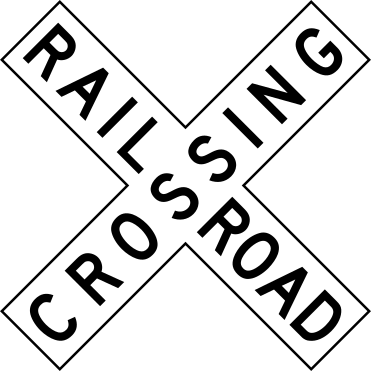
Question 89The white X-shaped railroad crossbuck sign has the same meaning as which sign?
Show answer
D: Yield. The crossbuck is a regulatory sign with the same meaning as a yield sign: slow down and be ready to stop for a train. Kentucky Driver Manual: Flashing Lights, page 43.
-
Question 90What happens to fines for speeding in a Kentucky work zone?
Show answer
D: They are doubled. Fines for speeding in a work zone are doubled. Kentucky Driver Manual: Work Zone Signs, page 46.
-
Question 91Under Kentucky law, when are fines doubled in a highway work zone?
Show answer
A: When signs say fines are doubled and at least one worker is present. Fines may be doubled when signs inform drivers of the work zone and doubled fines, and at least one bona fide worker is present. Kentucky Driver Manual: Work Zones, page 77.
-
Question 92Which shape is used only for yield signs?
Show answer
A: Equilateral triangle. The equilateral triangle is used only for yield signs. Kentucky Driver Manual: STANDARD SHAPES, page 49.
-
Question 93On a red light, a turn from a one-way street into another one-way street must go into which lane?
Show answer
D: The nearest lane. When turning on red from one one-way street to another, turn into the closest lane going in your direction. Kentucky Driver Manual: Traffic Signals, page 43.
-
Question 94How far before a turn must you signal in Kentucky?
Show answer
B: 100 feet. In Kentucky you must signal at least 100 feet before turning at an intersection. Kentucky Driver Manual: Turning and Turnabouts, page 50.
-
Question 95For a turnabout, from how far in each direction must your car be visible?
Show answer
C: 500 feet. Pick a turnabout spot where drivers can see your car from 500 feet away in both directions. Kentucky Driver Manual: Turnabouts, page 51.
-
Question 96Traffic in one lane blocks your view of another lane at an intersection. What should you do?
Show answer
A: Wait until it clears. If traffic in one lane blocks your view of another, wait until it clears; nosing into the other lane could get you hit. Kentucky Driver Manual: Intersections, page 51.
-
Question 97Is it legal to remain in the left lane on a Kentucky limited-access highway?
Show answer
A: No, it is illegal. Kentucky makes it illegal to stay in the left lane of a limited-access highway instead of using it to pass. Kentucky Driver Manual: Use of Lanes, page 54.
-
Question 98Can mopeds be operated on Kentucky limited-access highways?
Show answer
B: Not where the minimum speed is more than 30 mph. Mopeds are not allowed on limited-access highways whose minimum speed is above 30 mph. Kentucky Driver Manual: Moped License – Class E, page 11.
-
Question 99What does Kentucky law require when you leave a vehicle?
Show answer
B: Turn off the engine and remove the key. Kentucky law requires you to shut off the engine and take the key whenever you leave the vehicle; the manual also says to lock it. Kentucky Driver Manual: Parallel Parking, page 53.
-
Question 100When exiting a parallel space, when should you move fully into the traffic lane?
Show answer
D: When your door post clears the rear bumper of the car ahead. Move into the lane when the door post of your vehicle clears the rear bumper of the vehicle parked ahead. Kentucky Driver Manual: Parallel Parking, page 53.
-
Question 101When is a stop NOT required for a stopped school bus in Kentucky?
Show answer
D: When traveling the opposite direction on a road of four or more lanes separated by an elevated barrier or unpaved median. The only time you may keep going is when you are heading the opposite way on a road of four or more lanes divided by a raised barrier or an unpaved median. Kentucky Driver Manual: Rules for School Buses, page 52.
-
Question 102Besides school buses, which buses must you stop for when loading or unloading in Kentucky?
Show answer
C: Church buses. The rule applies to a stopped school bus or church bus loading or unloading passengers. Kentucky Driver Manual: Rules for School Buses, page 52.
-
Question 103How closely may you follow an emergency vehicle in Kentucky?
Show answer
C: No closer than 500 feet. It is unlawful to follow any emergency vehicle closer than 500 feet. Kentucky Driver Manual: Emergency Vehicles, page 73.
-
Question 104Under Kentucky's move-over law, what should you do on a four-lane highway when approaching police stopped on the shoulder?
Show answer
B: Approach slowly and move into the left lane if safe. On a four-lane highway, slow down and move to the left lane if it is safe; on a two-lane road, slow down and pass carefully. Kentucky Driver Manual: Kentucky Move-Over Laws, page 74.
-
Question 105For how many feet before a turn must a bicyclist signal intermittently?
Show answer
C: The last 50 feet. For a vehicle that is not a motor vehicle (bicycle), the signal is given intermittently for the last 50 feet before the turn. Kentucky Driver Manual: Bicyclists, page 68.
-
Question 106What is the minimum age to operate an electric low-speed scooter on a Kentucky highway or bike lane?
Show answer
A: 16. Riders must be at least 16 to use an electric low-speed scooter on a highway, bike lane or bike path. Kentucky Driver Manual: Electric Low-Speed Scooter, page 70.
-
Question 107What is the maximum design speed of an electric low-speed scooter in Kentucky?
Show answer
D: 20 mph. An electric low-speed scooter is built to go no faster than 20 mph on flat pavement. Kentucky Driver Manual: Electric Low-Speed Scooter, page 70.
-
Question 108Where is a large truck's biggest side blind spot?
Show answer
D: The right side, from behind the cab up to the length of the truck. A truck's right-side no zone is the biggest: it starts behind the cab and can run the full length of the truck. Kentucky Driver Manual: The No Zone, page 71.
-
Question 109How far behind a large truck can its rear blind spot extend?
Show answer
B: Up to 200 feet. The blind spot right behind a large truck or bus can stretch as far as 200 feet. Kentucky Driver Manual: Rear No Zones, page 71.
-
Question 110How far does a loaded truck at 55 mph need to stop under ideal conditions?
Show answer
B: At least 335 feet. A loaded truck at 55 mph needs at least 335 feet to stop—more than 1½ times a car's stopping distance. Kentucky Driver Manual: Front No Zones, page 71.
-
Question 111When may an ATV cross a two-lane public highway in Kentucky?
Show answer
B: At close to a 90-degree angle, traveling no more than 2/10 of a mile on the highway. An ATV may cross a two-lane highway at as close to a 90-degree angle as practical and may not travel on the highway more than two-tenths of a mile. Kentucky Driver Manual: Restrictions and Exceptions, page 75.
-
Question 112When are Kentucky headlights required?
Show answer
B: From one-half hour after sunset to one-half hour before sunrise. Headlights must be on from one-half hour after sunset to one-half hour before sunrise, and should be used in rain, snow, fog and when it gets dark. Kentucky Driver Manual: Communicating: Use headlights, page 62.
-
Question 113Within what distance of an oncoming vehicle must you dim your high beams?
Show answer
A: 500 feet. Switch to low beams when an oncoming vehicle is within 500 feet (and when you are within 300 feet behind another vehicle). Kentucky Driver Manual: Night Driving, page 76.
-
Question 114Within what distance of a vehicle you are following should you use low beams?
Show answer
A: 300 feet. Dim your lights within 300 feet of any vehicle you are following. Kentucky Driver Manual: Night Driving, page 76.
-
Question 115How far can an average freight train going 55 mph take to stop?
Show answer
C: A mile or more. The stopping distance for an average freight train at 55 mph may be a mile or more. Kentucky Driver Manual: Railroad Crossing Warning Signs, page 45.
-
Question 116Your vehicle stalls on railroad tracks with a train coming. Which way should you run?
Show answer
C: Away from the tracks, toward the direction the train is coming from. Get out at once and move away from the tracks toward the oncoming train, so debris thrown forward by the crash won't hit you; then call the number posted at the crossing or 911. Kentucky Driver Manual: Railroad Crossing Warning Signs, page 45.
-
Question 117How should cargo weight be distributed in a trailer?
Show answer
A: 60 percent in front, 40 percent in back. Sixty percent of cargo weight should go in the front (nearest the tow vehicle) and 40 percent in the back. Kentucky Driver Manual: Loading a Trailer, page 78.
-
Question 118Your car begins to skid sideways. Which way should you turn the wheel?
Show answer
D: In the direction the back of the vehicle is skidding. Steer toward the side the rear of the car is sliding to; that brings the front back in line with the rear. Kentucky Driver Manual: Dealing with Skids, page 64.
-
Question 119Your accelerator sticks and the car speeds out of control. What is the first step in the Kentucky manual?
Show answer
B: Turn off the engine. Turn off the engine, shift to neutral and look for an escape path, steer smoothly, brake gently and pull off. Kentucky Driver Manual: Stuck Accelerator, page 66.
-
Question 120How far behind your disabled vehicle should you place flares?
Show answer
D: About 200 to 300 feet. Place emergency flares about 200 to 300 feet behind the vehicle. Kentucky Driver Manual: Vehicle Breakdown & Emergency Signals, page 66.
-
Question 121After a non-injury crash in Kentucky, what does KRS 189.580 require?
Show answer
A: Move the damaged vehicles to the shoulder. In a non-injury accident, Kentucky law requires moving the damaged vehicles to the shoulder. Kentucky Driver Manual: Collisions, page 64.
-
Question 122When must you file a civilian crash report with Kentucky State Police?
Show answer
B: When property damage exceeds $500 and no officer investigated, within 10 days. Anyone in a crash with property damage over $500 that police did not investigate must file a written report within ten days. Kentucky Driver Manual: Collisions, page 64.
-
Question 123Does turning on your turn signal give you the right-of-way?
Show answer
D: No. A turn signal only tells others what you plan to do; it does not give you the right-of-way. Cancel it after the turn. Kentucky Driver Manual: Signaling Your Movements, page 62.
Answer every question to see your score.
Remembering the numbers
Most mistakes on the Kentucky KSP / KYTC test are about specifics: how many feet before a turn to signal, how far to park from a hydrant, the alcohol limit for drivers under 21. Write the numbers from these questions on a card and review them before the test, then take the exam simulator.