Maine BMV permit practice test 5
25 questions written from the Maine Driver's License Manual (Motorist Handbook and Study Guide), covering hazards, weather and night driving, alcohol and drugs, parking, right of way, signals and pavement markings and more. Pick an answer to see straight away whether you're right and why. The real Maine BMV test has 30 questions and you need 24 right.
-
Question 1On packed snow, how much should you slow down?
Show answer
B: To half speed. On packed snow, slow down to half speed. Maine Driver's License Manual (Motorist Handbook and Study Guide): Section 8: Adjusting for Road Conditions — Slippery Roads, page 80.
-
Question 2Which drink contains about the same amount of alcohol as a 12 oz. can of beer?
Show answer
A: A 4 oz. glass of table wine. A 12 oz. beer has about the same alcohol as a 1 oz. shot of 100-proof liquor, a 4 oz. glass of wine or a 10 oz. wine cooler. Maine Driver's License Manual (Motorist Handbook and Study Guide): Section 3: Myths Concerning Alcohol, page 30.
-
Question 3What is the minimum fine for misusing a disability parking access aisle in Maine?
Show answer
C: $200. Misuse of an access aisle is a traffic infraction with a fine of not less than $200. Maine Driver's License Manual (Motorist Handbook and Study Guide): Section 7: Parking, page 70.
-
Question 4You are turning left and a bicyclist is approaching from the opposite direction. What must you do?
Show answer
C: Yield to the bicyclist. Drivers turning left must yield to bicycle and roller ski operators approaching from the opposite direction. Maine Driver's License Manual (Motorist Handbook and Study Guide): Section 6: Yielding Right-Of-Way, page 49.
-
Question 5What does a dashed yellow center line on your side mean?
Show answer
D: Passing is permitted on your side when safe. Passing is permitted when the dashed line is on your side. Maine Driver's License Manual (Motorist Handbook and Study Guide): Section 6: Pavement Markings — Yellow Lane Markings, page 55.
-
Question 6An expressway entrance has no acceleration lane. What should you do?
Show answer
C: Stop, wait for a break in traffic, then speed up and merge. Without an acceleration lane, stop before entering, wait for a break in traffic, then speed up and merge. Maine Driver's License Manual (Motorist Handbook and Study Guide): Section 7: Expressway Driving — Entering a Multi-lane Highway, page 64.
-
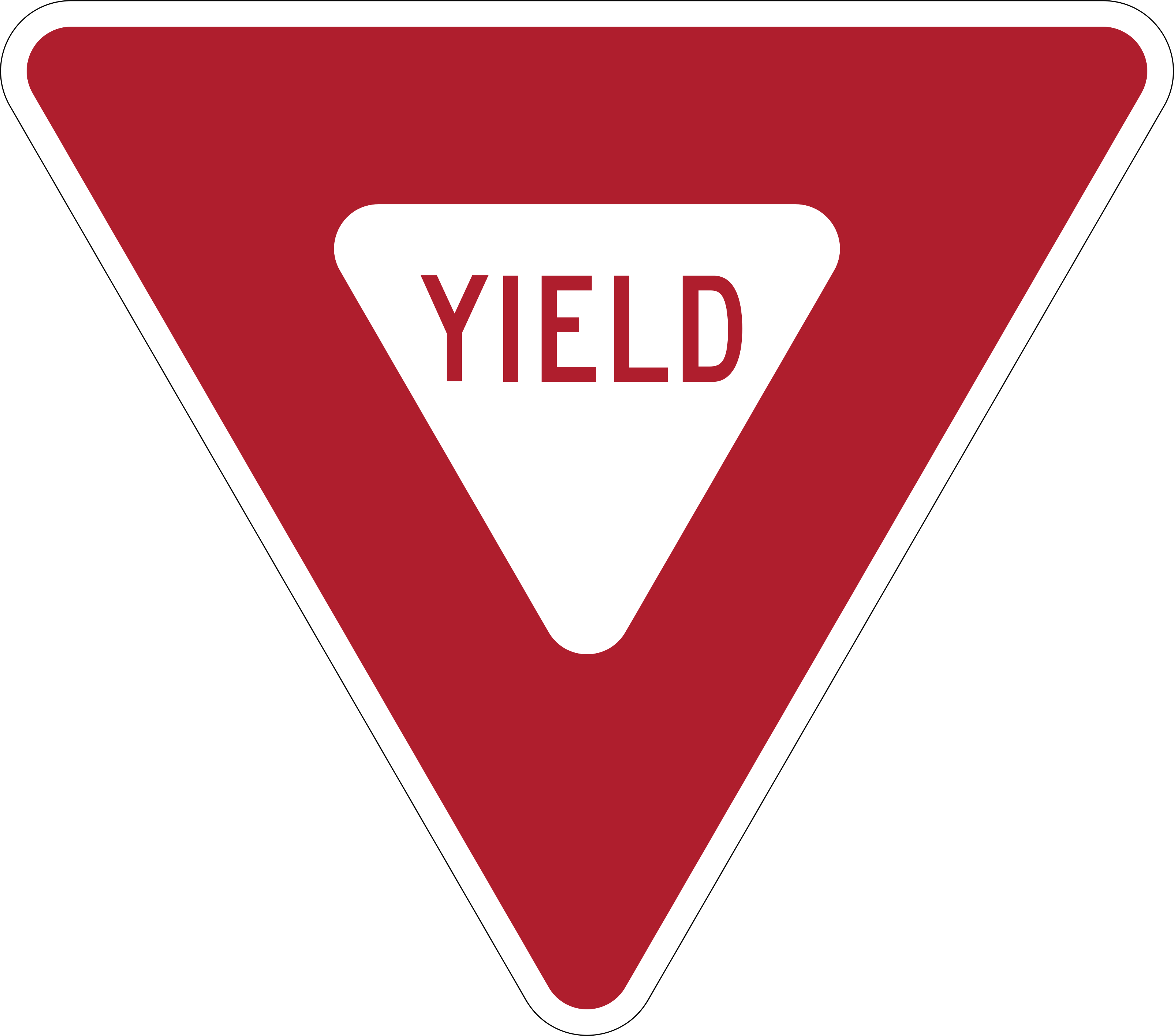
Question 7What does a yield sign mean?
Show answer
D: Slow down and yield to traffic or pedestrians with the right-of-way. A yield sign means slow down, wait for traffic to clear, and yield to traffic or pedestrians with the right-of-way. Maine Driver's License Manual (Motorist Handbook and Study Guide): Section 6: Traffic Signs — Regulatory Signs, page 53.
-
Question 8Which situation calls for increasing your following distance?
Show answer
A: Following motorcycles or bicycles. Increase following distance on slick roads, behind motorcycles or bicycles, behind large vehicles, at night and in bad weather. Maine Driver's License Manual (Motorist Handbook and Study Guide): Section 8: Managing Space — Space in Front, page 85.
-
Question 9In which direction do you travel in a Maine roundabout or traffic circle?
Show answer
B: Counterclockwise, to the right around the center island. Enter by proceeding to the right around the raised center island (counterclockwise). Maine Driver's License Manual (Motorist Handbook and Study Guide): Section 7: Traffic Circles and Roundabouts, page 62.
-
Question 10There is an oncoming car on your left and a bicyclist on your right. What should you do?
Show answer
A: Slow down, let the car pass, then pass the bicyclist with three feet of room. Take dangers one at a time: let the car pass, then move left to give the bicyclist plenty of room. Maine Driver's License Manual (Motorist Handbook and Study Guide): Section 8: Taking Dangers One at a Time, page 88.
-
Question 11At a crash scene, should you move an injured person?
Show answer
D: Only if absolutely necessary due to fire or other life-threatening danger. Don't move the victim unless absolutely necessary due to fire or another life-threatening danger. Maine Driver's License Manual (Motorist Handbook and Study Guide): Section 9: Emergency First Aid, page 97.
-
Question 12According to the Maine manual's stopping distance chart, what is the total stopping distance at 30 mph on dry pavement?
Show answer
B: 78 feet. At 30 mph the chart shows 33 feet reaction distance plus 45 feet braking distance, for 78 feet in total. Maine Driver's License Manual (Motorist Handbook and Study Guide): Section 8: How Well Can You See?, page 82.
-
Question 13What is the minimum age for a Maine school bus license?
Show answer
C: 21. School bus license applicants must be 21 or older with at least one year of licensed driving experience. Maine Driver's License Manual (Motorist Handbook and Study Guide): Section 1: Types of Driver's Licenses and Driver's Permits, page 8.
-
Question 14How often does the Maine manual suggest scheduling a break on long trips?
Show answer
B: Every two hours or 100 miles. Schedule a break every two hours or 100 miles, and stop sooner if you notice danger signs of fatigue. Maine Driver's License Manual (Motorist Handbook and Study Guide): Section 3: Fatigue — Give It a Rest for Safety, page 25.
-
Question 15When is pavement very slippery after rain begins?
Show answer
D: For the first few minutes, as oil rises to the surface. When it starts to rain, pavement can be very slippery for the first few minutes until the oil washes away. Maine Driver's License Manual (Motorist Handbook and Study Guide): Section 8: Adjusting for Road Conditions — Slippery Roads, page 80.
-
Question 16What is the only thing that sobers you up?
Show answer
C: Time. Your liver oxidizes alcohol at a constant rate, so nothing but time will sober you up. Maine Driver's License Manual (Motorist Handbook and Study Guide): Section 3: Myths Concerning Alcohol, page 30.
-
Question 17When you finish parallel parking, about how far from the curb should you be?
Show answer
A: About 6 inches (no more than 18 inches). You should be about 6 inches from the curb but not more than 18 inches away. Maine Driver's License Manual (Motorist Handbook and Study Guide): Section 7: Parking — Parallel Parking/Offset Backing, page 72.
-
Question 18A car ahead in the next lane has stopped for pedestrians in a crosswalk. What should you do?
Show answer
C: Do not pass it. Do not pass any vehicle that has stopped for pedestrians in a crosswalk. Maine Driver's License Manual (Motorist Handbook and Study Guide): Section 6: Yielding Right-Of-Way, page 49.
-
Question 19What does a solid white line between lanes going the same direction mean?
Show answer
A: The lanes have different uses and lane changes are discouraged. Solid white lines separate same-direction lanes with different uses and discourage lane changes; broken white lines allow safe lane changes. Maine Driver's License Manual (Motorist Handbook and Study Guide): Section 6: Use of Lanes — Sign and Road Markings, page 58.
-
Question 20On an expressway, which lane should you be in unless passing?
Show answer
B: The right-hand lane. You should always be in the right-hand lane unless you are passing. Maine Driver's License Manual (Motorist Handbook and Study Guide): Section 7: Expressway Driving — Expressway Passing, page 65.
-
Question 21What is a Shared Center Lane – Left Turn Only used for?
Show answer
A: Left turns by traffic from either direction. It is only for left-turning vehicles from either direction, not for through traffic or passing. Maine Driver's License Manual (Motorist Handbook and Study Guide): Section 6: Traffic Signs — Regulatory Signs, page 54.
-
Question 22When stopped behind a truck or bus on a hill, why should you leave space in front?
Show answer
D: The vehicle may roll back before starting forward. Leave space when stopped behind a truck or bus, especially on a hill, in case it rolls back. Maine Driver's License Manual (Motorist Handbook and Study Guide): Section 8: Managing Space — Space in Front, page 86.
-
Question 23In a large rotary, to which vehicle must you yield?
Show answer
A: The vehicle on your left. In large traffic circles (rotaries), drivers must yield the right-of-way to a vehicle on the operator's left. Maine Driver's License Manual (Motorist Handbook and Study Guide): Section 7: Traffic Circles and Roundabouts, page 63.
-
Question 24Must motorcyclists in Maine always use headlights?
Show answer
C: Yes, always on Maine roadways. Motorcyclists are always required to have headlights on when operating on Maine roadways. Maine Driver's License Manual (Motorist Handbook and Study Guide): Section 8: Communicating — Attract Attention, page 90.
-
Question 25Downed power lines are touching a crashed vehicle. What should you tell the occupants?
Show answer
B: Stay inside until help arrives. Don't go near downed wires; if they touch the vehicle, warn occupants to stay inside until help arrives. Maine Driver's License Manual (Motorist Handbook and Study Guide): Section 9: Emergency First Aid, page 97.
Answer every question to see your score.
More Maine practice tests
- Practice test 125 questions
- Practice test 225 questions
- Practice test 325 questions
- Practice test 425 questions
- Practice test 625 questions
- Practice test 725 questions
- Practice test 825 questions
- Practice test 925 questions
- Practice test 1025 questions
- Practice test 1125 questions
- Exam simulatorThe real format, 30 questions
How to use these tests
Read each explanation, even when you get the question right: it tells you the rule and the handbook section, so you can look it up. Your answers are saved in this browser only, so the weak spots mode can give you more questions on the topics you miss. When you're scoring well, take the exam simulator: it uses the same number of questions and passing score as the real test.
Our own questions, written from the Maine Driver's License Manual (Motorist Handbook and Study Guide) and checked against it. Not affiliated with the Maine Bureau of Motor Vehicles (Department of the Secretary of State). Found a mistake? Tell us.