Hardest New York permit test questions
130 questions that need exact knowledge rather than common sense: the numbers (distances, speeds, fines, limits), the exceptions and the rules that are easy to mix up. We chose them from our New York question bank for that reason; they're not statistics from the DMV.
-
Question 1At a STOP sign with no stop line and no crosswalk, where must you stop?
Show answer
B: Before entering the intersection, at the point nearest it that gives you a view of cross traffic. If there is no stop line or crosswalk, you stop before entering the intersection at the point nearest it where you can see traffic on the crossing road. New York State Driver's Manual (MV-21): Regulation Signs: Stop Sign, page 29.
-
Question 2How low can a posted work area speed limit be in New York?
Show answer
B: 25 mph. A work area speed limit as low as 25 mph can be posted. Even without a posted limit, you must reduce speed in a work zone. New York State Driver's Manual (MV-21): Work Area Signs, page 30.
-
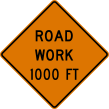
Question 3What should you do when you see a sign reading 'Road Work 1,500 feet'?
Show answer
B: Decrease your speed; at 60 mph you will reach the work area in about 17 seconds. The manual notes that at 60 mph you would cover 1,500 feet in about 17 seconds, so decrease speed when you see the sign. New York State Driver's Manual (MV-21): How to Drive Safely in Work Zones: Work Zone Tips, page 49.
-
Question 4A traffic light is out of service when you approach an intersection. What does New York law require?
Show answer
B: Stop as you would for a STOP sign, then follow right-of-way rules. State law requires you to stop as for a STOP sign when signals are out or not working, then continue according to right-of-way rules unless an officer directs you. New York State Driver's Manual (MV-21): Traffic Signals: Traffic Lights, page 30.
-
Question 5In New York City, can you turn right on a red light?
Show answer
B: No, unless a sign is posted that permits it. Turning on a red light is not allowed in New York City unless a sign permitting it is posted. New York State Driver's Manual (MV-21): Traffic Signals, page 31.
-
Question 6When may you turn left on a steady red light in New York (outside NYC)?
Show answer
B: When turning from a one-way road into another one-way road, after a full stop and yielding. A left turn on steady red is allowed only from a one-way road into another one-way road, after a full stop and yielding to traffic and pedestrians. New York State Driver's Manual (MV-21): Traffic Signals, page 31.
-
Question 7Can you turn right or left on a red arrow?
Show answer
B: No, a turn on red is not permitted at a red arrow. At a red arrow, do not go in the arrow's direction until a green light or arrow comes on; right or left turns on red are not permitted at a red arrow. New York State Driver's Manual (MV-21): Traffic Signals, page 31.
-
Question 8Which school bus drivers may NOT turn right on any red light?
Show answer
A: Drivers of a school bus containing students. The driver of a school bus containing students cannot turn right on any red light. New York State Driver's Manual (MV-21): Traffic Signals, page 31.
-
Question 9An overhead lane-use light shows a steady yellow 'X'. You should:
Show answer
B: Move from this lane. A steady yellow X means move from this lane. New York State Driver's Manual (MV-21): Lane Use Control Lights, page 31.
-
Question 10A flashing yellow 'X' over a lane means:
Show answer
B: The lane can only be used for a left turn. A flashing yellow X means this lane can only be used for a left turn. New York State Driver's Manual (MV-21): Lane Use Control Lights, page 31.
-
Question 11What does one single solid lane line mean?
Show answer
B: You may pass or change lanes only when obstructions or traffic conditions make it necessary. With one solid line you can pass or change lanes, but only when obstructions in the road or traffic conditions make it necessary. New York State Driver's Manual (MV-21): Pavement Markings: What some lane lines indicate, page 32.
-
Question 12On a city street, the solid line next to a diamond (HOV) lane changes to a broken line near an intersection. A non-HOV vehicle may enter the lane:
Show answer
B: To make a right turn at the next intersection. Where the solid line is replaced by broken lines on city streets, non-HOV vehicles can enter the HOV lane if they will turn right at the next intersection. New York State Driver's Manual (MV-21): Pavement Markings: Diamond Symbol, page 33.
-
Question 13Which of these must you obey over the other three?
Show answer
D: A police officer directing traffic. Directions from a traffic officer take precedence over signs, signals and pavement markings. New York State Driver's Manual (MV-21): Traffic Officers, page 33.
-
Question 14An emergency vehicle with lights and siren is approaching you in the opposite lane of a two-way road. You must:
Show answer
B: Pull over to the right and stop. You must pull over and stop for an emergency vehicle even if it is headed toward you in the opposite lane of a two-way roadway. New York State Driver's Manual (MV-21): Emergency Vehicles, page 35.
-
Question 15A personal vehicle displaying a flashing blue light is most likely driven by:
Show answer
B: A volunteer firefighter responding to an alarm. Volunteer firefighters responding to alarms may display blue lights on personal vehicles; volunteer ambulance or rescue members may display green lights. New York State Driver's Manual (MV-21): Blue, Green and Amber Lights, page 35.
-
Question 16Vehicles showing blue, green or amber lights are:
Show answer
B: Not authorized emergency vehicles; you are not required to yield, but should as a courtesy if safe. Vehicles with blue, green or amber lights are not authorized emergency vehicles and must obey traffic laws. You should yield as a courtesy if you safely can. New York State Driver's Manual (MV-21): Blue, Green and Amber Lights, page 35.
-
Question 17Does New York's Move Over Law apply to a tow truck or other hazard vehicle stopped with amber lights flashing?
Show answer
B: Yes, it also covers hazard vehicles with amber lights. The law covers authorized emergency or hazard vehicles stopped with emergency lights, amber hazard lights, or amber and blue lights activated, as well as vehicles with blue and green lights. New York State Driver's Manual (MV-21): Move Over Law, page 35.
-
Question 18Under the Move Over Law, on a parkway or controlled-access highway, you must also move over for:
Show answer
A: Any motor vehicle parked, stopped or standing on the shoulder. Drivers are also required to move over for motor vehicles parked, stopped or standing on the shoulder or any portion of a parkway or controlled-access highway. New York State Driver's Manual (MV-21): Move Over Law, page 35.
-
Question 19How far ahead must you signal before turning or changing lanes in New York?
Show answer
B: At least 100 feet. The law requires you to signal a turn or lane change with turn lights or hand signals at least 100 feet ahead. New York State Driver's Manual (MV-21): Turns, page 36.
-
Question 20You may not make a U-turn where other drivers cannot see your vehicle from how far away in either direction?
Show answer
C: 500 feet. U-turns are not allowed near hilltops, curves or other spots where drivers cannot see you from 500 feet in either direction. New York State Driver's Manual (MV-21): U-Turns, page 37.
-
Question 21Where are U-turns illegal in New York?
Show answer
A: In business districts of New York City. U-turns are illegal in business districts of New York City, where NO U-TURN signs are posted, on limited access expressways, and in school zones. New York State Driver's Manual (MV-21): U-Turns, page 37.
-
Question 22You cannot pass on the left if you cannot return to the right lane before an oncoming vehicle comes within:
Show answer
B: 200 feet. You may not pass on the left if you cannot safely return to the right lane before an oncoming vehicle comes within 200 feet of you. New York State Driver's Manual (MV-21): How to Pass on the Left, page 39.
-
Question 23On a two-way roadway, you may not pass within how many feet of a railroad crossing?
Show answer
B: 100 feet. You cannot pass on the left within 100 feet of a railroad crossing on a two-way roadway. New York State Driver's Manual (MV-21): How to Pass on the Left, page 39.
-
Question 24How far from a stopped school bus with flashing red lights should you stop?
Show answer
B: At least 20 feet. You should stop at least 20 feet away from the bus. New York State Driver's Manual (MV-21): School Buses, page 40.
-
Question 25Must you stop for a school bus with flashing red lights on the opposite side of a divided highway in New York?
Show answer
B: Yes. The manual says you must stop for a school bus even if it is on the opposite side of a divided highway; this law applies on all roadways in New York. New York State Driver's Manual (MV-21): School Buses, page 40.
-
Question 26What is the minimum fine for a first conviction of passing a stopped school bus in New York?
Show answer
B: $250. Fines range from a minimum of $250 for a first violation to a maximum of $1,000 for three violations in three years. New York State Driver's Manual (MV-21): School Buses, page 40.
-
Question 27What happens if you are convicted of passing a stopped school bus three times within three years?
Show answer
B: Your license is revoked for at least six months. Three convictions within three years result in a license revocation of at least six months. New York State Driver's Manual (MV-21): School Buses, page 40.
-
Question 28Under New York's school bus stop-arm camera law, what is the owner's penalty for a first violation?
Show answer
B: $250. Stop-arm camera penalties for vehicle owners are $250 for a first violation, $275 for a second within 18 months, and $300 for a third or more within 18 months. New York State Driver's Manual (MV-21): School Buses: Vehicle Owners, page 40.
-
Question 29After parallel parking, how close to the curb must your wheels be?
Show answer
B: No more than one foot. In your final parking position, your wheels must be no more than one foot from the curb. New York State Driver's Manual (MV-21): How to Park, page 42.
-
Question 30What does a NO STANDING sign allow?
Show answer
B: Only a temporary stop to pick up or drop off passengers; the driver cannot leave the vehicle. NO STANDING means you can only make a temporary stop to load or discharge passengers, and the driver cannot exit the vehicle. New York State Driver's Manual (MV-21): Parking Regulations, page 43.
-
Question 31What does a NO PARKING sign allow?
Show answer
B: A temporary stop to load or unload merchandise or passengers. A NO PARKING sign means you can make a temporary stop to load or discharge merchandise or passengers. New York State Driver's Manual (MV-21): Parking Regulations, page 43.
-
Question 32A NO STOPPING sign means you may stop only:
Show answer
C: To obey a traffic sign, signal or officer, or to avoid conflicts with other vehicles. Under NO STOPPING you may stop only to obey a traffic sign, signal or officer or to prevent conflicts with other vehicles. New York State Driver's Manual (MV-21): Parking Regulations, page 43.
-
Question 33How close to a fire hydrant may you park, stop or stand (unless a licensed driver stays in the vehicle)?
Show answer
B: No closer than 15 feet. You cannot park, stop or stand within 15 feet of a fire hydrant unless a licensed driver remains in the vehicle to move it in an emergency. New York State Driver's Manual (MV-21): Parking Regulations, page 43.
-
Question 34Within how many feet of a crosswalk at an intersection is parking or standing prohibited?
Show answer
B: 20 feet. Parking or standing is not allowed within 20 feet of a crosswalk at an intersection. New York State Driver's Manual (MV-21): Parking Regulations, page 43.
-
Question 35How close may you park or stand to a traffic light, STOP sign or YIELD sign?
Show answer
C: No closer than 30 feet. Parking or standing is not allowed within 30 feet of a traffic light, STOP sign or YIELD sign. New York State Driver's Manual (MV-21): Parking Regulations, page 43.
-
Question 36You may not park within how many feet of a railroad crossing?
Show answer
C: 50 feet. You cannot park your vehicle within 50 feet of a railroad crossing. New York State Driver's Manual (MV-21): Parking Regulations, page 43.
-
Question 37On the same side of the road as a fire station driveway, parking or standing is prohibited within:
Show answer
B: 20 feet. Parking or standing is not allowed within 20 feet of a fire station driveway, or within 75 feet on the opposite side of the road. New York State Driver's Manual (MV-21): Parking Regulations, page 43.
-
Question 38On the side of the road opposite a fire station driveway, parking or standing is prohibited within:
Show answer
D: 75 feet. Across the road from a fire station driveway, parking or standing is not allowed within 75 feet. New York State Driver's Manual (MV-21): Parking Regulations, page 43.
-
Question 39How close may you park, stop or stand to a pedestrian safety area, unless another distance is marked?
Show answer
D: 30 feet. You cannot park, stop or stand within 30 feet of a pedestrian safety area unless another distance is marked. New York State Driver's Manual (MV-21): Parking Regulations, page 43.
-
Question 40Unless a municipality sets higher penalties, what is the fine for a first disability-space parking violation at a shopping center?
Show answer
B: $50 to $75. The shopping center fine is $50 to $75 for a first offense and $75 to $150 for a second within two years, plus a $30 mandatory surcharge. New York State Driver's Manual (MV-21): Reserved Parking for People with Disabilities, page 44.
-
Question 41If no speed limit is posted in New York State (outside cities with lower limits), what is the maximum speed?
Show answer
C: 55 mph. You must obey the speed limit; if none is posted, drive no more than 55 mph. New York State Driver's Manual (MV-21): Speed, page 47.
-
Question 42What is the speed limit in New York City unless another limit is posted?
Show answer
B: 25 mph. The speed limit is 25 mph in New York City unless another limit is posted. New York State Driver's Manual (MV-21): Speed, page 47.
-
Question 43What is the normal speed limit on an expressway in New York, and what may be posted in some rural areas?
Show answer
B: 55 mph normally, up to 65 mph in some rural areas. The expressway limit is normally 55 mph but can be posted at 65 mph in some rural areas. New York State Driver's Manual (MV-21): Expressway Driving, page 62.
-
Question 44In bad weather or when following a large truck, how much should you increase your following time?
Show answer
A: To at least three or four seconds. In bad weather and when following large trucks, increase the count to at least three or four seconds. New York State Driver's Manual (MV-21): Allow Yourself Space, page 47.
-
Question 45What is the maximum fine for a driver who fails to buckle up in New York?
Show answer
B: $50. The driver can face a fine of up to $50 for not wearing a seat belt; passengers 16 and older can face the same. New York State Driver's Manual (MV-21): Seat Belts, Child Safety Seats and Air Bags, page 48.
-
Question 46Who is responsible for making sure passengers under 16 are properly restrained?
Show answer
C: The driver. The driver must make sure each passenger under 16 is restrained by a seat belt or appropriate child restraint; the driver faces a $25-$100 fine and 3 points per violation. New York State Driver's Manual (MV-21): Seat Belts, Child Safety Seats and Air Bags, page 48.
-
Question 47A driver is convicted of carrying an unrestrained 10-year-old passenger. The penalty can include:
Show answer
B: A fine of $25 to $100 and three points. For each passenger under 16 not properly restrained, the driver can face a $25 to $100 fine and three license points. New York State Driver's Manual (MV-21): Seat Belts, Child Safety Seats and Air Bags, page 48.
-
Question 48Until what age must a child ride rear-facing (or until reaching the seat's rear-facing weight/height limit)?
Show answer
B: 2. A child must be restrained rear-facing until age two or until reaching the highest rear-facing weight or height limit allowed by the seat maker. New York State Driver's Manual (MV-21): Seat Belts, Child Safety Seats and Air Bags, page 48.
-
Question 49A 6-year-old is over 4'9" tall and weighs more than 100 pounds. According to the manual, the child:
Show answer
B: May be restrained by a seat belt. If a child aged four to seven is over 4'9" and/or over 100 pounds, the child may use a seat belt; if it doesn't fit correctly, a child restraint is recommended. New York State Driver's Manual (MV-21): Seat Belts, Child Safety Seats and Air Bags, page 48.
-
Question 50How far should the center of your chest be from the air bag cover?
Show answer
B: At least 10 inches. Sit with at least 10 inches between the center of your chest and the air bag cover. New York State Driver's Manual (MV-21): Seat Belts, Child Safety Seats and Air Bags, page 49.
-
Question 51What happens to fines for speeding in a New York work zone?
Show answer
B: They double, even when workers are not present. When you speed in work zones, ticket fines double, even when the workers or work vehicles are not there. New York State Driver's Manual (MV-21): How to Drive Safely in Work Zones, page 49.
-
Question 52Roundabouts are designed to keep vehicle speeds within the roundabout at:
Show answer
B: 30 mph or less. Roundabouts are designed so the speed of all vehicles is restricted to 30 mph or less within the roundabout. New York State Driver's Manual (MV-21): Roundabouts, page 50.
-
Question 53How often does the manual recommend stopping on a long trip to prevent fatigue?
Show answer
B: Every 100 miles or two hours. Schedule regular stops every 100 miles or two hours, get enough sleep, and drive long trips with a companion if possible. New York State Driver's Manual (MV-21): Drowsy and Fatigued Driving: Effective Countermeasures, page 52.
-
Question 54After waking from sleep, how long should you wait before driving?
Show answer
B: At least 15 minutes. The manual advises not to drive for at least 15 minutes after waking from sleep. New York State Driver's Manual (MV-21): Drowsy and Fatigued Driving: Effective Countermeasures, page 52.
-
Question 55What is the penalty for a first offense of hand-held cell phone use while driving in New York, as stated in the manual?
Show answer
B: A fine up to $200 and five license points. A first offense can bring a fine up to $200 and five license points. New York State Driver's Manual (MV-21): Using a Cellular or Mobile Telephone, page 52.
-
Question 56What is the maximum fine for a first texting-while-driving offense in New York?
Show answer
B: $200. The first offense fine for texting is up to $200; a second within 18 months up to $250; a third or more within 18 months up to $450. New York State Driver's Manual (MV-21): Penalties for texting, electronic device use, page 52.
-
Question 57What is the maximum fine for a third texting offense committed within 18 months?
Show answer
C: $450. A third or subsequent texting offense within 18 months carries a fine of up to $450. New York State Driver's Manual (MV-21): Penalties for texting, electronic device use, page 52.
-
Question 58A driver with a junior or probationary license is convicted of texting while driving for the first time. What happens?
Show answer
B: A 120-day suspension. Probationary and junior license holders who use a hand-held phone or text while driving receive a 120-day suspension for a first conviction. New York State Driver's Manual (MV-21): Penalties for texting, electronic device use, page 52.
-
Question 59What is the minimum legal tire tread depth in New York?
Show answer
B: 2/32 of an inch. The law requires tires to have at least 2/32nds of an inch of tread. New York State Driver's Manual (MV-21): Vehicle Condition, page 53.
-
Question 60In New York, a BAC of more than .05 percent is legal evidence of:
Show answer
B: Impairment (DWAI). A BAC of more than .05 is legal evidence that you are impaired; .08 or higher is evidence of intoxication. New York State Driver's Manual (MV-21): Alcohol, Other Drugs and the Law, page 55.
-
Question 61What BAC level is evidence of aggravated driving while intoxicated (Agg-DWI)?
Show answer
C: .18 or more. A BAC of .18 percent or more is evidence of aggravated driving while intoxicated. New York State Driver's Manual (MV-21): Alcohol, Other Drugs and the Law, page 55.
-
Question 62Which of these drinks contains the most alcohol: 1½ oz of 80-proof liquor, 5 oz of wine, 12 oz of beer, or 12 oz of wine cooler?
Show answer
D: They contain about the same amount. These standard drinks all contain about the same amount of alcohol; none is safer than the others. New York State Driver's Manual (MV-21): Your BAC, page 55.
-
Question 63For a 150-pound male, one standard drink raises BAC by about:
Show answer
B: .02 percent. For a 150-pound male, each standard drink raises BAC by about .02 percent. New York State Driver's Manual (MV-21): Your BAC, page 55.
-
Question 64If you refuse a chemical test after an arrest and a DMV hearing confirms the refusal, your license will be:
Show answer
B: Revoked even if you are found not guilty of the alcohol or drug charge. Refusal is a separate issue; if a DMV hearing confirms the refusal, your license will be revoked even if you are found not guilty of the alcohol or drug charge. New York State Driver's Manual (MV-21): Chemical Tests, page 56.
-
Question 65What is the minimum revocation for a first chemical test refusal by a driver over 21?
Show answer
C: One year. Chemical test refusal by a driver over 21 carries a minimum one-year revocation; 18 months if within five years of a prior refusal or alcohol/drug violation. New York State Driver's Manual (MV-21): Mandatory Suspension or Revocation: Chemical Test Refusals, page 21.
-
Question 66What civil penalty must be paid to DMV after a chemical test refusal revocation (non-commercial vehicle) before re-licensing?
Show answer
C: $500. A chemical test refusal carries a $500 civil penalty ($550 in a commercial vehicle); $750 if within five years of an earlier alcohol, drug or refusal revocation. New York State Driver's Manual (MV-21): Fees and Civil Penalties, page 23.
-
Question 67Under New York's Zero Tolerance law, a driver under 21 with a BAC of .02 to .07 faces:
Show answer
B: A six-month license suspension. Under Zero Tolerance, a driver under 21 with a BAC of .02 to .07 will have the license suspended for six months. New York State Driver's Manual (MV-21): Zero Tolerance for Drivers Under Age 21, page 57.
-
Question 68To be re-licensed after a Zero Tolerance suspension, a driver must pay:
Show answer
B: A $125 civil penalty and a $100 suspension termination fee. After a Zero Tolerance suspension, the driver must pay a $100 suspension termination fee and a $125 civil penalty. New York State Driver's Manual (MV-21): Zero Tolerance for Drivers Under Age 21, page 57.
-
Question 69What is the penalty for a second Zero Tolerance violation?
Show answer
B: Revocation for at least one year or until age 21, whichever is longer. A second Zero Tolerance violation results in revocation for at least one year or until the driver turns 21, whichever is longer. New York State Driver's Manual (MV-21): Zero Tolerance for Drivers Under Age 21, page 57.
-
Question 70What is the license penalty for a first conviction of driving while ability impaired by alcohol (DWAI)?
Show answer
A: 90-day suspension. A first DWAI (alcohol) conviction brings a 90-day suspension. New York State Driver's Manual (MV-21): Penalties for Alcohol/Drug Related Violations, page 58.
-
Question 71What is the minimum license action for a first DWI conviction (.08 BAC or more)?
Show answer
B: Six-month revocation. A first DWI conviction carries a minimum six-month revocation, a $500-$1,000 fine and up to one year in jail. New York State Driver's Manual (MV-21): Penalties for Alcohol/Drug Related Violations, page 58.
-
Question 72What is the minimum license action for a first Aggravated DWI conviction?
Show answer
B: One-year revocation. A first Agg-DWI (.18 BAC or higher) conviction brings a minimum one-year revocation and a fine of $1,000 to $2,500. New York State Driver's Manual (MV-21): Penalties for Alcohol/Drug Related Violations, page 58.
-
Question 73What is the fine range for a first DWI conviction (not counting surcharges)?
Show answer
B: $500 to $1,000. A first DWI conviction carries a fine of $500 to $1,000 plus surcharges, up to one year in jail, and a minimum six-month revocation. New York State Driver's Manual (MV-21): Penalties for Alcohol/Drug Related Violations, page 58.
-
Question 74Under Leandra's Law, driving while intoxicated with a child under what age in the vehicle can be charged as a class E felony?
Show answer
B: Under 16. Committing these alcohol-related offenses with a child under 16 in the vehicle may be charged as a class E felony, punishable by up to four years in prison. New York State Driver's Manual (MV-21): The Ignition Interlock Program and Leandra's Law, page 59.
-
Question 75Courts must order a person convicted of DWI to install an ignition interlock on vehicles they own or operate for at least:
Show answer
C: 12 months. Courts must order an ignition interlock for at least 12 months; it may be waived if the device was installed at least six months, unless ordered longer. New York State Driver's Manual (MV-21): The Ignition Interlock Program and Leandra's Law, page 59.
-
Question 76What is the maximum fine for a first open container conviction in New York?
Show answer
B: $150. A first conviction carries a fine up to $150, a mandatory surcharge, a crime victim assistance fee, and possible imprisonment of 15 days. New York State Driver's Manual (MV-21): Open Container Law, page 57.
-
Question 77Flashing red lights and lowered gates at a railroad crossing. How far from the tracks must you stop?
Show answer
B: At least 15 feet. Flashing red lights, lowered gates and/or a bell mean you must stop at least 15 feet from the tracks. New York State Driver's Manual (MV-21): Railroad Crossing Signals, page 61.
-
Question 78A train is approaching your stalled car. Which way should you run?
Show answer
B: Toward the general direction the train is coming from, away from the tracks at a 45-degree angle. Run toward the train but away from the tracks at a 45-degree angle; running the same direction as the train risks being hit by debris. New York State Driver's Manual (MV-21): Stalling on Railroad Tracks, page 61.
-
Question 79How far before an expressway exit ramp should you signal?
Show answer
B: At least 100 feet. Signal your exit at least 100 feet before you reach the exit ramp. New York State Driver's Manual (MV-21): Expressway Driving, page 62.
-
Question 80About how far ahead do your headlights light the road?
Show answer
C: 350 feet. Headlights cover about 350 feet ahead; drive at a speed that lets you stop within that distance ('within the range' of your headlights). New York State Driver's Manual (MV-21): Night Driving, page 62.
-
Question 81New York law requires headlights from:
Show answer
B: One-half hour after sunset to one-half hour before sunrise. Headlights are required from one-half hour after sunset to one-half hour before sunrise, when visibility is under 1,000 feet, and when using wipers. New York State Driver's Manual (MV-21): Night Driving, page 63.
-
Question 82You must turn on headlights whenever visibility is less than:
Show answer
B: 1,000 feet. The law requires headlights when visibility is less than 1,000 feet. New York State Driver's Manual (MV-21): Night Driving, page 63.
-
Question 83You must switch to low beams when within how many feet of an oncoming vehicle?
Show answer
C: 500 feet. Headlights must be on low beam within 500 feet of an oncoming vehicle or within 200 feet of a vehicle ahead. New York State Driver's Manual (MV-21): Night Driving, page 63.
-
Question 84When following another vehicle at night, you must use low beams within:
Show answer
B: 200 feet. You must use low beams within 200 feet of a vehicle ahead of you, even if it is in a different lane. New York State Driver's Manual (MV-21): Night Driving, page 63.
-
Question 85Do daytime running lights satisfy New York's requirement to use headlights in bad weather?
Show answer
B: No. Daytime running lights do not qualify as headlights; you must turn on your headlights. New York State Driver's Manual (MV-21): Driving in Rain, Fog or Snow, page 63.
-
Question 86What color must rear fog lights be in New York?
Show answer
C: Red. Front fog lights can be amber or white, but back fog lights must be red. New York State Driver's Manual (MV-21): Driving in Rain, Fog or Snow, page 63.
-
Question 87During what period are tires with metal studs allowed in New York?
Show answer
B: October 16 to April 30. Tires with metal studs can be used in New York only from October 16 through April 30. New York State Driver's Manual (MV-21): How to Drive in Winter, page 64.
-
Question 88Your rear wheels start to skid to the left. Which way should you steer?
Show answer
B: Left, the direction the vehicle is trying to go. Turn the steering wheel in the direction the vehicle is trying to go: if the rear slides left, steer left. New York State Driver's Manual (MV-21): How to Drive in Winter, page 64.
-
Question 89If your front wheels skid, you should first:
Show answer
B: Take your foot off the gas and shift to neutral or push in the clutch, without trying to steer immediately. Take your foot off the gas and shift to neutral or push in the clutch, but don't steer right away. As traction returns, steer where you want to go. New York State Driver's Manual (MV-21): How to Drive in Winter, page 64.
-
Question 90Two-thirds of deer-vehicle collisions happen in which months?
Show answer
B: October, November and December. Two-thirds of all deer-vehicle collisions occur in October, November and December, when deer breed and travel most. New York State Driver's Manual (MV-21): How to Avoid Collisions With Deer, page 64.
-
Question 91Your gas pedal sticks and you cannot free it with your shoe. What should you do?
Show answer
B: Shift into neutral and brake, then get off the road. Shift into neutral and use the brake to slow and leave the road. Don't turn off the ignition; you could lose steering control or lock the wheel. New York State Driver's Manual (MV-21): Driving Emergencies: Stuck Gas Pedal, page 65.
-
Question 92In New York, bicyclists and passengers of what ages must wear an approved helmet?
Show answer
B: Ages 1 to 13. Bicyclists and their passengers ages 1-13 must wear an approved helmet; adults must follow local helmet laws. New York State Driver's Manual (MV-21): Bicyclists, page 69.
-
Question 93At night, a bicycle must have a headlight visible from at least how far ahead?
Show answer
C: 500 feet. A bicycle used at night needs a headlight visible from at least 500 feet ahead and a red taillight visible from at least 300 feet behind. New York State Driver's Manual (MV-21): Bicyclists, page 69.
-
Question 94A bicycle's horn or bell must be audible from at least:
Show answer
B: 100 feet. A bicycle on public highways must have adequate brakes and a horn or bell that can be heard at least 100 feet away. New York State Driver's Manual (MV-21): Bicyclists, page 69.
-
Question 95A bicycle crash that causes death or serious injury must be reported to DMV within:
Show answer
C: 10 days. Bicyclists must report any bicycle crash causing death or serious injury to DMV within 10 days. New York State Driver's Manual (MV-21): Bicyclists, page 69.
-
Question 96May three motorcyclists ride side-by-side in a single lane in New York?
Show answer
B: No; only two motorcyclists may ride side-by-side in one lane. Two motorcyclists may ride side-by-side in a single lane, but a motorcyclist cannot share a lane with a vehicle that is not a motorcycle. New York State Driver's Manual (MV-21): Motorcyclists, page 71.
-
Question 97Which mopeds must ride only in the right lane, as far right as possible?
Show answer
B: Class B and C. Class B and C mopeds can be driven only in the right lane as far right as possible; Class A mopeds may use any lane. New York State Driver's Manual (MV-21): Moped Operators, page 74.
-
Question 98A tractor with a long hood can have a blind spot in front of it of about:
Show answer
B: 20 feet. Tractors with long hoods can have a blind spot of 20 feet in front of the vehicle. New York State Driver's Manual (MV-21): Large Vehicles, page 74.
-
Question 99How many questions are on the New York Class D written permit test, and how many must you answer correctly?
Show answer
A: 20 questions, 14 correct. You must correctly answer at least 14 of the 20 questions, including at least two of the four road sign questions. New York State Driver's Manual (MV-21): Vision and Knowledge Tests, page 10.
-
Question 100On the New York written test, how many of the four road sign questions must you answer correctly?
Show answer
C: At least two. Besides 14 of 20 overall, you must correctly answer two of the four questions about road signs. New York State Driver's Manual (MV-21): Vision and Knowledge Tests, page 10.
-
Question 101What vision standard must you meet to pass the DMV vision test?
Show answer
B: 20/40 in at least one eye, with or without corrective lenses. To pass the vision test, you need 20/40 vision in at least one eye with or without corrective lenses. New York State Driver's Manual (MV-21): Vision and Knowledge Tests, page 10.
-
Question 102A learner permit holder must be supervised by a driver who is at least:
Show answer
C: 21 years old. The supervising driver must be at least 21, hold a license valid for the vehicle, and sit in the front seat. New York State Driver's Manual (MV-21): The Learner Permit, page 11.
-
Question 103Which Westchester County parkways are off-limits to learner permit holders?
Show answer
B: Cross County, Hutchinson River, Saw Mill River and Taconic State. Permit holders may not drive on the Cross County, Hutchinson River, Saw Mill River or Taconic State parkways in Westchester County. New York State Driver's Manual (MV-21): General Rules for All Drivers with Learner Permits, page 13.
-
Question 104Between 9 PM and 5 AM, may a junior permit holder drive in New York City or on Long Island?
Show answer
B: No. Junior permit holders must not drive between 9 PM and 5 AM in New York City or Long Island. New York State Driver's Manual (MV-21): Regional Restrictions for a Junior Permit, page 12.
-
Question 105A junior permit holder practicing in New York City between 5 AM and 9 PM must drive a vehicle with:
Show answer
B: Dual controls (dual brakes). In NYC, junior permit holders may drive 5 AM to 9 PM only with a parent, guardian, person in loco parentis, driver ed teacher or driving instructor, in a vehicle with dual controls. New York State Driver's Manual (MV-21): Regional Restrictions for a Junior Permit, page 12.
-
Question 106Upstate, between 9 PM and 5 AM, a junior permit holder may drive only under the supervision of:
Show answer
B: A parent, guardian, person in loco parentis, driver education teacher or driving school instructor. Upstate, from 9 PM to 5 AM, a junior permit holder must be supervised by a parent, guardian, person in loco parentis, driver ed teacher or driving school instructor, age 21 or older. New York State Driver's Manual (MV-21): Regional Restrictions for a Junior Permit, page 12.
-
Question 107How many hours of supervised practice, including how many after sunset, must a junior permit holder complete before the road test?
Show answer
C: 50 hours, 15 after sunset. You must have at least 50 hours of practice, with at least 15 hours after sunset, certified on form MV-262. New York State Driver's Manual (MV-21): Preparing for the Road Test, page 13.
-
Question 108How long must a junior permit be held before you can schedule a road test?
Show answer
B: 6 months, not counting any time it was suspended or revoked. A junior permit must be held for at least six months, excluding any time suspended or revoked, before a road test can be scheduled. New York State Driver's Manual (MV-21): Special Rules for Drivers with Junior Permits and Licenses, page 19.
-
Question 109What must you complete before you can make a road test appointment?
Show answer
B: An approved safe driver course such as the 5-hour Pre-Licensing Course or driver education. You must complete an approved safe driver course (5-hour Pre-Licensing Course or high school/college driver education). The PIRP course does NOT meet this requirement. New York State Driver's Manual (MV-21): Safe Driving Course Requirement, page 13.
-
Question 110May a junior license (Class DJ) holder drive in the five boroughs of New York City?
Show answer
B: No, junior license holders must not drive in NYC. The regional chart shows junior license holders must not drive in New York City. New York State Driver's Manual (MV-21): Regional Restrictions for a Junior License, page 16.
-
Question 111A junior permit or license holder is convicted of one serious traffic violation (three points or more). What happens?
Show answer
B: A 60-day suspension. Junior permits and licenses are suspended for 60 days for a serious violation (three points or more) or two other violations. New York State Driver's Manual (MV-21): Special Rules for Drivers with Junior Permits and Licenses, page 19.
-
Question 112A probationary driver is convicted of speeding. What happens?
Show answer
B: A 60-day suspension, followed by a new six-month probation. Speeding, reckless driving, tailgating, a speed contest, DWAI, or any two violations during probation means a 60-day suspension and then a new six-month probation. New York State Driver's Manual (MV-21): Probation Period for All Other Newly Licensed Drivers, page 19.
-
Question 113Within how many days must you notify DMV after changing your address?
Show answer
B: 10 days. You must notify DMV within 10 days of an address change, by mail on form MV-232 or online. New York State Driver's Manual (MV-21): Change of Address, page 17.
-
Question 114A new resident must get a New York driver license within how many days of becoming a permanent resident?
Show answer
B: 30 days. Drivers who move here must turn in their out-of-state license and get a New York license within 30 days of becoming a resident. New York State Driver's Manual (MV-21): Chapter 1 – Driver Licenses, page 6.
-
Question 115What is the minimum age for a Class D (Operator) license in New York?
Show answer
C: 18, or 17 with a driver education Certificate of Completion. Class D minimum age is 18, or 17 with a driver education Certificate of Completion. New York State Driver's Manual (MV-21): Types of Licenses, page 6.
-
Question 116How many points within 24 months will result in a notice that your license will be suspended?
Show answer
C: 11 points. If you get 11 or more points within 24 months, DMV will notify you that your license will be suspended. New York State Driver's Manual (MV-21): The Point System, page 22.
-
Question 117Points on your New York driving record are counted from:
Show answer
B: The date you commit the violation. Point values are counted from the date you commit the violation, not the date of conviction. New York State Driver's Manual (MV-21): The Point System, page 22.
-
Question 118How many points does New York assess for speeding 11 to 20 mph over the posted limit?
Show answer
B: 4. Speeding 1-10 mph over is 3 points, 11-20 is 4, 21-30 is 6, 31-40 is 8, and over 40 is 11. New York State Driver's Manual (MV-21): The Point System: Violation Points, page 22.
-
Question 119How many points are assessed for speeding more than 40 mph over the limit?
Show answer
D: 11. Speeding over 40 mph above the posted limit carries 11 points, enough on its own to trigger a suspension notice. New York State Driver's Manual (MV-21): The Point System: Violation Points, page 22.
-
Question 120How many points does speeding in a construction (work) zone carry?
Show answer
C: 8. Speeding in a construction zone carries 8 points. New York State Driver's Manual (MV-21): The Point System: Violation Points, page 22.
-
Question 121By how many points can completing a DMV-approved Point and Insurance Reduction Program (PIRP) course reduce your point total?
Show answer
B: Up to 4. A PIRP course can reduce your point total by up to four points and save up to 10% on liability and collision premiums. It cannot prevent a mandatory suspension or revocation. New York State Driver's Manual (MV-21): The Point System, page 22.
-
Question 122How often can you take a PIRP (crash prevention) course for point reduction?
Show answer
C: Every 18 months. You can complete the course every 18 months for point reduction. New York State Driver's Manual (MV-21): After the Road Test, page 15.
-
Question 123What Driver Responsibility Assessment applies if you get six points within 18 months?
Show answer
B: $100 each year for three years, plus $25 per additional point per year. Six points in 18 months means $100 a year for three years, plus $25 per additional point each year for three years. New York State Driver's Manual (MV-21): Driver Responsibility Assessments, page 23.
-
Question 124A driver convicted of DWI must pay a Driver Responsibility Assessment of:
Show answer
B: $250 per year for three years. Agg-DWI, DWI, DWAI, DWAI-drugs, combined DWAI, or chemical test refusal brings an assessment of $250 per year for three years. New York State Driver's Manual (MV-21): Driver Responsibility Assessments, page 23.
-
Question 125What is New York's minimum liability insurance coverage for injury to one person?
Show answer
B: $25,000. Minimum liability coverage is $25,000 for injury to one person, $50,000 for injury to two or more, $50,000/$100,000 for death, and $10,000 for property damage. New York State Driver's Manual (MV-21): Insurance, page 27.
-
Question 126What is New York's minimum property damage liability coverage?
Show answer
B: $10,000. Minimum liability coverage includes $10,000 against property damage. New York State Driver's Manual (MV-21): Insurance, page 27.
-
Question 127What happens if you drive or let someone drive your uninsured vehicle in New York?
Show answer
B: Your license is revoked for at least one year. Operating or allowing someone to operate your uninsured vehicle results in revocation for at least one year. New York State Driver's Manual (MV-21): No Insurance, page 21.
-
Question 128A crash causes $1,200 in damage to another person's car and no injuries. Must you report it to DMV?
Show answer
B: Yes, within 10 days, because damage to one person's property is $1,000 or more. You must report to DMV within 10 days any crash involving injury, death, or $1,000 or more in damage to one person's property, using form MV-104. New York State Driver's Manual (MV-21): Reports to DMV, page 77.
-
Question 129During the New York road test, which ADAS feature is NOT permitted?
Show answer
C: Automatic parallel parking. Warning systems such as blind spot monitors and cameras are permitted, but adaptive cruise control and automatic parallel parking are not permitted for testing. New York State Driver's Manual (MV-21): Vehicle Technologies Permitted and Not Permitted for Testing, page 79.
-
Question 130May you use adaptive cruise control during your road test?
Show answer
B: No. Adaptive cruise control is listed as not permitted for testing. New York State Driver's Manual (MV-21): Vehicle Technologies Permitted and Not Permitted for Testing, page 79.
Answer every question to see your score.
Remembering the numbers
Most mistakes on the New York DMV test are about specifics: how many feet before a turn to signal, how far to park from a hydrant, the alcohol limit for drivers under 21. Write the numbers from these questions on a card and review them before the test, then take the exam simulator.