Hardest Tennessee permit test questions
146 questions that need exact knowledge rather than common sense: the numbers (distances, speeds, fines, limits), the exceptions and the rules that are easy to mix up. We chose them from our Tennessee question bank for that reason; they're not statistics from the TDOSHS.
-
Question 1What is the minimum age for a Tennessee learner permit (Class PD)?
Show answer
B: 15. You must be 15 and pass the written knowledge test and vision screening for a Class D license to get a Class PD learner permit. Tennessee Comprehensive Driver License Manual: Section A-1: Class PD - Learner Permit, page 17.
-
Question 2Who must accompany a Tennessee learner permit holder while driving?
Show answer
D: A licensed driver at least 21 riding in the front seat. A Class PD holder may drive only with a licensed driver at least 21 years old sitting in the front seat beside them. Tennessee Comprehensive Driver License Manual: Section A-1: Class PD - Learner Permit, page 17.
-
Question 3During what hours may a Tennessee learner permit holder under 18 NOT drive?
Show answer
D: 10 p.m. to 6 a.m.. Learner permit holders under 18 may not drive between 10 p.m. and 6 a.m. Tennessee Comprehensive Driver License Manual: Section A-3 Intermediate Licenses for Driver Under 18: Learner Permit, page 28.
-
Question 4How long must a Tennessee teen hold a learner permit before moving to the Intermediate Restricted License?
Show answer
A: 180 days. Teens must hold the learner permit for 180 days before moving to the Intermediate Restricted step. Tennessee Comprehensive Driver License Manual: Section A-3 Intermediate Licenses for Driver Under 18: Learner Permit, page 28.
-
Question 5What is the minimum age for a Tennessee Intermediate Restricted License?
Show answer
C: 16. You must be 16 and pass the road skills test, after holding the learner permit 180 days. Tennessee Comprehensive Driver License Manual: Section A-3: First Level - Intermediate Restricted License, page 28.
-
Question 6How many hours of certified driving experience does a Tennessee teen need for the Intermediate Restricted License?
Show answer
B: 50 hours, 10 at night. A parent, guardian or licensed instructor must certify 50 hours of driving, including 10 at night, on form SF-1256. Tennessee Comprehensive Driver License Manual: Section A-3: First Level - Intermediate Restricted License, page 28.
-
Question 7With a Tennessee Intermediate Restricted License, how many passengers may you carry without exceptions applying?
Show answer
B: Only one other passenger. Intermediate Restricted holders may have only one other passenger unless a passenger is 21+ with a valid unrestricted license, or the siblings exception with a parent's school letter applies. Tennessee Comprehensive Driver License Manual: Section A-3: Teen Driver FAQs, page 33.
-
Question 8During what hours may a Tennessee Intermediate Restricted License holder generally not drive?
Show answer
D: 11 p.m. to 6 a.m.. Intermediate Restricted drivers may not drive from 11 p.m. to 6 a.m. unless an exception applies, such as a parent or designated 21+ driver, work, school events, or hunting/fishing. Tennessee Comprehensive Driver License Manual: Section A-3: Teen Driver FAQs, page 33.
-
Question 9Between what hours may a Tennessee Intermediate Restricted holder drive to or from hunting or fishing with a valid license?
Show answer
A: 4 a.m. to 6 a.m.. The hunting/fishing exception covers 4 a.m. to 6 a.m. with a valid hunting or fishing license in the driver's possession. Tennessee Comprehensive Driver License Manual: Section A-3: Teen Driver FAQs, page 33.
-
Question 10How long must a Tennessee teen hold the Intermediate Restricted License before getting the Intermediate Unrestricted License?
Show answer
D: One year. The Intermediate Restricted License must be held at least one year, and the applicant must be 17. Tennessee Comprehensive Driver License Manual: Section A-3: Second Level - Intermediate Unrestricted License, page 28.
-
Question 11A Tennessee Intermediate Restricted driver gets six or more points. What happens?
Show answer
C: 90 days are added to the time before the Intermediate Unrestricted License. Six or more points, contributing to a crash, or a second seat belt violation adds 90 days to the one-year minimum. Tennessee Comprehensive Driver License Manual: Section A-3: Teen Driver FAQs, page 33.
-
Question 12What does Tennessee law say about cell phone use by drivers with a learner permit or intermediate license?
Show answer
A: They may not use a cell phone while driving on any Tennessee roadway. Tennessee prohibits drivers with a learner permit or intermediate license from using a cell phone while driving on any Tennessee roadway. Tennessee Comprehensive Driver License Manual: Section A-3: No Cell Phones While Driving, page 32.
-
Question 13What are the consequences for a Tennessee permit or intermediate driver convicted of using a cell phone while driving?
Show answer
B: $50 fine, 6 points, and a 90-day delay in eligibility for the Intermediate Restricted License. The consequences are a Class C misdemeanor, a $50 fine, 6 points on the minor's record, and a 90-day delay for the Intermediate Restricted License. Tennessee Comprehensive Driver License Manual: Section A-3: No Cell Phones While Driving, page 32.
-
Question 14How soon must a new resident with an out-of-state license get a Tennessee license?
Show answer
C: Within 30 days of establishing residency. New or returning residents must obtain a Tennessee driver license no later than 30 days after establishing residency. Tennessee Comprehensive Driver License Manual: Section A-2: New Residents-Returning Residents, page 25.
-
Question 15Within how many days must you notify the Tennessee Department of Safety of a change of address?
Show answer
B: 10 days. State law requires you to notify the Department of Safety within ten days of a residence address change. Tennessee Comprehensive Driver License Manual: Section A-2: How Do I Change My Address?, page 27.
-
Question 16What late fee applies if your Tennessee license has been expired more than 30 days?
Show answer
C: $5, doubling to $10 after six months. After 30 days expired there is a $5 late fee, which doubles to $10 after six months; after five years you also must retest. Tennessee Comprehensive Driver License Manual: Section A-2: Don't Let Your License Expire, page 27.
-
Question 17What vision does Tennessee require for a driver license?
Show answer
C: At least 20/40 in each eye individually and both eyes together, with or without lenses. Applicants must have at least 20/40 vision in each eye individually and both eyes together, with or without glasses or contacts. Tennessee Comprehensive Driver License Manual: Section A-4 The Examinations: Vision Screening, page 35.
-
Question 18How long must you wait to retake the Tennessee knowledge test after failing it?
Show answer
C: A mandatory 1-day waiting period. A mandatory 1-day waiting period is required after failing any knowledge test; no test may be repeated the same day. Tennessee Comprehensive Driver License Manual: Section A-4 The Examinations, page 35.
-
Question 19Besides English, in which languages can the Tennessee knowledge test be taken on computerized testing machines?
Show answer
C: Spanish, Korean or Japanese. Computerized testing centers offer the test in three alternate languages: Spanish, Korean and Japanese. Interpreters are not allowed. Tennessee Comprehensive Driver License Manual: Section A-4 The Examinations: Test Formats, page 35.
-
Question 20What happens if an applicant is caught cheating on a Tennessee driver license exam?
Show answer
A: Automatic failure and no retest for 30 days. Any cheating means automatic failure, and the applicant may not retake the test for 30 days. Tennessee Comprehensive Driver License Manual: Section A-4 The Examinations: Test Formats, page 35.
-
Question 21How late can you be for a Tennessee road test appointment before it is canceled?
Show answer
A: More than 5 minutes late. If you are more than 5 minutes late, the road test is canceled and must be rescheduled. Tennessee Comprehensive Driver License Manual: Section A-4 The Examinations: Road Test, page 36.
-
Question 22On the Tennessee road test, if you commit 7 to 9 errors, when may you retest?
Show answer
A: The next day. Under Table 4.2, 1-6 errors passes; 7-9 errors allows retest the next day; 10-12 seven days; 13-15 fourteen days; 16+ or automatic failure 30 days. Tennessee Comprehensive Driver License Manual: Section A-4 The Examinations: Guidelines for Retesting (Table 4.2), page 37.
-
Question 23On the Tennessee road test, how long must you wait to retest after 16 or more errors or an automatic failure?
Show answer
C: Thirty days. Sixteen or more errors, or an automatic failure, requires a 30-day practice period before retesting. Tennessee Comprehensive Driver License Manual: Section A-4 The Examinations: Guidelines for Retesting (Table 4.2), page 37.
-
Question 24What is the darkest window tint allowed on a passenger car's side windows in Tennessee?
Show answer
A: Material transmitting less than 35% of light is not allowed. No tint may be on the windshield, and no material transmitting less than 35% of visible light may be on any window of a passenger car. Tennessee Comprehensive Driver License Manual: Section A-4 The Examinations: Pre-Trip Vehicle Inspection, page 37.
-
Question 25How far back from the steering wheel should your body be?
Show answer
D: About 10 to 12 inches. Your body should be about 10 to 12 inches back from the steering wheel so an air bag would strike your chest, not your face. Tennessee Comprehensive Driver License Manual: Section B-1 Getting Familiar With Your Vehicle: Seat Adjustments, page 41.
-
Question 26Where does the Tennessee manual recommend placing your hands on the steering wheel?
Show answer
B: 9 and 3 o'clock. Place the left hand at 9 o'clock and the right at 3 o'clock, which helps avoid injury from air bag deployment. Tennessee Comprehensive Driver License Manual: Section B-1 Getting Familiar With Your Vehicle: Steering the Vehicle, page 42.
-
Question 27Under Tennessee law, a child under one year old or under 20 pounds must ride:
Show answer
A: In a rear-facing car seat. A child under one year or weighing less than 20 pounds must be in a rear-facing child restraint. Tennessee Comprehensive Driver License Manual: Section B-2 Tennessee Safety Belt Laws: Child Safety Restraint Rules, page 45.
-
Question 28Under Tennessee law, children ages four through eight who are under 4 feet 9 inches tall must ride:
Show answer
A: In a belt-positioning booster seat with a seat belt. Children four through eight and under 4'9" must use a belt-positioning booster seat and wear a seat belt. Tennessee Comprehensive Driver License Manual: Section B-2 Tennessee Safety Belt Laws: Child Safety Restraint Rules, page 45.
-
Question 29In Tennessee, up to what age is the driver responsible for properly restraining children, with a $50 fine for violations?
Show answer
A: Up to age 16. The law makes the driver responsible for protecting children up to age 16; failing to restrain them can bring a $50 fine. Tennessee Comprehensive Driver License Manual: Section B-2 Tennessee Safety Belt Laws: Child Safety Restraint Rules, page 45.
-
Question 30In Tennessee, is it legal for a child under 6 to ride in the bed of a pickup truck?
Show answer
C: No, it is illegal. It is illegal to let any child under 6 ride in a pickup bed; children 6 to 12 may not ride in a pickup bed on state or interstate highways (with parade and farm exceptions). Tennessee Comprehensive Driver License Manual: Section B-2 Tennessee Safety Belt Laws: Other Child Passenger Protection Laws, page 47.
-
Question 31What is fluorescent pink (coral) used for on traffic signs?
Show answer
C: Incident management, such as crashes, wildfires, floods or hazmat spills. Fluorescent pink is used for incident management traffic control signs during incidents like crashes, wildland fires, floods and hazardous material spills. Tennessee Comprehensive Driver License Manual: Section B-3: Color Codes on Highway Traffic Signs, page 50.
-
Question 32What does a yellow turn sign (sharp arrow) mean, compared to a curve sign?
Show answer
A: The turn is marked for a recommended speed of 30 mph or less. The turn sign marks turns with a recommended speed of 30 mph or less; the curve sign marks curves with recommended speeds between 30 and 55 mph. Tennessee Comprehensive Driver License Manual: Section B-3: Warning Signs, page 52.
-
Question 33A reverse turn sign marks two turns in opposite directions that are less than how far apart?
Show answer
C: 600 feet. The reverse turn sign marks two turns in opposite directions less than 600 feet apart. Tennessee Comprehensive Driver License Manual: Section B-3: Warning Signs, page 52.
-
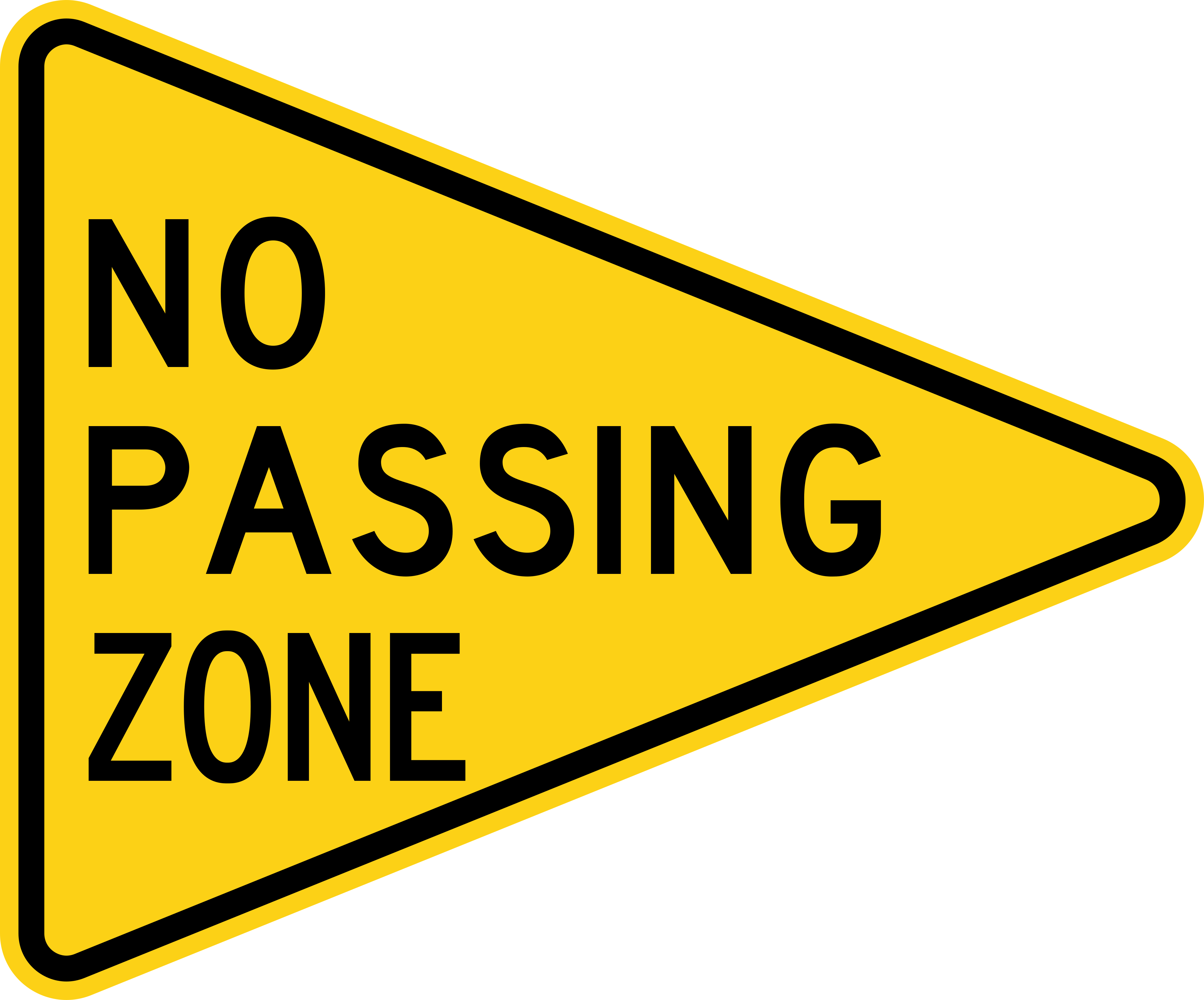
Question 34On which side of the road is the triangular No Passing Zone sign placed?
Show answer
D: The left side. The triangular No Passing Zone sign is yellow or orange and placed on the left side of the roadway. Tennessee Comprehensive Driver License Manual: Section B-3: Traffic Signs: Regulatory Signs, page 51.
-
Question 35Tennessee's emergency reference markers on urban interstates are placed how often?
Show answer
A: Every 1,000 feet. Interstate reference markers are installed every 1,000 feet along heavily traveled urban sections to help callers report their exact location. Tennessee Comprehensive Driver License Manual: Section B-3: Emergency Reference Markers, page 55.
-
Question 36What is the minimum time Tennessee law requires a yellow light to be shown before red?
Show answer
B: 3 seconds. Tennessee law only requires the yellow light to be displayed for a minimum of three seconds before the red light. Tennessee Comprehensive Driver License Manual: Section B-3: Traffic Signals, page 55.
-
Question 37A traffic signal at an intersection is not working. How does Tennessee law say to treat it?
Show answer
A: As an all-way stop. Tennessee law requires that an intersection with a non-working signal be treated as an all-way stop. Tennessee Comprehensive Driver License Manual: Section B-3: Traffic Signals: Malfunctioning Traffic Light, page 55.
-
Question 38You notice a yellow line on your right and a white line on your left. What does this mean?
Show answer
B: You are going the wrong way. If you ever have yellow to your right and white to your left, you are going the wrong way. Tennessee Comprehensive Driver License Manual: Section B-3: General Principles of Pavement Lane Markings, page 56.
-
Question 39May you cross double solid yellow lines to turn into a driveway?
Show answer
A: Yes, if it is safe to do so. You may not cross two solid yellow lines to pass, but you may cross them to turn into a driveway or side road if safe. Tennessee Comprehensive Driver License Manual: Section B-3: General Principles of Pavement Lane Markings, page 56.
-
Question 40When must Tennessee drivers use headlights at night?
Show answer
C: From 30 minutes after sunset until 30 minutes before sunrise. Headlights must be on from 30 minutes after sunset until 30 minutes before sunrise. Tennessee Comprehensive Driver License Manual: Section B-4 Rules of the Road: Use of Headlights, page 59.
-
Question 41In Tennessee daytime driving, when must your headlights be on?
Show answer
C: When you cannot clearly see persons or vehicles 200 feet ahead, or when precipitation requires constant wiper use. Headlights are required when daylight is not enough to see persons or vehicles clearly 200 feet ahead, and when rain, mist or snow requires constant wiper use. Tennessee Comprehensive Driver License Manual: Section B-4 Rules of the Road: Use of Headlights, page 59.
-
Question 42Within what distance of an oncoming vehicle must you dim your high beams in Tennessee?
Show answer
C: 500 feet. Dim high beams when an oncoming vehicle is within 500 feet, and also when following another vehicle within 500 feet. Tennessee Comprehensive Driver License Manual: Section B-4 Rules of the Road: Use of Headlights, page 59.
-
Question 43Unless otherwise posted, what is the speed limit on Tennessee primary and secondary state and federal highways?
Show answer
B: 55 mph. Unless otherwise posted, the speed limit on primary and secondary state and federal highways is 55 mph. Tennessee Comprehensive Driver License Manual: Section B-4: Tennessee Speed Laws, page 61.
-
Question 44What is the maximum speed set by Tennessee law for interstate highways?
Show answer
C: 70 mph. The maximum interstate speed set by Tennessee law is 70 mph, posted on most rural sections; urban sections are typically 55 mph. Tennessee Comprehensive Driver License Manual: Section B-4: Tennessee Speed Laws: Interstate Speed Limits, page 61.
-
Question 45What is the minimum speed in the right lane(s) of Tennessee interstates under normal conditions?
Show answer
C: 45 mph. On interstates, the minimum speed limit in the right lane(s) is 45 mph under normal conditions. Tennessee Comprehensive Driver License Manual: Section B-4: Tennessee Speed Laws: Interstate Speed Limits, page 61.
-
Question 46Below what speed is it unlawful to drive in the left-most lane of a Tennessee interstate, unless congestion prevents it?
Show answer
C: 55 mph. It is unlawful to drive less than 55 mph in the left-most lane of an interstate unless traffic congestion prevents it. Tennessee Comprehensive Driver License Manual: Section B-4: Tennessee Speed Laws: Interstate Speed Limits, page 61.
-
Question 47How does Tennessee law treat exceeding the school zone speed limit?
Show answer
B: As reckless driving, with six points added to your record. Exceeding the school zone speed limit is considered reckless driving by law, with an automatic six points on your record. Tennessee Comprehensive Driver License Manual: Section B-4: Tennessee Speed Laws: Speeding in School Zones, page 61.
-
Question 48What fine does Tennessee law mandate for speeding in an active work zone?
Show answer
C: $250 to $500. Tennessee law mandates a minimum fine of $250 and up to $500 for violating the posted speed limit in active work zones. Tennessee Comprehensive Driver License Manual: Section B-4: Tennessee Speed Laws: Speeding in Highway Work Zones, page 61.
-
Question 49In Tennessee, at what speed below the maximum limit are you considered a slow-moving vehicle?
Show answer
B: 10 mph or more below. Traveling 10 mph or more below the lawful maximum makes you a slow-moving vehicle; if five or more vehicles line up behind you, pull off when safe. Tennessee Comprehensive Driver License Manual: Section B-4 Rules of the Road: Slow-Moving Vehicles, page 60.
-
Question 50You are driving slowly and five or more vehicles are lined up behind you. What should you do?
Show answer
B: Turn or pull off the roadway as soon as it is safe. If five or more vehicles are lined up behind you, turn or pull off the roadway as soon as you can do so safely. Tennessee Comprehensive Driver License Manual: Section B-4 Rules of the Road: Slow-Moving Vehicles, page 60.
-
Question 51At 70 mph on a good road in good weather, about what total distance does the manual say it takes to stop, including seeing a hazard and moving to the brake?
Show answer
C: About 418 feet. In the manual's example, you travel 128 feet before braking and 290 feet braking at 70 mph, a total of about 418 feet. Tennessee Comprehensive Driver License Manual: Section B-4: Braking, Following and Stopping Distances: Stopping Distances, page 63.
-
Question 52According to the National Safety Council figure in the manual, about how far does a lightweight passenger car at 50 mph need to stop?
Show answer
A: About 200 feet. The manual cites the National Safety Council: a lightweight passenger car at 50 mph can stop in about 200 feet. Tennessee Comprehensive Driver License Manual: Section B-4: Braking, Following and Stopping Distances: Stopping Distances, page 63.
-
Question 53What is the average reaction time (from seeing danger to starting to brake) given in the Tennessee manual?
Show answer
D: About 2/3 of a second. Reaction time, from perceiving danger to starting to brake, averages about 2/3 of a second. Tennessee Comprehensive Driver License Manual: Section B-4: Braking, Following and Stopping Distances: Stopping Distances, page 63.
-
Question 54Under what conditions should you increase your following distance to at least four seconds?
Show answer
B: In bad weather, at higher interstate speeds, at night, and when following a motorcycle. In inclement weather, higher-speed interstate driving, night driving, and when following a motorcycle, use a minimum of four seconds. Tennessee Comprehensive Driver License Manual: Section B-4: Braking, Following and Stopping Distances: The Two-Second Rule, page 63.
-
Question 55When a train is approaching a railroad crossing, how far from the tracks must you stop in Tennessee?
Show answer
B: Between 15 and 50 feet. You must stop between 15 and 50 feet from the tracks when a train is coming, and never stop on the tracks. Tennessee Comprehensive Driver License Manual: Section B-4: Braking, Following and Stopping Distances: Stopping for Railroad Crossings, page 64.
-
Question 56About how far from a crossing are trains required to sound their horn?
Show answer
A: About 1,500 feet. Trains are required to signal with a horn when about 1,500 feet from a railroad crossing. Tennessee Comprehensive Driver License Manual: Section B-4: Braking, Following and Stopping Distances: Stopping for Railroad Crossings, page 64.
-
Question 57What is the fine range in Tennessee for failing to stop for a stopped school bus?
Show answer
C: $250 to $1,000. It is a Class A misdemeanor with a fine between $250 and $1,000. Tennessee Comprehensive Driver License Manual: Section B-4: The School Bus Stop Law, page 65.
-
Question 58On a four-lane highway with a center turn lane, you meet a stopped school bus with red lights flashing. Must you stop?
Show answer
B: Yes, a center turn lane is not a barrier, so traffic in both directions must stop. A middle turn lane is not a barrier but a fifth lane usable by vehicles, so drivers in both directions must stop. Tennessee Comprehensive Driver License Manual: Section B-4: The School Bus Stop Law, page 65.
-
Question 59A blind pedestrian with a white cane is crossing. How far away should you stop until they are off the roadway?
Show answer
A: At least 10 feet. Stop at least 10 feet away until the visually impaired person is off the roadway, and do not use your horn. Tennessee Comprehensive Driver License Manual: Section B-4: Right-of-Way Procedures, page 67.
-
Question 60About what share of all motor vehicle crashes are intersection-related, according to the manual?
Show answer
A: About 33%. Intersections are implicated in 33 percent of all motor vehicle crashes and 21 percent of fatal crashes. Tennessee Comprehensive Driver License Manual: Section B-4: Intersections, page 66.
-
Question 61How far before a turn must you turn on your turn signal in Tennessee?
Show answer
A: At least 50 feet. The Tennessee manual says you must turn on your turn signal at least 50 feet before the turn or lane change. Tennessee Comprehensive Driver License Manual: Section B-4: Turning, page 70.
-
Question 62When may you turn left on a red light in Tennessee?
Show answer
C: From a one-way street onto a one-way street moving in the direction of the turn, after a complete stop, unless posted. A left on red is permitted where a one-way street meets another one-way street going in the direction of the turn, after a complete stop, unless prohibited. Tennessee Comprehensive Driver License Manual: Section B-4: Turning: Turns Permitted on Red, page 72.
-
Question 63May you turn left on red from a one-way street onto a two-way street?
Show answer
A: No, you cannot make this left turn on red. Turning left from a one-way street onto a two-way street cannot be made on a red light. Tennessee Comprehensive Driver License Manual: Section B-4: Turning, page 71.
-
Question 64What speed is usually posted within a roundabout?
Show answer
B: 15 to 25 mph. Within a roundabout, proceed at a slower speed, usually posted at 15 to 25 mph. Tennessee Comprehensive Driver License Manual: Section B-4: Turning: Special Turns: Roundabouts, page 73.
-
Question 65A U-turn is prohibited where you cannot see traffic coming from both directions for at least how far?
Show answer
C: 500 feet. You may not make a U-turn where you cannot see traffic coming from both directions for at least 500 feet each way. Tennessee Comprehensive Driver License Manual: Section B-4: Turning: U-Turns, page 73.
-
Question 66How far may you travel in a shared center (two-way left) turn lane?
Show answer
C: Up to 300 feet. Shared center turn lanes cannot be used for passing or for travel farther than 300 feet. Tennessee Comprehensive Driver License Manual: Section B-4: Traffic Lanes and Lane Usage: Shared Center Turn/Two-Way Left Turn Lane, page 74.
-
Question 67Over a reversible lane, what does a steady yellow X mean?
Show answer
B: The lane's use is changing; move out of it as soon as safe. A steady yellow X means the use or direction of the lane is changing, so move out of it as soon as it is safe. Tennessee Comprehensive Driver License Manual: Section B-4: Traffic Lanes and Lane Usage: Reversible Lanes, page 75.
-
Question 68Over a reversible lane, what does a flashing yellow X mean?
Show answer
D: The lane is only for turning. A flashing yellow X means the lane is only for turning; a green arrow means you may drive in it and a red X means you may not. Tennessee Comprehensive Driver License Manual: Section B-4: Traffic Lanes and Lane Usage: Reversible Lanes, page 75.
-
Question 69If you pass several vehicles at once, you must be able to return to the right lane before coming within how far of a no-passing marking or oncoming vehicle?
Show answer
B: 100 feet. Passing multiple vehicles is not illegal but is only advised if you can return before coming within 100 feet of no-passing markings or oncoming vehicles. Tennessee Comprehensive Driver License Manual: Section B-4: Passing Other Vehicles, page 76.
-
Question 70On a multi-lane road, how far before a crosswalk should you stop for a pedestrian so you don't block other drivers' view?
Show answer
D: About 30 feet. When stopping for a crosswalk on a multi-lane road, stop about 30 feet before it so you don't block other lanes' view of the pedestrian. Tennessee Comprehensive Driver License Manual: Section B-4: Passing Other Vehicles: No Passing, page 77.
-
Question 71What minimum distance does Tennessee law require when passing a bicyclist going the same direction?
Show answer
C: 3 feet. When passing a bicyclist, pass slowly and leave at least 3 feet, maintaining that clearance until safely past. Tennessee Comprehensive Driver License Manual: Section B-4: Passing Other Vehicles: Passing Bicycles, page 77.
-
Question 72In Tennessee, how close to a fire hydrant may you park?
Show answer
B: No closer than 15 feet. It is illegal to park within 15 feet of a fire hydrant. Tennessee Comprehensive Driver License Manual: Section B-4: Backing and Parking: No Parking Zones, page 79.
-
Question 73In Tennessee, how close to a crosswalk may you park?
Show answer
A: No closer than 20 feet. Parking is illegal within 20 feet of a crosswalk or in the crosswalk area. Tennessee Comprehensive Driver License Manual: Section B-4: Backing and Parking: No Parking Zones, page 79.
-
Question 74In Tennessee, how close may you park to a traffic signal, stop sign or other traffic control device?
Show answer
C: No closer than 30 feet. It is illegal to park within 30 feet of a traffic signal, stop sign or other traffic control device. Tennessee Comprehensive Driver License Manual: Section B-4: Backing and Parking: No Parking Zones, page 79.
-
Question 75In Tennessee, how close to a railroad crossing may you park?
Show answer
D: No closer than 50 feet. Parking within 50 feet of a railroad crossing is illegal. Tennessee Comprehensive Driver License Manual: Section B-4: Backing and Parking: No Parking Zones, page 79.
-
Question 76On the same side of the street as a fire station driveway, how close may you park?
Show answer
A: No closer than 20 feet. You may not park within 20 feet of a fire station driveway on the same side, or within 75 feet of it on the opposite side. Tennessee Comprehensive Driver License Manual: Section B-4: Backing and Parking: No Parking Zones, page 79.
-
Question 77On the opposite side of the street from a fire station driveway, how close may you park?
Show answer
C: 75 feet. On the other side of the street, you may not park within 75 feet of the fire station driveway. Tennessee Comprehensive Driver License Manual: Section B-4: Backing and Parking: No Parking Zones, page 79.
-
Question 78When parking beside a roadway outside city limits, how much road width must you leave for other traffic?
Show answer
C: At least 18 feet. Outside city limits, get all four wheels off the pavement if possible and leave at least 18 feet of road width; the car must be visible 200 feet in each direction. Tennessee Comprehensive Driver License Manual: Section B-4: Backing and Parking: Routine Parking Regulations, page 79.
-
Question 79When parked beside a rural roadway, from how far away must your vehicle be visible in each direction?
Show answer
B: 200 feet. Your parked vehicle must be visible for at least 200 feet in either direction. Tennessee Comprehensive Driver License Manual: Section B-4: Backing and Parking: Routine Parking Regulations, page 79.
-
Question 80How far from the curb may your car be after parallel parking?
Show answer
B: No farther than 18 inches. After parallel parking, the vehicle should be no farther than 18 inches from the curb. Tennessee Comprehensive Driver License Manual: Section B-4: Backing and Parking: Parallel Parking, page 80.
-
Question 81You park uphill next to a curb. Which way should your front wheels point?
Show answer
A: Away from the curb (left). Uphill with a curb, turn the wheels away from the curb so the car rolls back into the curb. Tennessee Comprehensive Driver License Manual: Section B-4: Backing and Parking: When Parking on a Hill, page 79.
-
Question 82You park uphill on a road with no curb. Which way should your wheels point?
Show answer
C: Toward the edge of the roadway (right). Uphill without a curb, turn the wheels toward the edge of the road (right) so the car rolls away from traffic if the brakes fail. Tennessee Comprehensive Driver License Manual: Section B-4: Backing and Parking: When Parking on a Hill, page 79.
-
Question 83What is the penalty for illegally parking in a handicap space in Tennessee?
Show answer
C: A misdemeanor with a $100 fine, and the vehicle may be towed. Improperly parking in a handicap space is a misdemeanor punishable by a $100 fine, and the vehicle may be towed. Tennessee Comprehensive Driver License Manual: Section B-4: Backing and Parking: Handicap Parking Spaces, page 80.
-
Question 84How far ahead should you scan when driving on the interstate?
Show answer
C: 15-20 seconds. Scan the roadway and try to watch 15-20 seconds in front of your vehicle for cars braking, entering or exiting. Tennessee Comprehensive Driver License Manual: Section B-5 Interstate Driving: Driving on the Interstate, page 83.
-
Question 85What are the HOV lane hours on Tennessee interstates described in the manual?
Show answer
B: 7-9 a.m. and 4-6 p.m.. HOV restrictions apply during high inbound traffic (7-9 a.m.) and high outbound traffic (4-6 p.m.); at other times the lane is general purpose. Tennessee Comprehensive Driver License Manual: Section B-5 Interstate Driving: High Occupancy Vehicle (HOV) Lanes, page 83.
-
Question 86What is the fine for violating Tennessee HOV lane rules?
Show answer
B: $50 plus court costs. Drivers violating the HOV lane rules are subject to a $50 fine and court costs. Tennessee Comprehensive Driver License Manual: Section B-5 Interstate Driving: High Occupancy Vehicle (HOV) Lanes, page 83.
-
Question 87At a diamond interchange, where will the left-turn entrance ramp onto the interstate be found?
Show answer
D: After crossing over or under the interstate. At a diamond interchange, the right-turn entrance ramp comes before crossing the interstate and the left-turn entrance ramp comes after crossing it. Tennessee Comprehensive Driver License Manual: Section B-5 Interstate Driving: Diamond Interchange, page 84.
-
Question 88How often does the Tennessee manual suggest stopping on long interstate drives?
Show answer
B: At least every two hours or about every 100 miles. Take a break and get out of the car at least every two hours or every 100 miles or so. Tennessee Comprehensive Driver License Manual: Section B-5 Interstate Driving: Fight Interstate Hypnosis, page 85.
-
Question 89What is the maximum number of hours per day the manual says is safest to drive?
Show answer
D: Eight. It is safest for you and others not to drive more than eight hours per day. Tennessee Comprehensive Driver License Manual: Section B-5 Interstate Driving: Fight Interstate Hypnosis, page 85.
-
Question 90Under Tennessee's Move Over Law, a stationary emergency vehicle is on the left shoulder of a four-lane interstate. What should you do?
Show answer
B: Move into the right lane so the left lane stays clear, if safe. The rule applies on either side: if the vehicle is on the left shoulder, merge into the right lane, freeing the left lane as a safety barrier. Tennessee Comprehensive Driver License Manual: Section B-5 Interstate Driving: Move Over Law, page 86.
-
Question 91What number can you dial from a cell phone in Tennessee to reach the Highway Patrol at no charge?
Show answer
A: *THP (*847). Dial *THP (*847) to connect at no charge with the nearest Tennessee Highway Patrol dispatcher. Tennessee Comprehensive Driver License Manual: Section B-5 Interstate Driving: *THP – A Free Cell Phone Call for Help, page 87.
-
Question 92How far ahead must your headlights let you clearly see a person on the highway, by law?
Show answer
D: At least 200 feet. The law requires headlights that let you see clearly any person on the highway at least 200 feet ahead. Tennessee Comprehensive Driver License Manual: Section B-6: Driving at Night, page 88.
-
Question 93How much can stopping distance increase when hydroplaning?
Show answer
C: It may be tripled. When hydroplaning, stopping distances may be tripled and steering may be reduced or lost. Tennessee Comprehensive Driver License Manual: Section B-6: Driving in Inclement Weather Conditions: Hydroplaning, page 90.
-
Question 94Most cars can be swept away in about how much moving water?
Show answer
B: 18 to 24 inches. Most cars can be swept away in 18 to 24 inches of moving water; trucks and SUVs have only six to twelve inches more clearance. Tennessee Comprehensive Driver License Manual: Section B-6: High Water and Flooding Dangers, page 90.
-
Question 95What can happen if a Tennessee driver knowingly ignores flood barricades and drives into a flooded road?
Show answer
B: They can be charged with reckless driving and made to pay rescue costs. Knowingly ignoring flood warnings or barricades can lead to a reckless driving charge and paying the cost of the rescue. Tennessee Comprehensive Driver License Manual: Section B-6: High Water and Flooding Dangers, page 91.
-
Question 96At 20 mph on a low-traction surface, how far can it take to stop?
Show answer
D: 200 feet or more. Low traction can increase stopping distance to 200 feet or more at 20 mph. Tennessee Comprehensive Driver License Manual: Section B-6: Driving in Winter Weather Conditions, page 92.
-
Question 97By Tennessee law, at least what share of knowledge test questions must deal with alcohol and drugs?
Show answer
B: 25 percent. By law, at least 25 percent of knowledge test questions must deal with driving under the influence of drugs or alcohol. Tennessee Comprehensive Driver License Manual: Section B-7 Alcohol, Other Drugs and Driving, page 93.
-
Question 98How soon after drinking does alcohol begin to be absorbed into the bloodstream?
Show answer
D: Within one to two minutes. Alcohol begins to be absorbed into the bloodstream within one to two minutes after drinking. Tennessee Comprehensive Driver License Manual: Section B-7 Alcohol, Other Drugs and Driving: How Does Alcohol Affect the Body?, page 93.
-
Question 99What BAC level is always illegal for adult drivers in Tennessee?
Show answer
D: .08. In Tennessee, .08 is the level of intoxication that is always illegal for drivers. Tennessee Comprehensive Driver License Manual: Section B-7 Alcohol, Other Drugs and Driving: What Is Blood Alcohol Concentration (BAC)?, page 93.
-
Question 100A BAC of .08 means how many drops of alcohol per 10,000 drops of blood?
Show answer
A: Eight. A BAC of .08 means there are eight drops of alcohol for every 10,000 drops of blood. Tennessee Comprehensive Driver License Manual: Section B-7 Alcohol, Other Drugs and Driving: What Is Blood Alcohol Concentration (BAC)?, page 93.
-
Question 101About what percentage of the alcohol in the body does the liver oxidize?
Show answer
C: About 90%. The liver oxidizes approximately 90 percent of the alcohol in the body, which is why it is so vulnerable. Tennessee Comprehensive Driver License Manual: Section B-7 Alcohol, Other Drugs and Driving: Overall Condition of the Body, page 93.
-
Question 102With a BAC of .10, how much more likely are you to cause a crash than when sober?
Show answer
D: Seven times. At .10 BAC you are seven times more likely to cause a crash; at .15, 25 times; at .17, 50 times. Tennessee Comprehensive Driver License Manual: Section B-7 Alcohol, Other Drugs and Driving: Relationship of Alcohol to Traffic Crashes, page 93.
-
Question 103At a BAC of .15, how much does your chance of causing a crash increase?
Show answer
C: 25 times. At .15 BAC, your chance of causing a crash increases to 25 times that of a sober driver. Tennessee Comprehensive Driver License Manual: Section B-7 Alcohol, Other Drugs and Driving: Relationship of Alcohol to Traffic Crashes, page 93.
-
Question 104About what share of Americans will be involved in an alcohol-related crash at some time in their lives?
Show answer
C: 2 in 5 (40%). It is estimated that two in every five Americans (40%) will be involved in an alcohol-related crash in their lifetime. Tennessee Comprehensive Driver License Manual: Section B-7 Alcohol, Other Drugs and Driving: Impaired Driving, page 93.
-
Question 105At what BAC levels does research show driving skills, judgment and vision are greatly impaired, especially for young drinkers?
Show answer
C: .03 and .04. Research shows driving skills, judgment and vision are greatly impaired at BAC levels as low as .03 and .04, especially for young drinkers. Tennessee Comprehensive Driver License Manual: Section B-7: Alcohol's Effects on Driving Ability, page 94.
-
Question 106At a BAC of .05, about how much is side vision reduced?
Show answer
C: About 30 percent. Side vision is reduced by about 30 percent at .05 BAC. Tennessee Comprehensive Driver License Manual: Section B-7: Alcohol's Effects on Driving Ability: Vision, page 94.
-
Question 107About how much of the information used in driving comes from the eyes?
Show answer
A: Almost 90 percent. The eyes provide almost 90 percent of the information used in driving. Tennessee Comprehensive Driver License Manual: Section B-7: Alcohol's Effects on Driving Ability: Vision, page 94.
-
Question 108At what BAC are reaction time and coordination already impaired?
Show answer
C: As low as .02. Reaction and coordination are impaired by alcohol consumption as low as .02 BAC. Tennessee Comprehensive Driver License Manual: Section B-7: Alcohol's Effects on Driving Ability: Reaction Time and Coordination, page 94.
-
Question 109Can you be convicted of DUI in Tennessee with a BAC below .08?
Show answer
A: Yes, even at .00 if impaired by drugs. A driver can register .00 BAC and still be convicted of DUI if impaired; a BAC below .08 does not clear a driver. Tennessee Comprehensive Driver License Manual: Section B-7 Alcohol, Other Drugs and Driving: Driving Under the Influence (DUI Law), page 95.
-
Question 110Under Tennessee's implied consent law, what is the likely result of refusing a requested test after arrest?
Show answer
A: Court suspension of driving privileges for 12 months. Refusing the test after arrest will likely result in the court suspending your driving privileges for twelve months. Tennessee Comprehensive Driver License Manual: Section B-7 Alcohol, Other Drugs and Driving: Implied Consent Law, page 95.
-
Question 111What does a Tennessee DUI conviction require as a condition of probation?
Show answer
A: Litter pick-up for three eight-hour shifts while wearing an 'I am a DRUNK DRIVER' vest. A DUI conviction requires litter pick-up for three eight-hour shifts while wearing clothing displaying 'I am a DRUNK DRIVER'. Tennessee Comprehensive Driver License Manual: Section B-7: Penalties Applying to Any DUI Conviction, page 95.
-
Question 112Under Tennessee's Drunk Driving Child Protection Act, what is added when a DUI offender has a child under 18 in the vehicle?
Show answer
C: A mandatory minimum 30 days in jail and $1,000 fine. DUI with a child under 18 in the vehicle adds a mandatory minimum 30-day jail sentence and a $1,000 minimum fine. Tennessee Comprehensive Driver License Manual: Section B-7: Penalties Applying to Any DUI Conviction, page 96.
-
Question 113What is the minimum jail time for a first DUI conviction in Tennessee?
Show answer
B: 48 hours (7 days if BAC is 0.20% or more). A first DUI conviction carries 48 hours in jail, or 7 days if the BAC is 0.20% or more. Tennessee Comprehensive Driver License Manual: Section B-7: DUI Penalties, page 96.
-
Question 114What is the license revocation period for a first DUI conviction in Tennessee?
Show answer
D: One year. The DUI penalty table lists a 1-year license revocation for a first conviction and 2 years for a second. Tennessee Comprehensive Driver License Manual: Section B-7: DUI Penalties, page 96.
-
Question 115What fine range applies to a first DUI conviction in Tennessee?
Show answer
B: $350-$1,500. The first-conviction fine range is $350 to $1,500. Tennessee Comprehensive Driver License Manual: Section B-7: DUI Penalties, page 96.
-
Question 116How is a fourth or subsequent DUI conviction classified in Tennessee?
Show answer
A: A Class E felony. A fourth or subsequent DUI conviction is a Class E felony. Tennessee Comprehensive Driver License Manual: Section B-7: DUI Penalties, page 96.
-
Question 117When will a Tennessee driver's vehicle be seized for DUI?
Show answer
A: With two DUI convictions within five years, both after January 1997. The vehicle will be seized if the driver has two DUI convictions within five years and both happened after January 1997. Tennessee Comprehensive Driver License Manual: Section B-7: Additional DUI Penalties, page 96.
-
Question 118A 19-year-old is convicted of possessing alcohol, though not driving. What happens to their driving privilege?
Show answer
D: They lose it for one year (two years for a second offense). Ages 18-20 convicted of buying, trying to buy or possessing alcohol lose the privilege to drive for one year (two years on a second offense), even if not driving. Tennessee Comprehensive Driver License Manual: Section B-7: Under 21 Laws, page 97.
-
Question 119A 15-year-old is found to have possessed alcohol. What happens to their driving privilege?
Show answer
A: Suspended for one year or until age 17, whichever is longer. Ages 13-17 found possessing, consuming or selling alcohol or drugs lose driving privileges for one year or until 17, whichever is longer—even if never licensed. Tennessee Comprehensive Driver License Manual: Section B-7: Under 21 Laws, page 97.
-
Question 120What BAC makes a Tennessee driver age 16-20 guilty of underage driving while impaired?
Show answer
D: .02. A driver at least 16 but under 21 found driving with a BAC of .02 (or under the influence) is convicted of underage driving while impaired. Tennessee Comprehensive Driver License Manual: Section B-7: Under 21 Laws, page 97.
-
Question 121What are the penalties for underage driving while impaired in Tennessee?
Show answer
A: Loss of license for one year, a $250 fine, and sometimes public service. Penalties are losing your license for one year, a $250 fine, and sometimes public service work. Tennessee Comprehensive Driver License Manual: Section B-7: Under 21 Laws, page 97.
-
Question 122A 12-ounce bottle of beer contains about the same alcohol as:
Show answer
C: A 1-ounce shot of whiskey. The alcohol in one 12-ounce beer is about equal to that in a 1-ounce shot of whiskey. Tennessee Comprehensive Driver License Manual: Section B-7: Did You Know?, page 97.
-
Question 123About how long does it take to cancel the effects of three drinks?
Show answer
C: About three hours. It takes about one hour to cancel the effects of one drink, so about three hours for three drinks. Tennessee Comprehensive Driver License Manual: Section B-7: Did You Know?, page 97.
-
Question 124According to the manual, alcohol-related vehicle crashes are the number one killer of people under what age?
Show answer
D: Under 40. Alcohol-related vehicle crashes are the number one killer of persons under the age of 40. Tennessee Comprehensive Driver License Manual: Section B-7: Did You Know?, page 97.
-
Question 125Between 10 p.m. and 2 a.m., researchers estimate about how many drivers are intoxicated?
Show answer
B: 1 in 10. Researchers estimate that between 10 p.m. and 2 a.m., 1 of every 10 drivers is intoxicated. Tennessee Comprehensive Driver License Manual: Section B-7 Alcohol, Other Drugs and Driving: Alcohol and You, page 93.
-
Question 126An adult Tennessee driver who accumulates how many points within 12 months receives a notice of proposed suspension?
Show answer
C: 12 or more. Adults (18+) with 12 or more points within 12 months get a notice of proposed suspension; 6 to 11 points brings an advisory letter. Tennessee Comprehensive Driver License Manual: Section B-8 Driving Responsibilities: Driver Improvement Program, page 100.
-
Question 127A Tennessee driver under 18 receives a notice of proposed suspension at how many points within 12 months?
Show answer
B: 6 or more. Juvenile drivers with 6 or more points within 12 months receive a notice of proposed suspension; 1-5 points brings an advisory letter. Tennessee Comprehensive Driver License Manual: Section B-8 Driving Responsibilities: Driver Improvement Program, page 100.
-
Question 128How often can a Tennessee driver use the Defensive Driving Course option to avoid or reduce a suspension?
Show answer
B: Once in any five-year period. The Defensive Driving Course option is only available once in any five-year period. Tennessee Comprehensive Driver License Manual: Section B-8 Driving Responsibilities: Driver Improvement Program, page 100.
-
Question 129Within how many days must a suspended or revoked Tennessee license be turned in to the Department of Safety?
Show answer
B: 20 days. A suspended or revoked license must be turned in within 20 days; failure to surrender it brings a $75 fine. Tennessee Comprehensive Driver License Manual: Section B-8 Driving Responsibilities: Losing Your Privilege to Drive, page 99.
-
Question 130For a Tennessee driver under 18, what counts as dropping out of school for license purposes?
Show answer
A: 10 consecutive or 15 total days of unexcused absences in a semester. Dropping out is defined as 10 consecutive or 15 total days of unexcused absences in a semester. Tennessee Comprehensive Driver License Manual: Section B-8 Driving Responsibilities: Losing Your Privilege to Drive, page 99.
-
Question 131How many points does Tennessee assign for passing a stopped school bus loading or unloading passengers?
Show answer
D: 8 points. Passing a stopped school, church or youth bus taking on or discharging passengers is 8 points. Tennessee Comprehensive Driver License Manual: Section B-8: Points for Moving Traffic Violations and Crashes, page 101.
-
Question 132How many points does Tennessee assign for reckless driving?
Show answer
C: 6 points. Reckless driving is 6 points; reckless endangerment by vehicle is 8 points. Tennessee Comprehensive Driver License Manual: Section B-8: Points for Moving Traffic Violations and Crashes, page 101.
-
Question 133How many points does a driver under 18 get for operating a vehicle while using a cell phone in Tennessee?
Show answer
C: 6. Operating a vehicle while using a cell phone (under 18) is 6 points. Tennessee Comprehensive Driver License Manual: Section B-8: Points for Moving Traffic Violations and Crashes, page 101.
-
Question 134How many points are assigned for failure to stop at a railroad crossing in Tennessee?
Show answer
D: 8. Failure to stop at a railroad crossing is 8 points. Tennessee Comprehensive Driver License Manual: Section B-8: Points for Moving Traffic Violations and Crashes, page 101.
-
Question 135How many points does Tennessee assign for speeding 6 through 15 mph over the limit (outside a construction zone)?
Show answer
B: 3. Speeding 6-15 mph over is 3 points (4 points in a construction zone). Tennessee Comprehensive Driver License Manual: Section B-8: Points for Moving Traffic Violations and Crashes, page 101.
-
Question 136How many points are assigned for contributing to a crash resulting in bodily injury?
Show answer
C: 4. Contributing to a crash: property damage 3 points, bodily injury 4 points, death of another person 8 points. Tennessee Comprehensive Driver License Manual: Section B-8: Points for Moving Traffic Violations and Crashes, page 101.
-
Question 137In Tennessee, you must immediately notify police of any crash involving death, injury or property damage over what amount?
Show answer
A: $50. Drivers must immediately notify local police, the sheriff or the Highway Patrol of any crash involving death, injury or property damage over $50. Tennessee Comprehensive Driver License Manual: Section B-8 Driving Responsibilities: Reporting Crashes, page 103.
-
Question 138A crash that injures someone or causes over $400 in property damage to any one person is 'reportable.' Within how many days must the Owner/Driver Report be filed?
Show answer
C: 20 days. For a reportable crash (injury, death or over $400 damage to one person's property), file an Owner/Driver Report with the Department within 20 days. Tennessee Comprehensive Driver License Manual: Section B-8 Driving Responsibilities: Reporting Crashes, page 103.
-
Question 139What property damage amount makes a Tennessee crash 'reportable' to the Department of Safety?
Show answer
A: Over $400 to any one person's property. Reportable crashes include any in which someone is killed or injured or property damage to any one person exceeds $400. Tennessee Comprehensive Driver License Manual: Section B-8 Driving Responsibilities: Reporting Crashes, page 103.
-
Question 140Drivers who lose consciousness due to epilepsy or similar conditions must be seizure/lapse-free for how long before reinstatement?
Show answer
C: Six months. Drivers who lose consciousness or control from epilepsy, cardiac syncope, diabetes or similar conditions must be lapse-free at least six months. Tennessee Comprehensive Driver License Manual: Section B-8 Driving Responsibilities: Physical or Mental Disabilities, page 102.
-
Question 141According to research cited in the manual, who causes about two-thirds of car-motorcycle collisions?
Show answer
B: The car driver who turned in front of the motorcycle. Two-thirds of car-motorcycle collisions are caused by the car driver who turned in front of the motorcycle, often not seeing it. Tennessee Comprehensive Driver License Manual: Section C: Sharing the Road with Motorcycles, page 121.
-
Question 142About how far does a truck at 55 mph need to stop, compared with a car?
Show answer
C: About 450+ feet, versus about 240 feet for a car. A car at 55 mph can stop in about 240 feet, but a truck at the same speed needs about 450+ feet. Tennessee Comprehensive Driver License Manual: Section C: Sharing the Road with Large Trucks and Buses, page 123.
-
Question 143How much can a loaded tractor-trailer weigh?
Show answer
D: Up to 80,000 pounds (40 tons). A typical loaded tractor-trailer may weigh up to 80,000 pounds, or 40 tons, and exceed 70 feet long. Tennessee Comprehensive Driver License Manual: Section C: Sharing the Road with Large Trucks and Buses, page 123.
-
Question 144How far behind a truck can its rear blind spot extend?
Show answer
D: Up to 200 feet. A truck's blind spots are immediately in front, on either side, and up to 200 feet in the rear. Tennessee Comprehensive Driver License Manual: Section C: Sharing the Road with Large Trucks and Buses, page 123.
-
Question 145When lights are required on a slow-moving vehicle, how far to the rear should its red lamp be visible?
Show answer
C: 500 feet. A self-luminous red lamp on the rear of a slow-moving vehicle is normally visible for 500 feet to the rear. Tennessee Comprehensive Driver License Manual: Section C: Sharing the Road with Slow Moving Vehicles and Equipment, page 126.
-
Question 146About how far does a train traveling 55 mph need to stop?
Show answer
B: A full mile. A train traveling at 55 mph takes a full mile to stop. Tennessee Comprehensive Driver License Manual: Section C: Sharing the Road with Trains, page 127.
Answer every question to see your score.
Remembering the numbers
Most mistakes on the Tennessee TDOSHS test are about specifics: how many feet before a turn to signal, how far to park from a hydrant, the alcohol limit for drivers under 21. Write the numbers from these questions on a card and review them before the test, then take the exam simulator.