Tennessee TDOSHS permit practice test 6
25 questions written from the Tennessee Comprehensive Driver License Manual, covering alcohol and drugs, licensing laws and penalties, safe and defensive driving, road signs, signals and pavement markings and more. Pick an answer to see straight away whether you're right and why. The real Tennessee TDOSHS test has 30 questions and you need 24 right.
-
Question 1What effect does food in the stomach have on alcohol?
Show answer
A: It slows absorption, but all the alcohol still gets into the blood. All alcohol eventually reaches the blood whether or not you have eaten; food only slows absorption. Tennessee Comprehensive Driver License Manual: Section B-7 Alcohol, Other Drugs and Driving: Amount of Food in the Stomach, page 93.
-
Question 2Which is an allowed exception to the Tennessee Intermediate Restricted nighttime limit?
Show answer
A: Driving to or from work with written parent permission naming the workplace. Exceptions include driving to or from work with written parent or guardian permission identifying the workplace, among others. Tennessee Comprehensive Driver License Manual: Section A-3: Teen Driver FAQs, page 33.
-
Question 3Under Tennessee law, children ages four through eight who are under 4 feet 9 inches tall must ride:
Show answer
A: In a belt-positioning booster seat with a seat belt. Children four through eight and under 4'9" must use a belt-positioning booster seat and wear a seat belt. Tennessee Comprehensive Driver License Manual: Section B-2 Tennessee Safety Belt Laws: Child Safety Restraint Rules, page 45.
-
Question 4What does a round sign mean?

Show answer
C: Railroad crossing ahead. The circular sign always means you are approaching a railroad grade crossing; slow down and be ready to stop. Tennessee Comprehensive Driver License Manual: Section B-3: Traffic Signs: Round Shape — Railroad Ahead, page 50.
-
Question 5Under Tennessee law, who counts as a pedestrian?
Show answer
D: Any person afoot or using a motorized or non-motorized wheelchair. Tennessee defines a pedestrian as any person afoot or using a motorized or non-motorized wheelchair. Tennessee Comprehensive Driver License Manual: Section B-3: Traffic Signals: Pedestrian Signals, page 56.
-
Question 6At 70 mph on a good road in good weather, about what total distance does the manual say it takes to stop, including seeing a hazard and moving to the brake?
Show answer
C: About 418 feet. In the manual's example, you travel 128 feet before braking and 290 feet braking at 70 mph, a total of about 418 feet. Tennessee Comprehensive Driver License Manual: Section B-4: Braking, Following and Stopping Distances: Stopping Distances, page 63.
-
Question 7You see brake lights ahead on the interstate and must slow quickly. How can you warn drivers behind you?
Show answer
A: Lightly tap your brake pedal several times. If you spot a tie-up causing you to slow or stop, lightly tap your brake pedal several times to alert drivers behind you. Tennessee Comprehensive Driver License Manual: Section B-5 Interstate Driving: Driving on the Interstate, page 83.
-
Question 8A crash that injures someone or causes over $400 in property damage to any one person is 'reportable.' Within how many days must the Owner/Driver Report be filed?
Show answer
C: 20 days. For a reportable crash (injury, death or over $400 damage to one person's property), file an Owner/Driver Report with the Department within 20 days. Tennessee Comprehensive Driver License Manual: Section B-8 Driving Responsibilities: Reporting Crashes, page 103.
-
Question 9An emergency vehicle with siren and flashing lights approaches. What does Tennessee law require?
Show answer
D: Pull over parallel and as close as possible to the right edge or curb, stop, and stay until it passes. Drive to a position parallel and as close as possible to the right edge or curb, stop, and remain stopped until the emergency vehicle passes or an officer directs you. Tennessee Comprehensive Driver License Manual: Section B-4: Right-of-Way Procedures: Yield to Emergency Vehicles, page 68.
-
Question 10If you cannot see a truck's side mirrors while following it, what does that mean?
Show answer
B: The truck driver cannot see you, and you are following too closely. If you cannot see the side mirrors on the truck or bus you are following, the driver cannot see you and you are following too closely. Tennessee Comprehensive Driver License Manual: Section B-4: Passing Other Vehicles: Passing Trucks and Buses, page 78.
-
Question 11When turning left from a one-way street, which lane should you start from?
Show answer
C: The lane farthest to the left (nearest the left curb). When turning left from a one-way street, approach in the lane farthest to the left curb. Tennessee Comprehensive Driver License Manual: Section B-4: Turning, page 71.
-
Question 12How should you enter a Tennessee interstate from an on-ramp?
Show answer
B: Use the acceleration lane to reach interstate speed, signal, and merge when clear. Use the ramp and acceleration lane to reach interstate speed, give a left signal, and merge when the way is clear, yielding to traffic already on the interstate. Tennessee Comprehensive Driver License Manual: Section B-5 Interstate Driving: Entering the Interstate, page 82.
-
Question 13When starting to parallel park, how far from the car in front of the space should you be?
Show answer
A: No closer than two feet. Pull up even with the car in front of the space, with your rear bumper even with its bumper and no closer than two feet from it. Tennessee Comprehensive Driver License Manual: Section B-4: Backing and Parking: Parallel Parking, page 80.
-
Question 14In dense fog you can no longer see the road's edge. What should you do?
Show answer
A: Pull off as far right as possible, out of the traffic lane, and turn on emergency flashers. If you can't see the road's edge, pull off as far right as possible, well out of the lane, and turn on your emergency flashers. Tennessee Comprehensive Driver License Manual: Section B-6: Driving in Inclement Weather Conditions, page 89.
-
Question 15About what percentage of the alcohol in the body does the liver oxidize?
Show answer
C: About 90%. The liver oxidizes approximately 90 percent of the alcohol in the body, which is why it is so vulnerable. Tennessee Comprehensive Driver License Manual: Section B-7 Alcohol, Other Drugs and Driving: Overall Condition of the Body, page 93.
-
Question 16Between what hours may a Tennessee Intermediate Restricted holder drive to or from hunting or fishing with a valid license?
Show answer
A: 4 a.m. to 6 a.m.. The hunting/fishing exception covers 4 a.m. to 6 a.m. with a valid hunting or fishing license in the driver's possession. Tennessee Comprehensive Driver License Manual: Section A-3: Teen Driver FAQs, page 33.
-
Question 17In Tennessee, up to what age is the driver responsible for properly restraining children, with a $50 fine for violations?
Show answer
A: Up to age 16. The law makes the driver responsible for protecting children up to age 16; failing to restrain them can bring a $50 fine. Tennessee Comprehensive Driver License Manual: Section B-2 Tennessee Safety Belt Laws: Child Safety Restraint Rules, page 45.
-
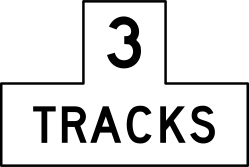
Question 18Why is the small sign showing the number of tracks below a crossbuck important?
Show answer
C: With two or more tracks, one train may hide another coming from the other direction. When there are two or more tracks, one passing train might hide the approach of a train from the other direction. Tennessee Comprehensive Driver License Manual: Section B-3: Traffic Signs: Broad X Shape — Railroad Here, page 50.
-
Question 19On a road, what does a solid white line at the side indicate?
Show answer
B: The right edge of the traffic lane. A solid white line marks the right edge of the traffic lane; yellow marks the left edge of lanes going your direction. Tennessee Comprehensive Driver License Manual: Section B-3: General Principles of Pavement Lane Markings, page 56.
-
Question 20According to the National Safety Council figure in the manual, about how far does a lightweight passenger car at 50 mph need to stop?
Show answer
A: About 200 feet. The manual cites the National Safety Council: a lightweight passenger car at 50 mph can stop in about 200 feet. Tennessee Comprehensive Driver License Manual: Section B-4: Braking, Following and Stopping Distances: Stopping Distances, page 63.
-
Question 21What property damage amount makes a Tennessee crash 'reportable' to the Department of Safety?
Show answer
A: Over $400 to any one person's property. Reportable crashes include any in which someone is killed or injured or property damage to any one person exceeds $400. Tennessee Comprehensive Driver License Manual: Section B-8 Driving Responsibilities: Reporting Crashes, page 103.
-
Question 22You are stopped at a red light when an emergency vehicle approaches, and your light turns green. What should you do?
Show answer
D: Stay where you are until the emergency vehicle has passed or turned. If the light is red, stay put; if it turns green before the emergency vehicle has passed, do not proceed until it has passed or turned. Tennessee Comprehensive Driver License Manual: Section B-4: Right-of-Way Procedures: Yield to Emergency Vehicles, page 68.
-
Question 23Under Tennessee's Move Over Law, a stationary emergency vehicle is on the left shoulder of a four-lane interstate. What should you do?
Show answer
B: Move into the right lane so the left lane stays clear, if safe. The rule applies on either side: if the vehicle is on the left shoulder, merge into the right lane, freeing the left lane as a safety barrier. Tennessee Comprehensive Driver License Manual: Section B-5 Interstate Driving: Move Over Law, page 86.
-
Question 24In which direction do you travel around a Tennessee roundabout or town square?

Show answer
B: Counter-clockwise, to the right. Always travel around a roundabout to the right, in a counter-clockwise direction. Tennessee Comprehensive Driver License Manual: Section B-4: Turning: Special Turns: Roundabouts, page 73.
-
Question 25Why should you avoid stopping at the end of an interstate on-ramp?
Show answer
A: You won't have room to reach interstate speed and may be hit from behind. Stopping at the end of the ramp leaves you too little room to speed up, and drivers behind you watching for a gap may hit you. Tennessee Comprehensive Driver License Manual: Section B-5 Interstate Driving: Entering the Interstate, page 82.
Answer every question to see your score.
More Tennessee practice tests
- Practice test 125 questions
- Practice test 225 questions
- Practice test 325 questions
- Practice test 425 questions
- Practice test 525 questions
- Practice test 725 questions
- Practice test 825 questions
- Practice test 925 questions
- Practice test 1025 questions
- Practice test 1125 questions
- Practice test 1225 questions
- Practice test 1325 questions
- Practice test 1416 questions
- Exam simulatorThe real format, 30 questions
How to use these tests
Read each explanation, even when you get the question right: it tells you the rule and the handbook section, so you can look it up. Your answers are saved in this browser only, so the weak spots mode can give you more questions on the topics you miss. When you're scoring well, take the exam simulator: it uses the same number of questions and passing score as the real test.
Our own questions, written from the Tennessee Comprehensive Driver License Manual and checked against it. Not affiliated with the Tennessee Department of Safety and Homeland Security, Driver Services Division. Found a mistake? Tell us.