Texas DPS permit practice test 11
25 questions written from the Texas Driver Handbook (DL-7), covering licensing laws and penalties, right of way, signals and pavement markings, road signs, sharing the road and more. Pick an answer to see straight away whether you're right and why.
-
Question 1After how many failed exams must a Texas applicant submit a new application and fee?
Show answer
B: Three. After 90 days or three failed exams, a new application and fee are required. Texas Driver Handbook (DL-7): Examinations, page 13.
-
Question 2After stopping for a school bus with flashing red lights, which of these lets you proceed?
Show answer
C: The bus driver signals you to proceed. Do not pass until the bus resumes motion, the driver signals you to proceed, or the red lights are no longer flashing. Texas Driver Handbook (DL-7): Yield Right-of-Way to School Buses, page 29.
-
Question 3A solid yellow line along the left edge of the road, such as on an interstate, indicates what?
Show answer
A: Driving to the left of the line is prohibited. The solid yellow line on the left edge of the road indicates that driving to the left of it is prohibited; it is found on interstate highways. Texas Driver Handbook (DL-7): Pavement Markings: Solid Lines, page 40.
-
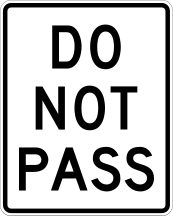
Question 4What does a "Do Not Pass" sign mean?
Show answer
B: Do not pass other vehicles. This regulatory sign means do not pass other vehicles. Texas Driver Handbook (DL-7): Regulatory and Warning Signs: Table 19, page 36.
-
Question 5At night, a Texas bicycle must have a white front lamp visible from at least how far?
Show answer
B: 500 feet. A bicycle used at night needs a front lamp emitting white light visible at least 500 feet ahead, and a red rear reflector. Texas Driver Handbook (DL-7): Bicycles Must Be Properly Equipped, page 69.
-
Question 6Which kinds of over-the-counter medicine does the handbook warn may cause drowsiness?
Show answer
A: Antihistamines and cold preparations. Be careful with antihistamines, other cold preparations, or any medicine that relaxes or promotes sleep; read the labels. Texas Driver Handbook (DL-7): Table 25: Alcohol and Other Types of Drugs, page 61.
-
Question 7A car's horn must be audible from at least how far away?
Show answer
B: 200 feet. Horns must be heard for a minimum distance of 200 feet. Texas Driver Handbook (DL-7): Required Equipment for Vehicles: Table 11, page 21.
-
Question 8After passing all exams, how long may you use the temporary license DPS issues while you wait for your card?
Show answer
B: 45 days. The temporary license may be used for 45 days or until the permanent license arrives in the mail. Texas Driver Handbook (DL-7): Examinations, page 13.
-
Question 9In which situation does Texas law NOT require you to stop for a school bus with flashing red lights?
Show answer
A: The bus is on a different road. It is not necessary to stop when passing a school bus on a different road, or on a controlled-access highway where the bus is in a loading zone and pedestrians may not cross. Texas Driver Handbook (DL-7): Yield Right-of-Way to School Buses, page 29.
-
Question 10On a one-way road where each lane is marked with broken white lines, which lanes may you drive in?
Show answer
B: Any lane. When each lane on a one-way road is marked with a broken white line, you may drive in any lane. Texas Driver Handbook (DL-7): Pavement Markings: Three Lane One-Way Roads, page 39.
-
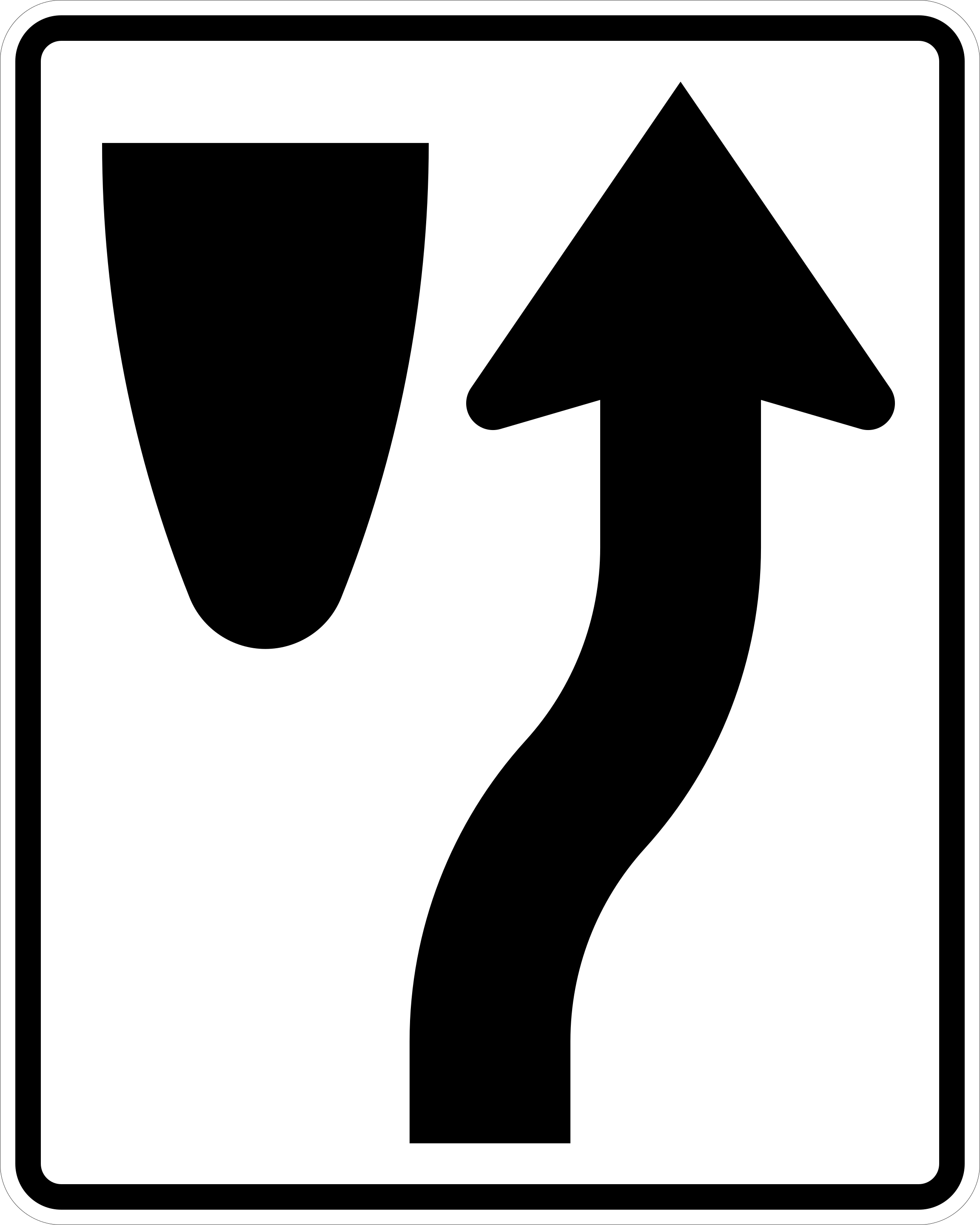
Question 11What does a "Keep Right" sign posted before a median or island tell you?
Show answer
D: Drive to the right of the sign. Drive to the right of this sign; it is used in advance of islands and medians. Texas Driver Handbook (DL-7): Regulatory and Warning Signs: Table 19, page 36.
-
Question 12Who must yield when a pedestrian crosses at a point other than a crosswalk at an intersection?
Show answer
A: The pedestrian. A pedestrian crossing anywhere other than a crosswalk at an intersection must yield the right-of-way to all vehicles. Texas Driver Handbook (DL-7): Laws and Safety Tips for Pedestrians, page 67.
-
Question 13Why is mixing alcohol with tranquilizers or sedatives especially dangerous?
Show answer
C: Alcohol increases the depressant effects of those drugs. Alcohol increases the depressant effects of tranquilizers and barbiturates; mixing them can be hazardous. Texas Driver Handbook (DL-7): Table 25: Alcohol and Other Types of Drugs, page 61.
-
Question 14On the Texas driving exam, your application will not be approved if more than how many points are deducted?
Show answer
A: 30. An application is not approved if the applicant has more than 30 points deducted on the driving exam. Texas Driver Handbook (DL-7): Part 3: The Driving Exam, page 14.
-
Question 15What is the fine for a first conviction of illegally passing a stopped school bus in Texas?
Show answer
A: $500 to $1,250. A first conviction for failing to stop for a school bus displaying flashing lights carries a fine of $500 to $1,250. Texas Driver Handbook (DL-7): Yield Right-of-Way to School Buses, page 29.
-
Question 16Which color are broken lane lines separating lanes of traffic moving in the same direction on a one-way street?
Show answer
D: White. Lanes on a one-way road are marked with broken white lines. Texas Driver Handbook (DL-7): Pavement Markings: Three Lane One-Way Roads, page 39.
-
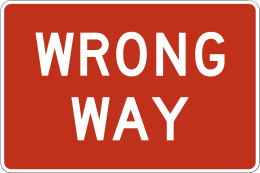
Question 17You see a "Wrong Way" sign facing you. What does it mean?
Show answer
B: You are driving the wrong way on a one-way street, against traffic. If you see this sign facing you, you are driving the wrong way on a one-way street and directly opposing traffic. Texas Driver Handbook (DL-7): Regulatory and Warning Signs: Table 19, page 36.
-
Question 18A pedestrian with a white cane or a guide animal is crossing ahead. What does Texas law require?
Show answer
C: Take necessary precautions and stop completely if needed to avoid injuring them. Take the necessary precautions to avoid injuring or endangering the pedestrian, and come to a full stop if that is the only way. Texas Driver Handbook (DL-7): Laws and Safety Tips for Motorists, page 67.
-
Question 19What does an ignition interlock device require a driver to do?
Show answer
D: Exhale into the device before the vehicle starts. A driver must exhale into the ignition interlock device to start the vehicle; installation is court-ordered. Texas Driver Handbook (DL-7): Appendix A: Glossary of Terms, page 79.
-
Question 20During the Texas driving exam's quick stop, at about what speed may you be asked to stop as quickly as possible without skidding?
Show answer
B: 20 mph. The quick stop asks you to stop as quickly as possible from about 20 mph without skidding your tires. Texas Driver Handbook (DL-7): Part 3: The Driving Exam, page 14.
-
Question 21What is the fine range in Texas when a driver's failure to yield the right-of-way causes bodily injury to another person?
Show answer
A: $500 to $2,000. A traffic offense involving failure to yield that causes bodily injury carries a fine of $500 to $2,000 ($1,000 to $4,000 for serious bodily injury). Texas Driver Handbook (DL-7): Chapter 4: Right-of-Way, page 26.
-
Question 22What is a shared lane marking painted in a travel lane used for?
Show answer
C: Show bicyclists where to position themselves in a shared lane and alert drivers. Shared lane markings help bicyclists position themselves in a shared lane and alert road users to where bicyclists are likely to ride. Texas Driver Handbook (DL-7): Shared Lane Marking, page 68.
-
Question 23An advisory speed sign posted below a curve warning sign shows:

Show answer
D: The highest speed at which you can safely travel around the curve. An advisory speed sign gives the highest speed at which you can safely travel around the curve ahead. Texas Driver Handbook (DL-7): Regulatory and Warning Signs: Table 19, page 36.
-
Question 24A pedestrian has entered the crosswalk on a WALK signal, and the light changes before they finish crossing. What should you do?
Show answer
A: Still give the pedestrian the right-of-way. If the light changes after the pedestrian has entered the crosswalk, still give the pedestrian the right-of-way. Texas Driver Handbook (DL-7): Yield the Right-of-Way to Pedestrians (Persons on Foot), page 29.
-
Question 25According to the handbook, what is one of the first effects of drinking alcohol or using drugs?
Show answer
B: Loss of judgment and impaired sight. One of the first effects is losing judgment and impaired sight, causing slower reactions and difficulty judging other vehicles' speed. Texas Driver Handbook (DL-7): Chapter 10: Alcohol and Drug Impact on the Driving Ability, page 61.
Answer every question to see your score.
More Texas practice tests
- Practice test 125 questions
- Practice test 225 questions
- Practice test 325 questions
- Practice test 425 questions
- Practice test 525 questions
- Practice test 625 questions
- Practice test 725 questions
- Practice test 825 questions
- Practice test 925 questions
- Practice test 1025 questions
- Practice test 1225 questions
- Practice test 1327 questions
- Exam simulatorThe real format
How to use these tests
Read each explanation, even when you get the question right: it tells you the rule and the handbook section, so you can look it up. Your answers are saved in this browser only, so the weak spots mode can give you more questions on the topics you miss. When you're scoring well, take the exam simulator: it uses 25 questions at the DPS's pass mark, since it doesn't publish the number of questions.
Our own questions, written from the Texas Driver Handbook (DL-7) and checked against it. Not affiliated with the Texas Department of Public Safety, Driver License Division. Found a mistake? Tell us.