Utah DLD permit practice test 5
25 questions written from the Utah Driver Handbook (AAMVA Model Non-Commercial), covering lanes, highways and freeways, parking, following and passing, turns and intersections, right of way and more. Pick an answer to see straight away whether you're right and why. The real Utah DLD test has 50 questions and you need 40 right.
-
Question 1On Utah's I-15 express lanes, where may you move in and out of the carpool lane?
Show answer
B: Only at access points marked with white dotted striping. It is illegal to cross the double white line; moving in and out is allowed only at access points with white dotted striping (about 3,000 feet long). Utah Driver Handbook (AAMVA Model Non-Commercial): Section 9: Rules of the Road: Carpool (Express) Lane, page 50.
-
Question 2Where may you not park in Utah?
Show answer
A: On the shoulder of an interstate unless broken down or in physical distress. Interstate shoulders may be used only if your vehicle breaks down or you are in physical distress. Utah Driver Handbook (AAMVA Model Non-Commercial): Section 8: Basic Driving: Parking, page 42.
-
Question 3You are being passed by another vehicle. What should you do?
Show answer
A: Stay in your lane and keep your speed steady. If you are being passed, stay in your lane and keep your speed steady so the other driver can pass. Utah Driver Handbook (AAMVA Model Non-Commercial): Section 8: Basic Driving: Passing, page 44.
-
Question 4How does a ThrU-Turn intersection handle left turns?
Show answer
D: Drivers go through, make a signalized U-turn away from the intersection, then come back and turn right. Instead of turning left, motorists go through the intersection, make a signalized U-turn at a separate location, and return to turn right. Utah Driver Handbook (AAMVA Model Non-Commercial): Section 9: Rules of the Road: ThrU-Turn Intersection, page 53.
-
Question 5Why should you never pass a vehicle stopped at a crosswalk?
Show answer
C: There may be people crossing that you can't see. Never pass vehicles stopped at a crosswalk; there may be people crossing that you can't see. Utah Driver Handbook (AAMVA Model Non-Commercial): Section 14: Sharing the Road: Pedestrians, page 93.
-
Question 6At night, within what distance must you dim your headlights when approaching or overtaking a bicyclist in Utah?
Show answer
C: 500 feet. Dim your headlights within 500 feet when approaching or overtaking bicyclists at night. Utah Driver Handbook (AAMVA Model Non-Commercial): Section 14: Sharing the Road: Bicycles, page 85.
-
Question 7According to the Utah handbook, what should you do when approaching an authorized vehicle flashing red, red and white, or red and blue lights?
Show answer
A: Slow down. The handbook lists approaching any authorized vehicle with flashing red, red and white, or red and blue lights as a time the law requires you to slow down. Utah Driver Handbook (AAMVA Model Non-Commercial): Section 9: Speed, page 55.
-
Question 8What does a dashed yellow center line on your side of the road mean?
Show answer
B: Passing is permitted when it is on your side and safe. On a two-direction roadway, passing is permitted when the dashed line is on your side. Utah Driver Handbook (AAMVA Model Non-Commercial): Section 9: Pavement Markings: Yellow Lane Markings, page 53.
-
Question 9A 17-year-old in Utah is convicted of possessing alcohol. What happens to their license on a first offense?
Show answer
A: Suspended for one year. Ages 13-20 convicted of possessing or consuming alcohol (or being underage in a bar) have the license suspended one year on a first offense and two years after that. Utah Driver Handbook (AAMVA Model Non-Commercial): Section 10: Alcohol/Drugs & Driving: 21 and Under, page 62.
-
Question 10In Utah, headlights are required when persons and vehicles are not clearly visible at what distance?
Show answer
C: 1,000 feet. Use lights from sunset to sunrise and any time conditions keep you from seeing persons and vehicles 1,000 feet ahead. Utah Driver Handbook (AAMVA Model Non-Commercial): Section 11: Distractions and Driving Challenges: Night Driving, page 71.
-
Question 11You hit an unattended parked car and cannot find the owner. What must you do?
Show answer
A: Leave a note with your name, address and the plate number of the vehicle that caused the crash. Leave a note with the name and address of the driver and the plate number of the vehicle that caused the crash. Utah Driver Handbook (AAMVA Model Non-Commercial): Section 12: Crashes and Insurance, page 75.
-
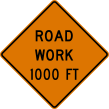
Question 12What color are Utah work zone signs?
Show answer
D: Orange with black letters or symbols. Work zone signs are diamond or rectangular and orange with black letters or symbols. Utah Driver Handbook (AAMVA Model Non-Commercial): Section 9: Traffic Signs: Work Zone Signs, page 59.
-
Question 13Under Utah's youthful driver rules, when may a 16-year-old with a driver license NOT drive (without an exception)?
Show answer
D: Midnight to 5 a.m.. A 16-year-old with a license (not a permit) may not drive from 12 a.m. to 5 a.m. unless an exception applies, such as a licensed driver 21+ in front, work, school activities, agricultural work or emergencies. Utah Driver Handbook (AAMVA Model Non-Commercial): Section 3: Driver Education/Permits: Driving by Minors—Youthful Driver Restrictions, page 18.
-
Question 14Until when must children ride rear-facing in the back seat according to the Utah handbook?
Show answer
A: At least age 2 and 30 pounds, or longer if the seat allows. Children must be rear-facing in the back seat until at least two years of age and 30 pounds, or longer if the car seat allows. Utah Driver Handbook (AAMVA Model Non-Commercial): Section 7: Preparing Your Vehicle: Car Seats, page 38.
-
Question 15Who may use Utah's I-15 express lanes free of charge?
Show answer
A: Vehicles with two or more persons, motorcycles, buses, and C-decal clean fuel vehicles. Carpools of two or more, motorcycles, buses and vehicles with a C decal may use express lanes free; single-occupant drivers need an express pass. Utah Driver Handbook (AAMVA Model Non-Commercial): Section 9: Rules of the Road: Carpool (Express) Lane, page 50.
-
Question 16When exiting a parallel parking space, when should you move into the traffic lane?
Show answer
B: When your vehicle clears the rear bumper of the vehicle ahead. Check traffic and signal, move forward slowly, and enter the lane when your vehicle clears the rear bumper of the vehicle ahead. Utah Driver Handbook (AAMVA Model Non-Commercial): Section 8: Basic Driving: Parallel Parking, page 43.
-
Question 17After passing, when should you return to the right lane?
Show answer
B: When you can see the passed vehicle in your rearview mirror and have done a head check. Wait until you can see the passed vehicle in your rearview mirror, do a head check, signal and steer back. Utah Driver Handbook (AAMVA Model Non-Commercial): Section 8: Basic Driving: Passing, page 44.
-
Question 18Before moving after a stop at an intersection, in what order should you look?
Show answer
D: Left, right, then left again. Look left, right, and then left again before entering the intersection. Utah Driver Handbook (AAMVA Model Non-Commercial): Section 9: Rules of the Road: Intersections, page 51.
-
Question 19Whom must you yield to when making a left turn?
Show answer
A: Drivers in the opposite lane. When making a left turn, yield to drivers in the opposite lane, as well as pedestrians and bicyclists still in the intersection. Utah Driver Handbook (AAMVA Model Non-Commercial): Section 9: Yielding Right-of-Way, page 60.
-
Question 20A slow bicyclist is ahead on a road with a two-way left-turn lane. What does Utah law allow?
Show answer
B: Driving in the center two-way left turn lane to pass. If a bicyclist travels at less than a reasonable speed, you may drive in the center two-way left turn lane on a road with three or more lanes. Utah Driver Handbook (AAMVA Model Non-Commercial): Section 14: Sharing the Road: Bicycles, page 85.
-
Question 21What does a white line separating an express or carpool lane from general lanes indicate on Utah freeways?
Show answer
A: Crossing is prohibited. White markings separating an express or carpool lane from general lanes mean crossing is prohibited (use access points). Utah Driver Handbook (AAMVA Model Non-Commercial): Section 9: Pavement Markings: White Lane Markings, page 53.
-
Question 22Under Utah's implied consent law, what tests may an officer ask you to submit to?
Show answer
D: Breath, blood, urine, or oral fluids. Driving a vehicle or motorboat in Utah implies you will submit to a chemical test of breath, blood, urine or oral fluids when a peace officer asks. Utah Driver Handbook (AAMVA Model Non-Commercial): Section 10: Alcohol/Drugs & Driving: Implied Consent Law, page 63.
-
Question 23In Utah, within what distance of an oncoming car must you dim your high beams?
Show answer
C: 500 feet. Dim your high beams before you get within 500 feet of an oncoming car. Utah Driver Handbook (AAMVA Model Non-Commercial): Section 11: Distractions and Driving Challenges: Night Driving, page 70.
-
Question 24What are the possible penalties for leaving the scene of a crash in Utah?
Show answer
B: License suspension or revocation up to one year, up to one year in jail, up to $2,500 fine, or both. Leaving the scene can bring license suspension or revocation up to one year, a jail sentence up to one year, a fine up to $2,500, or both. Utah Driver Handbook (AAMVA Model Non-Commercial): Section 12: Crashes and Insurance, page 75.
-
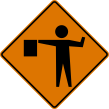
Question 25A flagger is directing traffic in a work zone. What must you do?
Show answer
D: Do as the flagger directs. A flagger may direct traffic in a work zone, and you must do as the flagger directs. Utah Driver Handbook (AAMVA Model Non-Commercial): Section 9: Traffic Signs: Work Zone Signs, page 59.
Answer every question to see your score.
More Utah practice tests
How to use these tests
Read each explanation, even when you get the question right: it tells you the rule and the handbook section, so you can look it up. Your answers are saved in this browser only, so the weak spots mode can give you more questions on the topics you miss. When you're scoring well, take the exam simulator: it uses the same number of questions and passing score as the real test.
Our own questions, written from the Utah Driver Handbook (AAMVA Model Non-Commercial) and checked against it. Not affiliated with the Utah Driver License Division (Utah Department of Public Safety). Found a mistake? Tell us.