Hardest Illinois permit test questions
170 questions that need exact knowledge rather than common sense: the numbers (distances, speeds, fines, limits), the exceptions and the rules that are easy to mix up. We chose them from our Illinois question bank for that reason; they're not statistics from the Secretary of State.
-
Question 1A first-time applicant aged 18, 19 or 20 who never completed driver education must first complete what?
Show answer
A: A six-hour Adult Driver Education Course from a Secretary of State certified provider. First-time applicants aged 18-20 who were never licensed and never completed driver education must complete a six-hour Adult Driver Education Course from a provider certified by the Secretary of State. Illinois Rules of the Road 2026 (DSD A 112): First-Time Drivers — Age 18-20, page 18.
-
Question 2You move to Illinois with a valid license from another state. How long do you have to get an Illinois license?
Show answer
A: 90 days or before your old license expires, whichever comes first. New residents with a valid out-of-state license must get an Illinois license within 90 days or before that license expires, whichever comes first. Illinois Rules of the Road 2026 (DSD A 112): Exemptions, page 5.
-
Question 3Within how many days of moving must you notify the Secretary of State of your new address?
Show answer
A: 10 days. Illinois drivers must report an address change to the Secretary of State within 10 days of moving. Illinois Rules of the Road 2026 (DSD A 112): Changing the Name/Address on an Illinois Driver's License/ID Card, page 6.
-
Question 4After a legal name change, how soon must you apply for a corrected Illinois driver's license?
Show answer
B: Within 30 days. A corrected driver's license or ID card must be applied for within 30 days of a legal name change. Illinois Rules of the Road 2026 (DSD A 112): Changing the Name/Address on an Illinois Driver's License/ID Card, page 6.
-
Question 5When does an Illinois driver's license issued to a driver under 21 expire?
Show answer
C: Three months after the driver's 21st birthday. Licenses for drivers under 21 expire three months after the driver's 21st birthday. Illinois Rules of the Road 2026 (DSD A 112): Driver's License/ID Card Renewal, page 8.
-
Question 6How often must an Illinois driver aged 87 or older renew their license?
Show answer
B: Every year. Drivers 87 and older must renew annually. Drivers aged 81-86 renew every two years, and most other drivers every four years. Illinois Rules of the Road 2026 (DSD A 112): Driver's License/ID Card Renewal, page 8.
-
Question 7If you develop a medical condition likely to cause a loss of consciousness, you must notify the Secretary of State within:
Show answer
D: 10 days. You must tell the Secretary of State's office within 10 days of becoming aware of such a condition, or your license may be canceled. Illinois Rules of the Road 2026 (DSD A 112): Medical Report, page 9.
-
Question 8What does the Illinois Rules of the Road list as the fee for an instruction permit?
Show answer
C: $20. The fee table lists the instruction permit at $20. Illinois Rules of the Road 2026 (DSD A 112): Driver's License/State ID Card Fees, page 11.
-
Question 9How many attempts do you get to pass each driver's license exam?
Show answer
B: Three attempts within one year of paying the application fee. Applicants get three attempts to pass each exam within one year from the date the application fee was paid. Illinois Rules of the Road 2026 (DSD A 112): Chapter 2: Driver's License Exams, page 13.
-
Question 10An applicant caught cheating on the written exam:
Show answer
B: Fails and cannot retake the exam for 30 days. Anyone found cheating fails the exam and may not retake it for 30 days. Illinois Rules of the Road 2026 (DSD A 112): Cheating and Bribery, page 13.
-
Question 11What is the penalty for taking any part of the driver's license exam for another person?
Show answer
A: A fine and at least seven days in jail. Taking any part of the exam for someone else is a criminal offense punishable by a fine and a mandatory minimum of seven days in jail. Illinois Rules of the Road 2026 (DSD A 112): Cheating and Bribery, page 13.
-
Question 12A driver whose visual acuity is between 20/41 and 20/70 may be licensed with what restriction?
Show answer
A: Daylight driving only. A driver with acuity between 20/41 and 20/70 is limited to daylight driving only. Illinois Rules of the Road 2026 (DSD A 112): Vision Screening, page 13.
-
Question 13How much peripheral (side) vision does Illinois require?
Show answer
A: At least 140 degrees. Applicants need at least 140 degrees of peripheral vision, with or without corrective lenses. Illinois Rules of the Road 2026 (DSD A 112): Vision Screening, page 13.
-
Question 14At what age must Illinois drivers take a driving exam when they renew?
Show answer
D: 87. Drivers aged 87 and older, and those turning 87 or older at renewal, must take a driving exam. Illinois Rules of the Road 2026 (DSD A 112): Driving Exam, page 14.
-
Question 15During the Illinois driving exam, about how far must you back the vehicle in a straight line?
Show answer
D: About 50 feet. The driving exam includes backing about 50 feet slowly, straight and smoothly while turning your head right and watching to the rear. Illinois Rules of the Road 2026 (DSD A 112): Driving Exam, page 15.
-
Question 16At what age may you get an Illinois instruction permit without taking a driver education course?
Show answer
C: 17 years and 3 months. Applicants who are at least 17 years and 3 months old may apply for an instruction permit without taking driver education. Illinois Rules of the Road 2026 (DSD A 112): Obtaining an Instruction Permit, page 16.
-
Question 17How long must a 15- to 17-year-old hold an instruction permit before getting a driver's license?
Show answer
D: Nine consecutive months. Drivers aged 15-17 must hold the permit for at least nine consecutive months before getting a license. Illinois Rules of the Road 2026 (DSD A 112): Obtaining an Instruction Permit, page 16.
-
Question 18How long is an Illinois instruction permit valid?
Show answer
C: 24 months. The instruction permit is valid for 24 months. Illinois Rules of the Road 2026 (DSD A 112): Obtaining an Instruction Permit, page 16.
-
Question 19Who may supervise an Illinois permit holder outside the driver education course?
Show answer
B: A parent, guardian or responsible adult aged 21 or older with a valid license and at least one year of driving experience. The supervisor must be a parent, legal guardian or responsible adult aged 21 or older who has a valid license and at least one year of driving experience, sitting in the front passenger seat. Illinois Rules of the Road 2026 (DSD A 112): Obtaining an Instruction Permit, page 16.
-
Question 20How many hours of supervised practice driving must Illinois drivers under 18 complete before getting a license?
Show answer
C: 50 hours, including 10 at night. Drivers under 18 need at least 50 hours of supervised behind-the-wheel practice, including 10 hours at night, in addition to driver education. Illinois Rules of the Road 2026 (DSD A 112): Obtaining an Instruction Permit, page 16.
-
Question 21An approved Illinois driver education course includes at least how much training?
Show answer
B: 30 hours classroom and 6 hours behind the wheel. Approved driver education courses include at least 30 hours of classroom study and six hours of behind-the-wheel training. Illinois Rules of the Road 2026 (DSD A 112): Chapter 3: Drivers Under Age 21, page 16.
-
Question 22What are the nighttime driving restrictions for Illinois permit holders and drivers under 18 on Friday and Saturday nights?
Show answer
B: 11 p.m. to 6 a.m.. On Friday and Saturday the GDL nighttime restriction runs from 11 p.m. to 6 a.m. (local curfews may differ). Illinois Rules of the Road 2026 (DSD A 112): Graduated Driver Licensing Program, page 18.
-
Question 23What are the GDL nighttime driving restrictions on Sunday through Thursday?
Show answer
D: 10 p.m. to 6 a.m.. From Sunday through Thursday, permit holders and drivers in the Initial Licensing Phase may not drive between 10 p.m. and 6 a.m. (local curfews may differ). Illinois Rules of the Road 2026 (DSD A 112): Graduated Driver Licensing Program, page 18.
-
Question 24For the first 12 months of the Initial Licensing Phase (or until age 18), how many passengers under 20 may a teen driver carry, not counting siblings, stepsiblings, children or stepchildren?
Show answer
D: One. For the first 12 months of licensing, or until 18 if that comes first, the driver may carry only one passenger under 20, unless the passengers are siblings, stepsiblings, children or stepchildren. Illinois Rules of the Road 2026 (DSD A 112): Graduated Driver Licensing Program, page 18.
-
Question 25Under Illinois GDL rules, until what age is any cellphone use while driving, even hands-free, prohibited except for emergencies?
Show answer
A: Under 19. Drivers under 19 may not use a wireless phone while driving, including hands-free, except to contact police, a health care provider or emergency services in an emergency. Illinois Rules of the Road 2026 (DSD A 112): Graduated Driver Licensing Program, page 18.
-
Question 26To move out of the Initial Licensing Phase, a driver must keep a conviction-free record for how long before turning 18?
Show answer
C: Six months. Drivers must keep a conviction-free record for six months before turning 18, or restrictions may extend past 18. Illinois Rules of the Road 2026 (DSD A 112): Graduated Driver Licensing Program, page 18.
-
Question 27How many court supervisions for serious traffic offenses may an Illinois driver under 21 receive?
Show answer
C: One. A driver under 21 is limited to one court supervision for serious traffic offenses and must attend traffic safety school to get it. Illinois Rules of the Road 2026 (DSD A 112): Related Laws, page 19.
-
Question 28A driver under 21 convicted of two or more moving violations within 24 months faces what?
Show answer
D: A minimum 30-day license suspension. Two or more moving-violation convictions within 24 months bring a minimum 30-day suspension for a driver under 21. Illinois Rules of the Road 2026 (DSD A 112): Related Laws, page 20.
-
Question 29A person under 21 is convicted of possessing alcohol while riding in a motor vehicle. What is the minimum license suspension?
Show answer
C: Six months. A conviction brings at least a six-month suspension when the offense happened in a motor vehicle; court supervision brings a three-month suspension. Illinois Rules of the Road 2026 (DSD A 112): Related Laws, page 20.
-
Question 30How often must Illinois drivers who have traffic convictions take the written exam?
Show answer
C: Every eight years. Every driver must take a written exam every eight years, except drivers with no traffic convictions. Illinois Rules of the Road 2026 (DSD A 112): Written Exam, page 14.
-
Question 31High school students may be excused from the Secretary of State driving exam under the Cooperative Driver Testing Program if they finish driver education with what combined grade?
Show answer
D: A or B. Students who finish accredited classroom and behind-the-wheel driver education with a combined grade of A or B may be exempt from the SOS driving exam. Illinois Rules of the Road 2026 (DSD A 112): Driver Education and the Cooperative Driver Testing Program, page 17.
-
Question 32A Vision Specialist Report submitted instead of the DMV vision screening must be dated within:
Show answer
D: Six months. The Vision Specialist Report from an optometrist, ophthalmologist or physician must be dated within six months of the facility visit. Illinois Rules of the Road 2026 (DSD A 112): Vision Screening, page 13.
-
Question 33How long is the temporary paper driver's license issued at an Illinois DMV valid?
Show answer
D: 90 days. After payment and testing, the Secretary of State issues a temporary secure paper license valid for 90 days while the permanent card is mailed. Illinois Rules of the Road 2026 (DSD A 112): Driver's License/ID Card Renewal, page 8.
-
Question 34A Class D license holder may drive a rental vehicle of up to what weight when moving their own or an immediate family member's property for non-business purposes in Illinois?
Show answer
C: 26,000 pounds. Class D holders may drive rental vehicles up to 26,000 pounds when moving their own or an immediate family member's personal property for non-business purposes within Illinois. Illinois Rules of the Road 2026 (DSD A 112): Chapter 1: Illinois Driver's License, page 4.
-
Question 35What does signing an Illinois traffic ticket mean?
Show answer
D: You acknowledge receiving the ticket. Signing a ticket only acknowledges that you received it; it is not an admission of guilt. Don't refuse to sign. Illinois Rules of the Road 2026 (DSD A 112): Proper Action When Stopped by Law Enforcement, page 21.
-
Question 36Is holding your phone and using the speakerphone considered hands-free in Illinois?
Show answer
B: No, it is a violation. Holding the device while using speakerphone is not hands-free and violates Illinois law. Illinois Rules of the Road 2026 (DSD A 112): Distracted Driving, page 22.
-
Question 37When may an adult Illinois driver use a handheld cellphone?
Show answer
A: While parked on the shoulder of the road. Handheld use is allowed only to report an emergency, while parked on the shoulder, or while stopped because traffic is obstructed with the vehicle in neutral or park. Illinois Rules of the Road 2026 (DSD A 112): Distracted Driving, page 22.
-
Question 38Which headset use is allowed while driving in Illinois?
Show answer
B: A single-sided headset or earpiece with a phone. Headsets are generally banned while driving, but a single-sided headset or earpiece used with a wireless phone is permitted. Illinois Rules of the Road 2026 (DSD A 112): Distracted Driving, page 22.
-
Question 39How far from the steering-wheel air bag is it desirable for a driver to sit?
Show answer
B: 10-12 inches. A distance of 10-12 inches between the driver and the air bag is desirable, especially for short, elderly or pregnant drivers. Illinois Rules of the Road 2026 (DSD A 112): Air Bag Safety, page 23.
-
Question 40Under the Child Passenger Protection Act, children under what age must be secured in an appropriate child restraint system?
Show answer
C: 8. All children under 8 must be properly secured in an appropriate child safety restraint system, which includes booster seats. Illinois Rules of the Road 2026 (DSD A 112): Child Passenger Protection Act, page 23.
-
Question 41Illinois law requires children to ride in a rear-facing child restraint until age 2 unless they:
Show answer
B: Weigh more than 40 pounds or are more than 40 inches tall. Children must ride rear-facing until age 2 unless they weigh more than 40 pounds or are taller than 40 inches. Illinois Rules of the Road 2026 (DSD A 112): Child Passenger Protection Act, page 24.
-
Question 42Unless otherwise posted, what is the speed limit on Illinois four-lane highways?
Show answer
C: 65 mph. The default limit on highways with four lanes is 65 mph. Illinois Rules of the Road 2026 (DSD A 112): Speed Limits, page 24.
-
Question 43Unless otherwise posted, what is the speed limit on other highways and in rural areas in Illinois?
Show answer
C: 55 mph. Other highways and rural areas have a default limit of 55 mph. Illinois Rules of the Road 2026 (DSD A 112): Speed Limits, page 24.
-
Question 44What is the default speed limit in Illinois city and town areas?
Show answer
C: 30 mph. Unless posted otherwise, the limit in city and town areas is 30 mph. Illinois Rules of the Road 2026 (DSD A 112): Speed Limits, page 24.
-
Question 45What is the speed limit in an Illinois alley unless otherwise posted?
Show answer
B: 15 mph. The default speed limit in alleys is 15 mph. Illinois Rules of the Road 2026 (DSD A 112): Speed Limits, page 24.
-
Question 46What is the Illinois school zone speed limit when it applies?
Show answer
B: 20 mph. In a school zone the limit is 20 mph on school days between 6:30 a.m. and 4 p.m. when children are present and signs are posted. Illinois Rules of the Road 2026 (DSD A 112): Speed Limits, page 24.
-
Question 47During what hours does the 20 mph Illinois school zone limit apply on school days when children are present?
Show answer
D: 6:30 a.m. to 4 p.m.. The 20 mph limit applies on school days between 6:30 a.m. and 4 p.m. when children are present and signs are posted. Illinois Rules of the Road 2026 (DSD A 112): Speed Limits, page 24.
-
Question 48When must you obey a posted Illinois construction zone speed limit?
Show answer
A: 24 hours a day, seven days a week. Posted construction zone speed limits apply 24 hours a day, seven days a week, whether or not workers are present. Illinois Rules of the Road 2026 (DSD A 112): Construction Zones, page 25.
-
Question 49Within how many feet of an emergency scene does Illinois law prohibit photography and cellphone use, with some exceptions?
Show answer
C: 500 feet. Illinois prohibits photography and wireless phone use within 500 feet of an emergency scene, except in certain circumstances. Illinois Rules of the Road 2026 (DSD A 112): Emergency/Maintenance Vehicles, page 25.
-
Question 50When may you drive over a fire hose?
Show answer
B: When a fire official in command permits it. You may not drive over fire hoses unless a fire official in command of the scene allows it. Illinois Rules of the Road 2026 (DSD A 112): Emergency/Maintenance Vehicles, page 25.
-
Question 51You enter an intersection on a green light to turn left, and the light turns red before you can finish. What should you do?
Show answer
C: Finish the turn when it is safe. If you entered the intersection while the light was green, you may finish the left turn even though the light turns red. Illinois Rules of the Road 2026 (DSD A 112): Right of Way, page 26.
-
Question 52You are on the road that ends at a T intersection with no signs or signals. Who has the right of way?
Show answer
C: Traffic on the through road. A driver on the ending (terminating) road of a T intersection with no signs or signals must yield to traffic on the through road. Illinois Rules of the Road 2026 (DSD A 112): Right of Way, page 26.
-
Question 53At a red light, from a one-way street onto another one-way street with traffic moving to the left, you may:
Show answer
D: Turn left after a complete stop, yielding to traffic and pedestrians. A left turn on red is allowed from a one-way street onto a one-way street moving left, after a complete stop and yielding the right of way. Illinois Rules of the Road 2026 (DSD A 112): Right of Way, page 26.
-
Question 54When passing on a two-lane road, you must return to your lane before getting within how many feet of an oncoming vehicle?
Show answer
B: 200 feet. You must return to your lane before coming within 200 feet of an oncoming vehicle. Illinois Rules of the Road 2026 (DSD A 112): Passing, page 28.
-
Question 55Is it legal in Illinois to flash your turn signals as a courtesy 'go ahead and pass' signal?
Show answer
C: No, it is against the law. Illinois law prohibits flashing turn signals as a courtesy or 'do pass' signal to other drivers. Illinois Rules of the Road 2026 (DSD A 112): Passing, page 28.
-
Question 56Within how many feet of an intersection or railroad crossing is passing prohibited on a two-lane, two-way road?
Show answer
B: 100 feet. Passing is not allowed within 100 feet of an intersection or railroad crossing. Illinois Rules of the Road 2026 (DSD A 112): Passing, page 29.
-
Question 57Are Illinois construction zones no-passing zones?
Show answer
C: Yes, all construction zones in Illinois are no-passing zones. All construction zones in Illinois are no-passing zones. Illinois Rules of the Road 2026 (DSD A 112): Passing, page 29.
-
Question 58On an interstate or fully access-controlled freeway in Illinois, when may you drive in the left lane?
Show answer
D: Mainly when passing, with limited exceptions such as heavy traffic or an obstruction. You may not drive in the left lane except to pass, with exceptions such as no vehicle directly behind you, congestion, weather, an obstruction in the right lane, or yielding to emergency or construction vehicles. Illinois Rules of the Road 2026 (DSD A 112): Lane Usage, page 29.
-
Question 59In a business or residential area, how far before turning must you give a continuous turn signal in Illinois?
Show answer
C: At least 100 feet. In business or residential areas, signal continuously for at least 100 feet before turning. Illinois Rules of the Road 2026 (DSD A 112): Signaling, page 30.
-
Question 60Outside business and residential areas, how far before a turn must you start signaling?
Show answer
C: At least 200 feet. In other areas, give the turn signal at least 200 feet before turning. Illinois Rules of the Road 2026 (DSD A 112): Signaling, page 30.
-
Question 61While waiting to turn left, which way should your front wheels point?
Show answer
B: Straight ahead until you start the turn. Keep your front wheels pointed straight ahead while you wait, and turn them only when you actually start the left turn. Illinois Rules of the Road 2026 (DSD A 112): Turning, page 31.
-
Question 62You may not make a U-turn on a curve or hill unless you can see how far in every direction?
Show answer
C: At least 500 feet. Don't turn around on curves or hills unless you can see at least 500 feet in all directions. Illinois Rules of the Road 2026 (DSD A 112): U-Turns, page 32.
-
Question 63When is an Illinois driver NOT required to stop for a stopped school bus loading or unloading children?
Show answer
D: When both vehicles are on a four-lane roadway and the bus is stopped in the opposite direction. You need not stop when both vehicles are on a four-lane roadway and the bus is stopped facing the opposite direction. Any other time you must stop. Illinois Rules of the Road 2026 (DSD A 112): School Buses, page 32.
-
Question 64Must you stop for a school bus loading children in a parking lot on school property?
Show answer
D: Yes. The stopping rule applies on any roadway, highway or private road, including any parking lot on school property. Illinois Rules of the Road 2026 (DSD A 112): School Buses, page 33.
-
Question 65How far ahead of a stop in a rural area will a school bus begin flashing its warning lights?
Show answer
C: At least 200 feet. A school bus gives its warning at least 100 feet before stopping, or 200 feet in rural areas. Illinois Rules of the Road 2026 (DSD A 112): School Buses, page 33.
-
Question 66What is the penalty for a conviction of passing a stopped Illinois school bus with its stop arm out?
Show answer
D: License suspension, a mandatory $300 fine and community service. A conviction brings suspension of your license, a mandatory $300 fine and community service set by the court. Illinois Rules of the Road 2026 (DSD A 112): School Buses, page 33.
-
Question 67If a vehicle illegally passes a stopped school bus and the owner won't name the driver, what happens?
Show answer
A: The vehicle registration is suspended for three months. If the owner wasn't driving and doesn't give the State's Attorney the driver's name, the vehicle registration is suspended for three months. Illinois Rules of the Road 2026 (DSD A 112): School Buses, page 33.
-
Question 68When required to stop at a railroad crossing, how far from the tracks must you stop?
Show answer
A: Within 15-50 feet. Stop within 15-50 feet of the crossing when there is a stop sign, flashing signal, lowered gate, flagger signal, or an approaching train. Illinois Rules of the Road 2026 (DSD A 112): Railroad Crossing, page 33.
-
Question 69Your car stalls on the railroad tracks. In which direction should everyone move away from the vehicle?
Show answer
A: At a 45-degree angle away from the tracks, toward the approaching train. Everyone should get out at once, call 911, and move away from the tracks at a 45-degree angle toward the train, so flying debris won't hit them. Illinois Rules of the Road 2026 (DSD A 112): Railroad Crossing, page 33.
-
Question 70Where can you find the railroad's Emergency Notification System phone number at a crossing?
Show answer
D: On a blue sign on the crossing post near the tracks. The number is on the blue sign attached to the railroad crossing post near the tracks. Illinois Rules of the Road 2026 (DSD A 112): Railroad Crossing, page 34.
-
Question 71In an urban area, where must you stop when leaving an alley or driveway?
Show answer
B: Before entering the sidewalk area. In urban areas you must stop completely before entering the sidewalk area. With no sidewalk, stop at the point nearest the street with a view of traffic. Illinois Rules of the Road 2026 (DSD A 112): Alleys/Driveways, page 34.
-
Question 72You park facing downhill on a street with a curb. Which way should you turn your front wheels?
Show answer
C: Toward the curb. When parked downhill with a curb, turn the wheels toward the curb so the vehicle would roll into it. Illinois Rules of the Road 2026 (DSD A 112): Hill Parking, page 34.
-
Question 73You park facing uphill on a street with a curb. Which way should you turn your front wheels?
Show answer
B: Away from the curb. When parked uphill with a curb, turn the front wheels away from the curb. Illinois Rules of the Road 2026 (DSD A 112): Hill Parking, page 34.
-
Question 74You park on a hill on a road with no curb. Which way should your wheels be turned?
Show answer
B: Toward the side of the road where you are parked. Without a curb, uphill or downhill, turn the wheels toward the side of the road where you are parked. Illinois Rules of the Road 2026 (DSD A 112): Hill Parking, page 34.
-
Question 75When parallel parking on a two-way street, your right-hand wheels should be within how many inches of the curb?
Show answer
B: 12 inches. Park with the right-hand wheels parallel to and within 12 inches of the curb. Illinois Rules of the Road 2026 (DSD A 112): Parallel Parking, page 35.
-
Question 76Can you park in the striped area next to an accessible parking space if you have a disability placard?
Show answer
D: No, the striped area is part of the reserved space and may not be used for parking. The striped access area is part of the reserved space. No vehicle may park there, even with a disability placard or plates. Illinois Rules of the Road 2026 (DSD A 112): Parking for Persons with Disabilities, page 35.
-
Question 77How close to a fire hydrant may you stand or park in Illinois?
Show answer
B: No closer than 15 feet. Standing or parking within 15 feet of a fire hydrant is prohibited. Illinois Rules of the Road 2026 (DSD A 112): Prohibited Stopping, Standing, or Parking, page 35.
-
Question 78Standing or parking is prohibited within how many feet of a crosswalk at an intersection?
Show answer
C: 20 feet. You may not stand or park within 20 feet of a fire station driveway or a crosswalk at an intersection. Illinois Rules of the Road 2026 (DSD A 112): Prohibited Stopping, Standing, or Parking, page 36.
-
Question 79How close may you park to a STOP sign, YIELD sign or traffic signal?
Show answer
A: No closer than 30 feet. Standing or parking within 30 feet of a STOP sign, YIELD sign or traffic control signal is prohibited. Illinois Rules of the Road 2026 (DSD A 112): Prohibited Stopping, Standing, or Parking, page 36.
-
Question 80You may not park within how many feet of the nearest rail of a railroad crossing?
Show answer
D: 50 feet. Parking within 50 feet of the nearest rail of a railroad crossing is prohibited. Illinois Rules of the Road 2026 (DSD A 112): Prohibited Stopping, Standing, or Parking, page 36.
-
Question 81Can a car stop briefly in a marked bike lane to drop off a passenger?
Show answer
C: No, vehicles may not stop, park, idle or load passengers in a bike lane. Stopping, standing or parking in a marked, buffered or barrel-protected bike lane is prohibited. Vehicles may not drive, park, idle or pick up or drop off passengers there even when no cyclists are present. Illinois Rules of the Road 2026 (DSD A 112): Prohibited Stopping, Standing, or Parking, page 35.
-
Question 82Outside business or residential districts, if you must stop on the paved roadway in an emergency, how far must you be able to see in each direction?
Show answer
B: 200 feet. In an emergency you may stop only where there is a clear view of 200 feet in each direction; turn on your flashers and leave room for others to pass. Illinois Rules of the Road 2026 (DSD A 112): Prohibited Stopping, Standing, or Parking, page 35.
-
Question 83Illinois law prohibits playing a vehicle sound system loud enough to be heard how far away?
Show answer
C: 75 feet or more. You may not play a sound system at a volume that can be heard 75 feet or more from a vehicle driven on a highway. Illinois Rules of the Road 2026 (DSD A 112): Additional Laws, page 36.
-
Question 84A pedestrian crosses in the middle of a block, not at a marked or unmarked crosswalk. Who must yield?
Show answer
C: The pedestrian must give the right of way to drivers. When crossing anywhere other than a marked or unmarked crosswalk, pedestrians must yield to drivers, though drivers should still be ready to stop. Illinois Rules of the Road 2026 (DSD A 112): Pedestrians, page 40.
-
Question 85A red light fails to turn green. After how long may a motorcyclist go through the intersection, after yielding to oncoming traffic?
Show answer
D: 120 seconds. If a red light doesn't turn green after 120 seconds, a motorcyclist may go through after yielding to oncoming traffic. Illinois Rules of the Road 2026 (DSD A 112): Stoplights, page 41.
-
Question 86How much following distance should you leave behind a motorcycle?
Show answer
D: At least three to four seconds. Allow at least three to four seconds behind a motorcycle so the rider has room to maneuver in an emergency. Illinois Rules of the Road 2026 (DSD A 112): Following and Stopping Distance, page 42.
-
Question 87When passing a bicyclist, the 3-foot minimum is measured from what?
Show answer
A: The edge of your vehicle's side mirror. Pass slowly and leave at least 3 feet from the edge of your side mirror. If there isn't room, wait. Illinois Rules of the Road 2026 (DSD A 112): Bicycles — Manual, Gas or Electric Powered, page 43.
-
Question 88How many bicyclists may ride side by side on an Illinois roadway, if traffic is not impeded?
Show answer
B: Two. Bicyclists may ride two abreast if they don't impede traffic. More than two abreast is prohibited except on paths set aside for bicycles. Illinois Rules of the Road 2026 (DSD A 112): Bicycles — Manual, Gas or Electric Powered, page 43.
-
Question 89What is the minimum age to operate a Class 3 low-speed electric bicycle in Illinois?
Show answer
D: 16. Class 3 e-bike riders must be at least 16. Illinois Rules of the Road 2026 (DSD A 112): Bicycles — Manual, Gas or Electric Powered, page 44.
-
Question 90A Class 1 low-speed electric bicycle stops providing motor assistance at what speed?
Show answer
B: 20 mph. A Class 1 e-bike assists only while the rider pedals and stops assisting at 20 mph. Illinois Rules of the Road 2026 (DSD A 112): Bicycles — Manual, Gas or Electric Powered, page 44.
-
Question 91What license is required to drive a scooter with an engine under 150cc on Illinois roads?
Show answer
B: Class L motorcycle license. A scooter under 150cc is a motor-driven cycle and requires a Class L license. 150cc or more is a motorcycle and requires Class M. Illinois Rules of the Road 2026 (DSD A 112): Scooters and Mopeds, page 44.
-
Question 92What license do you need to operate a moped (combustion engine 50cc or less, no gear shifting) in Illinois?
Show answer
C: Any valid Illinois driver's license. A moped may be operated with any valid Illinois driver's license. Illinois Rules of the Road 2026 (DSD A 112): Scooters and Mopeds, page 44.
-
Question 93How can you let a truck driver know you are passing, especially at night?
Show answer
B: Blink your headlights. Blink your headlights when passing a truck to let the driver know, and finish the pass quickly so you don't stay alongside. Illinois Rules of the Road 2026 (DSD A 112): Large Vehicles, page 45.
-
Question 94When towing one vehicle with another using a drawbar, the distance between them should usually not exceed:
Show answer
C: 15 feet. Towing must use a drawbar, the distance between the vehicles should usually not exceed 15 feet, and the towed vehicle should be coupled with two chains or cables. Illinois Rules of the Road 2026 (DSD A 112): Disabled Vehicles, page 45.
-
Question 95A vehicle left along an interstate or toll highway may be towed at the owner's expense after how long?
Show answer
D: Two hours. On an interstate, expressway or toll highway, police may have a vehicle towed after two hours; urban highways 10 hours; non-urban highways 24 hours. Illinois Rules of the Road 2026 (DSD A 112): Disabled Vehicles, page 45.
-
Question 96On which streets may low-speed vehicles operate in Illinois, unless locally prohibited?
Show answer
C: Streets posted at 30 mph or less. Low-speed vehicles, which have a top speed of 25 mph, may run on streets with a posted limit of 30 mph or less unless the municipality prohibits it. Illinois Rules of the Road 2026 (DSD A 112): Low-Speed Vehicles, page 45.
-
Question 97What is the normal speed range for slow-moving vehicles such as farm equipment?
Show answer
A: 5-20 mph. Slow-moving vehicles normally travel 5-20 mph, so you close in on them very quickly at highway speed. Illinois Rules of the Road 2026 (DSD A 112): Closing Speeds, page 46.
-
Question 98On the rear of a slow-moving vehicle, where must the required flashing amber light be mounted, and how far must it be visible in sunlight?
Show answer
A: As high as possible; 500 feet. When lights are required, a flashing amber signal must be mounted as high as possible on the rear and be visible for 500 feet in sunlight. Illinois Rules of the Road 2026 (DSD A 112): Rear Light, page 46.
-
Question 99Can you be convicted of DUI in Illinois with a BAC below .08%?
Show answer
D: Yes, if your driving ability is impaired. You can be convicted of DUI with a BAC under .08% if your driving ability is impaired. Illinois Rules of the Road 2026 (DSD A 112): Blood-Alcohol Concentration (BAC)/Presence of Drugs, page 48.
-
Question 100Illinois law prohibits driving with a THC concentration of how much or more per milliliter of whole blood?
Show answer
C: 5 nanograms. It is illegal to drive with 5 nanograms or more of THC per milliliter of whole blood, or 10 nanograms or more per milliliter of other bodily substance. Illinois Rules of the Road 2026 (DSD A 112): Blood-Alcohol Concentration (BAC)/Presence of Drugs, page 48.
-
Question 101How must cannabis be transported in a vehicle in Illinois?
Show answer
A: In a sealed, odor-proof, child-resistant container. Cannabis may be transported only in a sealed, odor-proof, child-resistant container, and no one may use cannabis in the vehicle. Illinois Rules of the Road 2026 (DSD A 112): Medical and Recreational Cannabis (Marijuana), page 48.
-
Question 102A first-time offender's chemical test shows a BAC of .08% or more. How long is the statutory summary suspension?
Show answer
D: Six months. Failing a chemical test (BAC .08% or more, or the THC limits) brings a six-month suspension for a first offender. Illinois Rules of the Road 2026 (DSD A 112): Statutory Summary Suspension/Revocation Law, page 49.
-
Question 103A first-time offender refuses chemical testing after a DUI arrest. How long is the suspension?
Show answer
A: One year. Refusing chemical testing brings a one-year suspension for a first offender. Illinois Rules of the Road 2026 (DSD A 112): Statutory Summary Suspension/Revocation Law, page 49.
-
Question 104For a second offender, how long is the statutory summary suspension for refusing a chemical test?
Show answer
A: Three years. A second offender's privileges are suspended for three years for refusal, or one year for failing the test. Illinois Rules of the Road 2026 (DSD A 112): Statutory Summary Suspension/Revocation Law, page 49.
-
Question 105After a DUI arrest, the officer's temporary receipt lets you drive for how long before the statutory summary suspension begins?
Show answer
C: 45 days. The temporary receipt allows driving for 45 days; the suspension begins on the 46th day after the notice date. Illinois Rules of the Road 2026 (DSD A 112): Statutory Summary Suspension/Revocation Law, page 49.
-
Question 106What is the minimum revocation for a first DUI conviction for a driver 21 or older in Illinois?
Show answer
D: One year. A first DUI conviction results in at least a one-year revocation. Illinois Rules of the Road 2026 (DSD A 112): DUI Conviction, page 50.
-
Question 107What is the minimum revocation for a second DUI conviction within 20 years?
Show answer
D: Five years. A second conviction within 20 years brings at least a five-year revocation; a third, 10 years; a fourth or later, lifetime. Illinois Rules of the Road 2026 (DSD A 112): DUI Conviction, page 50.
-
Question 108A fourth DUI conviction in Illinois results in:
Show answer
A: Lifetime revocation. A fourth and any later DUI conviction results in lifetime revocation. Illinois Rules of the Road 2026 (DSD A 112): DUI Conviction, page 50.
-
Question 109Which DUI cases may bring enhanced penalties in Illinois?
Show answer
C: A BAC of .16% or more, or transporting a child under 16. DUI with a BAC of .16% or more, or while transporting a child under 16, may bring enhanced penalties. Illinois Rules of the Road 2026 (DSD A 112): DUI Conviction, page 50.
-
Question 110After a DUI conviction, for how long must you file Financial Responsibility Insurance?
Show answer
A: Three years. A DUI conviction requires you to file Financial Responsibility (SR-22) Insurance for three years. Illinois Rules of the Road 2026 (DSD A 112): DUI Conviction, page 50.
-
Question 111What is the minimum revocation for a driver under 21 convicted of a first DUI?
Show answer
C: Two years. A driver under 21 convicted of DUI faces at least a two-year revocation for a first conviction. Illinois Rules of the Road 2026 (DSD A 112): Drivers Under Age 21, page 52.
-
Question 112A driver under 21 is found with any trace of alcohol while driving. What is the minimum suspension?
Show answer
B: Three months. Any trace of alcohol in a driver under 21 means a suspension of at least three months. Illinois Rules of the Road 2026 (DSD A 112): Drivers Under Age 21, page 52.
-
Question 113A first-time DUI offender chooses not to get a monitoring device permit and is caught driving during the suspension. What is the offense?
Show answer
C: A felony. An offender who declines the program and is caught driving during the suspension is guilty of a felony. Illinois Rules of the Road 2026 (DSD A 112): Breath Alcohol Ignition Interlock Device (BAIID), page 50.
-
Question 114Regardless of fault, an Illinois driver must file a crash report when property damage exceeds what amount (all vehicles insured)?
Show answer
C: $1,500. A crash report is required for death, bodily injury, or property damage over $1,500. The threshold is $500 if any vehicle is uninsured. Illinois Rules of the Road 2026 (DSD A 112): Crash Reports, page 54.
-
Question 115If any vehicle in a crash is uninsured, a crash report is required when property damage is more than:
Show answer
B: $500. When any vehicle involved is uninsured, a report is required if property damage is more than $500. Illinois Rules of the Road 2026 (DSD A 112): Crash Reports, page 54.
-
Question 116How long does a driver have to report a crash after it occurs, according to the Illinois Rules of the Road?
Show answer
A: 30 minutes. The handbook says a driver has 30 minutes to report a crash after it occurs, and police should be notified immediately. Illinois Rules of the Road 2026 (DSD A 112): Crash Reports, page 55.
-
Question 117What penalty can a driver face for failing to report a crash?
Show answer
A: A fine up to $2,500 and up to one year in jail. Failing to report a crash can bring a fine of up to $2,500 and up to one year in jail. Illinois Rules of the Road 2026 (DSD A 112): Crash Reports, page 55.
-
Question 118Leaving the scene of a crash that caused death or personal injury results in what action against your license?
Show answer
C: Revocation. For leaving the scene where death or injury occurred, the Secretary of State must revoke the license; for damage over $1,000, privileges are suspended. Illinois Rules of the Road 2026 (DSD A 112): Leaving the Scene of a Crash, page 55.
-
Question 119What is the penalty for a conviction of driving without mandatory insurance in Illinois?
Show answer
D: Loss of driving privileges for at least three months and a $100 reinstatement fee. Mandatory insurance convictions bring at least a three-month loss of driving privileges, a $100 reinstatement fee, and no driving permit. Illinois Rules of the Road 2026 (DSD A 112): Safety Responsibility Law, page 55.
-
Question 120Drivers aged 55 or older may get an insurance reduction for completing what?
Show answer
D: An eight-hour defensive driving course. Drivers 55 and older may get a reduction in liability insurance by completing an eight-hour defensive driving course. Illinois Rules of the Road 2026 (DSD A 112): Crash Prevention Courses, page 56.
-
Question 121What is the difference between a suspension and a revocation of an Illinois license?
Show answer
A: A suspension is a temporary loss of privileges; a revocation is an indefinite withdrawal. A suspension temporarily removes driving privileges, while a revocation withdraws them indefinitely; you may usually reapply after at least one year. Illinois Rules of the Road 2026 (DSD A 112): Revocation, page 58.
-
Question 122How many traffic violation convictions in a 12-month period can lead to suspension for a driver aged 21 or older?
Show answer
B: Three. Three traffic violation convictions within 12 months can lead to suspension; for drivers under 21 it's two within 24 months. Illinois Rules of the Road 2026 (DSD A 112): Suspension, page 60.
-
Question 123What is a 'zero tolerance' violation in Illinois?
Show answer
D: A driver under 21 with an alcohol concentration above 0.00 but below 0.08. Zero tolerance applies to drivers under 21 with an alcohol concentration greater than 0.00 but less than 0.08, and it leads to suspension. Illinois Rules of the Road 2026 (DSD A 112): Suspension, page 60.
-
Question 124A second speeding violation in a construction zone with workers present, within two years of the first, can result in:
Show answer
D: License suspension. A second violation within two years for speeding in a construction zone when workers are present is grounds for suspension. Illinois Rules of the Road 2026 (DSD A 112): Suspension, page 60.
-
Question 125What is the minimum age for a Monitoring Device Driving Permit (MDDP)?
Show answer
C: 18. An MDDP cannot be issued to anyone under 18. Illinois Rules of the Road 2026 (DSD A 112): Special Driving Permits, page 61.
-
Question 126A temporary STOP sign has been put up by highway authorities. How should you treat it?
Show answer
B: Like a permanent STOP sign. A temporary STOP sign erected by highway authorities must be treated just like a permanent STOP sign. Illinois Rules of the Road 2026 (DSD A 112): Shapes of Signs, page 63.
-
Question 127In rural areas, how far before a railroad crossing may the round advance warning sign be posted?

Show answer
D: Up to 750 feet. The round RR advance warning sign may be placed up to 750 feet before the crossing. Illinois Rules of the Road 2026 (DSD A 112): Railroad Crossings, page 81.
-
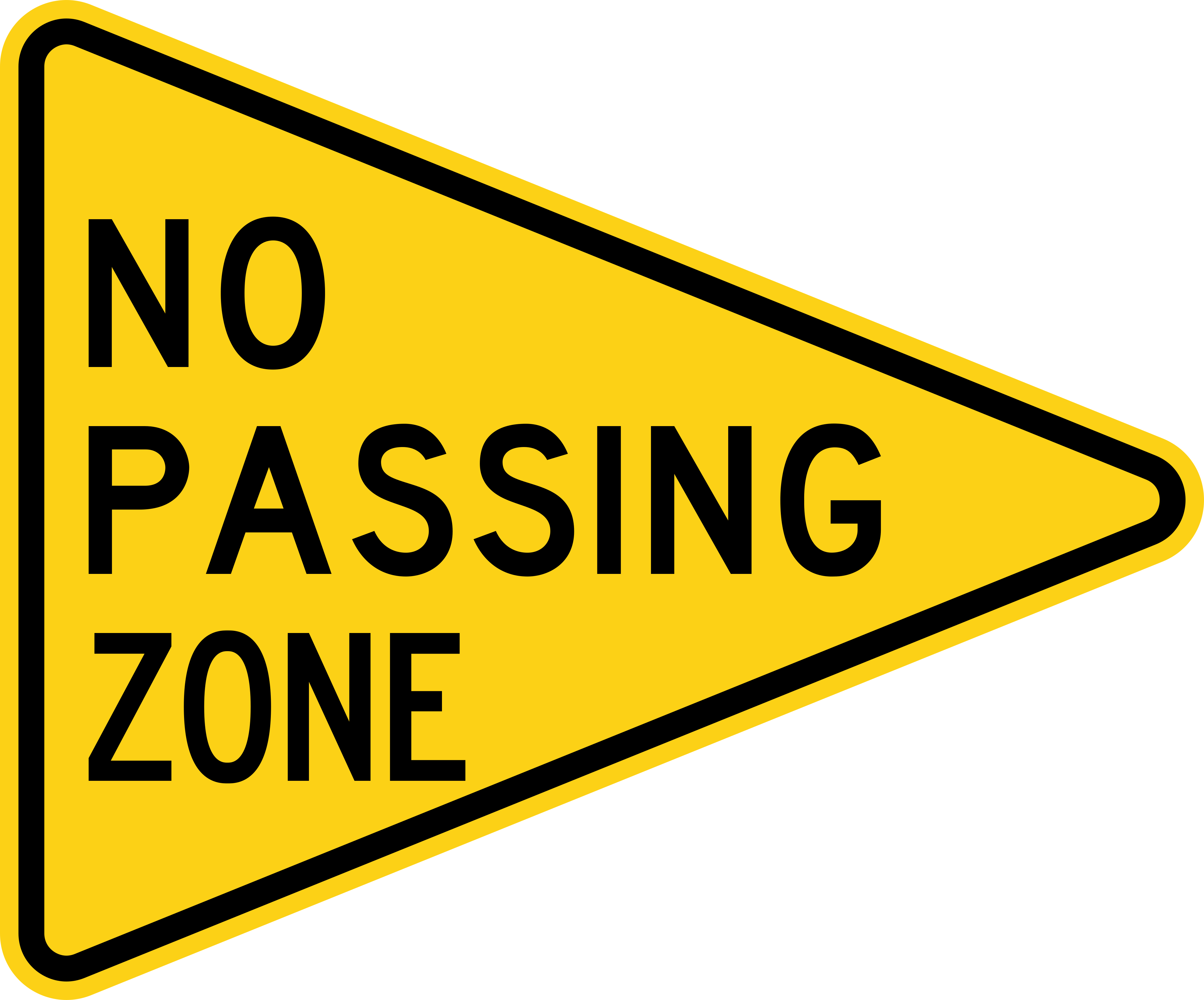
Question 128What does a yellow pennant-shaped (sideways triangle) sign on the left side of a two-lane road mean?
Show answer
A: No passing zone. The yellow, three-sided pennant sign marks the beginning of a no-passing zone and is posted on the left side of the road. Illinois Rules of the Road 2026 (DSD A 112): Colors of Signs, page 64.
-
Question 129What may pink signs be used for?
Show answer
A: Traffic incidents such as crashes and natural disasters. Pink may be used for traffic incident signs warning of unplanned incidents such as crashes and natural disasters. Illinois Rules of the Road 2026 (DSD A 112): Colors of Signs, page 65.
-
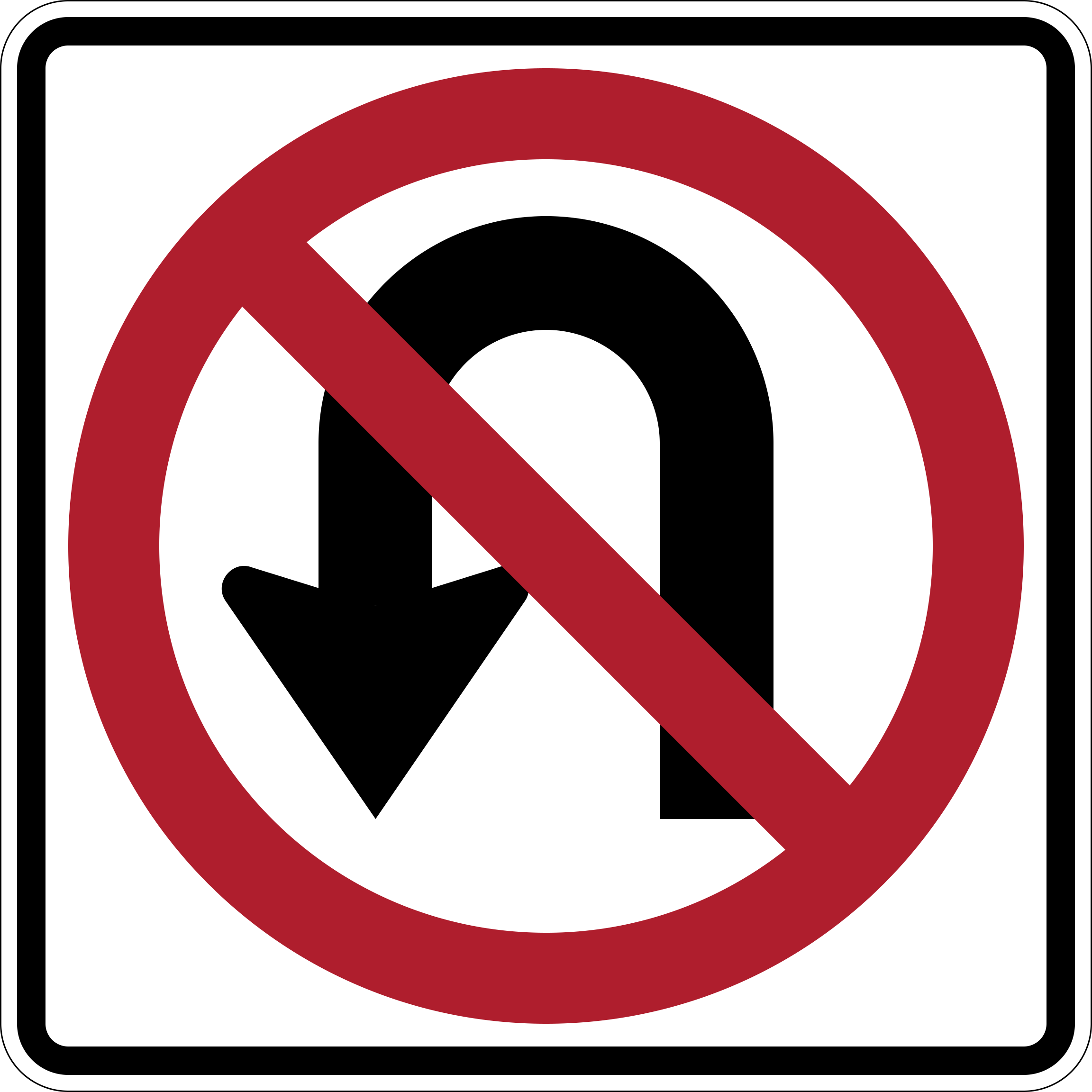
Question 130On a divided highway, who may use the median openings marked with NO U-TURN signs?
Show answer
B: Only authorized vehicles such as police, ambulances and snow plows. Those openings are only for authorized vehicles such as police cars, ambulances, snow plows and maintenance equipment. Illinois Rules of the Road 2026 (DSD A 112): No U-Turn, page 66.
-
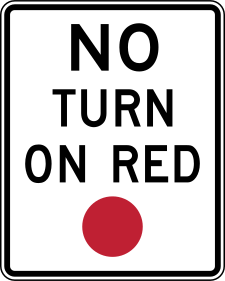
Question 131What does a NO TURN ON RED sign prohibit?
Show answer
D: Right turns on red, and left turns on red from one one-way street to another. NO TURN ON RED prohibits a right turn on a red light, and a left turn on red at intersecting one-way streets. Illinois Rules of the Road 2026 (DSD A 112): No Turn on Red, page 67.
-
Question 132How much narrower than the approach pavement is a bridge marked with a NARROW BRIDGE sign generally?

Show answer
A: About 2 feet. A narrow bridge is generally 2 feet narrower than the approach pavement. Illinois Rules of the Road 2026 (DSD A 112): Narrow Bridge, page 71.
-
Question 133During congestion, how does the Illinois Rules of the Road advise you to merge where two lanes become one (the 'zipper merge')?
Show answer
C: Use both lanes up to the lane reduction point and take turns merging there. In congestion, use both lanes up to the reduction point and merge there, taking turns. When the road is not congested, merge into the open lane as early as possible. Illinois Rules of the Road 2026 (DSD A 112): Reduction in Lanes, page 71.
-
Question 134When there is no congestion and a lane reduction is ahead, when should you merge?

Show answer
A: As early as possible. When the road isn't congested, merge into the open lane as early as possible. Illinois Rules of the Road 2026 (DSD A 112): Reduction in Lanes, page 71.
-
Question 135May you drive through a parking lot or off the roadway to avoid a traffic signal?
Show answer
C: No, a driver may never leave the roadway to avoid a traffic signal. A driver may never leave the roadway to avoid a traffic signal. Illinois Rules of the Road 2026 (DSD A 112): Chapter 10: Traffic Signals and Pavement Markings, page 77.
-
Question 136What does a steady red arrow mean in Illinois?
Show answer
A: Don't make the arrow's movement until a green arrow appears, except a right turn (or a left from one-way to one-way) after a full stop and yielding. A steady red arrow prohibits that movement until a green arrow appears. Exceptions: a right turn, or a left from a one-way onto a one-way moving left, after stopping completely and yielding. Illinois Rules of the Road 2026 (DSD A 112): Arrows, page 78.
-
Question 137What does a flashing yellow arrow mean?
Show answer
B: You may turn in the arrow's direction after yielding to pedestrians and vehicles. A flashing yellow arrow lets you turn in that direction after yielding to pedestrians and vehicles in the intersection or crosswalk. Illinois Rules of the Road 2026 (DSD A 112): Arrows, page 78.
-
Question 138What does a yellow X lane signal mean?
Show answer
A: The lane signal is about to change to red; leave the lane safely. A yellow X means the lane signal is about to turn to a red X, so move out of the lane safely. Illinois Rules of the Road 2026 (DSD A 112): Lane Signals, page 78.
-
Question 139A pedestrian is in the crosswalk when the flashing upraised-hand 'Don't Walk' signal starts. What may the pedestrian do?
Show answer
D: May continue to the sidewalk or safety island. A pedestrian who already started crossing during the steady walk signal may continue to a sidewalk or safety island; new pedestrians must not start. Illinois Rules of the Road 2026 (DSD A 112): Pedestrian Traffic Signals, Walk Lights, and Crossings, page 78.
-
Question 140What do double solid white lines between lanes mean?
Show answer
C: Crossing is prohibited. Double solid white lines separate lanes moving in the same direction, and crossing them is prohibited. Illinois Rules of the Road 2026 (DSD A 112): White Lane Lines, page 79.
-
Question 141What does a single solid white line between lanes going the same way mean?
Show answer
C: Crossing requires special care and is discouraged. A single solid white line between same-direction lanes means crossing requires special care and is discouraged. Illinois Rules of the Road 2026 (DSD A 112): White Lane Lines, page 79.
-
Question 142May you cross double solid yellow center lines to turn left into a driveway?
Show answer
C: Yes, to turn left into or from an alley, private road, driveway or street. Double solid yellow lines mark the center of the road, and you may cross them to turn left into or from an alley, private road, driveway or street. Illinois Rules of the Road 2026 (DSD A 112): Yellow Center Lines, page 79.
-
Question 143You started passing before a no-passing zone began. May you cross the solid yellow line on your side to finish the pass?
Show answer
B: Yes, to finish a pass started before the zone began. When the solid yellow line is on your side, you may cross it to finish a pass you started before the no-passing zone began. Illinois Rules of the Road 2026 (DSD A 112): Yellow No Passing Lines, page 79.
-
Question 144In an urban area, a white stop line is usually painted how far before the crosswalk?
Show answer
B: 4 feet. The white stop line is usually 4 feet before the crosswalk in urban areas. Stop before any part of your vehicle crosses it. Illinois Rules of the Road 2026 (DSD A 112): White Stop Line, page 80.
-
Question 145When a two-way left turn lane is provided, may you make a left turn from a different lane?
Show answer
D: No, a left turn may not be made from any other lane. When a two-way left turn lane is provided, you may not make a left turn from any other lane. Illinois Rules of the Road 2026 (DSD A 112): Two-Way Left Turn Lanes, page 80.
-
Question 146What are edge lines on the left side of a divided road?
Show answer
A: Solid yellow. Solid yellow lines mark the left edge of divided roads; solid white lines mark the right edge. Illinois Rules of the Road 2026 (DSD A 112): Edge Lines, page 79.
-
Question 147At a crossing with more than one track, where is the number of tracks shown?

Show answer
C: On a sign below the crossbuck. If the crossing has more than one track, the number of tracks is on a sign below the crossbuck. Illinois Rules of the Road 2026 (DSD A 112): Railroad Crossings, page 81.
-
Question 148At 55 mph, about how far back does the three-second rule put you, according to the Illinois table?
Show answer
C: 243 feet. At 55 mph a vehicle travels about 81 feet per second, so three seconds is about 243 feet. Illinois Rules of the Road 2026 (DSD A 112): Following Distances, page 83.
-
Question 149What happens to stopping distance when you double your speed?
Show answer
C: It quadruples. Doubling your speed quadruples your vehicle's stopping distance. Illinois Rules of the Road 2026 (DSD A 112): Vehicle Speed, page 84.
-
Question 150If the fog becomes too dense to see, the Illinois Rules of the Road says you should:
Show answer
A: Pull off the roadway and stop. If fog is too dense, pull off the roadway and stop. The handbook warns against creeping along at 5-10 mph. Illinois Rules of the Road 2026 (DSD A 112): Fog, page 84.
-
Question 151Illinois law requires your headlights to be on when:
Show answer
B: Your windshield wipers are in use. Illinois law requires headlights whenever you are using your windshield wipers. Illinois Rules of the Road 2026 (DSD A 112): Rain, page 85.
-
Question 152How far ahead of an oncoming vehicle must you dim your high beams?
Show answer
C: 500 feet. Dim bright lights 500 feet before meeting an oncoming vehicle and 300 feet before passing a vehicle you are following. Illinois Rules of the Road 2026 (DSD A 112): Night Driving, page 87.
-
Question 153At night you come up behind a vehicle you intend to pass. How far before passing it must you dim your high beams?
Show answer
B: 300 feet. Bright lights must be dimmed 300 feet before passing a vehicle, and 500 feet before meeting an oncoming one. Illinois Rules of the Road 2026 (DSD A 112): Night Driving, page 87.
-
Question 154Headlights must be on from sunset to sunrise and when you need your wipers. When else does the handbook say headlights should be used?
Show answer
D: When objects 1,000 feet away cannot be seen. Besides sunset to sunrise and whenever rain, snow or fog require wipers, headlights should also be used when you cannot see objects 1,000 feet away. Illinois Rules of the Road 2026 (DSD A 112): Required Equipment, page 92.
-
Question 155Your vehicle starts to skid. What should you do?
Show answer
A: Ease off the gas or brakes and steer in the direction of the skid until you regain traction. Ease off the gas or brakes, steer into the direction of the skid until you regain traction, then straighten the vehicle. Illinois Rules of the Road 2026 (DSD A 112): Skidding, page 87.
-
Question 156Your car runs into water and is sinking. Where does an air pocket usually form?
Show answer
D: The back seat area. If the vehicle sinks, move to the back seat area where an air pocket usually forms, take a breath and exit through a rear window if possible. Illinois Rules of the Road 2026 (DSD A 112): Water Crashes, page 88.
-
Question 157If you must jump clear of a vehicle touching downed power lines because of fire, how far should you shuffle or hop away?
Show answer
C: 50 feet. Land on both feet and hop or shuffle with your arms close to your body for 50 feet away from the vehicle. Illinois Rules of the Road 2026 (DSD A 112): Electricity, page 88.
-
Question 158You lose steering control in a car with power steering. Why shouldn't you turn off the ignition?
Show answer
B: You will lose power steering or the ability to steer. Turning off the ignition will cost you the power steering or the ability to steer. Ease off the gas, use flashers and brake very gently. Illinois Rules of the Road 2026 (DSD A 112): Equipment Failure, page 89.
-
Question 159Your car breaks down on the Illinois Tollway. What should you do?
Show answer
B: Pull to the right shoulder, stay in the vehicle with your seat belt on, use hazard lights and call *999 or 911. On the Tollway, pull far to the right, stay inside with your seat belt on, turn on hazards, call *999 or 911, and wait for help. Illinois Rules of the Road 2026 (DSD A 112): Stranded Motorists' Safety Protocols, page 90.
-
Question 160On a high-capacity road such as a highway, what should you do after pulling to the shoulder with a breakdown?
Show answer
D: Stay in the vehicle with your seat belt on, turn on hazards and call 911. On high-capacity roads, remain in the vehicle with your seat belt on, turn on hazards, call 911 and wait for responders. Illinois Rules of the Road 2026 (DSD A 112): Stranded Motorists' Safety Protocols, page 90.
-
Question 161The foot brake on your vehicle must be able to stop it from 20 mph within what distance?
Show answer
B: 30 feet. The foot brake must stop a vehicle traveling 20 mph within 30 feet; the parking brake must do it within 55 feet. Illinois Rules of the Road 2026 (DSD A 112): Required Equipment, page 92.
-
Question 162From how far away must your vehicle's horn be audible?
Show answer
C: 200 feet. Vehicles must have a horn that can be heard from 200 feet. Illinois Rules of the Road 2026 (DSD A 112): Required Equipment, page 92.
-
Question 163How far from behind must a vehicle's two red taillights be visible?
Show answer
C: 500 feet. Vehicles must have two red taillights visible for 500 feet from behind. Illinois Rules of the Road 2026 (DSD A 112): Required Equipment, page 92.
-
Question 164What window tinting is allowed on the front windshield in Illinois?
Show answer
D: None, except a 6-inch strip along the top. Tinted windows are not allowed on the front windshield, except a 6-inch strip along the entire top. Illinois Rules of the Road 2026 (DSD A 112): Required Equipment, page 92.
-
Question 165How far behind your car must your rearview mirror let you see?
Show answer
B: 200 feet. One rearview mirror is required that lets you see at least 200 feet behind your car. Illinois Rules of the Road 2026 (DSD A 112): Required Equipment, page 92.
-
Question 166A load extends 4 feet or more past the rear of your vehicle during the day. What must you do?
Show answer
B: Mark it with a red flag. Loads extending 4 feet or more to the rear need a red flag during the day and a red light visible for 500 feet at night or in poor visibility. Illinois Rules of the Road 2026 (DSD A 112): Restricted Equipment, page 93.
-
Question 167What are Illinois' minimum liability insurance limits for injury or death of one person?
Show answer
C: $25,000. Illinois minimum liability limits are $25,000 for one person, $50,000 for more than one person, and $20,000 for property damage. Illinois Rules of the Road 2026 (DSD A 112): Mandatory Insurance, page 98.
-
Question 168What is Illinois' minimum liability insurance for damage to another person's property?
Show answer
C: $20,000. The minimum property damage liability coverage in Illinois is $20,000. Illinois Rules of the Road 2026 (DSD A 112): Mandatory Insurance, page 98.
-
Question 169When you sell your car in Illinois, what happens to the license plates?
Show answer
C: The seller removes and keeps them. In Illinois, plates stay with the owner, not the vehicle. The seller removes and keeps them. Illinois Rules of the Road 2026 (DSD A 112): License Plate Requirements, page 96.
-
Question 170How long is an Illinois Temporary Registration Permit valid?
Show answer
C: 90 days. A Temporary Registration Permit is valid for 90 days from issuance and is displayed like a rear plate. Illinois Rules of the Road 2026 (DSD A 112): Temporary Registration Permit, page 96.
Answer every question to see your score.
Remembering the numbers
Most mistakes on the Illinois Secretary of State test are about specifics: how many feet before a turn to signal, how far to park from a hydrant, the alcohol limit for drivers under 21. Write the numbers from these questions on a card and review them before the test, then take the exam simulator.