Hardest New Hampshire permit test questions
89 questions that need exact knowledge rather than common sense: the numbers (distances, speeds, fines, limits), the exceptions and the rules that are easy to mix up. We chose them from our New Hampshire question bank for that reason; they're not statistics from the DMV.
-
Question 1Does New Hampshire issue learner's permits?
Show answer
D: No, but a person 15½ or older may practice with a qualified adult. New Hampshire does not issue permits; a person at least 15½ without a license may drive while being taught, accompanied by a parent, guardian, or licensed responsible adult 25 or older. New Hampshire Driver's Manual (DSMV 360): Section 1: Driving in New Hampshire: Practice Driving, page 8.
-
Question 2At what age may a New Hampshire teen begin practice driving with a qualified adult?
Show answer
B: 15½. A person at least 15½ may practice driving accompanied by a parent, legal guardian, or a licensed responsible adult 25 or older. New Hampshire Driver's Manual (DSMV 360): Section 1: Driving in New Hampshire: Practice Driving, page 8.
-
Question 3Besides a parent or guardian, who may supervise a New Hampshire teen's practice driving?
Show answer
B: A licensed responsible adult 25 years of age or older. Practice driving must be with a parent, legal guardian, or a licensed responsible adult who is 25 or older. New Hampshire Driver's Manual (DSMV 360): Section 1: Driving in New Hampshire: Practice Driving, page 8.
-
Question 4How many classroom hours does New Hampshire driver education require?
Show answer
C: 30 hours. Driver education requires 30 classroom hours, 10 hours of driving and 6 hours of observation with a certified instructor, plus 40 supervised hours with a parent or adult. New Hampshire Driver's Manual (DSMV 360): Section 1: Driving in New Hampshire: Licensing Requirements, page 7.
-
Question 5How many hours of practice driving with a certified instructor does New Hampshire driver education include?
Show answer
B: 10 hours. Driver education includes 10 hours of practice driving with a certified instructor and 6 hours of observation. New Hampshire Driver's Manual (DSMV 360): Section 1: Driving in New Hampshire: Licensing Requirements, page 7.
-
Question 6How many additional supervised hours with a parent or responsible adult does New Hampshire require, and how many at night?
Show answer
B: 40 hours, 10 at night. Teens must complete 40 hours of additional supervised driving with a parent, guardian or responsible adult, 10 of them at night. New Hampshire Driver's Manual (DSMV 360): Section 1: Driving in New Hampshire: Licensing Requirements, page 7.
-
Question 7How long do new residents have to get a New Hampshire driver's license after moving in?
Show answer
C: Up to 60 days. New residents have up to 60 days to obtain a New Hampshire driver's license. New Hampshire Driver's Manual (DSMV 360): Section 1: Driving in New Hampshire: New Residents to NH, page 7.
-
Question 8What vision is required for a New Hampshire driver's license?
Show answer
B: 20/40 in both eyes; 20/30 if sight in only one eye. Applicants need 20/40 visual acuity in both eyes; with sight in only one eye, 20/30 is required. New Hampshire Driver's Manual (DSMV 360): Section 1: Driving in New Hampshire: Required Driver's License Tests, page 8.
-
Question 9How many questions are on the New Hampshire automated knowledge test?
Show answer
C: 40. The knowledge test has 40 multiple-choice questions with four answers each, to be completed in 40 minutes. New Hampshire Driver's Manual (DSMV 360): Section 1: Driving in New Hampshire: Required Driver's License Tests, page 8.
-
Question 10How much time do you have to complete the New Hampshire knowledge test?
Show answer
B: 40 minutes. Testers have 40 minutes to complete the 40-question test. New Hampshire Driver's Manual (DSMV 360): Section 1: Driving in New Hampshire: Required Driver's License Tests, page 8.
-
Question 11When does the New Hampshire knowledge test automatically end?
Show answer
D: If more than 8 questions are answered incorrectly. If more than 8 questions are answered incorrectly, the test automatically ends. New Hampshire Driver's Manual (DSMV 360): Section 1: Driving in New Hampshire: Required Driver's License Tests, page 8.
-
Question 12If you fail the New Hampshire knowledge or road test, when can you retest?
Show answer
A: Not sooner than ten days from the failed test. If either test is failed, you get an appointment to retest not sooner than ten days later. New Hampshire Driver's Manual (DSMV 360): Section 1: Driving in New Hampshire: Pass/Fail of Tests, page 9.
-
Question 13How long is the temporary paper license valid after passing your New Hampshire tests?
Show answer
C: 60 days. Applicants who pass get a 60-day paper temporary license to use until the permanent license arrives by mail. New Hampshire Driver's Manual (DSMV 360): Section 1: Driving in New Hampshire: Pass/Fail of Tests, page 9.
-
Question 14What is a New Hampshire Youth Operator license?
Show answer
C: The license issued to drivers 16 and older but under 21; printed vertically, expires on the 21st birthday. Anyone 16 or older and under 21 receives a Youth Operator license, printed vertically, which expires on the 21st birthday. New Hampshire Driver's Manual (DSMV 360): Section 2: Driver's License and Non-Driver ID Information: Types of Driver Licenses, page 10.
-
Question 15During what hours may a New Hampshire Youth Operator under 18 NOT drive?
Show answer
D: 1 a.m. to 4 a.m.. Youth Operators under 18 may not drive between 1:00 a.m. and 4:00 a.m. New Hampshire Driver's Manual (DSMV 360): Section 2: Driver's License and Non-Driver ID Information: Specific Restrictions for Youth Operators, page 10.
-
Question 16During the first six months, how many non-family passengers under 25 may a New Hampshire Youth Operator under 18 carry without a licensed adult 25+?
Show answer
B: No more than one. For the first six months, a Youth Operator under 18 may not carry more than one non-family passenger under 25 unless accompanied by a licensed responsible adult at least 25. New Hampshire Driver's Manual (DSMV 360): Section 2: Driver's License and Non-Driver ID Information: Specific Restrictions for Youth Operators, page 10.
-
Question 17May a New Hampshire driver under 18 use a hands-free phone while driving?
Show answer
B: No, not hands-free or handheld, except to report an emergency. Drivers under 18 may not use a cell phone or mobile device, hands-free or not, while driving or stopped in traffic, except to report an emergency. New Hampshire Driver's Manual (DSMV 360): Section 2: Driver's License and Non-Driver ID Information: Specific Restrictions for Youth Operators, page 10.
-
Question 18How often must a New Hampshire driver's license be renewed?
Show answer
A: Every 5 years on your birthday. NH driver's licenses expire on the applicant's birthday every 5 years. New Hampshire Driver's Manual (DSMV 360): Section 2: Driver's License and Non-Driver ID Information: Driver's License Renewal, page 11.
-
Question 19Under New Hampshire's 'Under 20' law, how long is a license suspension for a youth driver's first offense?
Show answer
A: 20 to 40 days. For drivers under 20, a first offense suspension is a minimum of 20 days and not more than 40 days; second 45-90; third 90-180 plus a driver attitude program. New Hampshire Driver's Manual (DSMV 360): Section 2: Driver's License and Non-Driver ID Information: Youth Operator 'Under 20' Law, page 12.
-
Question 20How long can New Hampshire revoke a driver's privileges after declaring them a Habitual Offender?
Show answer
A: 1 to 4 years. If declared a Habitual Offender after a hearing, the Director revokes driving privileges for 1 to 4 years. New Hampshire Driver's Manual (DSMV 360): Section 2: Driver's License and Non-Driver ID Information: Habitual Offenders, page 12.
-
Question 21At what BAC is a New Hampshire driver 21 or older legally intoxicated?
Show answer
B: .08% or higher. A driver is legally intoxicated at a BAC of .08% or higher, or .02% or higher if under 21. New Hampshire Driver's Manual (DSMV 360): Section 2: Driver's License and Non-Driver ID Information: Loss of Driving Privileges, page 12.
-
Question 22At what BAC is a New Hampshire driver under 21 legally intoxicated?
Show answer
B: .02% or higher. For drivers under 21, the threshold is .02% or higher. New Hampshire Driver's Manual (DSMV 360): Section 2: Driver's License and Non-Driver ID Information: Loss of Driving Privileges, page 12.
-
Question 23What is the penalty for a first New Hampshire DUI conviction?
Show answer
A: Class B misdemeanor, fine of at least $500, 9 months to 2 years loss of license, and an impaired driver program. A first DUI is a Class B misdemeanor with a fine not less than $500, 9 months to 2 years loss of driving privileges, and a required impaired driver education program. New Hampshire Driver's Manual (DSMV 360): Section 3: Dangerous Driving: Impaired Driving and the Law, page 15.
-
Question 24Under New Hampshire law, may a driver under 21 transport alcohol in a vehicle?
Show answer
C: No, except when accompanied by a parent, legal guardian or legal-age spouse. No driver under 21 may transport liquor or alcoholic beverages in any part of a vehicle except when accompanied by a parent, legal guardian or legal-age spouse. New Hampshire Driver's Manual (DSMV 360): Section 3: Dangerous Driving: Alcohol, Other Drugs and Driving, page 14.
-
Question 25About how long does each ounce of alcohol take to go through the body?
Show answer
D: About an hour. Each ounce of alcohol consumed takes about an hour to go through the body. New Hampshire Driver's Manual (DSMV 360): Section 3: Dangerous Driving: Effects of Alcohol and Other Impairing Drugs, page 15.
-
Question 26About what share of fatal traffic crashes involve alcohol and other impairing drugs?
Show answer
B: About 40%. Alcohol and other impairing drugs are involved in about 40% of all traffic crashes in which someone is killed. New Hampshire Driver's Manual (DSMV 360): Section 3: Dangerous Driving: Alcohol, Other Drugs and Driving, page 14.
-
Question 27A driver awake for 18 straight hours performs about like someone with what BAC?
Show answer
B: 0.05%. After 18 hours awake, performance is similar to a 0.05% BAC; after 21 and 24 hours, 0.08% and 0.10%. New Hampshire Driver's Manual (DSMV 360): Section 3: Dangerous Driving: Fatigue, page 13.
-
Question 28On long trips, how often does the New Hampshire manual suggest stopping?
Show answer
C: At least every 2 hours. During long trips, plan to stop at least every 2 hours to stretch or get a drink. New Hampshire Driver's Manual (DSMV 360): Section 3: Dangerous Driving: Ways to Avoid Fatigue, page 13.
-
Question 29Under NH law, does the hand-held device ban apply while you are temporarily stopped at a traffic light?
Show answer
D: Yes, it applies while temporarily halted in traffic for a traffic control device. The ban applies while driving a moving vehicle or when temporarily halted in traffic for a traffic control device or other momentary delay. New Hampshire Driver's Manual (DSMV 360): Section 3: Dangerous Driving: Driver Distractions, page 13.
-
Question 30How far should your chest be from the steering wheel?
Show answer
C: 10 inches. There should be 10 inches between the driver's chest and the steering wheel. New Hampshire Driver's Manual (DSMV 360): Section 4: Before Driving: Adjusting Seat, page 17.
-
Question 31Who is required by New Hampshire law to wear a safety restraint?
Show answer
A: Anyone under the age of 18. In New Hampshire, safety restraints are required for anyone under 18, though they are highly recommended for all ages. New Hampshire Driver's Manual (DSMV 360): Section 4: Before Driving: Using Safety Belts, page 17.
-
Question 32In New Hampshire, which children must ride in a child passenger restraint?
Show answer
B: Under 7 years old and under 57 inches tall. A child less than 7 years old and less than 57 inches tall must be secured in an approved child passenger restraint. New Hampshire Driver's Manual (DSMV 360): Section 4: Before Driving: Child Passenger Safety Laws, page 18.
-
Question 33Who must wear a helmet on a motorcycle in New Hampshire?
Show answer
B: Riders and passengers under 18. New Hampshire law requires all riders and passengers under 18 to wear DOT-approved helmets. New Hampshire Driver's Manual (DSMV 360): Section 4: Before Driving: Motorcycle Helmet Use, page 18.
-
Question 34What is the fine range for a first offense if snow or ice on your vehicle endangers people or property in New Hampshire?
Show answer
C: $250 to $500. Under RSA 265:79-b, penalties can be $250 to $500 for a first offense, with more for later offenses. New Hampshire Driver's Manual (DSMV 360): Section 4: Before Driving: Snow and Ice Removal, page 19.
-
Question 35What is the maximum speed limit in a New Hampshire business or urban residence district?
Show answer
B: 30 mph. The maximum is 30 mph in any business or urban residence district. New Hampshire Driver's Manual (DSMV 360): Section 5: Basic Driving: Speed Management, page 21.
-
Question 36What is the maximum speed limit in a New Hampshire rural residence district?
Show answer
B: 35 mph. The maximum is 35 mph in any rural residence district and on Class V highways outside compact areas. New Hampshire Driver's Manual (DSMV 360): Section 5: Basic Driving: Speed Management, page 21.
-
Question 37What is the speed limit on New Hampshire interstates and turnpikes that are 4-lane divided highways (except the northern I-93 section)?
Show answer
C: 65 mph. The limit is 65 mph on the interstate system and turnpikes where they are divided highways of 4 or more lanes; 70 mph on I-93 from mile marker 45 to Vermont. New Hampshire Driver's Manual (DSMV 360): Section 5: Basic Driving: Speed Management, page 21.
-
Question 38On which New Hampshire road is the speed limit 70 mph?
Show answer
C: I-93 from mile marker 45 to the Vermont border. 70 mph applies on the portion of I-93 from mile marker 45 to the Vermont border. New Hampshire Driver's Manual (DSMV 360): Section 5: Basic Driving: Speed Management, page 21.
-
Question 39What is the minimum speed on a New Hampshire interstate (in normal conditions)?
Show answer
C: 45 mph. The minimum speed on an interstate is 45 mph unless road and weather conditions make that unsafe. New Hampshire Driver's Manual (DSMV 360): Section 5: Basic Driving: Speed Management, page 21.
-
Question 40What is the speed limit in a posted New Hampshire school zone during the restricted times?
Show answer
A: 10 mph below the usual posted limit. In a posted school zone, the limit is 10 mph below the usual posted limit from 45 minutes before school opens until it opens, and from closing until 45 minutes after. New Hampshire Driver's Manual (DSMV 360): Section 5: Basic Driving: Speed Management, page 21.
-
Question 41During what times does the New Hampshire school zone speed reduction apply?
Show answer
B: From 45 minutes before school opening until opening, and from closing until 45 minutes after. The reduced school zone limit applies from 45 minutes before school opening until it opens, and from school closing until 45 minutes after. New Hampshire Driver's Manual (DSMV 360): Section 5: Basic Driving: Speed Management, page 21.
-
Question 42How far before a turn does the New Hampshire manual say to signal?
Show answer
C: At least 100 feet. Signal at least 100 feet before a turn, and on the highway at least 500 feet before changing lanes or exiting. New Hampshire Driver's Manual (DSMV 360): Section 5: Basic Driving: Communicating and Signaling, page 21.
-
Question 43On the highway, how far ahead should you signal before changing lanes or exiting in New Hampshire?
Show answer
C: At least 500 feet. On the highway, signal at least 500 feet before changing lanes or exiting the roadway. New Hampshire Driver's Manual (DSMV 360): Section 5: Basic Driving: Communicating and Signaling, page 21.
-
Question 44When does New Hampshire law require headlights?
Show answer
A: From 1/2 hour after sunset to 1/2 hour before sunrise, and when rain, snow or fog keep you from seeing 1,000 feet ahead. Headlights are required from 1/2 hour after sunset to 1/2 hour before sunrise, and whenever rain, snow or fog prevent seeing persons and vehicles 1,000 feet ahead. New Hampshire Driver's Manual (DSMV 360): Section 5: Basic Driving: Communicating and Signaling, page 21.
-
Question 45When the speed of a vehicle doubles, what happens to its stopping distance?
Show answer
A: It increases 4 times. The stopping distance increases 4 times when the speed of the vehicle is doubled. New Hampshire Driver's Manual (DSMV 360): Section 5: Basic Driving: Stopping Distance, page 22.
-
Question 46At 50 mph on dry pavement with good brakes, about how far does braking take?
Show answer
A: About 158 feet. At 50 mph on dry pavement with good brakes, braking can take about 158 feet. New Hampshire Driver's Manual (DSMV 360): Section 5: Basic Driving: Stopping Distance, page 22.
-
Question 47What following distance does the New Hampshire manual recommend?
Show answer
A: At least four seconds. Avoid traveling closer than a four-second following distance; tailgating is a violation punishable by a fine. New Hampshire Driver's Manual (DSMV 360): Section 5: Basic Driving: Stopping Distance—Tailgating, page 22.
-
Question 48How much should you add to your following distance at night on an unfamiliar road?
Show answer
D: At least two additional seconds. Add at least one second for night driving and at least two additional seconds on unfamiliar roads at night. New Hampshire Driver's Manual (DSMV 360): Section 5: Basic Driving: Night Driving, page 24.
-
Question 49In New Hampshire's sign color list, what does purple indicate?
Show answer
D: E-ZPass. Purple signs are used for E-ZPass; pink is for incident management. New Hampshire Driver's Manual (DSMV 360): Section 6: Rules of the Road: Traffic Signs: Standard Colors, page 27.
-
Question 50What does a pink sign indicate?
Show answer
C: Incident management. Pink is the standard color for incident management signs. New Hampshire Driver's Manual (DSMV 360): Section 6: Rules of the Road: Traffic Signs: Standard Colors, page 27.
-
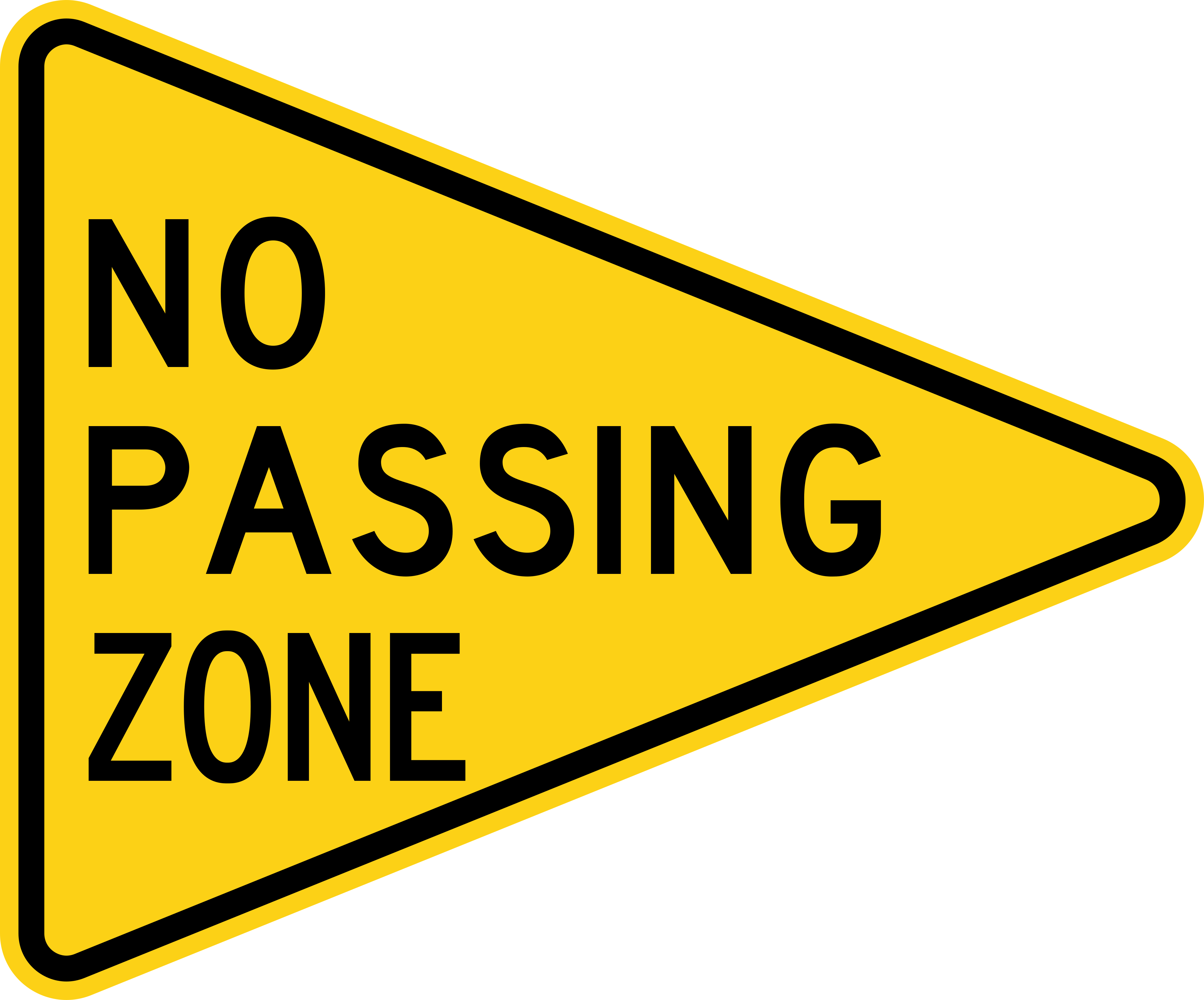
Question 51What does a pennant-shaped (sideways triangle) sign mean, and where is it placed?
Show answer
B: No passing zone ahead; on the left side of the road. The pennant warns of a no-passing zone ahead and is found on the left side of the road. New Hampshire Driver's Manual (DSMV 360): Section 6: Rules of the Road: Traffic Signs: Standard Shapes, page 27.
-
Question 52On interstate route numbers, what do odd numbers indicate?
Show answer
A: North-south routes. Even-numbered interstates run west/east and odd-numbered ones run north/south. New Hampshire Driver's Manual (DSMV 360): Section 6: Rules of the Road: Route Number Signs, page 28.
-
Question 53A three-digit interstate number starts with an even digit. What kind of route is it?
Show answer
B: A route that goes through or around a city. Three-digit routes with an odd first number go into a city; those with an even first number go through or around a city. New Hampshire Driver's Manual (DSMV 360): Section 6: Rules of the Road: Route Number Signs, page 28.
-
Question 54When a train is approaching a crossing in New Hampshire, how far from the nearest rail must you stop (if no stop line)?
Show answer
B: Not less than 15 feet nor more than 50 feet. Stop behind the stop line or not less than 15 feet nor more than 50 feet from the nearest rail. New Hampshire Driver's Manual (DSMV 360): Section 6: Rules of the Road: Railroad Crossing Warning Signs, page 28.
-
Question 55What can happen to fines in a New Hampshire work zone?
Show answer
A: They may be doubled, when clearly marked. Fines may be doubled in a work zone, which will be clearly marked before you enter it. New Hampshire Driver's Manual (DSMV 360): Section 6: Rules of the Road: Work Zone Signs, page 29.
-
Question 56What color is the edge line on the left edge of a one-way road?
Show answer
B: Yellow. Edge lines are white on two-way roads and on the right edges of one-way roads, and yellow on the left edges of one-way roads. New Hampshire Driver's Manual (DSMV 360): Section 6: Rules of the Road: Pavement Markings: Edge Markings, page 29.
-
Question 57How far from a stopped school bus with red lights flashing must you stop in New Hampshire?
Show answer
C: At least 25 feet, in any direction. Drivers must stop at least 25 feet in any direction from a school bus stopped with red lights flashing and/or stop arm out, unless the roadway is separated by a physical barrier. New Hampshire Driver's Manual (DSMV 360): Section 7: General Driving and Parking: Rules for School Buses, page 33.
-
Question 58When are you NOT required to stop for a stopped New Hampshire school bus with red lights flashing?
Show answer
C: When the roadway is separated by a physical barrier. You must stop in any direction unless the roadway is separated by a physical barrier. New Hampshire Driver's Manual (DSMV 360): Section 7: General Driving and Parking: Rules for School Buses, page 33.
-
Question 59If you can't pull completely off a rural highway, how far must you be visible in each direction?
Show answer
B: 200 feet. Pull off as far as possible, leaving a clear view for 200 feet in each direction and room for others to pass. New Hampshire Driver's Manual (DSMV 360): Section 7: General Driving and Parking: Parking, page 33.
-
Question 60How close to a fire hydrant may you park in New Hampshire?
Show answer
D: No closer than 15 feet. It is illegal to park within 15 feet of a fire hydrant. New Hampshire Driver's Manual (DSMV 360): Section 7: General Driving and Parking: Parking, page 34.
-
Question 61How close to a crosswalk at an intersection may you park in New Hampshire?
Show answer
B: No closer than 20 feet. It is illegal to park within 20 feet of a crosswalk at an intersection. New Hampshire Driver's Manual (DSMV 360): Section 7: General Driving and Parking: Parking, page 34.
-
Question 62How close to a stop sign, yield sign or traffic signal may you park in New Hampshire?
Show answer
B: No closer than 30 feet. It is illegal to park within 30 feet of a stop sign, yield sign or traffic control signal. New Hampshire Driver's Manual (DSMV 360): Section 7: General Driving and Parking: Parking, page 34.
-
Question 63How close to the nearest rail of a railroad crossing may you park in New Hampshire?
Show answer
D: No closer than 50 feet. It is illegal to park within 50 feet of the nearest rail of a railroad crossing. New Hampshire Driver's Manual (DSMV 360): Section 7: General Driving and Parking: Parking, page 34.
-
Question 64On the opposite side of the street from a fire station driveway, how close may you park?
Show answer
A: Not within 75 feet. You may not park within 20 feet of a fire station driveway, or within 75 feet on the opposite side of the street. New Hampshire Driver's Manual (DSMV 360): Section 7: General Driving and Parking: Parking, page 34.
-
Question 65Using the counting method, how do you know if you are following at least four seconds behind?
Show answer
D: You don't pass the fixed point before counting to 'one-thousand-four'. Count from when the vehicle ahead passes a fixed point; you should not reach that point before counting 'one-thousand-four'. New Hampshire Driver's Manual (DSMV 360): Section 8: Driving Safely: Space Management, page 36.
-
Question 66Within how many days must a New Hampshire crash report be filed if there is a death, injury, or over $1,000 combined damage?
Show answer
C: 15 days. An accident report must be filed with the DMV within 15 days if there is a fatality, injury, or combined property damage over $1,000. New Hampshire Driver's Manual (DSMV 360): Section 9: Accidents and Financial Responsibility: Reporting an Accident, page 38.
-
Question 67What combined property damage amount requires filing a crash report with the New Hampshire DMV?
Show answer
A: More than $1,000. A report is required if combined property damage exceeds $1,000 (or there's a fatality or injury). New Hampshire Driver's Manual (DSMV 360): Section 9: Accidents and Financial Responsibility: Reporting an Accident, page 38.
-
Question 68Is auto insurance mandatory for New Hampshire drivers?
Show answer
A: No, NH has no mandatory insurance law, but uninsured drivers are responsible for damages. New Hampshire has no mandatory insurance law, but after an uninsured accident you can be held responsible for all damages and may lose your license until settled. New Hampshire Driver's Manual (DSMV 360): Section 9: Accidents and Financial Responsibility: Financial Responsibility—Insurance, page 38.
-
Question 69Where should you place emergency flares or reflectors after a breakdown in New Hampshire?
Show answer
B: 200 feet in front of and behind the vehicle. Leave flashers on and, if available, place flares or reflectors 200 feet in front of and behind the vehicle. New Hampshire Driver's Manual (DSMV 360): Section 10: Driving Emergencies: Vehicle Breakdown, page 41.
-
Question 70Your car breaks down and you have no phone. What color cloth should you tie to the door handle or antenna in a snowstorm?
Show answer
D: Red. Raise the hood and tie a white cloth—red in a snowstorm—to the driver's door handle or antenna. New Hampshire Driver's Manual (DSMV 360): Section 10: Driving Emergencies: Vehicle Breakdown, page 41.
-
Question 71About what share of traffic deaths each year are vehicle-pedestrian collisions?
Show answer
B: Nearly 20 percent. Vehicle-pedestrian collisions account for nearly 20 percent of all traffic deaths each year. New Hampshire Driver's Manual (DSMV 360): Section 11: Sharing the Road: Pedestrians, page 42.
-
Question 72What passing distance does New Hampshire presume reasonable for a bicyclist when you are going 30 mph or less?
Show answer
D: At least 3 feet. At 30 mph or less, at least 3 feet is presumed reasonable, plus one more foot for every 10 mph above 30. New Hampshire Driver's Manual (DSMV 360): Section 11: Sharing the Road: Bicyclists, page 42.
-
Question 73You are passing a bicyclist at 50 mph in New Hampshire. How much clearance is presumed reasonable?
Show answer
C: 5 feet. 3 feet at 30 mph or less, plus one foot for every 10 mph above 30: at 50 mph that's 5 feet. New Hampshire Driver's Manual (DSMV 360): Section 11: Sharing the Road: Bicyclists, page 42.
-
Question 74About how wide are most motorcycles, according to the New Hampshire manual?
Show answer
B: About two feet. Most motorcycles are only about two feet wide, making them hard to see and easy to hide in blind spots. New Hampshire Driver's Manual (DSMV 360): Section 11: Sharing the Road: Motorcycles, page 43.
-
Question 75What following distance should you allow behind a motorcycle in New Hampshire?
Show answer
A: At least four seconds. Allow at least four seconds following distance when behind a motorcycle. New Hampshire Driver's Manual (DSMV 360): Section 11: Sharing the Road: Motorcycles, page 43.
-
Question 76What does the orange and red triangle on the back of a vehicle mean?
Show answer
C: The vehicle travels less than 25 mph. The reflective orange and red triangle on animal-drawn, farm or construction vehicles means it travels less than 25 mph. New Hampshire Driver's Manual (DSMV 360): Section 11: Sharing the Road: Slow Moving Vehicles, page 44.
-
Question 77A loaded truck at 55 mph needs a minimum of about how far to stop?
Show answer
C: 335 feet. A loaded truck at 55 mph needs at least 335 feet to stop, more than 1½ times a car's distance. New Hampshire Driver's Manual (DSMV 360): Section 11: Sharing the Road: Front No-Zones, page 45.
-
Question 78How far behind a large truck can its rear blind spot extend?
Show answer
C: 200 feet. Large vehicles have huge blind spots directly behind them that extend up to 200 feet. New Hampshire Driver's Manual (DSMV 360): Section 11: Sharing the Road: Rear No-Zones, page 45.
-
Question 79How close may you follow a fire truck sounding its siren in New Hampshire?
Show answer
A: Not closer than 500 feet. Do not follow a fire truck closer than 500 feet when it is sounding a siren or using flashing lights, and don't drive or park within the block where it stopped. New Hampshire Driver's Manual (DSMV 360): Section 11: Sharing the Road: Emergency Vehicles, page 46.
-
Question 80What does a 'G' restriction on a New Hampshire license mean?
Show answer
D: Daylight only. Restriction G limits the driver to daylight only. New Hampshire Driver's Manual (DSMV 360): Section 2: Driver's License and Non-Driver ID Information: License Restrictions, page 10.
-
Question 81What is the minimum age for a New Hampshire Non-Driver Identification Card?
Show answer
C: 12. Non-Driver ID cards may be issued to NH residents without a valid license who are at least 12. New Hampshire Driver's Manual (DSMV 360): Section 2: Driver's License and Non-Driver ID Information: Non-Driver Identification Cards, page 11.
-
Question 82Under what condition may a non-resident without a valid license drive in New Hampshire?
Show answer
A: If at least 15½ and accompanied by a licensed responsible adult 25 or older. Non-residents must have a valid license, or be at least 15½ and accompanied by a licensed responsible adult 25 or older. New Hampshire Driver's Manual (DSMV 360): Section 1: Driving in New Hampshire: Out-of-State Drivers Driving in NH, page 8.
-
Question 83How early can you renew your New Hampshire license if you'll be temporarily out of state at renewal time?
Show answer
D: Up to six months in advance. Applicants may apply for renewal up to six months in advance if they plan to be temporarily out of state at renewal time. New Hampshire Driver's Manual (DSMV 360): Section 2: Driver's License and Non-Driver ID Information: Driver's License Renewal, page 11.
-
Question 84Under New Hampshire's 'Under 20' law, what is the suspension range for a youth driver's second offense?
Show answer
A: 45-90 days. Second offense: a minimum of 45 days but not more than 90 days. New Hampshire Driver's Manual (DSMV 360): Section 2: Driver's License and Non-Driver ID Information: Youth Operator 'Under 20' Law, page 12.
-
Question 85Under the 'Under 20' law, what extra condition applies after a third or subsequent offense?
Show answer
D: Completing an approved in-person driver attitude program to reinstate. For a third or subsequent offense (90-180 days), reinstatement also requires completing an approved in-person driver attitude program. New Hampshire Driver's Manual (DSMV 360): Section 2: Driver's License and Non-Driver ID Information: Youth Operator 'Under 20' Law, page 12.
-
Question 86About how long does the average New Hampshire road test take?
Show answer
B: About 20 minutes. The average road test takes approximately 20 minutes; the examiner gives instructions but cannot coach. New Hampshire Driver's Manual (DSMV 360): Section 1: Driving in New Hampshire: Required Driver's License Tests, page 8.
-
Question 87How much should you add to your following distance for night driving?
Show answer
A: At least one additional second. Add at least one additional second for night driving, and at least two on unfamiliar roads at night. New Hampshire Driver's Manual (DSMV 360): Section 5: Basic Driving: Night Driving, page 24.
-
Question 88What is the average perception time for an alert driver?
Show answer
D: ¾ second to 1 second. Average perception time for an alert driver is ¾ second to 1 second; reaction time is about the same. New Hampshire Driver's Manual (DSMV 360): Section 5: Basic Driving: Stopping Distance, page 22.
-
Question 89At what BAC can a driver's ability already be affected, according to the New Hampshire manual?
Show answer
A: As low as .02%. A BAC as low as .02% can affect a driver's ability to drive, and vision is affected at .02 for all drivers. New Hampshire Driver's Manual (DSMV 360): Section 3: Dangerous Driving: Alcohol, Other Drugs and Driving, page 14.
Answer every question to see your score.
Remembering the numbers
Most mistakes on the New Hampshire DMV test are about specifics: how many feet before a turn to signal, how far to park from a hydrant, the alcohol limit for drivers under 21. Write the numbers from these questions on a card and review them before the test, then take the exam simulator.