New York DMV permit practice test 3
25 questions written from the New York State Driver's Manual (MV-21), covering speed limits, licensing laws and penalties, alcohol and drugs, hazards, weather and night driving, emergencies and more. Pick an answer to see straight away whether you're right and why. The real New York DMV test has 20 questions and you need 14 right.
-
Question 1Why do some highways have minimum speed limits?
Show answer
B: To keep traffic flowing smoothly; driving too slowly can create danger. Minimum speed limits keep traffic flowing smoothly; driving slower than the minimum can interfere with traffic and create a dangerous condition. New York State Driver's Manual (MV-21): Speed, page 47.
-
Question 2What vision standard must you meet to pass the DMV vision test?
Show answer
B: 20/40 in at least one eye, with or without corrective lenses. To pass the vision test, you need 20/40 vision in at least one eye with or without corrective lenses. New York State Driver's Manual (MV-21): Vision and Knowledge Tests, page 10.
-
Question 3When do the effects of alcohol on driving begin?
Show answer
B: With the first drink. The effects of alcohol can begin long before you are intoxicated or legally impaired, starting with the first drink. New York State Driver's Manual (MV-21): What Alcohol Does, page 54.
-
Question 4At a crossing with multiple tracks, after one train passes you should:
Show answer
B: Wait until you can clearly see down all tracks in both directions. If there are multiple tracks, wait until you can clearly see down all sets of tracks in both directions before crossing. New York State Driver's Manual (MV-21): Railroad Crossings, page 60.
-
Question 5What is the most important rule in any driving emergency?
Show answer
B: Do not panic. The most important rule in any emergency is do not panic; you usually have a second or two to think. New York State Driver's Manual (MV-21): Driving Emergencies, page 65.
-
Question 6How far before an expressway exit ramp should you signal?
Show answer
B: At least 100 feet. Signal your exit at least 100 feet before you reach the exit ramp. New York State Driver's Manual (MV-21): Expressway Driving, page 62.
-
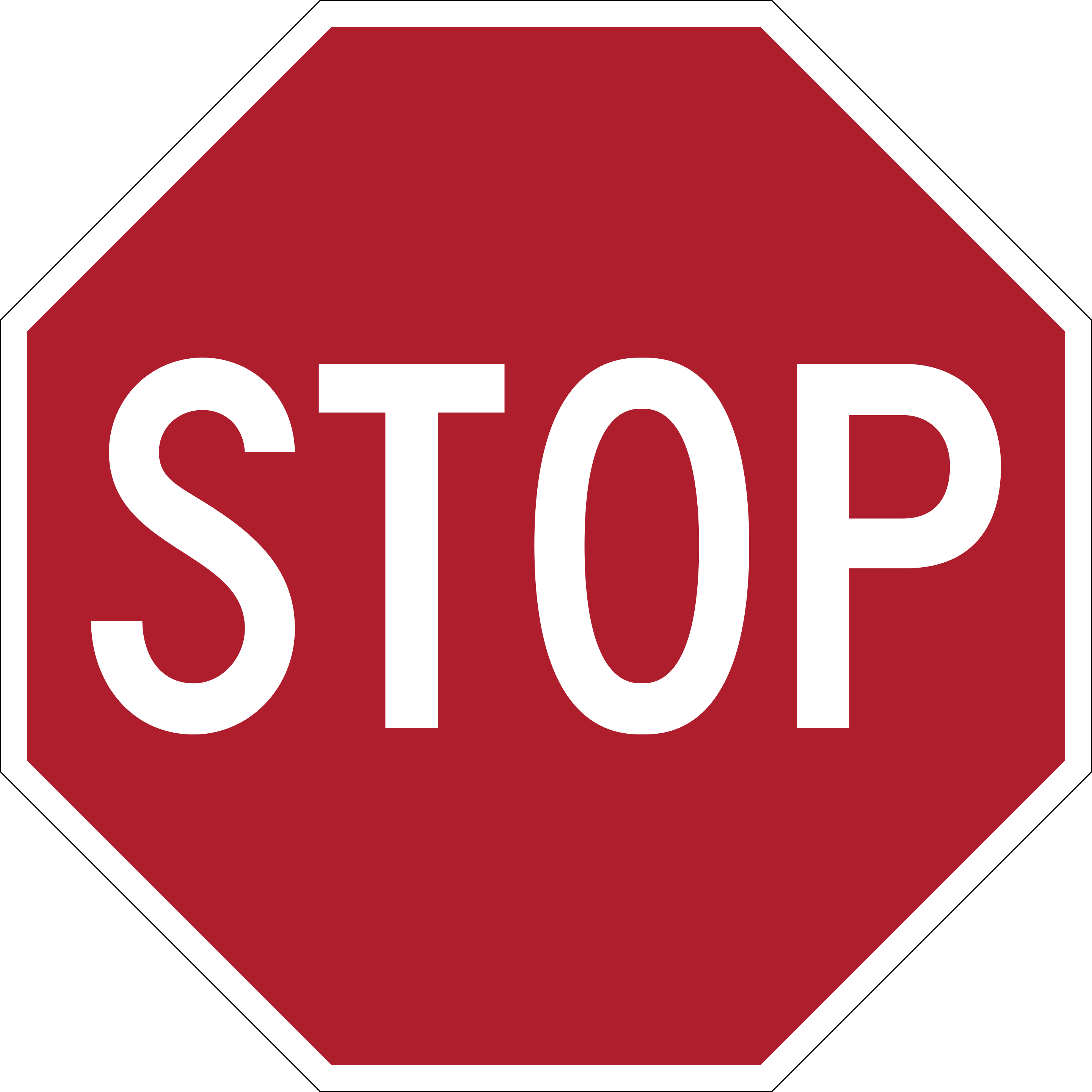
Question 7You see this sign at an intersection. What must you do?
Show answer
B: Come to a full stop, yield to vehicles and pedestrians, then go when it is safe. A STOP sign means come to a full stop and yield the right-of-way to vehicles and pedestrians in or heading toward the intersection, then go when safe. New York State Driver's Manual (MV-21): Regulation Signs: Stop Sign, page 29.
-
Question 8You face a steady red light with a green arrow pointing right. You may:
Show answer
B: Go only in the direction of the arrow if the intersection is clear. If a green arrow is shown with the red light, you can go only toward the arrow and only if the intersection is clear. New York State Driver's Manual (MV-21): Traffic Signals, page 31.
-
Question 9You are leaving a parking lot to enter a street. What must you do?
Show answer
B: Stop and yield to traffic on the roadway and to pedestrians. A vehicle entering a roadway from a driveway, private road or other non-roadway place must stop and yield to traffic and pedestrians. New York State Driver's Manual (MV-21): Right-of-Way, page 34.
-
Question 10You are turning left from a one-way road into a one-way road that has two lanes. Which lane should you turn into?
Show answer
B: The left lane. Move into the left lane to prepare and, if the road you enter has two lanes, turn into its left lane. New York State Driver's Manual (MV-21): Turns: Left Turn From One-Way Road Into One-Way Road, page 36.
-
Question 11You cannot pass on the left if you cannot return to the right lane before an oncoming vehicle comes within:
Show answer
B: 200 feet. You may not pass on the left if you cannot safely return to the right lane before an oncoming vehicle comes within 200 feet of you. New York State Driver's Manual (MV-21): How to Pass on the Left, page 39.
-
Question 12Must you stop for a school bus with flashing red lights on the opposite side of a divided highway in New York?
Show answer
B: Yes. The manual says you must stop for a school bus even if it is on the opposite side of a divided highway; this law applies on all roadways in New York. New York State Driver's Manual (MV-21): School Buses, page 40.
-
Question 13Your car has a back-up camera and parking sensors. Who is ultimately responsible for backing safely?
Show answer
B: The driver. Even with back-up cameras and sensors, you must check behind you; you, as the driver, are ultimately responsible. New York State Driver's Manual (MV-21): How to Park, page 42.
-
Question 14Which is described in the manual as being just as dangerous as taking your eyes off the road?
Show answer
B: Mental activities that take your mind away from driving. Mental activities that take your mind away from driving are just as dangerous as taking your eyes off the road or hands off the wheel. New York State Driver's Manual (MV-21): Driver Distractions, page 45.
-
Question 15Is it always safe to drive at the posted speed limit?
Show answer
B: No, the safe speed may be lower due to conditions. It is often common sense to drive below the posted limit, for example on slippery or foggy roads. New York State Driver's Manual (MV-21): Speed, page 47.
-
Question 16A learner permit holder must be supervised by a driver who is at least:
Show answer
C: 21 years old. The supervising driver must be at least 21, hold a license valid for the vehicle, and sit in the front seat. New York State Driver's Manual (MV-21): The Learner Permit, page 11.
-
Question 17Which of these can be a criminal offense to drive while impaired by?
Show answer
B: Alcohol, marijuana/cannabis, illegal drugs and some prescription drugs. It can be a criminal offense to drive impaired by drugs, alcohol or both, including cannabis, illegal drugs like cocaine or heroin, and some prescription drugs. New York State Driver's Manual (MV-21): Other Drugs, page 54.
-
Question 18Traffic on the other side of a railroad crossing prevents you from getting fully across. You should:
Show answer
B: Wait and cross only when there is room for your vehicle on the other side. You cannot cross unless there is room on the other side for your entire vehicle; wait until there is room. New York State Driver's Manual (MV-21): Railroad Crossing Signals, page 61.
-
Question 19A tire blows out. What should you do?
Show answer
B: Hold the wheel tightly and slowly take your foot off the gas. Hold the steering wheel tightly and slowly take your foot off the gas. Don't brake until the vehicle is under control. New York State Driver's Manual (MV-21): Driving Emergencies: Tire Blowout, page 65.
-
Question 20As you approach an expressway entrance where traffic is merging, you should if possible:
Show answer
B: Move out of the right lane to give entering vehicles room. If possible, move from the right lane when you approach entrances to give room to traffic entering from the ramp. New York State Driver's Manual (MV-21): Expressway Driving, page 62.
-
Question 21At a STOP sign with no stop line and no crosswalk, where must you stop?
Show answer
B: Before entering the intersection, at the point nearest it that gives you a view of cross traffic. If there is no stop line or crosswalk, you stop before entering the intersection at the point nearest it where you can see traffic on the crossing road. New York State Driver's Manual (MV-21): Regulation Signs: Stop Sign, page 29.
-
Question 22Outside New York City, when may you turn right on a steady red light?
Show answer
B: After a full stop and yielding to traffic and pedestrians, unless a sign, signal or marking prohibits it. You can turn right on a steady red after a full stop and yielding to oncoming traffic and pedestrians, unless NO TURN ON RED or another sign, signal or marking prevents it. New York State Driver's Manual (MV-21): Traffic Signals, page 31.
-
Question 23You plan to turn left out of a driveway onto a street. You must yield to:
Show answer
B: Vehicles approaching from both directions and pedestrians. When turning left out of a driveway or parking lot you must yield to vehicles from both directions, as well as pedestrians crossing the exit. New York State Driver's Manual (MV-21): Right-of-Way, page 34.
-
Question 24When turning left from a two-way road into a two-way road, you should approach the turn from:
Show answer
A: The right half of the roadway closest to the center. Approach from the right half of the roadway closest to the center and keep to the right of the center line of the road you enter. New York State Driver's Manual (MV-21): Turns: Left Turn From Two-Way Road Into Two-Way Road, page 37.
-
Question 25On a two-way roadway, you may not pass within how many feet of a railroad crossing?
Show answer
B: 100 feet. You cannot pass on the left within 100 feet of a railroad crossing on a two-way roadway. New York State Driver's Manual (MV-21): How to Pass on the Left, page 39.
Answer every question to see your score.
More New York practice tests
- Practice test 125 questions
- Practice test 225 questions
- Practice test 425 questions
- Practice test 525 questions
- Practice test 625 questions
- Practice test 725 questions
- Practice test 825 questions
- Practice test 925 questions
- Practice test 1025 questions
- Practice test 1125 questions
- Practice test 1225 questions
- Practice test 1325 questions
- Practice test 1425 questions
- Practice test 1525 questions
- Practice test 1621 questions
- Exam simulatorThe real format, 20 questions
How to use these tests
Read each explanation, even when you get the question right: it tells you the rule and the handbook section, so you can look it up. Your answers are saved in this browser only, so the weak spots mode can give you more questions on the topics you miss. When you're scoring well, take the exam simulator: it uses the same number of questions and passing score as the real test.
Our own questions, written from the New York State Driver's Manual (MV-21) and checked against it. Not affiliated with the New York State Department of Motor Vehicles. Found a mistake? Tell us.