New York DMV permit practice test 9
25 questions written from the New York State Driver's Manual (MV-21), covering following and passing, sharing the road, parking, safe and defensive driving, licensing laws and penalties and more. Pick an answer to see straight away whether you're right and why. The real New York DMV test has 20 questions and you need 14 right.
-
Question 1About how many of every 10 crashes involve rear-end collisions?
Show answer
C: Four. Four of every 10 crashes involve rear-end collisions, usually because of following too closely. New York State Driver's Manual (MV-21): Allow Yourself Space, page 47.
-
Question 2What are a vehicle's 'A-pillars' and why do they matter?
Show answer
B: Vertical supports around the windshield that can create blind spots. A-pillars are vertical supports around the glass that can interfere with seeing clearly and create blind spots. New York State Driver's Manual (MV-21): Pedestrians: Tips for Drivers, page 68.
-
Question 3On the same side of the road as a fire station driveway, parking or standing is prohibited within:
Show answer
B: 20 feet. Parking or standing is not allowed within 20 feet of a fire station driveway, or within 75 feet on the opposite side of the road. New York State Driver's Manual (MV-21): Parking Regulations, page 43.
-
Question 4What is the maximum fine for a driver who fails to buckle up in New York?
Show answer
B: $50. The driver can face a fine of up to $50 for not wearing a seat belt; passengers 16 and older can face the same. New York State Driver's Manual (MV-21): Seat Belts, Child Safety Seats and Air Bags, page 48.
-
Question 5May a junior license (Class DJ) holder drive in the five boroughs of New York City?
Show answer
B: No, junior license holders must not drive in NYC. The regional chart shows junior license holders must not drive in New York City. New York State Driver's Manual (MV-21): Regional Restrictions for a Junior License, page 16.
-
Question 6Eating before or while you drink alcohol:
Show answer
B: Slows absorption somewhat but cannot prevent impairment if you drink too much. Eating helps slow alcohol absorption somewhat, but cannot prevent intoxication or impairment if you drink too much. New York State Driver's Manual (MV-21): Your BAC, page 56.
-
Question 7For better night visibility inside your car, you should:
Show answer
B: Keep the interior roof light off and dim the dashboard lights. Light inside your vehicle makes it harder to see the road; keep the interior light off and dim the dashboard lights. New York State Driver's Manual (MV-21): Night Driving, page 63.
-
Question 8How should you handle the sudden loss of a wheel while driving?
Show answer
A: The same way as a tire blowout. Handle loss of a wheel like a blowout, then leave the roadway, stop, and check the vehicle. New York State Driver's Manual (MV-21): Driving Emergencies: Loss of a Wheel, page 65.
-
Question 9What does a round yellow sign with a black 'X' and the letters 'RR' mean?

Show answer
A: Railroad crossing ahead; use caution and be prepared to stop. The railroad crossing warning sign is yellow with black 'RR' and an 'X'. It means a railroad crossing is ahead; use caution and be prepared to stop. New York State Driver's Manual (MV-21): Railroad Crossing Warning Sign, page 61.
-
Question 10Lines that separate traffic moving in opposite directions are:
Show answer
B: Yellow. Yellow lines separate traffic moving in opposite directions; white lines separate lanes moving the same direction. New York State Driver's Manual (MV-21): Pavement Markings: Edge and Lane Lines, page 32.
-
Question 11Vehicles showing blue, green or amber lights are:
Show answer
B: Not authorized emergency vehicles; you are not required to yield, but should as a courtesy if safe. Vehicles with blue, green or amber lights are not authorized emergency vehicles and must obey traffic laws. You should yield as a courtesy if you safely can. New York State Driver's Manual (MV-21): Blue, Green and Amber Lights, page 35.
-
Question 12If you must turn around on a highway, what is the preferred method?
Show answer
B: Use a parking lot, driveway or other area, and enter the road moving forward if possible. Do not try a U-turn on a highway unless absolutely necessary; use a parking lot or driveway and, if possible, enter the road moving forward rather than backing. New York State Driver's Manual (MV-21): U-Turns, page 37.
-
Question 13What following-distance rule does the New York manual recommend in good conditions?
Show answer
B: Two-second rule. Use the two-second rule: count 'one thousand one, one thousand two' after the vehicle ahead passes a fixed object. New York State Driver's Manual (MV-21): Allow Yourself Space, page 47.
-
Question 14Why should you stop well back from a crosswalk when pedestrians are crossing?
Show answer
B: So other drivers can see the pedestrians and stop too. Stopping well back gives other vehicles a chance to see the crossing pedestrians so they can stop too. New York State Driver's Manual (MV-21): Pedestrians: Tips for Drivers, page 68.
-
Question 15On the side of the road opposite a fire station driveway, parking or standing is prohibited within:
Show answer
D: 75 feet. Across the road from a fire station driveway, parking or standing is not allowed within 75 feet. New York State Driver's Manual (MV-21): Parking Regulations, page 43.
-
Question 16Who is responsible for making sure passengers under 16 are properly restrained?
Show answer
C: The driver. The driver must make sure each passenger under 16 is restrained by a seat belt or appropriate child restraint; the driver faces a $25-$100 fine and 3 points per violation. New York State Driver's Manual (MV-21): Seat Belts, Child Safety Seats and Air Bags, page 48.
-
Question 17A junior license holder upstate may drive unaccompanied during which hours?
Show answer
B: 5 AM to 9 PM. Upstate, from 5 AM to 9 PM, a junior licensee may drive without being accompanied. Night driving is limited to direct trips between home and work or school unless accompanied by a parent or guardian. New York State Driver's Manual (MV-21): Regional Restrictions for a Junior License, page 16.
-
Question 18Under New York's Implied Consent law, by driving in the state you are considered to have agreed to:
Show answer
B: A chemical test of your BAC if arrested for an alcohol or drug violation. Under Implied Consent, driving in New York means you are considered to have consented to a chemical test. New York State Driver's Manual (MV-21): Chemical Tests, page 56.
-
Question 19In fog, rain or falling snow, which headlight setting gives you better visibility?
Show answer
B: Low beams. High beams reflect off rain, fog and snow, making it harder to see. Keep your headlights on low beam. New York State Driver's Manual (MV-21): Driving in Rain, Fog or Snow, page 63.
-
Question 20You hit a parked car and cannot find the owner. What must you do?
Show answer
B: Try to find the owner or notify the police. If a parked vehicle or other property is damaged, or a domestic animal is injured, you must try to find the owner or notify the police. New York State Driver's Manual (MV-21): At the Scene, page 77.
-
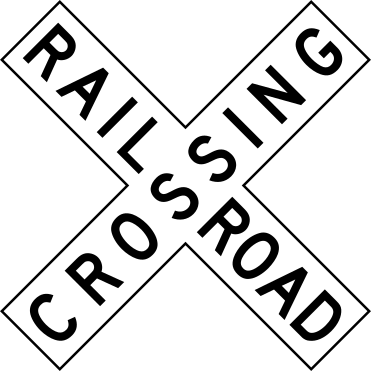
Question 21What should you do when you see an X-shaped 'RAILROAD CROSSING' (crossbuck) sign without lights?
Show answer
A: Yield, and look and listen for trains before crossing. You must yield at a crossbuck sign. Look and listen for trains before crossing any railroad tracks. New York State Driver's Manual (MV-21): Railroad Crossing Signals, page 61.
-
Question 22Lines that separate lanes of traffic moving in the same direction are:
Show answer
B: White. Lane lines between lanes moving in the same direction are white. New York State Driver's Manual (MV-21): Pavement Markings: Edge and Lane Lines, page 32.
-
Question 23Under New York's Move Over Law, on a multi-lane interstate or parkway, what must you do when passing a police car stopped on the shoulder with its emergency lights on?
Show answer
B: Reduce speed and move out of the lane next to it unless traffic or hazards make that unsafe. Drivers must reduce speed on all roads, and on parkways, interstates and other controlled-access roads with multiple lanes must also move from the adjacent lane unless unsafe. New York State Driver's Manual (MV-21): Move Over Law, page 35.
-
Question 24May you make a U-turn on a green left-turn arrow?
Show answer
B: Yes, unless signs say otherwise, if it is allowed and you yield to other traffic. Unless signs tell you otherwise, you can U-turn on a green left arrow if it is allowed and you yield to other traffic. New York State Driver's Manual (MV-21): U-Turns, page 37.
-
Question 25In bad weather or when following a large truck, how much should you increase your following time?
Show answer
A: To at least three or four seconds. In bad weather and when following large trucks, increase the count to at least three or four seconds. New York State Driver's Manual (MV-21): Allow Yourself Space, page 47.
Answer every question to see your score.
More New York practice tests
- Practice test 125 questions
- Practice test 225 questions
- Practice test 325 questions
- Practice test 425 questions
- Practice test 525 questions
- Practice test 625 questions
- Practice test 725 questions
- Practice test 825 questions
- Practice test 1025 questions
- Practice test 1125 questions
- Practice test 1225 questions
- Practice test 1325 questions
- Practice test 1425 questions
- Practice test 1525 questions
- Practice test 1621 questions
- Exam simulatorThe real format, 20 questions
How to use these tests
Read each explanation, even when you get the question right: it tells you the rule and the handbook section, so you can look it up. Your answers are saved in this browser only, so the weak spots mode can give you more questions on the topics you miss. When you're scoring well, take the exam simulator: it uses the same number of questions and passing score as the real test.
Our own questions, written from the New York State Driver's Manual (MV-21) and checked against it. Not affiliated with the New York State Department of Motor Vehicles. Found a mistake? Tell us.