Hardest Vermont permit test questions
111 questions that need exact knowledge rather than common sense: the numbers (distances, speeds, fines, limits), the exceptions and the rules that are easy to mix up. We chose them from our Vermont question bank for that reason; they're not statistics from the DMV.
-
Question 1How many questions are on the Vermont learner's permit knowledge test, and how many must you get right?
Show answer
A: 20 questions, 16 correct. The online knowledge test has 20 questions with four answer choices each; you must answer at least 16 correctly. Vermont Driver's Manual (VN-007): What are the Tests Like?, page 19.
-
Question 2Where is the Vermont learner's permit knowledge test taken?
Show answer
D: Online through myDMV. The learner permit test is no longer taken in the office; it is an online test on mydmv.vermont.gov. Vermont Driver's Manual (VN-007): What are the Tests Like?, page 19.
-
Question 3If you fail the Vermont knowledge test, how long must you wait to try again?
Show answer
B: At least one day. If you fail the knowledge test, you must wait at least one day before taking another. Vermont Driver's Manual (VN-007): What are the Tests Like?, page 19.
-
Question 4What is the minimum age to take the Vermont learner's permit test?
Show answer
D: 15. You must be at least 15 years old to take the learner's permit test. Vermont Driver's Manual (VN-007): Questions and Answers about Learner's Permits, page 13.
-
Question 5Who may supervise a Vermont learner's permit holder in the front seat?
Show answer
C: A licensed unimpaired parent/guardian, a driver ed instructor, or a licensed unimpaired person 25 or older. A permit holder may drive with a licensed, unimpaired parent or guardian, a licensed or certified driver education instructor, or a licensed unimpaired person 25 or older in the front seat. Vermont Driver's Manual (VN-007): When and Where can I drive with a Permit?, page 14.
-
Question 6How long must you hold a Vermont learner's permit before getting a Junior Driver's License?
Show answer
A: At least one year. An individual must possess a learner's permit for at least one year before obtaining a Junior Driver's License. Vermont Driver's Manual (VN-007): Questions and Answers about Junior Driver's Licenses, page 14.
-
Question 7How many hours of supervised driving practice must a Vermont teen complete before a Junior Driver's License?
Show answer
C: 40 hours, 10 at night. Teens must complete 40 hours of driving practice, with at least 10 hours at night, in addition to driver ed behind-the-wheel time. Vermont Driver's Manual (VN-007): Questions and Answers about Junior Driver's Licenses, page 14.
-
Question 8How is 'nighttime driving' defined for Vermont's practice requirement?
Show answer
B: From 30 minutes after sunset to 30 minutes before sunrise. Nighttime driving is the period from 30 minutes after sunset to 30 minutes before sunrise. Vermont Driver's Manual (VN-007): Questions and Answers about Junior Driver's Licenses, page 14.
-
Question 9What does Vermont's driver education course for 16- and 17-year-olds include?
Show answer
D: 30 hours classroom, 6 hours behind the wheel and 6 hours observation. An approved course consists of 30 hours of classroom study, 6 hours behind the wheel and 6 hours of observation. Vermont Driver's Manual (VN-007): Questions and Answers about Junior Driver's Licenses, page 14.
-
Question 10During the first three months with a Junior Driver's License, who may ride with the driver?
Show answer
B: Only if a licensed unimpaired parent/guardian, driver ed instructor or person 25+ is in the front seat. For the first three months a junior driver may carry passengers only when a licensed, unimpaired parent/guardian, driver ed instructor or person 25+ rides in the front seat; with one of them aboard, any number may ride up to the number of seat belts. Vermont Driver's Manual (VN-007): What restrictions are on a Junior Driver's License?, page 16.
-
Question 11During months four through six of a Junior Driver's License, who may the driver transport?
Show answer
D: Immediate family members (siblings and parents only). During the second three months, the junior driver may begin transporting immediate family members—siblings and parents only. Vermont Driver's Manual (VN-007): Graduated Driver's License Program, page 22.
-
Question 12How long must a Vermont junior driver wait before driving as part of a job (e.g. pizza delivery)?
Show answer
A: 1 year after the license or until 18. A junior driver cannot operate a vehicle in the course of employment for one year after issuance or until age 18, whichever comes first. Vermont Driver's Manual (VN-007): What restrictions are on a Junior Driver's License?, page 16.
-
Question 13To apply for a Vermont learner's permit, how long must a person under 18 have kept a clean driving record?
Show answer
A: The previous two years. An individual under 18 must have maintained a clean driving record in the previous two years to apply for a learner's permit. Vermont Driver's Manual (VN-007): Graduated Driver's License Program, page 21.
-
Question 14What is the recall period for a junior driver caught carrying passengers for hire?
Show answer
C: 90 days. Carrying passengers for hire as a junior operator results in a 90-day recall. Vermont Driver's Manual (VN-007): Graduated Driver's License Program, page 22.
-
Question 15What is the recall for a junior operator texting violation in Vermont?
Show answer
C: 30 days, plus fines of at least $100 and at least 2 points. Junior operator texting brings a 30-day recall, plus fines of at least $100 and at least two points. Vermont Driver's Manual (VN-007): Graduated Driver's License Program, page 22.
-
Question 16What triggers a 90-day junior operator points recall?
Show answer
D: A single 3-point speeding violation or 6 points total. A junior operator points recall is 90 days, for a single 3-point speeding violation or 6 points total. Vermont Driver's Manual (VN-007): Graduated Driver's License Program, page 22.
-
Question 17Is a reinstatement fee due when a recalled learner's permit or junior license is restored?
Show answer
A: No. No reinstatement fee is due when a learner's permit/junior license recall is restored. Vermont Driver's Manual (VN-007): Graduated Driver's License Program, page 22.
-
Question 18What does it cost to take the Vermont knowledge test and get a learner's permit?
Show answer
C: $63. The learner's permit costs $63 in total: $39 for the knowledge test plus $24 for the permit. Vermont Driver's Manual (VN-007): Chapter 6 – Fees, Renewals & Replacements, page 24.
-
Question 19After failing a road test three times in Vermont, how long must you wait?
Show answer
A: At least one month. After any failed road test wait at least a week; after three failures, the minimum wait is one month. Vermont Driver's Manual (VN-007): What are the Tests Like?, page 20.
-
Question 20Within how many days must a new resident with a valid out-of-state license get a Vermont license?
Show answer
C: 60 days. A person who moves to Vermont with a valid license must obtain a Vermont license within 60 days. Vermont Driver's Manual (VN-007): Licenses, page 13.
-
Question 21How long after expiration is a Vermont license no longer valid for driving?
Show answer
D: More than 14 days. A Vermont license that has expired for more than 14 days is not valid; you may not drive with it. Vermont Driver's Manual (VN-007): Permit/License Renewals, page 25.
-
Question 22Within how many days must you report a change of name or address to Vermont DMV?
Show answer
A: 30 days. You must report a change of name or address to the DMV within 30 days. Vermont Driver's Manual (VN-007): I Have Changed My Name or Address. What Do I Do?, page 25.
-
Question 23A Vermont license expired more than how long requires retesting?
Show answer
B: Three years. If your Vermont license is expired more than three years, you must be tested again. Vermont Driver's Manual (VN-007): Permit/License Renewals, page 25.
-
Question 24How many total points on your Vermont driving record trigger a letter saying your license will be suspended?
Show answer
C: 10. When a driver receives a total of 10 points, a letter is sent notifying that the privilege to drive will be suspended. Vermont Driver's Manual (VN-007): The Vermont Point System, page 65.
-
Question 25How many points does failing to stop for a stopped school bus with flashing red lights carry in Vermont?
Show answer
B: 5. Failure to stop for a stopped school bus with red lights flashing is 5 points. Vermont Driver's Manual (VN-007): The Vermont Point System, page 65.
-
Question 26How many points for failing to yield to a pedestrian in a crosswalk in Vermont?
Show answer
B: 4. Failure to yield to a pedestrian in a crosswalk is 4 points. Vermont Driver's Manual (VN-007): The Vermont Point System, page 65.
-
Question 27How many points for failing to yield to an ambulance, fire truck or police officer?
Show answer
B: 5. Failure to yield the right of way to an ambulance, fire truck or police officer is 5 points. Vermont Driver's Manual (VN-007): The Vermont Point System, page 65.
-
Question 28How many points does failing to stop for a stop sign or red light carry in Vermont?
Show answer
C: 2. Failure to stop for a stop sign or red light is 2 points. Vermont Driver's Manual (VN-007): The Vermont Point System, page 65.
-
Question 29What are Vermont's minimum liability insurance amounts?
Show answer
A: $25,000/$50,000/$10,000. Coverage must be at least $25,000 for one person, $50,000 for two or more, and $10,000 for property damage. Vermont Driver's Manual (VN-007): Insurance, page 68.
-
Question 30If you have insurance but can't show your card when stopped, how long do you have to show it?
Show answer
B: 15 days. If you have insurance but can't show the card, you have 15 days to show proof that you were insured at the time. Vermont Driver's Manual (VN-007): Insurance, page 68.
-
Question 31If you are caught driving without insurance in Vermont, what happens to your record?
Show answer
D: You are fined and assessed two points. Without insurance, the officer will give you a ticket; you'll be fined and assessed two points. Vermont Driver's Manual (VN-007): Insurance, page 68.
-
Question 32Uninsured drivers who have a crash must prove insurance to the Commissioner for how long?
Show answer
D: 3 years. Driving uninsured and then having a crash (even one that isn't your fault) costs you your license until you get insurance, and you must then show proof of insurance for 3 years. Vermont Driver's Manual (VN-007): Insurance, page 69.
-
Question 33How often must Vermont vehicles be inspected?
Show answer
B: Once a year. Your vehicle must be inspected once a year. Vermont Driver's Manual (VN-007): Inspection, page 60.
-
Question 34Within how many days of registration must a vehicle be inspected in Vermont (unless it has a valid VT sticker)?
Show answer
B: 15 days. All motor vehicles must be inspected within 15 days of registration unless bearing a valid Vermont inspection sticker. Vermont Driver's Manual (VN-007): Inspection, page 60.
-
Question 35Within how many days must you register a vehicle after moving to Vermont?
Show answer
C: 60 days. New residents have 60 days after moving to Vermont to register their vehicles here. Vermont Driver's Manual (VN-007): How to Register Your Vehicle, page 66.
-
Question 36What is Vermont's Purchase and Use Tax on a non-leased vehicle?
Show answer
A: 6%. The Purchase and Use Tax is 6% of the price paid or current fair market value, whichever is greater. Vermont Driver's Manual (VN-007): Purchase and Use Tax, page 67.
-
Question 37From how far must the rear license plate be readable when lit?
Show answer
C: 50 feet. The rear plate must be lighted so it can be read from at least 50 feet away. Vermont Driver's Manual (VN-007): Registration and Plates, page 66.
-
Question 38What is the minimum legal tire tread depth in Vermont?
Show answer
A: 2/32 inch. Tires must have at least 2/32 inch of tread depth. Vermont Driver's Manual (VN-007): Tires, page 61.
-
Question 39What is the penalty for a minor ticketed for possessing alcohol who fails to contact the Teen Alcohol Safety Program within 15 days and is found liable?
Show answer
A: $300 penalty and 90-day license suspension. Failure to contact the diversion board within 15 days sends the case to the judicial bureau: $300 penalty and a 90-day suspension if found liable. Vermont Driver's Manual (VN-007): Chapter 2 - How to Lose Your License, page 8.
-
Question 40What is the penalty for using a false identity to get a Vermont license?
Show answer
C: Up to $1,000 fine or 2 years' imprisonment, plus a 90-day suspension. Falsely impersonating another or using a false name in an application: fine up to $1,000 or up to two years, and a 90-day suspension. Vermont Driver's Manual (VN-007): Chapter 2 - How to Lose Your License, page 8.
-
Question 41What vision standard must you meet at the Vermont DMV screening?
Show answer
B: 20/40. If your vision does not meet the 20/40 standard, you'll be referred to an eye doctor of your choice for further testing. Vermont Driver's Manual (VN-007): What are the Tests Like?, page 19.
-
Question 42Within how many days must someone holding an out-of-state CDL transfer it after becoming a Vermont resident?
Show answer
A: 30 days. Any person holding a CDL from another state must transfer it within 30 days of establishing Vermont residency. Vermont Driver's Manual (VN-007): Licenses, page 13.
-
Question 43At what blood alcohol concentration is a Vermont driver considered 'under the influence'?
Show answer
A: .08 or above. Vermont law states that a BAC of .08 or above means a person is under the influence or impaired. Vermont Driver's Manual (VN-007): Alcohol and other drugs, page 53.
-
Question 44What happens to a Vermont driver under 21 who drives with a BAC of .02 or more?
Show answer
D: A civil traffic violation, license suspension and an alcohol and driving education program. Under-21 drivers at .02 or more can receive a civil violation; the license is suspended and they must complete an alcohol education program at their own expense. Vermont Driver's Manual (VN-007): Alcohol and other drugs, page 53.
-
Question 45How long does it take the body to process the alcohol from one drink?
Show answer
A: At least an hour per drink. Your body needs at least an hour to clear each drink, so several drinks can mean waiting several hours before you can drive safely. Vermont Driver's Manual (VN-007): What Does Alcohol Do To Your Driving Skills?, page 54.
-
Question 46Under Vermont's Implied Consent law, what happens if you refuse a test for alcohol or drugs?
Show answer
D: You lose your license for at least six months. If the driver refuses the test, they lose their license for at least six months. Vermont Driver's Manual (VN-007): Other Drugs, page 54.
-
Question 47Can you lose your Vermont license for DUI before a criminal conviction?
Show answer
B: Yes, through an administrative (civil) suspension process. Vermont can suspend your license through a civil (administrative) process, even before any criminal DUI conviction. Vermont Driver's Manual (VN-007): Other Drugs, page 54.
-
Question 48If traffic is backing up behind your slow vehicle in Vermont, what does the law require?
Show answer
A: Pull over when safe and let following vehicles go by. Vermont law requires a slow driver holding up a line of traffic to pull over when it is safe and let the vehicles behind pass. Vermont Driver's Manual (VN-007): Where Should I Start Driving?, page 26.
-
Question 49After seeing danger, about how long does it take the average driver to apply the brakes?
Show answer
A: 3/4 of a second. The average driver needs about three-quarters of a second to react and get on the brake; the distance covered in that time is reaction distance. Vermont Driver's Manual (VN-007): Stopping Your Vehicle, page 27.
-
Question 50According to studies cited in the Vermont manual, by how much do daytime low-beam headlights reduce head-on collision risk?
Show answer
C: More than 20%. Driving with low beams on during the day reduces the risk of head-on collisions by more than 20%. Vermont Driver's Manual (VN-007): Reduced Visibility: Daytime Driving, page 50.
-
Question 51What are the most common driver actions in pedestrian and bicycle crashes in Vermont?
Show answer
A: Inattention and failure to yield. In Vermont, the driver errors most often behind pedestrian and bicycle crashes are not paying attention and not yielding. Vermont Driver's Manual (VN-007): Distracted Driving, page 56.
-
Question 52What is the fine range for a first violation of Vermont's portable electronic device law?
Show answer
B: $100-$200. First violation: $100-$200; second or subsequent: $250-$500. Vermont Driver's Manual (VN-007): Cell Phones and other Electronic Devices, page 56.
-
Question 53Is using a handheld phone allowed while your car is stopped in traffic on a Vermont highway?
Show answer
C: No, the ban applies even while the vehicle is stationary. It is against the law to use a portable electronic device while operating on a public highway, including while the vehicle is stationary. Vermont Driver's Manual (VN-007): Cell Phones and other Electronic Devices, page 56.
-
Question 54A traffic signal is completely dark because of a power failure. What should you do?
Show answer
A: Stop as if there were stop signs in all directions. A signal with no lights at all, such as in a power outage, works like an all-way stop: stop, then go when it is your turn. Vermont Driver's Manual (VN-007): Traffic Lights, page 32.
-
Question 55May you turn right on a red arrow?
Show answer
C: No. Do not turn right on a red arrow, and don't turn right on red when No Turn On Red signs are lit. Vermont Driver's Manual (VN-007): Driver Responsibilities, page 39.
-
Question 56What does a flashing yellow arrow mean?
Show answer
B: You may turn left after yielding to oncoming traffic and pedestrians; oncoming traffic has a green light. With a flashing yellow arrow, turn left after yielding to all oncoming traffic and pedestrians; oncoming traffic has a green light. Vermont Driver's Manual (VN-007): Arrows, page 33.
-
Question 57What do a series of white triangles painted across a lane mean?
Show answer
A: A yield line showing where to stop if you must yield. A yield line of white triangles pointing toward approaching cars shows where to stop if required to yield. Vermont Driver's Manual (VN-007): Highway Markings, page 35.
-
Question 58On a divided highway, the edge line to your right is yellow. What does it mean?
Show answer
D: You are going the wrong way. If the right edge line is yellow, you are going the wrong way; on a divided highway the line to your right should be white. Vermont Driver's Manual (VN-007): Safe Driving on the Interstate, page 52.
-
Question 59In a work zone with temporary markings, on which side should the yellow markings be?
Show answer
A: On your left—if not, you are in the wrong lane. Yellow markers separate opposite traffic and will be on your left; if not, you're in the wrong lane. Vermont Driver's Manual (VN-007): Flashing arrow panels, page 37.
-
Question 60At a stop sign, where must you stop?
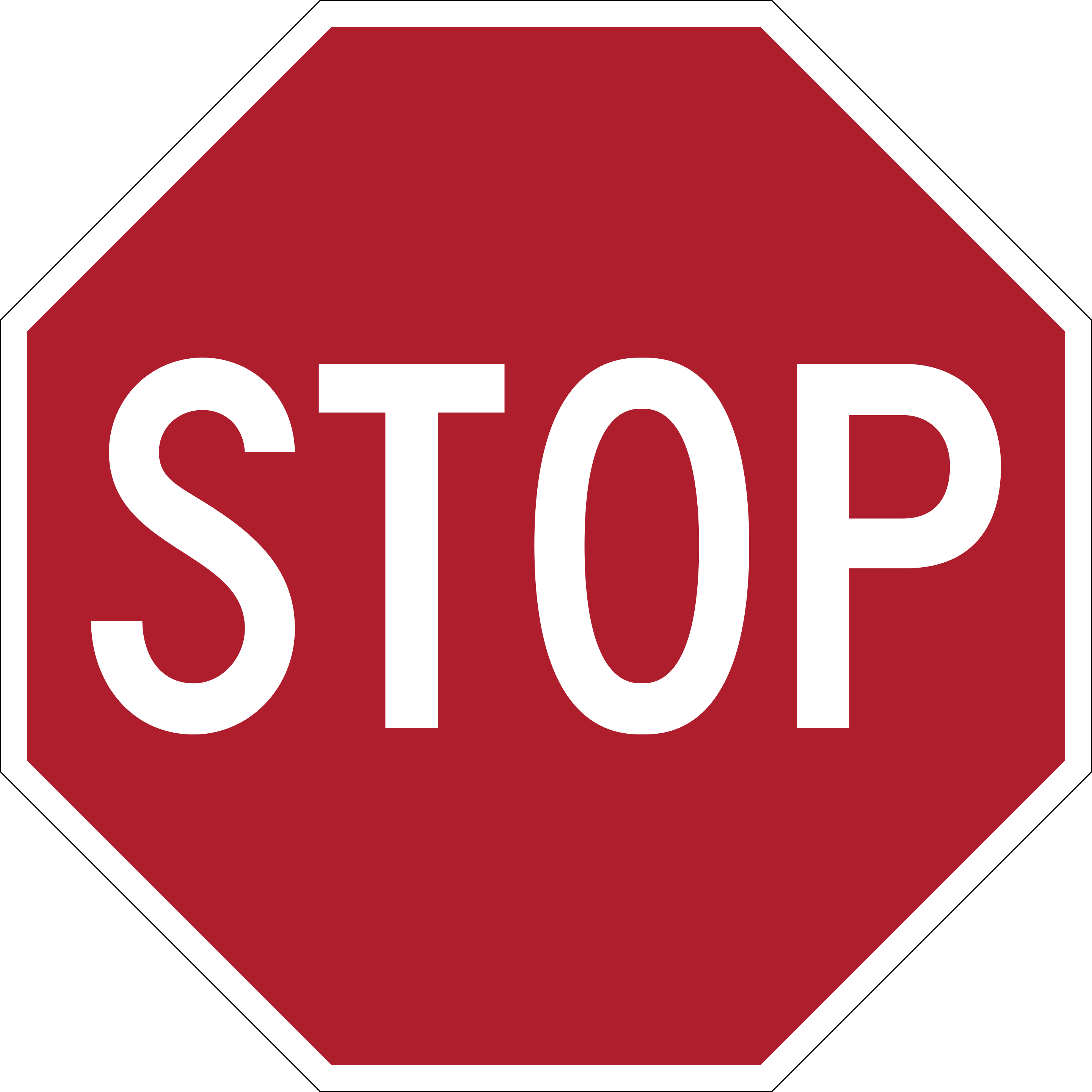
Show answer
C: Before the stop line, crosswalk (marked or unmarked) or intersecting road, whichever comes first. You must stop before the stop line, crosswalk (marked or unmarked) or intersecting road, whichever comes first. Vermont Driver's Manual (VN-007): Road Signs, page 33.
-
Question 61A flashing arrow panel in a work zone shows only blinking corner lights or a straight line. What does it mean?
Show answer
B: Caution mode: slow down. When arrows aren't in use, panels are in caution mode (straight line or four corner lights); drivers should slow down. Vermont Driver's Manual (VN-007): Flashing arrow panels, page 37.
-
Question 62What happens to fines for speeding in a Vermont work zone?
Show answer
D: They are doubled. Fines are doubled for speeding in a work zone. Vermont Driver's Manual (VN-007): WORK ZONE SAFETY, page 36.
-
Question 63An emergency vehicle approaches while you are already in a roundabout. What should you do?
Show answer
C: Exit the roundabout first, then pull over. If already in the roundabout, pull over after you have safely exited; if not yet in, pull over and let it pass. Vermont Driver's Manual (VN-007): Roundabouts, page 31.
-
Question 64A pedestrian crosses carelessly against the light. What must the driver do?
Show answer
D: Yield to the pedestrian. Even when pedestrians cross the street carelessly, the driver must yield. Vermont Driver's Manual (VN-007): Driver Responsibilities, page 39.
-
Question 65A car ahead in the next lane stops for a pedestrian. You have a clear lane. What should you do?
Show answer
C: Do not pass the stopped vehicle. When a vehicle ahead stops for a pedestrian, do not pass it even with two lanes; this is a frequent cause of pedestrian deaths. Vermont Driver's Manual (VN-007): Driver Responsibilities, page 39.
-
Question 66How far before turning or changing lanes must you signal in Vermont?
Show answer
C: Not less than 100 feet. The law states a driver must signal not less than 100 feet before turning or changing lanes; 3 to 5 seconds covers this. Vermont Driver's Manual (VN-007): Signals, page 27.
-
Question 67When preparing to turn left on a two-lane road, how close to the center line should you position your vehicle?
Show answer
C: Within one foot of the center line, if safe. Position your vehicle within one foot of the center line, if it is safe to do so. Vermont Driver's Manual (VN-007): Left Turns, page 27.
-
Question 68Approaching a right turn, about how far from the right side of the road should your vehicle be?
Show answer
D: About three feet. At the approach to a right turn, the vehicle should be about three feet from the right side of the road; don't swing left first. Vermont Driver's Manual (VN-007): Right Turns, page 28.
-
Question 69In a two-lane roundabout with no signs or arrows, which lane may turn left?
Show answer
B: The left lane (left turns or through). The right lane may make right turns or go through; the left lane may make left turns or go through. Vermont Driver's Manual (VN-007): Roundabouts, page 31.
-
Question 70May you change lanes once inside a multi-lane roundabout?
Show answer
A: No. Drivers may not change lanes once in the roundabout; check mirrors and blind spots before exiting from the inside lane. Vermont Driver's Manual (VN-007): Roundabouts, page 31.
-
Question 71What is the maximum speed on Vermont roads unless posted otherwise?
Show answer
C: 50 mph. The maximum speed for any vehicle on all Vermont roads is 50 mph or as posted. Vermont Driver's Manual (VN-007): Speed Limits and Safe Speeds, page 29.
-
Question 72What is the maximum speed on a Vermont interstate unless posted otherwise?
Show answer
A: 65 mph. The maximum speed on an Interstate in Vermont is 65 mph or as posted. Vermont Driver's Manual (VN-007): Speed Limits and Safe Speeds, page 29.
-
Question 73On a Vermont interstate, you can't change lanes away from a stopped emergency vehicle. How fast may you pass?
Show answer
D: At least 20 mph below the speed limit. If you can't change lanes, you must slow down to 20 mph below the speed limit to go by the stopped vehicles. Vermont Driver's Manual (VN-007): Safe Driving on the Interstate, page 52.
-
Question 74How far does a passenger car need to stop on dry pavement from 60 mph, per the Vermont work zone tips?
Show answer
C: 240 feet. It takes 240 feet for a passenger car to stop on dry pavement at 60 mph, versus 75 feet at 30 mph. Vermont Driver's Manual (VN-007): Tips for Safe Driving in Vermont Work Zones, page 36.
-
Question 75At night, driving at 40 mph on low beams, what are you doing according to the Vermont manual?
Show answer
C: Overdriving your headlights. At 40 mph with low beams you are 'overdriving your headlights'—you can't see far enough to stop in the space you can see. Vermont Driver's Manual (VN-007): Night Driving, page 50.
-
Question 76How far ahead do you always need to be able to see?
Show answer
B: 4 seconds. You always need to be able to see 4 seconds ahead. Vermont Driver's Manual (VN-007): Night Driving, page 50.
-
Question 77How fast can a startled deer bound across a road?
Show answer
B: Up to 40 mph. A deer may bound at speeds up to 40 miles per hour toward its habitat. Vermont Driver's Manual (VN-007): Moose and Deer Safety, page 46.
-
Question 78What following distance does the Vermont manual recommend?
Show answer
C: 4 seconds. Use the 4-second method; allow more than four seconds in poor conditions, poor visibility or at higher speeds. Vermont Driver's Manual (VN-007): Four Seconds - A Safe Following Distance, page 28.
-
Question 79How much space should you leave when passing a bicyclist in Vermont?
Show answer
A: At least 4 feet. Give a bicyclist at least four feet of space between your car and the rider; wait if the road is too narrow to do that. Vermont Driver's Manual (VN-007): Sharing the Road with Bicyclists: Driver Responsibilities, page 41.
-
Question 80When may you pass on the right in Vermont?
Show answer
A: On a multilane road, or on a two-lane road when a vehicle is turning left and there is room. You may pass on the right on a multilane road, or of a vehicle turning left if there is room—never by driving off the pavement. Vermont Driver's Manual (VN-007): PASSING, page 53.
-
Question 81How much following distance should you leave behind a motorcycle?
Show answer
B: More than 4 seconds. Motorcyclists often slow without brake lights; allow more than 4 seconds of following distance. Vermont Driver's Manual (VN-007): Sharing the Road with Motorcycles, page 43.
-
Question 82Behind a horse and rider or animal-drawn vehicle, what following distance should you leave?
Show answer
C: At least 4 seconds. When following a horse with a rider, horse and wagon or herded animals, leave at least a 4-second following distance. Vermont Driver's Manual (VN-007): Sharing the Road with Domestic Animals, page 46.
-
Question 83When may you stop on a Vermont interstate?
Show answer
D: Only in an emergency. It is illegal to stop on an interstate unless it is an emergency; then use the breakdown lane as far right as possible. Vermont Driver's Manual (VN-007): Safe Driving on the Interstate, page 52.
-
Question 84On a two-lane road, how close to the curb or road edge must your right wheels be when parked?
Show answer
D: Within 12 inches. On a two-lane road, park with your right wheels no more than 12 inches from the curb or road edge. Vermont Driver's Manual (VN-007): Parking Your Vehicle, page 30.
-
Question 85How close to a fire hydrant may you park in Vermont?
Show answer
D: No closer than 6 feet. You may not park within 6 feet of a fire hydrant. Vermont Driver's Manual (VN-007): Where You May Not Park, page 30.
-
Question 86How close to a crosswalk at an intersection may you park in Vermont?
Show answer
A: No closer than 20 feet. You may not park within 20 feet of a crosswalk at an intersection. Vermont Driver's Manual (VN-007): Where You May Not Park, page 30.
-
Question 87How close to a stop sign, traffic light or flashing light may you park in Vermont?
Show answer
B: No closer than 30 feet. You may not park within 30 feet of a flashing red or yellow light, stop sign or traffic light. Vermont Driver's Manual (VN-007): Where You May Not Park, page 30.
-
Question 88How close to the nearest rail of a railroad crossing may you park?
Show answer
B: No closer than 50 feet. You may not park on railroad tracks or within 50 feet of the nearest rail of a railroad crossing. Vermont Driver's Manual (VN-007): Where You May Not Park, page 30.
-
Question 89Near a fire station driveway with signs posted, how close may you park on the same side?
Show answer
B: No closer than 20 feet. With signs, you may not park within 20 feet of a fire station driveway, or within 75 feet of it across the street. Vermont Driver's Manual (VN-007): Where You May Not Park, page 30.
-
Question 90If you must park on a rural highway, how far must your vehicle be visible in each direction?
Show answer
C: At least 150 feet. Don't stop where your vehicle can't be seen for at least 150 feet in either direction; keep all wheels off the traveled portion. Vermont Driver's Manual (VN-007): Parking Your Vehicle, page 30.
-
Question 91On the road test, when entering a parallel parking space, how far from the front vehicle should you stop alongside it?
Show answer
D: Two to three feet. Stop alongside the front vehicle, two to three feet away, then check traffic and back in. Vermont Driver's Manual (VN-007): Parallel Parking, page 58.
-
Question 92Is it legal to leave your vehicle idling unattended in public in Vermont?
Show answer
C: No; you must shut it off if you leave it. Idling while unattended in public violates Vermont's unattended motor vehicle law; if you leave your vehicle you must shut it off. Vermont Driver's Manual (VN-007): Drive Smart and Save - "Green Driving" Tips, page 69.
-
Question 93Who must be restrained in a Vermont vehicle?
Show answer
C: All occupants, by safety belt or child restraint. The law requires all occupants of a motor vehicle to be restrained by a safety belt or federally approved child restraint. Vermont Driver's Manual (VN-007): Safety Belts, page 63.
-
Question 94What restraint must a Vermont child under 2 use?
Show answer
D: A rear-facing car seat with a harness. A child under two must be secured in a federally approved rear-facing car seat with a harness. Vermont Driver's Manual (VN-007): Child Restraint Systems 23 V.S.A. § 1258, page 63.
-
Question 95A Vermont child under 8 who isn't in a harnessed car seat must use what?
Show answer
C: A booster seat. A child under eight who isn't in a harnessed car seat must be secured in a booster seat. Vermont Driver's Manual (VN-007): Child Restraint Systems 23 V.S.A. § 1258, page 64.
-
Question 96Children under what age should ride in the back seat if practical in Vermont?
Show answer
D: 13. A child under 13 must, if practical, ride in the back seat. Vermont Driver's Manual (VN-007): Child Restraint Systems 23 V.S.A. § 1258, page 64.
-
Question 97Must you stop for a school bus with flashing red lights in a school yard?
Show answer
A: Yes. The red-light stop rule for school buses applies everywhere, including school yards. Vermont Driver's Manual (VN-007): School Bus Stops, page 41.
-
Question 98When do you NOT have to stop for a school bus with red lights flashing in Vermont?
Show answer
B: On a divided highway when the bus is traveling in the opposite direction. You don't have to stop on a divided highway (e.g., separated by a concrete barrier) if the bus is traveling the opposite direction. Vermont Driver's Manual (VN-007): School Bus Stops, page 41.
-
Question 99Because of its small size, a motorcycle often appears how?
Show answer
D: Farther away than it really is. Because of its small size, a motorcycle may look farther away than it is (and seem to move faster); predict it is closer than it looks. Vermont Driver's Manual (VN-007): Sharing the Road with Motorcycles, page 43.
-
Question 100During what hours does Vermont law require headlights?
Show answer
C: From a half hour after sunset to a half hour before sunrise. Vermont requires headlights from 30 minutes after sunset until 30 minutes before sunrise. Vermont Driver's Manual (VN-007): Night Driving, page 50.
-
Question 101How much moving water can make it difficult to walk?
Show answer
B: As little as 4 inches. Moving water only about 4 inches deep can make it hard to stay on your feet and can hide hazards. Vermont Driver's Manual (VN-007): Floods and Storms, page 47.
-
Question 102How much gas should you always keep in your tank in winter?
Show answer
A: At least a half tank. Always have at least a half tank of gas in your vehicle in winter. Vermont Driver's Manual (VN-007): Winter Driving, page 48.
-
Question 103If stranded in a blizzard, how often should you run the engine and heater?
Show answer
A: About 10 minutes each hour, with a downwind window slightly open. Run the engine and heater about 10 minutes each hour, open a downwind window slightly, and keep the exhaust pipe clear of snow. Vermont Driver's Manual (VN-007): If you are caught in a blizzard or stranded, page 48.
-
Question 104How close may you stop to the nearest rail when a train is approaching or signals are active?
Show answer
D: Not less than 15 feet. Drivers must stop not less than 15 feet from the nearest rail when lights, gates, a flagger, a train or a STOP sign require it. Vermont Driver's Manual (VN-007): Rules of the Road at Railroad Crossings, page 38.
-
Question 105At what visibility distance does Vermont law require headlights to be on, even in daytime?
Show answer
D: When you can't clearly see persons or vehicles 500 feet ahead. Vermont law requires headlights whenever you cannot clearly make out people or vehicles 500 feet ahead, day or night. Vermont Driver's Manual (VN-007): Floods and Storms, page 47.
-
Question 106Your ABS warning light stays on after you start driving. What does it mean?
Show answer
A: The ABS isn't working, but the vehicle still has brakes. If the ABS light stays on, the ABS system isn't working; the vehicle still has brakes. Vermont Driver's Manual (VN-007): Anti-lock Brakes, page 50.
-
Question 107When must you file a written crash report with Vermont DMV?
Show answer
C: Within 72 hours if anyone is injured or damage is over $3,000. If any person is injured or damage is over $3,000, you must report to the DMV in writing within 72 hours. Vermont Driver's Manual (VN-007): What to Do After a Crash, page 59.
-
Question 108A Vermont driver has a crash in another state. Where must it be reported?
Show answer
B: In the state where the crash happened. A crash in another state is reported to that state, not to Vermont. Vermont Driver's Manual (VN-007): Crash Reports, page 60.
-
Question 109When driving downhill, what should you not do?
Show answer
D: Coast with the clutch to the floor or in neutral. When driving downhill, don't coast with the clutch to the floor or the gearshift in neutral. Vermont Driver's Manual (VN-007): Stopping and Starting On a Hill, page 57.
-
Question 110When turning around using a side street on the road test, how far from the curb should you stop before backing?
Show answer
C: About 18 inches. Pull just past the side street and stop roughly 18 inches from the curb or road edge before backing in. Vermont Driver's Manual (VN-007): Turning Around, page 57.
-
Question 111In a properly designated work zone, how many points does a first portable electronic device conviction carry?
Show answer
A: 2. In a work zone with workers present, a first conviction adds two points; a second or later adds five. Vermont Driver's Manual (VN-007): Cell Phones and other Electronic Devices, page 56.
Answer every question to see your score.
Remembering the numbers
Most mistakes on the Vermont DMV test are about specifics: how many feet before a turn to signal, how far to park from a hydrant, the alcohol limit for drivers under 21. Write the numbers from these questions on a card and review them before the test, then take the exam simulator.