Vermont DMV permit practice test 2
25 questions written from the Vermont Driver's Manual (VN-007), covering parking, sharing the road, emergencies, licensing laws and penalties, alcohol and drugs and more. Pick an answer to see straight away whether you're right and why. The real Vermont DMV test has 20 questions and you need 16 right.
-
Question 1How close to a fire hydrant may you park in Vermont?
Show answer
D: No closer than 6 feet. You may not park within 6 feet of a fire hydrant. Vermont Driver's Manual (VN-007): Where You May Not Park, page 30.
-
Question 2What do a school bus's alternately flashing yellow lights mean?
Show answer
D: The bus is about to stop to load or unload; prepare to stop. Flashing yellow lights mean the driver is slowing to pick up or discharge students; you should prepare to stop. Vermont Driver's Manual (VN-007): School Bus Stops, page 40.
-
Question 3How should you steer to recover from a skid (front- or rear-wheel drive)?
Show answer
C: In the direction you want the vehicle to go. For both front- and rear-wheel drive, steer in the direction you want the vehicle to go. Vermont Driver's Manual (VN-007): How to Control a Vehicle in a Skid, page 49.
-
Question 4If you fail the Vermont knowledge test, how long must you wait to try again?
Show answer
B: At least one day. If you fail the knowledge test, you must wait at least one day before taking another. Vermont Driver's Manual (VN-007): What are the Tests Like?, page 19.
-
Question 5Can a driver be impaired below .08 BAC?
Show answer
C: Yes; even one drink impairs judgment. A person is impaired at BAC levels below .08; even one drink impairs your judgment. Vermont Driver's Manual (VN-007): Alcohol and other drugs, page 53.
-
Question 6After seeing danger, about how long does it take the average driver to apply the brakes?
Show answer
A: 3/4 of a second. The average driver needs about three-quarters of a second to react and get on the brake; the distance covered in that time is reaction distance. Vermont Driver's Manual (VN-007): Stopping Your Vehicle, page 27.
-
Question 7When may you turn right on a circular red light in Vermont?
Show answer
D: After stopping completely, scanning and yielding, unless signs prohibit it. Right turns on red are usually allowed after a complete stop, scanning and yielding, unless signs say otherwise. Vermont Driver's Manual (VN-007): Traffic Lights, page 32.
-
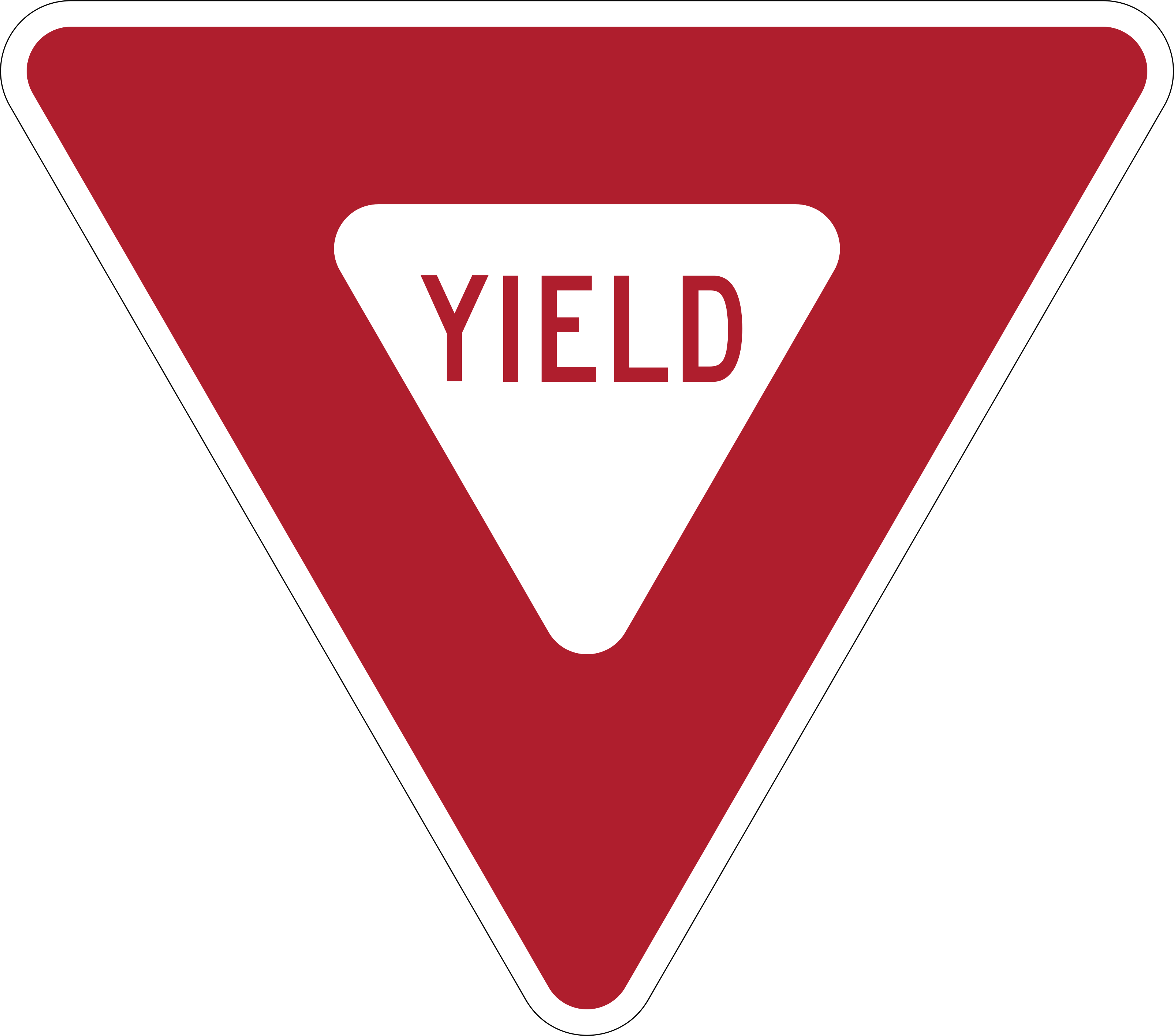
Question 8What does an upside-down triangle sign mean?
Show answer
A: Slow down, search and enter only if clear. A yield sign means slow down, look for pedestrians, bicyclists and vehicles, and go only when the way is clear. Vermont Driver's Manual (VN-007): Road Signs, page 33.
-
Question 9What is the maximum speed on a Vermont interstate unless posted otherwise?
Show answer
A: 65 mph. The maximum speed on an Interstate in Vermont is 65 mph or as posted. Vermont Driver's Manual (VN-007): Speed Limits and Safe Speeds, page 29.
-
Question 10During what hours does Vermont law require headlights?
Show answer
C: From a half hour after sunset to a half hour before sunrise. Vermont requires headlights from 30 minutes after sunset until 30 minutes before sunrise. Vermont Driver's Manual (VN-007): Night Driving, page 50.
-
Question 11At a four-way stop, who should go first?
Show answer
D: The first vehicle to arrive. At an all-way stop, the vehicle that got there first goes first. Vermont Driver's Manual (VN-007): Right-of-way, page 29.
-
Question 12If your turn signals or brake lights don't work, what must you do?
Show answer
C: Use hand signals and get them fixed immediately. If directional or brake lights don't work, you must use hand signals; the lights must be fixed immediately. Vermont Driver's Manual (VN-007): Signals, page 27.
-
Question 13How much space should you leave when passing a bicyclist in Vermont?
Show answer
A: At least 4 feet. Give a bicyclist at least four feet of space between your car and the rider; wait if the road is too narrow to do that. Vermont Driver's Manual (VN-007): Sharing the Road with Bicyclists: Driver Responsibilities, page 41.
-
Question 14How should you leave an interstate?
Show answer
D: Signal, move to the deceleration lane and slow to the posted exit speed. Signal for a lane change, move to the deceleration lane closest to the exit and slow down to the posted exit speed. Vermont Driver's Manual (VN-007): Exit Ramp, page 51.
-
Question 15How close to a crosswalk at an intersection may you park in Vermont?
Show answer
A: No closer than 20 feet. You may not park within 20 feet of a crosswalk at an intersection. Vermont Driver's Manual (VN-007): Where You May Not Park, page 30.
-
Question 16Must you stop for a school bus with flashing red lights in a school yard?
Show answer
A: Yes. The red-light stop rule for school buses applies everywhere, including school yards. Vermont Driver's Manual (VN-007): School Bus Stops, page 41.
-
Question 17Your ABS warning light stays on after you start driving. What does it mean?
Show answer
A: The ABS isn't working, but the vehicle still has brakes. If the ABS light stays on, the ABS system isn't working; the vehicle still has brakes. Vermont Driver's Manual (VN-007): Anti-lock Brakes, page 50.
-
Question 18What is the minimum age to take the Vermont learner's permit test?
Show answer
D: 15. You must be at least 15 years old to take the learner's permit test. Vermont Driver's Manual (VN-007): Questions and Answers about Learner's Permits, page 13.
-
Question 19How often is someone killed by a drunk driver, on average, according to the Vermont manual?
Show answer
B: Every 40 minutes. On average someone is killed by a drunk driver every 40 minutes; the drinking driver is the number one cause of fatal crashes. Vermont Driver's Manual (VN-007): Alcohol and other drugs, page 53.
-
Question 20What is the distance your car travels from when you see danger until you step on the brake called?
Show answer
D: Reaction distance. The distance traveled from seeing danger until stepping on the brake is reaction distance; from braking to stop is braking distance. Vermont Driver's Manual (VN-007): Stopping Your Vehicle, page 27.
-
Question 21May you turn right on a red arrow?
Show answer
C: No. Do not turn right on a red arrow, and don't turn right on red when No Turn On Red signs are lit. Vermont Driver's Manual (VN-007): Driver Responsibilities, page 39.
-
Question 22What does a circular sign with a large X and the letters RR mean?

Show answer
C: A railroad crossing is ahead. Circular signs with a large X and RR indicate a railroad crossing ahead. Vermont Driver's Manual (VN-007): Road Signs, page 33.
-
Question 23Can 10 mph ever be an unsafe speed?
Show answer
C: Yes, depending on conditions. Many crashes are caused by driving too fast for conditions; sometimes even 10 mph can be an unsafe speed. Vermont Driver's Manual (VN-007): Speed Limits and Safe Speeds, page 29.
-
Question 24Which headlights should you use in fog, heavy rain or heavy snow?
Show answer
C: Low beams. When visibility is poor in fog, heavy rain or snow, use your low beam headlights. Vermont Driver's Manual (VN-007): Floods and Storms, page 47.
-
Question 25When turning left, who must you yield to?
Show answer
B: All oncoming traffic, including bicyclists. If you are turning left you must yield to all oncoming traffic—motor vehicles and bicyclists. Vermont Driver's Manual (VN-007): Right-of-way, page 29.
Answer every question to see your score.
More Vermont practice tests
- Practice test 125 questions
- Practice test 325 questions
- Practice test 425 questions
- Practice test 525 questions
- Practice test 625 questions
- Practice test 725 questions
- Practice test 825 questions
- Practice test 925 questions
- Practice test 1025 questions
- Practice test 1125 questions
- Practice test 1223 questions
- Exam simulatorThe real format, 20 questions
How to use these tests
Read each explanation, even when you get the question right: it tells you the rule and the handbook section, so you can look it up. Your answers are saved in this browser only, so the weak spots mode can give you more questions on the topics you miss. When you're scoring well, take the exam simulator: it uses the same number of questions and passing score as the real test.
Our own questions, written from the Vermont Driver's Manual (VN-007) and checked against it. Not affiliated with the Vermont Department of Motor Vehicles (Agency of Transportation). Found a mistake? Tell us.