Hardest Virginia permit test questions
127 questions that need exact knowledge rather than common sense: the numbers (distances, speeds, fines, limits), the exceptions and the rules that are easy to mix up. We chose them from our Virginia question bank for that reason; they're not statistics from the DMV.
-
Question 1When is a left turn on a red light allowed in Virginia?
Show answer
C: From a one-way street onto another one-way street, after a complete stop. You may turn left on red only from a one-way street onto another one-way street, after coming to a complete stop and yielding, unless a sign or red arrow prohibits it. Virginia Driver's Manual (DMV 39): Traffic Signals: Left turn on red, page 7.
-
Question 2You are stopped at a red arrow pointing right, and there is no special sign. What does Virginia law allow?
Show answer
C: No right turn until the arrow changes. Virginia law prohibits turns at red arrows. You may only turn against a red arrow if a sign reads 'Right on Red Arrow After Stop'. Virginia Driver's Manual (DMV 39): Traffic Signals: Red arrow, page 7.
-
Question 3Which sign, if posted, allows you to turn against a red arrow in Virginia?
Show answer
C: Right on Red Arrow After Stop. The manual says you may not proceed in the direction of a red arrow unless a sign reads 'Right on Red Arrow After Stop' or 'Left on Red Arrow After Stop'. Virginia Driver's Manual (DMV 39): Traffic Signals: Red arrow, page 7.
-
Question 4At a railroad crossing with a flashing red light, you do not see any train. What should you do?
Show answer
C: Come to a complete stop anyway. The manual states that at a railroad crossing you must come to a complete stop at a flashing red light even if you don't see a train. Virginia Driver's Manual (DMV 39): Traffic Signals: Flashing red light, page 7.
-
Question 5A traffic signal is dark because of a power outage and no officer is directing traffic. How should you proceed?
Show answer
A: Treat the intersection as an all-way stop. When signals are out and showing no lights, you must stop and proceed as though the intersection were an all-way stop. Virginia Driver's Manual (DMV 39): Traffic Signals: Out of service signals, page 8.
-
Question 6A yellow X or a yellow diagonal downward arrow over your lane means:
Show answer
D: Move out of the lane as soon as safely possible. A yellow X or yellow diagonal downward arrow means you should move out of that lane as soon as it is safe. Virginia Driver's Manual (DMV 39): Lane use signals, page 8.
-
Question 7At a pedestrian hybrid beacon, the two red lights are alternating (flashing). What may you do?
Show answer
A: Proceed with caution if the crosswalk is clear. While the walk signal counts down, the PHB's red lights alternate flashing, telling drivers they may proceed with caution if the crosswalk is clear. Virginia Driver's Manual (DMV 39): Pedestrian Hybrid Beacons (PHBs), page 8.
-
Question 8What is the first thing a pedestrian hybrid beacon shows when a pedestrian activates it?
Show answer
A: A flashing yellow light at the bottom. When activated, a single yellow light at the bottom flashes first, then turns solid, then the two red lights come on. Virginia Driver's Manual (DMV 39): Pedestrian Hybrid Beacons (PHBs), page 8.
-
Question 9Pink-and-black signs are used to warn drivers about:
Show answer
C: Traffic incident areas. Orange-and-black signs are used in construction areas, and pink-and-black signs are used in incident areas. Virginia Driver's Manual (DMV 39): Sign Colors, page 8.
-
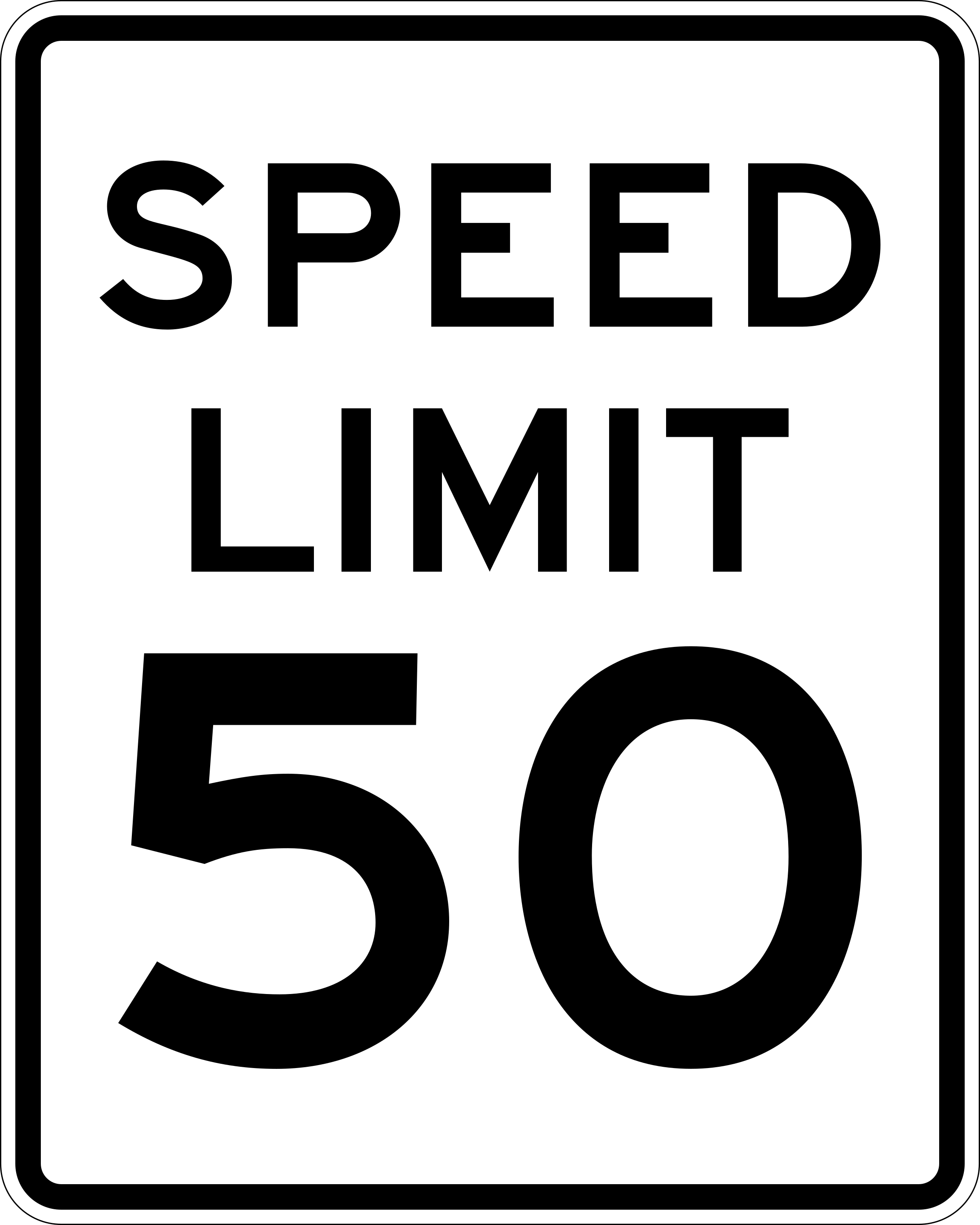
Question 10You are driving at the posted speed limit during heavy rain. Can you get a ticket for speeding?
Show answer
C: Yes, you may be ticketed for driving too fast for conditions. Speed limit signs show the maximum speed in good weather. In rain, snow and ice you may be ticketed for driving too fast for conditions even at or below the limit. Virginia Driver's Manual (DMV 39): Regulatory signs: Speed Limit, page 9.
-
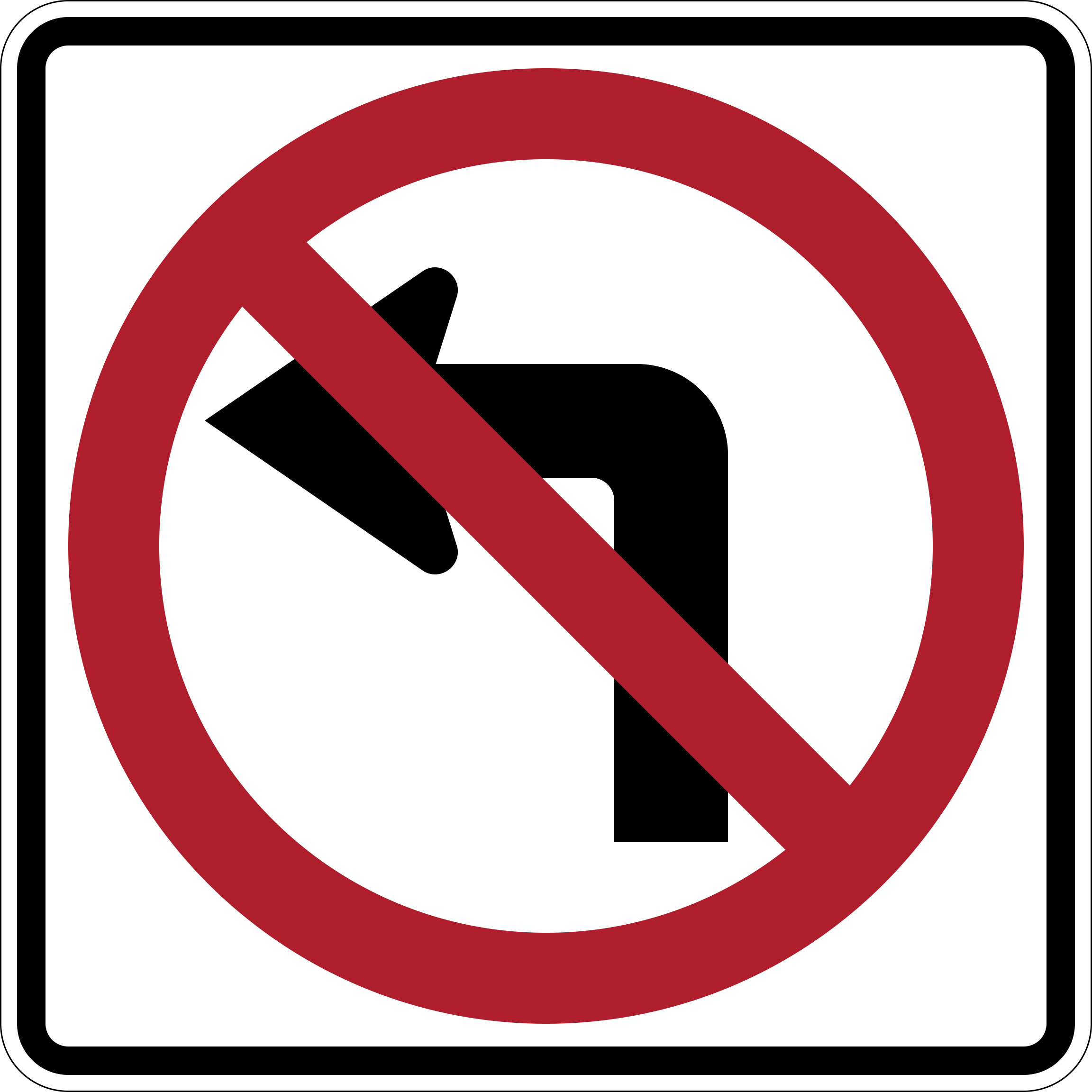
Question 11In Virginia, a U-turn where a No Left Turn sign is posted is:
Show answer
B: Illegal, because a U-turn counts as two left turns. Virginia considers a U-turn to be two left turns, so U-turns are illegal where a No Left Turn sign is posted. Virginia Driver's Manual (DMV 39): Regulatory signs: No Left Turn, page 9.
-
Question 12At a 'Merge' sign, who is responsible for merging safely?

Show answer
D: Drivers in both lanes. The Merge sign means two lanes are about to become one, and drivers in both lanes are responsible for merging safely. Virginia Driver's Manual (DMV 39): Warning signs: Merge, page 10.
-
Question 13When you see a 'Horse-Drawn Buggies' sign, how should you pass a buggy when the way is clear?
Show answer
A: Pass with at least three feet of clearance and don't use the horn. Slow down and don't use the horn around horse-drawn buggies. State law requires passing with at least three feet of clearance when the way is clear. Virginia Driver's Manual (DMV 39): Warning signs: Horse-Drawn Buggies, page 10.
-
Question 14A train has passed a multi-track crossing with flashing lights, but the lights are still flashing. What should you do?
Show answer
A: Stay stopped until the tracks are clear and the lights stop flashing. Do not proceed until all trains have passed, the tracks are clear and the lights are no longer flashing; a second train may be coming. Virginia Driver's Manual (DMV 39): Railroad Crossbuck and Flashing Lights, page 11.
-
Question 15Which type of vehicle must always stop at railroad crossings, even when the lights are not flashing?
Show answer
D: School buses. The manual notes that school buses must always stop at railroad crossings, even when the lights are not flashing. Virginia Driver's Manual (DMV 39): Railroad crossings, page 12.
-
Question 16Your car stalls on railroad tracks and a train is coming. What should you do?
Show answer
A: Get out right away and run diagonally away from the tracks toward the oncoming train. Get out immediately and run diagonally away from the tracks, in the direction the train is coming from. Virginia Driver's Manual (DMV 39): Railroad crossings: stalled vehicle, page 12.
-
Question 17If you are convicted of speeding in a Virginia highway work zone, the fine can be up to:
Show answer
C: $500. Exceeding the speed limit in a highway work zone can bring a fine of up to $500. Virginia Driver's Manual (DMV 39): Work zones, page 12.
-
Question 18What is the fine for using a handheld communications device in a Virginia highway work zone?
Show answer
C: $250. A conviction for using a handheld communications device in a highway work zone carries a $250 fine. Virginia Driver's Manual (DMV 39): Work zones, page 12.
-
Question 19A slow-moving vehicle emblem (orange triangle) must be shown by vehicles traveling at:
Show answer
B: 25 mph or less. Slow-moving vehicles traveling at 25 mph or less, such as farm equipment and horse-drawn vehicles, must display this sign on public highways. Virginia Driver's Manual (DMV 39): Slow Moving Vehicles, page 13.
-
Question 20On the solid side of a yellow center line, when may you cross it?
Show answer
C: To pass pedestrians, bicyclists, or scooter or skateboard riders when the opposite lane is clear and you can pass safely. The manual allows crossing the solid line only to pass pedestrians, bicyclists, and riders of scooters or skateboards when the opposite lane is clear and passing is safe. Virginia Driver's Manual (DMV 39): Pavement Markings, page 13.
-
Question 21Double solid yellow lines may be crossed to:
Show answer
B: Make a left turn or pass pedestrians, bicyclists and scooter or skateboard riders when safe. You may not cross double solid yellow lines except to turn left or to pass pedestrians, bicyclists and scooter or skateboard riders when the opposite lane is clear. Virginia Driver's Manual (DMV 39): Pavement Markings, page 13.
-
Question 22On an unmarked two-lane road in Virginia, may you pass a slow-moving vehicle?
Show answer
B: Yes, on the left, if no signs prohibit passing and the way is clear. On an unmarked two-lane road you may pass a slow vehicle on the left if no signs prohibit passing and the way is clear. Virginia Driver's Manual (DMV 39): Pavement Markings, page 13.
-
Question 23A center lane on a three-lane road is marked with a solid and a broken yellow line on each side. How far may you travel in it?
Show answer
B: Not more than 150 feet. This is a two-way left-turn lane; drivers in either direction may use it for left turns but may not travel more than 150 feet in it. Virginia Driver's Manual (DMV 39): Pavement Markings: three-lane roads, page 14.
-
Question 24On a three-lane road, the center lane is marked by a single broken yellow line on both sides. It may be used for:
Show answer
D: Passing, by drivers in either direction. If the center lane has a single broken yellow line on both sides, drivers in either direction may use it for passing. Virginia Driver's Manual (DMV 39): Pavement Markings: three-lane roads, page 14.
-
Question 25Double solid white lines that separate an HOV lane from other expressway lanes mean:
Show answer
C: You may not cross them; enter only where signs and markings allow. You may not cross double solid white lines; enter the special-use lane only where signs and markings allow. Virginia Driver's Manual (DMV 39): Pavement Markings: Double solid white lines, page 14.
-
Question 26At an intersection with a bicycle box, may you turn right on red?
Show answer
C: No, right turns on red are not allowed there. Right turns on red are not allowed at intersections with bicycle boxes. Virginia Driver's Manual (DMV 39): Bicycle boxes, page 15.
-
Question 27You accidentally enter a high-speed E-ZPass-only toll lane without a transponder. What should you do?
Show answer
B: Do not stop; continue through, and the vehicle owner will be billed. Do not stop, because stopping could cause a rear-end crash. Cameras photograph the plate and the owner is billed. Virginia Driver's Manual (DMV 39): Toll Plazas and Lanes, page 15.
-
Question 28Where should your hands be on the steering wheel, using the clock positions given in the Virginia manual?
Show answer
A: 8 and 4 o'clock. Virginia's manual says to place your hands at the 8 o'clock and 4 o'clock positions, holding with fingers and thumbs rather than palms. Virginia Driver's Manual (DMV 39): Hand Position, page 16.
-
Question 29Unless otherwise posted, what is the maximum speed limit on unpaved roads in Virginia?
Show answer
B: 35 mph. The default maximum on unpaved roads is 35 mph unless a sign says otherwise. Virginia Driver's Manual (DMV 39): Speed Limits, page 17.
-
Question 30Unless otherwise posted, what is the maximum speed limit on Virginia roads that are not school, business, residential or unpaved?
Show answer
C: 55 mph. The manual lists 55 mph for all other roads unless a speed limit sign states otherwise. Virginia Driver's Manual (DMV 39): Speed Limits, page 17.
-
Question 31In Virginia you may be charged with reckless driving for going how fast?
Show answer
B: 20 mph or more over the limit, or over 85 mph. Driving 20 mph or more above the limit, or over 85 mph regardless of the limit, can bring a reckless driving charge. Virginia Driver's Manual (DMV 39): Speed Limits, page 16.
-
Question 32You are driving 80 mph where the limit is 65 mph. Is this reckless driving under the speed rule in the Virginia manual?
Show answer
B: No; it is 15 mph over and not above 85 mph, though it is still speeding. The reckless driving threshold is 20 mph or more over the limit or over 85 mph. 80 in a 65 is neither, but it is still a speeding violation. Virginia Driver's Manual (DMV 39): Speed Limits, page 16.
-
Question 33What additional fine applies if convicted of driving between 81 and 85 mph in a 65-mph zone?
Show answer
B: $100. You are subject to an additional $100 fine for driving 81 to 85 mph in a 65-mph zone. Virginia Driver's Manual (DMV 39): Speed Limits, page 16.
-
Question 34Are radar detectors legal to use in passenger vehicles in Virginia?
Show answer
B: No, it is illegal to use them. The manual states it is illegal to use radar detectors in Virginia. Virginia Driver's Manual (DMV 39): Speed Limits, page 16.
-
Question 35If you fail to obey a police officer's signal to stop and the pursuing officer is killed as a direct result, you are guilty of:
Show answer
A: A Class 4 felony. The manual states you will be guilty of a Class 4 felony in that situation. Virginia Driver's Manual (DMV 39): Stopping, page 17.
-
Question 36When are you NOT required to stop for a school bus with flashing red lights in Virginia?
Show answer
D: When you are traveling the opposite direction on a road divided by a median or barrier. You do not have to stop if you are on the opposite side of a median or barrier dividing the road, but be ready for unexpected actions. Virginia Driver's Manual (DMV 39): Stopping for School Buses, page 17.
-
Question 37A school bus is loading children but its signals are not on. Must you stop?
Show answer
A: Yes, you must also stop when the bus is loading or unloading. You must also stop if the bus is loading or unloading passengers even when the signals are not on. Virginia Driver's Manual (DMV 39): Stopping for School Buses, page 17.
-
Question 38The requirement to stop for a stopped school bus applies on highways and also on:
Show answer
A: Private roads and school driveways. The rule applies when approaching from any direction on a highway, private road or school driveway. Virginia Driver's Manual (DMV 39): Stopping for School Buses, page 17.
-
Question 39According to the Virginia manual, wet pavement can do what to your braking distance?
Show answer
A: Double it. Braking distance depends on pavement condition; wet pavement can double your braking distance. Virginia Driver's Manual (DMV 39): Stopping Distance, page 17.
-
Question 40You must pass a stopped trash truck collecting trash on a two-lane road and cannot change lanes. What must you do?
Show answer
A: Slow to 10 mph below the posted limit and pass at least 2 feet to the left. On highways with fewer than four lanes, or if you can't change lanes, slow to 10 mph below the limit and pass at least two feet to the left. Virginia Driver's Manual (DMV 39): Yielding to Vehicles with Flashing Lights: Stationary vehicles, page 18.
-
Question 41How close may you follow an emergency vehicle that has its lights flashing?
Show answer
C: No closer than 500 feet. Never follow an emergency vehicle closer than 500 feet when its lights are flashing. Virginia Driver's Manual (DMV 39): Yielding to Vehicles with Flashing Lights: Approaching vehicles - same direction, page 18.
-
Question 42How close to fire trucks or equipment stopped to answer an alarm may you park?
Show answer
D: Not within 500 feet. You may not park within 500 feet of where fire trucks or equipment are stopped answering an alarm. Virginia Driver's Manual (DMV 39): Parking, page 24.
-
Question 43An emergency vehicle with lights and siren approaches in the opposite lane of an undivided highway. What should you do?
Show answer
C: Pull over to the edge of the road and stop until it passes. When an emergency vehicle approaches in the opposite lane of an undivided highway, pull to the edge and stop until it passes. Virginia Driver's Manual (DMV 39): Yielding to Vehicles with Flashing Lights: Approaching vehicles - opposite direction, page 18.
-
Question 44In a funeral procession not led by a police escort, who must obey all traffic signs and signals?
Show answer
D: The lead vehicle. Unless led by a police escort, the lead vehicle must obey all signs and signals; others in the procession may follow carefully without stopping. Virginia Driver's Manual (DMV 39): Yielding the Right-of-Way, page 18.
-
Question 45In a dual-lane roundabout, you plan to go straight through. Which lane may you use?
Show answer
C: Either lane. To go straight in a dual-lane roundabout, you may stay in either lane. Virginia Driver's Manual (DMV 39): Roundabouts, page 18.
-
Question 46Is it legal to exceed the speed limit while passing?
Show answer
C: No, it is against the law. It is against the law to exceed the speed limit while passing. Virginia Driver's Manual (DMV 39): Passing, page 19.
-
Question 47How far ahead of a turn should you signal, according to the Virginia manual?
Show answer
C: Three or four seconds, about 100 feet. Signal at least three or four seconds, 100 feet, ahead of your turn. Virginia Driver's Manual (DMV 39): Turn Signals, page 20.
-
Question 48Two vehicles facing each other are both turning left. How should they turn?
Show answer
B: In front of each other, so their passenger sides pass beside each other. Both vehicles should turn in front of each other so that their passenger sides are beside each other. Virginia Driver's Manual (DMV 39): Turning, page 20.
-
Question 49In Virginia business districts, cities and towns, where are U-turns allowed?
Show answer
C: Only at intersections. In business districts, cities and towns, U-turns are allowed only at intersections. Virginia Driver's Manual (DMV 39): U-Turns, page 20.
-
Question 50Using Virginia's two-, three-, four-second rule, how many seconds should you follow behind a vehicle when driving under 35 mph on a dry road?
Show answer
B: 2 seconds. The manual's table calls for 2 seconds under 35 mph on dry surfaces. Virginia Driver's Manual (DMV 39): Following Distance, page 21.
-
Question 51Under Virginia's following distance table, what is the minimum following time at 35-45 mph?
Show answer
B: 3 seconds. The table calls for 3 seconds at 35-45 mph on dry surfaces. Virginia Driver's Manual (DMV 39): Following Distance, page 21.
-
Question 52Under Virginia's following distance table, what is the minimum following time at 46-70 mph?
Show answer
C: 4 seconds. The table calls for 4 seconds at 46-70 mph on dry surfaces; the cushions don't work if you're speeding over 70. Virginia Driver's Manual (DMV 39): Following Distance, page 21.
-
Question 53According to the Virginia manual, about how long is the typical foot response time?
Show answer
C: Three-quarters of a second. Hand response time is close to half a second and foot response time is normally three-quarters of a second. Virginia Driver's Manual (DMV 39): Following Distance, page 21.
-
Question 54How far ahead do expert drivers try to focus their eyes?
Show answer
A: 20 to 30 seconds. Expert drivers try to look 20 to 30 seconds ahead, which in the city is about one block. Virginia Driver's Manual (DMV 39): Searching, page 21.
-
Question 55How often should you check your rearview mirror?
Show answer
C: About every 10 seconds. Check the traffic behind you frequently, about every 10 seconds. Virginia Driver's Manual (DMV 39): Searching, page 21.
-
Question 56Failing to stop for a pedestrian lawfully crossing and causing serious bodily injury or death can result in:
Show answer
A: A Class 1 misdemeanor. The manual states this can result in a Class 1 misdemeanor. Virginia Driver's Manual (DMV 39): Sharing the Road: Pedestrians, page 22.
-
Question 57You stopped for a pedestrian crossing in front of you. How long must you remain stopped?
Show answer
A: Until the pedestrian has passed the lane your vehicle is in. Stop and remain stopped until pedestrians have passed the lane in which your vehicle is stopped. Virginia Driver's Manual (DMV 39): Sharing the Road: Pedestrians, page 22.
-
Question 58May a motorist drive in a marked bicycle lane to pass another vehicle?
Show answer
C: No, using marked bicycle lanes is prohibited for motor vehicles, including while passing. The manual says using marked bicycle lanes is prohibited for motor vehicles, including while passing. Virginia Driver's Manual (DMV 39): Sharing the Road: Bicycles, page 22.
-
Question 59How much following distance should you allow behind a motorcycle?
Show answer
A: Add an extra second to the following distance rule, and double that in bad weather. Add an extra second to the following distance rule behind a motorcycle; in inclement weather, double this distance. Virginia Driver's Manual (DMV 39): Sharing the Road: Motorcycles, page 22.
-
Question 60Low speed vehicles may be operated on public roads with speed limits of:
Show answer
B: 35 mph or less. Low speed vehicles may be used on public roads with speed limits of 35 mph or less. Virginia Driver's Manual (DMV 39): Low Speed Vehicles, page 23.
-
Question 61Which statement about low speed vehicles in Virginia is correct?
Show answer
D: They have a maximum speed of 21 to 25 mph and need registration and insurance like passenger vehicles. Low speed vehicles have top speeds of 21 to 25 mph, must meet passenger vehicle registration and insurance requirements, and golf carts are not low speed vehicles. Virginia Driver's Manual (DMV 39): Low Speed Vehicles, page 23.
-
Question 62A truck's blind spots may stretch about how far behind the vehicle?
Show answer
C: 200 feet. Blind spots may stretch up to 20 feet in front of the cab and about 200 feet behind the vehicle. Virginia Driver's Manual (DMV 39): Trucks, Tractor-Trailers, Buses and RVs, page 23.
-
Question 63A tractor-trailer may be up to how long, according to the Virginia manual?
Show answer
C: 65 feet. A truck and its trailer may be as long as 65 feet, and passing it may take more than half a mile of clear road. Virginia Driver's Manual (DMV 39): Trucks, Tractor-Trailers, Buses and RVs, page 23.
-
Question 64When backing a trailer, to move the trailer to the left you should place your hand at the bottom of the steering wheel and:
Show answer
A: Move the wheel left with your left hand. With your hand at the bottom of the wheel, use your left hand to move the wheel left to back the trailer to the left. Virginia Driver's Manual (DMV 39): Light to Medium Trailers, page 23.
-
Question 65When parallel parking next to a curb in Virginia, how far from the curb may your vehicle be?
Show answer
C: No more than one foot. You may not park more than one foot from the curb. Virginia Driver's Manual (DMV 39): Parking, page 24.
-
Question 66You are parking uphill next to a curb. Which way should you turn your front wheels?
Show answer
B: Left, away from the curb. Uphill with a curb, turn the front wheels left so the tire rests against the curb if the car rolls back. Virginia Driver's Manual (DMV 39): Parking on a hill, page 24.
-
Question 67You are parking uphill on a road with no curb. Which way should you turn your front wheels?
Show answer
C: Right. Without a curb, turn the wheels right (uphill or downhill) so that if the car rolls, the rear rolls away from traffic. Virginia Driver's Manual (DMV 39): Parking on a hill, page 24.
-
Question 68In Virginia, you may not park within how many feet of a fire hydrant?
Show answer
B: 15 feet. You may not park within 15 feet of a fire hydrant. Virginia Driver's Manual (DMV 39): Parking, page 24.
-
Question 69In Virginia, you may not park within how many feet of an intersection?
Show answer
B: 20 feet. You may not park within 20 feet of an intersection. Virginia Driver's Manual (DMV 39): Parking, page 24.
-
Question 70How close to a railroad crossing may you park in Virginia?
Show answer
C: Not within 50 feet. You may not park within 50 feet of a railroad crossing. Virginia Driver's Manual (DMV 39): Parking, page 24.
-
Question 71You may not park within how many feet of the entrance to a fire, ambulance or rescue squad station?
Show answer
A: 15 feet. Virginia prohibits parking within 15 feet of the entrance to a fire, ambulance or rescue squad station. Virginia Driver's Manual (DMV 39): Parking, page 24.
-
Question 72Is it legal to park on the hard surface of a road when no curb is present?
Show answer
B: No. The manual lists the hard surface of a road with no curb as a place you may not park; pull off onto the shoulder as far as possible. Virginia Driver's Manual (DMV 39): Parking, page 24.
-
Question 73Virginia law requires headlights in rain, fog, snow or sleet when visibility is reduced to:
Show answer
C: 500 feet. Headlights are required in inclement weather when visibility is reduced to 500 feet. Virginia Driver's Manual (DMV 39): Lights, page 24.
-
Question 74In hazardous conditions, the Virginia manual says to increase your space cushion by:
Show answer
B: Doubling your normal following distance. Increase your space cushion by doubling your normal following distance. Virginia Driver's Manual (DMV 39): Hazardous Conditions, page 25.
-
Question 75When following another vehicle at night, you must use low beams when within:
Show answer
B: 200 feet. When following, use low beams whenever you are within 200 feet of the vehicle ahead. Virginia Driver's Manual (DMV 39): Night Driving, page 25.
-
Question 76On a highway at night, you should dim your high beams when an oncoming vehicle is within:
Show answer
C: 500 feet. Use high beams on highways unless another vehicle is coming toward you within 500 feet. Virginia Driver's Manual (DMV 39): Night Driving, page 25.
-
Question 77A conviction for aggressive driving in Virginia can lead to a license suspension of:
Show answer
D: 10 days up to six months. If convicted of aggressive driving, your license could be suspended for ten days or as long as six months. Virginia Driver's Manual (DMV 39): Aggressive Driving, page 25.
-
Question 78May a Virginia driver use a phone for GPS navigation while driving?
Show answer
A: Yes, as long as the driver is not holding it or entering information. A phone may be used for navigation if the driver is not holding it or entering information while driving. Virginia Driver's Manual (DMV 39): Distracted Driving, page 26.
-
Question 79About what share of all Virginia traffic crashes does driver distraction account for each year?
Show answer
B: About 17 percent. The manual states driver distraction accounts for roughly 17 percent of all traffic crashes in Virginia annually. Virginia Driver's Manual (DMV 39): Distracted Driving, page 26.
-
Question 80On long drives, how often should you stop for rest?
Show answer
A: At least every two hours. Limit long-distance driving and stop at least every two hours for rest. Virginia Driver's Manual (DMV 39): Drowsy Driving, page 26.
-
Question 81To avoid drowsy driving, which hours does the Virginia manual suggest avoiding driving?
Show answer
D: 10 p.m. to 6 a.m.. The manual advises avoiding driving from 10 p.m. to 6 a.m. Virginia Driver's Manual (DMV 39): Drowsy Driving, page 26.
-
Question 82Can you be convicted of DUI in Virginia with a BAC below .08?
Show answer
B: Yes, if your driving is impaired. If your driving is impaired, you can be convicted of DUI with a BAC lower than .08 percent. Virginia Driver's Manual (DMV 39): Drunk and Drugged Driving, page 26.
-
Question 83A driver under 21 can be convicted of illegal consumption of alcohol with a BAC of:
Show answer
C: At least .02 but less than .08. Under 21, you can be convicted of illegal consumption with a BAC of at least .02 but less than .08; at .08 or higher, DUI. Virginia Driver's Manual (DMV 39): Drunk and Drugged Driving, page 26.
-
Question 84Compared with driving sober, how much greater is your chance of a crash if you drive after drinking, according to the Virginia manual?
Show answer
A: Seven times greater. The manual says your chances of being in a crash are seven times greater if you drive after drinking. Virginia Driver's Manual (DMV 39): Drunk and Drugged Driving, page 26.
-
Question 85After a minor crash with no injuries, the cars can still be driven. What does Virginia require?
Show answer
D: Move the vehicles from the road immediately if you can do so safely. Drivers must move vehicles from the road immediately if they can be moved, no one is injured and the driver can do so safely. Virginia Driver's Manual (DMV 39): Traffic Crashes, page 27.
-
Question 86Police must send a written crash report to DMV when a crash causes injury, death, or total property damage over:
Show answer
C: $3,000. Law enforcement forwards a crash report to DMV when there is injury or death or total property damage in excess of $3,000. Virginia Driver's Manual (DMV 39): Traffic Crashes, page 27.
-
Question 87You hit an unattended parked car and can't find the owner. Besides leaving a note, what must you do?
Show answer
B: Report the crash to police within 24 hours. Leave an easy-to-find note with your name, phone, date, time and damage description, and report the crash to police within 24 hours. Virginia Driver's Manual (DMV 39): Traffic Crashes, page 27.
-
Question 88An officer gives you a citation to sign. What does signing mean?
Show answer
B: It is not an admission of guilt; refusing to sign may result in arrest. Signing the citation is not an admission of guilt; refusal to sign may result in arrest. Virginia Driver's Manual (DMV 39): Traffic Stops, page 28.
-
Question 89The driver must make sure every passenger under what age is secured in a safety belt, booster or child safety seat?
Show answer
C: Under 18. A driver transporting anyone younger than 18 must ensure they are properly secured, no matter where they sit. Virginia Driver's Manual (DMV 39): Seat Belts, page 28.
-
Question 90With air bags, how far should you sit from the steering wheel?
Show answer
D: At least 10 inches. Move your seat back so you are at least ten inches from the steering wheel. Virginia Driver's Manual (DMV 39): Air Bags, page 29.
-
Question 91Children of what age are safer buckled up in the back seat because of air bags?
Show answer
D: Ages 12 and under. The manual says children ages 12 and under are safer buckled up in the back seat. Virginia Driver's Manual (DMV 39): Air Bags, page 29.
-
Question 92Children should ride rear-facing from birth to what age (or as long as the seat maker allows)?
Show answer
B: 2 years. Children should ride rear-facing from birth to 2 years, or as long as the seat manufacturer allows. Virginia Driver's Manual (DMV 39): Child Safety Seats, page 29.
-
Question 93What is the fine for a first conviction of violating Virginia's child restraint law?
Show answer
B: $50. A first conviction brings a $50 fine; a second or subsequent offense could mean a $500 penalty. Virginia Driver's Manual (DMV 39): Child Safety Seats, page 29.
-
Question 94Transporting children under what age in the bed of a pickup truck is illegal in Virginia?
Show answer
B: Under 16. It is illegal to transport children under age 16 in a pickup truck bed, even with a camper shell. Virginia Driver's Manual (DMV 39): Child Safety Seats, page 29.
-
Question 95How many of the 10 traffic sign questions in part one of Virginia's knowledge exam must you answer correctly?
Show answer
A: All 10. You must correctly answer all ten traffic sign questions in part one before you can take part two. Virginia Driver's Manual (DMV 39): Two-Part Knowledge Exam, page 5.
-
Question 96What score must you reach on part two (general knowledge) of Virginia's knowledge exam?
Show answer
C: At least 80 percent. You must answer at least 80 percent of the part two multiple-choice questions correctly. Virginia Driver's Manual (DMV 39): Two-Part Knowledge Exam, page 5.
-
Question 97An applicant under 18 fails the knowledge exam on January 1. What is the earliest date they can retake it?
Show answer
A: January 17. Under 18, by law you must wait a full 15 days; failing on January 1 means the earliest retake is January 17. Virginia Driver's Manual (DMV 39): Two-Part Knowledge Exam, page 5.
-
Question 98After failing the knowledge exam three times, what must you do before a fourth attempt?
Show answer
B: Complete and pass the classroom component of driver education (or an approved 8-hour manual course where eligible). After three failures you must complete classroom driver education; an approved 8-hour course based on the manual may satisfy this if eligible. Virginia Driver's Manual (DMV 39): Section 1: Testing, page 5.
-
Question 99Under the current (April 2026) Virginia manual, applicants 18 or older who do not take driver education must hold the learner's permit how long before their first road skills test?
Show answer
C: 60 days. The manual says applicants 18 or older must hold the permit 60 days before the first road skills test, or complete driver education. DMV has announced that from Jan. 1, 2027, applicants aged 18 to 20 must hold the permit 90 days and also complete driver education. Virginia Driver's Manual (DMV 39): Road Skills Test, page 6.
-
Question 100If you fail the road skills test, how long must you wait to retake it?
Show answer
B: Two days. If you fail the road skills test, you must wait two days to take it again. Virginia Driver's Manual (DMV 39): Road Skills Test, page 6.
-
Question 101What vision is required for an unrestricted Virginia driver's license?
Show answer
C: 20/40 or better in one or both eyes and at least 110 degrees horizontal vision. An unrestricted license requires 20/40 or better in one or both eyes and 110 degrees or better horizontal vision. Virginia Driver's Manual (DMV 39): Vision Standards, page 6.
-
Question 102A daylight-only restricted license allows you to drive during which hours?
Show answer
C: From a half-hour after sunrise to a half-hour before sunset. A daylight-only license permits driving from a half-hour after sunrise until a half-hour before sunset. Virginia Driver's Manual (DMV 39): Vision Standards, page 6.
-
Question 103When does DMV require a driver 18 or older to complete a driver improvement clinic?
Show answer
C: After 12 demerit points within 12 months or 18 points within 24 months. Drivers 18+ must complete a clinic if they get 12 demerit points in 12 months or 18 points in 24 months. Virginia Driver's Manual (DMV 39): Driver Improvement Program, page 31.
-
Question 104A driver 18 or older receives 18 demerit points within 12 months. What will DMV do?
Show answer
D: Suspend the license for 90 days and require a driver improvement clinic. 18 points within 12 months or 24 points within 24 months brings a 90-day suspension and a required driver improvement clinic. Virginia Driver's Manual (DMV 39): Driver Improvement Program, page 31.
-
Question 105A driver under 18 is convicted of a demerit-point violation. What does DMV require?
Show answer
A: Completion of a driver improvement clinic within 90 days. A first demerit-point (or safety belt/child restraint) conviction for an under-18 offense requires a driver improvement clinic within 90 days. Virginia Driver's Manual (DMV 39): Driver Improvement Program, page 31.
-
Question 106What happens after a second demerit-point conviction for a violation committed while under 18?
Show answer
C: A 90-day suspension. After the second such conviction, DMV suspends the driving privilege for 90 days. Virginia Driver's Manual (DMV 39): Driver Improvement Program, page 31.
-
Question 107A third demerit-point conviction for a violation committed under age 18 results in:
Show answer
A: Revocation for one year or until age 18, whichever is longer. The third conviction results in revocation for one year or until age 18, whichever is longer. Virginia Driver's Manual (DMV 39): Driver Improvement Program, page 31.
-
Question 108Virginia demerit point convictions may be assigned how many points?
Show answer
C: 3, 4 or 6. Convictions may be assigned three, four or six demerit points. Virginia Driver's Manual (DMV 39): Driver Improvement Program, page 31.
-
Question 109After a crash, police with probable cause may arrest you for DUI without a warrant within how many hours?
Show answer
C: Three hours. You can be arrested for DUI within three hours of a crash without a warrant and at any location. Virginia Driver's Manual (DMV 39): Alcohol and the Law, page 32.
-
Question 110Under administrative license suspension, how long is the license suspended for a first DUI charge (refusal or BAC .08+)?
Show answer
B: Seven days. For a first offense, the administrative suspension is seven days. Virginia Driver's Manual (DMV 39): Administrative License Suspension, page 32.
-
Question 111Under administrative license suspension, how long is the suspension for a second DUI offense?
Show answer
B: 60 days or until trial, whichever comes first. For a second offense the suspension is 60 days or until trial, whichever comes first; for a third, until trial. Virginia Driver's Manual (DMV 39): Administrative License Suspension, page 32.
-
Question 112A DUI conviction with a passenger age 17 or younger in the vehicle carries an additional mandatory:
Show answer
B: Five-day jail term. It carries an additional mandatory five-day jail term and an additional fine of $500 to $1,000. Virginia Driver's Manual (DMV 39): Transporting Children While Under the Influence of Alcohol/Drugs, page 32.
-
Question 113If you are caught driving while your license is suspended for an alcohol-related offense, your vehicle will be impounded immediately for:
Show answer
C: 30 days. The vehicle is impounded immediately for 30 days; the court can add 90 more days on conviction. Virginia Driver's Manual (DMV 39): Vehicle Impoundment, page 32.
-
Question 114Under 21 and convicted of driving after illegally consuming alcohol (BAC .02 to under .08), the penalty includes:
Show answer
D: A one-year license suspension and a $500 minimum fine or at least 50 hours of community service. The court penalty includes a one-year suspension plus a minimum $500 fine or at least 50 hours of community service. Virginia Driver's Manual (DMV 39): Alcohol Related Violations and Penalties Involving Persons Under Age 21, page 32.
-
Question 115Unless the supervising driver is the learner's legal guardian or sibling, how old must the licensed driver beside a Virginia learner's permit holder be?
Show answer
C: At least 21. The licensed driver in the front passenger seat must be at least 21, alert and able to help. A guardian or sibling (including half- and step-siblings) may supervise at 18, 19 or 20. Virginia Driver's Manual (DMV 39): Learner's Permit, page 33.
-
Question 116Your 19-year-old brother holds a valid driver's license. May he supervise you while you drive on your learner's permit?
Show answer
D: Yes, a sibling age 18, 19 or 20 may supervise. The licensed driver may be 18, 19 or 20 if he or she is the learner's legal guardian or a brother, sister, half-sibling or stepsibling. Virginia Driver's Manual (DMV 39): Learner's Permit, page 33.
-
Question 117A person under 21 uses a fake ID to try to buy alcohol in Virginia. Which penalty applies?
Show answer
D: At least a $500 fine, 50 hours of community service, and a license suspension of 6 months to 1 year. Penalties include a fine of at least $500, at least 50 hours of community service, up to 12 months in jail, and a 6-month to 1-year license suspension. Virginia Driver's Manual (DMV 39): Alcohol Related Violations and Penalties Involving Persons Under Age 21, page 33.
-
Question 118What is the maximum fine for providing alcohol to a person under 21 in Virginia?
Show answer
C: $2,500. Providing alcohol to someone under 21 can bring a fine up to $2,500, up to a one-year license suspension and 12 months in jail. Virginia Driver's Manual (DMV 39): Alcohol Related Violations and Penalties Involving Persons Under Age 21, page 33.
-
Question 119After a DUI-related crash, Virginia localities may require you to repay emergency response costs up to:
Show answer
C: $1,000. You may be responsible for paying up to $1,000 for law enforcement, EMS, fire and rescue personnel who respond to a crash caused by your DUI. Virginia Driver's Manual (DMV 39): Restitution, page 32.
-
Question 120A regular Virginia driver's license allows you to drive vehicles or small trucks under what weight that are exempt from CDL requirements?
Show answer
B: 26,001 pounds. A driver's license allows you to operate any vehicle or small truck less than 26,001 pounds that is exempt from CDL requirements. Virginia Driver's Manual (DMV 39): Driver's License, page 34.
-
Question 121After moving to a new address, how soon must you notify Virginia DMV?
Show answer
C: Within 30 days. If you move, you must notify DMV within 30 days. Virginia Driver's Manual (DMV 39): Address Changes, page 35.
-
Question 122A new Virginia resident who drives must get a Virginia driver's license within:
Show answer
D: 60 days. New residents must obtain a Virginia driver's license within 60 days of moving here. Virginia Driver's Manual (DMV 39): New to Virginia, page 35.
-
Question 123How soon after moving to Virginia must you title and register your vehicle?
Show answer
C: Within 30 days. Title and register your vehicle and get Virginia plates within 30 days of moving to Virginia. Virginia Driver's Manual (DMV 39): Titles, Registrations, License Plates, Decals, page 35.
-
Question 124In the penny test, you place Lincoln's head into a tread groove. What shows that the tread depth is safe?
Show answer
D: Part of Lincoln's head is covered by the tread. If any part of Lincoln's head is covered by the tread, you have a safe amount of tread. Virginia Driver's Manual (DMV 39): Tire Safety Inspection, page 36.
-
Question 125The Division of Child Support Enforcement can direct DMV to suspend your license if your child support payments are late by:
Show answer
C: 90 days or $5,000. DMV will suspend if child support payments are late by 90 days or $5,000, or for failing to appear in related court proceedings. Virginia Driver's Manual (DMV 39): Suspensions for Failing to Satisfy Child Support-Related Requirements, page 32.
-
Question 126Driver's licenses from which countries let an applicant skip Virginia's knowledge exam?
Show answer
B: Canada, Germany, France and the Republic of Korea. You need the knowledge exam unless you hold a valid license from another U.S. state, Canada, Germany, France or the Republic of Korea. Virginia Driver's Manual (DMV 39): Two-Part Knowledge Exam, page 5.
-
Question 127After failing the road skills test at DMV three times, what must you complete before a fourth try?
Show answer
D: The in-vehicle part of driver education at an approved school. After three road test failures at DMV, you must complete and pass the in-vehicle part of driver education. Virginia Driver's Manual (DMV 39): Road Skills Test, page 6.
Answer every question to see your score.
Remembering the numbers
Most mistakes on the Virginia DMV test are about specifics: how many feet before a turn to signal, how far to park from a hydrant, the alcohol limit for drivers under 21. Write the numbers from these questions on a card and review them before the test, then take the exam simulator.