Colorado DMV permit practice test 11
25 questions written from the Colorado Driver Handbook (DR 2337), covering alcohol and drugs, safe and defensive driving, signals and pavement markings, road signs, sharing the road and more. Pick an answer to see straight away whether you're right and why.
-
Question 1Can you plea bargain an alcohol- or drug-related driving offense down to a non-alcohol offense in Colorado?
Show answer
A: No. Colorado does not let you plead an alcohol- or drug-related driving charge down to a lesser offense. Not using alcohol or drugs before driving is the only sure way to avoid the penalties. Colorado Driver Handbook (DR 2337): Express Consent Law (C.R.S. 42-4-1301.1), page 8.
-
Question 2Under normal conditions, what following distance rule does the Colorado handbook use?
Show answer
A: The three-second rule. Under normal conditions, use the three-second rule to gauge your space behind the vehicle ahead. Colorado Driver Handbook (DR 2337): Three-second rule, page 21.
-
Question 3How are reversible lanes typically marked?
Show answer
A: By a barrier or double broken yellow lines, with signs or special lights. Reversible lanes change direction at different times. They are separated by a barrier or double broken yellow lines and are controlled by signs or special lights. Colorado Driver Handbook (DR 2337): Lane Controls: Reversible lanes, page 13.
-
Question 4What happens if you park in a disabled space using someone else's placard?
Show answer
A: Jail time, loss of privileges, towing and fines double the normal amounts. Using someone else's placard or plate brings jail time, loss of driving privileges, towing, and fines double those for illegal parking. Colorado Driver Handbook (DR 2337): Traffic Signs: Disabled parking signs, page 12.
-
Question 5About how far does an average freight train traveling 55 mph need to stop?
Show answer
A: About one mile. A typical freight train going 55 mph needs about a mile to stop, so never try to beat one. Colorado Driver Handbook (DR 2337): Railroad Crossing, page 24.
-
Question 6In the event of a crash, what is the first thing you should do?
Show answer
A: Stop immediately and never leave the scene. Stop immediately and never leave the scene; check for injuries, call law enforcement and exchange information. Colorado Driver Handbook (DR 2337): Crash Tips, page 29.
-
Question 7A 19-year-old is convicted of buying alcohol, but was not driving. Can their driving privilege be affected?
Show answer
A: Yes, it is subject to revocation even if driving was not a factor. Anyone younger than 21 convicted of buying or possessing alcohol is subject to revocation even if driving was not a factor. Colorado Driver Handbook (DR 2337): Driving under the influence while younger than 21, page 7.
-
Question 8Alcohol is classified as what type of drug?
Show answer
A: A depressant. Alcohol is a depressant that reduces brain function, slowing reflexes and reaction times. Colorado Driver Handbook (DR 2337): Driving Under the Influence, page 6.
-
Question 9What is a 'zipper merge'?
Show answer
A: Using both lanes until just before the lane closes, then taking turns merging. Drivers continue in both lanes equally until just before the lane ends, then take turns filling the open lane. Colorado Driver Handbook (DR 2337): Zipper Merge, page 22.
-
Question 10On a road with no lane markings, where should you drive?
Show answer
A: Just to the right of the center of the road. With no lane lines, keep just right of the road's center and stay off the shoulder. Colorado Driver Handbook (DR 2337): Lane Controls: Unmarked lane, page 13.
-
Question 11To park in a disabled parking space, who must be entering or exiting the vehicle?
Show answer
A: The person who owns the disabled placard. In order to park in a disabled space, the person who owns the placard must be entering or exiting the vehicle. Colorado Driver Handbook (DR 2337): Traffic Signs: Disabled parking signs, page 12.
-
Question 12If there is no stop line at a railroad crossing, how far from the tracks must you stop?
Show answer
A: At least 10 feet. With no painted stop line, stop at least 10 feet from the nearest rail, because trains extend about 3 feet beyond the tracks. Colorado Driver Handbook (DR 2337): Railroad Crossing: Pavement markings, page 24.
-
Question 13Which parts of driving does the Colorado drive test assess?
Show answer
A: Perceptual, motor and attentional skills. The drive test assesses perceptual, motor and attentional skills, using AAMVA guidelines. Colorado Driver Handbook (DR 2337): Driving Skills Test (drive test), page 4.
-
Question 14Besides BAC, how can impaired driving be proven in Colorado?
Show answer
A: By impaired driving behavior and the totality of circumstances, including field sobriety tests. Impaired driving convictions are not proven only by BAC, but by impaired driving behavior and the totality of circumstances, including Standardized Field Sobriety Tests. Colorado Driver Handbook (DR 2337): Driving Under the Influence, page 6.
-
Question 15Which of these is listed as a 'slow zone' requiring slower speeds and more attention?
Show answer
A: Toll plazas. Slow zones include shopping centers, schools, parks, residential streets, rush hour, narrow bridges, toll plazas and rail crossings. Colorado Driver Handbook (DR 2337): Slow Zones, page 22.
-
Question 16When a street has a shared center turn lane, may you turn left from another lane?
Show answer
A: No. On a street with a center two-way left-turn lane, left turns must be made from that lane, and the lane may not be used for anything except turning left. Colorado Driver Handbook (DR 2337): Lane Controls: Two-way left-turn lane, page 13.
-
Question 17What is the only round traffic sign?

Show answer
A: The railroad advance warning sign. The railroad advance warning sign is the only round traffic sign. Colorado Driver Handbook (DR 2337): Railroad Crossing: Advance warning signs, page 24.
-
Question 18How far does a train overhang the tracks?
Show answer
A: About 3 feet. Trains overhang the tracks by 3 feet. Colorado Driver Handbook (DR 2337): Railroad Crossing: Pavement markings, page 24.
-
Question 19During the Colorado drive test, may you use a back-up camera and blind spot warnings?
Show answer
A: Yes, but they don't replace physical searching like looking over your shoulder. Back-up cameras and blind-spot or lane-departure warnings may be used during the test. You must still turn your head and check physically. Colorado Driver Handbook (DR 2337): Driving Skills Test: Searching, page 5.
-
Question 20If other suspensions arise from the same impaired-driving incident as a revocation, how are they served?
Show answer
A: Added onto the end of the revocation (consecutively). Other suspensions or revocations from the same incident are added onto the end of the revocation, consecutively. Colorado Driver Handbook (DR 2337): Express Consent Law (C.R.S. 42-4-1301.1), page 8.
-
Question 21How can you report an aggressive driver to the Colorado State Patrol by cell phone?
Show answer
A: Dial *CSP (*277). Dial *CSP (*277) to report aggressive drivers; there is no charge. Colorado Driver Handbook (DR 2337): Reporting aggressive or impaired drivers, page 28.
-
Question 22May you stop in a two-way left-turn lane?
Show answer
A: Yes, until it is safe to complete your left turn. You may stop in the two-way left-turn lane until it is safe to complete the turn. Colorado Driver Handbook (DR 2337): Lane Controls: Two-way left-turn lane, page 13.
-
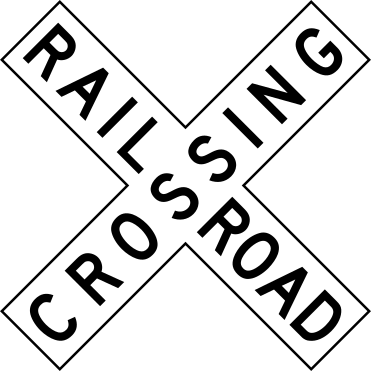
Question 23How should you treat a railroad crossbuck sign?
Show answer
A: The same as a yield sign. Crossbuck signs should be treated the same as a yield sign; a sign below shows the number of tracks if more than one. Colorado Driver Handbook (DR 2337): Railroad Crossing: Crossbuck signs, page 24.
-
Question 24Your vehicle stalls on a railroad crossing. What should you do?
Show answer
A: Get everyone out and move far away, then call the number on the blue ENS sign or police. Get everyone out and away from the tracks right away, even if no train is in sight. Then call the number on the blue ENS sign or the police. Colorado Driver Handbook (DR 2337): Railroad Crossing, page 24.
-
Question 25Which statement about marijuana and driving is in the Colorado handbook?
Show answer
A: There is no correlation between THC levels and the degree of individual impairment. Unlike alcohol, there is no correlation between THC levels in blood, breath or saliva and the degree of individual impairment. Colorado Driver Handbook (DR 2337): Drugs and driving, page 8.
Answer every question to see your score.
More Colorado practice tests
- Practice test 125 questions
- Practice test 225 questions
- Practice test 325 questions
- Practice test 425 questions
- Practice test 525 questions
- Practice test 625 questions
- Practice test 725 questions
- Practice test 825 questions
- Practice test 925 questions
- Practice test 1025 questions
- Practice test 1221 questions
- Exam simulatorThe real format
How to use these tests
Read each explanation, even when you get the question right: it tells you the rule and the handbook section, so you can look it up. Your answers are saved in this browser only, so the weak spots mode can give you more questions on the topics you miss. When you're scoring well, take the exam simulator: it uses 25 questions at the DMV's pass mark, since it doesn't publish the number of questions.
Our own questions, written from the Colorado Driver Handbook (DR 2337) and checked against it. Not affiliated with the Colorado Division of Motor Vehicles (Colorado Department of Revenue). Found a mistake? Tell us.