Hardest Connecticut permit test questions
90 questions that need exact knowledge rather than common sense: the numbers (distances, speeds, fines, limits), the exceptions and the rules that are easy to mix up. We chose them from our Connecticut question bank for that reason; they're not statistics from the DMV.
-
Question 1How many questions are on the Connecticut learner's permit knowledge test, and how many must you answer correctly?
Show answer
C: 25 questions, 20 correct. The knowledge test has 25 questions and you need 20 correct answers to pass. Connecticut Driver's Manual: The Knowledge Test, page 7.
-
Question 2How long is a Connecticut learner's permit valid?
Show answer
C: Until you get a license or 2 years from issue, whichever comes first. The permit is valid until you obtain a driver's license or for 2 years from the date it is issued, whichever comes first. Connecticut Driver's Manual: Obtaining a Learner's Permit: First Time Drivers, page 7.
-
Question 3What is the minimum vision requirement for a Connecticut driver's license?
Show answer
A: 20/40, with or without glasses or contact lenses. The minimum vision requirement for all license classes is at least 20/40 with or without glasses or contact lenses. Connecticut Driver's Manual: The Vision Test, page 7.
-
Question 4A 16-year-old learner's permit holder practices with a family friend. What must be true of that trainer?
Show answer
D: At least 20, licensed for 4 or more consecutive years, with no suspension in the last 4 years. The one person providing instruction must be at least 20 years old, have held a license for four or more consecutive years, and have had no suspension during the four years before training. Connecticut Driver's Manual: Learner's Permit Passenger Restrictions for 16- and 17-Year-Olds, page 8.
-
Question 5How much behind-the-wheel, on-the-road training must all 16- and 17-year-old license applicants have?
Show answer
D: 40 hours. All 16- and 17-year-old applicants must have at least 40 hours of behind-the-wheel, on-the-road training, from professional instruction, home training, or both. Connecticut Driver's Manual: Driver Education Requirements: Home Training Program, page 9.
-
Question 6A 16-year-old completes driver education at a commercial driving school. How long must they hold the learner's permit before the road test?
Show answer
D: 120 days. Applicants who complete driver education through a commercial driving school or secondary school must wait 120 days after the permit is issued before the road test. Connecticut Driver's Manual: Commercial Driving School or Secondary School Training, page 8.
-
Question 7A 16-year-old is trained at home rather than by a driving school or high school program. How long must they hold the permit before the road test?
Show answer
A: 180 days. Applicants who do not complete driver education through a commercial or secondary school must wait 180 days after the permit is issued before taking the driver's exam. Connecticut Driver's Manual: Commercial Driving School or Secondary School Training, page 8.
-
Question 8How long must a person 18 or older hold a learner's permit before taking the road test?
Show answer
C: 90 days. Adult first-time applicants (18 and older) need to keep their learner's permit for a minimum of 90 days before they can take the road test. Connecticut Driver's Manual: Applicants 18 Years of Age or Older, page 9.
-
Question 9During the first six months after getting a license, which passenger may a 16-year-old driver carry?
Show answer
A: A parent or legal guardian. For the first six months, a newly licensed 16- or 17-year-old may carry only a licensed driving instructor, parents or legal guardian (at least one licensed), or one qualified person at least 20 years old. Connecticut Driver's Manual: Restrictions for 16- and 17-Year-Old Drivers: Passenger Restrictions, page 10.
-
Question 10During months seven through twelve of a 17-year-old's license, which additional passengers are allowed?
Show answer
D: Members of the driver's immediate family. In the second six months, the only additional passengers allowed are members of the driver's immediate family. Connecticut Driver's Manual: Restrictions for 16- and 17-Year-Old Drivers: Passenger Restrictions, page 10.
-
Question 11What are the curfew hours for 16- and 17-year-old drivers in Connecticut?
Show answer
B: 11 p.m. to 5 a.m.. Teen drivers may not drive from 11 p.m. to 5 a.m. unless traveling for employment, school, religious activities, medical necessity, or as an assigned Safe Ride Program driver. Connecticut Driver's Manual: Hour Restrictions (Curfew), page 10.
-
Question 12May a 17-year-old licensed driver in Connecticut use a hands-free phone while driving?
Show answer
D: No, drivers under 18 may not use any cell phone, even hands-free, except in an emergency. Learner's permit holders and 16- and 17-year-old drivers may not use a cell phone or mobile electronic device, even hands-free; emergency calls are the exception for any age. Connecticut Driver's Manual: Connecticut Cell Phone Laws, page 15.
-
Question 13How long after getting a motorcycle endorsement must a 16- or 17-year-old wait before carrying a passenger on the motorcycle?
Show answer
C: Six months. Teen drivers may not transport any passenger on a motorcycle for six months after the motorcycle endorsement is issued. Connecticut Driver's Manual: Other Restrictions, page 10.
-
Question 14How much must you pay for a Connecticut driver's license after passing the road test?
Show answer
D: $84. The manual lists a license fee of $84, paid after you pass the road test. Connecticut Driver's Manual: To Begin the Road Test You Will Need, page 9.
-
Question 15What is the fine if a driver or passenger is cited for not wearing a seat belt in Connecticut?
Show answer
D: $75. If either the driver or a passenger fails to wear a seat belt, each could be cited and fined $75. Connecticut Driver's Manual: Connecticut Seat Belt Laws, page 14.
-
Question 16A 16-year-old is convicted for the first time of using a cell phone while driving. What is the license penalty?
Show answer
C: 30-day suspension and $175 restoration fee. For drivers 16 and 17, a first conviction for cell phone or text messaging use brings a 30-day suspension, a $175 license restoration fee and court fines. Connecticut Driver's Manual: Other Suspensions for 16- and 17-Year-Old Drivers, page 36.
-
Question 17A driver who is 22 years old is convicted of two moving violations. What does Connecticut require?
Show answer
A: Completion of the DMV-certified operator retraining program. Anyone age 24 or younger who commits two or more moving or suspension violations must complete the operator retraining program. Connecticut Driver's Manual: Operator Retraining Program for Repeat Offenders, page 37.
-
Question 18How many moving-violation convictions require a driver age 25 or older to attend operator retraining?
Show answer
B: Three. A motorist 25 or older with three or more such convictions must attend and pass a certified operator retraining program. Connecticut Driver's Manual: Operator Retraining Program for Repeat Offenders, page 37.
-
Question 19After completing operator retraining, what happens if you get another moving violation within three years?
Show answer
D: License suspension of at least 30 days. An additional moving violation within three years of completing operator retraining results in a license suspension of at least 30 days. Connecticut Driver's Manual: Operator Retraining Program for Repeat Offenders, page 37.
-
Question 20A 17-year-old is convicted of speeding 20 mph or more over the limit for the first time. What is the license suspension?
Show answer
B: 60 days. For 16- and 17-year-olds, a first conviction for speeding 20 mph over the limit brings a 60-day suspension plus a $175 restoration fee and court fines. Connecticut Driver's Manual: Other Suspensions for 16- and 17-Year-Old Drivers, page 36.
-
Question 21What is the license suspension for a 16- or 17-year-old's first reckless driving conviction?
Show answer
D: 6 months. A first reckless driving conviction for a 16- or 17-year-old brings a 6-month suspension, a $175 restoration fee and court fines or jail. Connecticut Driver's Manual: Other Suspensions for 16- and 17-Year-Old Drivers, page 36.
-
Question 22A 16-year-old is convicted of a second violation of the teen passenger restrictions. What is the suspension?
Show answer
B: 6 months or until age 18, whichever is longer. For second and later GDL violations (such as passenger or curfew rules), the suspension is 6 months or until age 18, whichever is longer. Connecticut Driver's Manual: Other Suspensions for 16- and 17-Year-Old Drivers, page 36.
-
Question 23Under Connecticut law, which children must be secured in a proper child restraint system?
Show answer
A: Children under 16. Connecticut's child restraint law covers every passenger under age 16, who must ride in a restraint or safety system suited to their age and weight. Connecticut Driver's Manual: Child Safety Requirements, page 14.
-
Question 24What restraint does Connecticut require for a child under age 2 or weighing less than 30 pounds?
Show answer
B: A rear-facing car seat with a 5-point harness. Children under 2, or under 30 pounds regardless of age, must ride in a rear-facing-only or rear-facing convertible seat with a 5-point harness. Connecticut Driver's Manual: Child Safety Requirements, page 14.
-
Question 25When a child's age and weight fall into two different restraint categories, which rule applies?
Show answer
A: The more restrictive one. If a child's age and weight fall in two different categories, the more restrictive requirement applies. Connecticut Driver's Manual: Child Safety Requirements, page 14.
-
Question 26When may an adult driver in Connecticut use a hand-held cell phone?
Show answer
D: When parked safely on the side or shoulder of the road. Hand-held devices may not be used while driving or while temporarily stopped for traffic or signals; you may use them when parked safely on the side or shoulder. Connecticut Driver's Manual: Connecticut Cell Phone Laws, page 15.
-
Question 27What happens to the fine for illegally using a hand-held phone while driving in a work zone?
Show answer
C: It is doubled. Distracted driving fines are doubled for illegally using a hand-held phone or mobile electronic device in a work zone. Connecticut Driver's Manual: Work Zones, page 17.
-
Question 28What can a driver convicted of speeding or endangering a highway worker in a Connecticut work zone face?
Show answer
C: Fines up to $1,000, license points, and possible driver retraining. Speeding, disobeying traffic control devices, using an improper lane or endangering a worker in a work zone can bring fines up to $1,000, points and the retraining program. Connecticut Driver's Manual: Work Zones, page 17.
-
Question 29Under Connecticut's zero tolerance law, what blood alcohol content triggers penalties for a driver under 21?
Show answer
D: 0.02% or more. Drivers under 21 face penalties for a BAC of two hundredths of one percent (.02%) or more, on public roads and private property. Connecticut Driver's Manual: Alcohol and the Law, page 35.
-
Question 30A 19-year-old driver's test shows a BAC of .03%. What happens to their license?
Show answer
B: Suspension of at least 45 days, plus an ignition interlock device for at least one year. Under zero tolerance, a result of .02% or higher leads to a suspension of at least 45 days and an IID for at least one year as a condition of reinstatement. Connecticut Driver's Manual: Alcohol and the Law, page 35.
-
Question 31If you refuse to take a blood, breath or urine test after a DUI arrest in Connecticut, what is the minimum license suspension?
Show answer
C: 45 days. Regardless of age, refusing the test results in a suspension of at least 45 days and an ignition interlock device for at least one year. Connecticut Driver's Manual: Alcohol and the Law, page 35.
-
Question 32An adult fails a chemical test after a DUI arrest. For at least how long must they use an ignition interlock device after reinstatement?
Show answer
C: Six months. An adult who fails the test faces a suspension of at least 45 days and must use an IID for at least six months, or longer with prior offenses. Connecticut Driver's Manual: Alcohol and the Law, page 35.
-
Question 33In Connecticut, how much alcohol could make a driver under 21 legally impaired?
Show answer
B: Only one drink. People under 21 could be considered impaired after only one drink of alcohol. Connecticut Driver's Manual: Alcohol and You, page 35.
-
Question 34Safe drivers look how far ahead of their vehicle?
Show answer
A: At least 12 seconds. Safer drivers tend to look at least 12 seconds ahead—about one block in the city and about a quarter mile on the highway. Connecticut Driver's Manual: Scanning, page 16.
-
Question 35On the highway, how far is 12 seconds of driving, roughly?
Show answer
B: About a quarter of a mile. Twelve seconds of travel at highway speed covers roughly a quarter mile, or about four city blocks. Connecticut Driver's Manual: Scanning, page 16.
-
Question 36On long trips, how often should you plan to take a break?
Show answer
D: About every 100 miles or 2 hours. The manual recommends planning a rest stop roughly every two hours or 100 miles on a long drive. Connecticut Driver's Manual: Fatigue: Before a Trip, page 30.
-
Question 37How far ahead should you try to signal before turning or changing lanes?
Show answer
B: At least three seconds. Try to signal at least three seconds before you make your move. Connecticut Driver's Manual: Turn Signals, page 41.
-
Question 38What is the minimum distance you must leave when passing a bicyclist in Connecticut?
Show answer
D: 3 feet. When approaching or passing a bicyclist, slow down and pass only when you can give a minimum of three feet between your vehicle and the bicycle. Connecticut Driver's Manual: Bicyclists: As a driver, page 19.
-
Question 39What happens to the fine for failing to yield the right-of-way to a bicyclist?
Show answer
D: It is doubled. Connecticut doubles the fine when a driver fails to yield the right-of-way to a person on a bicycle. Connecticut Driver's Manual: Bicyclists: As a driver, page 19.
-
Question 40Up to what age must a bicyclist in Connecticut wear a helmet?
Show answer
C: Under 16. Bicyclists under 16 years of age are required to wear a helmet. Connecticut Driver's Manual: Bicyclists: As a bicyclist, page 19.
-
Question 41When may you drive in a designated bicycle lane?
Show answer
C: When entering or leaving an alley or driveway, or when directed by police. Do not stop, park or drive in a bike lane except to enter or leave an alley or driveway, for official duties, when directed by police, or in an emergency. You may turn across it but not drive in it approaching a turn. Connecticut Driver's Manual: Bicyclists: As a driver, page 19.
-
Question 42May you pass a slow bicyclist in a no-passing zone in Connecticut?
Show answer
B: Yes, if you can do it safely. Connecticut lets you pass slow traffic such as a bicycle in a no-passing zone, but only when you can see far enough ahead to do it safely. Connecticut Driver's Manual: Bicyclists: As a driver, page 19.
-
Question 43You are in the middle of an intersection when an ambulance approaches with its siren on. What should you do?
Show answer
C: Drive through the intersection, then pull over to the right and stop. If you are in an intersection, drive through it before pulling over to the right and stopping. Connecticut Driver's Manual: Right-of-Way, page 39.
-
Question 44Under Connecticut's Move Over Law, what must you do when any vehicle is pulled over on the road?
Show answer
B: Slow down below the posted speed and move over one lane when safe. When any vehicle is pulled over on a highway or road, drivers must slow down below the posted limit and move over one lane when safe. Connecticut Driver's Manual: "Move Over Law", page 18.
-
Question 45When do you NOT have to stop for a school bus with flashing red lights?
Show answer
B: When the bus is coming toward you on the other side of a median or physical barrier. You are not required to stop if the bus is traveling toward you and a median or other physical barrier separates the roadway. Connecticut Driver's Manual: Right-of-Way, page 39.
-
Question 46How close may you stop to an ice cream truck that is displaying flashing lights and has its stop arm out?
Show answer
A: No closer than 10 feet from its front or back. State law requires drivers to stop at least 10 feet from the front or back of an ice cream truck displaying flashing lights with its stop and crossing arms extended. Connecticut Driver's Manual: Ice Cream Trucks, page 20.
-
Question 47After stopping for an ice cream truck with flashing lights, how fast may you pass it?
Show answer
D: Up to 5 mph. After stopping, you may proceed past at a reasonable speed, up to 5 mph, yielding to pedestrians going to or from the truck. Connecticut Driver's Manual: Ice Cream Trucks, page 20.
-
Question 48A bus traveling in your direction signals to pull out from a stop. What must you do?
Show answer
A: Yield the right-of-way to the bus. When a bus going your way signals to move back into traffic, Connecticut law requires you to let it in. Connecticut Driver's Manual: Slow Moving Vehicles, page 20.
-
Question 49Nearly 40 percent of motorcycle crashes with other vehicles are caused by what?
Show answer
B: The other vehicle turning left in front of the motorcyclist. About four in ten motorcycle crashes with other vehicles happen when the other driver turns left across the motorcycle's path. Connecticut Driver's Manual: Motorcycles, page 20.
-
Question 50What following distance does the manual recommend behind a motorcycle?
Show answer
B: 3 to 4 seconds, more in wet conditions. When following a motorcyclist, allow a 3 to 4 second following distance, or more in wet conditions. Connecticut Driver's Manual: Motorcycles, page 20.
-
Question 51How far behind a truck can its rear blind spot stretch?
Show answer
C: About 200 feet. The truck's rear blind spot can reach roughly 200 feet back, and the front blind spot about 20 feet ahead of the cab. Connecticut Driver's Manual: Sharing the Road with Trucks: No-Zone, page 21.
-
Question 52What is the minimum time interval at which you should follow a truck?
Show answer
C: Three seconds. Stay at least three seconds behind a truck so you can see around it and stop in time. Connecticut Driver's Manual: Keep a Safe Following Distance Behind Trucks, page 22.
-
Question 53Which action by a pedestrian at the curb means you must yield at a Connecticut crosswalk?
Show answer
B: Raising a hand and arm toward oncoming traffic to show intent to cross. Drivers must yield when a pedestrian steps to the curb at a crosswalk and raises a hand and arm toward traffic, or moves any body part or extension (cane, stroller, leashed dog) into the crosswalk. Connecticut Driver's Manual: Pedestrians, page 18.
-
Question 54When passing a vulnerable user such as a pedestrian or highway worker, how much distance must you allow?
Show answer
D: Three feet. Under the Vulnerable User's Law, drivers must allow three feet of distance when passing. Connecticut Driver's Manual: Vulnerable Users, page 18.
-
Question 55Does the law give any driver the right-of-way?
Show answer
D: No; the law only says who must yield. Right-of-way rules only tell drivers when they must yield; no one is ever guaranteed the right-of-way, and you must still try to avoid any crash. Connecticut Driver's Manual: Right-of-Way, page 38.
-
Question 56A traffic signal is not working at all. How must you treat the intersection?
Show answer
D: As if it were controlled by a stop sign. When a traffic light at an intersection is out, Connecticut law requires you to treat it like a stop sign and come to a full stop. Connecticut Driver's Manual: Stop Light Not Working, page 27.
-
Question 57Which color may be used for pedestrian, bicycle and school warning signs?
Show answer
A: Fluorescent yellow-green. School, pedestrian and bicycle warning signs may use a bright fluorescent yellow-green background. Connecticut Driver's Manual: Colors, page 49.
-
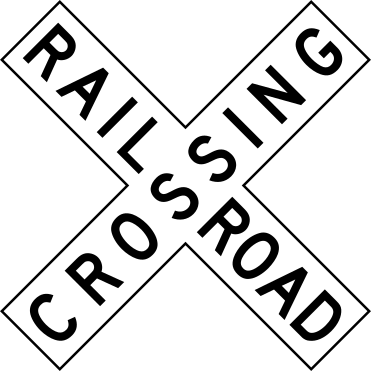
Question 58A white X-shaped railroad crossbuck has the same meaning as which sign?
Show answer
D: Yield. The crossbuck at the tracks works like a yield sign: slow down, and stop if needed so any train passes first. Connecticut Driver's Manual: Railroad Crossbuck, page 54.
-
Question 59Where do milepost numbers usually start at zero in Connecticut?
Show answer
B: At the south and west borders of the state. Mileposts are placed every mile, and zero usually starts at the south and west borders of the state. Connecticut Driver's Manual: Destination and Distance Signs, page 53.
-
Question 60At a HAWK pedestrian signal, what does a solid red signal mean for drivers?
Show answer
B: Pedestrians are in the crosswalk; you must stop. A solid red HAWK signal means pedestrians are in the crosswalk and motorists must stop. Connecticut Driver's Manual: High-Intensity Activated CrossWalK (HAWK) Signals, page 47.
-
Question 61At a HAWK signal showing flashing red, what may drivers do?
Show answer
C: Stop, then proceed once pedestrians have cleared the crosswalk. Flashing red at a HAWK works like a stop sign: stop, then go once the crosswalk is clear of pedestrians. Connecticut Driver's Manual: High-Intensity Activated CrossWalK (HAWK) Signals, page 47.
-
Question 62What does it mean when a HAWK pedestrian signal is dark?
Show answer
B: It has not been activated; vehicles may proceed through the crossing. A dark HAWK signal has not been activated, and vehicles proceed through the pedestrian crossing. Connecticut Driver's Manual: High-Intensity Activated CrossWalK (HAWK) Signals, page 47.
-
Question 63On a reversible lane, what does a steady yellow X above the lane mean?
Show answer
D: The lane use is changing; move out of it as soon as safely possible. A steady yellow X means the lane's use is changing and you should move out of it as soon as it is safe. Connecticut Driver's Manual: Reversible Lanes, page 46.
-
Question 64Over a reversible lane, what does a flashing yellow X mean?
Show answer
D: Lane is only for turning. A flashing yellow X means the lane is only for turning; a green arrow means you may use it and a red X means you may not. Connecticut Driver's Manual: Reversible Lanes, page 46.
-
Question 65When may you cross a double solid yellow center line?
Show answer
C: To make a left turn into or out of a driveway, alley, private road or street. A double solid yellow line means no ordinary passing, but you may cross it to turn left into or out of a driveway, alley, private road or street. Connecticut Driver's Manual: Center Lines, page 46.
-
Question 66Compared with stopping at 30 mph, how much distance does stopping at 60 mph take?
Show answer
B: Over three times the distance. Stopping at 60 mph takes not twice but over three times the distance it takes at 30 mph. Connecticut Driver's Manual: Speed Limits: Speeding, page 38.
-
Question 67On dry pavement with good tires and brakes, about how far does it take to react and stop from 50 mph?
Show answer
C: About 400 feet. At 50 mph it can take about 400 feet—about a city block—to react and stop. Connecticut Driver's Manual: How Well Can You See?, page 38.
-
Question 68About how far does it take to react and stop from 30 mph on dry pavement?
Show answer
A: About 200 feet. At 30 mph it can take about 200 feet to stop—almost half a city block. Connecticut Driver's Manual: How Well Can You See?, page 38.
-
Question 69How much should you reduce your speed on a wet road?
Show answer
B: About 10 mph. On wet pavement, drop your speed by roughly 10 mph. Connecticut Driver's Manual: Slippery Roads, page 27.
-
Question 70How should you adjust your speed on packed snow?
Show answer
B: Cut your speed in half. On packed snow, you should cut your speed in half; on ice, slow to a crawl. Connecticut Driver's Manual: Slippery Roads, page 27.
-
Question 71Your high beams let you see about 400 feet ahead at night. What speed lets you stop within that distance?
Show answer
D: About 50 mph. High beams let you see about 400 feet; drive at a speed that lets you stop within that distance, about 50 mph. Connecticut Driver's Manual: Lights: Darkness, page 40.
-
Question 72In which situation does the manual suggest a four-second following distance?
Show answer
C: When following a motorcycle or on slippery roads. Use four seconds on slippery roads, behind motorcycles, behind trucks and buses, when towing, in low visibility, behind emergency vehicles and near railroad crossings. Connecticut Driver's Manual: Space Ahead: When to use the "four-second" rule, page 23.
-
Question 73At 55 mph, about how much time do you need to pass another vehicle?
Show answer
B: About 10 seconds. At 55 mph you need about 10 seconds to pass, so you need a 10-second gap in oncoming traffic. Connecticut Driver's Manual: Passing: Rules of Passing, page 25.
-
Question 74To pass safely at 55 mph on a two-lane road, about how much clear distance do you need?
Show answer
D: Over 1,600 feet (about one-third of a mile). You travel over 800 feet in 10 seconds and so does an oncoming car, so you need over 1,600 feet—about a third of a mile. Connecticut Driver's Manual: Passing: Rules of Passing, page 25.
-
Question 75How close to a hill or curve may you start to pass on a two-lane road?
Show answer
D: Never within one-third of a mile of it. Treat a hill or curve like an oncoming vehicle: do not start to pass if you are within one-third of a mile of it. Connecticut Driver's Manual: Visibility: Hills and Curves, page 26.
-
Question 76Which can you legally pass in a no-passing zone in Connecticut, if it is safe?
Show answer
C: A slow-moving vehicle, bicycle, pedestrian, animal or parked vehicle. State law permits passing slow-moving traffic, pedestrians, parked vehicles, animals, bicycles, mopeds and scooters in no-passing zones if you can see far enough ahead to pass safely. Connecticut Driver's Manual: Slow Moving Vehicles, page 20.
-
Question 77While in a roundabout, should you stop to let traffic enter from another approach?
Show answer
D: No, do not stop within the roundabout to let others enter. Do not stop within the roundabout to allow traffic to enter from another leg. Connecticut Driver's Manual: Roundabouts, page 39.
-
Question 78On a road with fewer than three lanes in your direction, which lane does Connecticut law require you to use except when passing?
Show answer
D: Right lane. When your direction of travel has fewer than three lanes, Connecticut law requires you to drive in the right lane except when passing. Connecticut Driver's Manual: Passing: On Multi-Lane roads, page 25.
-
Question 79How large a gap in traffic do you need to merge or change lanes?
Show answer
D: About 4 seconds. You need an opening of about four seconds to merge, so you and the vehicle behind each have about two seconds. Connecticut Driver's Manual: Space to Merge, page 22.
-
Question 80How close to a fire hydrant may you park in Connecticut?
Show answer
A: No closer than 10 feet. Do not park within 10 feet of a fire hydrant. Connecticut Driver's Manual: No-Parking Zones, page 39.
-
Question 81How close to a stop sign may you park?
Show answer
D: No closer than 25 feet. Do not park within 25 feet of a stop sign. Connecticut Driver's Manual: No-Parking Zones, page 39.
-
Question 82How far from the curb may your wheels be when you park parallel?
Show answer
B: No more than 1 foot. Do not park more than one foot from the curb. Connecticut Driver's Manual: No-Parking Zones, page 39.
-
Question 83How close to a pedestrian safety zone may you park?
Show answer
D: No closer than 25 feet. Do not park within 25 feet of a pedestrian safety zone. Connecticut Driver's Manual: No-Parking Zones, page 39.
-
Question 84At about what speed do most tires begin to hydroplane on a wet road?
Show answer
C: Above 35 mph. Most tires have good traction up to about 35 mph on a wet road; faster than that they can start to ride up on the water. Connecticut Driver's Manual: Water on the Roadway, page 27.
-
Question 85When are studded tires allowed in Connecticut?
Show answer
D: November 15 through April 30. Studded tires are permitted in Connecticut from November 15th through April 30th. Connecticut Driver's Manual: Slippery Roads, page 27.
-
Question 86Ice is most slippery at what temperature?
Show answer
D: Around the freezing point, when it becomes wet. When the temperature is around freezing, ice can become wet, making it more slippery than at colder temperatures. Connecticut Driver's Manual: Slippery Roads, page 27.
-
Question 87When must you turn on your headlights in Connecticut, by law, during the day?
Show answer
D: Whenever your windshield wipers are on. Connecticut law ties headlights to wipers: whenever the wipers are running, your headlights must be on too. Connecticut Driver's Manual: Lights: Use Headlights, page 40.
-
Question 88When should you dim your high beams for an oncoming vehicle?
Show answer
D: Within about one block of it. Switch to low beams once an oncoming vehicle is about a block away so you do not blind its driver. Connecticut Driver's Manual: Lights, page 40.
-
Question 89What should you give an injured person at a crash scene to drink?
Show answer
D: Nothing, not even water. Do not give injured persons anything to drink, not even water. Connecticut Driver's Manual: Traffic Crashes: If someone is injured, page 43.
-
Question 90When must you report a crash to police in Connecticut?
Show answer
D: If there is an injury, a death or property damage. Connecticut drivers must report a crash to police if anyone is hurt or killed or if there is property damage. Connecticut Driver's Manual: Traffic Crashes: Report the Accident, page 43.
Answer every question to see your score.
Remembering the numbers
Most mistakes on the Connecticut DMV test are about specifics: how many feet before a turn to signal, how far to park from a hydrant, the alcohol limit for drivers under 21. Write the numbers from these questions on a card and review them before the test, then take the exam simulator.