Connecticut DMV permit practice test
25 questions written from the Connecticut Driver's Manual, covering licensing laws and penalties, alcohol and drugs, safe and defensive driving, sharing the road, right of way and more. Pick an answer to see straight away whether you're right and why. The real Connecticut DMV test has 25 questions and you need 20 right.
-
Question 1What is the minimum age to get a learner's permit in Connecticut?
Show answer
C: 16. To obtain a Connecticut learner's permit you must be at least 16 years of age. Connecticut Driver's Manual: Obtaining a Learner's Permit: First Time Drivers, page 7.
-
Question 2Alcohol is involved in about what share of traffic crashes in which someone is killed?
Show answer
D: More than 40 percent. The manual states alcohol is involved in more than 40 percent of fatal traffic crashes. Connecticut Driver's Manual: Drinking and Driving, page 35.
-
Question 3Where should your hands be placed on the steering wheel for normal driving?
Show answer
D: Left between 8 and 10 o'clock, right between 2 and 4 o'clock. Place your hands on opposite sides of the wheel: left hand between 8 and 10 o'clock and right hand between 2 and 4 o'clock. Connecticut Driver's Manual: Steering, page 16.
-
Question 4What is the minimum distance you must leave when passing a bicyclist in Connecticut?
Show answer
D: 3 feet. When approaching or passing a bicyclist, slow down and pass only when you can give a minimum of three feet between your vehicle and the bicycle. Connecticut Driver's Manual: Bicyclists: As a driver, page 19.
-
Question 5At an intersection with no signs or signals, two vehicles arrive at the same time. Who must yield?
Show answer
A: The vehicle on the left. Where there is no stop sign, yield sign or signal, drivers must yield to vehicles coming from the right. Connecticut Driver's Manual: Right-of-Way, page 38.
-
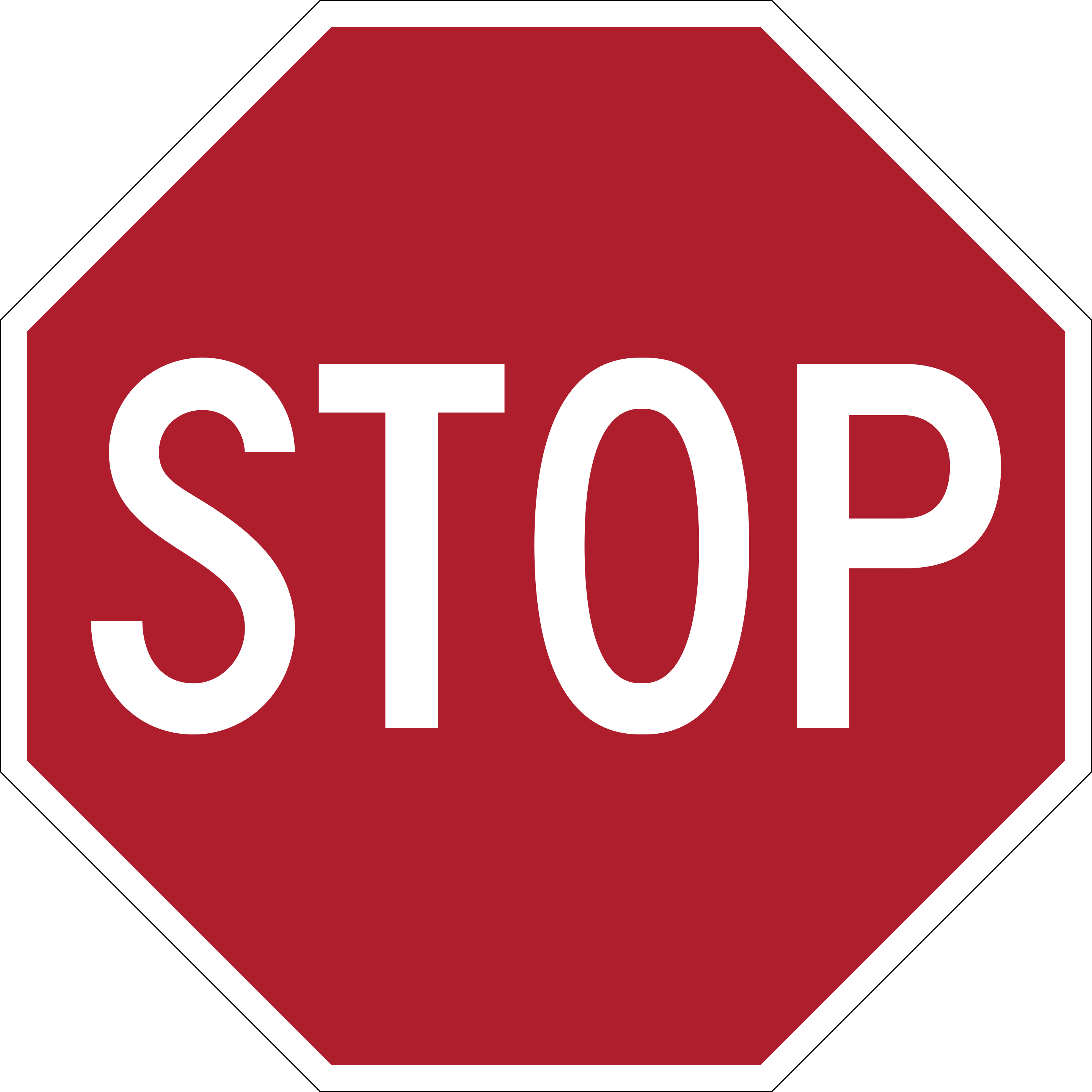
Question 6What does an eight-sided (octagon) sign always mean?
Show answer
D: Stop. The octagon shape always means stop; come to a complete stop at the sign, stop line, crosswalk or curb. Connecticut Driver's Manual: Traffic Signs: Shapes, page 48.
-
Question 7What does a flashing red traffic light mean?
Show answer
B: The same as a stop sign: stop fully, then go when safe. A flashing red light means the same as a stop sign: come to a full stop and proceed when safe. Connecticut Driver's Manual: Flashing Lights, page 47.
-
Question 8Can you get a ticket for driving at the posted speed limit?
Show answer
C: Yes, if you are going too fast for road conditions. Speed limits are posted for ideal conditions; even at the posted limit you can be ticketed for traveling too fast for conditions. Connecticut Driver's Manual: Speed Limits, page 38.
-
Question 9How do you use the three-second rule?
Show answer
D: Count from when the car ahead passes a fixed point until you reach it; if under three seconds, you're too close. Watch the rear of the vehicle ahead pass a fixed point and count; if you reach it before 'three-one-thousand,' you are following too closely. Connecticut Driver's Manual: Space Ahead, page 23.
-
Question 10When there are no signs or markings, which lane should you turn into?
Show answer
D: The lane closest to the one you came from. Turn from the lane closest to the direction you want to go and into the lane closest to the one you came from, crossing the fewest lanes. Connecticut Driver's Manual: Turning, page 25.
-
Question 11On a road with fewer than three lanes in your direction, which lane does Connecticut law require you to use except when passing?
Show answer
D: Right lane. When your direction of travel has fewer than three lanes, Connecticut law requires you to drive in the right lane except when passing. Connecticut Driver's Manual: Passing: On Multi-Lane roads, page 25.
-
Question 12How close to a fire hydrant may you park in Connecticut?
Show answer
A: No closer than 10 feet. Do not park within 10 feet of a fire hydrant. Connecticut Driver's Manual: No-Parking Zones, page 39.
-
Question 13At about what speed do most tires begin to hydroplane on a wet road?
Show answer
C: Above 35 mph. Most tires have good traction up to about 35 mph on a wet road; faster than that they can start to ride up on the water. Connecticut Driver's Manual: Water on the Roadway, page 27.
-
Question 14Your brakes suddenly fail. What should you try first?
Show answer
B: Pump the brake pedal several times. Pump the brake pedal several times; this often builds enough pressure to stop. If not, use the parking brake slowly, then shift to lower gears. Connecticut Driver's Manual: Equipment Failure: Brake Failure, page 41.
-
Question 15How many questions are on the Connecticut learner's permit knowledge test, and how many must you answer correctly?
Show answer
C: 25 questions, 20 correct. The knowledge test has 25 questions and you need 20 correct answers to pass. Connecticut Driver's Manual: The Knowledge Test, page 7.
-
Question 16Which of these contains about the same amount of alcohol as a 12-ounce regular beer?
Show answer
B: A 5-ounce glass of wine. One drink is 1.5 oz of 80-proof liquor, 12 oz of beer, or a 5 oz glass of wine. Connecticut Driver's Manual: Alcohol and You, page 35.
-
Question 17In the push/pull steering method, what should happen to your hands?
Show answer
A: They never cross and stay on the wheel. Done correctly, push/pull steering keeps both hands on the wheel at all times and they never cross. Connecticut Driver's Manual: Steering, page 16.
-
Question 18What happens to the fine for failing to yield the right-of-way to a bicyclist?
Show answer
D: It is doubled. Connecticut doubles the fine when a driver fails to yield the right-of-way to a person on a bicycle. Connecticut Driver's Manual: Bicyclists: As a driver, page 19.
-
Question 19At a four-way stop, two vehicles arrive at the same time. Which goes first?
Show answer
A: The vehicle on the right. At a four-way stop, the first to arrive goes first; if more than one arrives at the same time, the vehicle on the right goes first. Connecticut Driver's Manual: Right-of-Way, page 38.
-
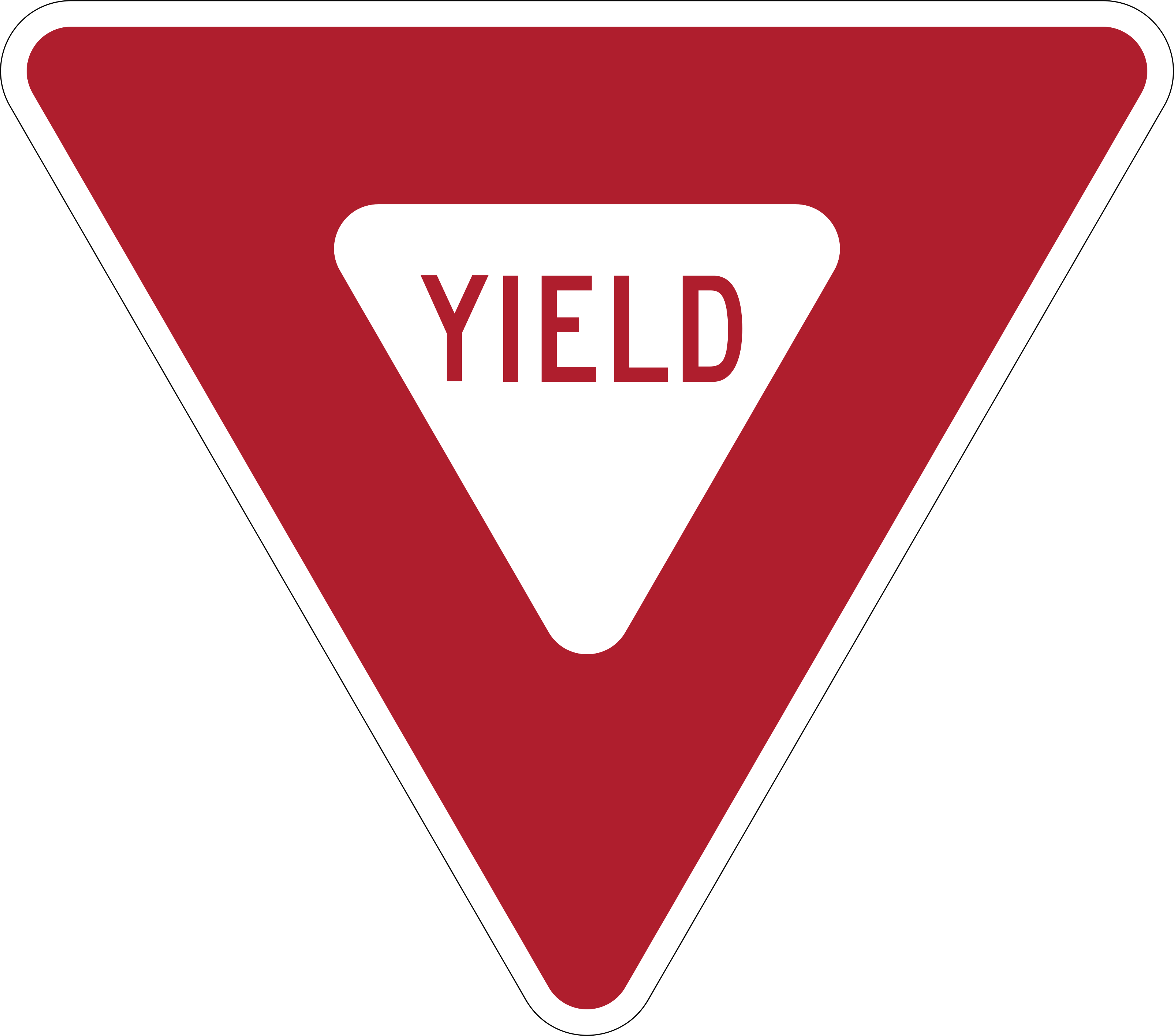
Question 20What should you do at this downward-pointing triangle sign?
Show answer
D: Slow down and yield the right-of-way, stopping if necessary. A yield sign means slow down to a reasonable speed and yield the right-of-way to traffic you are crossing or entering; stop if necessary. Connecticut Driver's Manual: Traffic Signs: Shapes, page 48.
-
Question 21What does a flashing yellow traffic light mean?
Show answer
C: Slow down and proceed with caution. A flashing yellow light means slow down and proceed with caution. Connecticut Driver's Manual: Flashing Lights, page 47.
-
Question 22Compared with stopping at 30 mph, how much distance does stopping at 60 mph take?
Show answer
B: Over three times the distance. Stopping at 60 mph takes not twice but over three times the distance it takes at 30 mph. Connecticut Driver's Manual: Speed Limits: Speeding, page 38.
-
Question 23In which situation does the manual suggest a four-second following distance?
Show answer
C: When following a motorcycle or on slippery roads. Use four seconds on slippery roads, behind motorcycles, behind trucks and buses, when towing, in low visibility, behind emergency vehicles and near railroad crossings. Connecticut Driver's Manual: Space Ahead: When to use the "four-second" rule, page 23.
-
Question 24Why should you avoid swinging wide to the left before a right turn?
Show answer
D: The driver behind may think you are turning left and try to pass you on the right. If you swing wide, the driver behind may think you are changing lanes or turning left and try to pass on the right. Connecticut Driver's Manual: Turning: Right turns, page 26.
-
Question 25On a road with three or more lanes in your direction and lots of entering and exiting traffic, which lane is best for through travel?
Show answer
A: The center lane. On roads with three or more lanes each way, the middle lane is usually best for through traffic when many vehicles are entering and exiting. Connecticut Driver's Manual: Other Hints, page 22.
Answer every question to see your score.
More Connecticut practice tests
- Practice test 225 questions
- Practice test 325 questions
- Practice test 425 questions
- Practice test 525 questions
- Practice test 625 questions
- Practice test 725 questions
- Practice test 825 questions
- Practice test 925 questions
- Practice test 1025 questions
- Practice test 1125 questions
- Practice test 1225 questions
- Exam simulatorThe real format, 25 questions
How to use these tests
Read each explanation, even when you get the question right: it tells you the rule and the handbook section, so you can look it up. Your answers are saved in this browser only, so the weak spots mode can give you more questions on the topics you miss. When you're scoring well, take the exam simulator: it uses the same number of questions and passing score as the real test.
Our own questions, written from the Connecticut Driver's Manual and checked against it. Not affiliated with the Connecticut Department of Motor Vehicles. Found a mistake? Tell us.