Hardest Iowa permit test questions
122 questions that need exact knowledge rather than common sense: the numbers (distances, speeds, fines, limits), the exceptions and the rules that are easy to mix up. We chose them from our Iowa question bank for that reason; they're not statistics from the DOT.
-
Question 1For driver's licensing, how long must you have lived in Iowa continuously to be considered a resident (if no other condition applies)?
Show answer
B: 30 days. Living in Iowa continuously for 30 days is one of the conditions that makes you a resident for licensing. Iowa Driver's License Manual: 1.1 Who Needs an Iowa Driver's License?, page 4.
-
Question 2Within what distance may a person drive farm equipment between the home farm and nearby farmland without a driver's license in Iowa?
Show answer
B: Two miles. No license is needed to drive farm equipment between the home farm and nearby farmland or farm operations within two miles. Iowa Driver's License Manual: 1.1 Who Needs an Iowa Driver's License?, page 4.
-
Question 3What do fluorescent pink signs indicate in Iowa?
Show answer
A: Incident management, such as crash cleanup or debris removal. Fluorescent pink marks temporary incident scenes, such as a crash being cleared or debris being removed. Iowa Driver's License Manual: 2.1 Traffic Signs — Standard Colors, page 6.
-
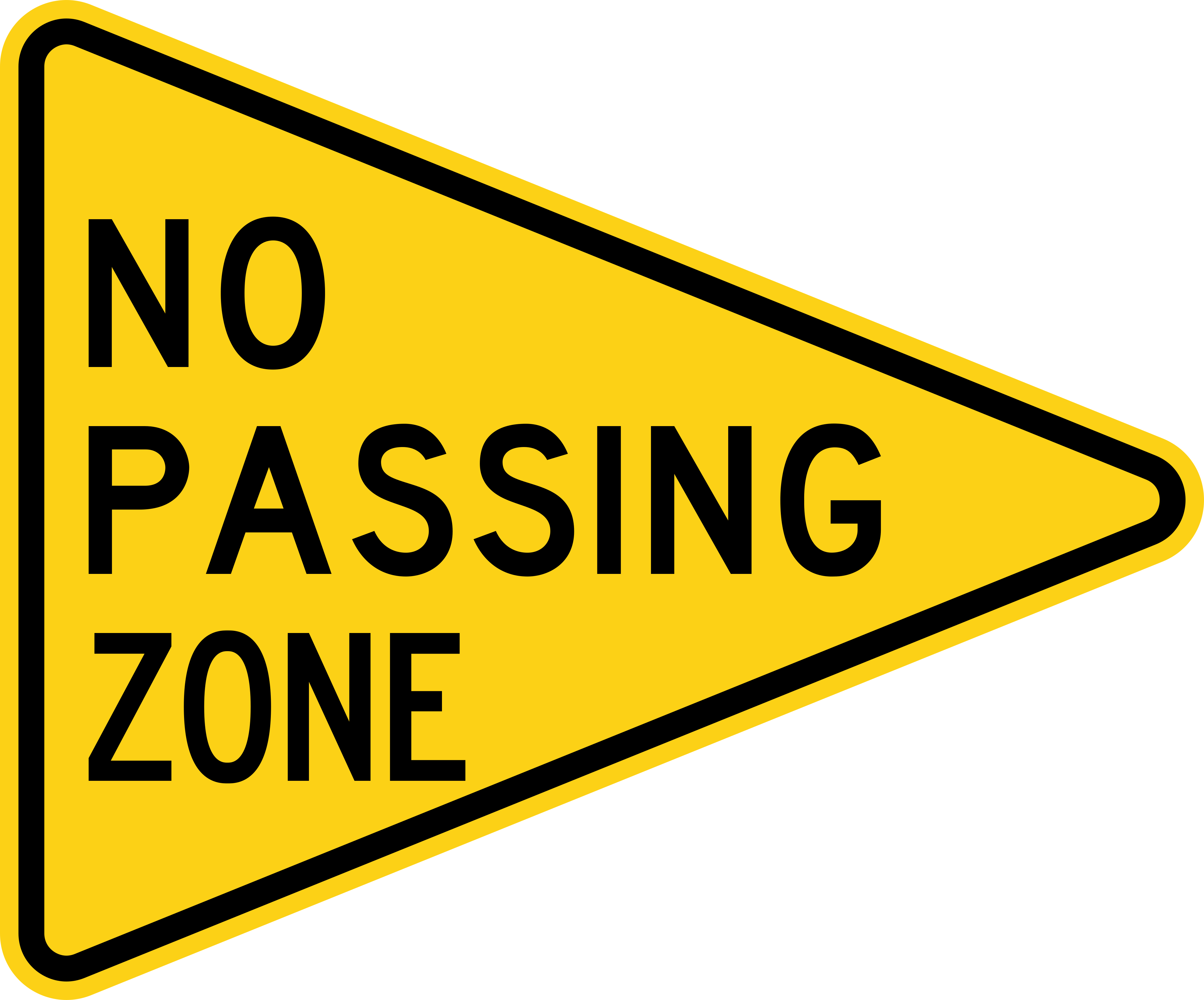
Question 4On which side of the road is the pennant-shaped no-passing sign placed?
Show answer
A: The left side. The pennant sign is on the left side of the road and warns of a no-passing zone. Iowa Driver's License Manual: 2.1 Traffic Signs — Standard Shapes, page 7.
-
Question 5A minimum speed limit on a high-speed road is too fast for you. What should you do?
Show answer
A: Use another route. If the minimum speed is too fast for you, you should use another route. Iowa Driver's License Manual: 2.2 Regulatory Signs — Speed Limit Signs, page 8.
-
Question 6Where is the no passing zone sign located?
Show answer
A: At the beginning of the no passing zone. The pennant-shaped sign is posted where the no-passing zone starts. Iowa Driver's License Manual: 2.2 Regulatory Signs — No Passing Signs, page 8.
-
Question 7What should you do when you see the Hill warning sign?

Show answer
A: Check your brakes before going down the hill. The Hill sign warns the road goes down a hill; check your brakes before descending. Iowa Driver's License Manual: 2.3 Warning Signs, page 9.
-
Question 8Under Iowa's 2024 crosswalk law, whom must vehicles yield to?
Show answer
A: Pedestrians on foot and those using pedestrian conveyances such as wheelchairs, strollers and skateboards. Vehicles must yield to pedestrians on foot and to those using any human-powered device (pedestrian conveyance). Iowa Driver's License Manual: 2.4 Pedestrian Conveyance, page 10.
-
Question 9Which is an example of a pedestrian conveyance under Iowa law?
Show answer
A: A skateboard. Pedestrian conveyances include wheelchairs, strollers, skateboards, scooters and electric personal assistive mobility devices. Iowa Driver's License Manual: 2.4 Pedestrian Conveyance, page 10.
-
Question 10What speed does a reflective orange slow-moving vehicle triangle indicate in Iowa?
Show answer
B: 35 mph or less. A reflective orange triangle means the vehicle is traveling 35 mph or less. Iowa Driver's License Manual: 2.5 Slow-Moving Vehicle Sign, page 11.
-
Question 11What does a flashing yellow arrow mean for a left turn?
Show answer
A: Yield to oncoming traffic and pedestrians, then turn with caution; oncoming traffic has a green light. A flashing yellow arrow permits the turn only after you yield, because oncoming drivers have a green light and pedestrians may be crossing. Iowa Driver's License Manual: 2.9 Traffic Signals, page 11.
-
Question 12Which vehicles must stop 15 to 50 feet from railroad tracks in Iowa?
Show answer
A: School buses, charter buses, vehicles carrying passengers for hire, and placarded hazmat vehicles. These vehicles must stop within 15 to 50 feet of the tracks, unless directed otherwise or the crossing is marked EXEMPT. Iowa Driver's License Manual: 2.10 Railroad Crossings, page 12.
-
Question 13Your car stalls on the tracks and a train is approaching. In which direction should everyone move away?
Show answer
A: At a 45-degree angle in the direction of the approaching train. Get everyone out immediately and move away at a 45-degree angle toward the approaching train. Iowa Driver's License Manual: 2.10 Railroad Crossings, page 12.
-
Question 14When stopped at a railroad crossing, how much space should you leave between your vehicle and the nearest rail?
Show answer
C: At least 15 feet. Leave at least 15 feet between your vehicle and the nearest rail. Iowa Driver's License Manual: 2.10 Railroad Crossings, page 12.
-
Question 15What may happen to fines in Iowa work zones?
Show answer
A: They may double. Work zone fines may be doubled, so slow down and stay alert. Iowa Driver's License Manual: 2.11 Work Zones, page 14.
-
Question 16What are yield lines?
Show answer
A: A row of solid white triangles pointing toward approaching vehicles, showing where to yield. Yield lines are a row of solid white triangles pointing at approaching vehicles that show where to yield. Iowa Driver's License Manual: 2.13 Yield Lines, page 15.
-
Question 17How are reversible lanes usually marked?
Show answer
A: With double-dashed yellow lines. Reversible lanes are usually marked by double-dashed yellow lines. Iowa Driver's License Manual: 2.15 Reversible Lanes, page 15.
-
Question 18Over a reversible lane you see a flashing yellow X. What does it mean?
Show answer
A: The lane is only for turning. A flashing yellow X over a reversible lane means the lane may be used only for turning. Iowa Driver's License Manual: 2.15 Reversible Lanes, page 15.
-
Question 19Over a reversible lane you see a steady yellow X. What should you do?
Show answer
A: Move out of the lane as soon as it is safe; its use is changing. A steady yellow X warns that the lane's direction is about to change, so leave it as soon as you safely can. Iowa Driver's License Manual: 2.15 Reversible Lanes, page 15.
-
Question 20When may a motorist drive in a bicycle lane?
Show answer
A: Only when making turning movements, after checking for bicyclists. Motorists may drive in bike lanes only when turning, after looking carefully for bicyclists. Iowa Driver's License Manual: 2.19 Bicycle Lanes and Pavement Markings, page 17.
-
Question 21At a pedestrian hybrid beacon, the top two red lights are flashing. What must you do?
Show answer
A: Stop if you haven't already, then proceed with caution if the crosswalk is clear. When the red lights flash, stop if you haven't already, then proceed with caution if the crosswalk is clear. Iowa Driver's License Manual: 2.20 Bicycle and Pedestrian Signals, page 18.
-
Question 22According to the Iowa manual, what is the number one cause of traffic-related fatalities in Iowa?
Show answer
A: Failure to yield the right-of-way. The manual names failure to yield as the leading cause of traffic deaths in Iowa. Iowa Driver's License Manual: 2.22 Intersections, page 18.
-
Question 23Does right-of-way law give anyone the right-of-way?
Show answer
A: No; it only says who must yield. The law says who must yield; it does not give anyone the right-of-way. Iowa Driver's License Manual: 2.22 Intersections, page 18.
-
Question 24You are in an intersection when an emergency vehicle approaches. What should you do?
Show answer
A: Drive through the intersection, then pull over. If you are in an intersection (including a roundabout), drive through it before pulling over. Iowa Driver's License Manual: 2.23 Emergency Vehicles, page 19.
-
Question 25How far behind an emergency vehicle using lights and sirens must you stay?
Show answer
C: At least 500 feet. When an emergency vehicle is running its lights and siren, keep a gap of 500 feet or more behind it. Iowa Driver's License Manual: 2.23 Emergency Vehicles, page 19.
-
Question 26On a highway separated by a median, an emergency vehicle is on the other side. Must you pull over and stop?
Show answer
A: No. If the emergency vehicle is on the other side of a median, you do not have to stop. Iowa Driver's License Manual: 2.23 Emergency Vehicles, page 19.
-
Question 27On a two-lane road you are behind a school bus that stops with its stop arm out. How close may you stop to the rear of the bus?
Show answer
B: No closer than 15 feet. Stop at least 15 feet behind the bus and wait until the stop arm is pulled in and the bus starts moving. Iowa Driver's License Manual: 2.24 School Buses, page 20.
-
Question 28You are meeting a school bus from the front on a two-lane road and its amber lights are flashing. What is the maximum speed you may drive?
Show answer
B: 20 mph. Amber lights mean the bus is about to stop; oncoming drivers must slow to 20 mph or less and be ready to stop. Iowa Driver's License Manual: 2.24 School Buses, page 20.
-
Question 29On a road with four or more lanes, a school bus stopped in the opposite lanes has its stop arm out. Must you stop?
Show answer
A: No; meeting traffic on four or more lanes does not stop. On four or more lanes, oncoming traffic meeting the bus does not need to stop; traffic behind the bus must stop. Iowa Driver's License Manual: 2.24 School Buses, page 20.
-
Question 30On a three-lane road, a stopped school bus has its stop arm out. Who must stop?
Show answer
A: All vehicles in both directions. On roads with three lanes or fewer, all vehicles must stop. Iowa Driver's License Manual: 2.24 School Buses, page 20.
-
Question 31Illegally passing a stopped school bus in Iowa can result in license suspension for up to how long?
Show answer
C: 180 days. Violating the school bus law may result in a license suspension of up to 180 days. Iowa Driver's License Manual: 2.24 School Buses, page 20.
-
Question 32When parking next to a curb, how close must your vehicle be?
Show answer
A: Within 18 inches. When parking at a curb, your wheels must be no more than 18 inches from it. Iowa Driver's License Manual: 2.25 Parking, page 21.
-
Question 33How close to a fire hydrant may you park in Iowa?
Show answer
A: No closer than 5 feet. Keep at least 5 feet away from a fire hydrant, and never park in a marked hydrant red zone. Iowa Driver's License Manual: 2.26 Parking Not Allowed, page 21.
-
Question 34How close to a stop sign may you park in Iowa?
Show answer
B: No closer than 10 feet. Do not park closer than 10 feet from a stop sign. Iowa Driver's License Manual: 2.26 Parking Not Allowed, page 21.
-
Question 35How close to a fire station entrance may you park in Iowa?
Show answer
C: No closer than 20 feet. Do not park closer than 20 feet from a fire station entrance. Iowa Driver's License Manual: 2.26 Parking Not Allowed, page 21.
-
Question 36How close to a railroad crossing may you park in Iowa?
Show answer
C: No closer than 50 feet. Do not park closer than 50 feet from a railroad crossing. Iowa Driver's License Manual: 2.26 Parking Not Allowed, page 21.
-
Question 37Where is parking on a bridge prohibited in Iowa?
Show answer
A: On any bridge outside city limits. Outside city limits, parking on any bridge is not allowed; parking in highway tunnels is also banned. Iowa Driver's License Manual: 2.26 Parking Not Allowed, page 21.
-
Question 38Under Iowa's Move Over or Slow Down Law, which stopped vehicles must you move over for?
Show answer
A: Emergency, tow, maintenance, construction, garbage/recycling vehicles with flashing lights, and any vehicle with hazards on. The law covers stopped emergency, tow, recovery, maintenance, construction, solid waste and recycling vehicles with flashing lights, and any vehicle showing hazard lights. Iowa Driver's License Manual: 2.27 Approaching Stopped Vehicles — Iowa's Move Over or Slow Down Law, page 22.
-
Question 39If you cannot safely change lanes for a stopped vehicle with flashing lights, what does Iowa law require?
Show answer
A: Slow down to a reasonable speed and be prepared to stop. Slow down and be prepared to stop; no specific speed is set, but it must be reasonable for conditions. Iowa Driver's License Manual: 2.27 Approaching Stopped Vehicles — Iowa's Move Over or Slow Down Law, page 22.
-
Question 40For every minute an interstate lane is blocked, by roughly how much does the risk of a secondary crash increase?
Show answer
B: 2.8 percent. Each minute a blocked interstate lane stays blocked raises the chance of a secondary crash by about 2.8 percent. Iowa Driver's License Manual: 2.28 Steer It-Clear It, page 22.
-
Question 41From how far away must a vehicle's red rear light be visible?
Show answer
C: At least 500 feet. You need at least one red light on the back that is visible for at least 500 feet. Iowa Driver's License Manual: 3.1 Maintaining Your Vehicle — Lights, page 24.
-
Question 42By how much can dirt on light lenses cut a light's effectiveness?
Show answer
C: 50 percent. Dirt on the lenses can cut a light's effectiveness by 50 percent. Iowa Driver's License Manual: 3.1 Maintaining Your Vehicle — Lights, page 24.
-
Question 43Iowa law requires the windshield and the windows to the driver's immediate left and right to let through at least what percentage of light?
Show answer
C: 70 percent. Tinted windshields and front side windows must allow at least 70 percent of light through. Iowa Driver's License Manual: 3.1 Maintaining Your Vehicle — Windshield, Windshield Wipers, and Glass Surfaces, page 24.
-
Question 44Does Iowa have a medical exemption for tinted windows?
Show answer
A: No. Iowa makes no medical exception to its window tint limits. Iowa Driver's License Manual: 3.1 Maintaining Your Vehicle — Windshield, Windshield Wipers, and Glass Surfaces, page 24.
-
Question 45How far behind you must you be able to see in your rearview mirror?
Show answer
B: At least 200 feet. Your rearview mirror must give you a view of at least 200 feet of road behind the vehicle. Iowa Driver's License Manual: 3.1 Maintaining Your Vehicle — Mirrors, page 25.
-
Question 46Which vehicles must have both left and right outside mirrors?
Show answer
A: Vans or van-type vehicles. Vans and van-type vehicles are required to have outside mirrors on both sides. Iowa Driver's License Manual: 3.1 Maintaining Your Vehicle — Mirrors, page 25.
-
Question 47How far should your chest be from the steering wheel?
Show answer
B: At least 10 inches. Sit so there are at least 10 inches between your chest and the steering wheel air bag. Iowa Driver's License Manual: 3.2 Adjusting Seats and Mirrors — Seat Position, page 25.
-
Question 48Which technology may NOT be used during an Iowa driving test?
Show answer
A: Adaptive cruise control. Convenience technologies such as adaptive cruise control and automatic parallel parking are not permitted during the test. Iowa Driver's License Manual: 3.3 Advanced Driver-Assistance Systems, page 26.
-
Question 49May automatic parallel parking be used during an Iowa driving test?
Show answer
A: No. Automatic parallel parking is a convenience technology and is not permitted during the driving test. Iowa Driver's License Manual: 3.3 Advanced Driver-Assistance Systems, page 26.
-
Question 50About how far ahead does a forward collision warning system scan?
Show answer
C: Up to 500 feet. Forward collision warning scans traffic 20 times per second up to 500 feet ahead. Iowa Driver's License Manual: 3.3 Advanced Driver-Assistance Systems — Forward Collision Warning Systems, page 30.
-
Question 51Does forward collision warning automatically brake for you?
Show answer
A: No, the warning alone does not brake. Forward collision warning only alerts you; it is up to you to brake or steer. Iowa Driver's License Manual: 3.3 Advanced Driver-Assistance Systems — Forward Collision Warning Systems, page 30.
-
Question 52What is the number one killer of teenagers, according to the Iowa manual?
Show answer
A: Car crashes. Car crashes are the number one killer of teenagers; buckling up is the easiest protection. Iowa Driver's License Manual: 3.5 Seat Belts and Child Restraints, page 34.
-
Question 53What does it mean that Iowa's seat belt law is a primary offense?
Show answer
A: You can be stopped solely for not wearing a seat belt. Not wearing a seat belt is a primary offense, so you can be stopped just for that. Iowa Driver's License Manual: 3.5 Seat Belts and Child Restraints — Seat Belts, page 34.
-
Question 54What is the maximum Iowa seat belt fine per passenger under 18?
Show answer
C: $100. Violations are punishable by up to $50 per passenger and $100 per passenger under 18. Iowa Driver's License Manual: 3.5 Seat Belts and Child Restraints — Seat Belts, page 34.
-
Question 55Under Iowa law, who must wear seat belts in the back seat?
Show answer
A: Passengers under age 18. Iowa requires all front-seat occupants to wear belts, and the law also covers back-seat passengers under 18. Iowa Driver's License Manual: 3.5 Seat Belts and Child Restraints, page 34.
-
Question 56In Iowa, a child under one year old and under 20 pounds must ride in what?
Show answer
A: A rear-facing child restraint. A child under one and weighing less than 20 pounds must be in a rear-facing child restraint system. Iowa Driver's License Manual: 3.5 Seat Belts and Child Restraints — Seat Belts and Iowa Law, page 35.
-
Question 57Under Iowa law, a child under what age must ride in a child restraint (safety seat or booster), not just a seat belt?
Show answer
B: 6. A child under six must be secured in a child restraint system (safety seat or booster), not a seat belt. Iowa Driver's License Manual: 3.5 Seat Belts and Child Restraints — Seat Belts and Iowa Law, page 35.
-
Question 58May a 16-year-old ride in the back of a moving pickup truck in Iowa?
Show answer
A: No; no one under 18 may. Iowa law bars anyone under 18 from riding in the open back of a moving pickup. Iowa Driver's License Manual: 3.5 Seat Belts and Child Restraints — Seat Belts and Iowa Law, page 35.
-
Question 59According to the manual, over half of all traffic deaths happen within how far of home?
Show answer
C: 25 miles. More than half of traffic deaths occur less than 25 miles from home, so buckle up on short trips too. Iowa Driver's License Manual: 3.5 Seat Belts and Child Restraints — Seat Belt Myths, page 35.
-
Question 60At 60 mph, how much force can a loose 20-pound object exert in a sudden stop?
Show answer
C: Well over 1,000 pounds. In a sudden stop from 60 mph, an unsecured 20-pound item can hit with more than 1,000 pounds of force. Iowa Driver's License Manual: 3.6 Securing Loose Objects, page 35.
-
Question 61Listening to music or having a conversation while driving is which type of distraction?
Show answer
A: Cognitive. Cognitive distractions cause your mind to wander, such as music or conversation. Iowa Driver's License Manual: 3.7 Eliminating Distractions, page 36.
-
Question 62Under Iowa's distracted driving law, what must you do before writing, sending or reading a text message?
Show answer
A: Bring the vehicle to a complete stop off the traveled roadway. Before texting, emailing or posting, the vehicle must be completely stopped off the traveled portion of the roadway. Iowa Driver's License Manual: 3.7 Eliminating Distractions — Mobile Devices and Texting While Driving, page 36.
-
Question 63Which drivers in Iowa may not talk on the phone while driving, even hands-free?
Show answer
A: Drivers under 18 with an instruction permit, intermediate license or special minor's license. Drivers under 18 with these permits or licenses may not make or receive calls unless stopped off the roadway. Iowa Driver's License Manual: 3.7 Eliminating Distractions — Talking on the Phone, page 36.
-
Question 64Under Iowa's hands-free law, which is allowed while driving?
Show answer
A: Making a call using voice activation. You can't hold or type on your phone, enter a GPS address or stream video; calls are allowed only hands-free or by voice. Iowa Driver's License Manual: 3.7 Eliminating Distractions — Iowa's Hands-Free Law, page 36.
-
Question 65Even without a criminal OWI conviction, how long will your Iowa driving privileges be revoked if you operate while intoxicated?
Show answer
C: At least 180 days. Your driving privileges will be revoked for a minimum of 180 days. Iowa Driver's License Manual: 3.8 Alcohol and Drugs — Operating While Intoxicated (OWI), page 37.
-
Question 66What happens if you refuse a breath test in Iowa?
Show answer
A: Automatic one-year revocation and a minimum $1,250 fine. Refusal brings an automatic one-year revocation and a minimum $1,250 fine. Iowa Driver's License Manual: 3.8 Alcohol and Drugs — Test Refusal, page 37.
-
Question 67At what BAC is a driver under 21 considered to be operating while intoxicated in Iowa?
Show answer
B: .02. An underage driver is considered OWI with a BAC of .02 or more. Iowa Driver's License Manual: 3.8 Alcohol and Drugs — Drivers Under 21, page 37.
-
Question 68What is the minimum revocation for a driver under 21 with a BAC of .02 but under .08?
Show answer
B: 60 days. An underage driver's privileges are revoked for at least 60 days, or 180 days if the BAC is .08 or more. Iowa Driver's License Manual: 3.8 Alcohol and Drugs — Drivers Under 21, page 37.
-
Question 69Being awake for how many hours straight is as impairing as a .08 BAC?
Show answer
B: 18. Staying awake 18 hours in a row impairs you about as much as a .08 BAC. Iowa Driver's License Manual: 3.9 Drowsy Driving, page 37.
-
Question 70What is the total stopping distance at 50 mph, according to the Iowa manual's chart?
Show answer
C: 268 feet. At 50 mph: 110 feet reaction distance plus 158 feet braking distance equals 268 feet. Iowa Driver's License Manual: 4.4 Braking and Stopping, page 40.
-
Question 71According to the manual's chart, what is the total stopping distance at 30 mph?
Show answer
B: 123 feet. At 30 mph: 66 feet reaction plus 57 feet braking equals 123 feet. Iowa Driver's License Manual: 4.4 Braking and Stopping, page 40.
-
Question 72What minimum following distance should a beginning driver keep in normal conditions?
Show answer
B: Three seconds. An inexperienced or beginning driver should keep at least a three-second following distance. Iowa Driver's License Manual: 4.4 Braking and Stopping — Safe Following Distance, page 41.
-
Question 73What following distance is recommended at 40 mph?
Show answer
C: Four to five seconds. At around 40 mph the manual recommends leaving four to five seconds behind the vehicle ahead. Iowa Driver's License Manual: 4.4 Braking and Stopping — Safe Following Distance, page 41.
-
Question 74Roads are slippery or the vehicle ahead blocks your view. What following distance is recommended?
Show answer
D: Six or more seconds. Slippery roads, or a vehicle ahead that blocks your view, call for a gap of at least six seconds. Iowa Driver's License Manual: 4.4 Braking and Stopping — Safe Following Distance, page 41.
-
Question 75When exiting a driveway or alley, where must you always stop?
Show answer
A: Before crossing the sidewalk. When leaving a driveway, alley or other private road, you must stop before driving across the sidewalk. Iowa Driver's License Manual: 4.4 Braking and Stopping — Required Stops, page 41.
-
Question 76What is Iowa's speed limit in a business district when no limit is posted?
Show answer
B: 20 mph. The unposted limit in any business district is 20 mph. Iowa Driver's License Manual: 4.5 Appropriate Speed, page 42.
-
Question 77What is Iowa's speed limit in a residential or school district when no limit is posted?
Show answer
B: 25 mph. The unposted limit in a residential or school district is 25 mph. Iowa Driver's License Manual: 4.5 Appropriate Speed, page 42.
-
Question 78What is Iowa's speed limit in a suburban district when no limit is posted?
Show answer
C: 45 mph. The unposted limit in any suburban district is 45 mph. Iowa Driver's License Manual: 4.5 Appropriate Speed, page 42.
-
Question 79What is the maximum speed for a vehicle pulling another vehicle in Iowa when no limit is posted?
Show answer
B: 45 mph. The general limit for any vehicle pulling another vehicle is 45 mph. Iowa Driver's License Manual: 4.5 Appropriate Speed, page 42.
-
Question 80What is the speed limit on unsurfaced secondary roads from sunset to sunrise in Iowa?
Show answer
C: 50 mph. Unless posted otherwise, unpaved secondary roads have a 50 mph limit between sunset and sunrise. Iowa Driver's License Manual: 4.5 Appropriate Speed, page 42.
-
Question 81What is the general speed limit on Iowa primary roads and urban interstates?
Show answer
B: 60 mph. The general limit is 60 mph on primary roads, urban interstates and secondary roads. Iowa Driver's License Manual: 4.5 Appropriate Speed, page 42.
-
Question 82What is the speed limit on rural interstate highways in Iowa?
Show answer
C: 70 mph. Rural interstate highways have a 70 mph limit. Iowa Driver's License Manual: 4.5 Appropriate Speed, page 42.
-
Question 83What is the minimum speed on Iowa's interstate system?
Show answer
B: 40 mph. There is a 40 mph minimum speed on the interstate system. Iowa Driver's License Manual: 4.5 Appropriate Speed, page 42.
-
Question 84How much farther does a vehicle at 60 mph travel before stopping compared to one at 30 mph?
Show answer
B: Three times as far. A vehicle at 60 mph travels 3 times further before stopping than one at 30 mph. Iowa Driver's License Manual: 4.5 Appropriate Speed, page 42.
-
Question 85Where should your hands be on the steering wheel?
Show answer
A: At 9 and 3 o'clock, or slightly lower at 7 and 5 o'clock. Hold the wheel on opposite sides at 9 and 3 (or a little lower at 7 and 5) for control and to lower air bag injury risk. Iowa Driver's License Manual: 4.6 Steering — Gripping the Wheel, page 42.
-
Question 86In Iowa, how far before a turn must you signal if the speed limit is 45 mph or less?
Show answer
B: At least 100 feet. Where the speed limit is 45 mph or lower, turn on your signal at least 100 feet ahead of the turn. Iowa Driver's License Manual: 4.8 Proper Turning Techniques — Turn Signals, page 43.
-
Question 87In Iowa, how far before a turn must you signal if the speed limit is over 45 mph?
Show answer
C: At least 300 feet. Above 45 mph, Iowa requires your signal to be on at least 300 feet before the turn. Iowa Driver's License Manual: 4.8 Proper Turning Techniques — Turn Signals, page 43.
-
Question 88In Iowa, when may you turn left on a red light?
Show answer
A: From the left lane of a one-way street onto another one-way street, after stopping. After a full stop, you may turn left on red only from the left lane of a one-way street into another one-way street. Iowa Driver's License Manual: 4.8 Proper Turning Techniques — Turns on Red, After a Stop, page 43.
-
Question 89What does the Iowa manual say about three-point turns?
Show answer
A: They are generally not safe; it is better to go to the nearest intersection. Three-point turns are generally not safe; it is better to proceed to the nearest intersection. Iowa Driver's License Manual: 4.8 Proper Turning Techniques — Turning Maneuvers, page 43.
-
Question 90When you turn your head to check your blind spot, what should you do with the steering wheel?
Show answer
A: Keep it straight. Keep the steering wheel straight; people tend to turn their arms in the direction they look. Iowa Driver's License Manual: 4.9 Changing Lanes, page 44.
-
Question 91Within how many feet of an intersection or railroad crossing is passing illegal in Iowa?
Show answer
B: 100 feet. Do not pass within 100 feet of an intersection or railroad crossing, or a signed narrow bridge, viaduct or tunnel. Iowa Driver's License Manual: 4.10 Passing — Passing Is Illegal in the Following Situations, page 46.
-
Question 92According to the Iowa manual, what share of serious crashes are due to dangerous choices or errors by drivers?
Show answer
C: 94 percent. The manual says 94 percent of serious crashes come from driver mistakes or risky choices. Iowa Driver's License Manual: 4.11 Defensive Driving, page 47.
-
Question 93How far ahead should you scan as a defensive driver?
Show answer
B: 20 to 30 seconds. Look 20 to 30 seconds down the road and check your mirrors often. Iowa Driver's License Manual: 4.11 Defensive Driving, page 47.
-
Question 94When does Iowa law require headlights?
Show answer
A: Sunset to sunrise and whenever visibility is 500 feet or less. Both headlights must be on from sunset to sunrise and any time you cannot see 500 feet ahead. Iowa Driver's License Manual: 4.13 Communicating — Headlights, page 49.
-
Question 95Your vehicle stalls in a traveled lane. What should you and your passengers do?
Show answer
A: Exit quickly and stand in a safe area away from moving traffic. If stalled in a traveled lane, exit quickly and stand in a safe area, away from the shoulder and moving vehicles. Iowa Driver's License Manual: 4.13 Communicating — Hazard Lights, page 49.
-
Question 96An approaching car has its turn signal on. Should you pull out in front of it?
Show answer
A: No; wait until it actually starts to turn. Beware of false turn signals; wait until the other driver starts to turn, then proceed if safe. Iowa Driver's License Manual: 5.1 Intersections, page 50.
-
Question 97How should you cross or turn left onto a rural four-lane divided road?
Show answer
A: Cross one direction of traffic, stop in the median, then complete the crossing. Don't try to cross both directions at once; proceed to the median when safe, stop, look right, then cross or turn. Iowa Driver's License Manual: 5.1 Intersections — Crossing or Turning Left onto a Rural Four-Lane Road, page 51.
-
Question 98At a reduced-conflict intersection, how do side-road drivers cross or turn left onto the four-lane highway?
Show answer
A: Turn right, merge left, then make a U-turn at a designated median opening. You turn right onto the highway, move to the left lane and U-turn at a marked median opening, so you only cross one direction of traffic at a time. Iowa Driver's License Manual: 5.3 Reduced-Conflict Intersection, page 52.
-
Question 99In a multi-lane roundabout, what should you avoid doing near trucks and buses?
Show answer
A: Passing or driving beside them. Do not pass or drive beside trucks or buses in a roundabout; they may straddle lanes or not see you. Iowa Driver's License Manual: 5.5 Roundabouts — Multi-Lane Roundabout, page 54.
-
Question 100In a multi-lane roundabout, when should you signal to exit?
Show answer
A: After passing the street before your exit. Turn on your right signal once you have passed the exit just before yours, then leave the roundabout. Iowa Driver's License Manual: 5.5 Roundabouts — Multi-Lane Roundabout, page 54.
-
Question 101At an uncontrolled intersection on a gravel road, which vehicle should yield?
Show answer
A: The vehicle on the left. At an uncontrolled intersection, the vehicle on the left should yield; never assume the other vehicle will stop. Iowa Driver's License Manual: 5.6 Rural/Gravel Road Driving — Uncontrolled Intersections, page 55.
-
Question 102A deer runs in front of you and there isn't time to stop. What should you do?
Show answer
A: Do not swerve or veer. Swerving or veering to miss an animal usually leads to a worse crash, so brake and stay in your lane. Iowa Driver's License Manual: 5.8 Deer and Other Animals, page 57.
-
Question 103Which months are the peak months for deer collisions in Iowa?
Show answer
A: October, November and May. Deer crashes peak in October, November and May, though they can happen any month. Iowa Driver's License Manual: 5.8 Deer and Other Animals, page 57.
-
Question 104In crashes involving large trucks, what share of fatalities are occupants of the car?
Show answer
C: 78 percent. Car occupants sustain 78 percent of fatalities in crashes involving large trucks. Iowa Driver's License Manual: 5.9 Sharing the Road with Large Trucks, page 57.
-
Question 105What following distance should you keep behind a motorcycle?
Show answer
C: At least 3-4 seconds. Allow at least a 3-4 second following distance behind a motorcycle, more when wet. Iowa Driver's License Manual: 5.10 Sharing the Road with Motorcycles, page 58.
-
Question 106A vehicle ahead in the next lane has stopped or is slowing for a pedestrian. What should you do?
Show answer
A: Do not pass it. Never pass a vehicle that has stopped or is slowing for a pedestrian; you might not see the pedestrian. Iowa Driver's License Manual: 5.11 Sharing the Road with Bicyclists and Pedestrians, page 58.
-
Question 107How must you pass a bicyclist in Iowa, according to the manual?
Show answer
A: Completely change lanes, giving the bicyclist the entire lane. When passing bicyclists, completely change lanes, giving them the entire lane as with any vehicle. Iowa Driver's License Manual: 5.11 Sharing the Road with Bicyclists and Pedestrians — Passing Safely, page 58.
-
Question 108On a hot day, how quickly can the inside of a closed vehicle climb above 160 degrees?
Show answer
A: In less than 10 minutes. Depending on temperature and humidity, a closed vehicle can pass 160 degrees inside in under 10 minutes, so never leave a child, dependent adult or pet in one. Iowa Driver's License Manual: 5.12 Closed Vehicles on a Hot Day, page 59.
-
Question 109In Iowa, may you break a vehicle's window to help a person or animal trapped inside on a hot day?
Show answer
A: Yes, to provide medical attention. Iowa law allows you to break a car window to give medical help to a person or animal trapped inside. Iowa Driver's License Manual: 5.12 Closed Vehicles on a Hot Day, page 59.
-
Question 110On wet or slippery roads, what following distance does the manual recommend?
Show answer
C: Five or six seconds. When roads are wet or slippery, slow down and leave five to six seconds behind the vehicle ahead. Iowa Driver's License Manual: 5.13 Inclement Weather Driving — Wet/Slippery Roads, page 60.
-
Question 111How little moving water can sweep away a vehicle, including SUVs and pickups?
Show answer
A: As little as 6 inches. Moving water just 6 inches deep can carry away a vehicle, even an SUV or pickup. Iowa Driver's License Manual: 5.13 Inclement Weather Driving — Flooded Roadways, page 60.
-
Question 112Your submerged car is filling with water. According to the Iowa manual, when will the doors be easier to open?
Show answer
A: Once the vehicle is full of water. Water pressure holds the doors shut until the car is full; stay calm, let it fill, then open the door, hold your breath and swim up. Iowa Driver's License Manual: 5.13 Inclement Weather Driving — Flooded Roadways, page 60.
-
Question 113You are driving when a tornado approaches and you cannot reach shelter. What should you do?
Show answer
A: Pull over, duck below the windows with your belt fastened, and cover your head. Pull over, duck below the windows, keep your seat belt on and cover your head; stay away from bridges and overpasses. Iowa Driver's License Manual: 5.13 Inclement Weather Driving — Tornadoes, page 60.
-
Question 114According to the Iowa manual, stopping distances on ice and snow can be up to how many times greater than normal?
Show answer
D: 10 times. The manual warns that on ice and snow it can take up to 10 times the normal distance to stop. Iowa Driver's License Manual: 5.13 Inclement Weather Driving — Ice and Snow, page 61.
-
Question 115At what speed do snowplows typically operate?
Show answer
B: 25-35 mph. Snowplows typically operate at 25-35 mph, and many drivers hit them from behind. Iowa Driver's License Manual: 5.13 Inclement Weather Driving — Sharing the Road with Snowplows, page 61.
-
Question 116On which side should you never pass a snowplow?
Show answer
A: The shoulder side. Plows push snow toward the shoulder, so never pass a plow on that side. Iowa Driver's License Manual: 5.13 Inclement Weather Driving — Sharing the Road with Snowplows, page 61.
-
Question 117A front tire blows out. What should you be careful not to do?
Show answer
A: Overcorrect when steering. A front blowout jerks the car toward the flat side; don't overcorrect, straighten out and move gradually to the shoulder. Iowa Driver's License Manual: 5.14 Equipment Failure Emergencies — Flat Tire, page 62.
-
Question 118In Iowa, a crash must be reported to police if it involves injury, death, or property damage of more than how much?
Show answer
C: $1,500. State law requires reporting a crash involving injury or death, or property damage over $1,500. Iowa Driver's License Manual: 5.15 Involvement in a Crash, page 63.
-
Question 119Within how many hours must a reportable crash be reported in Iowa to avoid losing driving privileges?
Show answer
C: 72 hours. Failure to report within 72 hours will result in the loss of driving privileges and further penalties. Iowa Driver's License Manual: 5.15 Involvement in a Crash, page 63.
-
Question 120What indicators may Iowa drivers choose to have printed on their license to help officers during a stop?
Show answer
A: Autism spectrum and deaf or hard of hearing indicators. Drivers with autism and/or who are deaf or hard of hearing may add an indicator visible to law enforcement. Iowa Driver's License Manual: 5.16 Law Enforcement Interactions, page 64.
-
Question 121What is the maximum fine for an open container violation in Iowa?
Show answer
C: $200. An open container violation is a simple misdemeanor carrying a fine of up to $200 for the driver and for each passenger. Iowa Driver's License Manual: 3.8 Alcohol and Drugs — Open Container Law, page 37.
-
Question 122Can an Iowa OWI offender under 18 get a temporary restricted license during the revocation?
Show answer
A: No. A driver under 18 whose license is revoked for OWI cannot get a temporary restricted license. Iowa Driver's License Manual: 3.8 Alcohol and Drugs — Drivers Under 21, page 37.
Answer every question to see your score.
Remembering the numbers
Most mistakes on the Iowa DOT test are about specifics: how many feet before a turn to signal, how far to park from a hydrant, the alcohol limit for drivers under 21. Write the numbers from these questions on a card and review them before the test, then take the exam simulator.