Hardest Kansas permit test questions
170 questions that need exact knowledge rather than common sense: the numbers (distances, speeds, fines, limits), the exceptions and the rules that are easy to mix up. We chose them from our Kansas question bank for that reason; they're not statistics from the KDOR Division of Vehicles.
-
Question 1What is the minimum age for a Kansas Class C instruction permit?
Show answer
D: 14. A Class C or M instruction permit is available at 14 years of age or older. Kansas Driving Handbook (Non-Commercial Driver's Manual): Age Requirements: Instruction Permits, page 9.
-
Question 2Who may supervise a Kansas instruction permit holder?
Show answer
C: A licensed adult at least 21 with at least one year of driving experience, in the front seat. Permit holders may drive only with a licensed adult in the front seat who is at least 21 and has at least one year of driving experience. Kansas Driving Handbook (Non-Commercial Driver's Manual): Instructional Permit Class C or M — K.S.A. 8-239, page 12.
-
Question 3Who besides the supervising adult may sit in the front seat while a Kansas permit holder drives?
Show answer
B: No one. No person but the supervising adult may be in the front seat. Kansas Driving Handbook (Non-Commercial Driver's Manual): Instructional Permit Class C or M — K.S.A. 8-239, page 12.
-
Question 4How long is a Kansas Class C instruction permit valid?
Show answer
A: One year. A Class C instructional permit expires in one year and may be renewed by retaking and passing the written exam. Kansas Driving Handbook (Non-Commercial Driver's Manual): Driver License Renewal: Permits, page 14.
-
Question 5What is the minimum age for a Kansas restricted license?
Show answer
B: 15. The restricted license (K.S.A. 8-2,101) has a minimum age of 15. Kansas Driving Handbook (Non-Commercial Driver's Manual): Restricted License --- K.S.A. 8-2,101, page 12.
-
Question 6How long must you have held a state-issued learner's permit before getting a Kansas restricted license?
Show answer
D: 1 year or more. You must have held a state issued learner's permit for 1 year or more; driver's education permit slip time does not count. Kansas Driving Handbook (Non-Commercial Driver's Manual): Restricted License --- K.S.A. 8-2,101, page 12.
-
Question 7How many supervised driving hours must a 15-year-old have to get a Kansas restricted license?
Show answer
C: 25 hours. 15-year-old applicants must have completed 25 hours of supervised driving and an approved driver's education course. Kansas Driving Handbook (Non-Commercial Driver's Manual): Restricted License --- K.S.A. 8-2,101, page 12.
-
Question 8How many supervised hours must a 16-year-old applicant for a restricted license have completed?
Show answer
C: 50 hours, 10 at night. 16-year-old applicants must have completed 50 hours of supervised driving with 10 at night. Kansas Driving Handbook (Non-Commercial Driver's Manual): Restricted License --- K.S.A. 8-2,101, page 12.
-
Question 9Where may a 15-year-old with a Kansas restricted license drive without a licensed adult?
Show answer
A: To and from work, directly to and from school on school days, and to and from religious activities. At 15: to/from work, directly to/from home and school for attendance (not school activities), and to/from religious activities; otherwise with a licensed adult. Kansas Driving Handbook (Non-Commercial Driver's Manual): Driving Restrictions 15-Year-Old, page 13.
-
Question 10May a 15-year-old with a Kansas restricted license carry a non-sibling minor passenger?
Show answer
A: No. Restricted 15-year-olds may not carry any non-sibling minor passengers. Kansas Driving Handbook (Non-Commercial Driver's Manual): Driving Restrictions 15-Year-Old, page 13.
-
Question 11Between which hours may a 16-year-old with a Kansas restricted license drive anywhere?
Show answer
A: 5 a.m. to 9 p.m.. A 16-year-old may drive at any time from 5 a.m. to 9 p.m., plus to/from school activities, religious activities and work, or with a licensed adult. Kansas Driving Handbook (Non-Commercial Driver's Manual): Driving Restrictions 16-Year-Old, page 13.
-
Question 12How many non-sibling minor passengers may a 16-year-old with a Kansas restricted license carry?
Show answer
A: One. Only one non-sibling minor passenger is allowed. Kansas Driving Handbook (Non-Commercial Driver's Manual): Driving Restrictions 16-Year-Old, page 13.
-
Question 13When are all age-related driving restrictions removed for a Kansas teen driver?
Show answer
D: After age 16 once the restricted license has been held for 6 months. After age 16, once the restricted license has been held for 6 months, all age-related restrictions are removed (KDOR's GDL page adds: or at 17 if that comes first). Kansas Driving Handbook (Non-Commercial Driver's Manual): Driving Restrictions 16-Year-Old, page 13.
-
Question 14May a Kansas permit or restricted license holder use a cell phone while driving?
Show answer
B: No, except to report illegal activity or summon emergency help. Permit and restricted holders may not use wireless communication devices while driving except to report illegal activity or summon emergency help. Kansas Driving Handbook (Non-Commercial Driver's Manual): Driving Restrictions 16-Year-Old, page 13.
-
Question 15What is the minimum age for an unrestricted Kansas Class C license?
Show answer
B: 17. The unrestricted driver's license (K.S.A. 8-235d) requires a minimum age of 17. Kansas Driving Handbook (Non-Commercial Driver's Manual): Unrestricted Driver's License — K.S.A. 8-235d, page 13.
-
Question 16What is the age range for a Kansas farm permit?
Show answer
B: 14 but less than 17. A farm permit has a minimum age of 14 but less than 17 and requires living or working on a farm. Kansas Driving Handbook (Non-Commercial Driver's Manual): Farm Permit --- K.S.A. 8-296, page 11.
-
Question 17How big must a farm be for a Kansas farm permit?
Show answer
A: At least 20 acres used in agricultural operations. A farm is at least 20 acres used in agricultural operations. Kansas Driving Handbook (Non-Commercial Driver's Manual): Farm Permit --- K.S.A. 8-296, page 11.
-
Question 18Within how many days of moving to Kansas must you get a Kansas driver's license?
Show answer
C: 90 days. You are required to have a Kansas driver's license within 90 days of moving to Kansas. Kansas Driving Handbook (Non-Commercial Driver's Manual): About This Manual, page 11.
-
Question 19What do approved private driver's education schools in Kansas provide?
Show answer
D: 8 hours of classroom and 6 hours of behind-the-wheel instruction. Approved private schools offer 8 hours of classroom and 6 hours of behind-the-wheel instruction; internet driver's ed courses are not accepted. Kansas Driving Handbook (Non-Commercial Driver's Manual): Driver's Education, page 9.
-
Question 20Will Kansas accept a certificate from an internet driver education course for licensing?
Show answer
A: No. Internet courses do not meet Kansas requirements; their certificates will not be accepted. Kansas Driving Handbook (Non-Commercial Driver's Manual): Driver's Education, page 9.
-
Question 21What score must you get to pass the Kansas knowledge test?
Show answer
B: 80%. You must score 80% to pass the knowledge test. Kansas Driving Handbook (Non-Commercial Driver's Manual): Passing the Knowledge Test, page 94.
-
Question 22Is the Kansas knowledge test timed?
Show answer
C: No, but it generally takes 15 to 20 minutes. The test is not timed, but generally takes 15 to 20 minutes. Kansas Driving Handbook (Non-Commercial Driver's Manual): Knowledge Test, page 94.
-
Question 23How many chances do you get to pass the Kansas written test before a waiting period applies?
Show answer
B: Four. You have four chances; after the fourth failure you must wait at least six months from the most recent failed exam. Kansas Driving Handbook (Non-Commercial Driver's Manual): Unsuccessful Examinations, page 14.
-
Question 24After failing the Kansas written or driving test four times, how long must you wait to retest?
Show answer
B: At least six months from the most recent failed exam. After the fourth failure of either test, you must wait a minimum of six months from the most recent failed exam. Kansas Driving Handbook (Non-Commercial Driver's Manual): Unsuccessful Examinations, page 14.
-
Question 25If you fail the Kansas written test, when may you retake it and what does it cost?
Show answer
A: The next working day after paying a $1.50 re-exam fee. You may retake the test the next working day after paying a $1.50 re-exam fee. Kansas Driving Handbook (Non-Commercial Driver's Manual): Unsuccessful Examinations, page 14.
-
Question 26What vision standard must you meet at a Kansas driver license station?
Show answer
D: At least 20/40 in one eye. Vision must be at least 20/40 in one eye when screened at the driver license station, with or without correction. Kansas Driving Handbook (Non-Commercial Driver's Manual): Required Noncommercial License Tests: Vision, page 13.
-
Question 27If you use an eye doctor's report instead of the station's vision screening, how recent must the exam be?
Show answer
C: Within the last 90 days. A Driver Licensing eye examination form completed by an ophthalmologist or optometrist in the last 90 days is accepted. Kansas Driving Handbook (Non-Commercial Driver's Manual): Required Noncommercial License Tests: Vision, page 13.
-
Question 28Your Kansas license expired more than one year ago. What testing is required?
Show answer
B: Full testing: vision, written and driving. If the license has been expired more than one year, full testing (vision, written and driving) is required. Kansas Driving Handbook (Non-Commercial Driver's Manual): Driver License Renewal, page 14.
-
Question 29What is the penalty fee for renewing an expired Kansas license?
Show answer
B: An additional $1.00. An additional $1.00 is charged as a penalty to anyone whose license has expired. Kansas Driving Handbook (Non-Commercial Driver's Manual): Driver License Renewal, page 14.
-
Question 30Kansas may suspend your license for how many moving violations within twelve months?
Show answer
C: Three. Conviction of three moving violations within a twelve-month period can lead to suspension (K.S.A. 8-255). Kansas Driving Handbook (Non-Commercial Driver's Manual): Loss of Driving Privileges, page 14.
-
Question 31How long is the suspension for a first refusal to submit to a chemical test in Kansas?
Show answer
A: 1 year. Refusing a chemical test is a mandatory 1-year suspension for the 1st refusal, 2 years for the 2nd, 3 years for the 3rd and 10 years for the 4th. Kansas Driving Handbook (Non-Commercial Driver's Manual): Loss of Driving Privileges, page 14.
-
Question 32How long is the suspension for a fourth refusal to take a chemical test in Kansas?
Show answer
B: 10 years. A fourth refusal brings a 10-year suspension. Kansas Driving Handbook (Non-Commercial Driver's Manual): Loss of Driving Privileges, page 14.
-
Question 33What happens after a fifth chemical test result of .08 or more or a fifth refusal in Kansas?
Show answer
D: Permanent license revocation. A fifth test result of .08 or greater or refusal results in permanent license revocation. Kansas Driving Handbook (Non-Commercial Driver's Manual): Loss of Driving Privileges, page 15.
-
Question 34What happens if you fail to keep continuous liability insurance on your vehicle in Kansas?
Show answer
A: Mandatory indefinite suspension. Failing to maintain continuous liability insurance is a mandatory indefinite suspension. Kansas Driving Handbook (Non-Commercial Driver's Manual): Loss of Driving Privileges, page 14.
-
Question 35How old must you be for a non-commercial Kansas Class A or B license?
Show answer
C: 18. Non-commercial Class A or B licenses require age 18 or older. Kansas Driving Handbook (Non-Commercial Driver's Manual): Age Requirements: Driver Licenses, page 9.
-
Question 36How old must you be for an interstate commercial license in Kansas?
Show answer
B: 21. Commercial Class A, B or C (interstate) requires age 21; intrastate requires 18. Kansas Driving Handbook (Non-Commercial Driver's Manual): Age Requirements: Driver Licenses, page 9.
-
Question 37After passing the knowledge test, when may an applicant under 17 take the Kansas driver's license test?
Show answer
A: After holding the instruction permit one full year or reaching 17, whichever comes first. If under 17, you must hold your instruction permit for one full year or until age 17, whichever comes first. Kansas Driving Handbook (Non-Commercial Driver's Manual): Passing the Knowledge Test, page 94.
-
Question 38During the Kansas pre-trip inspection test, must you open the hood?
Show answer
C: No, you won't have to open the hood or crawl under the vehicle. You will NOT have to open the hood or crawl under the vehicle during the pre-trip inspection. Kansas Driving Handbook (Non-Commercial Driver's Manual): Pre-Trip Vehicle Safety Inspection Test, page 96.
-
Question 39If the outside temperature is over 85°F, what must work in the vehicle used for the Kansas driving exam?
Show answer
C: The air conditioner. If over 85°F, the air conditioner must work; between 75-85°F, the A/C must work or the passenger window must roll down; under 45°F, the heater must work. Kansas Driving Handbook (Non-Commercial Driver's Manual): Internal Inspection: Vehicle Used for Driving Exam, page 97.
-
Question 40Which of these causes an automatic failure on the Kansas road test?
Show answer
A: Not checking your blind spots. Automatic failures include not using a safety belt, not checking blind spots, any moving violation, not yielding, avoidable contact, unsafe acts, curb strikes and examiner intervention. Kansas Driving Handbook (Non-Commercial Driver's Manual): Automatic Failures, page 107.
-
Question 41On the Kansas skills test parallel parking exercise, how close must you bring the vehicle to the curb side of the space?
Show answer
D: Within 12 inches. Bring the vehicle within 12 inches of the curb side of the space without crossing side or rear boundaries. Kansas Driving Handbook (Non-Commercial Driver's Manual): Exercises: Right-side Parallel Park, page 102.
-
Question 42When stopped behind another vehicle during the Kansas road test, what is a safe gap?
Show answer
A: Where you can see the rear tires of the vehicle ahead. A safe gap when stopping behind another vehicle is where you can see the rear tires of the vehicle ahead. Kansas Driving Handbook (Non-Commercial Driver's Manual): Road Test: Turns, page 104.
-
Question 43Unless otherwise posted, what is the maximum speed in a Kansas urban district?
Show answer
A: 30 mph. Unless otherwise posted, the maximum is 30 mph in any urban district. Kansas Driving Handbook (Non-Commercial Driver's Manual): Speed Limits (K.S.A. 8-1558), page 16.
-
Question 44What is the maximum speed on separated, multilane Kansas highways designated and posted by the Secretary of Transportation?
Show answer
A: 75 mph. 75 mph on any separated, multilane highway as designated and posted by the Secretary of Transportation. Kansas Driving Handbook (Non-Commercial Driver's Manual): Speed Limits (K.S.A. 8-1558), page 16.
-
Question 45Unless otherwise posted, what is the speed limit on Kansas state or federal highways?
Show answer
D: 65 mph. 65 mph on any state or federal highway outside of towns. Kansas Driving Handbook (Non-Commercial Driver's Manual): Speed Limits (K.S.A. 8-1558), page 16.
-
Question 46Unless otherwise posted, what is the speed limit on Kansas county or township roads?
Show answer
D: 55 mph. 55 mph on any county or township road. Kansas Driving Handbook (Non-Commercial Driver's Manual): Speed Limits (K.S.A. 8-1558), page 16.
-
Question 47What is the maximum speed in a properly marked Kansas school zone?
Show answer
C: 20 mph. 20 mph in a school zone or business district when properly marked, unless otherwise posted. Kansas Driving Handbook (Non-Commercial Driver's Manual): Speed Limits (K.S.A. 8-1558), page 16.
-
Question 48On a wet roadway, how much should you reduce your speed according to the Kansas handbook?
Show answer
D: About 10 mph below recommended speeds. On wet roads, reduce speed about 10 mph below recommended speeds; with packed snow, reduce by half or more. Kansas Driving Handbook (Non-Commercial Driver's Manual): Slippery roads, page 59.
-
Question 49With packed snow on the road, how much should you reduce your speed?
Show answer
D: By half or more. If there is packed snow on the road, reduce your speed by half or more. Kansas Driving Handbook (Non-Commercial Driver's Manual): Slippery roads, page 59.
-
Question 50Driving how much slower than the flow of traffic can be as dangerous as speeding?
Show answer
B: More than 15 mph slower. Driving more than 15 mph slower than the traffic flow can be just as dangerous as excessive speed. Kansas Driving Handbook (Non-Commercial Driver's Manual): Keeping pace with traffic, page 60.
-
Question 51If you double your speed from 20 to 40 mph, how much greater is the impact and braking distance?
Show answer
B: 4 times. Doubling speed from 20 to 40 mph makes the impact and braking distance 4 times greater; tripling to 60 makes it 9 times greater. Kansas Driving Handbook (Non-Commercial Driver's Manual): Speed Management, page 59.
-
Question 52Compared with 20 mph, how much greater are impact and braking distance at 80 mph?
Show answer
B: 16 times. Increase the speed to 80 mph and impact and braking distance are 16 times greater than at 20 mph. Kansas Driving Handbook (Non-Commercial Driver's Manual): Speed Management, page 59.
-
Question 53At 60 mph, if you cannot see at least how far ahead, you are driving too fast for your visibility?
Show answer
B: 400 feet. At 60 mph, if you cannot see at least 400 feet ahead, you are driving too fast for your visibility; at 30 mph, at least 150 feet. Kansas Driving Handbook (Non-Commercial Driver's Manual): Seeing Well Ahead in the Travel Path, page 57.
-
Question 54About how far does it take to react and stop from 60 mph on dry pavement?
Show answer
B: About 359 feet. At 60 mph it can take about 4 to 5 seconds or 359 feet to react and stop; at 30 mph about 123 feet. Kansas Driving Handbook (Non-Commercial Driver's Manual): Seeing Well Ahead in the Travel Path, page 57.
-
Question 55When you can see no farther than 100 feet ahead because of rain, snow, dust, smoke or fog, what is the fastest you can safely drive?
Show answer
A: 30 mph. When you cannot see farther than 100 feet ahead, you cannot safely drive faster than 30 mph. Kansas Driving Handbook (Non-Commercial Driver's Manual): Vision Limitations, page 77.
-
Question 56With low beam headlights at night, about what speed allows you to stop within the distance you can see?
Show answer
D: About 45 mph. Low beams let you see about 150-200 feet ahead, so about 45 mph lets you stop within that distance; high beams (350-400 feet) allow about 65 mph. Kansas Driving Handbook (Non-Commercial Driver's Manual): Vision Limitations, page 77.
-
Question 57What speed should you slow to when entering a roundabout?
Show answer
D: About 15 to 20 mph. When entering a roundabout you must negotiate a sharp curve; slow to about 15 to 20 mph. Kansas Driving Handbook (Non-Commercial Driver's Manual): Roundabouts and Traffic Circles, page 49.
-
Question 58According to the Kansas handbook, who is given the right-of-way by law?
Show answer
C: No one; the law only says who must yield. The law says who must yield; it does not give anyone the right-of-way. You only gain it when another road user gives it to you. Kansas Driving Handbook (Non-Commercial Driver's Manual): Right-Of-Way (Section 6), page 33.
-
Question 59After an emergency vehicle passes, how far behind it must you stay?
Show answer
D: At least 500 feet. You must stay at least 500 feet away from the emergency vehicle. Kansas Driving Handbook (Non-Commercial Driver's Manual): Emergency Vehicles, page 85.
-
Question 60Does Kansas's Move Over law apply to towing and recovery vehicles?
Show answer
B: Yes, stationary emergency vehicles including towing and recovery vehicles. State law requires drivers approaching a stationary emergency vehicle with flashing lights, including towing and recovery vehicles, to vacate the closest lane or slow down. Kansas Driving Handbook (Non-Commercial Driver's Manual): Move-Over Laws, page 85.
-
Question 61Do Kansas drivers have to move over for construction vehicles working on the road?
Show answer
C: Yes, move to a lane not next to them. You must yield to construction vehicles and workers engaged in work, and move into a lane not next to them. Kansas Driving Handbook (Non-Commercial Driver's Manual): Right-of-Way (Section 2), page 18.
-
Question 62Do you have to stop for a transit bus picking up passengers when you are not behind it?
Show answer
C: No, unlike a school bus. Unlike a school bus, you do not have to stop for a transit bus picking up or dropping off people unless you are behind it. Kansas Driving Handbook (Non-Commercial Driver's Manual): Public Transportation: Transit Buses, page 87.
-
Question 63At what speed may you pass a trolley or light rail safety zone?
Show answer
A: No faster than 10 mph. You may pass the safety zone as soon as it is safe and at no faster than 10 mph; never drive through or park in it. Kansas Driving Handbook (Non-Commercial Driver's Manual): Public Transportation: Transit Buses, page 87.
-
Question 64Must you stop for a school bus on the opposite side of a multi-lane highway without a median?
Show answer
C: Yes. You must stop on a multi-lane highway whether the bus is on your side of the road or the opposite side. Kansas Driving Handbook (Non-Commercial Driver's Manual): Rules for School Buses, page 51.
-
Question 65Must you stop for an oncoming school bus when a center turning lane separates you?
Show answer
B: Yes. You must stop when there is a center turning lane between the roadways, whether the bus is on your side or the opposite side. Kansas Driving Handbook (Non-Commercial Driver's Manual): Rules for School Buses, page 51.
-
Question 66When are you NOT required to stop for a school bus in Kansas?
Show answer
A: When it is coming toward you and the road is separated by a median or other physical barrier. You are not required to stop if the bus is traveling towards you and the roadway is separated by a median or other physical barrier. Kansas Driving Handbook (Non-Commercial Driver's Manual): Rules for School Buses, page 52.
-
Question 67Besides school buses, which other buses must Kansas drivers stop for when loading children?
Show answer
A: Church buses and day care buses. You must stop for a school bus, church bus or day care bus that is stopped to pick up or let off children. Kansas Driving Handbook (Non-Commercial Driver's Manual): Stopping: School Buses, page 18.
-
Question 68On horizontal traffic lights, which side is the red light on?
Show answer
C: The left. In horizontal signals, red is on the left, yellow in the middle and green on the right. Kansas Driving Handbook (Non-Commercial Driver's Manual): Traffic Signals, page 34.
-
Question 69In Kansas, from which roads may a left turn on red be permitted?
Show answer
D: From a one-way street onto a one-way street, or from a two-way street onto a one-way street. Some left turns may be permitted on red from a one-way street onto another one-way street or from a two-way street onto a one-way street. Kansas Driving Handbook (Non-Commercial Driver's Manual): Traffic Signals: Steady RED Traffic Light, page 34.
-
Question 70What does a small, very bright blinking light in the middle of a red signal mean?
Show answer
A: It alerts you to the red light; you must stop. Some red signals have a small, very bright blinking light to alert you to the red light; you must stop. Kansas Driving Handbook (Non-Commercial Driver's Manual): Traffic Signals: Steady RED Traffic Light, page 34.
-
Question 71Two solid yellow lines separate the lanes. Which statement is true?
Show answer
D: Neither side may pass, but you may cross to turn when gaps exist. Two solid yellow lines mean neither side may pass; you may cross a solid yellow line to turn when gaps in traffic exist. Kansas Driving Handbook (Non-Commercial Driver's Manual): Pavement Markings: Yellow Lane Markings, page 43.
-
Question 72Over a reversible lane, what does a flashing yellow X mean?
Show answer
C: The lane is for turning only. A flashing yellow X means the lane is for turning only; a steady yellow X means its use is changing; a red X means not available. Kansas Driving Handbook (Non-Commercial Driver's Manual): Reversible Lanes, page 45.
-
Question 73Over a reversible lane, what does a steady yellow X mean?
Show answer
A: The lane's use is changing; move out of it as soon as it is safe. A steady yellow X means the use of the lane is changing and you should move out of it as soon as it is safe. Kansas Driving Handbook (Non-Commercial Driver's Manual): Reversible Lanes, page 45.
-
Question 74An 'HOV 3' sign on a lane means:
Show answer
D: At least three people must be in the vehicle to use the lane. HOV lanes are for vehicles with two or more people; 'HOV 3' means at least three people must be in the vehicle. Kansas Driving Handbook (Non-Commercial Driver's Manual): Reserved Lanes, page 45.
-
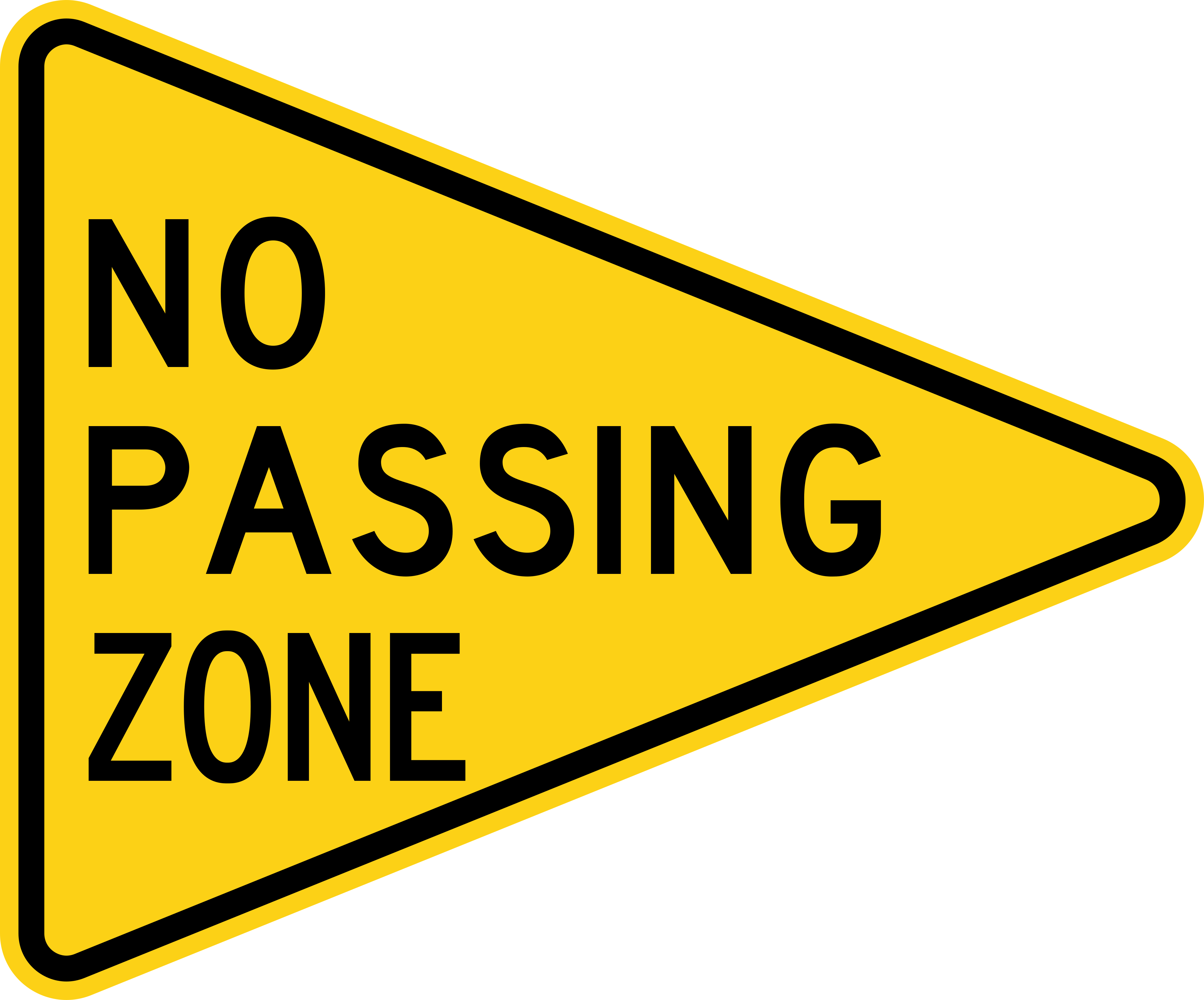
Question 75What is the only pennant-shaped warning sign, and where is it placed?
Show answer
B: No Passing Zone, on the left side of the road. The No Passing Zone sign is the only pennant-shaped warning sign; it marks the start of a no-passing zone on the left side of the road. Kansas Driving Handbook (Non-Commercial Driver's Manual): Passing (K.S.A. 8-1516, 8-1518, 8-1520), page 17.
-
Question 76What color are Kansas incident signs used for crashes, spills or disasters?
Show answer
B: Fluorescent pink with black lettering. Incident signs are temporary and fluorescent pink with black lettering. Kansas Driving Handbook (Non-Commercial Driver's Manual): Incident Signs, page 43.
-
Question 77On an exit sign, the word 'Exit' appears on the left side. What does that mean?
Show answer
C: The exit lane or ramp is to the left. If 'Exit' is written on the left side of an exit sign, the exit lane or ramp is to the left; on the right side, it is to the right. Kansas Driving Handbook (Non-Commercial Driver's Manual): Guide Signs: Destination Signs, page 42.
-
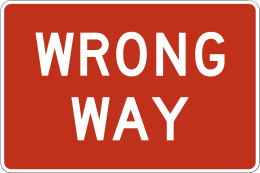
Question 78Where will you typically see a WRONG WAY sign on an expressway ramp?
Show answer
A: A short distance past the DO NOT ENTER sign. You'll see a Wrong Way sign on expressway ramps a short distance past the Do Not Enter sign. Kansas Driving Handbook (Non-Commercial Driver's Manual): Wrong Way, page 41.
-
Question 79In Kansas, what does a white painted curb usually mean?
Show answer
A: Only short stops are permitted. Painted curbs: white = short stops only; yellow = loading zone or other restriction; blue = handicap; red = fire zone. Kansas Driving Handbook (Non-Commercial Driver's Manual): Painted curbs, page 55.
-
Question 80In Kansas, what does a red painted curb indicate?
Show answer
A: Fire zone restrictions. Red curbs indicate fire zone restrictions. Kansas Driving Handbook (Non-Commercial Driver's Manual): Painted curbs, page 55.
-
Question 81In Kansas, what does a blue painted curb indicate?
Show answer
A: A handicap restriction. Blue curbs indicate a handicap restriction. Kansas Driving Handbook (Non-Commercial Driver's Manual): Painted curbs, page 55.
-
Question 82How far before a turn must you signal under Kansas law?
Show answer
B: At least 100 feet. All signals must be given at least 100 feet before making the actual move or turn. Kansas Driving Handbook (Non-Commercial Driver's Manual): Signaling for Stops and Turns (K.S.A. 8-1548), page 17.
-
Question 83At speeds above 40 mph, how far before a turn or lane change does the Kansas handbook advise signaling?
Show answer
B: 200 feet or 3 to 5 seconds. In urban areas signal 100 feet or 3 to 5 seconds before; above 40 mph signal 200 feet or 3 to 5 seconds before. Kansas Driving Handbook (Non-Commercial Driver's Manual): Signaling Your Movements, page 69.
-
Question 84Where is a U-turn prohibited in Kansas?
Show answer
D: On a curve, near the top of a hill, or where you can't be seen by other drivers for at least 500 feet. Do not make a U-turn on a curve, near the top of a hill or anywhere you cannot be seen by other drivers for at least 500 feet. Kansas Driving Handbook (Non-Commercial Driver's Manual): "U" Turns (K.S.A. 8-1546), page 17.
-
Question 85When should you choose your lane before a multiple-lane turn?
Show answer
B: At least one block before turning. At least one block before turning, identify and enter the lane from which you will turn. Kansas Driving Handbook (Non-Commercial Driver's Manual): Multiple lanes turning, page 47.
-
Question 86When turning left at a light that turns green, what does the Kansas handbook say to do?
Show answer
B: Pull into the intersection to be ready to turn, leaving room for oncoming left turns. When the light turns green, pull into the intersection to be ready to turn, avoid cutting the corner, and leave room for oncoming left turns. Kansas Driving Handbook (Non-Commercial Driver's Manual): Left turns, page 47.
-
Question 87Another vehicle arrives at a traffic circle at the same time as you, on your right. What should you do?
Show answer
C: Yield to it. Yield to any traffic in the circle; if another vehicle arrives at the same time and is on your right, yield to it. Kansas Driving Handbook (Non-Commercial Driver's Manual): Roundabouts and Traffic Circles, page 49.
-
Question 88In a roundabout, if you plan to turn left, when should you signal right?
Show answer
C: After traveling three quarters of the way around, to take the exit. If you intend to turn left, signal right once you have traveled three quarters of the way around to take the exit. Kansas Driving Handbook (Non-Commercial Driver's Manual): Roundabouts and Traffic Circles, page 50.
-
Question 89Under normal conditions, how long does it take to complete a left turn and get up to speed?
Show answer
D: 15 to 18 seconds. A right turn and pick-up of speed takes 12 to 15 seconds; a left turn takes 15 to 18 seconds. Kansas Driving Handbook (Non-Commercial Driver's Manual): Space to Cross or Enter, page 65.
-
Question 90You must not pass within how many feet of an intersection or railroad grade crossing in Kansas?
Show answer
B: 100 feet. No passing within 100 feet of crossing any intersection or railroad grade crossing. Kansas Driving Handbook (Non-Commercial Driver's Manual): Passing (K.S.A. 8-1516, 8-1518, 8-1520), page 17.
-
Question 91Within how many feet of a stopped emergency vehicle with emergency lights on is passing prohibited in Kansas?
Show answer
C: 100 feet. No passing within 100 feet of an emergency vehicle stopped on the side of the roadway with its emergency lights on. Kansas Driving Handbook (Non-Commercial Driver's Manual): Passing (K.S.A. 8-1516, 8-1518, 8-1520), page 17.
-
Question 92When passing, you must return to your lane before coming within how many feet of an oncoming vehicle?
Show answer
A: 200 feet. You must return to your lane before coming within 200 feet of any vehicle approaching from the opposite direction. Kansas Driving Handbook (Non-Commercial Driver's Manual): Passing (K.S.A. 8-1516, 8-1518, 8-1520), page 17.
-
Question 93How far ahead must you be able to see before passing at 55 to 60 mph?
Show answer
A: At least 1/3 of a mile (about 20 to 25 seconds). You must be able to see at least 1/3 of a mile or about 20 to 25 seconds ahead at 55-60 mph; don't pass within 1/3 mile of a hill or curve. Kansas Driving Handbook (Non-Commercial Driver's Manual): Space to Pass: Hills and curves, page 66.
-
Question 94An oncoming vehicle that is more than how many seconds away generally appears to be standing still?
Show answer
D: 25 seconds. An oncoming vehicle more than 25 seconds away generally appears to be standing still; if you can see it closing, it's probably closer. Kansas Driving Handbook (Non-Commercial Driver's Manual): Space to Pass: Oncoming vehicles, page 66.
-
Question 95How many vehicles should you pass at one time, and how long can a pass take?
Show answer
D: One; a pass can take 20 to 30 seconds. As a rule, only pass one vehicle at a time; it can take as many as 20 to 30 seconds. Kansas Driving Handbook (Non-Commercial Driver's Manual): Space to Pass, page 66.
-
Question 96From how far behind the vehicle to be passed should you begin your pass?
Show answer
A: At least two seconds behind. Pass from at least two seconds behind the vehicle to be passed to avoid striking its rear side. Kansas Driving Handbook (Non-Commercial Driver's Manual): Space to Pass, page 65.
-
Question 97Should you pass if a railroad grade crossing is within the 20-to-25-second area ahead?
Show answer
B: No. You should not pass if there is a railroad grade crossing within the 20 to 25 second area ahead. Kansas Driving Handbook (Non-Commercial Driver's Manual): Space to Pass: Highway-railroad grade crossings, page 66.
-
Question 98If you are being tailgated, how much should you increase your own following distance?
Show answer
A: By 2 to 3 seconds. Increase your following distance by 2 to 3 seconds to allow more time and space to stop. Kansas Driving Handbook (Non-Commercial Driver's Manual): Space Behind Affects Your Following Interval, page 64.
-
Question 99When merging into traffic, what size gap should you look for?
Show answer
C: 4 to 6 seconds. Select a gap of 4 to 6 seconds whenever changing lanes, entering a roadway or merging. Kansas Driving Handbook (Non-Commercial Driver's Manual): Space to Merge, page 64.
-
Question 100Staying 500 feet behind emergency equipment means a following interval of at least about how many seconds at 30 mph?
Show answer
A: 12 seconds. The handbook says 500 feet behind emergency equipment is a minimum of about 12 seconds at 30 mph and about 6 seconds at 60 mph. Kansas Driving Handbook (Non-Commercial Driver's Manual): Space Ahead, page 63.
-
Question 101When following a motorcycle, scooter or moped, what following distance does the Kansas handbook advise?
Show answer
A: 3 to 4 seconds or more in wet conditions. Allow a 3 to 4 second following distance or more in wet conditions behind motorcycles, scooters and mopeds. Kansas Driving Handbook (Non-Commercial Driver's Manual): Motorcycles, Scooters and Mopeds, page 84.
-
Question 102At night, how much should you add to your following distance?
Show answer
C: At least one additional second, two on unfamiliar roads. Add at least one additional second for night driving and at least two additional seconds on unfamiliar roads at night. Kansas Driving Handbook (Non-Commercial Driver's Manual): Vision Limitations, page 77.
-
Question 103On a road with three or more lanes in the same direction, which lane does the Kansas handbook recommend?
Show answer
B: The center lane, especially with heavy entering and exiting traffic. With three or more lanes in the same direction, use the center lane, especially when a lot of traffic is entering or exiting. Kansas Driving Handbook (Non-Commercial Driver's Manual): General Rules: General Driving, page 46.
-
Question 104In heavy traffic, how far before your exit should you get into the proper lane?
Show answer
A: About one-half mile. Plan to get into the proper lane about one-half mile before the exit. Kansas Driving Handbook (Non-Commercial Driver's Manual): Exiting traffic flow, page 60.
-
Question 105Before changing lanes, what gap in traffic should you identify?
Show answer
B: 4 to 5 seconds. Identify a 4 to 5 second gap in traffic, signal and look again, then steer into the lane and cancel the signal. Kansas Driving Handbook (Non-Commercial Driver's Manual): When changing lanes, page 58.
-
Question 106How far behind a broken-down vehicle should you place emergency flares?
Show answer
B: About 200 to 300 feet. Place emergency flares about 200 to 300 feet behind the vehicle. Kansas Driving Handbook (Non-Commercial Driver's Manual): Use emergency signals, page 69.
-
Question 107How close to a fire hydrant may you park in Kansas?
Show answer
B: No closer than 15 feet. Parking is not allowed within 15 feet of a fire hydrant. Kansas Driving Handbook (Non-Commercial Driver's Manual): Parking (K.S.A. 8-1571 8-1572), page 19.
-
Question 108How far from the curb may your wheels be when parked in Kansas?
Show answer
A: No more than 12 inches. Parking more than 12 inches (1 foot) from a curb is not allowed. Kansas Driving Handbook (Non-Commercial Driver's Manual): Parking (K.S.A. 8-1571 8-1572), page 19.
-
Question 109How close to a railroad crossing may you park in Kansas?
Show answer
B: No closer than 50 feet from the nearest rail. Parking is not allowed within 50 feet of the nearest rail at a railroad crossing. Kansas Driving Handbook (Non-Commercial Driver's Manual): Parking (K.S.A. 8-1571 8-1572), page 19.
-
Question 110Within how many feet approaching a traffic signal, stop sign or flashing beacon is parking prohibited?
Show answer
A: 30 feet. No parking within 30 feet approaching any traffic control signal, stop sign or flashing beacon. Kansas Driving Handbook (Non-Commercial Driver's Manual): Parking (K.S.A. 8-1571 8-1572), page 19.
-
Question 111How close may you park to a fire station driveway on the same side of the street?
Show answer
B: No closer than 20 feet. No parking within 20 feet of a fire station driveway on the same side, or within 75 feet of the entrance on the opposite side. Kansas Driving Handbook (Non-Commercial Driver's Manual): Parking (K.S.A. 8-1571 8-1572), page 19.
-
Question 112On the side of the street opposite a fire station entrance, how close may you park?
Show answer
A: No closer than 75 feet. On the opposite side of the street, you may not park within 75 feet of the fire station entrance. Kansas Driving Handbook (Non-Commercial Driver's Manual): Parking (K.S.A. 8-1571 8-1572), page 19.
-
Question 113When parking uphill with a curb, how should your wheels be turned?
Show answer
C: Away from the curb, then roll back until the tire touches the curb. Uphill with a curb, turn the wheels sharply away from the curb and let the vehicle roll back until the tire touches it. Kansas Driving Handbook (Non-Commercial Driver's Manual): Parking Uphill with a Curb, page 52.
-
Question 114When parking uphill without a curb, how should your wheels be turned?
Show answer
C: Toward the edge of the road. Uphill without a curb, turn the steering wheel sharply toward the edge of the road. Kansas Driving Handbook (Non-Commercial Driver's Manual): Parking Uphill Without a Curb, page 53.
-
Question 115Within how many feet of a pedestrian safety zone is parking prohibited?
Show answer
A: 30 feet. Do not park within 30 feet of a pedestrian safety zone. Kansas Driving Handbook (Non-Commercial Driver's Manual): No-Parking Zones, page 54.
-
Question 116In Kansas, what does a yellow painted curb indicate?
Show answer
C: A loading zone or other restriction. Yellow curbs indicate a loading zone or some other restriction. Kansas Driving Handbook (Non-Commercial Driver's Manual): Painted curbs, page 55.
-
Question 117Do crosswalks exist even when they aren't marked?
Show answer
D: Yes, at all intersections where a sidewalk meets the street. Crosswalks exist at all intersections where a sidewalk meets the street; not all have markings. Kansas Driving Handbook (Non-Commercial Driver's Manual): Pedestrians, page 80.
-
Question 118Approaching a vehicle stopped ahead of you on a multi-lane road, what should you do?
Show answer
B: Slow down and don't pass until sure no pedestrians are crossing in front of it. When approaching a stopped vehicle from behind, slow down and do not pass until you're sure no pedestrians are crossing in front of it—even on multi-lane roads. Kansas Driving Handbook (Non-Commercial Driver's Manual): Pedestrians, page 80.
-
Question 119Under Kansas's Dead Red Law, what may a bicyclist do?
Show answer
B: Cross a red light that won't detect the bicycle after waiting a reasonable time, without impeding cross traffic. Under the Dead Red Law, if the signal won't respond to a bicycle, the cyclist may cross after waiting a reasonable time, without impeding cross-traffic. Kansas Driving Handbook (Non-Commercial Driver's Manual): Bicyclists, page 81.
-
Question 120May bicyclists ride two abreast in a Kansas lane?
Show answer
C: Yes. Bicyclists are allowed to ride two abreast in a lane; in some situations single file may be better. Kansas Driving Handbook (Non-Commercial Driver's Manual): Bicyclists, page 81.
-
Question 121What lighting is required on a bicycle at dusk in Kansas?
Show answer
C: A headlight (a taillight is highly recommended). Use of a headlight at dusk is required; a taillight is highly recommended. Kansas Driving Handbook (Non-Commercial Driver's Manual): Bicyclists, page 81.
-
Question 122May two motorcycles share a single traffic lane in Kansas?
Show answer
A: Yes, two may share a lane, but cars may not pass a motorcycle in the same lane. Motorcyclists have the right to a complete lane, and two motorcycles may share a lane; do not pass a motorcycle in the same lane. Kansas Driving Handbook (Non-Commercial Driver's Manual): Motorcycles, Scooters and Mopeds, page 83.
-
Question 123What portion of motorcycle crashes with another vehicle are caused by the other vehicle turning left in front of the rider?
Show answer
C: Nearly 40 percent. About half of motorcycle crashes involve another vehicle; nearly 40 percent were caused by the other vehicle turning left in front of the rider. Kansas Driving Handbook (Non-Commercial Driver's Manual): Motorcycles, Scooters and Mopeds, page 83.
-
Question 124Under Kansas law, a moped's motor may have a cylinder capacity of no more than:
Show answer
C: 130 cubic centimeters. A motorized bicycle or moped has a motor of not more than 3.5 brake horsepower, a cylinder capacity of not more than 130 cc, an automatic transmission, and a maximum design speed of no more than 30 mph. Kansas Driving Handbook (Non-Commercial Driver's Manual): Motorcycles, Scooters and Mopeds, page 83.
-
Question 125A truck has a larger blind spot on which side?
Show answer
A: The right side, starting behind the cab and extending up to the truck's length. Trucks have a larger blind spot on their right side starting behind the cab and extending up to the length of the truck. Kansas Driving Handbook (Non-Commercial Driver's Manual): The No-Zone, page 86.
-
Question 126How fast do large vehicles typically travel up or down steep hills, according to the Kansas handbook?
Show answer
C: Approximately 35 mph, using the right lane. Large vehicles must drive slowly up or down steep hills, approximately 35 mph, and use the right lane; avoid the right lane there. Kansas Driving Handbook (Non-Commercial Driver's Manual): The No-Zone, page 86.
-
Question 127In more than what share of fatal car-truck crashes did police report the car driver contributed?
Show answer
B: More than 70%. In more than 70% of fatal crashes involving cars and commercial vehicles, police report that the car driver contributed. Kansas Driving Handbook (Non-Commercial Driver's Manual): Interacting with Commercial Vehicles, page 85.
-
Question 128What is the normal speed of an animal-drawn vehicle?
Show answer
D: 5 to 8 mph. Normal speeds for animal-drawn vehicles range between 5 and 8 miles per hour. Kansas Driving Handbook (Non-Commercial Driver's Manual): Slow Moving Vehicles: Animal drawn vehicles, page 88.
-
Question 129An orange-and-red triangle on the back of a farm vehicle means it travels at less than:
Show answer
D: 25 mph. The slow-moving vehicle triangle means the vehicle is traveling less than 25 mph. Kansas Driving Handbook (Non-Commercial Driver's Manual): Slow Moving Vehicles, page 88.
-
Question 130Farm machinery ahead swings wide to the left. What might it be doing?
Show answer
D: Preparing to turn right. Farm machinery often has no turn signals and may pull wide to the left before turning right. Kansas Driving Handbook (Non-Commercial Driver's Manual): Slow Moving Vehicles: Farm machinery, page 88.
-
Question 131When may you overtake and pass a trolley or light rail vehicle on the left?
Show answer
D: Only on a one-way street, when the tracks are too close to the right side to pass on the right, or when an officer directs you. Do not pass a trolley or light rail vehicle on the left, moving or stopped, unless you are on a one-way street, the tracks are too close to the right side to pass there, or a traffic officer directs you. Kansas Driving Handbook (Non-Commercial Driver's Manual): Public Transportation: Transit Buses, page 87.
-
Question 132How fast can a 100-car freight train at 55 mph stop in emergency braking?
Show answer
D: It needs more than a mile (about 18 football fields). A 100-car freight train at 55 mph needs more than a mile to stop, about 18 football fields. Kansas Driving Handbook (Non-Commercial Driver's Manual): Railroad Crossing Warning Signs, page 37.
-
Question 133Your car stalls on railroad tracks. Which way should you run?
Show answer
D: Toward the direction the train is coming from. Get everyone out and run in the direction from which the train is approaching, so you won't be hit by flying debris. Kansas Driving Handbook (Non-Commercial Driver's Manual): Railroad Crossing Warning Signs, page 37.
-
Question 134In Kansas, a driver under 21 can be arrested for alcohol impairment at what BAC?
Show answer
A: .02. If you are under 21, you can be arrested for alcohol impairment at .02%. Kansas Driving Handbook (Non-Commercial Driver's Manual): Alcohol and the Law, page 23.
-
Question 135With a BAC of .08 or more, how long may your Kansas driving privileges be suspended?
Show answer
C: 30 days. If you have a BAC of .08 or more, your license and privileges may be suspended for 30 days and you may face criminal penalties. Kansas Driving Handbook (Non-Commercial Driver's Manual): Alcohol and the Law, page 23.
-
Question 136What is the fine range for a first alcohol driving conviction in Kansas?
Show answer
C: $750-$1,000 plus court costs. A first conviction may bring a fine of $750-$1,000 plus court costs, at least 48 hours in jail or 100 hours of community service, suspension, and an ignition interlock. Kansas Driving Handbook (Non-Commercial Driver's Manual): Alcohol and the Law, page 24.
-
Question 137What minimum jail or community service may a first Kansas DUI conviction bring?
Show answer
B: 48 hours in jail or 100 hours of community service. You could be sentenced to a minimum of 48 hours in jail or 100 hours of community service. Kansas Driving Handbook (Non-Commercial Driver's Manual): Alcohol and the Law, page 24.
-
Question 138About what share of fatal crashes involve alcohol and other impairing drugs?
Show answer
B: About 40%. Alcohol and other impairing drugs are involved in approximately 40% of all fatal crashes. Kansas Driving Handbook (Non-Commercial Driver's Manual): Alcohol, Other Drugs and Driving, page 22.
-
Question 139How long does it take the body to get rid of one normal drink?
Show answer
D: About one hour. It takes about an hour for the body to get rid of one normal drink; four drinks means waiting four hours or more. Kansas Driving Handbook (Non-Commercial Driver's Manual): Alcohol, page 23.
-
Question 140At what BAC does Kansas say vision is affected for all drivers?
Show answer
C: .02. Vision is impacted at .02 BAC for all drivers. Kansas Driving Handbook (Non-Commercial Driver's Manual): Effects of Alcohol and other Impairing Drugs, page 23.
-
Question 141What is the penalty range for a first drug-related DUI conviction in Kansas?
Show answer
A: $750-$1,000 plus court costs, with jail or community service and suspension. A first drug-related DUI conviction may bring a $750-$1,000 fine plus costs, at least 48 hours in jail or 100 hours of community service, and suspension. Kansas Driving Handbook (Non-Commercial Driver's Manual): Illegal Drugs, page 24.
-
Question 142Even with a BAC under .08, can you be convicted of impaired driving in Kansas?
Show answer
D: Yes. Even under .08 you are still impaired, and under the law you can still be convicted of driving impaired. Kansas Driving Handbook (Non-Commercial Driver's Manual): Alcohol and the Law, page 23.
-
Question 143When are roads most slippery during rain, snow or sleet?
Show answer
C: When it first starts, as water mixes with dirt and oil. Roadways are more slippery when it first starts to rain, snow or sleet, as water mixes with dirt, oil and other substances. Kansas Driving Handbook (Non-Commercial Driver's Manual): Slippery roads, page 59.
-
Question 144Up to about what speed do modern tires keep stable traction on wet roads?
Show answer
A: About 30 mph. Modern tires have stable traction up to about 30 mph on wet roads; above 35 mph they start to ride up on pooled water. Kansas Driving Handbook (Non-Commercial Driver's Manual): Water on the roadway, page 60.
-
Question 145In heavy rain, at what speed can your tires lose all traction with the road?
Show answer
D: 45-50 mph. In heavy rain, tires can lose all traction at 45-50 mph; badly worn tires lose traction at much lower speeds (25-30 mph). Kansas Driving Handbook (Non-Commercial Driver's Manual): Water on the roadway, page 60.
-
Question 146When may vehicles in Kansas use studded snow tires?
Show answer
D: From November 1 to April 1. Vehicles in Kansas may be equipped with studded snow tires from November 1 to April 1 each year. Kansas Driving Handbook (Non-Commercial Driver's Manual): Slippery roads, page 59.
-
Question 147Kansas law requires headlights to be on whenever:
Show answer
A: The windshield wipers are in continuous use because of rain, sleet or snow. The handbook says Kansas requires headlights whenever the wipers are used; the statute (K.S.A. 8-1703) applies when wipers are in continuous use because of rain, sleet or snow. Kansas Driving Handbook (Non-Commercial Driver's Manual): Use headlights, page 67.
-
Question 148How far ahead do low beam headlights let you see clearly?
Show answer
C: About 150 to 200 feet. Low beams let you see about 150-200 feet ahead; high beams about 350-400 feet. Kansas Driving Handbook (Non-Commercial Driver's Manual): Vision Limitations, page 77.
-
Question 149When should you dim your high beams for an oncoming vehicle in Kansas?
Show answer
B: Within about one block of the oncoming vehicle. Dim your high beams whenever you come within about a one-block distance of an oncoming vehicle. Kansas Driving Handbook (Non-Commercial Driver's Manual): Night Driving, page 91.
-
Question 150How deep must water be to reach the bottom of most passenger cars?
Show answer
D: 6 inches. 6 inches of water reaches the bottom of most passenger cars, causing loss of control or stalling; 2 feet of rushing water can carry away most vehicles. Kansas Driving Handbook (Non-Commercial Driver's Manual): Flooded Roadways, page 91.
-
Question 151How much rushing water can carry away most vehicles?
Show answer
D: 2 feet. 2 feet of rushing water can carry away most vehicles. Kansas Driving Handbook (Non-Commercial Driver's Manual): Flooded Roadways, page 91.
-
Question 152When are deer and other animals most active?
Show answer
C: At dawn and dusk, and from October through December. Use caution at dawn and dusk and between October and December, when animals are most active. Kansas Driving Handbook (Non-Commercial Driver's Manual): Avoiding Collisions with Animals, page 92.
-
Question 153In a work zone, when should you merge if a lane will close?
Show answer
C: As soon as possible, at the first notice of the work zone. Merge as soon as possible by moving to the appropriate lane at first notice of an approaching work zone. Kansas Driving Handbook (Non-Commercial Driver's Manual): Work Zones, page 92.
-
Question 154When stranded in cold weather, how long does the handbook suggest running the engine each hour?
Show answer
C: About 10 minutes. Running the engine for about 10 minutes each hour is recommended, keeping the exhaust pipe clear and a window partly open. Kansas Driving Handbook (Non-Commercial Driver's Manual): Winter Driving, page 109.
-
Question 155Without ABS, if the brakes lock and you skid during a quick stop, what should you do?
Show answer
C: Ease up on the brake, then reapply with control, keeping your foot on the pedal. Ease up on the brake pedal and reapply with control; don't take your foot off the pedal; repeat until stopped. Kansas Driving Handbook (Non-Commercial Driver's Manual): Braking Quickly, page 73.
-
Question 156Your wheels drop off the pavement edge. To what speed should you slow before returning?
Show answer
C: 25 mph or less. Ease off the accelerator, brake gently, steer straight and slow to 25 mph or less, then turn about a quarter-turn back when clear. Kansas Driving Handbook (Non-Commercial Driver's Manual): Uneven Surface Drop-Offs, page 76.
-
Question 157How much should you turn the steering wheel to return to the pavement after a drop-off?
Show answer
A: About one quarter-turn. When there is a gap in traffic, turn the wheel about one quarter-turn to return to the pavement; do not oversteer. Kansas Driving Handbook (Non-Commercial Driver's Manual): Uneven Surface Drop-Offs, page 76.
-
Question 158What share of rollovers involve no other vehicle?
Show answer
C: More than 80%. More than 80% of rollovers involve no other vehicle besides the one that rolls over. Kansas Driving Handbook (Non-Commercial Driver's Manual): Rollovers, page 76.
-
Question 159When evading a hazard at speed, how much steering input should you limit yourself to?
Show answer
D: Not more than 180 degrees. Limit steering to not more than 180 degrees when evading a problem; more causes traction loss. Returning from off-road takes only 45-90 degrees. Kansas Driving Handbook (Non-Commercial Driver's Manual): Types of Steering Methods: Evasive action steering, page 31.
-
Question 160What does Kansas law prohibit regarding phones while driving?
Show answer
C: Using any electronic device to write, send or read a written communication, such as texting or email. Kansas prohibits using any electronic device to write, send or read written communications while driving; talking or dialing is not specifically illegal for licensed adults. Kansas Driving Handbook (Non-Commercial Driver's Manual): Cell Phones (K.S.A 8-1598), page 19.
-
Question 161Kansas children under what age must be in a federally approved child safety seat?
Show answer
C: Under 4. All children under 4 must be in a federally approved child safety seat. Kansas Driving Handbook (Non-Commercial Driver's Manual): Child Restraints (K.S.A. 8-1344), page 16.
-
Question 162A Kansas child aged 4 to 8 may use a seat belt instead of a booster seat if the child is:
Show answer
B: Taller than 4'9" or weighs more than 80 pounds. Children 4 to 8 must use a child seat or booster unless taller than 4'9" or over 80 pounds; then they must use a seat belt. Kansas Driving Handbook (Non-Commercial Driver's Manual): Child Restraints (K.S.A. 8-1344), page 16.
-
Question 163What hand positions does the Kansas handbook recommend for hand-to-hand (push/pull) steering?
Show answer
D: Left hand between 7 and 8 o'clock, right hand between 4 and 5 o'clock. For hand-to-hand steering, the left hand is between 7 and 8 o'clock and the right between 4 and 5; 10 and 2 is not recommended because of airbags. Kansas Driving Handbook (Non-Commercial Driver's Manual): Types of Steering Methods: Hand-to-hand steering, page 31.
-
Question 164How far should the center of your chest be from the center of the steering wheel?
Show answer
B: At least 10 inches. Adjust your seat so at least 10 inches is between the center of your chest and the steering wheel. Kansas Driving Handbook (Non-Commercial Driver's Manual): Air Bags, page 28.
-
Question 165More than half of crashes causing injury or death happen at what speeds and distance from home?
Show answer
C: Under 40 mph and within 25 miles of home. More than half of injury or fatal crashes happen at speeds under 40 mph and within 25 miles of home. Kansas Driving Handbook (Non-Commercial Driver's Manual): Using Safety Belts, page 27.
-
Question 166On long trips, how often does the Kansas handbook suggest taking breaks?
Show answer
B: About every 100 miles or 2 hours. Schedule proper breaks about every 100 miles or 2 hours during long trips. Kansas Driving Handbook (Non-Commercial Driver's Manual): Fatigue: Before a Trip, page 21.
-
Question 167How long a nap does the Kansas handbook recommend if you are drowsy while driving?
Show answer
D: 15 to 20 minutes. Find a safe parking area to take a 15 to 20-minute nap. Kansas Driving Handbook (Non-Commercial Driver's Manual): Fatigue: Ways to Prevent a Fatigue-Related Crash, page 21.
-
Question 168Between which hours does the Kansas handbook advise against driving because of fatigue?
Show answer
B: Midnight and 6 a.m.. Try not to drive late at night between midnight and 6 a.m. Kansas Driving Handbook (Non-Commercial Driver's Manual): Fatigue: Ways to Prevent a Fatigue-Related Crash, page 21.
-
Question 169How far ahead should you look when driving in the city, according to the Kansas handbook?
Show answer
A: At least two blocks or two traffic signals. In the city, look at least two blocks or two signals ahead; in urban areas, three; on the highway, at least a quarter mile. Kansas Driving Handbook (Non-Commercial Driver's Manual): Look ahead, page 56.
-
Question 170What is a 'visual lead'?
Show answer
D: An area 20 to 30 seconds ahead of your vehicle. A visual lead is an area 20 to 30 seconds ahead of the front of the vehicle. Kansas Driving Handbook (Non-Commercial Driver's Manual): Seeing Well Ahead in the Travel Path, page 56.
Answer every question to see your score.
Remembering the numbers
Most mistakes on the Kansas KDOR Division of Vehicles test are about specifics: how many feet before a turn to signal, how far to park from a hydrant, the alcohol limit for drivers under 21. Write the numbers from these questions on a card and review them before the test, then take the exam simulator.