Nevada DMV permit practice test 4
25 questions written from the Nevada Driver's Handbook (Official Driver Handbook, DMV 700), covering speed limits, following and passing, safe and defensive driving, lanes, highways and freeways, parking and more. Pick an answer to see straight away whether you're right and why. The real Nevada DMV test has 25 questions and you need 20 right.
-
Question 1According to the handbook's examples of Nevada speed limits, 45 mph is typical for:
Show answer
C: Reduced speed areas going into towns. 45 mph is listed as the speed limit for reduced speed areas going into towns. Nevada Driver's Handbook (Official Driver Handbook, DMV 700): Controlling Speed, page 35.
-
Question 2After passing a vehicle on a two-lane road, when should you return to your lane?
Show answer
A: When you can see the vehicle you passed in your rear-view mirror. Return to your lane once the passed vehicle shows up in your rear-view mirror. Nevada Driver's Handbook (Official Driver Handbook, DMV 700): Passing Another Vehicle, page 47.
-
Question 3Why should an infant never ride in the front seat of a car with a passenger-side airbag?
Show answer
B: The airbag inflates at about 200 mph and can strike the back of the baby's head. A deploying airbag comes out of the dashboard at about 200 mph and can hit a rear-facing seat hard enough to injure the baby's head, so infants never ride in front of a passenger airbag. Nevada Driver's Handbook (Official Driver Handbook, DMV 700): Traveling with Babies and Children, page 26.
-
Question 4Which vehicles are NOT eligible to use Nevada HOV lanes?
Show answer
A: Vehicles with more than 2 axles or vehicle-trailer combinations. HOV lanes are closed to vehicles with more than two axles and to vehicles towing trailers. Motorcycles and responding emergency vehicles may use them. Nevada Driver's Handbook (Official Driver Handbook, DMV 700): High-Occupancy Vehicle Lanes, page 39.
-
Question 5A red curb means:
Show answer
A: No stopping, standing or parking. Red means no stopping, standing or parking. Nevada Driver's Handbook (Official Driver Handbook, DMV 700): Colored Curb Markings, page 48.
-
Question 6How can you tell if you are in a truck driver's side blind spot?
Show answer
B: You cannot see the driver's face in the truck's side mirror. Truck mirrors work both ways: if the driver's face isn't visible to you in the side mirror, the driver can't see you either. Nevada Driver's Handbook (Official Driver Handbook, DMV 700): Side No-Zones, page 62.
-
Question 7Which is a safe night-driving practice?
Show answer
A: Making sure you can stop within the range of your headlights. Always make sure you can stop within the range of your headlights; never wear sunglasses at night or drive with just parking lights. Nevada Driver's Handbook (Official Driver Handbook, DMV 700): Night Driving, page 56.
-
Question 8Smoke comes from under your hood. What should you do?
Show answer
B: Slow down, pull off, and turn off the ignition immediately. Slow down, pull off and turn off the ignition immediately; use extreme caution when opening the hood. Nevada Driver's Handbook (Official Driver Handbook, DMV 700): Fire, page 58.
-
Question 9If your driving privilege was revoked for refusing a test within the prior seven years, a new refusal makes you ineligible for:
Show answer
B: Three years. A refusal when your privilege was revoked for refusal in the prior seven years brings a three-year period of ineligibility. Nevada Driver's Handbook (Official Driver Handbook, DMV 700): Driving Under the Influence, page 79.
-
Question 10For how long must a minor be free of at-fault crashes, moving violation convictions and alcohol or drug convictions before receiving a Nevada driver's license?
Show answer
A: 6 months. Minors must have no at-fault crashes, moving violation convictions or alcohol/drug convictions for six months before getting a license. Nevada Driver's Handbook (Official Driver Handbook, DMV 700): Driver Education, page 14.
-
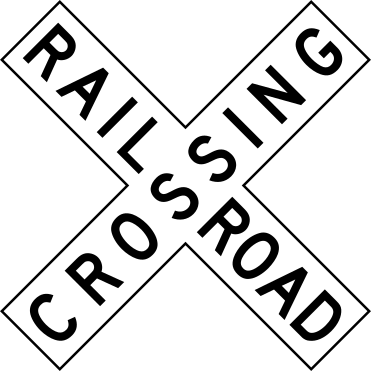
Question 11What does the crossbuck (X-shaped) sign mark?
Show answer
B: The actual location of a railroad crossing. The crossbuck marks the actual railroad crossing, where drivers must yield to trains. Nevada Driver's Handbook (Official Driver Handbook, DMV 700): Signs, page 28.
-
Question 12What should you do when facing a flashing yellow left-turn arrow?
Show answer
C: Yield to oncoming traffic and pedestrians, then turn when safe. A flashing yellow arrow means you must yield to oncoming traffic and pedestrians and may turn when it is safe. Nevada Driver's Handbook (Official Driver Handbook, DMV 700): Signals, page 30.
-
Question 13An ambulance with a siren and flashing lights approaches from behind. What must you do?
Show answer
C: Drive to the right side of the road, clear of any intersection, and stop until it passes. Yield to emergency vehicles from any direction: drive to the right side of the road clear of intersections and stop until it has passed. Nevada Driver's Handbook (Official Driver Handbook, DMV 700): Right-of-Way, page 34.
-
Question 14How far ahead should you signal before turning on an open highway?
Show answer
C: 300 feet (about 30 car lengths). On open highways, signal your turn at least 300 feet (30 car lengths) ahead. Nevada Driver's Handbook (Official Driver Handbook, DMV 700): Turning, page 45.
-
Question 15What speed limit does the Nevada handbook list for rural interstate freeways?
Show answer
C: 70 mph or more. Rural interstate freeways are listed at 70+ mph; urban freeways and rural highways at 65 mph. Nevada Driver's Handbook (Official Driver Handbook, DMV 700): Controlling Speed, page 35.
-
Question 16Is it ever legal to exceed the speed limit or use the shoulder to pass?
Show answer
A: No; never exceed the speed limit to pass and never pass on the shoulder. Passing never justifies going over the speed limit, and the shoulder may never be used to pass. Nevada Driver's Handbook (Official Driver Handbook, DMV 700): Passing Another Vehicle, page 47.
-
Question 17Under Nevada law, a child aged 7 or younger may not be left unattended in a vehicle in risky conditions unless supervised by someone at least:
Show answer
B: 12 years old. A child 7 or younger may not be left unattended when conditions are risky unless supervised by and within sight of a person at least 12 (NRS 202.485). Nevada Driver's Handbook (Official Driver Handbook, DMV 700): Unattended Children and Pets, page 25.
-
Question 18An overhead freeway signal shows a yellow X with the word MERGE over your lane. What does it mean?
Show answer
B: Your lane is ending; prepare to merge safely into an open lane. A yellow X with MERGE means the lane is ending and you should prepare to merge safely into another open lane. Nevada Driver's Handbook (Official Driver Handbook, DMV 700): Active Traffic Management Signs, page 37.
-
Question 19A yellow curb means:
Show answer
D: A loading zone, with rules depending on local laws. Yellow marks a loading zone; rules depend on local laws. Nevada Driver's Handbook (Official Driver Handbook, DMV 700): Colored Curb Markings, page 48.
-
Question 20Why is a truck's right-side blind spot doubly dangerous?
Show answer
A: Trucks and buses make wide right turns. Trucks and buses swing wide when turning right, which makes being in the right-side blind spot especially dangerous. Nevada Driver's Handbook (Official Driver Handbook, DMV 700): What is a No-Zone?, page 62.
-
Question 21What is the most important thing to do when driving in bad weather?
Show answer
A: Slow down. The most important thing in bad weather is to slow down. Nevada Driver's Handbook (Official Driver Handbook, DMV 700): Driving in Bad Weather, page 57.
-
Question 22Why should you not use water on a gasoline fire?
Show answer
B: Burning gasoline floats on water and the fire can spread. Burning gasoline floats on water and spreads the fire; smother it with sand or dirt or use a chemical extinguisher. Nevada Driver's Handbook (Official Driver Handbook, DMV 700): Fire, page 58.
-
Question 23What is the Nevada limit for marijuana in a driver's blood?
Show answer
D: 2 nanograms per milliliter (5 ng/ml for marijuana metabolite). It is unlawful to drive with more than 2 ng/ml of marijuana (5 ng/ml of metabolite) in your blood. Nevada Driver's Handbook (Official Driver Handbook, DMV 700): Driving Under the Influence, page 79.
-
Question 24For the first 6 months after getting a license, a 16- or 17-year-old Nevada driver may not carry which passengers?
Show answer
B: Passengers under 18, except immediate family members. Drivers licensed at 16 or 17 may not carry passengers under 18, other than immediate family, for their first 6 months of driving. Nevada Driver's Handbook (Official Driver Handbook, DMV 700): Passenger Restrictions and Curfews, page 15.
-
Question 25What shape is usually used for U.S., Interstate and state route markers?
Show answer
C: Shield. Route signs and markers are usually shaped like a shield and show U.S., Interstate and state route numbers. Nevada Driver's Handbook (Official Driver Handbook, DMV 700): Signs, page 29.
Answer every question to see your score.
More Nevada practice tests
- Practice test 125 questions
- Practice test 225 questions
- Practice test 325 questions
- Practice test 525 questions
- Practice test 625 questions
- Practice test 725 questions
- Practice test 825 questions
- Practice test 925 questions
- Practice test 1025 questions
- Practice test 1125 questions
- Practice test 1219 questions
- Exam simulatorThe real format, 25 questions
How to use these tests
Read each explanation, even when you get the question right: it tells you the rule and the handbook section, so you can look it up. Your answers are saved in this browser only, so the weak spots mode can give you more questions on the topics you miss. When you're scoring well, take the exam simulator: it uses the same number of questions and passing score as the real test.
Our own questions, written from the Nevada Driver's Handbook (Official Driver Handbook, DMV 700) and checked against it. Not affiliated with the Nevada Department of Motor Vehicles. Found a mistake? Tell us.