Hardest New Jersey permit test questions
150 questions that need exact knowledge rather than common sense: the numbers (distances, speeds, fines, limits), the exceptions and the rules that are easy to mix up. We chose them from our New Jersey question bank for that reason; they're not statistics from the MVC.
-
Question 1What is the minimum age to get a New Jersey examination permit (without a driver training course)?
Show answer
B: 17. Any New Jersey resident at least 17 who is not suspended can obtain an examination permit; no instructor or school enrollment is needed. New Jersey Driver Manual: Examination Permits for New Jersey Residents, page 20.
-
Question 2Who must purchase a special learner permit for a 16-year-old student driver?
Show answer
B: The approved driving instructor. For a special learner permit, the approved instructor buys the permit after the student's documents are provided. New Jersey Driver Manual: GDL: Option A, page 15.
-
Question 3How many hours of behind-the-wheel instruction make up an approved course for a special learner permit?
Show answer
B: Six hours. An approved course is six full hours of behind-the-wheel instruction in a dual-controlled vehicle, not counting time at the MVC. New Jersey Driver Manual: Special Learner Permits for New Jersey Residents, page 19.
-
Question 4How many practice driving hours must a GDL permit holder under 21 complete before the road test?
Show answer
B: At least 50 hours, including 10 during darkness. A minimum of 50 practice driving hours, including 10 hours during darkness, is required, certified on the BA-CSD form. New Jersey Driver Manual: Road Test, page 34.
-
Question 5A first-time driver who is 21 or older must practice supervised driving for at least how long before the road test?
Show answer
B: Three months. Under the Adult Road (GDL Option C), applicants 21 and older practice at least three months before the road test. New Jersey Driver Manual: GDL: Option C, page 17.
-
Question 6A permit or probationary driver under 21 may not drive during which hours?
Show answer
B: 11:01 p.m. to 5:00 a.m.. GDL permit and probationary drivers under 21 may not drive between 11:01 p.m. and 5:00 a.m. unless they have an employment or religious exemption. New Jersey Driver Manual: Special Learner Permit Restrictions, page 18.
-
Question 7The supervising driver for a New Jersey permit holder must be at least 21 and have how much driving experience?
Show answer
C: Three years. The adult supervising driver must be 21 or older, hold a valid New Jersey license and have at least three years of driving experience. New Jersey Driver Manual: Examination Permit Restrictions, page 18.
-
Question 8May a probationary driver under 21 use a hands-free cell phone while driving?
Show answer
C: No, GDL drivers may not use hand-held or hands-free phones or other electronic devices. GDL permit and probationary license holders may not use hand-held or hands-free phones or any other electronic device while driving. New Jersey Driver Manual: Cellular Telephones, page 86.
-
Question 9Without a parent or guardian in the car, how many passengers may a probationary driver under 21 carry (besides dependents)?
Show answer
B: One. Passengers are limited to the probationary driver's dependents and one additional person unless a parent or guardian is in the vehicle. New Jersey Driver Manual: Probationary Driver License Restrictions, page 18.
-
Question 10How much does a pair of red GDL decals cost?
Show answer
B: $4. The two removable decals are provided when a permit is issued for $4, and extra pairs are $4 each at MVC Licensing Centers. New Jersey Driver Manual: GDL Decal, page 19.
-
Question 11What is the penalty for violating GDL restrictions in New Jersey?
Show answer
B: A $100 fine or suspension of driving privileges. Failure to follow GDL restrictions may result in a $100 fine or suspension of driving privileges. New Jersey Driver Manual: Graduated Driver License (GDL), page 14.
-
Question 12If an examination permit or probationary license holder is 21 or older, which GDL restrictions no longer apply?
Show answer
B: Hour, passenger and decal restrictions. For holders 21 or older, the hour, passenger and decal restrictions do not apply. New Jersey Driver Manual: Probationary Driver License Restrictions, page 18.
-
Question 13Within how long must you report a change of address to the MVC?
Show answer
A: Within one week. A motorist who moves must report the change of address to the MVC within one week. New Jersey Driver Manual: Laws Governing Driver Licenses, page 4.
-
Question 14After a legal name change, within how long must a New Jersey motorist report it to the MVC?
Show answer
B: Two weeks. A legal name change (marriage, divorce or court order) must be reported to the MVC within two weeks. New Jersey Driver Manual: Laws Governing Driver Licenses, page 4.
-
Question 15To pass the New Jersey knowledge test, how many of the 50 questions must you answer correctly?
Show answer
C: 40 (80 percent). You need 80 percent, or 40 of the 50 questions, correct. New Jersey Driver Manual: Test Requirements, page 31.
-
Question 16What vision standard must a basic New Jersey license applicant meet?
Show answer
C: 20/50 with or without corrective lenses. Basic license applicants need 20/50 vision with or without corrective lenses. New Jersey Driver Manual: Test Requirements, page 31.
-
Question 17An applicant has sight in only one eye. What is required for a basic license?
Show answer
B: That eye must meet the 20/50 rule and a licensed physician must sign documentation. For sight in one eye only, that eye must meet 20/50 and the applicant needs documentation signed by a licensed physician. New Jersey Driver Manual: Test Requirements, page 31.
-
Question 18An applicant whose native language is not offered for the knowledge test wants an interpreter. What must they do first?
Show answer
B: Attempt the test in an offered language first. You must first attempt the knowledge test in an offered language; if you fail, MVC arranges a state-approved interpreter. New Jersey Driver Manual: Knowledge Test, page 30.
-
Question 19How far in advance must you tell the MVC that you need an interpreter for the knowledge test?
Show answer
C: At least two weeks. You must inform the MVC of the need for an interpreter at least two weeks before the date you plan to take the test. New Jersey Driver Manual: Knowledge Test, page 30.
-
Question 20A person with a valid out-of-state license moves to New Jersey. Within how long must they apply for a New Jersey license?
Show answer
B: 60 days or before the current license expires, whichever is sooner. New residents must apply within 60 days (30 days for a CDL) or before their current license expires, whichever comes first. New Jersey Driver Manual: Laws Governing Driver Licenses, page 4.
-
Question 21New Jersey uses a point system. How many points are added for a moving violation committed in another state?
Show answer
B: Two. Two points are added to a New Jersey driving record for traffic violations committed in other states. New Jersey Driver Manual: Point System, page 137.
-
Question 22How many points can be subtracted from your record for each year you go without a violation or suspension?
Show answer
B: Up to three. Up to three points are subtracted each year without a violation or suspension, but never below zero. New Jersey Driver Manual: Point System, page 137.
-
Question 23At how many points accumulated will a New Jersey driver receive a Notice of Scheduled Suspension?
Show answer
C: 12 points or more. Motorists who accumulate 12 or more points receive a Notice of Scheduled Suspension from the MVC. New Jersey Driver Manual: Driver Improvement Program, page 133.
-
Question 24How many points are removed after successfully completing a Driver Improvement Program?
Show answer
C: Three. Completing a Driver Improvement Program removes three points from the driver's record. New Jersey Driver Manual: Driver Improvement Program, page 134.
-
Question 25How many points does a voluntary defensive driving course remove, and how often does MVC recognize it?
Show answer
A: Two points, once every five years. A defensive driving course removes two points, and the MVC recognizes it for point reduction only once every five years. New Jersey Driver Manual: Defensive Driving Courses, page 135.
-
Question 26When does New Jersey's two-year probationary driver period begin?
Show answer
B: When you receive a special learner or examination permit. The two-year probationary driver period starts when a special learner or examination permit is issued. New Jersey Driver Manual: Probationary Driver Program, page 134.
-
Question 27During the probationary period, which drivers must enroll in the Probationary Driver Program?
Show answer
B: Drivers convicted of two or more moving violations totaling four or more points. Two or more moving violations totaling four or more points require enrollment in the Probationary Driver Program. New Jersey Driver Manual: Probationary Driver Program, page 134.
-
Question 28Motorists who accumulate six or more points within three years must pay what surcharge?
Show answer
B: $150 for six points and $25 for each additional point. The violation surcharge is $150 for six points plus $25 for each point above six, billed every year that you have six or more points from violations posted in the past three years. New Jersey Driver Manual: Violation Surcharges and Point Violations, page 136.
-
Question 29How many points are assessed for exceeding the speed limit by 1 to 14 mph?
Show answer
A: Two. Exceeding the maximum speed by 1-14 mph carries 2 points. New Jersey Driver Manual: Moving Violation Point Chart, page 139.
-
Question 30Speeding 30 mph or more over the limit carries how many points in New Jersey?
Show answer
D: Five. Exceeding the maximum speed by 30 mph or more is a 5-point violation. New Jersey Driver Manual: Moving Violation Point Chart, page 139.
-
Question 31How many points are assessed for tailgating?
Show answer
D: Five. Tailgating (N.J.S.A. 39:4-89) carries 5 points. New Jersey Driver Manual: Moving Violation Point Chart, page 139.
-
Question 32How many points are given for improperly passing a stopped school bus?
Show answer
D: Five. Improper passing of a school bus is a 5-point violation. New Jersey Driver Manual: Moving Violation Point Chart, page 140.
-
Question 33Leaving the scene of a crash that involved personal injury carries how many points?
Show answer
D: Eight. Leaving the scene of a crash is 2 points with no injury and 8 points when there is personal injury. New Jersey Driver Manual: Moving Violation Point Chart, page 140.
-
Question 34What is the New Jersey speed limit in suburban business and residential districts unless otherwise posted?
Show answer
C: 35 mph. Suburban business and residential districts have a 35 mph limit unless posted otherwise. New Jersey Driver Manual: Speed Control, page 62.
-
Question 35What is the speed limit on non-posted rural roadways in New Jersey?
Show answer
C: 50 mph. Non-posted rural roadways have a 50 mph limit. New Jersey Driver Manual: Speed Control, page 62.
-
Question 36In a 65 mph zone, fines are doubled if you exceed the limit by how much?
Show answer
C: 10 mph or more. Motorists pay double fines for exceeding the 65 mph limit by 10 mph or more. New Jersey Driver Manual: Speed Control, page 62.
-
Question 37When passing a school bus that is stopped directly in front of a school, what is the maximum speed?
Show answer
B: 10 mph. At a school bus stopped in front of a school, you may pass from either direction at no more than 10 mph. New Jersey Driver Manual: Stop for School Buses, page 77.
-
Question 38After stopping for an ice cream truck that shows flashing red lights and a stop arm, how fast may you pass it?
Show answer
C: 15 mph. Stop, then pass a frozen dessert truck at no more than 15 mph while watching for children. New Jersey Driver Manual: Stop for Frozen Dessert Trucks, page 78.
-
Question 39A vehicle-pedestrian crash at 20 mph has about a 5 percent fatality rate. What is the rate at 40 mph?
Show answer
D: 85 percent. The fatality rate jumps from 5 percent at 20 mph to 85 percent at 40 mph. New Jersey Driver Manual: People, page 144.
-
Question 40When approaching or passing a horseback rider or horse-drawn vehicle, what is the maximum speed?
Show answer
C: 25 mph. Motorists must slow to 25 mph or less and proceed with caution when approaching or passing horses. New Jersey Driver Manual: Horseback Riders & Horse-Drawn Vehicles, page 155.
-
Question 41If you cannot give a bicyclist 4 feet when passing on a single-lane road, what must you do?
Show answer
B: Slow to 25 mph and be prepared to stop until it is safe to pass. Under the Safe Passing Law, if 4 feet is not possible you must slow to 25 mph and be ready to stop until you can pass safely. New Jersey Driver Manual: Bicycles, Skateboards, and Inline Skates, page 150.
-
Question 42How far from the curb may your wheels be when you are parked in New Jersey?
Show answer
A: No more than 6 inches. It is illegal for a vehicle to be parked more than six inches from the curb. New Jersey Driver Manual: Parking Regulations, page 84.
-
Question 43You must not park within how many feet of a fire hydrant in New Jersey?
Show answer
B: 10 feet. Do not park within 10 feet of a fire hydrant. New Jersey Driver Manual: Do Not Park, page 85.
-
Question 44You may not park within how many feet of a crosswalk at an intersection?
Show answer
C: 25 feet. Parking is prohibited within 25 feet of a crosswalk at an intersection. New Jersey Driver Manual: Do Not Park, page 85.
-
Question 45You may not park within how many feet of a stop sign?
Show answer
C: 50 feet. Parking is prohibited within 50 feet of a stop sign. New Jersey Driver Manual: Do Not Park, page 85.
-
Question 46You may not park within how many feet of a railroad crossing?
Show answer
C: 50 feet. Parking is prohibited within 50 feet of a railroad crossing. New Jersey Driver Manual: Do Not Park, page 85.
-
Question 47How far must you stay from the driveway entrance to a fire station when parking on the same side of the street?
Show answer
B: 20 feet. Do not park within 20 feet of a fire station driveway entrance, or within 75 feet on the opposite side of the street. New Jersey Driver Manual: Do Not Park, page 85.
-
Question 48When parallel parking, about how far from the vehicle in front should you pull up alongside before backing?
Show answer
B: About two to four feet. Pull up alongside, parallel to the car in front, about two to four feet away before backing in. New Jersey Driver Manual: Parallel Parking, page 58.
-
Question 49A traffic signal is dark because of a power failure. How should you treat the intersection?
Show answer
B: As a four-way stop. When a traffic signal is not lit because of a power failure or malfunction, it is treated as a four-way stop. New Jersey Driver Manual: Uncontrolled, page 68.
-
Question 50In a New Jersey traffic circle where you are unsure who has the right-of-way, what basic rule applies?
Show answer
B: The vehicle on the left yields to the vehicle approaching from the right. When in doubt in a circle, use the uncontrolled-intersection rule: the vehicle to the left yields to the vehicle approaching from the right. New Jersey Driver Manual: Traffic Circle, page 68.
-
Question 51What usually decides who has the right-of-way in a New Jersey traffic circle?
Show answer
B: The circle's historically established traffic flow and any stop or yield signs at the entrances. New Jersey has no set traffic circle rule; the established flow pattern (often the major highway) and posted stop or yield signs govern. New Jersey Driver Manual: Traffic Circle, page 68.
-
Question 52A pedestrian is crossing in a marked crosswalk. What does New Jersey law require?
Show answer
B: Come to a complete stop and remain stopped until they clear your lane and the adjacent lane. You must stop, not just slow or yield, and stay stopped until the pedestrian has cleared your lane and the next lane in the same direction. New Jersey Driver Manual: Pedestrians in a Crosswalk, page 66.
-
Question 53What penalties can result from failing to stop for a pedestrian in a crosswalk in New Jersey?
Show answer
B: Fines up to $500, up to 25 days in jail, community service, up to 6 months suspension and 2 points. Penalties include fines up to $500, up to 25 days in jail, community service, a suspension of up to six months and two points. New Jersey Driver Manual: Pedestrians in a Crosswalk, page 66.
-
Question 54Where do crosswalks exist in New Jersey?
Show answer
B: At all corners of intersections, marked or unmarked, unless signs prohibit crossing. Crosswalks can be marked or unmarked and exist at all corners of intersections unless signs prohibit pedestrian crossing. New Jersey Driver Manual: Pedestrians in a Crosswalk, page 66.
-
Question 55Must you yield to a bus that is already in the normal flow of traffic and is changing lanes?
Show answer
B: No, the yield law applies to buses re-entering traffic, not to lane changes. Once the bus is back in the normal flow of traffic, motorists are not required to yield to it when it changes lanes. New Jersey Driver Manual: Yielding to School and Commercial Buses, page 150.
-
Question 56At least how far before a turn must you signal in New Jersey?
Show answer
B: 100 feet. State law requires moving to the proper lane and signaling at least 100 feet before any turn. New Jersey Driver Manual: Turning, page 55.
-
Question 57When turning left from a two-way road onto a four-lane highway, which lane should you turn into?
Show answer
B: The lane nearest the center line on the right side (the passing lane), then move right when safe. Turn into the lane nearest the center line, which is the passing lane, then move right out of it when traffic permits. New Jersey Driver Manual: Left Turns, page 73.
-
Question 58Two vehicles facing each other at an intersection both signal left turns. How should they turn?
Show answer
B: Each turns to the left of the center of the intersection. When safe, each driver turns to the left of the center of the intersection. New Jersey Driver Manual: Left Turns, page 73.
-
Question 59At a stop sign, where must you bring your vehicle to a complete stop?
Show answer
B: Within five feet of the nearest crosswalk or stop line. You must come to a complete stop within five feet of the nearest crosswalk or stop line before proceeding. New Jersey Driver Manual: Intersections, page 67.
-
Question 60On a two-lane road, a school bus ahead has stopped with flashing red lights. How far away must you stop?
Show answer
C: At least 25 feet. State law requires stopping at least 25 feet from a school bus with flashing red lights. New Jersey Driver Manual: Stop for School Buses, page 77.
-
Question 61You are on a dual highway, on the other side of a raised median from a stopped school bus with flashing red lights. What must you do?
Show answer
B: Slow to 10 mph. On a dual-lane highway, if you are on the other side of a safety island or raised median, slow to 10 mph. New Jersey Driver Manual: Stop for School Buses, page 77.
-
Question 62On a multi-lane highway where the lanes are separated only by painted lines, a school bus stops with red lights flashing on the other side. What must you do?
Show answer
B: Stop at least 25 feet away. When lanes are separated only by lines, traffic in both directions must stop at least 25 feet from the bus. New Jersey Driver Manual: Stop for School Buses, page 77.
-
Question 63You are on a dual highway, on the other side of a raised median from an ice cream truck that is flashing red lights and showing its stop arm. What does the law require?
Show answer
B: You need not stop, but stay alert for children. Drivers on a dual highway who are on the other side of a safety island or raised median do not have to stop for a frozen dessert truck, though watching for children is still wise. New Jersey Driver Manual: Stop for Frozen Dessert Trucks, page 78.
-
Question 64After an emergency vehicle passes you, how far behind it must you stay?
Show answer
C: 300 feet. Keep at least 300 feet behind a signaling emergency vehicle. New Jersey Driver Manual: Pull Over and Stop for Emergency Vehicles, page 78.
-
Question 65What color lights are used by volunteer fire and rescue squad members responding in private vehicles?
Show answer
B: Blue. Private vehicles of volunteer fire and rescue members responding to an emergency use blue lights. New Jersey Driver Manual: Pull Over and Stop for Emergency Vehicles, page 78.
-
Question 66How close may you park to a fire department vehicle that is in service?
Show answer
C: No closer than 200 feet. Never park within 200 feet of a fire department vehicle in service. New Jersey Driver Manual: Pull Over and Stop for Emergency Vehicles, page 78.
-
Question 67Under New Jersey's Move Over law, what must you do when approaching a stopped tow truck with flashing amber lights?
Show answer
B: Change to a lane not next to it if safe; otherwise slow below the posted limit and be ready to stop. Move Over covers emergency vehicles, tow trucks, highway maintenance and service vehicles; change lanes if safe, or slow below the limit and be prepared to stop. New Jersey Driver Manual: Move Over Law, page 78.
-
Question 68Does New Jersey's Move Over law apply to an ordinary disabled car showing hazard lights or flares?
Show answer
B: Yes, it covers stationary or disabled vehicles with hazard lights, flares or reflective triangles. The law also covers any stationary or disabled vehicle flashing hazard lights or using flares or reflective triangles. New Jersey Driver Manual: Move Over Law, page 78.
-
Question 69What is the fine for violating New Jersey's Move Over law?
Show answer
B: $100 to $500. Violators face a fine of not less than $100 and not more than $500. New Jersey Driver Manual: Move Over Law, page 78.
-
Question 70Railroad crossing lights are flashing and bells are ringing. How far from the crossing must you stop?
Show answer
C: At least 15 feet. A motorist must stop at least 15 feet from the crossing when there are flashing lights, bells, gates or flag signals. New Jersey Driver Manual: Stop at Railroad Crossings, page 76.
-
Question 71Your car stalls on railroad tracks and a train is coming. Which way should you run?
Show answer
B: Away from the tracks at a 45-degree angle toward the direction the train is coming from. Run at a 45-degree angle away from the tracks in the direction of the train to avoid flying debris. New Jersey Driver Manual: Stalling on Railroad Tracks, page 106.
-
Question 72Within how many feet of a railroad crossing should you not pass other vehicles?
Show answer
B: 100 feet. Do not pass other vehicles within 100 feet of a railroad crossing. New Jersey Driver Manual: Trains, page 153.
-
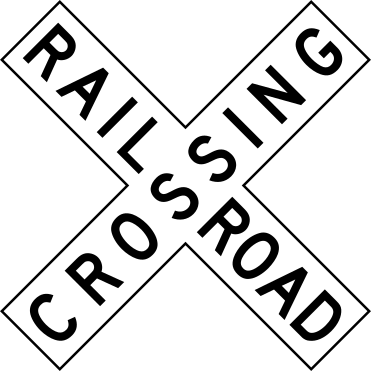
Question 73What does the white X-shaped crossbuck sign at a railroad crossing mean?
Show answer
B: The same as a YIELD sign; yield to trains. The crossbuck means the same as a Yield sign; motorists must always yield to trains. New Jersey Driver Manual: Regulatory Signs, page 216.
-
Question 74Under the national truck route signs used in New Jersey, what do red signs mark?
Show answer
B: Routes and ramps where trucks are prohibited and the end of designated routes. Green signs mark routes where trucks are permitted; red signs mark where trucks are prohibited and the end of designated routes. New Jersey Driver Manual: Regulatory Signs, page 216.
-
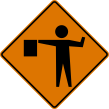
Question 75Flaggers in a work zone have the same authority as:
Show answer
B: A regulatory sign. Flaggers have the same authority as a regulatory sign, so you may be cited for disobeying them. New Jersey Driver Manual: Road Work Signs, page 215.
-
Question 76Which are passive railroad crossing warning devices?
Show answer
B: Pavement markings, signs and crossbucks. Pavement markings, signs and crossbucks are passive devices; flashing lights, bells and gates are active warnings. New Jersey Driver Manual: Road Markings, page 217.
-
Question 77In a weave lane, who must yield?
Show answer
B: Drivers entering from the entrance ramp must yield to drivers leaving the expressway. The motorist entering from the ramp must yield the right-of-way to the motorist leaving the expressway. New Jersey Driver Manual: Weave Lane, page 70.
-
Question 78On a highway through a city during rush hour, which lane does the manual suggest to avoid merge conflicts?
Show answer
B: The left or center lane. Drive in the left or center lane to avoid merge conflicts during rush hour and look for exits early. New Jersey Driver Manual: Highways Through Cities, page 71.
-
Question 79In bad weather, how much following time does the manual recommend?
Show answer
C: Four or more seconds. During bad weather or on wet roads, increase the interval to four or more seconds. New Jersey Driver Manual: Three Seconds-Plus Rule, page 95.
-
Question 80On snow-covered roads, what following distance does the manual suggest as a good rule?
Show answer
C: Six seconds or more. A good rule on snow-covered roads is a following distance of six seconds or more. New Jersey Driver Manual: Reduced Visibility, page 99.
-
Question 81Using the car-length rule of thumb, how much space should you leave at 50 mph?
Show answer
C: Five car lengths. The rule of thumb is one car length (about 20 feet) for each 10 mph of speed, so five car lengths at 50 mph. New Jersey Driver Manual: One Car Length, page 94.
-
Question 82About how long is one car length in the New Jersey rule of thumb?
Show answer
B: 20 feet. One car length is about 20 feet. New Jersey Driver Manual: One Car Length, page 94.
-
Question 83According to the minimum safe following distance table, how many car lengths are needed at 30 mph on wet pavement?
Show answer
B: 6. The table lists 6 car lengths at 30 mph on wet pavement (3 under ideal conditions). New Jersey Driver Manual: Minimum Safe Following Distance (in Car Lengths), page 96.
-
Question 84When is passing on the right allowed in New Jersey?
Show answer
B: On roads with more than one lane in your direction, or when the vehicle ahead is turning left and there is room. Passing on the right is allowed on multi-lane roads or when the driver ahead is turning left and there is room; never on the shoulder. New Jersey Driver Manual: Passing, page 65.
-
Question 85How many points are assessed for improper passing in a no-passing zone?
Show answer
C: Four. Improper passing in a no-passing zone carries 4 points. New Jersey Driver Manual: Moving Violation Point Chart, page 139.
-
Question 86When should you sound your horn when passing, according to the manual?
Show answer
B: When passing another vehicle outside a business or residential zone. Motorists may sound the horn when passing another vehicle when not in a business or residential zone. New Jersey Driver Manual: Driving Signals, page 54.
-
Question 87In a heavy rainstorm on a multi-lane highway, where does the manual suggest you drive?
Show answer
B: On the highest point of the road, such as the center lane. To reduce hydroplaning, drive on the highest point of the road, such as the center lane of a multi-lane highway. New Jersey Driver Manual: Hydroplaning, page 97.
-
Question 88When must headlights be on in New Jersey?
Show answer
B: From one-half hour after sunset to one-half hour before sunrise, and whenever visibility is 500 feet or less. Headlights are required from 1/2 hour after sunset to 1/2 hour before sunrise, when visibility is 500 feet or less, and in fog, mist or smoke. New Jersey Driver Manual: Using Headlights, page 83.
-
Question 89Your windshield wipers are on because of rain. What does New Jersey law require?
Show answer
B: Your headlights must be on. Headlights must be used whenever windshield wipers are in use. New Jersey Driver Manual: Using Headlights, page 83.
-
Question 90How long can it take to recover from the glare of oncoming high beams?
Show answer
B: Three to five seconds. It can take three to five seconds to recover; at 50 mph you travel the length of a football field without seeing. New Jersey Driver Manual: Bright and Dim, page 83.
-
Question 91At what speed can tires start to hydroplane on wet roads?
Show answer
B: About 35 mph. Wet road surfaces can cause tires to hydroplane starting at about 35 mph; above 55 mph they may totally leave the road. New Jersey Driver Manual: Hydroplaning, page 97.
-
Question 92At about what speed may tires totally leave the road surface when hydroplaning?
Show answer
C: 55 mph. After about 55 mph, tires may totally leave the road surface, making braking and steering nearly impossible. New Jersey Driver Manual: Hydroplaning, page 97.
-
Question 93What gives the best traction on ice and in hard-packed or deep snow?
Show answer
B: Tire chains. Tire chains provide the best traction on ice and in hard-packed or deep snow; snow tires do not grip well on ice. New Jersey Driver Manual: Snow and Ice, page 99.
-
Question 94During what period may studded snow tires be used in New Jersey?
Show answer
B: November 15 to April 1. Studded snow tires may be used between November 15 and April 1. New Jersey Driver Manual: Snow and Ice, page 99.
-
Question 95What is the fine for not removing snow or ice from your vehicle, even if none flies off?
Show answer
B: $25 to $75. Violators face $25 to $75 even if no snow or ice dislodges; up to $1,500 if it causes injury or damage. New Jersey Driver Manual: Snow and Ice, page 47.
-
Question 96How far ahead should you look while driving in the city?
Show answer
C: At least 12 seconds. Look at least 12 seconds ahead; at 25 mph in the city that is about a block. New Jersey Driver Manual: City Driving, page 101.
-
Question 97The night stopping table assumes a reaction time of how long?
Show answer
C: 1.5 seconds. The night stopping distances are based on a nighttime reaction time of 1.5 seconds. New Jersey Driver Manual: Driving and Stopping at Night, page 100.
-
Question 98According to the stopping distance table, what is the total stopping distance at 50 mph in normal conditions?
Show answer
C: 247 feet. At 50 mph, reaction distance is 55 feet plus braking distance of 192 feet, a total of 247 feet. New Jersey Driver Manual: Stopping Distances, page 53.
-
Question 99How many feet per second does a vehicle travel at 60 mph?
Show answer
C: 88 feet. A vehicle travels 88 feet per second at 60 mph. New Jersey Driver Manual: Stopping Distances, page 53.
-
Question 100How far ahead of a work zone may the advance warning sign or flashing vehicle lights be placed?
Show answer
C: Up to one-half mile. Work zones are identified by an advance warning sign or flashing lights on a vehicle up to one-half mile before the work area. New Jersey Driver Manual: Construction Zones/Work Zones, page 103.
-
Question 101Why should you never turn a steering-wheel ignition to the lock position while the vehicle is moving?
Show answer
B: The steering will lock and you will lose control. Turning the ignition to lock while moving locks the steering as the vehicle turns, causing loss of control. New Jersey Driver Manual: Ignition System, page 104.
-
Question 102Your right wheels drift off the pavement onto the shoulder. What should you do?
Show answer
B: Stay on the shoulder, ease off the gas, and return when at 25 mph or less with a quarter turn of the wheel. Ease off the gas and, once at 25 mph or less, turn the wheel about one-quarter turn back toward the road. New Jersey Driver Manual: Running Off the Pavement, page 105.
-
Question 103About how long will a vehicle with closed windows and doors float in water?
Show answer
B: About three to ten minutes. A vehicle with windows and doors closed will float for about three to ten minutes. New Jersey Driver Manual: Plunging Into Water, page 106.
-
Question 104Your vehicle stalls on railroad tracks but no train is in sight. What should you do?
Show answer
B: Get everyone out and away from the vehicle and tracks, then call the number on the Emergency Notification sign or 911. Get out and move far away even if no train is coming, then call the number on the crossing's Emergency Notification sign or 911. New Jersey Driver Manual: Stalling on Railroad Tracks, page 106.
-
Question 105During an emergency stop on a highway, how far behind your vehicle should you place a second warning device?
Show answer
C: At least 300 feet (about 120 paces). Place a flare or sign just behind the vehicle and another warning device at least 300 feet (about 120 paces) back. New Jersey Driver Manual: Emergency Stops, page 105.
-
Question 106After a crash with injury or property damage over $500 and no police report filed, what must you do?
Show answer
B: Send a written report to the MVC within 10 days. When damage exceeds $500 or someone is injured and no police report is filed, send a written report to the MVC within 10 days. New Jersey Driver Manual: Reporting Crashes, page 111.
-
Question 107Which situation can cause dangerous carbon monoxide buildup in or around a vehicle?
Show answer
B: Idling in a garage, even with the garage door open. Idling in a garage or confined space, even with the door open, can cause dangerous CO buildup. New Jersey Driver Manual: Carbon Monoxide Poisoning, page 48.
-
Question 108What is the illegal BAC level for a driver under 21 in New Jersey?
Show answer
B: 0.01% or higher. For drivers under 21, it is illegal to drive with a BAC of 0.01 percent or higher. New Jersey Driver Manual: How Much is Too Much, page 115.
-
Question 109At what BAC is a commercial motor vehicle operator in violation under N.J.S.A. 39:3-10.13?
Show answer
B: 0.04%. Operating a commercial motor vehicle with a BAC of 0.04% (but less than 0.08%) is a violation. New Jersey Driver Manual: Ignition Interlock Device, page 127.
-
Question 110About what percentage of alcohol is burned up by the liver?
Show answer
C: 90%. About 90 percent of alcohol is oxidized by the liver; the other 10 percent leaves in breath, urine and sweat. New Jersey Driver Manual: Effects of Alcohol, page 114.
-
Question 111Which contains the most alcohol: a 12-ounce beer, a 5-ounce glass of wine, or 1.5 ounces of 80-proof whiskey?
Show answer
D: They contain about the same amount. Each of these standard drinks contains about the same amount of alcohol, about half an ounce. New Jersey Driver Manual: How Much is Too Much, page 115.
-
Question 112Which is NOT one of the four factors the manual lists as determining BAC?
Show answer
C: The type of alcoholic drink. BAC depends on how much you drink, body weight, how quickly you drink and food eaten, not the type of drink. New Jersey Driver Manual: How Much is Too Much, page 115.
-
Question 113At a BAC of 0.10 percent, how much greater is the risk of causing a crash?
Show answer
B: Six times. The crash risk doubles slightly above 0.05, is six times as great at 0.10 and 25 times as great at 0.15. New Jersey Driver Manual: How Much is Too Much, page 115.
-
Question 114What violation surcharge applies to a driver who refuses a breath test in New Jersey?
Show answer
C: $1,000 per year for three years. Refusing a breath test brings a violation surcharge of $1,000 per year for three years. New Jersey Driver Manual: Breath Test, page 127.
-
Question 115An ignition interlock device prevents the vehicle from starting when the driver's BAC exceeds:
Show answer
B: 0.05%. The device has a built-in breathalyzer and prevents starting if BAC exceeds 0.05%. New Jersey Driver Manual: Ignition Interlock Device, page 127.
-
Question 116For a first DUI with a BAC of 0.08% to less than 0.10%, how long must an ignition interlock be installed after restoration?
Show answer
B: Three months. A first offense at 0.08% to under 0.10% requires an ignition interlock for three months from restoration. New Jersey Driver Manual: Ignition Interlock Device, page 127.
-
Question 117What is the fine range for a first DUI offense with a BAC of 0.08% to less than 0.10%?
Show answer
B: $250-$400. A first offense at 0.08% to under 0.10% carries a $250-$400 fine, plus many fees and surcharges. New Jersey Driver Manual: Mandatory Penalties, page 123.
-
Question 118What annual surcharge does a driver pay for three years after a first DUI conviction?
Show answer
C: $1,000. A first DUI brings a $1,000 annual surcharge for three years. New Jersey Driver Manual: Mandatory Penalties, page 123.
-
Question 119What are the penalties for a driver under 21 with a BAC of 0.01% but less than 0.08% (first offense)?
Show answer
B: 30- to 90-day suspension, 15 to 30 days of community service and an IDRC or alcohol education program. Underage first offenders face a 30-90 day suspension, 15-30 days of community service and an IDRC or alcohol education program. New Jersey Driver Manual: Underage Offense, page 124.
-
Question 120What is the fine for having an open alcoholic beverage container in the passenger area (first offense)?
Show answer
C: $200. Carrying an open or unsealed alcoholic beverage or cannabis item in the passenger area brings a $200 fine for a first offense. New Jersey Driver Manual: Motor Vehicle Violations, page 129.
-
Question 121A parent convicted of DUI with a child under 18 in the car faces what additional consequences?
Show answer
B: A disorderly persons offense, up to 6 months suspension and up to 5 days of community service. It is a disorderly persons offense with a possible suspension of up to six months and up to five days of community service. New Jersey Driver Manual: Driving Under the Influence (DUI) with a Minor in the Vehicle, page 133.
-
Question 122Under New Jersey's Safe Passing Law, how much space must you give a bicyclist when passing on a single-lane road?
Show answer
C: At least 4 feet. You must move over a lane if possible, or allow at least 4 feet when passing on a single-lane road. New Jersey Driver Manual: Safe Passing Law (Vulnerable Road Users), page 146.
-
Question 123What penalty applies if a driver fails to pass a vulnerable road user with due caution and causes bodily injury?
Show answer
B: $500 fine and 2 points. Causing bodily injury brings a $500 fine and 2 points; without injury it is a $100 fine and no points. New Jersey Driver Manual: Safe Passing Law (Vulnerable Road Users), page 146.
-
Question 124In bad weather, how much longer can a truck, tractor-trailer or bus take to stop?
Show answer
C: As much as 25 percent. During bad weather, large vehicles can take as much as 25 percent longer to stop. New Jersey Driver Manual: Trucks, Tractor-Trailers, and Buses, page 147.
-
Question 125What is the maximum speed of a moped (motorized bicycle) on New Jersey roads?
Show answer
C: 25 mph. Moped drivers may not exceed 25 mph and must ride on the right with traffic. New Jersey Driver Manual: Mopeds, page 150.
-
Question 126What is a low-speed vehicle (LSV)?
Show answer
B: A four-wheeled, non-gas vehicle with a top speed of more than 20 but no more than 25 mph. An LSV is a four-wheeled vehicle with an attainable speed over 20 but not over 25 mph, not powered by gas or diesel. New Jersey Driver Manual: Low-Speed Vehicles, page 153.
-
Question 127A rider on a horse coming toward you raises a hand. What must you do?
Show answer
B: Stop and remain stopped as long as it takes the horse to pass. When a horse rider or driver signals by raising a hand, you must stop and stay stopped until the horse passes. New Jersey Driver Manual: Horseback Riders & Horse-Drawn Vehicles, page 155.
-
Question 128What is the recommended hand position on the steering wheel for normal driving?
Show answer
B: 9 and 3 o'clock. Grip the outside rim at the 9 and 3 o'clock positions; this reduces injury risk if the airbag deploys. New Jersey Driver Manual: Hand Position, page 51.
-
Question 129A driver-side airbag on-off switch may be allowed for people who cannot keep at least how much space between the steering wheel center and their breastbone?
Show answer
B: At least 10 inches. Drivers who cannot keep at least 10 inches between the steering wheel center and breastbone may qualify for an airbag cutoff switch. New Jersey Driver Manual: Air Bags, page 44.
-
Question 130What is the minimum tire tread depth for safe driving?
Show answer
B: 1/16 inch. Do not drive on tires with less than 1/16 inch of tread. New Jersey Driver Manual: Tires, page 46.
-
Question 131Under normal conditions, a horn should be audible for at least how far?
Show answer
C: 200 feet. The horn should be able to be heard for at least 200 feet under normal conditions. New Jersey Driver Manual: Driving Signals, page 54.
-
Question 132What is the fine range for a first offense of using a hand-held phone while driving?
Show answer
C: $200-$400. A first offense is $200-$400; second $400-$600; third or later $600-$800 plus 3 points. New Jersey Driver Manual: Cellular Telephones, page 86.
-
Question 133Which New Jersey law treats illegal cell phone use that kills or injures someone as recklessness under vehicular homicide and assault by auto statutes?
Show answer
B: Kulesh's, Kuberts' and Bolis' Law. Kulesh's, Kuberts' and Bolis' Law (2012) makes illegal cell phone use while driving recklessness for those statutes. New Jersey Driver Manual: Cellular Telephones, page 86.
-
Question 134What does Maggie's Law make illegal?
Show answer
B: Knowingly driving while impaired by lack of sleep. Maggie's Law makes it illegal to knowingly drive while impaired by lack of sleep and treats it as recklessness under vehicular homicide. New Jersey Driver Manual: Tired Driver/Highway Hypnosis, page 92.
-
Question 135How often does the manual recommend resting on a long drive to avoid highway hypnosis?
Show answer
B: Every two hours. Rest every two hours and/or share the driving with another licensed motorist. New Jersey Driver Manual: Tired Driver/Highway Hypnosis, page 93.
-
Question 136New Jersey law limits vehicle idling to how long?
Show answer
B: Three minutes. All motorists must restrict idling to three minutes or less, with exceptions such as being stuck in traffic. New Jersey Driver Manual: Idling Your Vehicle, page 50.
-
Question 137Who is responsible for making sure passengers under 18 wear seat belts?
Show answer
B: The driver. The driver is responsible for all passengers under age 18; front-seat adults are responsible for themselves. New Jersey Driver Manual: Buckle up – New Jersey's Seat Belt Law, page 40.
-
Question 138An adult back-seat passenger is not wearing a seat belt. Can police stop the car for that alone?
Show answer
B: No; for back-seat occupants 18 and older it is a secondary offense. Unbuckled back-seat occupants 18 and older may be ticketed only if the vehicle is stopped for another reason. New Jersey Driver Manual: Buckle up – New Jersey's Seat Belt Law, page 40.
-
Question 139A child under 8 who is less than 57 inches tall must ride how?
Show answer
B: In a rear seat in a child restraint with a 5-point harness or a booster seat. Children under 8 and under 57 inches must ride in a rear seat in a forward-facing harness seat or a booster seat. New Jersey Driver Manual: Child Passenger Safety Law, page 42.
-
Question 140Children under 2 who weigh less than 30 pounds must ride in:
Show answer
B: A rear-facing child restraint with a 5-point harness. Children under 2 and under 30 pounds must ride rear-facing in a seat with a five-point harness. New Jersey Driver Manual: Child Passenger Safety Law, page 42.
-
Question 141What is the fine for violating New Jersey's child passenger safety law?
Show answer
B: $50-$75. The fine is not less than $50 nor more than $75, plus fees and court costs. New Jersey Driver Manual: Child Passenger Safety Law, page 43.
-
Question 142How should you adjust your left outside mirror?
Show answer
B: So you can just see the tip of the driver-side door handle in the lower right of the mirror. Adjust it so the tip of the driver-side front door handle appears in the lower right of the mirror. New Jersey Driver Manual: Starting Your Car, page 50.
-
Question 143How can you report an aggressive driver in New Jersey from a cell phone?
Show answer
B: Dial #77. Report aggressive drivers at (888) SAF-ROAD or #77 from a cell phone; pulling over first is safest. New Jersey Driver Manual: Aggressive Driving/Road Rage, page 91.
-
Question 144Is add-on tinting allowed on the windshield and front side windows in New Jersey?
Show answer
B: No, it is prohibited. New Jersey law prohibits add-on tinting on windshields and front side windows. New Jersey Driver Manual: Windshield, page 47.
-
Question 145What does the manual recommend for eye checkups for drivers over 40?
Show answer
B: Every year. Drivers should have their eyes tested every year or two; over age 40, every year. New Jersey Driver Manual: Vision, page 118.
-
Question 146Within how many days after registering must a new resident have a passenger vehicle that is five model years or older inspected?
Show answer
B: 14 days. A new resident must have a passenger vehicle five model years or older inspected within 14 days after registering it. New Jersey Driver Manual: Vehicle Inspection, page 160.
-
Question 147Lost or damaged license plates must be replaced within how long?
Show answer
A: 24 hours. Replace lost or damaged plates within 24 hours at any MVC Vehicle Center. New Jersey Driver Manual: License Plates, page 159.
-
Question 148What happens to a driver's license for a first-offense hit-and-run involving injury or death?
Show answer
B: Loss of license for one year. A first offense brings a one-year license loss (permanent for a subsequent offense) plus fines of $2,500-$5,000 and/or 180 days in jail. New Jersey Driver Manual: Motor Vehicle Violations, page 130.
-
Question 149What is the penalty for a first offense of driving while your license is suspended?
Show answer
B: $500 fine and up to six months additional suspension. First offense: $500 fine and up to six months of additional license and/or registration suspension. New Jersey Driver Manual: Motor Vehicle Violations, page 130.
-
Question 150What can happen for a first offense of driving with no insurance in New Jersey?
Show answer
B: One-year license loss, $300-$1,000 fine and community service. A first no-insurance offense can bring a 1-year license loss, $300-$1,000 fine, surcharges and court-determined community service. New Jersey Driver Manual: Driving Under the Influence (DUI) (penalty chart), page 126.
Answer every question to see your score.
Remembering the numbers
Most mistakes on the New Jersey MVC test are about specifics: how many feet before a turn to signal, how far to park from a hydrant, the alcohol limit for drivers under 21. Write the numbers from these questions on a card and review them before the test, then take the exam simulator.