Virginia DMV permit practice test 11
25 questions written from the Virginia Driver's Manual (DMV 39), covering signals and pavement markings, road signs, sharing the road, safe and defensive driving, licensing laws and penalties. Pick an answer to see straight away whether you're right and why. The real Virginia DMV test has 40 questions and you need 34 right.
-
Question 1To avoid a red light, a driver cuts through a corner gas station parking lot. This is:
Show answer
B: Illegal. The manual states it is illegal to avoid traffic controls by cutting through a parking lot or field. Virginia Driver's Manual (DMV 39): Section 2: Signals, Signs and Pavement Markings, page 7.
-
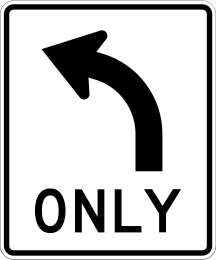
Question 2You are in a lane marked by a lane use control sign with a curved arrow. You must:
Show answer
A: Turn in the direction of the arrow. Lane use control signs are posted where turns are required; traffic in the lane must turn in the direction of the arrow. Virginia Driver's Manual (DMV 39): Regulatory signs: Lane Use Control, page 9.
-
Question 3What is true about light rail trains such as The Tide in Norfolk?
Show answer
A: Expect trains on any track at any time, and never drive around lowered crossing gates. Light rail shares the road with traffic; expect trains at any time, never drive around lowered gates, and never stop on the tracks. Virginia Driver's Manual (DMV 39): Sharing the Road: Light Rail, page 23.
-
Question 4About what share of all Virginia traffic crashes does driver distraction account for each year?
Show answer
B: About 17 percent. The manual states driver distraction accounts for roughly 17 percent of all traffic crashes in Virginia annually. Virginia Driver's Manual (DMV 39): Distracted Driving, page 26.
-
Question 5Is an international driver's license a valid license to drive?
Show answer
D: No; it is only a translation of your existing valid license. An international driver's license is not a valid license; it is a translation of your existing license, issued by AAA. Virginia Driver's Manual (DMV 39): International Driver's License, page 34.
-
Question 6At a yellow light, you are already in the intersection. What should you do?
Show answer
D: Go through cautiously. If you are already in the intersection when the light turns yellow, continue through it cautiously. Virginia Driver's Manual (DMV 39): Traffic Signals: Yellow light or arrow, page 7.
-
Question 7A High Occupancy Vehicle (HOV) sign indicates a lane reserved for:
Show answer
B: Buses and vehicles carrying a driver plus the number of passengers shown on the sign. HOV signs mark lanes reserved for buses and vehicles with a driver and one or more passengers as specified on the sign. Virginia Driver's Manual (DMV 39): Regulatory signs: High Occupancy Vehicle, page 9.
-
Question 8Low speed vehicles may be operated on public roads with speed limits of:
Show answer
B: 35 mph or less. Low speed vehicles may be used on public roads with speed limits of 35 mph or less. Virginia Driver's Manual (DMV 39): Low Speed Vehicles, page 23.
-
Question 9When should you set your mirrors, seat and other controls?
Show answer
D: As soon as you get in the car and before you begin driving. Set or adjust controls as soon as you get in the car and before you begin driving. Virginia Driver's Manual (DMV 39): Distracted Driving, page 26.
-
Question 10After moving to a new address, how soon must you notify Virginia DMV?
Show answer
C: Within 30 days. If you move, you must notify DMV within 30 days. Virginia Driver's Manual (DMV 39): Address Changes, page 35.
-
Question 11An 'X' with the letters 'RR' painted on the pavement means:
Show answer
D: You are approaching a railroad crossing. Pavement markings with an X and RR may be painted at the approach to some railroad crossings. Virginia Driver's Manual (DMV 39): Railroad crossings: pavement markings, page 12.
-
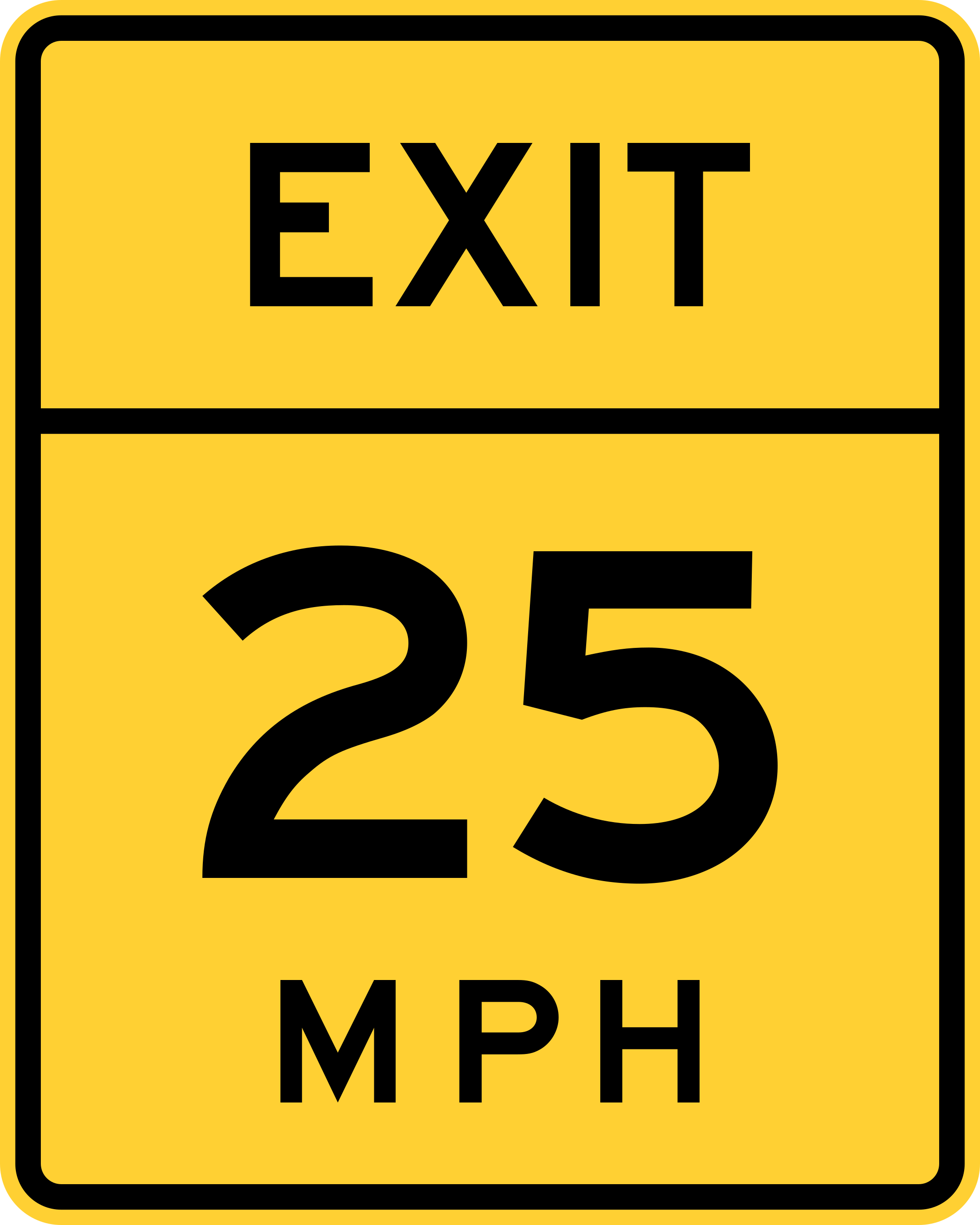
Question 12A yellow advisory speed plate on a highway exit ramp shows:
Show answer
C: The maximum safe speed for the exit. The advisory speed sign indicates the maximum safe speed for a highway exit. Virginia Driver's Manual (DMV 39): Warning signs: Advisory Speed, page 10.
-
Question 13Which statement about low speed vehicles in Virginia is correct?
Show answer
D: They have a maximum speed of 21 to 25 mph and need registration and insurance like passenger vehicles. Low speed vehicles have top speeds of 21 to 25 mph, must meet passenger vehicle registration and insurance requirements, and golf carts are not low speed vehicles. Virginia Driver's Manual (DMV 39): Low Speed Vehicles, page 23.
-
Question 14Which is a warning sign of drowsy driving?
Show answer
D: Hitting rumble strips or drifting out of your lane. Signs include yawning, nodding, heavy eyelids, not remembering the last few miles, missing signs or exits, drifting and hitting rumble strips. Virginia Driver's Manual (DMV 39): Drowsy Driving, page 26.
-
Question 15A new Virginia resident who drives must get a Virginia driver's license within:
Show answer
D: 60 days. New residents must obtain a Virginia driver's license within 60 days of moving here. Virginia Driver's Manual (DMV 39): New to Virginia, page 35.
-
Question 16Red reflectors on the pavement facing you mean:
Show answer
D: You are driving in the wrong direction or into an area not to be used. Red reflectors mark areas not to be entered and are positioned so only traffic flowing the wrong way sees them. Virginia Driver's Manual (DMV 39): Pavement Markings, page 13.
-
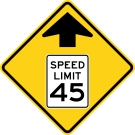
Question 17A 'Reduced Speed Limit Ahead' sign means:
Show answer
C: Prepare to reduce your speed; the limit changes ahead. This warning sign tells you to prepare to reduce speed because the speed limit is changing ahead. Virginia Driver's Manual (DMV 39): Warning signs: Reduced Speed Limit Ahead, page 10.
-
Question 18What are 'No-Zones'?
Show answer
D: Danger areas around trucks, buses and RVs, including blind spots where your car disappears from the driver's view. No-Zones are danger areas on the sides, front and rear of large vehicles where crashes are more likely and your car may be invisible to the driver. Virginia Driver's Manual (DMV 39): Trucks, Tractor-Trailers, Buses and RVs, page 23.
-
Question 19On long drives, how often should you stop for rest?
Show answer
A: At least every two hours. Limit long-distance driving and stop at least every two hours for rest. Virginia Driver's Manual (DMV 39): Drowsy Driving, page 26.
-
Question 20How soon after moving to Virginia must you title and register your vehicle?
Show answer
C: Within 30 days. Title and register your vehicle and get Virginia plates within 30 days of moving to Virginia. Virginia Driver's Manual (DMV 39): Titles, Registrations, License Plates, Decals, page 35.
-
Question 21Yellow center lines separate:
Show answer
B: Traffic flowing in opposite directions. Yellow center lines mean two-way traffic flowing in opposite directions. Virginia Driver's Manual (DMV 39): Pavement Markings, page 13.
-
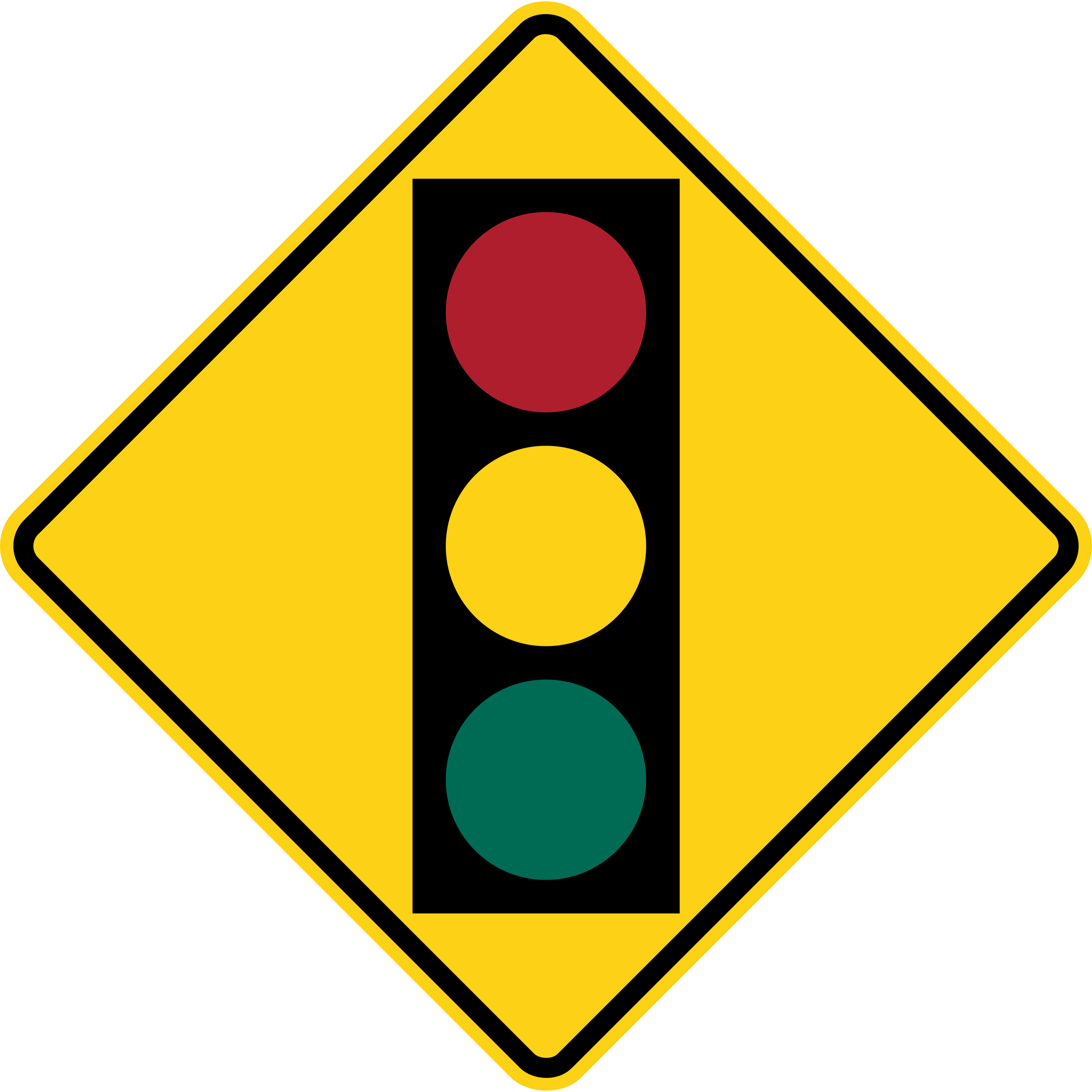
Question 22A 'Signal Ahead' warning sign means:
Show answer
A: A traffic signal is ahead; slow down and be ready to stop. Signal Ahead means traffic signals are ahead; slow down and be ready to stop. Virginia Driver's Manual (DMV 39): Warning signs: Signal Ahead, page 10.
-
Question 23If you can't see a truck driver's face in the truck's side mirror, then:
Show answer
A: The driver can't see you. If you can't see the driver's face in the side mirror, the driver can't see you. Virginia Driver's Manual (DMV 39): Trucks, Tractor-Trailers, Buses and RVs, page 23.
-
Question 24According to the Virginia manual, what reliably prevents drowsy driving?
Show answer
C: Getting enough quality sleep or taking a nap at a safe place. Windows, gum, radio and caffeine are not reliable. Get plenty of sleep, and if drowsy, stop and nap; 10 to 20 minutes helps. Virginia Driver's Manual (DMV 39): Drowsy Driving, page 26.
-
Question 25How often must a Virginia-registered vehicle pass a safety inspection?
Show answer
C: Every year. Your vehicle must pass an annual safety inspection and display a valid inspection sticker. Virginia Driver's Manual (DMV 39): Safety Inspections, page 35.
Answer every question to see your score.
More Virginia practice tests
- Practice test 125 questions
- Practice test 225 questions
- Practice test 325 questions
- Practice test 425 questions
- Practice test 525 questions
- Practice test 625 questions
- Practice test 725 questions
- Practice test 825 questions
- Practice test 925 questions
- Practice test 1025 questions
- Practice test 1225 questions
- Practice test 1325 questions
- Practice test 1425 questions
- Exam simulatorThe real format, 40 questions
How to use these tests
Read each explanation, even when you get the question right: it tells you the rule and the handbook section, so you can look it up. Your answers are saved in this browser only, so the weak spots mode can give you more questions on the topics you miss. When you're scoring well, take the exam simulator: it uses the same number of questions and passing score as the real test.
Our own questions, written from the Virginia Driver's Manual (DMV 39) and checked against it. Not affiliated with the Virginia Department of Motor Vehicles. Found a mistake? Tell us.