Washington DC DMV permit practice test 5
25 questions written from the DC DMV Automobile Driver Manual, covering safe and defensive driving, right of way, speed limits, hazards, weather and night driving, following and passing and more. Pick an answer to see straight away whether you're right and why.
-
Question 1When may you use your horn in DC?
Show answer
D: Only to warn a pedestrian, cyclist or driver in an emergency. Sound your horn only to warn others in an emergency; never in a posted Quiet Zone unless an emergency, and not just to announce your approach. DC DMV Automobile Driver Manual: Safe Driving Practices: Use of the Horn, page 23.
-
Question 2A vehicle is stopped at a crosswalk to let a pedestrian cross. You approach from behind. What must you do?
Show answer
D: Do not overtake and pass the stopped vehicle. When a vehicle is stopped at a crosswalk for a pedestrian, approaching drivers must not overtake and pass it. DC DMV Automobile Driver Manual: Right-of-Way: Crossing at Crosswalks, page 35.
-
Question 3Hitting a solid object at 60 mph is like what?
Show answer
A: Falling off a 10-story building. Hitting a solid stationary object at 60 mph equals falling off a 10-story building. DC DMV Automobile Driver Manual: Traffic Rules: Speed Restrictions, page 46.
-
Question 4At night with no road edge line, what can you use as a guide?
Show answer
B: The center line. Use the road edge line as a guide; if there is none, use the center line. DC DMV Automobile Driver Manual: Special Driving Situations: Night Driving, page 27.
-
Question 5What does the end of a 'no-passing zone' mean?
Show answer
B: It is lawful to pass only when safe. The end of a no-passing zone does not mean it's safe to pass, only that it is lawful to pass when safe. DC DMV Automobile Driver Manual: Driving Rules: When You Must Not Pass on Two Lane Highways, page 41.
-
Question 6Over a reversible lane, what does a steady yellow X mean in DC?
Show answer
B: Move out of the lane as soon as safely possible. A steady yellow X means move out of the lane as soon as safely possible; never drive under a red X. DC DMV Automobile Driver Manual: Signals, Signs and Markings: Lane Use Signals, page 51.
-
Question 7Your car won't run on a limited-access highway. Where may you stop and what should you do?
Show answer
D: Stop on the shoulder, raise the hood or tie a white cloth to the left door handle, and stay with the vehicle. Stopping in the traveled lanes is prohibited; use the shoulder only in emergencies, signal with the hood or a white cloth, and stay with your vehicle—never walk along the highway. DC DMV Automobile Driver Manual: Interstate and Other Limited Access Highways: Stopping, page 31.
-
Question 8You plan to turn just past an intersection. When should you signal?
Show answer
B: Once you are in the intersection. When turning just past an intersection, signal once you are in the intersection. DC DMV Automobile Driver Manual: Driving Rules: Signaling, page 41.
-
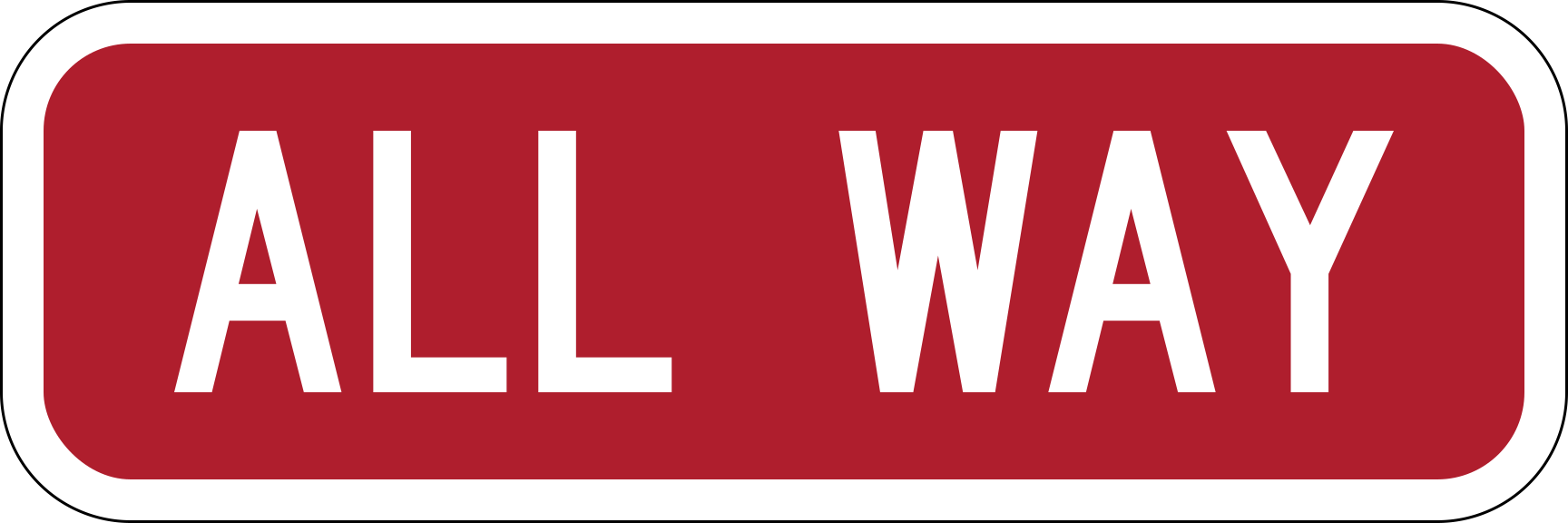
Question 9At a 4-way stop, who goes first?
Show answer
A: The first driver to stop. At a 4-way stop, traffic from all directions stops, and the first driver to stop is the first to go. DC DMV Automobile Driver Manual: Regulatory Signs: 4-Way Stop, page 53.
-
Question 10At 60 mph, about how far does a car need to stop compared with a truck, according to the DC manual?
Show answer
D: Car about 366 ft, truck more than 400 ft. A car at 60 mph can stop in about 366 feet; a truck at the same speed takes more than 400 feet. DC DMV Automobile Driver Manual: Sharing the Road With Large Trucks: Truck Stopping Distance, page 37.
-
Question 11You park on a hill with no curb in DC. Which way should your front wheels point?
Show answer
B: Toward the edge of the road (where the curb would be). With no curb, uphill or downhill, turn the front wheels toward the edge of the road. DC DMV Automobile Driver Manual: Parking Rules: Parking on a Hill, page 43.
-
Question 12Which substances count toward 'impaired driving' in the DC manual?
Show answer
D: Alcohol, legal or illicit drugs, and sleepiness. Operating a vehicle while affected by alcohol, legal or illicit drugs, and sleepiness are all part of impaired driving. DC DMV Automobile Driver Manual: Introduction: Impaired Driving, page 5.
-
Question 13How long must a DC GRAD driver be free of pointable moving violations before getting a full license?
Show answer
B: 12 consecutive months. After holding a provisional license at least 6 months, you must have no pointable moving violations for 12 consecutive months. DC DMV Automobile Driver Manual: Types of Driver Licenses & Permits: Full Driver License, page 14.
-
Question 14Your accelerator pedal sticks. What is the first step listed in the DC manual?
Show answer
D: Slap the accelerator pedal hard with your foot. Slap the accelerator pedal hard, shift to neutral, apply the brakes, then pull off and stop. DC DMV Automobile Driver Manual: Emergencies: Accelerator Pedal Sticks, page 32.
-
Question 15When should you use hand signals in addition to your turn signals?
Show answer
C: When the sun is shining brightly or vehicles behind you block your turn signal. Use hand signals in addition to turn signals when bright sun or vehicles immediately behind you obscure your signal. DC DMV Automobile Driver Manual: Safe Driving Practices: Hand Signals under Special Conditions, page 23.
-
Question 16A pedestrian is crossing outside a crosswalk in DC. What must you do?
Show answer
A: Yield to the pedestrian. Even though a pedestrian outside a crosswalk doesn't have the right-of-way, drivers must always yield to them. DC DMV Automobile Driver Manual: Right-of-Way: Crossing at Locations Other Than Crosswalks, page 35.
-
Question 17Up to the limit, what speed is safest according to the DC manual?
Show answer
B: The average speed at which traffic is moving. Up to the limit, it is safest to drive at the average traffic speed; departing from it, faster or slower, increases crash risk. DC DMV Automobile Driver Manual: Traffic Rules: Speed Restrictions, page 46.
-
Question 18What does the most to improve traction and stopping on ice and snow?
Show answer
B: Chains. Chains do the most to improve traction and stopping on ice and snow, but no tire makes normal speeds safe on ice. DC DMV Automobile Driver Manual: Special Driving Situations: Winter Driving, page 28.
-
Question 19What do blue pavement markings indicate?
Show answer
D: Parking spaces for persons with disabilities. Blue markings show parking spaces for persons with disabilities; red reflectors show areas not to be entered. DC DMV Automobile Driver Manual: Pavement Markings, page 57.
-
Question 20How far ahead should you signal before changing lanes in DC?
Show answer
D: No less than 300 feet. You should signal no less than 300 feet before changing lanes, and sooner is preferable. DC DMV Automobile Driver Manual: Driving Rules: Driving on Roads With Marked Lanes, page 42.
-
Question 21Where are U-turns prohibited in DC?
Show answer
C: At intersections controlled by traffic lights, on adjacent crosswalks, or on a curve/hill without 500 feet of visibility. No U-turns on a curve or hill where you can't be seen 500 feet away, at signal-controlled intersections, or on adjacent crosswalks. DC DMV Automobile Driver Manual: Other Traffic Laws: U-Turn, page 47.
-
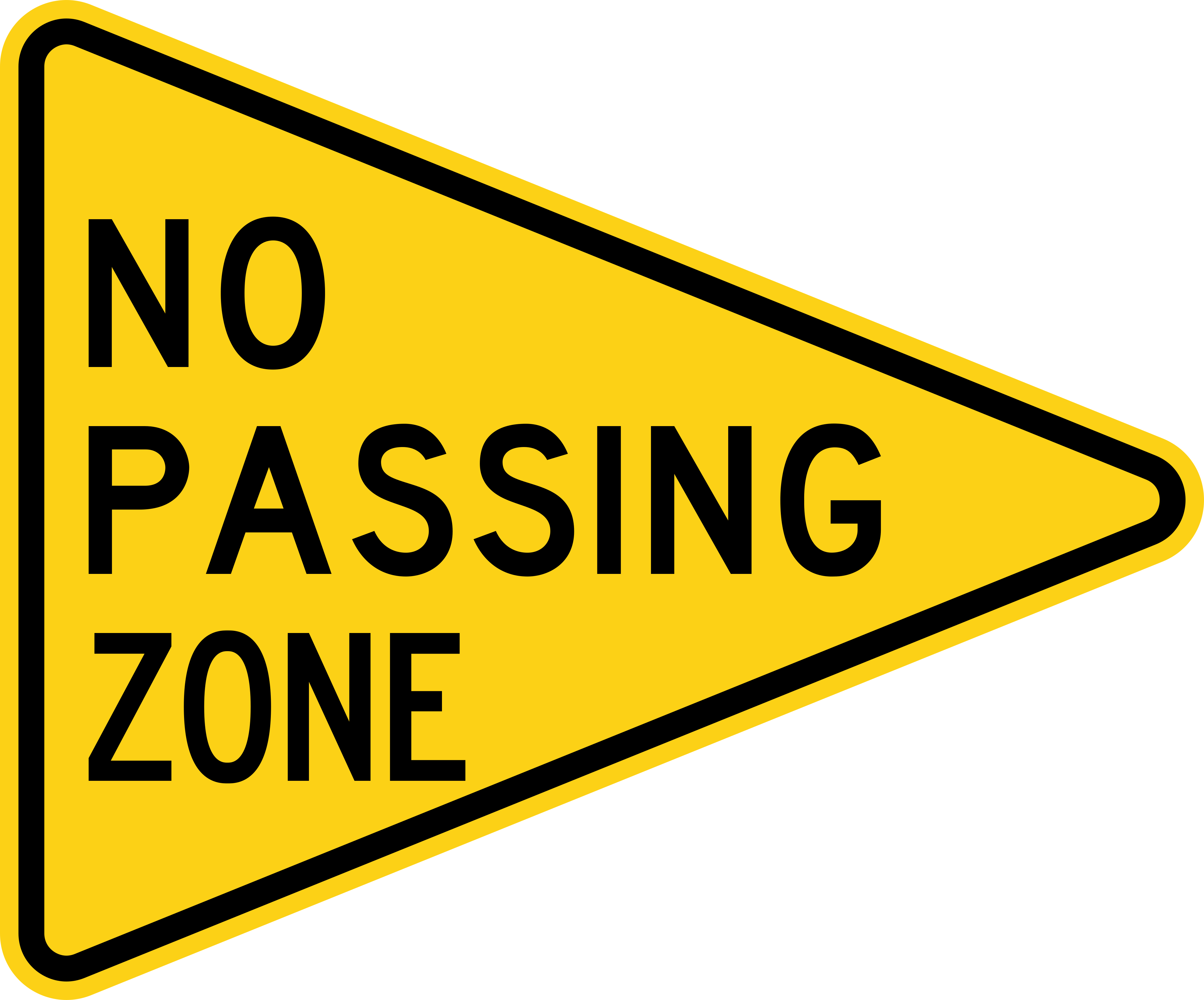
Question 22Where is the pennant-shaped No Passing sign located?
Show answer
C: On the left side of the road, pointing to the start of the no-passing zone. The pennant supplements the DO NOT PASS sign; it's on the left side and points to the beginning of the no-passing zone. DC DMV Automobile Driver Manual: Warning Signs: No Passing Pennant, page 54.
-
Question 23How much more time and room do truck and bus drivers need to stop than cars?
Show answer
B: Nearly twice. Truck and bus drivers need nearly twice the time and room to stop as cars, so don't cut in too soon after passing. DC DMV Automobile Driver Manual: Sharing the Road With Large Trucks: Front No-Zones, page 37.
-
Question 24When parked on a highway shoulder after dark in DC, what must you turn on?
Show answer
D: Hazard lights or parking lights. From sunset to sunrise, or when you can't see 1,000 feet, turn on hazard or parking lights when parked on the shoulder. DC DMV Automobile Driver Manual: Parking Rules: Parking on Highways, page 44.
-
Question 25During what hours may a DC learner permit holder drive (with a supervising driver 21+)?
Show answer
D: Every day, 6:00 a.m. to 9:00 p.m.. Learner permit holders may drive every day from 6:00 a.m. to 9:00 p.m., accompanied by a driver 21 or older. DC DMV Automobile Driver Manual: Gradual Rearing of Adult Drivers (GRAD) Program: GRAD Permissible Driving Hours, page 14.
Answer every question to see your score.
More Washington DC practice tests
How to use these tests
Read each explanation, even when you get the question right: it tells you the rule and the handbook section, so you can look it up. Your answers are saved in this browser only, so the weak spots mode can give you more questions on the topics you miss. When you're scoring well, take the exam simulator: it uses 25 questions at the DMV's pass mark, since it doesn't publish the number of questions.
Our own questions, written from the DC DMV Automobile Driver Manual and checked against it. Not affiliated with the District of Columbia Department of Motor Vehicles. Found a mistake? Tell us.