Washington DC DMV permit practice test 8
25 questions written from the DC DMV Automobile Driver Manual, covering hazards, weather and night driving, signals and pavement markings, road signs, sharing the road, licensing laws and penalties and more. Pick an answer to see straight away whether you're right and why.
-
Question 1Which lights should you use in fog?
Show answer
B: Low beams or fog lights. Use low beams or fog lights; high beams reflect back into your eyes. DC DMV Automobile Driver Manual: Special Driving Situations: Driving in Fog, page 29.
-
Question 2What is a yield line?
Show answer
D: A line of triangles across the road showing where to yield or stop if necessary. A yield line is a row of triangles across the roadway used with a yield sign, often at roundabout entrances. DC DMV Automobile Driver Manual: Pavement Markings: Yield Line, page 58.
-
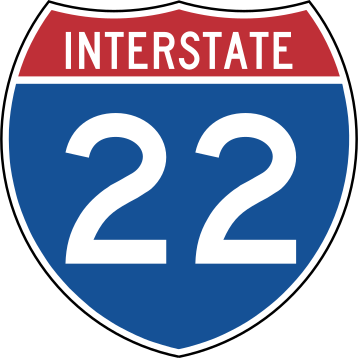
Question 3What does the Interstate route marker look like?
Show answer
C: A shield, red on top with INTERSTATE and blue on the bottom with the number. Interstate markers are shields with INTERSTATE in white on red at the top and the route number in white on blue below. DC DMV Automobile Driver Manual: Interstate Route Marker, page 56.
-
Question 4Is it legal in DC to pass a motorcycle within the same lane?
Show answer
D: No, it is against the law. A motorcycle is entitled to the entire lane; it is against the law to overtake or pass a motorcycle within the same lane. DC DMV Automobile Driver Manual: Sharing the Road With Motorcyclists, page 38.
-
Question 5With a DC full license with conditions (under 18), how many passengers under 21 may you carry (not counting your siblings)?
Show answer
D: No more than two. Drivers under 18 with a full license with conditions may carry no more than two passengers under 21. Siblings don't count toward that limit. DC DMV Automobile Driver Manual: Gradual Rearing of Adult Drivers (GRAD) Program: GRAD Program Restrictions, page 15.
-
Question 6A tire blows out. What should you avoid?
Show answer
D: Applying the brakes. Do not apply the brakes; grip the wheel tightly, signal right, decelerate and pull onto the shoulder. DC DMV Automobile Driver Manual: Emergencies: Blowouts, page 34.
-
Question 7Which is a danger sign of a drowsy driver?
Show answer
C: Not remembering the last few miles or drifting out of your lane. Warning signs include eyes closing, head nodding, constant yawning, wandering thoughts, not remembering the last miles, missing exits and drifting from your lane. DC DMV Automobile Driver Manual: Distracted Driver Syndrome: Danger Signs of Drowsy Drivers, page 26.
-
Question 8If a side street meets a road at a HAWK signal, how is the side street controlled?
Show answer
A: By a stop sign. If a side street is present at a HAWK signal, it continues to be controlled by a stop sign. DC DMV Automobile Driver Manual: Introduction: HAWK Pedestrian Signal, page 7.
-
Question 9Fog can reduce visibility to how far or less?
Show answer
D: ¼ mile. Fog can reduce visibility to ¼ mile or less. DC DMV Automobile Driver Manual: Special Driving Situations: Driving in Fog, page 29.
-
Question 10One solid and one broken yellow line: from which side may you pass?
Show answer
D: From the side of the broken line. Passing is allowed from the broken-line side, not the solid-line side (except to pass pedestrians or cyclists when clear). DC DMV Automobile Driver Manual: Pavement Markings: One Solid, One Broken Yellow Lines, page 57.
-
Question 11What does a 'Divided Highway Ends' sign mean?

Show answer
A: The median ends and traffic goes both directions; keep right. The highway ahead no longer has a median; traffic goes in both directions, so keep right. DC DMV Automobile Driver Manual: Warning Signs: Divided Highway Ends, page 54.
-
Question 12How much clearance does the DC manual say to give when passing a bicyclist?
Show answer
A: About three feet. Allow adequate clearance—usually about three feet—and return when you can clearly see the bicyclist in your mirror. DC DMV Automobile Driver Manual: Sharing the Road with Bicycles: Passing a Bicyclist, page 38.
-
Question 13What happens to a DC learner permit if 8 or more points are assessed or GRAD restrictions are violated?
Show answer
B: A 90-day suspension plus a reinstatement fee. During the learner permit stage, 8+ points or a GRAD restriction violation brings a 90-day permit suspension and a reinstatement fee. DC DMV Automobile Driver Manual: Gradual Rearing of Adult Drivers (GRAD) Program: GRAD Program Enforcements, page 16.
-
Question 14What minimum tread depth does the DC manual list for every major groove on front tires?
Show answer
C: 4/32 inch. You need at least 4/32-inch tread in every major groove on front wheels and 2/32-inch on other wheels. DC DMV Automobile Driver Manual: Emergencies: Tires, page 34.
-
Question 15What are DC's rules on cell phone use while driving?
Show answer
D: You must be hands-free; texting while driving is never allowed. In DC you must be hands-free while driving with a cell phone, and texting while driving is never allowed. DC DMV Automobile Driver Manual: Distracted Driver Syndrome: Cellular Phones, page 26.
-
Question 16Emerging from an alley or driveway across a sidewalk in DC, what must you do?
Show answer
B: Stop and yield to pedestrians, bicyclists and vehicles before entering the sidewalk. When emerging from an alley, driveway or parking structure across a sidewalk, stop and yield to pedestrians, bicyclists and vehicles before entering the sidewalk. DC DMV Automobile Driver Manual: Parking Rules: Stopping, page 44.
-
Question 17What are rumble strips meant to do?
Show answer
D: Alert you with tire noise to hazards such as dangerous intersections or drifting near the road edge. Rumble strips are corrugated sections that warn of hazards like dangerous intersections or driving too close to the edge. DC DMV Automobile Driver Manual: Emergencies: Rumble Strips, page 34.
-
Question 18What should you do when you see a Steep Hill Ahead sign?

Show answer
C: Check your brakes. A steep grade is ahead; check your brakes. DC DMV Automobile Driver Manual: Warning Signs: Steep Hill Ahead, page 55.
-
Question 19How fast can an experienced cyclist travel, according to the DC manual?
Show answer
D: 20-30 mph. Experienced cyclists commonly reach 20-30 mph and may be closer than you think. DC DMV Automobile Driver Manual: Sharing the Road with Bicycles: Passing a Bicyclist, page 38.
-
Question 20At what point total is any DC driver's license automatically suspended?
Show answer
C: 10 points. Accumulating 10 or 11 points brings a 90-day suspension; 12 or more points means revocation for at least six months. DC DMV Automobile Driver Manual: Important Things to Know, page 19.
-
Question 21How should you start a flooded engine?
Show answer
D: Hold the gas pedal to the floor and turn the key for short intervals (10-15 seconds). Press the gas pedal to the floor and hold it, turn the key for 10-15 second intervals, release the gas when it starts; don't pump. DC DMV Automobile Driver Manual: Emergencies: Flooded Engine, page 34.
-
Question 22A passenger is distracting you while driving. What does the DC manual suggest?
Show answer
D: Pull over where it is safe and legal, and don't start again until it's under control. If a passenger distracts you, pull over where safe and legal, and don't start driving until the situation is under control. DC DMV Automobile Driver Manual: Distracted Driver Syndrome: The Solution to Distractions, page 26.
-
Question 23When must you turn on your headlights in DC?
Show answer
D: From one-half hour after sunset to one-half hour before sunrise, when you can't see 500 feet ahead, in tunnels, and when wipers are on. Headlights are required a half hour after sunset to a half hour before sunrise, when you can't see persons or vehicles 500 feet ahead, in tunnels, and whenever wipers are on. DC DMV Automobile Driver Manual: Driving Rules: Using Your Headlights, page 42.
-
Question 24As you approach a bicyclist in DC, what should you avoid?
Show answer
D: Using your horn. Slow down and avoid using your horn; loud noises can startle the rider and cause a crash. DC DMV Automobile Driver Manual: Sharing the Road with Bicycles: Following a Bicyclist, page 38.
-
Question 25What happens if a DC driver accumulates 12 or more points?
Show answer
D: License revoked; not eligible for reinstatement for six months. 12 or more points means revocation, with no reinstatement for six months. DC DMV Automobile Driver Manual: Important Things to Know, page 19.
Answer every question to see your score.
More Washington DC practice tests
How to use these tests
Read each explanation, even when you get the question right: it tells you the rule and the handbook section, so you can look it up. Your answers are saved in this browser only, so the weak spots mode can give you more questions on the topics you miss. When you're scoring well, take the exam simulator: it uses 25 questions at the DMV's pass mark, since it doesn't publish the number of questions.
Our own questions, written from the DC DMV Automobile Driver Manual and checked against it. Not affiliated with the District of Columbia Department of Motor Vehicles. Found a mistake? Tell us.