Washington DC DMV permit practice test 6
25 questions written from the DC DMV Automobile Driver Manual, covering emergencies, safe and defensive driving, right of way, speed limits, hazards, weather and night driving and more. Pick an answer to see straight away whether you're right and why.
-
Question 1Why should you never turn the ignition to 'lock' while the vehicle is moving?
Show answer
A: The steering will lock and you'll lose control. Turning the ignition to lock while moving locks the steering, causing loss of control. DC DMV Automobile Driver Manual: Emergencies: Loss of Control – Steering and Locking Device, page 32.
-
Question 2Where should you put loose objects in your car?
Show answer
B: In the trunk or on the floor (but not where they interfere with the pedals). Loose objects can become projectiles; put them in the trunk or on the floor, keeping them clear of the pedals. DC DMV Automobile Driver Manual: Safe Driving Practices: Loose Objects, page 23.
-
Question 3When must a DC driver come to a complete stop for a pedestrian in a crosswalk?
Show answer
D: When the pedestrian is on your half of the roadway or approaching closely from the other half. Stop completely when the pedestrian is on your half of the roadway or approaching so closely from the other half as to be in danger. DC DMV Automobile Driver Manual: Right-of-Way: Crossing at Crosswalks, page 35.
-
Question 4Does an advisory (yellow or orange) speed sign have the force of law?
Show answer
C: No, but if you exceed it and crash, you may be ticketed under the general speed restriction. Advisory speed signs don't have the force of law, but exceeding one and crashing may be treated as violating the general speed restriction. DC DMV Automobile Driver Manual: Traffic Rules: Speed Signs, page 46.
-
Question 5When a snow emergency is declared in DC, what is required on designated snow emergency routes?
Show answer
D: Chains, snow tires or radial tires. Chains, snow tires or radial tires must be used on designated snow emergency routes when a snow emergency is declared. DC DMV Automobile Driver Manual: Special Driving Situations: Winter Driving, page 28.
-
Question 6When may you cross double solid yellow lines in DC?
Show answer
B: Only to make a left turn or to pass pedestrians, bicyclists, scooter or skateboard riders when the opposite lane is clear. Double solid yellow lines prohibit passing; you may cross only to turn left or to pass pedestrians, bicyclists, scooter or skateboard riders when safe. DC DMV Automobile Driver Manual: Pavement Markings: Double Solid Yellow Lines, page 57.
-
Question 7On a two-lane or narrow road, how much of the road must you give an approaching vehicle?
Show answer
A: One-half of the paved portion. On a two-lane or narrow highway, you must grant the approaching vehicle one-half of the paved or improved portion of the road. DC DMV Automobile Driver Manual: Driving Rules: Keep to the Right, page 41.
-
Question 8What does 'Don't Block the Box' mean?
Show answer
C: Don't enter an intersection if traffic beyond it is blocked; wait until you can clear it. If the roadway beyond an intersection is blocked, stop and proceed only once it clears—don't block the box or the crosswalk. DC DMV Automobile Driver Manual: Parking Rules: Stopping, page 44.
-
Question 9What does an Intersection Merge (lanes merge) sign mean?

Show answer
C: Two lanes in the same direction become one, and drivers in both lanes are responsible for merging safely. Two lanes moving the same direction are about to become one; drivers in both lanes share responsibility for merging safely. DC DMV Automobile Driver Manual: Warning Signs: Intersection Merge, page 54.
-
Question 10On which side should you always pass a tractor-trailer?
Show answer
B: The left. Always pass a tractor-trailer completely and always on the left side, without lingering alongside. DC DMV Automobile Driver Manual: Sharing the Road With Large Trucks: Common Mistakes to Avoid, page 37.
-
Question 11Is double parking allowed in DC?
Show answer
D: No, it is prohibited because it blocks traffic and causes crashes. Double parking is prohibited because it blocks traffic and causes crashes. DC DMV Automobile Driver Manual: Parking Rules: Parallel Parking, page 43.
-
Question 12From September to June, what are a DC provisional driver's permitted hours Monday through Thursday?
Show answer
B: 6:01 a.m. to 10:59 p.m.. From September to June, provisional drivers may drive Monday-Thursday from 6:01 a.m. to 10:59 p.m. DC law also ends Sunday driving at 10:59 p.m. Friday and Saturday driving may run until 11:59 p.m. DC DMV Automobile Driver Manual: Gradual Rearing of Adult Drivers (GRAD) Program: GRAD Permissible Driving Hours, page 14.
-
Question 13Your vehicle catches fire. Where should you pull over?
Show answer
D: In an open area away from buildings, trees, brush and other vehicles. Get off the road and park in an open area away from anything that might catch fire—do not pull into a service station. DC DMV Automobile Driver Manual: Emergencies: Fire in Vehicle, page 33.
-
Question 14What does the DC manual say about pets in the vehicle?
Show answer
C: Keep them away from you, never on your lap, and never leave them unattended. Keep pets away from you; don't let them sit on your lap or use the driver's window, and never leave them unattended. DC DMV Automobile Driver Manual: Safe Driving Practices: Pets, page 23.
-
Question 15At intersections with pedestrian signals, which signals do drivers obey?
Show answer
A: The normal traffic signals. Drivers must obey the normal traffic signals; pedestrians obey the WALK and DON'T WALK signals. DC DMV Automobile Driver Manual: Right-of-Way: Pedestrian Signals, page 35.
-
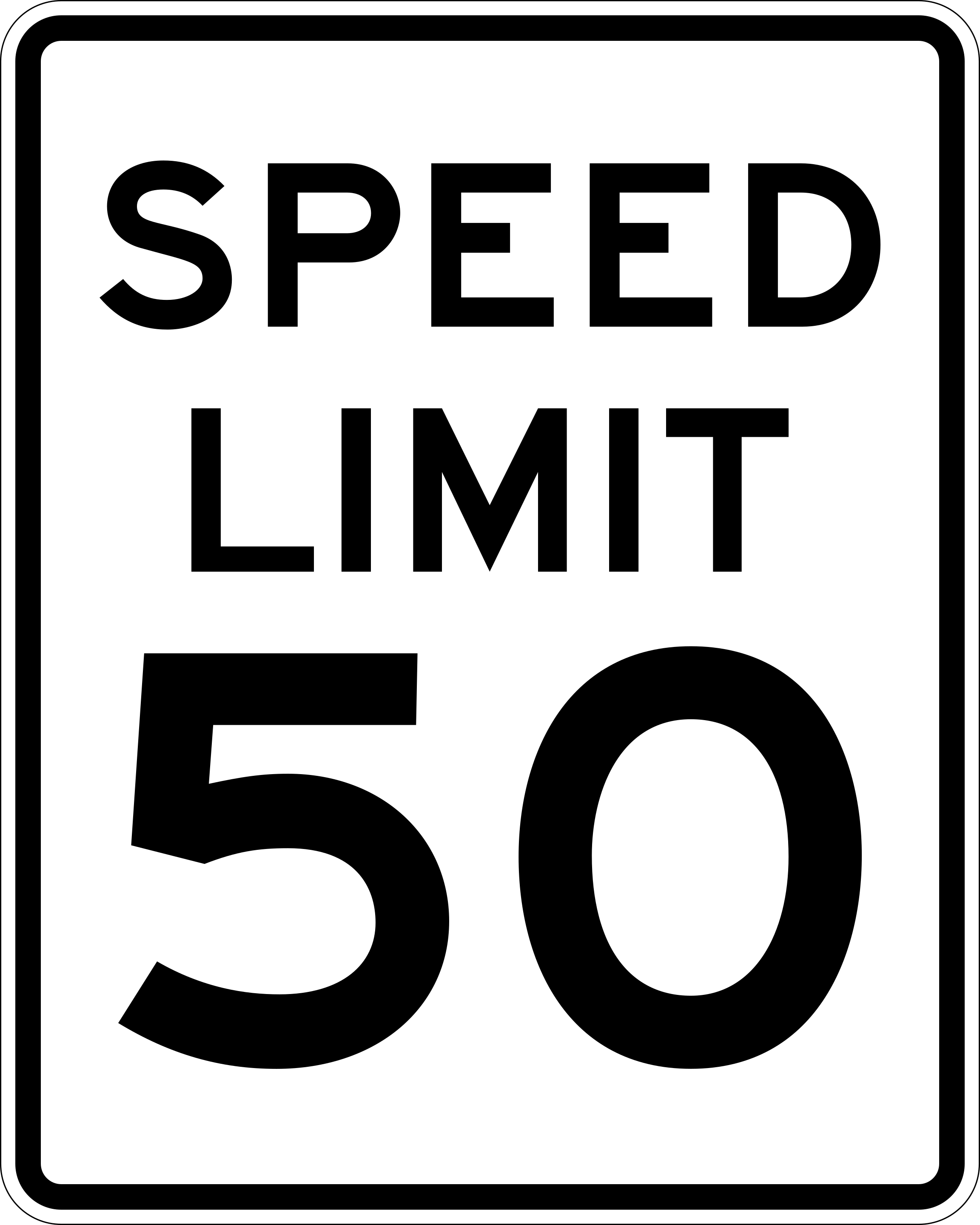
Question 16What do DC speed limit signs look like?
Show answer
B: Black letters and numerals on a white rectangle. Speed limit signs have black letters and numerals on a white rectangular background and are legal limits. DC DMV Automobile Driver Manual: Traffic Rules: Speed Signs, page 46.
-
Question 17Which road surfaces freeze first in winter?
Show answer
A: Ramps and bridges. Ramps and bridges freeze first before highways and roads; plowed roads may also refreeze at night. DC DMV Automobile Driver Manual: Special Driving Situations: Winter Driving, page 28.
-
Question 18What does a double solid white line separating an HOV lane mean?
Show answer
B: You may not cross; enter the special lane only where signs and markings allow. Double solid white lines separate same-direction lanes like HOV lanes; you may not cross them. DC DMV Automobile Driver Manual: Pavement Markings: Double Solid White Line, page 58.
-
Question 19You see a vehicle stopped on the shoulder. What should you do?
Show answer
B: Slow down and move to the left part of your lane or the next lane if available. If you see a vehicle stopped on the shoulder, slow down and move to the left part of your lane or the next lane if available. DC DMV Automobile Driver Manual: Driving Rules: Driving on Roads With Marked Lanes, page 42.
-
Question 20A 'Right Lane Ends Ahead' sign is posted. What should drivers in the left lane do?

Show answer
A: Allow vehicles in the right lane to merge smoothly. Right-lane drivers must merge left when space opens; left-lane drivers should allow them to merge smoothly. DC DMV Automobile Driver Manual: Warning Signs: The Right Lane Ends Ahead, page 54.
-
Question 21Why do drivers misjudge approaching tractor-trailers at intersections?
Show answer
D: Their large size makes them seem slower than they really are. Because of its size, a tractor-trailer often appears to travel slower than it is, leading to intersection crashes. DC DMV Automobile Driver Manual: Sharing the Road With Large Trucks: Common Mistakes to Avoid, page 38.
-
Question 22How close to a railroad crossing may you park in DC (except briefly loading)?
Show answer
D: Not within 50 feet of the nearest rail. Don't park within 50 feet of the nearest rail of a railroad crossing, except temporarily while loading or unloading. DC DMV Automobile Driver Manual: Parking Rules: Stopping, Standing, Parking – Prohibited, page 45.
-
Question 23In July and August, what are a DC provisional driver's permitted hours?
Show answer
A: Every day 6:01 a.m. to 11:59 p.m.. In July and August provisional drivers may drive every day from 6:01 a.m. to 11:59 p.m. DC DMV Automobile Driver Manual: Gradual Rearing of Adult Drivers (GRAD) Program: GRAD Permissible Driving Hours, page 14.
-
Question 24When using a fire extinguisher on a vehicle fire, where should you aim?
Show answer
A: At the source or base of the fire, from upwind. Stay as far away as possible, aim at the base of the fire, and position yourself upwind. DC DMV Automobile Driver Manual: Emergencies: Fire in Vehicle, page 33.
-
Question 25At 55 mph, how far does your vehicle travel if you take your eyes off the road for three to four seconds?
Show answer
A: About the length of a football field. Taking your eyes off the road for three to four seconds at 55 mph means traveling the length of a football field. DC DMV Automobile Driver Manual: Distracted Driver Syndrome, page 25.
Answer every question to see your score.
More Washington DC practice tests
How to use these tests
Read each explanation, even when you get the question right: it tells you the rule and the handbook section, so you can look it up. Your answers are saved in this browser only, so the weak spots mode can give you more questions on the topics you miss. When you're scoring well, take the exam simulator: it uses 25 questions at the DMV's pass mark, since it doesn't publish the number of questions.
Our own questions, written from the DC DMV Automobile Driver Manual and checked against it. Not affiliated with the District of Columbia Department of Motor Vehicles. Found a mistake? Tell us.