Florida FLHSMV permit practice test
25 questions written from the Official Florida Driver License Handbook (Class E), covering road signs, signals and pavement markings, lanes, highways and freeways, right of way, turns and intersections and more. Pick an answer to see straight away whether you're right and why. The real Florida FLHSMV test has 50 questions and you need 40 right.
-
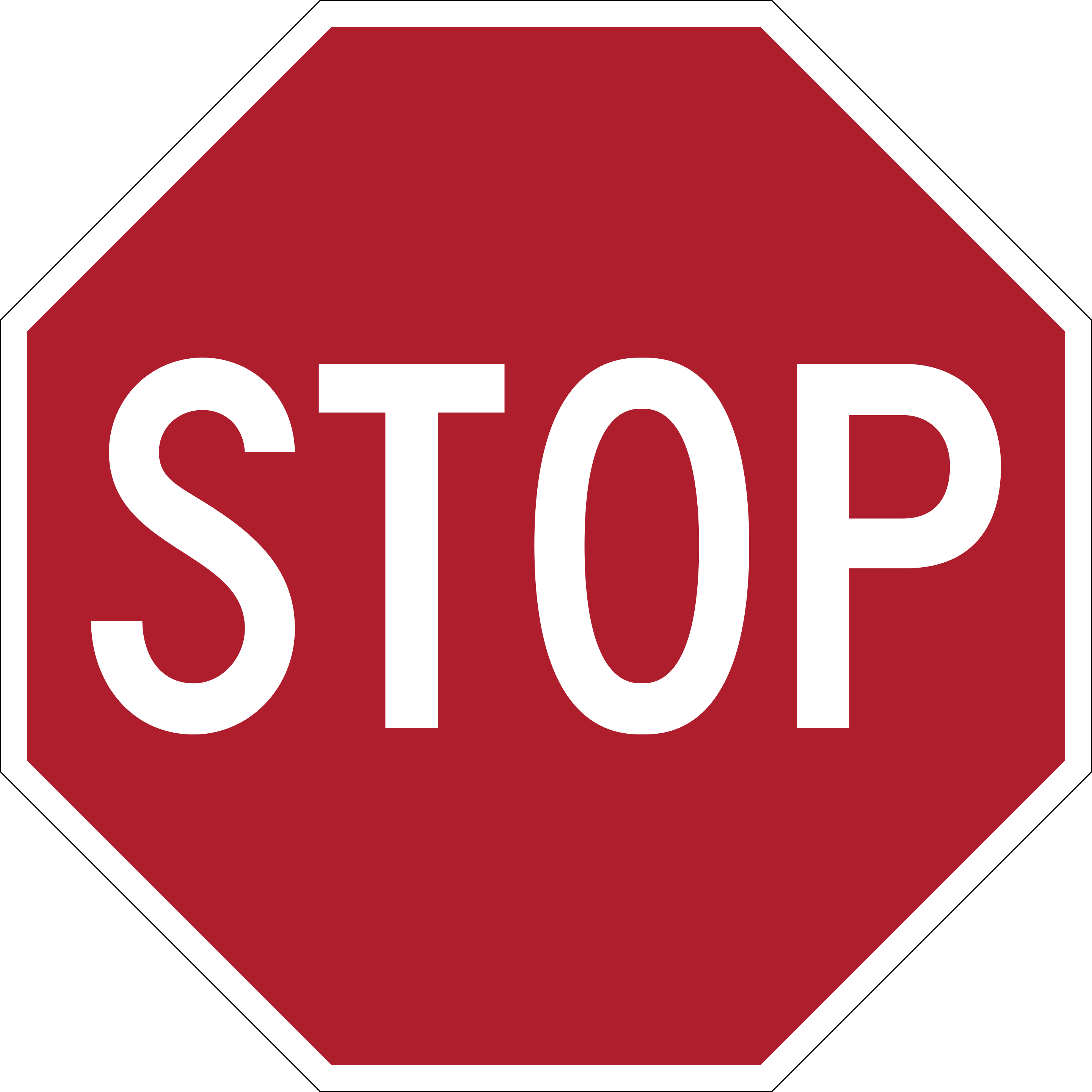
Question 1What must you do at a STOP sign when there is no stop line or crosswalk?
Show answer
A: Stop before the intersection at a point where you can see approaching traffic on the crossing road. With no stop line or crosswalk, you stop before the intersection at a point near the crossing road where you have a clear view of approaching traffic. Official Florida Driver License Handbook (Class E): Regulatory Signs: Stop Sign, page 55.
-
Question 2A single solid white line along the right side of the road marks:
Show answer
A: The right edge of the roadway. A single solid white edge line marks the right edge of the roadway. Official Florida Driver License Handbook (Class E): Pavement Markings: Edge Lines, page 51.
-
Question 3Where may vehicles enter and exit an HOV lane?
Show answer
A: Only at designated points. Vehicles may enter and exit HOV lanes only at designated points. Official Florida Driver License Handbook (Class E): HOV Lanes, page 77.
-
Question 4After a complete stop at a stop line, you must yield to:
Show answer
A: Traffic already in the intersection, pedestrians and bicyclists. After a complete stop, yield to traffic already in the intersection and to pedestrians and bicyclists; go only when the road is clear. Official Florida Driver License Handbook (Class E): Intersections, page 70.
-
Question 5Where do more crashes happen than any other place?
Show answer
A: At intersections. Crashes happen at intersections more than any other place, so use extra caution approaching them. Official Florida Driver License Handbook (Class E): Defensive Driving, page 83.
-
Question 6Unless otherwise posted, what is the speed limit in a Florida school zone?
Show answer
A: 20 mph. Florida's standard school zone speed limit is 20 mph. Official Florida Driver License Handbook (Class E): Florida Standard Speed Limits, page 76.
-
Question 7What minimum following distance does the Florida handbook recommend in favorable weather and traffic?
Show answer
A: Four seconds. Keep a minimum following distance of four seconds during favorable weather and traffic conditions, and increase it when conditions are unfavorable. Official Florida Driver License Handbook (Class E): Following Distances, page 69.
-
Question 8When parallel parking, your right-hand wheels must be within how many inches of the curb?
Show answer
A: 12 inches. Park parallel to the curb in the direction of traffic with right-hand wheels parallel to and within 12 inches of the curb. Official Florida Driver License Handbook (Class E): Parking, page 73.
-
Question 9How much clearance does Florida law require when passing a bicyclist?
Show answer
A: At least 3 feet. Florida law requires that you give bicyclists a minimum of three feet of clearance and use caution when passing them. Official Florida Driver License Handbook (Class E): Rules for Motorists (Bicyclists), page 89.
-
Question 10When must you turn on your headlights in Florida?
Show answer
A: Between sunset and sunrise, in low visibility, and whenever your windshield wipers are on. Florida law requires headlights from sunset to sunrise; you must also turn them on in low visibility and when you turn on your windshield wipers. Official Florida Driver License Handbook (Class E): Night Driving; Low Visibility; Rain, page 81.
-
Question 11Your vehicle has anti-lock brakes (ABS) and you must stop in an emergency. What should you do?
Show answer
A: Press down hard on the brake pedal, hold it, and steer out of danger. Drivers with ABS must press hard on the brake pedal, hold it and steer; removing steady pressure or pumping disengages the ABS. Official Florida Driver License Handbook (Class E): Emergency Braking, page 86.
-
Question 12At what blood or breath alcohol level will an adult driver's license be administratively suspended at the time of a DUI arrest?
Show answer
A: .08 or above. Your license will be administratively suspended at arrest if you have a BAL of .08 or above, or refuse to submit to a breath/blood test. Official Florida Driver License Handbook (Class E): Driving Under the Influence (DUI), page 33.
-
Question 13What is the minimum age for a Florida learner's license?
Show answer
A: 15. To get a learner's license you must be at least 15, complete the required course, and pass the vision and Class E Knowledge exams. Official Florida Driver License Handbook (Class E): Requirements for Class E Learner's & Driver License, page 16.
-
Question 14What are the three main categories of driver distraction?
Show answer
A: Visual, manual and cognitive. The three categories are visual (eyes off the road), manual (hands off the wheel) and cognitive (mind off driving). Official Florida Driver License Handbook (Class E): Distracted Driving, page 42.
-
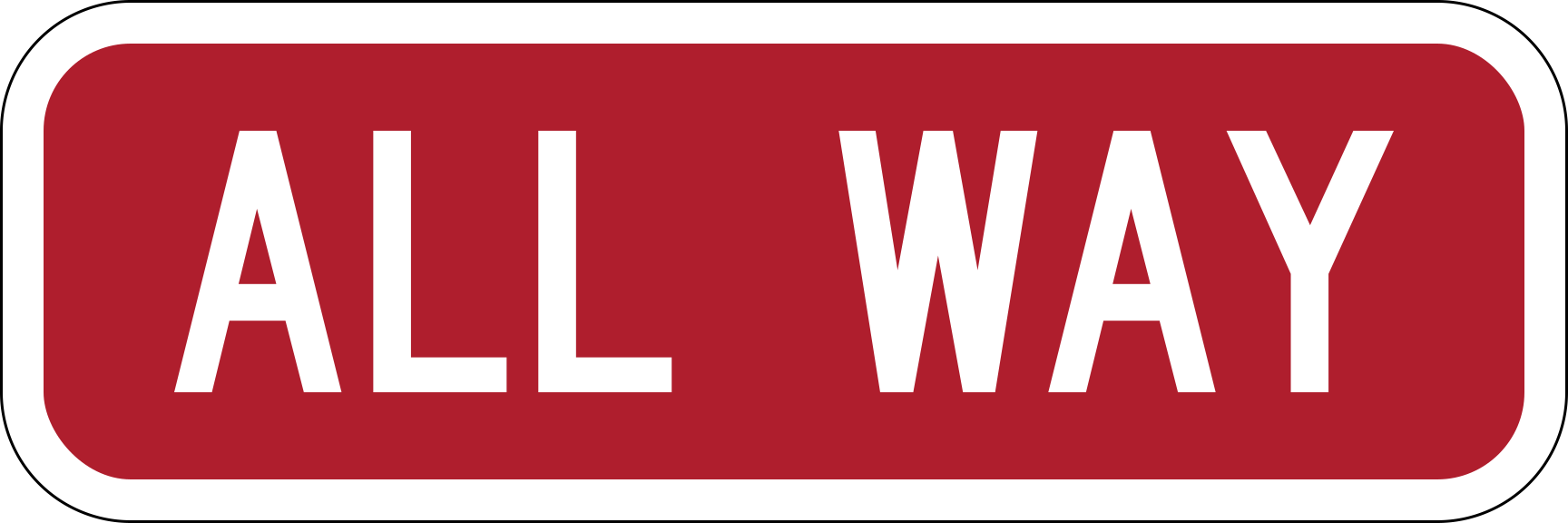
Question 15At an ALL WAY stop, two vehicles arrive at about the same time. Who must yield?
Show answer
A: Each driver yields to the driver on their right. Vehicles go in the order they arrived; when they arrive at about the same time, each driver yields to the driver on their right. Official Florida Driver License Handbook (Class E): Regulatory Signs: All Way Stop, page 55.
-
Question 16On a divided highway or one-way street, a single solid yellow line marks:
Show answer
A: The left edge of the roadway. A single solid yellow edge line marks the left edge of the roadway on divided highways and one-way streets. Official Florida Driver License Handbook (Class E): Pavement Markings: Edge Lines, page 51.
-
Question 17Which of these is NOT allowed on Florida limited access highways?
Show answer
A: Motor scooters of 150 cc or less. Pedestrians, hitchhikers, bicycles, animal-drawn vehicles and motor-driven cycles/scooters of 150 cc or less are not allowed on limited access highways. Official Florida Driver License Handbook (Class E): Limited Access Highways, page 71.
-
Question 18At a two-way stop, a vehicle is turning and another is going straight. Who must yield?
Show answer
A: The turning vehicle yields to the vehicle going straight. At a two-way stop, the turning vehicle yields to the vehicle going straight. Official Florida Driver License Handbook (Class E): Intersections, page 70.
-
Question 19How far before a turn must you signal in Florida?
Show answer
A: At least 100 feet. You must give a turn signal at least 100 feet before making your turn. Official Florida Driver License Handbook (Class E): Turning, page 77.
-
Question 20Unless otherwise posted, what is the maximum speed in a Florida municipal, business or residential area?
Show answer
A: 30 mph. The standard maximum in municipal, business or residential areas is 30 mph except where otherwise posted. Official Florida Driver License Handbook (Class E): Florida Standard Speed Limits, page 76.
-
Question 21How do you check your following distance?
Show answer
A: Note when the vehicle ahead passes a fixed marker and count seconds until you reach it. Watch the rear of the vehicle ahead pass a stationary marker and count 'one-thousand-one...' until you reach it; if you reach it before four, you are too close. Official Florida Driver License Handbook (Class E): Following Distances, page 69.
-
Question 22On which side of the road should you park, unless it is a one-way street?
Show answer
A: The right side, in the direction of traffic. Always park on the right side of the road unless it is a one-way street, parallel to the curb in the direction of traffic. Official Florida Driver License Handbook (Class E): Parking, page 73.
-
Question 23In Florida, a bicycle is legally:
Show answer
A: A vehicle, with the same rights and responsibilities as other vehicle operators. The bicycle is legally a vehicle with the privileges, rights and responsibilities of a motor vehicle operator on public roads (except limited access highways). Official Florida Driver License Handbook (Class E): Bicyclists, page 89.
-
Question 24Within how many feet of an oncoming vehicle must you switch from high beams to low beams?
Show answer
A: 500 feet. Do not use high beams within 500 feet of an oncoming vehicle. Official Florida Driver License Handbook (Class E): Night Driving, page 81.
-
Question 25How should a driver with conventional (non-ABS) brakes stop in an emergency when traction is lost?
Show answer
A: Pump the brakes. Drivers with conventional brakes should pump the brakes in an emergency where traction is lost. Official Florida Driver License Handbook (Class E): Emergency Braking, page 86.
Answer every question to see your score.
More Florida practice tests
- Practice test 225 questions
- Practice test 325 questions
- Practice test 425 questions
- Practice test 525 questions
- Practice test 625 questions
- Practice test 725 questions
- Practice test 825 questions
- Practice test 925 questions
- Practice test 1025 questions
- Practice test 1125 questions
- Practice test 1225 questions
- Practice test 1325 questions
- Practice test 1425 questions
- Practice test 1522 questions
- Exam simulatorThe real format, 50 questions
How to use these tests
Read each explanation, even when you get the question right: it tells you the rule and the handbook section, so you can look it up. Your answers are saved in this browser only, so the weak spots mode can give you more questions on the topics you miss. When you're scoring well, take the exam simulator: it uses the same number of questions and passing score as the real test.
Our own questions, written from the Official Florida Driver License Handbook (Class E) and checked against it. Not affiliated with the Florida Department of Highway Safety and Motor Vehicles. Found a mistake? Tell us.