Hardest Louisiana permit test questions
160 questions that need exact knowledge rather than common sense: the numbers (distances, speeds, fines, limits), the exceptions and the rules that are easy to mix up. We chose them from our Louisiana question bank for that reason; they're not statistics from the OMV.
-
Question 1How long may a non-resident with a valid license from another state drive in Louisiana?
Show answer
A: 90 days. Non-residents with a valid license from another state may drive in Louisiana for 90 days. Class D & E Driver's Guide: Who Must Have a Driver's License?, page 6.
-
Question 2What is the minimum age for a Louisiana Class D (chauffeur's) license?
Show answer
B: 17. Class D requires a minimum age of seventeen. Class D & E Driver's Guide: Age Requirement (R.S. 32:408), page 9.
-
Question 3How much driver education must a Louisiana teen complete for a learner's permit?
Show answer
C: 30 hours classroom and 8 hours behind the wheel. Stage 1 requires thirty hours of classroom instruction and eight hours of behind-the-wheel instruction. Class D & E Driver's Guide: Stage 1: Learner's Permit, page 12.
-
Question 4With whom may a Louisiana learner's permit holder drive?
Show answer
C: A licensed adult at least 21 or a licensed sibling at least 18. A permit holder may drive only when a licensed adult aged 21 or older, or a licensed brother or sister aged 18 or older, is with them. Class D & E Driver's Guide: Stage 1: Learner's Permit, page 12.
-
Question 5How long must a learner's permit be held before moving to the intermediate stage?
Show answer
A: 180 days. The learner's license must be held at least 180 days, and the driver can't advance before turning 16. Class D & E Driver's Guide: Stage 1: Learner's Permit, page 12.
-
Question 6How many hours of supervised driving must a parent attest to before a teen gets an intermediate license?
Show answer
C: 50 hours, 15 at night. A parent or guardian must attest to at least 50 hours of behind-the-wheel experience, at least 15 of them at night. Class D & E Driver's Guide: Stage 1: Learner's Permit, page 12.
-
Question 7During which hours may an intermediate license holder NOT drive without a licensed adult 21+ or sibling 18+?
Show answer
D: 11 p.m. to 5 a.m.. Intermediate drivers may not be on the road from 11 p.m. to 5 a.m. unless a licensed adult 21+ or a licensed sibling 18+ rides with them. Class D & E Driver's Guide: Stage 2: Intermediate License, page 12.
-
Question 8Between 6 p.m. and 5 a.m., how many passengers under 21 who are not immediate family may an intermediate driver carry (without a licensed adult 21+)?
Show answer
B: One. In the 6 p.m. to 5 a.m. window, the limit is one passenger under age 21 from outside the driver's immediate family. Class D & E Driver's Guide: Stage 2: Intermediate License, page 12.
-
Question 9An applicant 18 or older who never entered the graduated program can get a full Class E license or permit after completing:
Show answer
A: A 38-hour driver's education course, or a 6-hour pre-licensing course plus 8 hours behind the wheel. Adults 18+ may apply after a 38-hour driver's education course or a 6-hour pre-licensing course and an 8-hour behind-the-wheel course. Class D & E Driver's Guide: Stage 3: Full License, page 12.
-
Question 10What minimum vision standard does Louisiana's screening check for?
Show answer
C: 20/40. The vision screening determines whether your vision meets the minimum standard of 20/40. Class D & E Driver's Guide: Vision Test, page 13.
-
Question 11If you need glasses to pass the Louisiana vision test, what restriction code appears on your license?
Show answer
B: 01. Your license will display an 01 restriction, requiring corrective lenses while driving. Class D & E Driver's Guide: Vision Test, page 13.
-
Question 12How long is a Louisiana driver's license valid?
Show answer
C: 6 years. Your license expires six years from your nearest birthday. Class D & E Driver's Guide: License Renewals, page 15.
-
Question 13How early can you renew your Louisiana driver's license?
Show answer
A: 180 days before expiration. Licenses may be renewed any time within 180 days before the expiration date, and you must pass the vision exam. Class D & E Driver's Guide: License Renewals, page 15.
-
Question 14Within how many days after moving must you correct the address on your Louisiana license?
Show answer
B: 10 days. After you move, Louisiana gives you 10 days to update the address on your driver's license. Class D & E Driver's Guide: Change of Address, page 15.
-
Question 15Which drivers may be selected to renew a Louisiana license by mail or internet?
Show answer
B: Residents under 70 with a Class D or E license. Residents under 70 with a class D or E license may be selected; you won't be invited two consecutive renewal cycles. Class D & E Driver's Guide: Renewal by Mail or Internet, page 15.
-
Question 16Who must submit a physician or vision specialist report when applying for a Louisiana license for the first time?
Show answer
D: Physically impaired persons and persons over 60. Every physically impaired person and persons over 60 applying for the first time must submit a detailed medical/vision report. Class D & E Driver's Guide: Medical Reports Required, page 16.
-
Question 17How long does the Louisiana OMV keep traffic convictions and collisions on your public driving record?
Show answer
B: Five years. The OMV keeps a public record of your traffic convictions and collisions for five years. Class D & E Driver's Guide: Your Driving Record, page 16.
-
Question 18How long are DWI convictions kept on a Louisiana driving record?
Show answer
C: Ten years. Convictions for DWI are maintained for 10 years. Class D & E Driver's Guide: Your Driving Record, page 16.
-
Question 19Which of these can cause a 15- to 17-year-old to lose the Louisiana driving privilege?
Show answer
A: Withdrawing from school before graduation or being habitually absent or tardy. Withdrawing from school before graduation if 15 to under 18, or being habitually absent or tardy, can lead to revocation. Class D & E Driver's Guide: Revocation of Your License, page 17.
-
Question 20How many reckless driving convictions within 12 months can lead to revocation of a Louisiana license?
Show answer
B: Three. Three convictions of reckless driving within a 12-month period can cost you your license. Class D & E Driver's Guide: Revocation of Your License, page 17.
-
Question 21What happens each time you are convicted of driving under suspension in Louisiana?
Show answer
B: Your suspension period is extended by one year. Each conviction of driving under suspension extends the suspension period by one year. Class D & E Driver's Guide: Losing Your Driving Privileges, page 132.
-
Question 22Under Louisiana's simple littering law, what is the penalty for a first offense?
Show answer
A: $150 fine or eight hours of community service. R.S. 30:2531 sets a first offense at a $150 fine or eight hours of community service; a second at $900 or 20 hours. Class D & E Driver's Guide: Litter is Illegal, page 19.
-
Question 23After buying a used vehicle in Louisiana, how many days do you have to apply for a title in your name?
Show answer
A: Five days. A buyer of a used vehicle must apply for a title in their own name within five days of the sale. Class D & E Driver's Guide: Used Vehicles, page 140.
-
Question 24If you can't show proof of insurance when stopped by police in Louisiana, what happens?
Show answer
B: Your license plate is seized and you have three days (excluding weekends and holidays) to provide proof. The plate is seized and the vehicle may be impounded; you have three calendar days, excluding weekends and holidays, to provide proof. Class D & E Driver's Guide: Proof of Insurance, page 141.
-
Question 25The white crossbuck railroad sign has the same meaning as:
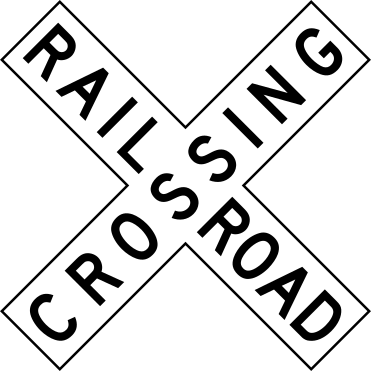
Show answer
B: A yield sign. The white crossbuck is a regulatory sign with the same meaning as a yield sign; you must yield to trains. Class D & E Driver's Guide: Traffic Signs, page 28.
-
Question 26What does a fluorescent pink sign indicate?
Show answer
A: Incident management, such as a hurricane or a road closure due to a crash. Fluorescent pink is used for incident management signs, such as hurricanes or road closures due to crashes. Class D & E Driver's Guide: Traffic Signs, page 29.
-
Question 27What does a 'School Speed Limit When Flashing' sign mean?
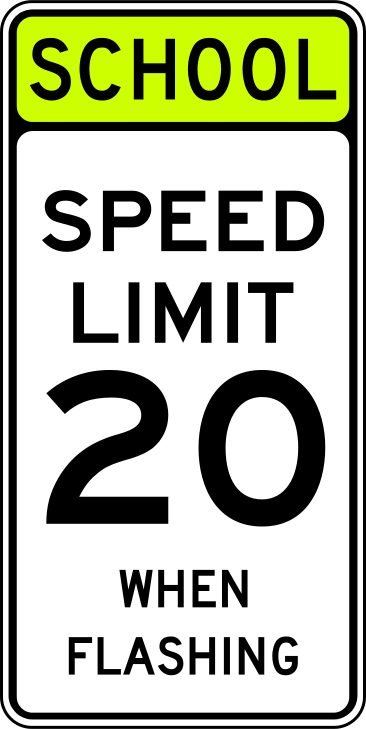
Show answer
A: The reduced school limit applies only when the lights are flashing. The reduced school-zone limit is required only when flashing; otherwise obey the roadway's speed limit. Class D & E Driver's Guide: Traffic Signs, page 32.
-
Question 28How far may you drive in a shared center left-turn lane in Louisiana?
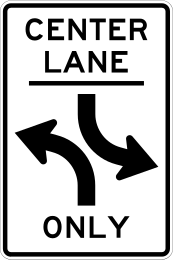
Show answer
B: No more than 200 feet. You must not drive more than 200 feet in a shared center left-turn-only lane. Class D & E Driver's Guide: Traffic Signs, page 32.
-
Question 29If the word 'Exit' appears on the left side of an exit sign, it means:
Show answer
D: The exit lane or ramp is to the left. 'Exit' printed on the left of the sign means the exit lane or ramp leaves from the left; left-exit signs are sometimes yellow for emphasis. Class D & E Driver's Guide: Traffic Signs, page 34.
-
Question 30What happens to traffic fines in Louisiana construction zones?
Show answer
D: They double. In Louisiana, traffic fines are double for construction zones. Class D & E Driver's Guide: Highway Work Zones, page 36.
-
Question 31On a work-zone barricade, the diagonal stripes slope downward to the left. Which way should you go?
Show answer
A: Bear to the left. Stripes sloping downward to the left mean bear to the left; downward to the right means bear to the right. Class D & E Driver's Guide: Channelizing Devices, page 37.
-
Question 32On a horizontal traffic signal, where is the red light?
Show answer
B: On the left. In horizontal signals, red is on the left, yellow in the middle and green on the right. Class D & E Driver's Guide: Traffic Signals, page 38.
-
Question 33When may you turn left on a red light in Louisiana?
Show answer
B: From a one-way street onto another one-way street, after stopping and yielding. Louisiana allows some left turns on red when turning from a one-way street onto another one-way street, after stopping and yielding to traffic and pedestrians. Class D & E Driver's Guide: Traffic Signals, page 39.
-
Question 34According to the Louisiana guide, double solid yellow lines mark the center of roads with four or more lanes. What may you do?
Show answer
B: Cross them only to make a turn, not to pass. You may not cross double solid yellow lines to pass, but you may cross them to make a turn. Class D & E Driver's Guide: Center Lines, page 39.
-
Question 35A single solid yellow 'no passing line' on a two-lane road may be crossed:
Show answer
B: To make a turn, or if a dashed line is on your side. A single solid yellow line marks a no-passing zone, but you may cross it to turn, or to pass when a broken line is on your side. Class D & E Driver's Guide: Center Lines, page 39.
-
Question 36What do double solid white lines between two lanes going the same direction mean?
Show answer
D: Crossing is prohibited. Double solid white lines separate two lanes going the same way, and crossing them is prohibited; most common on interstates. Class D & E Driver's Guide: Lane Markings, page 40.
-
Question 37What do red raised pavement markers or reflectors facing you mean?
Show answer
B: You are going against the direction of travel; do not enter. Red raised markers indicate going against the direction of travel on a roadway that must not be entered. Class D & E Driver's Guide: Lane Markings, page 40.
-
Question 38Under Louisiana law, which lane should vehicles generally travel in?
Show answer
A: The right-hand lane, except when preparing for a left turn, passing, or when right lanes are congested. Louisiana law expects you to keep right except to pass, to get ready for a left turn, or when the right lanes are congested; slower traffic belongs in the right lane. Class D & E Driver's Guide: Lane Markings, page 40.
-
Question 39According to the Louisiana guide's roundabout tips, what speed is adequate inside a roundabout?
Show answer
A: 15 mph or less. The guide says 15 mph or slower is fast enough inside a roundabout. Class D & E Driver's Guide: Roundabouts, page 42.
-
Question 40If you plan to turn left at a roundabout, how should you signal?
Show answer
B: Signal left on approach, then signal right after going three-quarters of the way around. Signal left on approach; once three-quarters of the way around, signal right to take the exit. Class D & E Driver's Guide: Roundabouts and Traffic Circles, page 97.
-
Question 41When going straight through a roundabout, do you need to signal while approaching?
Show answer
A: No signal is needed while approaching. If you're going straight through, no signal is needed while approaching (signal right to exit). Class D & E Driver's Guide: Roundabouts and Traffic Circles, page 97.
-
Question 42If you arrive at a traffic circle at the same time as another vehicle, whom do you yield to?
Show answer
D: The vehicle on your right. Yield to traffic in the circle; if another vehicle arrives at the same time, yield to the vehicle on your right. Class D & E Driver's Guide: Roundabouts and Traffic Circles, page 97.
-
Question 43How far before a turn does Louisiana law require you to signal and be in the proper lane?
Show answer
B: 100 feet. Louisiana requires your signal to be on and your car in the correct lane at least 100 feet before the turn. Class D & E Driver's Guide: Rules for Turning, page 94.
-
Question 44Two drivers facing each other at an intersection both signal left turns. How should they turn?
Show answer
A: Each turns to the left of the center of the intersection. When it's safe, each driver passes to the left of the intersection's center point so the two paths don't cross. Class D & E Driver's Guide: Left Turn - Two Vehicles, page 95.
-
Question 45You may not turn around on a hill or curve where you cannot be seen by drivers approaching within:
Show answer
C: 500 feet. Don't turn around on a hill or curve where other drivers can't see you within 500 feet. Class D & E Driver's Guide: You May Not Turn Around, page 95.
-
Question 46By about how much do safety belts reduce the risk of serious injury and death?
Show answer
C: 50 percent. The guide says belts cut the risk of serious injury, and of death, by about half (50 percent). Class D & E Driver's Guide: Use of Safety Belts, page 44.
-
Question 47Under Louisiana's child passenger law, children from birth to at least age 2 must ride in:
Show answer
A: A rear-facing car seat. Louisiana's child restraint law calls for a rear-facing, federally approved car seat from birth until at least age 2. Class D & E Driver's Guide: Use of Safety Belts, page 45.
-
Question 48What does Louisiana law require for children ages 4 to 9?
Show answer
A: Booster seat with restraints. Children 4-9 years must use a booster seat with restraints; from age 9, a correctly fitting lap/shoulder belt. Class D & E Driver's Guide: Use of Safety Belts, page 45.
-
Question 49Children younger than what age should ride in the rear seat when available, under Louisiana law?
Show answer
C: 13. Children younger than 13 years ride in the rear seat when available, properly restrained. Class D & E Driver's Guide: Use of Safety Belts, page 45.
-
Question 50Why are the 10 and 2 hand positions no longer recommended?
Show answer
C: A deploying airbag (150-200 mph) can throw your hands into your face or break wrists. Airbags deploy at 150 to 200 mph; hands at 10 and 2 can be thrown into your head or injured. Use 9 and 3 or 8 and 4. Class D & E Driver's Guide: Air Bags, page 46.
-
Question 51How far from an airbag-equipped steering wheel should you sit?
Show answer
A: At least 10 inches. Sit at least 10 inches from a steering wheel equipped with an air bag. Class D & E Driver's Guide: Air Bags, page 46.
-
Question 52Do airbags deploy when your car is rear-ended?
Show answer
D: No. A rear-end impact does not set off the air bags; air bags add to the protection of seat belts and do not replace them. Class D & E Driver's Guide: Air Bags, page 46.
-
Question 53How deep should your tire tread be, according to the Louisiana guide's weekly checks?
Show answer
B: At least 1/16 of an inch. Ensure tires have at least 1/16 of an inch of tread depth. Class D & E Driver's Guide: Preparing to Drive, page 49.
-
Question 54When you stop behind another vehicle, how far back should you be?
Show answer
C: Far enough to see the bottom of its tires. Leave enough room when you stop that the bottom of the tires of the car ahead is still in view. Class D & E Driver's Guide: Starting and Stopping, page 51.
-
Question 55Above about what speed is hand-to-hand (push/pull) steering used during normal forward driving?
Show answer
B: 10-15 mph. Use hand-to-hand steering when turning the wheel during normal driving going forward above 10-15 mph. Class D & E Driver's Guide: Steering Methods, page 54.
-
Question 56In evasive steering, why should you limit steering input to no more than 180 degrees?
Show answer
A: More input causes traction loss and the vehicle may cross into oncoming traffic. Using more than 180 degrees of input causes traction loss and the vehicle often moves across the roadway. Class D & E Driver's Guide: Steering Methods, page 54.
-
Question 57Properly inflated tires can improve gas mileage by as much as:
Show answer
B: 3.3 percent. Keeping tires properly inflated can improve gas mileage by as much as 3.3 percent. Class D & E Driver's Guide: Tires, page 53.
-
Question 58In hot weather, for every 10-degree Fahrenheit rise in air temperature, tire pressure:
Show answer
C: Rises about one pound. Tire pressure goes up roughly one pound for each 10-degree Fahrenheit rise in air temperature, so check it in hot weather. Class D & E Driver's Guide: Seasonal Changes and How They Affect Driving, page 56.
-
Question 59When should you use your parking brake?
Show answer
C: Every time you park. Whether manual or automatic, hilly or flat, use your parking brake every time you park. Class D & E Driver's Guide: Parking Brake, page 72.
-
Question 60What number can you call in Louisiana to report a suspicious or reckless motorist?
Show answer
D: *LSP (*577). Notify police immediately after seeing a motorist driving suspiciously or recklessly: call *LSP (*577). Class D & E Driver's Guide: Defensive Driving, page 59.
-
Question 61What basic following-distance rule does the Louisiana guide teach for any speed?
Show answer
D: Three-second rule. The 3-second rule makes judging distance easier and can be used at any speed. Class D & E Driver's Guide: Following Distances, page 70.
-
Question 62How much following distance should you allow behind a motorcycle?
Show answer
A: At least 4 seconds. Stay at least four seconds behind a motorcycle, more on wet roads, so you have room if the rider falls or stops suddenly. Class D & E Driver's Guide: Sharing the Road with Motorcycles, page 87.
-
Question 63In good conditions, how much following distance should you keep behind a large truck?
Show answer
C: 4-5 seconds. Leave a gap of at least four to five seconds behind a truck, even longer when conditions are poor. Class D & E Driver's Guide: Following trucks, page 89.
-
Question 64On the interstate, what minimum space cushion should you keep behind the vehicle ahead?
Show answer
B: At least 4 seconds, doubled in bad weather. Always keep at least a four-second space cushion; when weather is bad or pavement slick, double that time. Class D & E Driver's Guide: Right-Hand Lane, page 106.
-
Question 65How much should you add to your following distance for night driving?
Show answer
C: At least one additional second (two on unfamiliar roads at night). Add at least one second for night driving and at least two seconds on unfamiliar roads at night. Class D & E Driver's Guide: Night Driving, page 80.
-
Question 66Before returning to your lane after passing on a two-lane road, you must complete the pass before coming within how many feet of an oncoming vehicle?
Show answer
B: 100 feet. A pass must be finished before you get within 100 feet of a vehicle coming the other way. Class D & E Driver's Guide: Passing on the Left, page 76.
-
Question 67It is against the law to pass within how many feet of an intersection, railroad crossing, bridge or tunnel?
Show answer
B: 100 feet. You may not pass within one hundred feet of an intersection, railroad crossing, bridge or tunnel. Class D & E Driver's Guide: Passing on the Left, page 76.
-
Question 68An oncoming vehicle more than about how many seconds away generally appears to be standing still?
Show answer
C: 25 seconds. A vehicle more than 25 seconds away appears to be standing still; if you can see it getting closer, it's probably nearer than 25 seconds. Class D & E Driver's Guide: Safety Tips on Passing, page 78.
-
Question 69When passing, from how far behind the vehicle being passed should you start?
Show answer
B: At least two seconds behind. Start your pass from at least two seconds back so you don't clip the rear corner of the vehicle you're passing. Class D & E Driver's Guide: Safety Tips on Passing, page 78.
-
Question 70If you can't see at least how far ahead, you should not attempt to pass?
Show answer
C: A quarter mile. The guide says not to try a pass unless you can see at least a quarter mile ahead. Class D & E Driver's Guide: Lane Changing, page 93.
-
Question 71What size gap should you look for when changing lanes?
Show answer
C: 4 to 5 seconds. Find a gap of 4 to 5 seconds, signal, check again, adjust your speed and steer smoothly into the new lane. Class D & E Driver's Guide: Looking and Scanning Ahead, page 68.
-
Question 72At 60 mph, if you can't see at least how far ahead, you are driving too fast for your visibility?
Show answer
C: 400 feet. At 60 mph, if you can't see at least 400 feet ahead, you're driving too fast for your visibility. Class D & E Driver's Guide: Looking and Scanning Ahead, page 67.
-
Question 73About how far does it take to react and stop from 60 mph on dry pavement?
Show answer
C: 359 feet. On dry pavement, reacting and braking from 60 mph takes roughly 4 to 5 seconds and about 359 feet. Class D & E Driver's Guide: Looking and Scanning Ahead, page 67.
-
Question 74What is the average perception time for an alert driver?
Show answer
C: 3/4 second to 1 second. Average perception time for an alert driver is 3/4 second to 1 second. Class D & E Driver's Guide: Stopping Distances, page 69.
-
Question 75At 50 mph, what is the minimum total stopping distance in ideal conditions?
Show answer
C: 268 feet. Counting perception, reaction and braking, a car at 50 mph needs at least 268 feet to stop. Class D & E Driver's Guide: Stopping Distances, page 70.
-
Question 76If you triple your speed from 20 to 60 mph, your impact and braking distance become:
Show answer
C: 9 times greater. Tripling speed from 20 to 60 mph makes the impact and braking distance 9 times greater. Class D & E Driver's Guide: Stopping Distances, page 70.
-
Question 77Facing uphill next to a curb, how should you turn your wheels?
Show answer
C: Away from the curb. Uphill next to a curb, point the front wheels away from the curb and shift to park (or low gear), so the tires catch the curb if the car rolls back. Class D & E Driver's Guide: Parking on Hills, page 73.
-
Question 78When parallel parked, your right wheels must be within how many inches of the curb?
Show answer
C: 18 inches. Louisiana requires the right-side wheels of a parallel-parked car to be no more than 18 inches from the curb. Class D & E Driver's Guide: Parking, page 75.
-
Question 79How close to a fire hydrant may you park in Louisiana?
Show answer
B: No closer than 15 feet. It is against the law to park within 15 feet of a fire hydrant. Class D & E Driver's Guide: Parking, page 75.
-
Question 80You may not park within how many feet of a railroad crossing?
Show answer
D: 50 feet. It is illegal to park within 50 feet of a railroad crossing. Class D & E Driver's Guide: Parking, page 75.
-
Question 81How close to a crosswalk at an intersection may you park?
Show answer
C: No closer than 20 feet. Don't park within 20 feet of a crosswalk at an intersection. Class D & E Driver's Guide: Parking, page 75.
-
Question 82On the side of the street opposite a fire station driveway, you may not park within:
Show answer
C: 75 feet. Keep 20 feet back from a fire station driveway on your side of the street, and 75 feet back when it is across the street. Class D & E Driver's Guide: Parking, page 75.
-
Question 83How close to a stop sign, yield sign or traffic signal at the side of the road may you park in Louisiana?
Show answer
B: No closer than 20 feet. When parking, stay at least 20 feet from a roadside stop sign, yield sign, traffic signal or flashing beacon. Class D & E Driver's Guide: Parking, page 75.
-
Question 84Which of these is illegal parking in Louisiana?
Show answer
C: Parking more than 2 feet from the curb. The list of prohibited places includes more than 2 feet from the curb, double parking, bridges and bike lanes. Class D & E Driver's Guide: Parking, page 75.
-
Question 85When parallel parked, how close may your bumpers be to the other vehicles (unless otherwise marked)?
Show answer
D: No closer than two feet. Unless markings say otherwise, leave at least two feet between your bumpers and the cars in front and behind. Class D & E Driver's Guide: Parallel Parking, page 74.
-
Question 86When must you yield to a pedestrian in Louisiana?
Show answer
B: At all times, even if the pedestrian is jaywalking. You must yield to pedestrians at all times; even if they are jaywalking, you must stop for them. Class D & E Driver's Guide: Pedestrian Safety, page 81.
-
Question 87Where do the majority of pedestrian crashes occur?
Show answer
C: At locations other than intersections. Most pedestrian crashes happen away from intersections. Class D & E Driver's Guide: Pedestrian Safety, page 82.
-
Question 88When stopping for a visually impaired pedestrian, you should not stop more than how far from the crosswalk?
Show answer
C: Five feet. Don't stop more than five feet from the crosswalk; the pedestrian uses your engine sound as a guide. Class D & E Driver's Guide: Visually Impaired Pedestrians, page 82.
-
Question 89How much space must you leave when passing a bicyclist in Louisiana (R.S. 32:76.1)?
Show answer
D: At least 3 feet. R.S. 32:76.1 requires at least three feet of space between your car and a bicyclist you pass. Class D & E Driver's Guide: Sharing the Road with Bicycles, page 85.
-
Question 90Under Louisiana law, which bicycle riders must wear an approved helmet?
Show answer
A: Riders and passengers under age 12. No parent or guardian may allow a child under 12 to ride or be a passenger on a bicycle without an approved, securely fastened helmet. Class D & E Driver's Guide: Sharing the Road with Bicycles, page 86.
-
Question 91Children weighing less than 40 pounds or under 40 inches tall who ride as bicycle passengers must:
Show answer
D: Be seated and secured in an approved restraining seat. A child passenger on a bicycle who weighs under 40 pounds or is shorter than 40 inches must be secured in an approved restraining seat. Class D & E Driver's Guide: Other Laws You Should Know, page 102.
-
Question 92According to research cited in the guide, over two-thirds of car-motorcycle collisions happen because:
Show answer
A: The other driver turned in front of the motorcyclist. Over two-thirds of car/motorcycle collisions result from the other driver turning in front of the motorcyclist. Class D & E Driver's Guide: Sharing the Road with Motorcycles, page 86.
-
Question 93About how far does a loaded tractor-trailer at 55 mph on a dry road need to stop, according to the Louisiana guide?
Show answer
D: At least 290 feet. A loaded tractor trailer at 55 mph on a clear, dry road requires a minimum of 290 feet to stop. Class D & E Driver's Guide: Sharing the Road with Big Trucks, page 88.
-
Question 94In crashes between large trucks and cars, what share of fatalities are car occupants?
Show answer
C: 78%. In crashes involving large trucks and automobiles, car occupants sustain 78% of the fatalities. Class D & E Driver's Guide: Sharing the Road with Big Trucks, page 88.
-
Question 95An oncoming truck is approaching in the rain. What should you do?
Show answer
B: Turn on your wipers before it passes you. Turn on your wipers before the truck passes so spray is cleared quickly. Class D & E Driver's Guide: Following trucks, page 89.
-
Question 96What does an orange-and-red reflective triangle on the back of a vehicle mean?
Show answer
C: The vehicle is slow moving, traveling less than 25 mph. The triangle on farm, construction or animal-drawn vehicles means the vehicle travels less than 25 mph. Class D & E Driver's Guide: Slow Moving Vehicles, page 110.
-
Question 97What are normal speeds for animal-drawn vehicles?
Show answer
B: 5-8 mph. Animal-drawn vehicles usually move at 5 to 8 mph, and even slower with heavy loads or at intersections. Class D & E Driver's Guide: Slow Moving Vehicles, page 110.
-
Question 98Who must yield when an unpaved road meets a paved road?
Show answer
B: Drivers on the unpaved road. Traffic coming from an unpaved road must yield to traffic on the paved road it meets. Class D & E Driver's Guide: Right of Way, page 98.
-
Question 99What does Louisiana right-of-way law actually do?
Show answer
A: Says who must yield; it does not give anyone the right-of-way. The law says who must yield; it doesn't give anyone the right-of-way, and you should never insist on taking it. Class D & E Driver's Guide: Right of Way, page 98.
-
Question 100Can you be cited for driving too fast for conditions even when under the posted limit?
Show answer
A: Yes; speed limits are posted for ideal conditions. Speed limits are for ideal conditions; driving 55 mph in a snowstorm is not acceptable even if 55 is posted. Class D & E Driver's Guide: Speed, page 91.
-
Question 101According to the Louisiana guide, a frontal impact at 35 mph compared with 30 mph is:
Show answer
B: One-third more violent. Crash force grows faster than speed: the guide says a head-on impact at 35 mph is a third more violent than at 30 mph. Class D & E Driver's Guide: Speed, page 91.
-
Question 102What is the maximum speed on Louisiana interstates unless otherwise posted?
Show answer
C: 70 mph. Unless a sign says otherwise, 70 mph is the top legal speed on Louisiana interstates. Class D & E Driver's Guide: Entering, page 105.
-
Question 103Driving at night at a speed that lets you stop within the distance lit by your low beams is about:
Show answer
C: 45 mph. Low beams let you see about 150 to 200 feet; a speed that lets you stop within that distance is about 45 mph. Class D & E Driver's Guide: Night Driving, page 80.
-
Question 104How far from a stopped school bus that is loading or unloading children must you stop in Louisiana?
Show answer
C: At least 30 feet. Louisiana requires you to stop 30 feet or more from a school bus that has stopped to load or unload children. Class D & E Driver's Guide: Stopped School Buses, page 93.
-
Question 105How far before a stop do school bus drivers turn on the flashing yellow lights?
Show answer
A: At least 100 feet but no more than 500 feet. School bus drivers turn on the yellow lights 100 to 500 feet before the stop; the red lights and stop arm come on when the bus stops. Class D & E Driver's Guide: Stopped School Buses, page 93.
-
Question 106When is a Louisiana driver NOT required to stop for a stopped school bus?
Show answer
C: When the bus is in a loading zone completely off the roadway where pedestrians may not cross. You need not stop when the bus is in a loading zone completely off the road where pedestrians aren't allowed to cross. Class D & E Driver's Guide: Stopped School Buses, page 93.
-
Question 107You are on the opposite side of a roadway divided by a grassy median from a stopped school bus. Must you stop?
Show answer
A: No. If a ditch, grassy median, raised barrier or other obstacle you can't drive across separates you from the bus, you don't have to stop. Class D & E Driver's Guide: Stopped School Buses, page 93.
-
Question 108A school bus is stopped on a road with one lane each way and a center two-way left turn lane. Must oncoming traffic stop?
Show answer
A: Yes; this is not considered a divided highway. A roadway with one lane in each direction plus a two-way left turn lane is not a divided highway; drivers must stop. Class D & E Driver's Guide: Stopped School Buses, page 94.
-
Question 109Does Louisiana require oncoming drivers to stop for a school bus on a four-lane road with no barrier?
Show answer
C: Yes. A four-lane road without a barrier is not divided, so traffic in both directions must stop for the bus. Class D & E Driver's Guide: Stopped School Buses, page 94.
-
Question 110How close to a railroad crossing must you stop when a signal is flashing or a gate is lowered?
Show answer
C: Within 50 feet but no less than 15 feet from the nearest rail. Under R.S. 32:171, when a crossing signal or gate is active or a train is close, stop no closer than 15 feet and no farther than 50 feet from the nearest rail. Class D & E Driver's Guide: Railroad Grade Crossing, page 99.
-
Question 111Your vehicle stalls on the tracks with a train coming. Which way should you move after getting out?
Show answer
D: Toward the approaching train, away from the tracks. Get everyone out and move away from the tracks toward the oncoming train, so debris from the impact flies away from you. Class D & E Driver's Guide: Railroad Grade Crossing, page 99.
-
Question 112How far does a 100-car freight train at 55 mph need to stop?
Show answer
D: More than a mile. A 100-car freight train at 55 mph requires more than a mile (18 football fields) to stop. Class D & E Driver's Guide: Track Facts, page 101.
-
Question 113What size gap do you need to merge onto an interstate?
Show answer
C: 4 seconds. A 4-second gap leaves about 2 seconds of following distance both for you and for the car you merge ahead of. Class D & E Driver's Guide: Space to Merge, page 106.
-
Question 114What is the most frequent type of crash on interstates?
Show answer
D: Rear-end. Rear-end crashes are the type that happens most often on interstates, usually from following too closely. Class D & E Driver's Guide: Right-Hand Lane, page 106.
-
Question 115About how far before your interstate exit should you check that you're in the correct lane?
Show answer
A: About a mile. Approximately a mile before your exit, make sure you're in the correct lane; signal for about five seconds. Class D & E Driver's Guide: Exiting, page 107.
-
Question 116How many people may occupy the front seat of a moving vehicle in Louisiana?
Show answer
B: No more than three. Louisiana law allows no more than three people in the front seat of a moving vehicle. Class D & E Driver's Guide: Other Laws You Should Know, page 101.
-
Question 117Who may not ride in the open bed of a truck in Louisiana?
Show answer
C: Anyone under 12 (and no one of any age on an interstate). No one under 12 may ride in an open truck bed, and no person of any age may ride in one on an interstate. Class D & E Driver's Guide: Other Laws You Should Know, page 101.
-
Question 118How close may you follow an emergency vehicle responding to a call?
Show answer
C: No closer than 500 feet. Following an emergency vehicle responding to a call closer than 500 feet is unlawful. Class D & E Driver's Guide: Other Laws You Should Know, page 102.
-
Question 119What does Louisiana law say about wearing headphones while driving?
Show answer
A: Prohibited in both ears; one ear is allowed. Wearing headphones in both ears is prohibited; a listening device in one ear alone is allowed. Class D & E Driver's Guide: Other Laws You Should Know, page 102.
-
Question 120When must you have your headlights on in Louisiana besides sunset to sunrise?
Show answer
A: Whenever your windshield wipers are needed. Louisiana law requires low-beam headlights when your windshield wipers are required. Class D & E Driver's Guide: Other Laws You Should Know, page 102.
-
Question 121Under Louisiana's Implied Consent law, what happens on a first offense if you refuse a chemical test?
Show answer
B: Your driving privileges are suspended for 365 days. Refusing the test suspends your driving privileges for 365 days on a first offense (730 days for a second or subsequent). Class D & E Driver's Guide: Administrative Per Se, page 131.
-
Question 122After an implied-consent refusal, what must you file before reinstatement?
Show answer
B: Proof of future financial responsibility (SR-22) or $30,000 cash or security, kept for 3 years. You must file an SR-22 (high-risk insurance) or $30,000 cash/security and maintain it for three years. Class D & E Driver's Guide: Administrative Per Se, page 131.
-
Question 123A driver 21 or older submits to a test showing a BAC of 0.08% to 0.149%. How long is the suspension?
Show answer
B: 180 days. A BAC of 0.08% to 0.149% for drivers 21+ brings a 180-day suspension. Class D & E Driver's Guide: Administrative Per Se, page 131.
-
Question 124A driver 21 or older tests at 0.15% BAC or higher. How long is the suspension?
Show answer
C: Two years (730 days). A BAC of 0.15% or greater results in a two-year (730-day) suspension. Class D & E Driver's Guide: Administrative Per Se, page 131.
-
Question 125In what percent of crashes is driver behavior a factor, according to the guide?
Show answer
D: 95%. In 95% of motor vehicle collisions, some factor of driver behavior combined with another factor caused the crash. Class D & E Driver's Guide: Avoiding Collisions, page 118.
-
Question 126How often can an anti-lock braking system (ABS) pump the brakes?
Show answer
B: Up to 30 times a second. When pressed hard, ABS pumps the brakes up to 30 times per second. Class D & E Driver's Guide: Avoiding Collisions, page 118.
-
Question 127Does ABS stop your car faster?
Show answer
A: No; it lets you keep steering control while braking. ABS doesn't stop the car faster; it helps you keep control and steer to safety. Class D & E Driver's Guide: Avoiding Collisions, page 118.
-
Question 128Another driver can't complete a pass and must drop back behind you. What should you do?
Show answer
C: Increase your speed so the driver can move in behind you. If the passing driver must drop back, increase your speed so they can move in behind you. Class D & E Driver's Guide: Overtaking vehicle in danger, page 119.
-
Question 129About what share of passenger vehicle occupant deaths happen in rollovers?
Show answer
C: 1 in 3. Only about 1 in 40 vehicles in crashes roll over, but 1 in 3 passenger vehicle occupant deaths occur in rollovers. Class D & E Driver's Guide: Rollovers, page 119.
-
Question 130Under Louisiana law, who may not use a wireless device for calls or texts while driving (except emergencies)?
Show answer
A: Drivers 17 years of age or younger. No person 17 or younger may drive while using a wireless device to make a call or write, send or read a text. Class D & E Driver's Guide: Distracted Driving, page 116.
-
Question 131Texting causes a driver to look away from the road for about how long?
Show answer
C: 4.6 seconds. Texting takes your eyes off the road for 4.6 seconds; at 55 mph that's the length of a football field. Class D & E Driver's Guide: Cellular Phones, page 83.
-
Question 132What is the legal BAC limit for Louisiana drivers 20 years of age and younger?
Show answer
B: 0.02. The limit is .02 if you are 20 years of age and younger. Class D & E Driver's Guide: Blood Alcohol Concentration, page 128.
-
Question 133What is the BAC limit when operating a commercial motor vehicle in Louisiana?
Show answer
B: 0.04. The limit is .04 if you are operating a commercial motor vehicle. Class D & E Driver's Guide: Blood Alcohol Concentration, page 128.
-
Question 134How quickly does alcohol reach your brain after it enters your stomach?
Show answer
B: About 20 minutes. Alcohol enters the bloodstream and reaches your brain in about 20 minutes. Class D & E Driver's Guide: Alcohol, page 127.
-
Question 135What is the maximum jail time for a first DWI conviction in Louisiana?
Show answer
C: Six months. Maximum penalties for a first DWI include six months in jail, a $1,025 fine plus court costs, and loss of license for 1 year. Class D & E Driver's Guide: Penalty for Driving While Intoxicated (DWI), page 129.
-
Question 136How long can you lose your license for a first DWI conviction in Louisiana (maximum)?
Show answer
B: One year (365 days). A first DWI conviction can bring loss of license for 1 year (365 days). Class D & E Driver's Guide: Penalty for Driving While Intoxicated (DWI), page 129.
-
Question 137A third DWI conviction in Louisiana is:
Show answer
D: A felony with 1-5 years in prison and loss of license for three years. A 3rd DWI is a felony with 1-5 years' prison (30 days mandatory), a $2,100 fine, 3-year license loss and possible vehicle seizure. Class D & E Driver's Guide: Penalty for Driving While Intoxicated (DWI), page 129.
-
Question 138After a DWI conviction, for how long must proof of future financial responsibility be maintained?
Show answer
C: Three years. After a DWI conviction you must file proof of future financial responsibility and keep it for three years from the conviction date. Class D & E Driver's Guide: Penalty for Driving While Intoxicated (DWI), page 130.
-
Question 139Does Louisiana law treat driving under the influence of drugs (including prescription or OTC) differently from alcohol?
Show answer
C: No, the same penalty applies as for alcohol. Under Louisiana law, impaired driving on drugs, including over-the-counter and prescription medicines, carries the same penalties as alcohol. Class D & E Driver's Guide: Drugs, page 130.
-
Question 140How long does it take for the effects of one marijuana cigarette to wear off, according to the guide?
Show answer
A: Five to six hours. One drink wears off in about an hour, but one marijuana cigarette takes five to six hours. Class D & E Driver's Guide: Marijuana, page 130.
-
Question 141What is the penalty range for vehicular homicide in Louisiana?
Show answer
B: $2,000-$15,000 fine and 5 to 30 years' imprisonment, at least one year mandatory. Vehicular homicide (R.S. 14:32.1) carries fines of $2,000-$15,000 and 5 to 30 years, with at least one year mandatory. Class D & E Driver's Guide: Vehicular Homicide, page 131.
-
Question 142Under 21, what test result leads to a 180-day suspension in Louisiana?
Show answer
B: 0.02% or more. If you're under 21 and the test shows a BAC of 0.02% or more, your privileges are suspended for 180 days. Class D & E Driver's Guide: Administrative Per Se, page 131.
-
Question 143The body processes about how much BAC per hour?
Show answer
B: 0.015%. The body can process 0.015% of alcohol per hour; a 0.20% BAC at 2 a.m. is still above 0.10% at 8 a.m. Class D & E Driver's Guide: Blood Alcohol Concentration, page 128.
-
Question 144According to the guide, alcohol is a factor in about what share of fatal motor vehicle crashes?
Show answer
A: Almost half. The guide notes that alcohol plays a part in nearly half of fatal crashes, so plan for a sober designated driver. Class D & E Driver's Guide: Defensive Driving, page 59.
-
Question 145Which cause of motor vehicle deaths in Louisiana is listed first by the Louisiana Highway Safety Research Group (2017 data)?
Show answer
D: Alcohol. The four leading causes were alcohol, distraction, aggressive driving and lack of seat belt usage. Class D & E Driver's Guide: Traffic Collision Costs, page 24.
-
Question 146At what speed does partial hydroplaning begin?
Show answer
B: About 35 mph. Partial hydroplaning starts at about 35 mph and increases until, at 55 mph, tires may lose all contact. Class D & E Driver's Guide: Hydroplaning, page 79.
-
Question 147How far can you see clearly with high-beam headlights?
Show answer
C: 350-400 feet. High beams let you see clearly about 350 to 400 feet; a speed that lets you stop within that is about 65 mph. Class D & E Driver's Guide: Night Driving, page 80.
-
Question 148When must you dim your high beams for an oncoming vehicle in Louisiana?
Show answer
A: Within 500 feet. You must use low beams when approaching within 500 feet of another vehicle. Class D & E Driver's Guide: Night Driving, page 80.
-
Question 149When following another vehicle, within how many feet must you use low beams in Louisiana?
Show answer
B: 200 feet. Use low beams when following within 200 feet of another vehicle. Class D & E Driver's Guide: Night Driving, page 80.
-
Question 150Headlights are required when weather makes it hard to see a vehicle clearly from what distance?
Show answer
C: 500 feet. Headlights must be on when weather conditions make it difficult to see your vehicle clearly from 500 feet. Class D & E Driver's Guide: Night Driving, page 80.
-
Question 151When are animals such as deer most active?
Show answer
A: Dusk and dawn, especially October through December. Wildlife is more active at dusk and dawn, and between October and December. Class D & E Driver's Guide: Animals, page 109.
-
Question 152A wild animal is standing on the road ahead. What should you do?
Show answer
D: Slow down or stop, don't use the horn, and pass as far from it as possible. For wild animals, slow or stop, don't use the horn or rev the engine, and pass as far away as possible. Class D & E Driver's Guide: Animals, page 109.
-
Question 153How much water can carry away most vehicles?
Show answer
B: 2 feet of rushing water. About 6 inches of water reaches the underside of most cars, and 2 feet of moving water can sweep most vehicles away. Class D & E Driver's Guide: Flooded Roadways, page 124.
-
Question 154One of your tires blows out while you are driving. What should you do?
Show answer
A: Hold the wheel firmly, stay in your lane, let the car slow to around 30 mph, then brake gently. Don't panic or slam on the brakes; hold the wheel, let the car slow to about 30 mph, then brake gently and pull off. Class D & E Driver's Guide: Tire blowout, page 122.
-
Question 155Your brakes fail. What should you avoid doing?
Show answer
A: Applying the parking brake suddenly. Don't put on the parking brake suddenly; let the car slow, downshift, then gradually apply the hand brake. Class D & E Driver's Guide: Brakes fail, page 122.
-
Question 156Your wheels drift off the pavement and there's a big drop-off. How should you get back on the road?
Show answer
C: Slow to a very slow speed (about 10 mph), check traffic, then turn sharply back onto the pavement. Stay on the shoulder, slow to about 10 mph, look for traffic and then turn sharply back onto the pavement. Class D & E Driver's Guide: Wheels roll off the pavement, page 121.
-
Question 157Your car breaks down at night. How far behind it should you place flares?
Show answer
D: At least 100 feet. At night, switch on the dome light or set flares 100 feet or more behind the car. Class D & E Driver's Guide: Breakdowns, page 123.
-
Question 158If your car goes into water, how long will it usually float?
Show answer
D: 30 to 60 seconds. A vehicle will only float for 30 to 60 seconds; try to get out immediately. Class D & E Driver's Guide: Becoming Submerged in Water, page 124.
-
Question 159Escaping a sinking car with children, who should you unbuckle first?
Show answer
C: The oldest child first. Unbuckle the oldest child first, then the younger ones; older children need less help. Class D & E Driver's Guide: Becoming Submerged in Water, page 125.
-
Question 160When passing a parked emergency vehicle on a highway with two or more lanes in your direction, Louisiana law requires you to:
Show answer
C: Move into a lane not adjacent to it if safe; if not possible, slow to a reasonably safe speed. Change to a lane not adjacent to the parked emergency vehicle if possible; otherwise slow to a reasonably safe speed. Class D & E Driver's Guide: Approach of an Authorized Emergency Vehicle, page 126.
Answer every question to see your score.
Remembering the numbers
Most mistakes on the Louisiana OMV test are about specifics: how many feet before a turn to signal, how far to park from a hydrant, the alcohol limit for drivers under 21. Write the numbers from these questions on a card and review them before the test, then take the exam simulator.