Hardest Washington permit test questions
122 questions that need exact knowledge rather than common sense: the numbers (distances, speeds, fines, limits), the exceptions and the rules that are easy to mix up. We chose them from our Washington question bank for that reason; they're not statistics from the DOL.
-
Question 1If you enroll in an approved driver training course, what is the earliest age you can apply for a Washington instruction permit?
Show answer
B: 15. If you're enrolling in a driver training course, you can apply for a permit as early as 15, 1 to 10 days before the course starts. Washington Driver Guide: 1.8 Getting a personal driver license: Instruction permit, page 25.
-
Question 2If you are NOT enrolling in a driver training course, at what age can you take the knowledge exam and get a Washington permit?
Show answer
B: 15½. Without a driver training course, you can take the knowledge exam after you turn 15½, but you must wait until 18 to take the skills exam. Washington Driver Guide: 1.8 Getting a personal driver license: Instruction permit, page 25.
-
Question 3How long is a Washington knowledge exam score valid?
Show answer
B: 2 years. Your knowledge exam score is valid for 2 years; if you wait too long to take the skills exam you may have to retake it. Washington Driver Guide: 1.8 Getting a personal driver license: Instruction permit, page 25.
-
Question 4How much supervised driving must a Washington teen complete before getting a license?
Show answer
B: 40 hours day and 10 hours night. Teens must complete at least 40 hours of day driving and 10 hours of night driving, attested by a parent, guardian or responsible adult. Washington Driver Guide: 1.8 Getting your personal driver license: ages 16 to 17, page 26.
-
Question 5What are Washington's minimum requirements for a traffic safety (driver training) course taken in another state?
Show answer
B: 30 hours classroom and 6 hours behind the wheel. An out-of-state course must meet Washington's minimum of 30 hours of classroom and 6 hours of behind-the-wheel instruction. Washington Driver Guide: 1.8 Getting your personal driver license: ages 16 to 17, page 26.
-
Question 6After getting your license at a Washington driver licensing office, how long is the temporary license good for?
Show answer
C: 45 days. Before leaving the office you'll receive a temporary license that is good for 45 days; the official license is mailed. Washington Driver Guide: 1.8 Getting your personal driver license: ages 16 to 17, page 27.
-
Question 7During the first 6 months of an intermediate license, which passengers are allowed?
Show answer
C: No passengers under 20 except immediate family members. For the first 6 months you may carry no passengers under age 20 except immediate family members. Washington Driver Guide: 1.8 Intermediate driver license, page 28.
-
Question 8After the first 6 months with an intermediate license (until 18 or one year), how many passengers under 20 who are not immediate family may you carry?
Show answer
D: No more than 3. From 6 months until age 18 or one year, you may carry no more than 3 passengers under 20 who are not immediate family. Washington Driver Guide: 1.8 Intermediate driver license, page 28.
-
Question 9During which hours may a Washington intermediate license holder NOT drive unless accompanied by a parent, guardian or licensed driver at least 25?
Show answer
A: 1 a.m. to 5 a.m.. Intermediate drivers may not drive between 1 a.m. and 5 a.m. unless accompanied by a parent, guardian or licensed driver at least 25. Washington Driver Guide: 1.8 Intermediate driver license, page 28.
-
Question 10Who may accompany an intermediate license holder during the restricted 1 a.m. to 5 a.m. hours?
Show answer
B: A parent, guardian, or licensed driver at least 25 years old. Nighttime driving is allowed only when accompanied by a parent, guardian or licensed driver at least 25. Washington Driver Guide: 1.8 Intermediate driver license, page 28.
-
Question 11May a Washington intermediate license holder use a hands-free phone while driving?
Show answer
D: No, only to report an emergency. Intermediate license laws restrict phone use even with hands-free technology; you may only use the phone to report an emergency. Washington Driver Guide: 1.8 Intermediate driver license, page 29.
-
Question 12What is the penalty for an intermediate license holder's second traffic violation or at-fault collision?
Show answer
D: License suspended for 6 months or until 18, whichever comes first. A 2nd violation suspends the license for 6 months or until 18, whichever comes first. Washington Driver Guide: 1.8 Intermediate driver license, page 29.
-
Question 13What happens after an intermediate license holder's third traffic violation?
Show answer
B: The license is suspended until age 18. A 3rd violation results in suspension until the driver turns 18. Washington Driver Guide: 1.8 Intermediate driver license, page 29.
-
Question 14What is the minimum age for a juvenile agricultural permit in Washington?
Show answer
C: There is no minimum age. There's no minimum age requirement for a juvenile agricultural permit, but it doesn't replace an instruction permit. Washington Driver Guide: 1.8 Agricultural permits, page 29.
-
Question 15Who receives early warning letters from Washington DOL?
Show answer
C: Drivers ages 18 to 21 who receive their first moving violation. DOL sends letters to drivers ages 18 to 21 who receive their first moving violation; a driver's chance of crashing doubles after the first violation. Washington Driver Guide: 1.8 Early warning letters, page 30.
-
Question 16Within how many days must you update your address with Washington DOL after moving?
Show answer
B: 10 days. Update your address in License Express within 10 days of the change; name changes must be made in an office. Washington Driver Guide: 1.16 Change of address or name, page 39.
-
Question 17If your Washington license has been expired for 8 or more years, you must:
Show answer
B: Retake the knowledge and skills exams. If your license is 8 or more years expired, you'll need to retake the skills and knowledge exams. Washington Driver Guide: 1.15 Expired license, page 35.
-
Question 18Minors who commit an alcohol, drug or firearm offense in Washington risk having their license delayed until what age?
Show answer
B: 17. Minors who receive an alcohol, drug or firearm offense risk delaying their license until they are 17. Washington Driver Guide: 1.15 Alcohol, drugs, and firearms violations, page 36.
-
Question 19What are Washington's minimum liability insurance amounts?
Show answer
D: $25,000 / $50,000 / $10,000. Washington requires $25,000 for injury or death of one person, $50,000 for two or more, and $10,000 for property damage. Washington Driver Guide: 2.3 Insurance required, page 43.
-
Question 20If you sell your vehicle to another individual, within how many days should you file a Vehicle Report of Sale?
Show answer
A: 5 days. File a Vehicle Report of Sale within 5 days of selling, trading, gifting or disposing of your vehicle. Washington Driver Guide: 2.1 Report of sale, page 42.
-
Question 21A buyer must transfer a vehicle's title within how many days to avoid penalty fees?
Show answer
C: 15 days. The purchaser must bring the signed title to a licensing office within 15 days to avoid penalty fees. Washington Driver Guide: 2.1 Report of sale, page 42.
-
Question 22If no law enforcement officer files a report, within how many days must you file a collision report in Washington?
Show answer
A: 4 days. File a collision report form within 4 days of a crash if an officer doesn't do this for you. Washington Driver Guide: 5.9 Reporting a crash, page 176.
-
Question 23After getting a traffic ticket, how long do you have to follow the instructions on the back to avoid suspension?
Show answer
C: 15 days. Follow the instructions on the back of the ticket within 15 days to avoid having your driving privileges suspended. Washington Driver Guide: 5.10 Getting a ticket, page 182.
-
Question 24Drivers under 21 in Washington face DUI consequences at what BAC?
Show answer
B: 0.02%. Drivers under 21 have the same potential consequences at a BAC of 0.02%. Washington Driver Guide: 1.15 Driving under the influence (DUI), page 37.
-
Question 25For drivers 21 and older, what level of active THC in the blood is considered DUI in Washington?
Show answer
B: More than 5 nanograms per milliliter. Having more than 5 nanograms of active THC per milliliter of blood is a DUI for drivers 21 and older. Washington Driver Guide: 1.15 Driving under the influence (DUI), page 37.
-
Question 26What THC level counts as DUI for Washington drivers under 21?
Show answer
D: More than 0 nanograms per milliliter. Drivers under 21 face DUI consequences for anything more than 0 nanograms of active THC per milliliter of blood. Washington Driver Guide: 1.15 Driving under the influence (DUI), page 37.
-
Question 27Under Washington's Implied Consent Law, what can happen if you refuse a test when an officer suspects DUI?
Show answer
A: Loss of your driving privilege for 90 to 730 days, or until age 21, whichever is longer. Refusing to be tested can cost you your privilege for 90 to 730 days or until age 21, whichever is longer. Washington Driver Guide: 1.15 Driving under the influence (DUI), page 37.
-
Question 28Can you be charged with DUI in Washington while sitting in a parked car?
Show answer
C: Yes, if you are in physical control of the vehicle. DUI also applies to being in physical control of a vehicle, even if it's parked (RCW 46.61.503). Washington Driver Guide: 1.15 Driving under the influence (DUI), page 37.
-
Question 29How long do alcohol- and drug-related offenses stay on a Washington driving record?
Show answer
A: For life. Alcohol- and drug-related offenses appear on your driving record for life. Washington Driver Guide: 1.15 Driving under the influence (DUI), page 38.
-
Question 30A DUI conviction in Washington can bring a license suspension of:
Show answer
C: 90 days to 4 years. Convictions can include suspension of driving privileges for 90 days to 4 years, among other penalties. Washington Driver Guide: 1.15 Driving under the influence (DUI), page 38.
-
Question 31According to the Washington guide, what is the most common impairment involved in fatal crashes?
Show answer
B: Polydrug use (mixing more than one drug). Polydrug use, the mixing of more than one type of drug, is the most common impairment involved in fatal crashes. Washington Driver Guide: 3.1 Polydrug use and driving, page 75.
-
Question 32According to the Washington guide, tire tread should not be less than:
Show answer
D: 2/32 of an inch. Worn tires can slip and slide, especially on wet roads; tread shouldn't be less than 2/32 of an inch. Washington Driver Guide: 2.5 Tires, page 48.
-
Question 33From how far away must your brake lights be clearly visible?
Show answer
B: 100 feet. Brake lights are red and must be clearly visible from 100 feet away. Washington Driver Guide: 2.5 Brake lights, page 50.
-
Question 34How far before a turn or lane change should you signal, according to the Washington guide?
Show answer
B: 100 feet. Signal 100 feet before you make your move, and make sure the signal stops after the turn. Washington Driver Guide: 2.5 Turn signals, page 50.
-
Question 35How far should your chest be from the steering wheel to leave room for the airbag?
Show answer
D: At least 10 inches. Adjust your seat so your chest is at least 10 inches from the steering wheel. Washington Driver Guide: 2.5 Driver's seat, page 51.
-
Question 36Children up to what age must ride in a rear-facing car seat in Washington?
Show answer
B: 2. Children up to age 2 must ride in a rear-facing car seat. Washington Driver Guide: 2.6 Child seats, page 53.
-
Question 37Children ages 2 to 4 must ride in:
Show answer
B: A car seat with a rear- or forward-facing harness. Ages 2 to 4 must ride in a car seat with a rear- or forward-facing harness. Washington Driver Guide: 2.6 Child seats, page 54.
-
Question 38Children 4 and older must ride in a car or booster seat until:
Show answer
C: The vehicle's lap and shoulder belts fit properly, typically between ages 8 and 12. Booster use continues until the lap and shoulder belts fit properly, typically between ages 8 and 12 (about 4'9"). Washington Driver Guide: 2.6 Child seats, page 54.
-
Question 39Children under what age should never ride in the front seat because of airbags?
Show answer
C: 13. Children under the age of 13 should never ride in the front seat; they could be seriously injured or killed by a deploying airbag. Washington Driver Guide: 2.6 Airbags, page 54.
-
Question 40When is one-hand steering at the 12 o'clock position recommended?
Show answer
B: Only when backing the vehicle. The 12 position is recommended only when backing, while you turn your body to see behind you. Washington Driver Guide: 2.7 One-hand steering, page 58.
-
Question 41Which statement about antilock brakes (ABS) is correct?
Show answer
C: ABS lets you keep steering control during emergency braking but does not shorten stopping distance. ABS allows you to steer during emergency braking; it does not shorten your stopping distance. Washington Driver Guide: 2.8 Antilock braking systems, page 59.
-
Question 42When you stop your car with the stop line appearing under your side mirror, about how far are you from the line?
Show answer
B: 3 to 6 inches. Stopping when the stop line is under your side mirror means you are about 3 to 6 inches from the line. Washington Driver Guide: 2.11 Vehicle reference points, page 62.
-
Question 43What does Washington law say about wearing earbuds or headphones while driving?
Show answer
B: It is illegal to wear earbuds or headphones that broadcast sound or cancel noise; a hands-free device in one ear may be allowed. It's against the law to drive wearing earbuds, headphones or headsets that broadcast sound or cancel noise; a one-ear hands-free device may comply with WAC 204-10-045. Washington Driver Guide: 3.0 Hearing, page 70.
-
Question 44What can happen to fines for distracted driving after your first violation in Washington?
Show answer
A: They can be doubled. An officer can ticket you for violating the distracted driving law, and fines after your first violation can be doubled. Washington Driver Guide: 3.4 Washington's distracted driving laws, page 86.
-
Question 45Can a Washington driver with an instruction permit use a hands-free phone while driving?
Show answer
D: No, not even hands-free. Permit and intermediate license holders cannot use a cell phone or any mobile electronic device while driving, even hands-free. Washington Driver Guide: 3.0 Hearing, page 70.
-
Question 46If you are driving alone and start to feel tired, the Washington guide recommends you:
Show answer
C: Pull off the road and take a 20-minute nap. If you're traveling alone and tired, pull off the road and take a 20-minute nap. Washington Driver Guide: 3.1 Fatigue and drowsy driving, page 76.
-
Question 47On long trips, how often should you plan to stop?
Show answer
A: About every 100 miles or 2 hours. Plan to stop about every 100 miles or 2 hours during long trips. Washington Driver Guide: 3.1 Fatigue and drowsy driving, page 76.
-
Question 48How does the Washington guide classify road rage?
Show answer
D: A criminal offense. Road rage is a criminal offense: an angry response leading to violent behavior with a vehicle or other weapon. Washington Driver Guide: 3.1 Road rage, page 78.
-
Question 49For which age group are vehicle crashes a leading cause of death in Washington?
Show answer
B: 16 to 25. In Washington, vehicle crashes are a leading cause of death for people ages 16 to 25. Washington Driver Guide: 5.0 Dangers of driving, page 154.
-
Question 50A pedestrian is crossing in front of you. How long must you wait before proceeding?
Show answer
D: Until the pedestrian has cleared your lane and one additional lane. Wait until a pedestrian has cleared your lane and one additional lane before proceeding. Washington Driver Guide: 4.1 Sharing with people, page 93.
-
Question 51A pedestrian using a cane, wheelchair or guide dog is crossing. When may you continue?
Show answer
C: When they have completely crossed the street. If the pedestrian uses a wheelchair, cane, guide dog or other service animal, wait until they have completely crossed the street. Washington Driver Guide: 4.1 Sharing with people, page 93.
-
Question 52May you use a center turn lane to get around a school bus that has its red lights flashing?
Show answer
C: No; drivers in all turn lanes must stop. Don't use a center turn lane to pass a school bus; drivers in all turn lanes must stop. Washington Driver Guide: 4.2 When you are behind the bus, page 95.
-
Question 53What happens to the fine for passing a stopped school bus in Washington?
Show answer
D: It is doubled. Fines are doubled for anyone who passes a stopped school bus. Washington Driver Guide: 4.2 Sharing with school buses, page 95.
-
Question 54You are on a two-lane road, approaching a school bus from the front with its red lights flashing. What must you do?
Show answer
D: Stop. On a 2-lane road, all vehicles must stop when the red lights flash and the stop sign extends. Washington Driver Guide: 4.2 When you are in front of the bus, page 96.
-
Question 55On a multilane road, when are drivers traveling in the opposite direction from a stopped school bus NOT required to stop?
Show answer
A: When there are three or more lanes, or the lanes are separated by a median or barrier. Opposite-direction drivers don't need to stop if there are three or more lanes or the lanes are separated by a median or barrier. Washington Driver Guide: 4.2 When you are in front of the bus, page 97.
-
Question 56About how far does a loaded truck with properly adjusted brakes need to stop from 55 mph?
Show answer
D: 450 feet. It takes a loaded truck traveling at 55 mph about 450 feet to come to a complete stop. Washington Driver Guide: 4.4 Sharing with large vehicles, page 98.
-
Question 57When merging in front of a large vehicle, when is it safe to move in?
Show answer
C: When you can clearly see both of its headlights in your rearview mirror. Wait until you can clearly see both of the large vehicle's headlights in your rearview mirror before merging in front. Washington Driver Guide: 4.4 Sharing with large vehicles, page 99.
-
Question 58How much space does a large vehicle need in a roundabout?
Show answer
D: Two lanes. Large vehicles might need more than one lane to turn, and they need 2 lanes of space in a roundabout. Washington Driver Guide: 4.4 Sharing with large vehicles, page 99.
-
Question 59Why might you not see brake lights when a motorcyclist slows down?
Show answer
D: Riders may slow by using the throttle instead of the brakes. Motorcyclists might slow with the throttle and not their brakes, so their brake lights wouldn't come on. Washington Driver Guide: 4.5 Lights, page 102.
-
Question 60When passing a bicyclist, how much space must you leave between the cyclist and the widest part of your vehicle?
Show answer
C: At least 3 feet. Leave at least 3 feet between the bicyclist and the widest part of your vehicle, and move over one full lane if there are two lanes in your direction. Washington Driver Guide: 4.6 Passing a bicyclist, page 103.
-
Question 61How far can it take a train to come to a full stop?
Show answer
A: Up to a mile. Trains are heavy and cannot stop quickly; it can take up to a mile for a train to stop. Washington Driver Guide: 4.7 Sharing the road with trains, page 105.
-
Question 62When must you stop at a railroad crossing, and how far from the nearest rail?
Show answer
B: When signals flash, gates lower, a flagger signals, a train is near or its horn sounds, or a stop sign is posted; 15 to 50 feet. Stop between 15 and 50 feet from the nearest rail in those situations. Washington Driver Guide: 4.7 Sharing the road with trains, page 105.
-
Question 63How much space should you leave between your vehicle and a light rail train?
Show answer
A: At least one car length or more. Leave at least one car length (or more) between your vehicle and light rail trains. Washington Driver Guide: 4.7 Light rail, page 106.
-
Question 64A triangle-shaped emblem on the back of a farm vehicle means it is designed to travel:
Show answer
B: 25 mph or less. Agricultural vehicles designed to go 25 mph or less have a triangle sign or emblem on the back. Washington Driver Guide: 4.8 Sharing with agricultural vehicles, page 106.
-
Question 65At a four-way stop, a driver turning left and a driver going straight arrive together from opposite directions. Who must yield?
Show answer
A: The driver turning left. Any vehicle turning left must yield the right-of-way to vehicles going straight or turning right. Washington Driver Guide: 4.13 Four-way stop, page 122.
-
Question 66At an uncontrolled intersection, in which situation must you yield?
Show answer
A: You are entering a paved road from an unpaved road. You must yield if a vehicle is already in the intersection, you enter a state highway from a secondary road, you enter a paved road from an unpaved road, or you are turning left in front of oncoming traffic. Washington Driver Guide: 4.15 Uncontrolled intersection, page 129.
-
Question 67After stopping at a red light, may you turn left in Washington?
Show answer
C: Yes, onto a one-way street, if there is no 'no turn on red' sign and you have room to enter traffic. After a complete stop at a red light, you can turn left onto a one-way street if no sign prohibits it and there is room. Washington Driver Guide: 4.11 Solid red, page 110.
-
Question 68A steady yellow light comes on while you are already in the intersection. What should you do?
Show answer
B: Continue through at the posted speed. If you're in the intersection when the yellow light comes on, continue at the posted speed; you may not accelerate beyond the limit. Washington Driver Guide: 4.11 Solid yellow, page 111.
-
Question 69In Washington, a flashing yellow traffic light has the same meaning as:
Show answer
A: A yield sign. A flashing yellow light has the same meaning as a yield sign; treat it as an uncontrolled intersection. Washington Driver Guide: 4.11 Flashing yellow, page 111.
-
Question 70Where might a Washington driver see a flashing green traffic light?
Show answer
B: Not in Washington; they may appear in British Columbia as a warning that pedestrians are waiting. You won't see a flashing green light in Washington; in British Columbia it can warn that pedestrians are waiting to cross. Washington Driver Guide: 4.11 Flashing green, page 112.
-
Question 71A fluorescent yellow-green sign warns of:
Show answer
D: School, pedestrian and bicycling activity. Fluorescent yellow-green signs warn of school, pedestrian and bicycling activity. Washington Driver Guide: 4.12 Signs, page 113.
-
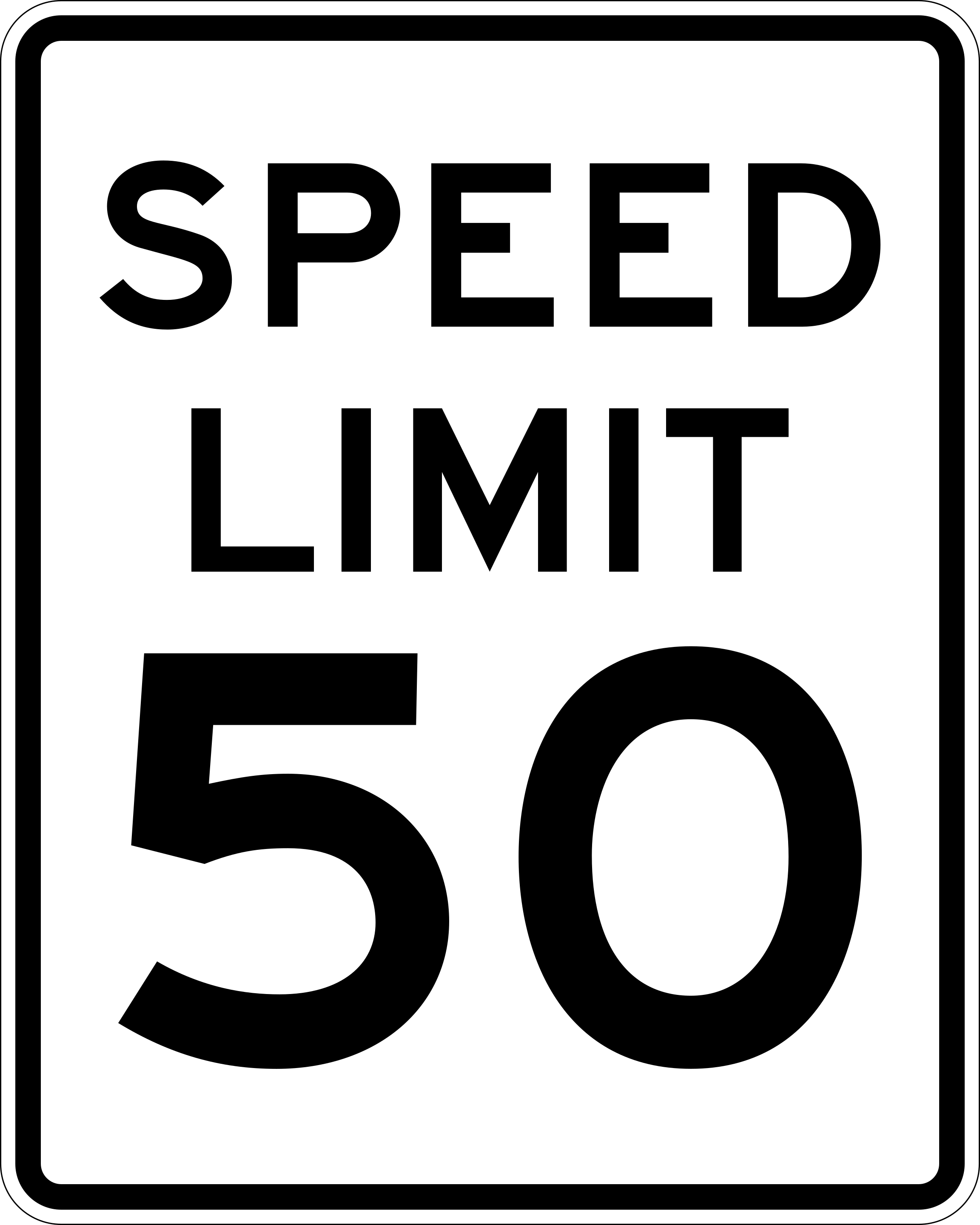
Question 72Can you get a ticket for driving too fast for conditions even if you are below the posted speed limit?
Show answer
D: Yes. The maximum limit is for ideal conditions; you can be ticketed for traveling too fast for road conditions even under the posted limit. Washington Driver Guide: 4.12 Common signs, page 114.
-
Question 73Automated traffic safety cameras in Washington record images when you:
Show answer
A: Fail to stop at a steady red light or railroad crossing signal, or speed in a school zone. Cameras record failing to stop at a red light or railroad signal and speeding in a school zone; tickets are mailed to the vehicle owner. Washington Driver Guide: 4.12 Common signs, page 115.
-
Question 74When are fines doubled in Washington construction areas?
Show answer
A: When workers are present. Fines double for offenses committed while driving in construction areas when workers are present. Washington Driver Guide: 4.12 Work zone signs, page 117.
-
Question 75A warning sign shows an 'Added lane' symbol from the right. What does it mean?

Show answer
D: A lane is added from the right and no merging is required. The added lane sign (from right) means a new lane joins and no merging is required. Washington Driver Guide: 4.12 Other traffic signs, page 120.
-
Question 76What is legally true of every intersection in Washington?
Show answer
D: It is legally a crosswalk, whether marked or unmarked. Every intersection is legally a crosswalk, whether it's marked or unmarked. Washington Driver Guide: 4.13 Common intersections, page 121.
-
Question 77When turning left or right at an intersection, Washington law requires you to turn into:
Show answer
C: The lane closest to the direction you are coming from. State law requires you to turn into the lane closest to the direction you're coming from. Washington Driver Guide: 4.14 Turning, page 123.
-
Question 78Why might a large vehicle go clockwise through a traffic calming circle?
Show answer
B: These circles are intended for passenger vehicles and may not easily fit large vehicles. Traffic calming circles may not accommodate large vehicles like fire trucks or buses, which might have to go clockwise. Washington Driver Guide: 4.15 Traffic calming circles, page 125.
-
Question 79Roundabouts are designed for what speeds?
Show answer
C: 15 to 25 mph. Roundabouts are designed for speeds between 15 and 25 mph. Washington Driver Guide: 4.15 Roundabouts, page 127.
-
Question 80An emergency vehicle approaches while you are in a roundabout. What should you do?
Show answer
C: Drive through the roundabout and pull over after exiting. Drive through the roundabout and pull over, just as you would at any other intersection. Washington Driver Guide: 4.15 Roundabouts, page 127.
-
Question 81What do shorter dashed white lines mean?
Show answer
B: The lane is ending; you will need to merge or exit. Shorter dashed white lines mean the lane is ending and you will need to merge or exit. Washington Driver Guide: 4.16 Lanes, page 131.
-
Question 82Is it legal to drive within, over or across a median?
Show answer
B: No, it's illegal. Medians can be open spaces, cement dividers or 18-inch solid yellow markings with stripes; it's illegal to drive within, over or across them. Washington Driver Guide: 4.16 Lanes, page 131.
-
Question 83What do double solid white lines between lanes mean?
Show answer
B: They are a barrier; it is illegal to cross them. Double solid white lines are a barrier between lanes, and it's illegal to cross them. Washington Driver Guide: 4.16 Lanes, page 132.
-
Question 84A solid yellow line on your side of the center and a dashed yellow line on the other side means:
Show answer
D: You may not pass. You're not allowed to pass when the solid yellow line is on your side; drivers with the dashed line on their side may pass when safe. Washington Driver Guide: 4.16 Lanes, page 133.
-
Question 85How far may you travel in a shared center left-turn lane in Washington?
Show answer
A: No more than 300 feet. Center turn lanes must not be used for passing, and you shouldn't travel farther than 300 feet in one. Washington Driver Guide: 4.16 Lanes, page 134.
-
Question 86Reversible lanes are usually marked by:
Show answer
B: Double-dashed white lines. Reversible lanes are usually marked by double-dashed white lines; check overhead signs before using them. Washington Driver Guide: 4.16 Reversible lanes, page 135.
-
Question 87Above a reversible lane, a steady yellow X means:
Show answer
C: The lane is changing direction; move out of it as soon as it's safe. A steady yellow X means the lane is changing direction and you should move out as soon as it's safe; a red X means you can't use it. Washington Driver Guide: 4.16 Reversible lanes, page 135.
-
Question 88By how much does zipper merging improve traffic flow, according to the guide?
Show answer
C: 60 percent. Zipper merging improves traffic flow by 60 percent. Washington Driver Guide: 5.3 Zipper merging, page 160.
-
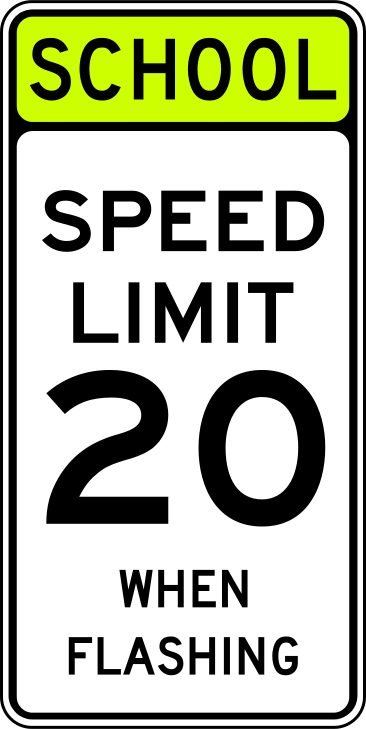
Question 89What is the school zone speed limit in Washington?
Show answer
B: 20 mph. The school zone speed limit is 20 mph because higher speeds increase the risk of fatal crashes. Washington Driver Guide: 4.17 School zone, page 140.
-
Question 90When you see a roadside response vehicle with flashing lights, Washington law says you must either move to a farther lane or slow to at least:
Show answer
B: 10 mph below the posted limit. Move over into a farther lane or slow to at least 10 mph below the posted speed limit. Washington Driver Guide: 4.17 Emergency zone, page 143.
-
Question 91What is the maximum speed allowed in a Washington emergency zone?
Show answer
C: 50 mph. Never drive faster than 50 mph in an emergency zone. Washington Driver Guide: 4.17 Emergency zone, page 143.
-
Question 92What is the speed limit for driving on Washington ocean beaches?
Show answer
B: 25 mph. The beach is considered a state highway; the speed limit is 25 mph and pedestrians and bicyclists always have the right-of-way. Washington Driver Guide: 4.20 Beaches, page 152.
-
Question 93How far from the curb may your vehicle be when parallel parked in Washington?
Show answer
C: No more than 12 inches. Don't park more than 12 inches from the curb. Washington Driver Guide: 4.18 General parking rules, page 144.
-
Question 94How close to a fire hydrant may you park in Washington?
Show answer
A: No closer than 15 feet. Do not park within 15 feet of a fire hydrant. Washington Driver Guide: 4.18 General parking rules, page 144.
-
Question 95You may not park within how many feet of a traffic signal, stop sign or yield sign?
Show answer
C: 30 feet. Do not park within 30 feet of a traffic signal, stop sign or yield sign. Washington Driver Guide: 4.18 General parking rules, page 143.
-
Question 96How close to a driveway, alley or private road may you park?
Show answer
B: No closer than 5 feet. Do not park within 5 feet of a driveway, alley or private road. Washington Driver Guide: 4.18 General parking rules, page 143.
-
Question 97On the opposite side of the street from a fire station driveway, you may not park within:
Show answer
C: 75 feet. Do not park within 75 feet of a fire station driveway on the opposite side of the street. Washington Driver Guide: 4.18 General parking rules, page 143.
-
Question 98How close to a railroad crossing may you park?
Show answer
A: No closer than 50 feet. Do not park within 50 feet of a railroad crossing. Washington Driver Guide: 4.18 General parking rules, page 144.
-
Question 99You may not park within how many feet of a pedestrian safety zone?
Show answer
B: 20 feet. Do not park within 20 feet of pedestrian safety zones. Washington Driver Guide: 4.18 General parking rules, page 144.
-
Question 100Parking facing uphill next to a tall curb, which way should you turn your steering wheel?
Show answer
D: Away from the curb, until the back of the front tire touches the curb. On hills with tall curbs, turn away from the curb until the back of the front tire touches it, so the car would roll back into the curb. Washington Driver Guide: 4.18 Parking on a hill, page 148.
-
Question 101With the engine off, it is a crime in Washington to leave a child under what age unattended in a parked vehicle?
Show answer
A: Under 12. It's a crime to leave a child under 12 unattended in a parked vehicle; if the motor is running, the age rises to under 16. Washington Driver Guide: 4.18 General parking rules, page 145.
-
Question 102It is a crime to leave a child under what age unattended in a parked vehicle while the motor is running?
Show answer
C: 16. It's a crime to leave a child under 16 unattended in a parked vehicle while the motor is running. Washington Driver Guide: 4.18 General parking rules, page 145.
-
Question 103Who receives priority loading on most Washington State Ferries?
Show answer
C: Bicyclists. Bicyclists receive priority loading on most ferries and can proceed past vehicles waiting in the holding lane. Washington Driver Guide: 4.20 Ferries, page 152.
-
Question 104In which Washington counties is driving allowed on ocean beaches?
Show answer
C: Grays Harbor and Pacific. Driving on ocean beaches is allowed only in Grays Harbor and Pacific counties, through marked approaches and on hard-packed sand. Washington Driver Guide: 4.20 Beaches, page 152.
-
Question 105May you turn right on red at an intersection with a bicycle box?
Show answer
C: No; stay behind the white line until the bicycle box is clear. You can't turn right on red near a bicycle box; stay behind the white line until it is clear. Washington Driver Guide: 4.16 Other road markings, page 140.
-
Question 106How much space does the Washington guide say to leave between you and the vehicle ahead?
Show answer
A: At least twice the length of your vehicle. When driving near other vehicles, leave a distance at least twice the length of your vehicle between you and the vehicle ahead. Washington Driver Guide: 5.2 Space, page 159.
-
Question 107When using the left lane to pass, you must:
Show answer
C: Still obey the speed limit. Follow speed limit laws, even when using the left lane to pass. Washington Driver Guide: 4.10 General driving guidance, page 108.
-
Question 108To practice judging distance in seconds, the guide suggests picking a marker you think is how many seconds ahead and counting?
Show answer
C: 15 seconds. Pick a marker you think is 15 seconds ahead and count until you reach it. Washington Driver Guide: 5.4 Count seconds, page 161.
-
Question 109At night, you should drive at a speed that lets you stop within the glow of your headlights, which is usually about:
Show answer
C: 400 feet. Drive at a speed that lets you stop within the glow of your headlights, usually 400 feet. Washington Driver Guide: 5.6 Night driving, page 166.
-
Question 110When should you switch from high beams to regular headlights?
Show answer
B: Within 500 feet of an oncoming vehicle and 300 feet when following another vehicle. Switch back to regular headlights when you're 500 feet in front of an oncoming vehicle or 300 feet behind another vehicle. Washington Driver Guide: 2.5 Headlights, page 50.
-
Question 111When does Washington law require headlights?
Show answer
C: From a half hour after sunset to a half hour before sunrise. Washington law requires headlights from a half hour after sunset to a half hour before sunrise; it's easier to keep them on all the time. Washington Driver Guide: 2.5 Headlights, page 49.
-
Question 112Why aren't daytime running lights a substitute for headlights at dusk?
Show answer
B: They aren't as bright as headlights and don't turn on your taillights. Daytime running lights aren't as bright as headlights and don't activate your taillights. Washington Driver Guide: 2.5 Headlights, page 49.
-
Question 113When approaching a curve, where should you position your vehicle?
Show answer
A: Slightly to the outside of the lane. Position your vehicle slightly to the outside of the lane as you approach a curve for more room and better visibility. Washington Driver Guide: 5.6 Curves, page 168.
-
Question 114When ice warms from below freezing to near freezing, the road becomes:
Show answer
C: More slippery, because the ice melts and becomes wet. When below-freezing temperatures warm to near freezing, ice can melt and become wet, which makes the road more slippery. Washington Driver Guide: 5.6 Slippery roads, page 171.
-
Question 115In a skid, which way should you steer?
Show answer
C: In the same direction your vehicle is moving. Steer in the same direction your vehicle is moving and keep correcting until the tires regain traction. Washington Driver Guide: 5.6 Skidding, page 172.
-
Question 116Your car breaks down and you have emergency flares. Where should you place them?
Show answer
B: 200 to 300 feet behind the vehicle. Warn others by placing emergency flares 200 to 300 feet behind the vehicle. Washington Driver Guide: 5.7 Vehicle failures, page 173.
-
Question 117Should you give an injured person water after a crash?
Show answer
A: No, don't give them anything to drink. Do not give injured people anything to drink, not even water; cover them to keep them warm. Washington Driver Guide: 5.9 Reporting an injury, page 177.
-
Question 118If your vehicle is touching a power line and catches fire, how should you get out?
Show answer
B: Jump clear with both feet landing together, don't touch the vehicle, and shuffle 35 feet away. Jump away with arms at your sides, land with both feet together without touching the vehicle, and shuffle 35 feet away. Washington Driver Guide: 5.9 Encountering power lines, page 178.
-
Question 119How far should people stay from a vehicle in contact with a power line?
Show answer
D: At least 35 feet. Encourage people to stay at least 35 feet away; the ground around the vehicle could be energized. Washington Driver Guide: 5.9 Encountering power lines, page 178.
-
Question 120Which vehicles count as roadside response vehicles for Washington's emergency zone law?
Show answer
C: Tow trucks, solid waste trucks, incident response, highway maintenance, utility vehicles, police, fire trucks and ambulances. Roadside response vehicles include tow trucks, solid waste trucks, incident response, highway maintenance, utility, law enforcement, fire and ambulances. Washington Driver Guide: 4.17 Emergency zone, page 143.
-
Question 121Your car's blind spot warning shows no alert, and you want to change lanes on a multilane freeway. What should you still do?
Show answer
B: Turn your head and check, because the system may miss a car two lanes over that is moving into the same space. The guide warns that blind spot systems can't tell if a vehicle two lanes over is also preparing to merge, so always do your own visual check. Washington Driver Guide: 2.4 Vehicle safety technology, page 45.
-
Question 122An intermediate license holder may drive at any hour, with passengers, when driving for which purpose?
Show answer
C: Agricultural purposes. The intermediate license rules make an exception for agricultural purposes, allowing driving at any hour and with passengers for farm work. Washington Driver Guide: 1.8 Intermediate driver license: Exceptions, page 29.
Answer every question to see your score.
Remembering the numbers
Most mistakes on the Washington DOL test are about specifics: how many feet before a turn to signal, how far to park from a hydrant, the alcohol limit for drivers under 21. Write the numbers from these questions on a card and review them before the test, then take the exam simulator.