Indiana BMV permit practice test 4
25 questions written from the Indiana Driver's Manual, covering turns and intersections, following and passing, lanes, highways and freeways, sharing the road, speed limits and more. Pick an answer to see straight away whether you're right and why.
-
Question 1In which direction does traffic move in a roundabout?
Show answer
A: Counterclockwise. A roundabout is a circular intersection where traffic proceeds counterclockwise. Indiana Driver's Manual: Chapter 7: Roundabouts, page 45.
-
Question 2Another vehicle is passing you on the left. What should you do?
Show answer
A: Allow it to pass safely and do not increase your speed. Let the passing driver get by: hold your speed steady and don't speed up. Indiana Driver's Manual: Chapter 7: Changing Lanes and Passing Other Vehicles — Being Passed, page 43.
-
Question 3On an Indiana interstate with two lanes in one direction, which lane are trucks restricted to?
Show answer
A: The right lane. Trucks are restricted to the right lane with two lanes, and the right two lanes with three or more. Indiana Driver's Manual: Chapter 7: Driving on Interstate Highways, page 51.
-
Question 4How far may a fully loaded tractor-trailer with hot brakes need to stop from 55 mph?
Show answer
C: More than 400 feet. A fully loaded tractor-trailer with hot brakes may need more than 400 feet to stop. Indiana Driver's Manual: Chapter 7: Sharing the Road with Tractor-Trailers — Braking, page 55.
-
Question 5What is the maximum speed in an Indiana alley unless posted otherwise?
Show answer
C: 15 mph. In alleys, vehicles may not exceed 15 mph or the posted limit. Indiana Driver's Manual: Chapter 7: Speed Limits — Urban Speed Limits, page 46.
-
Question 6Why does the manual suggest driving with a full tank of gas in winter?
Show answer
A: So the heater can run longer if you are stranded. A full tank lets the heater stay on as long as possible if you are stranded. Indiana Driver's Manual: Chapter 7: Driving in Uncertain Weather Conditions — Winter Driving, page 48.
-
Question 7After an accident on the traveled part of a highway with no injuries, what should the driver do with the vehicle?
Show answer
A: Move it off the highway to a spot as close to the accident as possible. If no one is hurt and no hazardous materials are involved, move the vehicle off the highway as close to the scene as possible. Indiana Driver's Manual: Chapter 8: What to Do After an Accident — Should You Move Your Vehicle?, page 63.
-
Question 8In the penny test, what does it mean if part of Lincoln's head is covered by the tread?
Show answer
A: You have a legal and safe amount of tread. If any part of Lincoln's head is covered, you have a legal and safe amount of tread. Indiana Driver's Manual: Chapter 7: Tire Pressure and Tread Depth, page 48.
-
Question 9How close to a fire hydrant may you park in Indiana?
Show answer
C: No closer than 15 feet. Parking within 15 feet of a fire hydrant is prohibited. Indiana Driver's Manual: Chapter 7: Parking and Reversing — Illegal Parking Areas, page 59.
-
Question 10An Indiana permit holder may practice with their spouse. How old must the licensed spouse be?
Show answer
C: 21 or older. A permit holder may practice with a spouse who is licensed and at least 21 years old. Indiana Driver's Manual: Chapter 1: Practice Driving with Your Learner's Permit, page 9.
-
Question 11In Indiana, what happens to your driving privileges if you are convicted of operating a watercraft while intoxicated?
Show answer
A: They face the same penalties as for a motor vehicle. An OWI conviction on a watercraft carries the same driving-privilege penalties as for a motor vehicle. Indiana Driver's Manual: Chapter 5: Operating a Watercraft While Intoxicated, page 29.
-
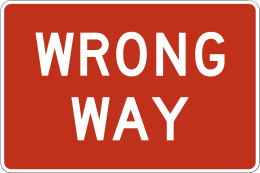
Question 12What does a red background on a traffic sign convey?
Show answer
A: Regulations requiring immediate action to avoid threats to safety. Red signs convey regulations requiring immediate action, such as Wrong Way. Indiana Driver's Manual: Chapter 6: Traffic Sign Colors, page 32.
-
Question 13What does a flashing yellow light (no arrow) at an intersection mean?
Show answer
A: Slow down and use caution. A flashing yellow light means slow down and use caution through the intersection. Indiana Driver's Manual: Chapter 6: Traffic Signals — Yellow Flashing Lights, page 39.
-
Question 14You are entering a street from an alley or driveway. What should you do?
Show answer
A: Stop and yield the right of way to other vehicles. Before entering a street from an alley or driveway, stop and yield to other vehicles. Indiana Driver's Manual: Chapter 6: Traffic Signals — Approaching an Intersection with No Sign or Signal, page 40.
-
Question 15In a multi-lane roundabout, when should you choose your lane?
Show answer
A: Before entering. Know which lane you need before entering; do not change lanes in the circulatory roadway. Indiana Driver's Manual: Chapter 7: Roundabouts, page 45.
-
Question 16The driver ahead has signaled a turn or slowed down. What should you do?
Show answer
A: Slow down and be prepared to stop. When following a driver who signals or slows for a turn, slow down and be prepared to stop. Indiana Driver's Manual: Chapter 7: Following Turning Vehicles, page 45.
-
Question 17When may you stop or park on the shoulder of an Indiana interstate?
Show answer
A: Only in an emergency or with a disabled vehicle. Except for an emergency or disabled vehicle, do not stop or park on an interstate shoulder. Indiana Driver's Manual: Chapter 7: Driving on Interstate Highways, page 51.
-
Question 18Why do tractor-trailer drivers often swing out before a tight turn?
Show answer
A: The rear wheels follow a shorter path than the front wheels. The rear wheels follow a shorter path than the front wheels, so tractor-trailers swing wide to turn. Indiana Driver's Manual: Chapter 7: Sharing the Road with Tractor-Trailers — Turning, page 55.
-
Question 19Unless posted otherwise, what is the speed limit on Indiana county roads?
Show answer
C: 55 mph. On county roads, vehicles may not exceed 55 mph or the posted limit. Indiana Driver's Manual: Chapter 7: Speed Limits — Urban Speed Limits, page 46.
-
Question 20When are wet roads especially slick?
Show answer
A: Immediately following a rainfall. The manual says wet roads can be dangerously slick, especially immediately following a rainfall, because tires ride on a thin layer of oil, dirt and water. Indiana Driver's Manual: Chapter 7: Driving in Uncertain Weather Conditions — Rain, page 48.
-
Question 21When should you NOT move your vehicle after an accident?
Show answer
A: When the accident results in injury, death or entrapment, or involves hazardous materials. Do not move the vehicle if the accident involves hazardous materials or results in injury, death or entrapment. Indiana Driver's Manual: Chapter 8: What to Do After an Accident — Should You Move Your Vehicle?, page 63.
-
Question 22Going 18 hours without sleep impairs a driver about as much as what BAC?
Show answer
C: .08. Studies show 18 hours without sleep leaves a driver as impaired as one with a .08 BAC. Indiana Driver's Manual: Chapter 7: Impaired and Dangerous Driving — Drowsy Driving, page 50.
-
Question 23Where is parking prohibited?
Show answer
A: Beside another parked vehicle (double parking). Illegal parking areas include beside another parked vehicle, in intersections, on crosswalks and sidewalks, and next to yellow curbs. Indiana Driver's Manual: Chapter 7: Parking and Reversing — Illegal Parking Areas, page 59.
-
Question 24Where must the supervising driver sit when an Indiana permit holder is practicing?
Show answer
A: In the front passenger seat. The supervising licensed driver, instructor or specialist must be seated in the front passenger seat. Indiana Driver's Manual: Chapter 1: Practice Driving with Your Learner's Permit, page 9.
-
Question 25How does alcohol affect a driver?
Show answer
A: It impairs clear thinking and coordination and slows reaction time. Alcohol affects your ability to think clearly and your coordination, and decreases reaction time. Indiana Driver's Manual: Chapter 8: Impaired Driving, page 64.
Answer every question to see your score.
More Indiana practice tests
- Practice test 125 questions
- Practice test 225 questions
- Practice test 325 questions
- Practice test 525 questions
- Practice test 625 questions
- Practice test 725 questions
- Practice test 825 questions
- Practice test 925 questions
- Practice test 1025 questions
- Practice test 1125 questions
- Practice test 1225 questions
- Exam simulatorThe real format
How to use these tests
Read each explanation, even when you get the question right: it tells you the rule and the handbook section, so you can look it up. Your answers are saved in this browser only, so the weak spots mode can give you more questions on the topics you miss. When you're scoring well, take the exam simulator: it uses 25 questions at the BMV's pass mark, since it doesn't publish the number of questions.
Our own questions, written from the Indiana Driver's Manual and checked against it. Not affiliated with the Indiana Bureau of Motor Vehicles. Found a mistake? Tell us.