New Hampshire DMV permit practice test 4
25 questions written from the New Hampshire Driver's Manual (DSMV 360), covering signals and pavement markings, hazards, weather and night driving, following and passing, road signs, lanes, highways and freeways and more. Pick an answer to see straight away whether you're right and why. The real New Hampshire DMV test has 40 questions and you need 32 right.
-
Question 1A police officer is directing traffic at a signalized intersection. Whom do you obey?
Show answer
D: The police officer. A police officer directing traffic overrules any traffic light or sign and must be obeyed. New Hampshire Driver's Manual (DSMV 360): Section 6: Rules of the Road: New Hampshire Rules of the Road, page 26.
-
Question 2An oncoming driver has high beams on. Where should you look?
Show answer
A: Toward the right side of the road. Look toward the right side of the road (the fog line or road edge) to avoid being blinded. New Hampshire Driver's Manual (DSMV 360): Section 5: Basic Driving: Night Driving, page 24.
-
Question 3Using the counting method, how do you know if you are following at least four seconds behind?
Show answer
D: You don't pass the fixed point before counting to 'one-thousand-four'. Count from when the vehicle ahead passes a fixed point; you should not reach that point before counting 'one-thousand-four'. New Hampshire Driver's Manual (DSMV 360): Section 8: Driving Safely: Space Management, page 36.
-
Question 4What does a brown sign indicate?
Show answer
B: Tourist and recreation guidance. Brown signs give tourist and recreation guidance. New Hampshire Driver's Manual (DSMV 360): Section 6: Rules of the Road: Traffic Signs: Standard Colors, page 27.
-
Question 5How should you enter a multi-lane highway?
Show answer
C: Use the acceleration lane to reach traffic speed and merge into a gap. Use the acceleration lane to reach the speed of other vehicles, then merge into a gap in traffic. New Hampshire Driver's Manual (DSMV 360): Section 5: Basic Driving: Changing Lanes—Entering a Multi-lane Highway, page 22.
-
Question 6Why might a large truck straddle both lanes in a roundabout?
Show answer
D: Large trucks and trailers may need both lanes to get through. Do not drive beside or pass vehicles in a roundabout; large trucks and trailers may need to straddle both lanes. New Hampshire Driver's Manual (DSMV 360): Section 7: General Driving and Parking: Multi-Lane Roundabouts (Traffic Circles), page 33.
-
Question 7Where should pedestrians walk when there is no sidewalk?
Show answer
D: On the left side facing oncoming traffic. Pedestrians should walk on the left side facing oncoming traffic where there's no sidewalk, and never on interstates. New Hampshire Driver's Manual (DSMV 360): Section 11: Sharing the Road: Pedestrians, page 42.
-
Question 8How close to the nearest rail of a railroad crossing may you park in New Hampshire?
Show answer
D: No closer than 50 feet. It is illegal to park within 50 feet of the nearest rail of a railroad crossing. New Hampshire Driver's Manual (DSMV 360): Section 7: General Driving and Parking: Parking, page 34.
-
Question 9Your vehicle begins to skid. What does the New Hampshire manual advise?
Show answer
C: Ease up on the accelerator and steer in the direction the rear of the vehicle is sliding. Ease up on the accelerator and steer in the direction the rear is sliding; be ready to counter-steer, then straighten the wheels. New Hampshire Driver's Manual (DSMV 360): Section 10: Driving Emergencies: Dealing with Skids, page 40.
-
Question 10How long do new residents have to get a New Hampshire driver's license after moving in?
Show answer
C: Up to 60 days. New residents have up to 60 days to obtain a New Hampshire driver's license. New Hampshire Driver's Manual (DSMV 360): Section 1: Driving in New Hampshire: New Residents to NH, page 7.
-
Question 11Under New Hampshire's implied consent law, what have you agreed to by driving in NH?
Show answer
C: Having your blood, breath or urine tested if arrested for an alcohol or drug offense. Anyone who drives in New Hampshire is considered to have consented to blood, breath or urine testing if arrested for an alcohol or drug offense; refusal may cost your license. New Hampshire Driver's Manual (DSMV 360): Section 2: Loss of Driving Privileges, page 12.
-
Question 12How far should your chest be from the steering wheel?
Show answer
C: 10 inches. There should be 10 inches between the driver's chest and the steering wheel. New Hampshire Driver's Manual (DSMV 360): Section 4: Before Driving: Adjusting Seat, page 17.
-
Question 13On an interstate entrance ramp, whom must you yield to?
Show answer
C: Drivers already on the limited access or interstate highway. Yield to drivers already on the limited access or interstate highway when you're on the entrance or acceleration ramp. New Hampshire Driver's Manual (DSMV 360): Section 5: Yielding Right-of-Way, page 20.
-
Question 14During what times does the New Hampshire school zone speed reduction apply?
Show answer
B: From 45 minutes before school opening until opening, and from closing until 45 minutes after. The reduced school zone limit applies from 45 minutes before school opening until it opens, and from school closing until 45 minutes after. New Hampshire Driver's Manual (DSMV 360): Section 5: Basic Driving: Speed Management, page 21.
-
Question 15What does a solid white line between lanes mean in New Hampshire?
Show answer
B: Changing lanes or passing is prohibited. Solid white lines prohibit changing lanes or passing another vehicle. New Hampshire Driver's Manual (DSMV 360): Section 6: Rules of the Road: Pavement Markings, page 29.
-
Question 16In a work zone, when may you resume normal speed?
Show answer
A: When you see the 'End Road Work' sign. Observe the work zone signs and do not resume normal speed until the 'End Road Work' sign is visible. New Hampshire Driver's Manual (DSMV 360): Section 11: Sharing the Road: Work Zones, page 47.
-
Question 17When should you increase your following distance beyond four seconds?
Show answer
A: Behind trucks, buses, RVs or trailers; at night, in fog or bad weather; on slippery roads. Increase following distance on slippery roads, behind large vehicles, at night or in fog/bad weather, and behind vehicles that must stop at railroad crossings. New Hampshire Driver's Manual (DSMV 360): Section 8: Driving Safely: Space Management, page 37.
-
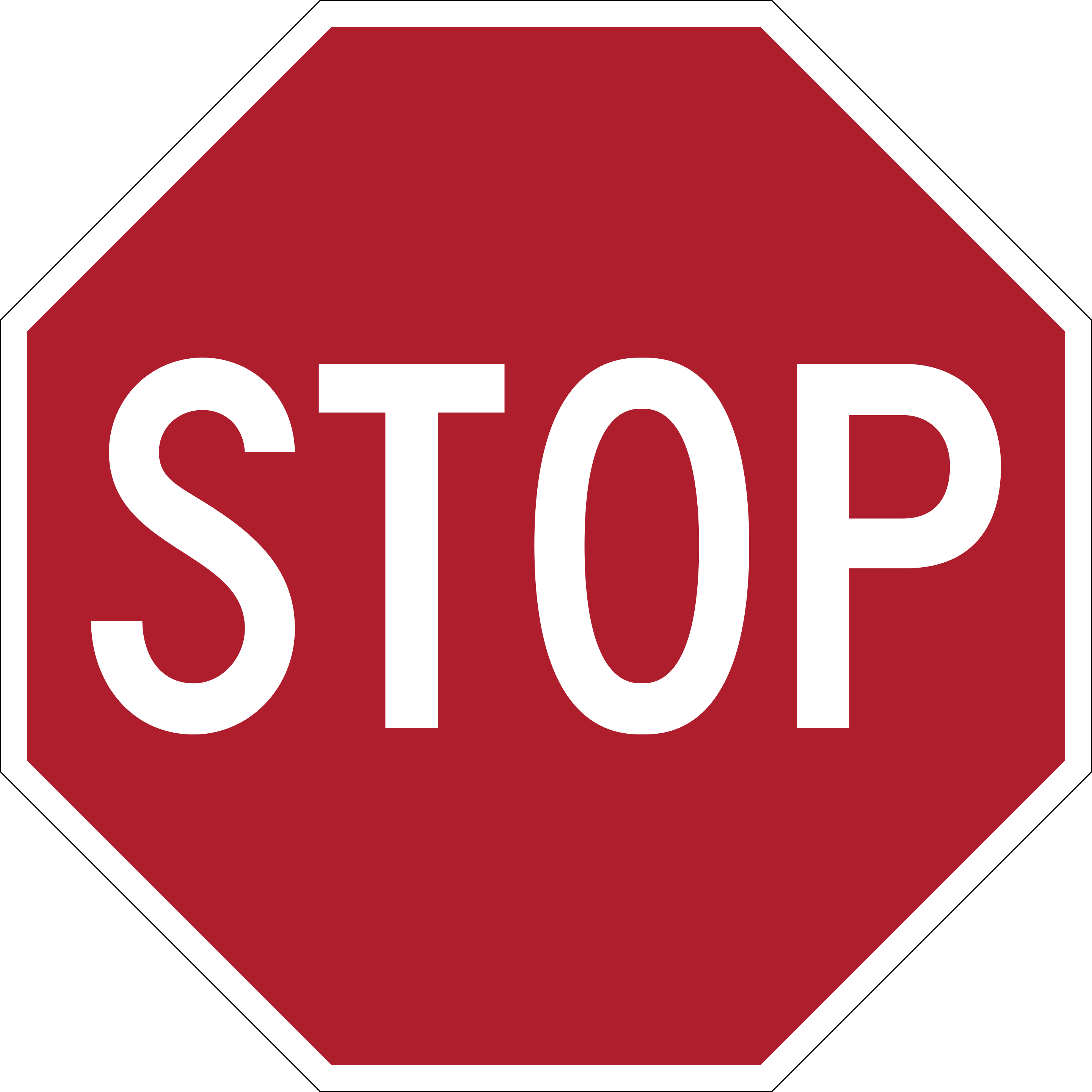
Question 18At a stop sign, what does a 'full stop' mean in New Hampshire?
Show answer
C: The wheels must completely stop moving. Drivers must come to a full stop, meaning the wheels completely stop, behind the stop line or crosswalk (or before the intersection). New Hampshire Driver's Manual (DSMV 360): Section 6: Rules of the Road: Traffic Signs: Examples of Prohibition Signs, page 27.
-
Question 19When exiting a highway, when should you slow to exit speed?
Show answer
C: After moving into the deceleration lane. Move to the lane nearest the exit early, keep your speed on the main road, signal, move into the deceleration lane and slow to exit speed. New Hampshire Driver's Manual (DSMV 360): Section 5: Basic Driving: Changing Lanes—Exiting a Roadway, page 22.
-
Question 20An emergency vehicle approaches while you are inside a roundabout. What should you do?
Show answer
D: Continue through, exit, pull over to the right and let it pass. Never stop inside the roundabout; move through, exit, then pull over to the right. Don't enter a roundabout when emergency vehicles approach. New Hampshire Driver's Manual (DSMV 360): Section 7: General Driving and Parking: Multi-Lane Roundabouts (Traffic Circles), page 33.
-
Question 21What passing distance does New Hampshire presume reasonable for a bicyclist when you are going 30 mph or less?
Show answer
D: At least 3 feet. At 30 mph or less, at least 3 feet is presumed reasonable, plus one more foot for every 10 mph above 30. New Hampshire Driver's Manual (DSMV 360): Section 11: Sharing the Road: Bicyclists, page 42.
-
Question 22On the opposite side of the street from a fire station driveway, how close may you park?
Show answer
A: Not within 75 feet. You may not park within 20 feet of a fire station driveway, or within 75 feet on the opposite side of the street. New Hampshire Driver's Manual (DSMV 360): Section 7: General Driving and Parking: Parking, page 34.
-
Question 23How do you use ABS brakes in an emergency?
Show answer
C: Press the pedal and keep applying pressure; vibration and clicking are normal. Press the brake and keep pressure on it; ABS works only if pressure is kept on, and vibration and clicking are normal. New Hampshire Driver's Manual (DSMV 360): Section 10: Driving Emergencies: Braking, page 40.
-
Question 24What vision is required for a New Hampshire driver's license?
Show answer
B: 20/40 in both eyes; 20/30 if sight in only one eye. Applicants need 20/40 visual acuity in both eyes; with sight in only one eye, 20/30 is required. New Hampshire Driver's Manual (DSMV 360): Section 1: Driving in New Hampshire: Required Driver's License Tests, page 8.
-
Question 25Which prescription drugs does the New Hampshire manual say can affect safe driving?
Show answer
A: Antidepressants, pain reducers, sleep aids and sedatives. Prescription drugs such as antidepressants, pain reducers, sleep aids and sedatives can affect reflexes, judgment, vision and alertness. New Hampshire Driver's Manual (DSMV 360): Section 3: Dangerous Driving: Prescription Drugs, page 15.
Answer every question to see your score.
More New Hampshire practice tests
- Practice test 125 questions
- Practice test 225 questions
- Practice test 325 questions
- Practice test 525 questions
- Practice test 625 questions
- Practice test 725 questions
- Practice test 825 questions
- Practice test 925 questions
- Practice test 1025 questions
- Practice test 1121 questions
- Exam simulatorThe real format, 40 questions
How to use these tests
Read each explanation, even when you get the question right: it tells you the rule and the handbook section, so you can look it up. Your answers are saved in this browser only, so the weak spots mode can give you more questions on the topics you miss. When you're scoring well, take the exam simulator: it uses the same number of questions and passing score as the real test.
Our own questions, written from the New Hampshire Driver's Manual (DSMV 360) and checked against it. Not affiliated with the New Hampshire Department of Safety, Division of Motor Vehicles. Found a mistake? Tell us.