New Hampshire DMV permit practice test 7
25 questions written from the New Hampshire Driver's Manual (DSMV 360), covering licensing laws and penalties, alcohol and drugs, safe and defensive driving, signals and pavement markings, hazards, weather and night driving and more. Pick an answer to see straight away whether you're right and why. The real New Hampshire DMV test has 40 questions and you need 32 right.
-
Question 1If you fail the New Hampshire knowledge or road test, when can you retest?
Show answer
A: Not sooner than ten days from the failed test. If either test is failed, you get an appointment to retest not sooner than ten days later. New Hampshire Driver's Manual (DSMV 360): Section 1: Driving in New Hampshire: Pass/Fail of Tests, page 9.
-
Question 2You're unsure whether a medicine is safe to take before driving. What should you do?
Show answer
A: Check the label and ask your doctor or pharmacist about side effects. Check the product label for warnings and, if unsure, ask a doctor or pharmacist about side effects. New Hampshire Driver's Manual (DSMV 360): Section 3: Dangerous Driving: Over-the-Counter Drugs, page 15.
-
Question 3What is the fine range for a first offense if snow or ice on your vehicle endangers people or property in New Hampshire?
Show answer
C: $250 to $500. Under RSA 265:79-b, penalties can be $250 to $500 for a first offense, with more for later offenses. New Hampshire Driver's Manual (DSMV 360): Section 4: Before Driving: Snow and Ice Removal, page 19.
-
Question 4What do broken yellow lines between lanes indicate?
Show answer
C: Traffic moves in opposite directions, and passing is allowed when safe. Yellow lines separate opposing traffic; you may pass over broken lines when it is safe. New Hampshire Driver's Manual (DSMV 360): Section 6: Rules of the Road: Pavement Markings, page 29.
-
Question 5What should you do on open bridge gratings or steel bridges?
Show answer
A: Reduce speed, increase following distance and keep a firm grip on the wheel. Open gratings reduce traction: reduce speed, increase following distance and keep a firm grip. New Hampshire Driver's Manual (DSMV 360): Section 5: Basic Driving: Rural Road Driving, page 24.
-
Question 6A vehicle is trying to merge onto a multi-lane highway beside you. What should you do?
Show answer
A: Move over a lane or adjust your speed to give it space. Allow space for vehicles entering a multiple-lane or limited-access roadway by moving over a lane or adjusting your speed. New Hampshire Driver's Manual (DSMV 360): Section 8: Space Management—Space to the Side, page 37.
-
Question 7What can happen to fines in a New Hampshire work zone?
Show answer
A: They may be doubled, when clearly marked. Fines may be doubled in a work zone, which will be clearly marked before you enter it. New Hampshire Driver's Manual (DSMV 360): Section 6: Rules of the Road: Work Zone Signs, page 29.
-
Question 8May you share a lane with a motorcycle?
Show answer
A: Never; motorcycles are entitled to the full lane width. Never attempt to share a lane with a motorcycle; motorcycles are entitled to the same full lane width as all other vehicles. New Hampshire Driver's Manual (DSMV 360): Section 11: Sharing the Road: Motorcycles, page 43.
-
Question 9What may a person with a walking disability do if a car is parked illegally in an accessible space or aisle?
Show answer
C: Submit a photo of the vehicle with a sworn statement to local police. The law lets persons with walking disabilities or their drivers submit a photo of the illegally parked vehicle with a sworn statement to local police. New Hampshire Driver's Manual (DSMV 360): Section 7: General Driving and Parking: Parking: Spaces and Access Aisles, page 34.
-
Question 10Your car breaks down and you have no phone. What color cloth should you tie to the door handle or antenna in a snowstorm?
Show answer
D: Red. Raise the hood and tie a white cloth—red in a snowstorm—to the driver's door handle or antenna. New Hampshire Driver's Manual (DSMV 360): Section 10: Driving Emergencies: Vehicle Breakdown, page 41.
-
Question 11How long is the temporary paper license valid after passing your New Hampshire tests?
Show answer
C: 60 days. Applicants who pass get a 60-day paper temporary license to use until the permanent license arrives by mail. New Hampshire Driver's Manual (DSMV 360): Section 1: Driving in New Hampshire: Pass/Fail of Tests, page 9.
-
Question 12Why should you never drink alcohol while taking other drugs?
Show answer
B: The drugs could multiply the effects of alcohol or add effects of their own. Other drugs could multiply alcohol's effects or have additional effects that severely impair driving. New Hampshire Driver's Manual (DSMV 360): Section 3: Dangerous Driving: Combining Alcohol and Other Impairing Drugs, page 15.
-
Question 13When is a load considered secure?
Show answer
B: When nothing can slide, shift, fall or sift onto the roadway or become airborne. A load is secure only when nothing can slide, shift, fall or sift onto the roadway, or become airborne. New Hampshire Driver's Manual (DSMV 360): Section 4: Before Driving: Securing a Load, page 18.
-
Question 14What is a shared center turn lane used for?
Show answer
D: Left turns only, by vehicles from either direction. Shared center lanes are for left turns only, from either direction, and not for through traffic or passing. New Hampshire Driver's Manual (DSMV 360): Section 6: Rules of the Road: Pavement Markings: Shared Center Turn Lane, page 30.
-
Question 15How should you approach an uncontrolled rural intersection?
Show answer
C: Slow down and be prepared to stop for crossing or oncoming traffic. When approaching an uncontrolled rural intersection, slow down and be prepared to stop. New Hampshire Driver's Manual (DSMV 360): Section 5: Basic Driving: Rural Road Driving, page 24.
-
Question 16Why should you avoid driving next to other vehicles for long periods?
Show answer
D: You may be in their blind spot and have less space to avoid a collision. You may be in their blind spot, and it reduces the space you need to avoid a collision. New Hampshire Driver's Manual (DSMV 360): Section 8: Space Management—Space to the Side, page 37.
-
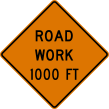
Question 17What color are work zone signs?
Show answer
B: Orange with black letters or symbols. Work zone signs are generally diamond or rectangular and orange with black letters or symbols. New Hampshire Driver's Manual (DSMV 360): Section 6: Rules of the Road: Work Zone Signs, page 29.
-
Question 18Which road surfaces may cause a motorcyclist to slow down or change direction?
Show answer
B: Gravel, debris, pavement seams, grooved pavement and manhole covers. Uneven surfaces, gravel, debris, pavement seams, grooved pavement and manhole covers can make riders slow or change direction. New Hampshire Driver's Manual (DSMV 360): Section 11: Sharing the Road: Motorcycles, page 44.
-
Question 19A front tire blows out. Which way does the vehicle pull?
Show answer
A: Sharply in the direction of the blowout. A front blowout pulls the vehicle sharply toward the blowout; grip the wheel, keep straight and slow gradually. New Hampshire Driver's Manual (DSMV 360): Section 10: Driving Emergencies: Tire Blowout, page 41.
-
Question 20Who must bring a licensed driver to the New Hampshire road test?
Show answer
A: Every applicant, to drive the test vehicle to and from the site and stay until the test is done. Bring a licensed driver to drive the test vehicle to and from the site; that person must remain at the site until the road test is complete. New Hampshire Driver's Manual (DSMV 360): Section 1: Driving in New Hampshire: What to Bring to the Tests, page 9.
-
Question 21At what BAC can a driver's ability already be affected, according to the New Hampshire manual?
Show answer
A: As low as .02%. A BAC as low as .02% can affect a driver's ability to drive, and vision is affected at .02 for all drivers. New Hampshire Driver's Manual (DSMV 360): Section 3: Dangerous Driving: Alcohol, Other Drugs and Driving, page 14.
-
Question 22What hand positions does the New Hampshire manual recommend on the steering wheel?
Show answer
B: 9 and 3 o'clock, or 8 and 4 o'clock. Hands should be at 9 and 3 o'clock or 8 and 4 o'clock, with knuckles and thumbs outside the wheel. New Hampshire Driver's Manual (DSMV 360): Section 5: Basic Driving: Steering, page 20.
-
Question 23On a solid green light, what must you still do?
Show answer
A: Proceed with caution and yield to pedestrians and vehicles in the intersection. A solid green light means you may go if clear, proceeding with caution and yielding to pedestrians and vehicles in the intersection. New Hampshire Driver's Manual (DSMV 360): Section 6: Rules of the Road: Traffic Signals, page 26.
-
Question 24On a narrow rural road with ditches instead of shoulders, what should you do?
Show answer
B: Reduce speed, center the vehicle in your lane and watch for oncoming traffic encroaching. Reduce speed, center your vehicle in the travel lane and watch for oncoming traffic that may share or encroach on your lane. New Hampshire Driver's Manual (DSMV 360): Section 5: Basic Driving: Rural Road Driving, page 24.
-
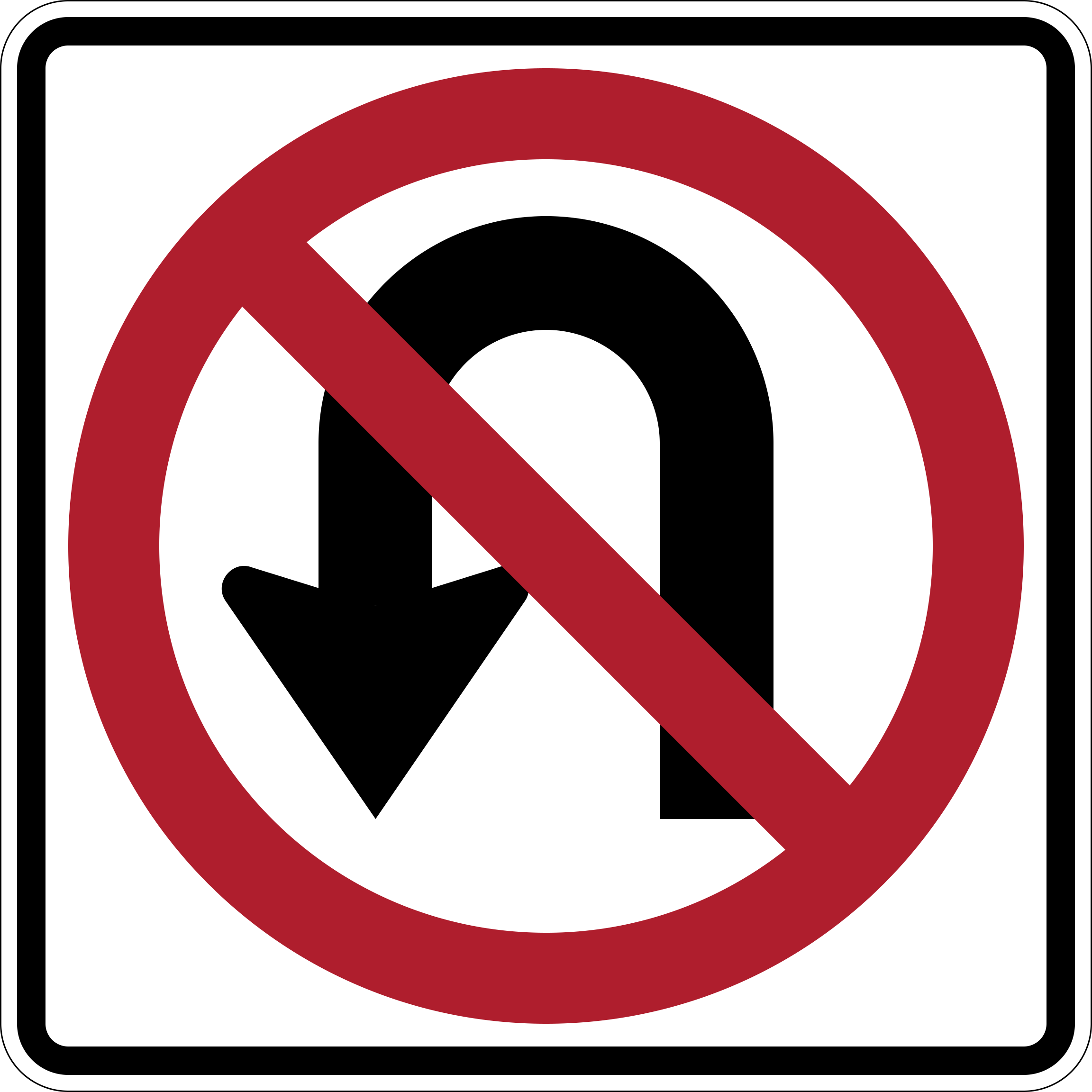
Question 25What does a red circle with a slash over a symbol on a regulatory sign mean?
Show answer
D: The action shown is prohibited. Regulatory signs with a red circle and red slash over a symbol prohibit that action. New Hampshire Driver's Manual (DSMV 360): Section 6: Rules of the Road: Regulatory Signs, page 28.
Answer every question to see your score.
More New Hampshire practice tests
- Practice test 125 questions
- Practice test 225 questions
- Practice test 325 questions
- Practice test 425 questions
- Practice test 525 questions
- Practice test 625 questions
- Practice test 825 questions
- Practice test 925 questions
- Practice test 1025 questions
- Practice test 1121 questions
- Exam simulatorThe real format, 40 questions
How to use these tests
Read each explanation, even when you get the question right: it tells you the rule and the handbook section, so you can look it up. Your answers are saved in this browser only, so the weak spots mode can give you more questions on the topics you miss. When you're scoring well, take the exam simulator: it uses the same number of questions and passing score as the real test.
Our own questions, written from the New Hampshire Driver's Manual (DSMV 360) and checked against it. Not affiliated with the New Hampshire Department of Safety, Division of Motor Vehicles. Found a mistake? Tell us.