Washington DOL permit practice test 5
25 questions written from the Washington Driver Guide, covering safe and defensive driving, hazards, weather and night driving, right of way, sharing the road, signals and pavement markings and more. Pick an answer to see straight away whether you're right and why. The real Washington DOL test has 40 questions and you need 32 right.
-
Question 1Where should your headrest be positioned to protect against whiplash?
Show answer
B: Even with your ears. Make sure the headrest is even with your ears to protect against whiplash. Washington Driver Guide: 2.5 Driver's seat, page 51.
-
Question 2When approaching a curve, where should you position your vehicle?
Show answer
A: Slightly to the outside of the lane. Position your vehicle slightly to the outside of the lane as you approach a curve for more room and better visibility. Washington Driver Guide: 5.6 Curves, page 168.
-
Question 3At a four-way stop, a driver turning left and a driver going straight arrive together from opposite directions. Who must yield?
Show answer
A: The driver turning left. Any vehicle turning left must yield the right-of-way to vehicles going straight or turning right. Washington Driver Guide: 4.13 Four-way stop, page 122.
-
Question 4On a multilane road, when are drivers traveling in the opposite direction from a stopped school bus NOT required to stop?
Show answer
A: When there are three or more lanes, or the lanes are separated by a median or barrier. Opposite-direction drivers don't need to stop if there are three or more lanes or the lanes are separated by a median or barrier. Washington Driver Guide: 4.2 When you are in front of the bus, page 97.
-
Question 5What does a green arrow signal mean?
Show answer
B: You have the right-of-way to go in the arrow's direction. A green arrow gives you the right-of-way to travel in that direction; there should be no conflicting traffic. Washington Driver Guide: 4.11 Green arrow, page 112.
-
Question 6What does a white sign color mean?
Show answer
C: Regulatory. White is used for regulatory signs. Washington Driver Guide: 4.12 Signs, page 113.
-
Question 7Where should you NOT make a U-turn?
Show answer
C: On a curve or when approaching the crest of a hill. Don't make a U-turn on a curve or approaching the crest of a hill, where visibility is limited. Washington Driver Guide: 4.14 U-turns, page 124.
-
Question 8You missed your freeway exit. What does Washington law say?
Show answer
D: Don't drive in reverse; it's illegal to back up on a shoulder or freeway. Keep moving forward; it's illegal to back up on a shoulder or freeway. Washington Driver Guide: 4.10 General driving guidance, page 108.
-
Question 9In which situation does the guide say to reduce your speed?
Show answer
C: On narrow bridges and in tunnels. Reduce speed on sharp curves and hills, slippery roads, near pedestrians, in parking areas, in heavy traffic, on narrow bridges and tunnels, and in residential areas. Washington Driver Guide: 5.1 Adjusting speed for conditions, page 158.
-
Question 10Which of these is a legal place to park?
Show answer
B: In a marked space along the curb, facing the direction of traffic, within 12 inches of the curb. Parking in a marked curbside space, facing the same way as traffic and no more than 12 inches from the curb, follows the guide's rules; bridges and overpasses, double parking and facing oncoming traffic are all listed as places or ways you may not park. Washington Driver Guide: 4.18 General parking rules, page 144.
-
Question 11To practice judging distance in seconds, the guide suggests picking a marker you think is how many seconds ahead and counting?
Show answer
C: 15 seconds. Pick a marker you think is 15 seconds ahead and count until you reach it. Washington Driver Guide: 5.4 Count seconds, page 161.
-
Question 12A tire suddenly blows out. What should you do?
Show answer
A: Grip the wheel firmly, keep the vehicle straight, take your foot off the gas and avoid braking. Grip the wheel, keep going straight, slow gradually without braking (or brake gently), and pull off in a safe place. Washington Driver Guide: 5.7 Tires, page 173.
-
Question 13To get a license at 16 or 17, you must have been without traffic violations or convictions for how long before applying?
Show answer
C: 6 months. You must be without any traffic violations or convictions for 6 months before applying for the license. Washington Driver Guide: 1.8 Getting your personal driver license: ages 16 to 17, page 26.
-
Question 14Under Washington's open container law, where may open alcohol or cannabis products be carried?
Show answer
A: In the trunk or truck bed. Open alcohol and cannabis products can only be transported in a trunk or truck bed, not in compartments the driver can reach. Washington Driver Guide: 1.15 Open container law, page 39.
-
Question 15Who must wear a seat belt or use an approved child restraint in a moving vehicle in Washington?
Show answer
A: Every person in the vehicle. Every person in a moving vehicle must wear a seat belt or be securely fastened in an approved child restraint (RCW 46.61.687, .688). Washington Driver Guide: 2.6 Seat belts and occupant protection, page 52.
-
Question 16What should you do while driving through a curve?
Show answer
C: Maintain a steady speed and steer smoothly. Reduce speed before the curve; in the curve, keep a steady speed and steer gently. Washington Driver Guide: 5.6 Curves, page 168.
-
Question 17At a two-way stop, who has the right-of-way?
Show answer
A: The vehicle going straight. At a two-way stop, turning vehicles must yield to the vehicle going straight. Washington Driver Guide: 4.13 Two-way stop, page 122.
-
Question 18About how far does a loaded truck with properly adjusted brakes need to stop from 55 mph?
Show answer
D: 450 feet. It takes a loaded truck traveling at 55 mph about 450 feet to come to a complete stop. Washington Driver Guide: 4.4 Sharing with large vehicles, page 98.
-
Question 19How should you use a freeway ramp meter showing red?
Show answer
B: Stop at the white stop line and go when it turns green. Ramp meters work like regular signals: stop at the white stop line on red, continue on green. Washington Driver Guide: 4.11 Freeway ramp meters, page 113.
-
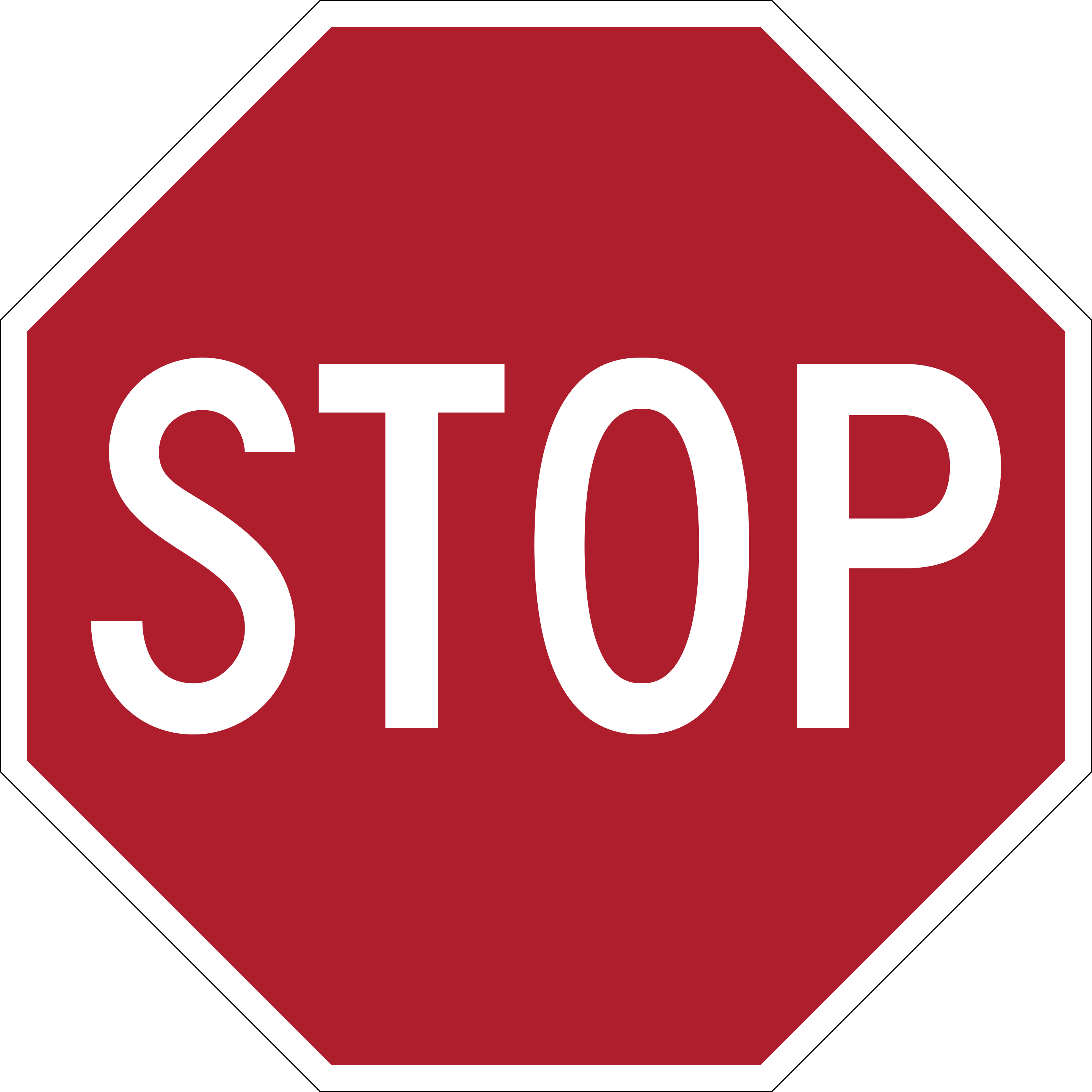
Question 20What must you do at a stop sign?
Show answer
C: Stop at the line, crosswalk or corner, look in all directions and yield the right-of-way. A stop sign means stop at the line, crosswalk or corner, look for vehicles and pedestrians in all directions, and yield. Washington Driver Guide: 4.12 Common signs, page 114.
-
Question 21In a traffic calming circle, traffic flows:
Show answer
C: Counterclockwise. Traffic flows counterclockwise around the center island of a traffic calming circle. Washington Driver Guide: 4.15 Traffic calming circles, page 125.
-
Question 22Is it legal to pick up hitchhikers on Washington freeways?
Show answer
A: No, it's illegal and dangerous. Don't hitchhike or pick up hitchhikers on Washington freeways; it's illegal and dangerous. Washington Driver Guide: 4.10 General driving guidance, page 109.
-
Question 23Snowy roads require:
Show answer
C: A larger following distance and dramatically reduced speed. Snowy roads require a larger following distance and dramatically reduced speed. Washington Driver Guide: 5.6 Slippery roads, page 170.
-
Question 24What does a white painted curb mean in Washington?
Show answer
C: Only short stops are permitted. White means only short stops are permitted; yellow or red indicates a loading zone or other restriction. Washington Driver Guide: 4.18 General parking rules, page 144.
-
Question 25Why should you never cross into oncoming traffic to pass a bicyclist?
Show answer
A: It creates a head-on collision risk; wait until it's safe. Don't pass until it's safe for you and the bicyclist, and never into oncoming traffic. Washington Driver Guide: 4.6 Passing a bicyclist, page 103.
Answer every question to see your score.
More Washington practice tests
- Practice test 125 questions
- Practice test 225 questions
- Practice test 325 questions
- Practice test 425 questions
- Practice test 625 questions
- Practice test 725 questions
- Practice test 825 questions
- Practice test 925 questions
- Practice test 1025 questions
- Practice test 1125 questions
- Practice test 1227 questions
- Exam simulatorThe real format, 40 questions
How to use these tests
Read each explanation, even when you get the question right: it tells you the rule and the handbook section, so you can look it up. Your answers are saved in this browser only, so the weak spots mode can give you more questions on the topics you miss. When you're scoring well, take the exam simulator: it uses the same number of questions and passing score as the real test.
Our own questions, written from the Washington Driver Guide and checked against it. Not affiliated with the Washington State Department of Licensing. Found a mistake? Tell us.