Louisiana OMV permit practice test 3
25 questions written from the Class D & E Driver's Guide, covering parking, right of way, speed limits, lanes, highways and freeways, alcohol and drugs and more. Pick an answer to see straight away whether you're right and why. The real Louisiana OMV test has 40 questions and you need 32 right.
-
Question 1When parallel parked, your right wheels must be within how many inches of the curb?
Show answer
C: 18 inches. Louisiana requires the right-side wheels of a parallel-parked car to be no more than 18 inches from the curb. Class D & E Driver's Guide: Parking, page 75.
-
Question 2Who must yield when an unpaved road meets a paved road?
Show answer
B: Drivers on the unpaved road. Traffic coming from an unpaved road must yield to traffic on the paved road it meets. Class D & E Driver's Guide: Right of Way, page 98.
-
Question 3What is the maximum speed on Louisiana interstates unless otherwise posted?
Show answer
C: 70 mph. Unless a sign says otherwise, 70 mph is the top legal speed on Louisiana interstates. Class D & E Driver's Guide: Entering, page 105.
-
Question 4What is the most frequent type of crash on interstates?
Show answer
D: Rear-end. Rear-end crashes are the type that happens most often on interstates, usually from following too closely. Class D & E Driver's Guide: Right-Hand Lane, page 106.
-
Question 5A driver 21 or older tests at 0.15% BAC or higher. How long is the suspension?
Show answer
C: Two years (730 days). A BAC of 0.15% or greater results in a two-year (730-day) suspension. Class D & E Driver's Guide: Administrative Per Se, page 131.
-
Question 6Your wheels drift off the pavement and there's a big drop-off. How should you get back on the road?
Show answer
C: Slow to a very slow speed (about 10 mph), check traffic, then turn sharply back onto the pavement. Stay on the shoulder, slow to about 10 mph, look for traffic and then turn sharply back onto the pavement. Class D & E Driver's Guide: Wheels roll off the pavement, page 121.
-
Question 7What is the minimum age for a Louisiana learner's permit?
Show answer
B: 15. Class E requires a minimum age of fifteen for a learner's permit, and the applicant must complete all stages of the Graduated Licensing Program. Class D & E Driver's Guide: Age Requirement (R.S. 32:408), page 9.
-
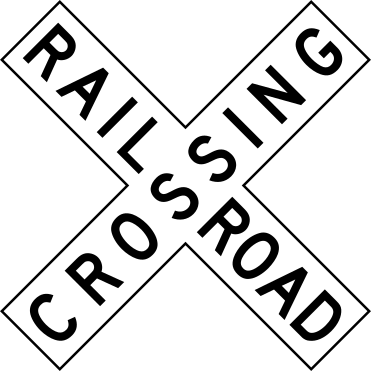
Question 8The white crossbuck railroad sign has the same meaning as:
Show answer
B: A yield sign. The white crossbuck is a regulatory sign with the same meaning as a yield sign; you must yield to trains. Class D & E Driver's Guide: Traffic Signs, page 28.
-
Question 9A steady yellow arrow means:
Show answer
B: The green arrow is ending; prepare to stop and yield to oncoming traffic or pedestrians. A steady yellow arrow means the green arrow is ending; prepare to stop and yield. Class D & E Driver's Guide: Traffic Signals, page 38.
-
Question 10If you plan to turn left at a roundabout, how should you signal?
Show answer
B: Signal left on approach, then signal right after going three-quarters of the way around. Signal left on approach; once three-quarters of the way around, signal right to take the exit. Class D & E Driver's Guide: Roundabouts and Traffic Circles, page 97.
-
Question 11Where do the majority of pedestrian crashes occur?
Show answer
C: At locations other than intersections. Most pedestrian crashes happen away from intersections. Class D & E Driver's Guide: Pedestrian Safety, page 82.
-
Question 12What does Louisiana law require for children ages 4 to 9?
Show answer
A: Booster seat with restraints. Children 4-9 years must use a booster seat with restraints; from age 9, a correctly fitting lap/shoulder belt. Class D & E Driver's Guide: Use of Safety Belts, page 45.
-
Question 13On the interstate, what minimum space cushion should you keep behind the vehicle ahead?
Show answer
B: At least 4 seconds, doubled in bad weather. Always keep at least a four-second space cushion; when weather is bad or pavement slick, double that time. Class D & E Driver's Guide: Right-Hand Lane, page 106.
-
Question 14If you triple your speed from 20 to 60 mph, your impact and braking distance become:
Show answer
C: 9 times greater. Tripling speed from 20 to 60 mph makes the impact and braking distance 9 times greater. Class D & E Driver's Guide: Stopping Distances, page 70.
-
Question 15Before leaving a parked vehicle unattended, what must you do?
Show answer
A: Stop the motor, remove the key, lock the ignition and set the brake. Before walking away from a parked car, shut off the engine, take the key, lock the ignition and set the parking brake. Class D & E Driver's Guide: Parking, page 75.
-
Question 16What does Louisiana right-of-way law actually do?
Show answer
A: Says who must yield; it does not give anyone the right-of-way. The law says who must yield; it doesn't give anyone the right-of-way, and you should never insist on taking it. Class D & E Driver's Guide: Right of Way, page 98.
-
Question 17Where does Louisiana law require reduced speed limits?
Show answer
C: Near schools and playgrounds when children are present, and in residential or business areas. Reduced limits apply on streets near schools and playgrounds, at school crossings when children are present, and in residential or business areas. Class D & E Driver's Guide: Speed Limits, page 92.
-
Question 18About how far before your interstate exit should you check that you're in the correct lane?
Show answer
A: About a mile. Approximately a mile before your exit, make sure you're in the correct lane; signal for about five seconds. Class D & E Driver's Guide: Exiting, page 107.
-
Question 19What is the legal BAC limit in Louisiana for drivers 21 and older?
Show answer
C: 0.08. The legal limit is .08 if you are 21 years of age or older. Class D & E Driver's Guide: Blood Alcohol Concentration, page 128.
-
Question 20Steam comes from under the hood. What should you NOT do?
Show answer
D: Open the radiator cap. If the cooling system is boiling, pull over and turn off the engine; do not open the radiator cap. Class D & E Driver's Guide: Overheating, page 122.
-
Question 21Louisiana's Graduated Licensing Program is known as the R.Y.A.N. Act. What does R.Y.A.N. stand for?
Show answer
D: Reduce Youth Accidents Now. The program, begun January 1, 1998, is the R.Y.A.N. Act (Reduce Youth Accidents Now), named for Ryan Lee. Class D & E Driver's Guide: Graduated Licensing Program, page 11.
-
Question 22What does a fluorescent pink sign indicate?
Show answer
A: Incident management, such as a hurricane or a road closure due to a crash. Fluorescent pink is used for incident management signs, such as hurricanes or road closures due to crashes. Class D & E Driver's Guide: Traffic Signs, page 29.
-
Question 23When may you turn left on a red light in Louisiana?
Show answer
B: From a one-way street onto another one-way street, after stopping and yielding. Louisiana allows some left turns on red when turning from a one-way street onto another one-way street, after stopping and yielding to traffic and pedestrians. Class D & E Driver's Guide: Traffic Signals, page 39.
-
Question 24When going straight through a roundabout, do you need to signal while approaching?
Show answer
A: No signal is needed while approaching. If you're going straight through, no signal is needed while approaching (signal right to exit). Class D & E Driver's Guide: Roundabouts and Traffic Circles, page 97.
-
Question 25A pedestrian with a white cane (with or without a red tip) is crossing. What must you do?
Show answer
D: Give them the right of way at all times. A person with a guide dog or a white cane (red tip or not) always gets the right of way. Class D & E Driver's Guide: Visually Impaired Pedestrians, page 82.
Answer every question to see your score.
More Louisiana practice tests
- Practice test 125 questions
- Practice test 225 questions
- Practice test 425 questions
- Practice test 525 questions
- Practice test 625 questions
- Practice test 725 questions
- Practice test 825 questions
- Practice test 925 questions
- Practice test 1025 questions
- Practice test 1125 questions
- Practice test 1227 questions
- Exam simulatorThe real format, 40 questions
How to use these tests
Read each explanation, even when you get the question right: it tells you the rule and the handbook section, so you can look it up. Your answers are saved in this browser only, so the weak spots mode can give you more questions on the topics you miss. When you're scoring well, take the exam simulator: it uses the same number of questions and passing score as the real test.
Our own questions, written from the Class D & E Driver's Guide and checked against it. Not affiliated with the Louisiana Office of Motor Vehicles (Department of Public Safety & Corrections, Public Safety Services). Found a mistake? Tell us.