North Carolina NCDMV permit practice test
25 questions written from the North Carolina Driver Handbook, covering licensing laws and penalties, alcohol and drugs, safe and defensive driving, signals and pavement markings, road signs and more. Pick an answer to see straight away whether you're right and why.
-
Question 1What is the minimum age to apply for a Level One Limited Learner Permit in North Carolina?
Show answer
C: 15. A Level One Limited Learner Permit is available to North Carolina residents who are at least 15 but under 18 and have completed approved driver education. North Carolina Driver Handbook: Graduated Licensing—Licensing for Drivers 15–18: Limited Learner Permit, page 14.
-
Question 2At what blood alcohol concentration (BAC) can a North Carolina driver age 21 or older be convicted of DWI based on the BAC alone?
Show answer
C: 0.08 percent or more. DWI can be proven by showing a BAC of 0.08 percent or more (0.04 in a commercial motor vehicle), or by showing appreciable impairment. North Carolina Driver Handbook: Driving While Impaired, page 33.
-
Question 3Under North Carolina law, which use of a cell phone is unlawful for every driver, regardless of age?
Show answer
A: Texting or emailing while operating the vehicle. It is unlawful for any driver to use a cell phone for email or text messages while operating a vehicle on a public street, highway or public vehicular area. North Carolina Driver Handbook: Distracted Driving: Cell Phones, page 43.
-
Question 4What does a steady circular green traffic signal mean?
Show answer
A: You may proceed cautiously straight or turn, yielding to oncoming traffic and pedestrians. A circular green lets you proceed cautiously straight or turn, but turning vehicles must yield to oncoming traffic and pedestrians. North Carolina Driver Handbook: Traffic Signals, page 82.
-
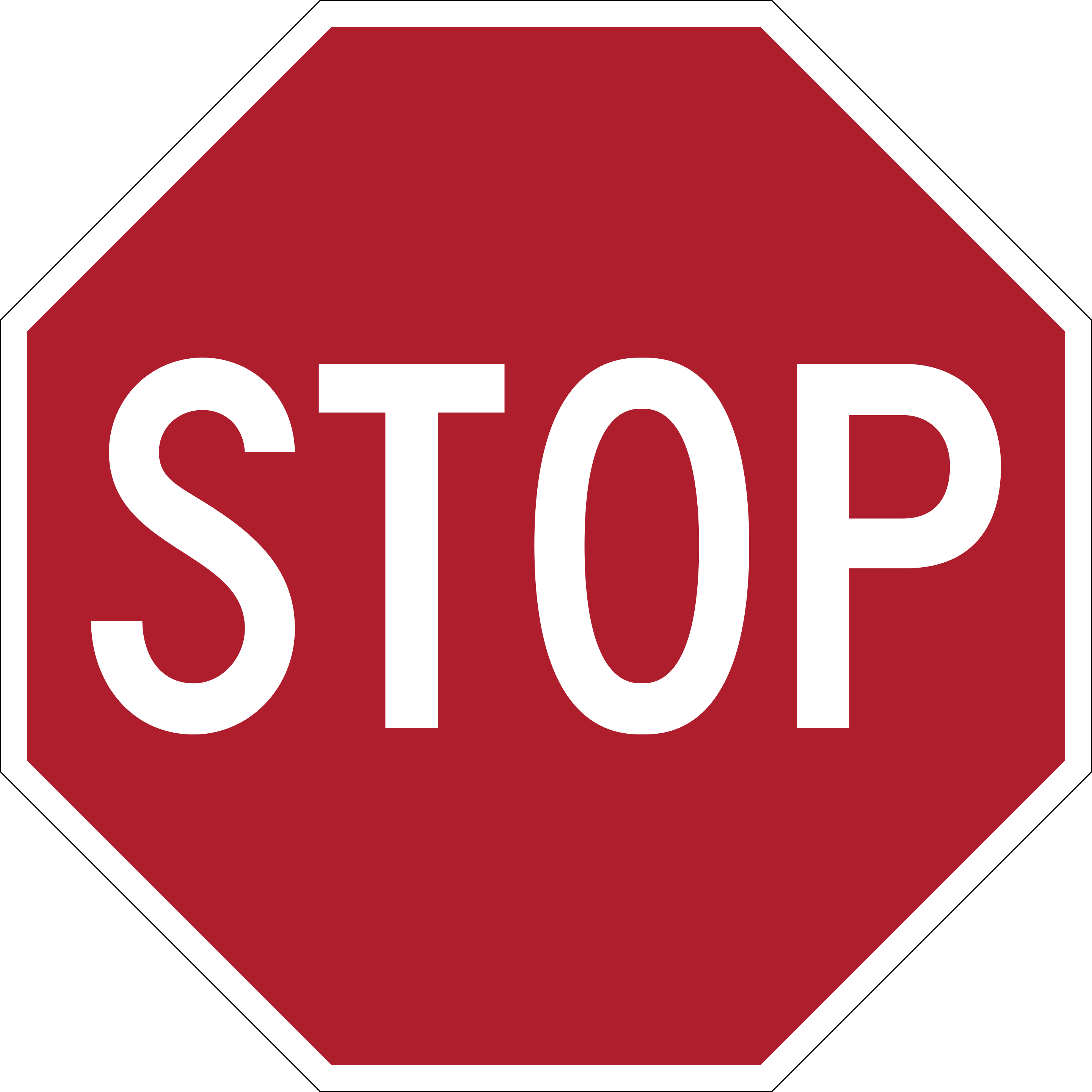
Question 5What shape is used only for stop signs?
Show answer
A: Octagon (eight sides). The eight-sided octagon shape is used for stop signs only. North Carolina Driver Handbook: Traffic Signs: Regulatory Signs, page 85.
-
Question 6At an intersection with no traffic signs or signals, which vehicle has the right of way?
Show answer
C: The vehicle already in the intersection. At uncontrolled intersections, a vehicle already in the intersection has the right of way over one that has not entered. North Carolina Driver Handbook: Right-of-Way at Intersections, page 59.
-
Question 7On a two-lane road, a school bus stops with its stop arm out and red lights flashing. Who must stop?
Show answer
A: All traffic from both directions. On a two-lane roadway, all traffic in both directions must stop for a stopped school bus. North Carolina Driver Handbook: School Buses, page 49.
-
Question 8Unless otherwise posted, what is the speed limit in North Carolina cities and towns?
Show answer
B: 35 mph. Unless another limit is posted, the speed limit in cities and towns is 35 mph. North Carolina Driver Handbook: Adjusting Your Speed to Driving Conditions: Maximum Speed Limits, page 55.
-
Question 9What is the 'two-second rule'?
Show answer
A: Keep at least two seconds between when the vehicle ahead passes a point and when you reach it. The two-second rule means allowing two seconds between the vehicle ahead passing a fixed point and your vehicle reaching that point. North Carolina Driver Handbook: Following: The Two-Second Rule, page 56.
-
Question 10When making a right turn, where should your vehicle be?
Show answer
B: Close to the right edge of the road, so no vehicle can get between you and the curb. For right turns, stay close to the right edge so another vehicle cannot move between your vehicle and the curb. North Carolina Driver Handbook: Turning, page 56.
-
Question 11How close to a fire hydrant may you park in North Carolina?
Show answer
A: No closer than 15 feet. Do not park within 15 feet of a fire hydrant or the entrance to a fire station. North Carolina Driver Handbook: Parking, page 58.
-
Question 12North Carolina law requires headlights from sunset to sunrise and whenever visibility is:
Show answer
D: 400 feet or less. Headlights are required from sunset to sunrise and when visibility is 400 feet or less. North Carolina Driver Handbook: Night Driving, page 73.
-
Question 13Your brakes fail in a car with an automatic transmission. What should you do?
Show answer
D: Apply the emergency brake and shift into a low range. With an automatic transmission, apply the emergency brake and move the gear lever to the low-range position. North Carolina Driver Handbook: Emergencies: Brake Failure, page 77.
-
Question 14How should you enter an interstate highway?
Show answer
A: Use the acceleration lane to match the speed of traffic, then merge. Use the acceleration lane until your speed matches other traffic, then merge safely. North Carolina Driver Handbook: Interstate Highways, page 66.
-
Question 15How much driver education must a North Carolina applicant under 18 complete before testing for a learner permit?
Show answer
D: 30 hours of classroom and 6 hours behind the wheel. The approved driver education course must include at least 30 hours of classroom instruction and six hours of behind-the-wheel instruction. North Carolina Driver Handbook: Graduated Licensing—Licensing for Drivers 15–18: Limited Learner Permit, page 14.
-
Question 16What BAC is the DWI limit for a person driving a commercial motor vehicle in North Carolina?
Show answer
B: 0.04 percent. For commercial motor vehicle drivers, a BAC of 0.04 or more establishes DWI. North Carolina Driver Handbook: Driving While Impaired, page 33.
-
Question 17Which of these is a warning sign of drowsy driving?
Show answer
A: You cannot remember the last few miles driven. Warning signs include not remembering the last few miles, drifting or hitting rumble strips, repeated yawning and trouble keeping your eyes open. North Carolina Driver Handbook: Drowsy Driving, page 42.
-
Question 18What should you do when a circular yellow signal appears as you approach an intersection?
Show answer
B: Stop, unless you are too close to stop safely. Stop for a yellow signal unless you are too close to stop safely; never speed up to beat the red. North Carolina Driver Handbook: Traffic Signals, page 82.
-
Question 19How far from the intersection is a stop sign usually posted?
Show answer
D: Six to 50 feet. The stop sign is usually posted six to 50 feet from the intersection. North Carolina Driver Handbook: Traffic Signs: Regulatory Signs, page 85.
-
Question 20Two vehicles reach an uncontrolled intersection at the same time. Who has the right of way?
Show answer
C: The vehicle on the right. When two vehicles reach an intersection at the same time, the vehicle to the right has the right of way. North Carolina Driver Handbook: Right-of-Way at Intersections, page 59.
-
Question 21On a divided highway of four or more lanes with a median, a school bus stops to load children. Who must stop?
Show answer
A: Only traffic following the bus. On a divided highway of four or more lanes with a median separation, only traffic following the bus must stop. North Carolina Driver Handbook: School Buses, page 50.
-
Question 22What is the maximum speed limit outside cities and towns in North Carolina, unless otherwise posted?
Show answer
C: 55 mph. The handbook's maximum speed limit table lists 55 mph outside cities and towns. North Carolina Driver Handbook: Adjusting Your Speed to Driving Conditions: Maximum Speed Limits, page 55.
-
Question 23On the open road, how much space should you keep between you and the vehicle ahead?
Show answer
B: Enough that a passing vehicle can safely move into the space. On the open road, keep enough distance that a passing vehicle can safely move into and occupy the space. North Carolina Driver Handbook: Following, page 56.
-
Question 24In North Carolina, you must signal at least how far before turning or stopping in normal conditions?
Show answer
B: The last 100 feet. Signal at least the last 100 feet before turning or stopping. North Carolina Driver Handbook: Hand Signals: Flashing Turn Signals, page 71.
-
Question 25You may not park within how many feet of the curb line of an intersecting street?
Show answer
C: 25 feet. Do not park within 25 feet of the curb line of an intersecting street (or 15 feet of the right-of-way lines if there is no curb). North Carolina Driver Handbook: Parking, page 58.
Answer every question to see your score.
More North Carolina practice tests
- Practice test 225 questions
- Practice test 325 questions
- Practice test 425 questions
- Practice test 525 questions
- Practice test 625 questions
- Practice test 725 questions
- Practice test 825 questions
- Practice test 925 questions
- Practice test 1025 questions
- Practice test 1125 questions
- Practice test 1225 questions
- Practice test 1325 questions
- Exam simulatorThe real format
How to use these tests
Read each explanation, even when you get the question right: it tells you the rule and the handbook section, so you can look it up. Your answers are saved in this browser only, so the weak spots mode can give you more questions on the topics you miss. When you're scoring well, take the exam simulator: it uses 25 questions at the NCDMV's pass mark, since it doesn't publish the number of questions.
Our own questions, written from the North Carolina Driver Handbook and checked against it. Not affiliated with the North Carolina Division of Motor Vehicles (N.C. Department of Transportation). Found a mistake? Tell us.