Oregon DMV permit practice test 2
25 questions written from the Oregon Driver Manual, covering hazards, weather and night driving, alcohol and drugs, licensing laws and penalties, road signs, signals and pavement markings and more. Pick an answer to see straight away whether you're right and why. The real Oregon DMV test has 35 questions and you need 28 right.
-
Question 1You have high beams on and a vehicle approaches from the opposite direction. Within what distance must you dim them?
Show answer
A: 500 feet. Dim your high beams when an oncoming vehicle is within 500 feet. Oregon Driver Manual: Hazardous Conditions: Using Lights, page 76.
-
Question 2Can you be arrested for DUII in Oregon if your BAC is below 0.08%?
Show answer
B: Yes, if alcohol or drugs are affecting your driving. You can still be arrested even if your BAC is lower than 0.08% when alcohol or drugs are affecting you. Oregon Driver Manual: Impaired Driving, page 82.
-
Question 3What happens if you are caught cheating on an Oregon knowledge test?
Show answer
C: You fail and may not test again for 90 days. If you are caught cheating you fail the test and won't be allowed to test again for 90 days. Oregon Driver Manual: Guidelines for Taking a Knowledge Test in a DMV Office, page 2.
-
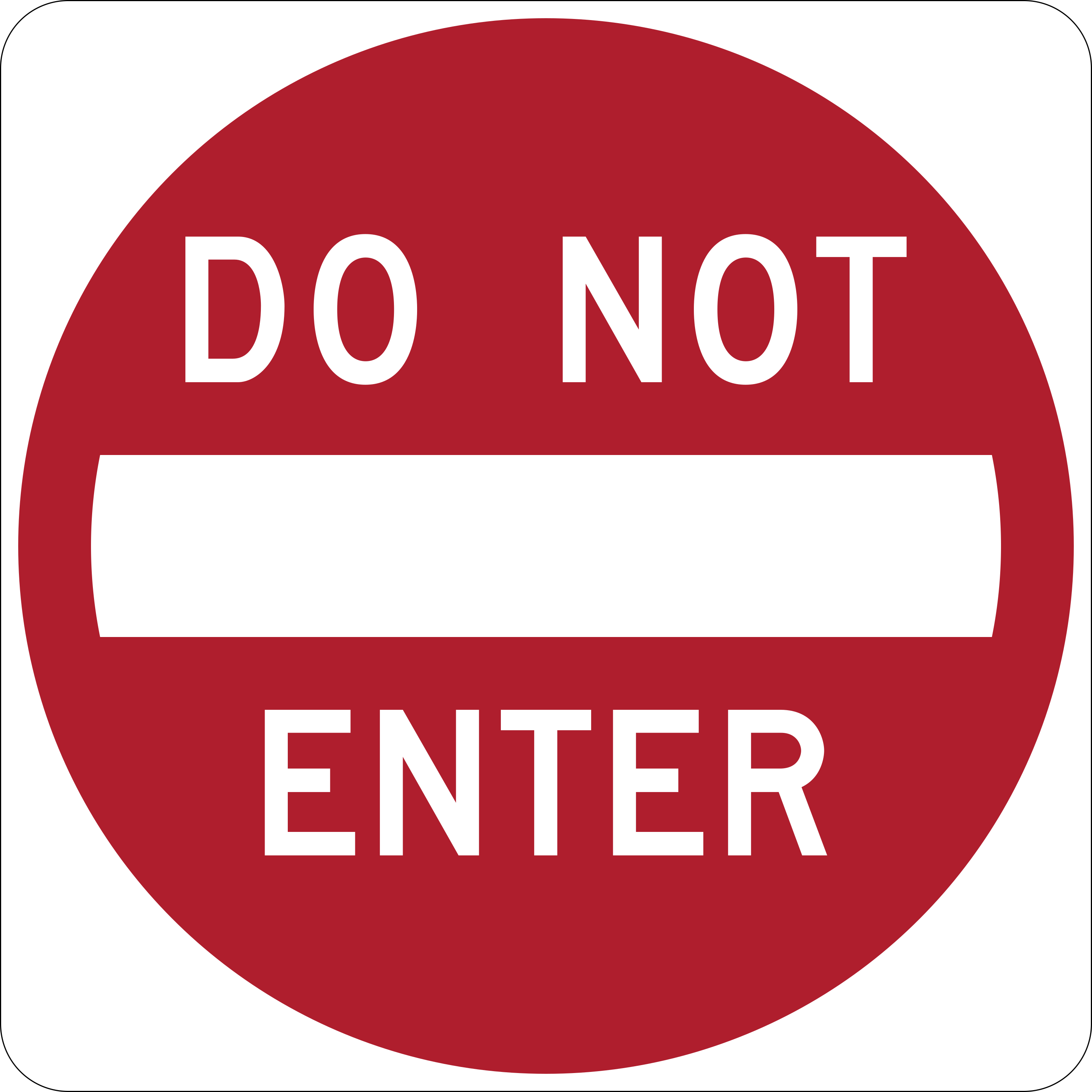
Question 4You see a square red-and-white DO NOT ENTER sign ahead of you on a ramp. What does it most likely mean?
Show answer
B: You are about to go the wrong way. A Do Not Enter sign warns you not to enter that road or freeway; you will see it if you are going the wrong way. Oregon Driver Manual: Regulatory Signs—Prohibitive: Do Not Enter – Square, page 7.
-
Question 5You are stopped at a steady red light on a two-way street and want to turn right onto another two-way street. What does Oregon law allow?
Show answer
C: A right turn after a complete stop, unless a sign or officer prohibits it. After a complete stop you may turn right on red onto a two-way road unless a sign or police officer says otherwise. Oregon Driver Manual: Traffic Signals: Steady Circular Red, page 15.
-
Question 6Does the basic rule ever allow you to exceed the posted speed limit if conditions are ideal?
Show answer
D: No. The basic rule does not allow you to drive over the speed limit. Oregon Driver Manual: The Basic Rule Law, page 21.
-
Question 7To check your following distance, you watch the car ahead pass a pole and count. You are following too closely if you reach the pole before counting:
Show answer
C: Two seconds. You are too close if you pass the mark before finishing a count of at least two seconds. Oregon Driver Manual: Maintaining a Space Cushion: Following Distance, page 27.
-
Question 8You are leaving a parking lot onto a street with no signs or signals. What must you do?
Show answer
A: Stop before entering the road and yield to approaching vehicles and pedestrians. Stop before entering a road from an alley, driveway or parking lot and yield to vehicles and pedestrians. Oregon Driver Manual: Lane Travel, page 18.
-
Question 9Hand-and-arm signals may be used only when:
Show answer
C: It is daylight and you can clearly see people and vehicles 1,000 feet away. Use hand-and-arm signals only in daylight with clear visibility of 1,000 feet. At night or in poor visibility you must use signal lights. Oregon Driver Manual: Turn Signals, page 38.
-
Question 10At an intersection with no signs or signals, you must yield to:
Show answer
D: Any vehicle in the intersection or approaching from your right. At an uncontrolled intersection yield to any vehicle already in the intersection or approaching from your right. Oregon Driver Manual: Intersections, page 42.
-
Question 11You must stop and remain stopped for a pedestrian in a crosswalk who is in which location?
Show answer
D: In your lane, in the lane next to yours (including a bike lane), or in the lane you are turning into. Stop and stay stopped if the pedestrian is in your lane, the next lane including a bike lane, or the lane you are turning into. Oregon Driver Manual: Pedestrians, page 46.
-
Question 12Where can you find the phone number to tell the railroad that something is stuck on the tracks?
Show answer
C: On the Emergency Notification System (ENS) sign posted at the crossing. Look for the Emergency Notification System sign on a post near the tracks to notify the railroad. Oregon Driver Manual: Railroad Crossings, page 64.
-
Question 13When parking downhill against a curb, which way should you turn your front wheels?
Show answer
A: Toward the curb. Downhill against a curb, turn your wheels toward the curb. Oregon Driver Manual: Parking on Hills, page 69.
-
Question 14Until what age must infants ride rear-facing in Oregon?
Show answer
C: 2 years. Infants must ride rear-facing until they reach two years of age. Oregon Driver Manual: Safety Belts, page 74.
-
Question 15You are following another vehicle at night. Within what distance must you dim your high beams?
Show answer
A: 350 feet. Dim your lights when following another vehicle within 350 feet. Oregon Driver Manual: Hazardous Conditions: Using Lights, page 76.
-
Question 16A driver under 21 takes a breath test in Oregon. What BAC causes them to fail?
Show answer
C: Any amount. Oregon has a zero tolerance law: drivers under 21 fail the test with a blood alcohol concentration of any amount. Oregon Driver Manual: Impaired Driving (Implied Consent), page 83.
-
Question 17If you fail the knowledge test at a DMV office, when may you retake it?
Show answer
D: The same day, depending on office testing availability. If you fail a knowledge test you may test again the same day, depending on testing resources at the office. Oregon Driver Manual: Guidelines for Taking a Knowledge Test in a DMV Office, page 2.
-
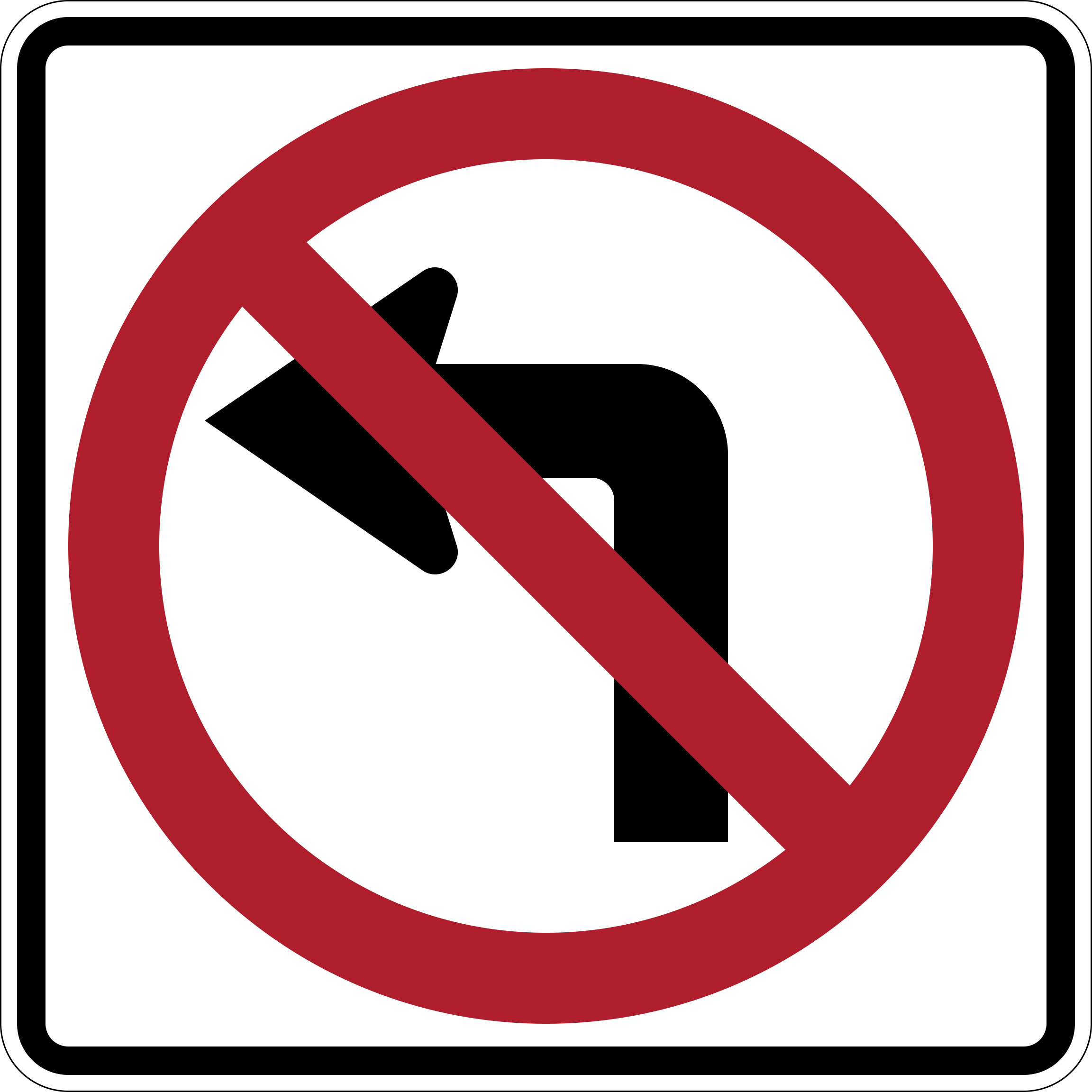
Question 18A sign shows a turn arrow inside a red circle with a red slash. What does it mean?
Show answer
C: Do not make the turn shown. A red circle with a slash through a symbol prohibits the action shown, such as a left turn or U-turn. Oregon Driver Manual: Regulatory Signs—Prohibitive: No Left Turn; No Right Turn; No U Turn, page 7.
-
Question 19You are on a one-way street at a red light. The cross street is also one-way, going left. What may you do after a complete stop?
Show answer
D: Turn left onto the one-way street, yielding to traffic and pedestrians. When entering a one-way road you may turn right or left on red in the direction of the one-way traffic after stopping, unless prohibited. Oregon Driver Manual: Traffic Signals: Steady Circular Red, page 15.
-
Question 20Unless otherwise posted, what is the speed limit in an Oregon alley?
Show answer
B: 15 mph. Oregon law sets 15 mph in alleys and narrow residential areas. Oregon Driver Manual: Speed Regulations: Speed Limits, page 19.
-
Question 21When you stop behind another vehicle, how far back should you be?
Show answer
D: Far enough to see where its rear tires meet the road. Stop where you can see the rear tires of the vehicle ahead touching the road; then return to a safe following distance when traffic moves. Oregon Driver Manual: Maintaining a Space Cushion: Following Distance, page 27.
-
Question 22Generally, which position in your lane is safest?
Show answer
C: The center of your lane. It is safest to drive in the center of your lane so you can move left or right to avoid a problem. Oregon Driver Manual: Maintaining a Space Cushion: Side Space Cushion, page 28.
-
Question 23Hand-and-arm signals should not be used when you are:
Show answer
A: Driving a wide or long vehicle. Hand-and-arm signals should not be used when driving a wide or long vehicle. Oregon Driver Manual: Turn Signals, page 38.
-
Question 24Your road ends at a T intersection with no signs or signals. What must you do?
Show answer
D: Yield to drivers on the through road. The driver on the road that ends at a T intersection must yield to drivers on the through road. Oregon Driver Manual: Intersections, page 42.
-
Question 25You are turning at an intersection WITH a traffic signal. How far must the pedestrian be from the lane you are turning into before you begin to turn?
Show answer
B: 6 feet or more. At a signalized intersection the pedestrian must be six feet or more from the lane you are turning into. Oregon Driver Manual: Pedestrians, page 47.
Answer every question to see your score.
More Oregon practice tests
- Practice test 125 questions
- Practice test 325 questions
- Practice test 425 questions
- Practice test 525 questions
- Practice test 625 questions
- Practice test 725 questions
- Practice test 825 questions
- Practice test 925 questions
- Practice test 1025 questions
- Practice test 1125 questions
- Practice test 1225 questions
- Practice test 1325 questions
- Practice test 1417 questions
- Exam simulatorThe real format, 35 questions
How to use these tests
Read each explanation, even when you get the question right: it tells you the rule and the handbook section, so you can look it up. Your answers are saved in this browser only, so the weak spots mode can give you more questions on the topics you miss. When you're scoring well, take the exam simulator: it uses the same number of questions and passing score as the real test.
Our own questions, written from the Oregon Driver Manual and checked against it. Not affiliated with the Oregon Department of Transportation, Driver and Motor Vehicle Services (Oregon DMV). Found a mistake? Tell us.