Oregon DMV permit practice test 8
25 questions written from the Oregon Driver Manual, covering emergencies, parking, safe and defensive driving, hazards, weather and night driving, licensing laws and penalties and more. Pick an answer to see straight away whether you're right and why. The real Oregon DMV test has 35 questions and you need 28 right.
-
Question 1Your power steering fails while driving. What should you do?
Show answer
D: Grip the wheel firmly, slow down and ease onto the shoulder. Steering will be hard. Grip the wheel firmly, slow down and ease onto the shoulder. Oregon Driver Manual: Vehicle Equipment Failures: Power Steering Fails, page 85.
-
Question 2What is double parking, which is illegal in Oregon?
Show answer
A: Stopping or parking on the road side of a parked vehicle. Double parking means stopping on the road side of any parked vehicle; it is prohibited. Oregon Driver Manual: No Parking, page 70.
-
Question 3Which is a warning sign that you may be falling asleep at the wheel?
Show answer
D: Frequent yawning, heavy eyelids, and drifting out of your lane. Yawning, head nodding, heavy eyelids, blurred vision and not staying in your lane can mean you are falling asleep. Oregon Driver Manual: Fatigue and Drowsy Driving, page 81.
-
Question 4When your windshield wipers are on, the manual says you should also:
Show answer
A: Turn on your headlights. Turn on your headlights when your windshield wipers are on to make yourself more visible. Oregon Driver Manual: Rain, page 77.
-
Question 5What is the minimum age for an Oregon Class C driver license?
Show answer
D: 16. You must be at least 16 years of age to apply for a license. Oregon Driver Manual: How to Apply, page 89.
-
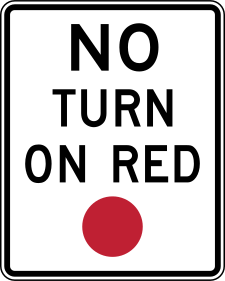
Question 6A NO TURN ON RED sign is posted at a signal. What must you do if you want to turn and the light is red?
Show answer
B: Wait for the signal to turn green. No Turn on Red means you may not turn during the red light; you must wait for green. Oregon Driver Manual: Regulatory Signs – Other: No Turn on Red, page 9.
-
Question 7At an operating ramp meter, how many vehicles may go on each green light?
Show answer
C: One vehicle per lane. Only one vehicle may proceed each time the green light comes on; each lane of a multi-lane ramp has its own meter. Oregon Driver Manual: Freeway Driving: Entering a Freeway (ramp meters), page 35.
-
Question 8A flashing yellow light on a school speed sign means:
Show answer
A: Children are arriving at or leaving school; the 20 mph limit applies. Any time the yellow light on a school speed sign flashes, children are arriving or leaving and the 20 mph limit applies. Oregon Driver Manual: School Zones: Flashing School Speed Limit Sign, page 49.
-
Question 9You may cross the center line in a no-passing zone only if:
Show answer
B: The right side of the road is blocked or you are turning left. In a no-passing zone you may cross the center line only when the right side is blocked or to turn left. Oregon Driver Manual: No Passing, page 32.
-
Question 10How many trailers may you tow behind a passenger vehicle in Oregon?
Show answer
B: One. Oregon allows a maximum of one boat, utility trailer or other vehicle towed behind a passenger or recreational vehicle. Oregon Driver Manual: Driving a Large Vehicle or Towing, page 36.
-
Question 11Inside city limits, U-turns are prohibited where your vehicle cannot be seen by traffic coming from either direction within:
Show answer
B: 500 feet. Within city limits U-turns are banned where traffic from either direction cannot see you within 500 feet (1,000 feet outside city limits). Oregon Driver Manual: U-Turns, page 41.
-
Question 12You are turning left at a green light and an oncoming motorcycle is approaching. What is safest?
Show answer
B: Yield as you would to any vehicle; it is safest to wait until it passes. You must yield to an oncoming motorcycle as you would to any vehicle; it's safest to wait until it passes before turning. Oregon Driver Manual: Motorcycles and Mopeds, page 52.
-
Question 13In Oregon, at speeds above 35 mph, when may you pass a bicyclist traveling in your lane?
Show answer
D: Only if you leave enough distance to avoid contact if the rider fell. At speeds over 35 mph you may pass a bicyclist in your lane only if you leave enough distance to prevent contact if the rider fell. Oregon Driver Manual: Bicycles, page 50.
-
Question 14Do Oregon's no-parking rules apply if you stay in the vehicle?
Show answer
A: Yes, they apply whether you are in your vehicle or not. The rules about parking and stopping apply whether you are in your vehicle or not. Oregon Driver Manual: No Parking, page 70.
-
Question 15You feel very drowsy on a long trip. What does the manual advise?
Show answer
C: Find a safe place to stop and rest. Never push through. Stop and rest or take a brisk walk; drink water, talk with passengers, and share driving. Oregon Driver Manual: Fatigue and Drowsy Driving, page 81.
-
Question 16What is hydroplaning?
Show answer
B: Tires skimming or floating on a wet road surface, reducing steering and braking. Hydroplaning is when tires skim or float over a wet road, reducing or eliminating your ability to steer and stop. Slow down on wet roads. Oregon Driver Manual: Rain, page 78.
-
Question 17If you are under 18, how long must you hold an instruction permit before getting a driver license?
Show answer
C: 6 months. Applicants under 18 must have had an instruction permit for at least 6 months; out-of-state permit time counts. Oregon Driver Manual: How to Apply, page 90.
-
Question 18What color are warning signs that alert you to possible hazards or changing road conditions?
Show answer
C: Yellow. Warning signs are yellow and alert you to known possible hazards or changes in road conditions ahead. Oregon Driver Manual: Warning Signs, page 10.
-
Question 19Yellow pavement lines are used to:
Show answer
A: Separate traffic moving in opposite directions and mark the left edge of one-way roads. Yellow markings separate opposing traffic (center lines) and mark the left edge of one-way roads and ramps, two-way left turn lanes and painted medians. Oregon Driver Manual: Pavement Markings: Yellow Markings, page 22.
-
Question 20If you drive slower than the normal speed of traffic, where should you drive?
Show answer
D: In the right lane or as close as practical to the right curb or edge, unless preparing to turn left. Slower drivers must use the right lane or keep to the right, except when preparing for a left turn. Oregon Driver Manual: Slow Drivers, page 21.
-
Question 21Why should you not pass when approaching an intersection or railroad crossing?
Show answer
D: It is illegal to pass when approaching, at or in an intersection or railroad crossing. The manual lists intersections and railroad crossings as places you must not cross the center line to pass. Oregon Driver Manual: No Passing, page 32.
-
Question 22In which type of trailer may passengers legally ride if it meets the safety requirements?
Show answer
D: A fifth-wheel trailer with safety glass, a way to signal the driver, and an exit that opens from inside and outside. Passengers may not ride in trailers except a commercial bus trailer, independently-steered trailer, or fifth-wheel trailer with the required safety equipment. Oregon Driver Manual: Driving a Large Vehicle or Towing, page 36.
-
Question 23On a rural road outside city limits, you want to make a U-turn. Oncoming and following traffic must be able to see your vehicle from at least how far away?
Show answer
A: 1,000 feet. Outside city limits the visibility distance for a legal U-turn is 1,000 feet. Oregon Driver Manual: U-Turns, page 41.
-
Question 24Bicyclists are approaching the same intersection as you. What right-of-way rules apply?
Show answer
B: Yield to people riding bicycles the same as you do for other vehicles. You must yield to people riding bicycles at intersections the same as you do for other types of vehicles. Oregon Driver Manual: Bicycles, page 50.
-
Question 25May you drive or park in a bike lane?
Show answer
A: No, but you may cross it when turning or entering/leaving a driveway, alley or private road. Do not drive or park in a bike lane. You may cross it when turning or entering or leaving an alley, driveway or private road. Oregon Driver Manual: Bicycles, page 50.
Answer every question to see your score.
More Oregon practice tests
- Practice test 125 questions
- Practice test 225 questions
- Practice test 325 questions
- Practice test 425 questions
- Practice test 525 questions
- Practice test 625 questions
- Practice test 725 questions
- Practice test 925 questions
- Practice test 1025 questions
- Practice test 1125 questions
- Practice test 1225 questions
- Practice test 1325 questions
- Practice test 1417 questions
- Exam simulatorThe real format, 35 questions
How to use these tests
Read each explanation, even when you get the question right: it tells you the rule and the handbook section, so you can look it up. Your answers are saved in this browser only, so the weak spots mode can give you more questions on the topics you miss. When you're scoring well, take the exam simulator: it uses the same number of questions and passing score as the real test.
Our own questions, written from the Oregon Driver Manual and checked against it. Not affiliated with the Oregon Department of Transportation, Driver and Motor Vehicle Services (Oregon DMV). Found a mistake? Tell us.