No Train Horn sign
Required at crossings in an established Quiet Zone, where trains do not routinely sound their horns.
What to do
Do not count on hearing a train; look carefully both ways.
Do not rely on hearing a train; look carefully both ways before crossing and obey any lights or gates.
Where it's used
Section 8B.20 requires either a NO TRAIN HORN (W10-9) sign or a W10-9P plaque in each direction at every highway-rail crossing within a Quiet Zone set up under 49 CFR Part 222. The sign is a black-on-yellow diamond (36 x 36 inches on conventional roads). If the plaque version is used it must be mounted directly below the grade crossing advance warning sign.
Don't confuse it with
- No Gates or Lights plaque: NO GATES OR LIGHTS means the crossing has no automatic warning devices, while NO TRAIN HORN means trains will not normally sound a horn.
- Railroad Crossing Ahead: The round W10-1 warns of the crossing itself; this sign adds that you will not hear a horn.

- Type
- Railroad crossing signs
- Shape
- Diamond
- Colors
- yellow, black
- MUTCD code
- W10-9
- MUTCD section
- 8B.20
On state permit tests
Our questions for 1 state ask about this sign, including Nebraska.
Test yourself
What does a NO TRAIN HORN plaque under a railroad crossing sign mean? (Nebraska practice test)
- The crossing is closed
- Trains are not running
- Honking is prohibited for cars
- A quiet zone; trains do not blow the horn here
Show answer
A quiet zone; trains do not blow the horn here. It marks a quiet zone where trains do not blow the horn, so look and listen carefully.
More railroad crossing signs
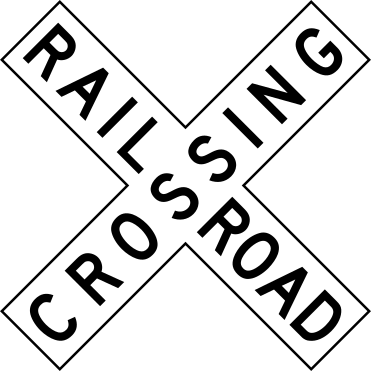 Railroad Crossing (Crossbuck)
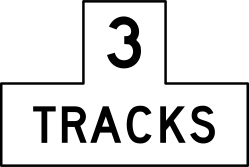 Number of Tracks plaque
 Railroad Crossing Ahead
 Parallel Track Crossing
 Low Ground Clearance Crossing
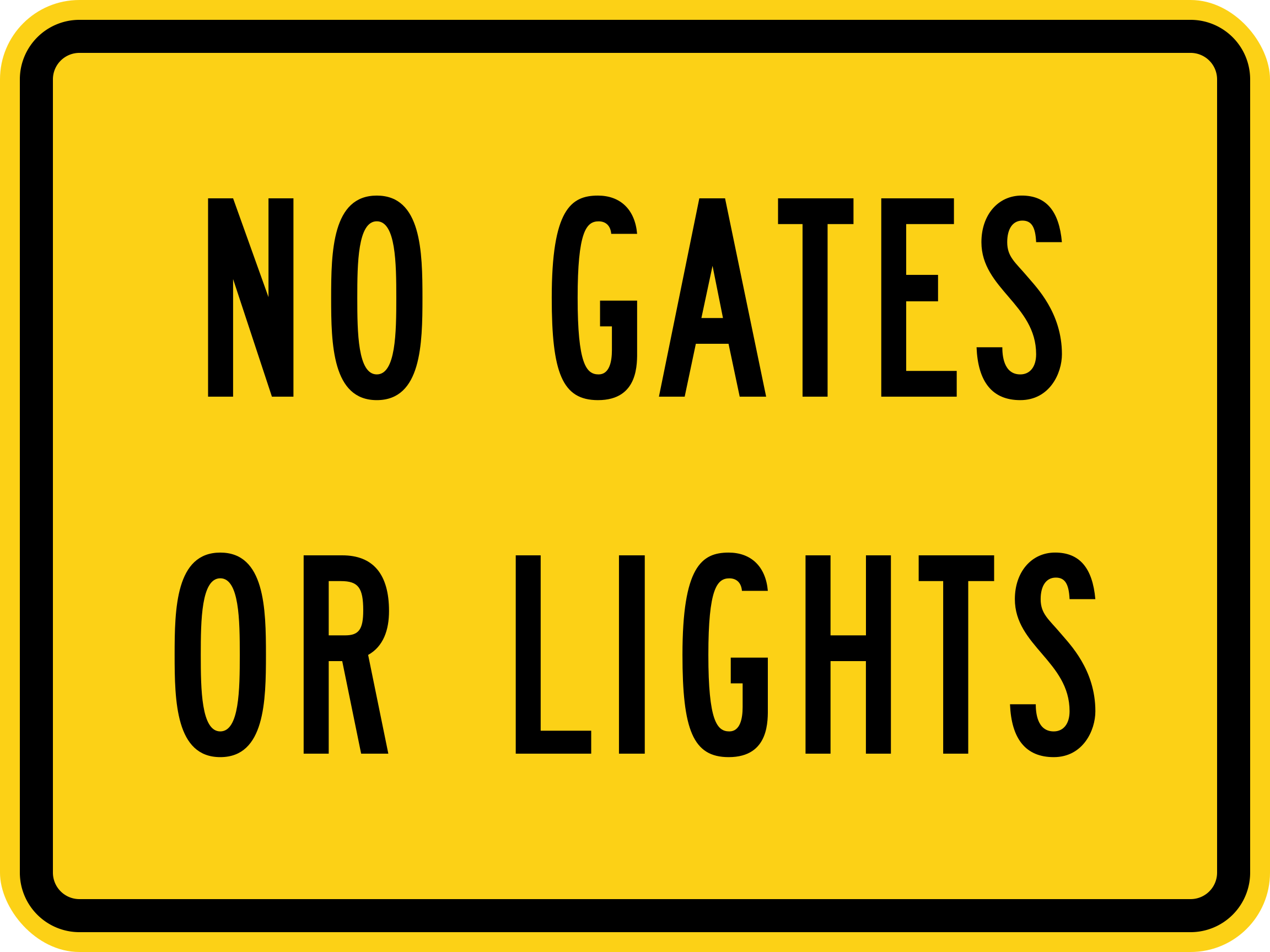 No Gates or Lights plaque
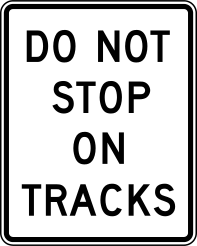 Do Not Stop on Tracks
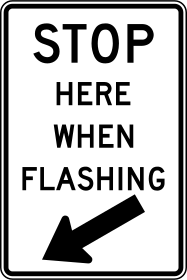 Stop Here When Flashing
From the Manual on Uniform Traffic Control Devices (MUTCD), 11th edition, section 8B.20. Sign image: public domain, source.