Street Name sign
Identifies the street at an intersection.
What to do
Use it to find your turn.
Count down cross streets by reading names early, and if you miss your street, continue and turn around safely rather than turning suddenly.
Agencies may instead use a blue or brown background (white legend) or a white background (black legend) (2D.45 Paras 26-28).
Where it's used
Section 2D.45 says Street Name (D3-1) signs should be installed at all intersections in urban areas and at important unsigned roads in rural areas, with both streets named and the faces parallel to the street they name; on business streets and arterials they should be on at least diagonally opposite corners. The standard is white letters on green, but an agency may use blue, brown (both with white letters) or white (with black letters) to show jurisdiction. They may include block numbers, a city pictograph, or a route shield (D3-1a), and should not name the freeway at the end of an exit ramp.
Don't confuse it with
- Destination sign: The Destination sign points to a town or place, while the Street Name sign names the street at the corner.
- U.S. Route marker: A route marker shows the highway number, while the street name sign shows the local name of the road.

- Type
- Guide signs
- Shape
- Horizontal rectangle
- Colors
- green, white
- MUTCD code
- D3-1
- MUTCD section
- 2D.45
More guide signs
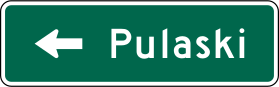 Destination sign
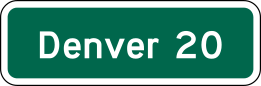 Distance sign
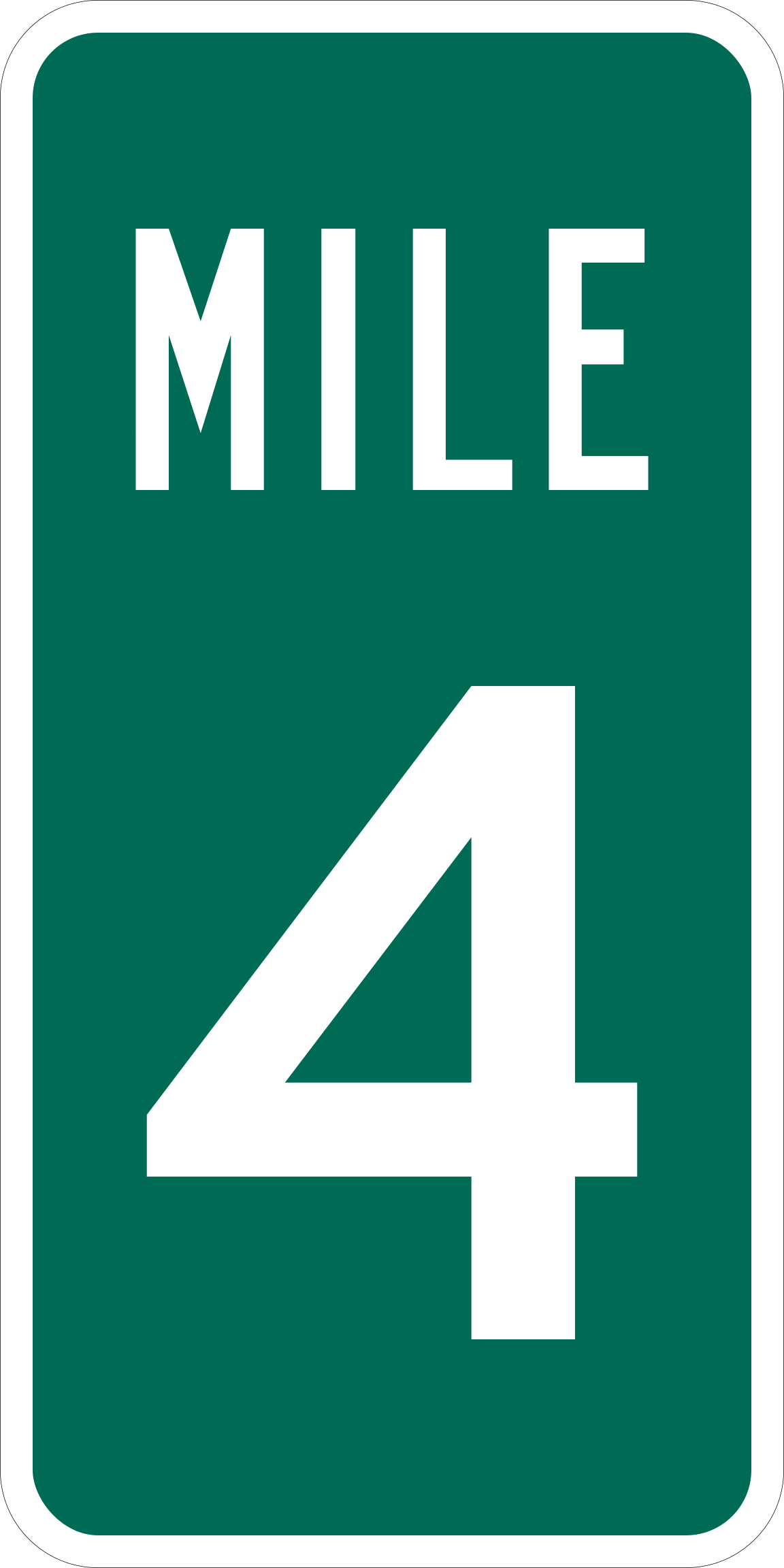 Reference Location sign (mile marker)
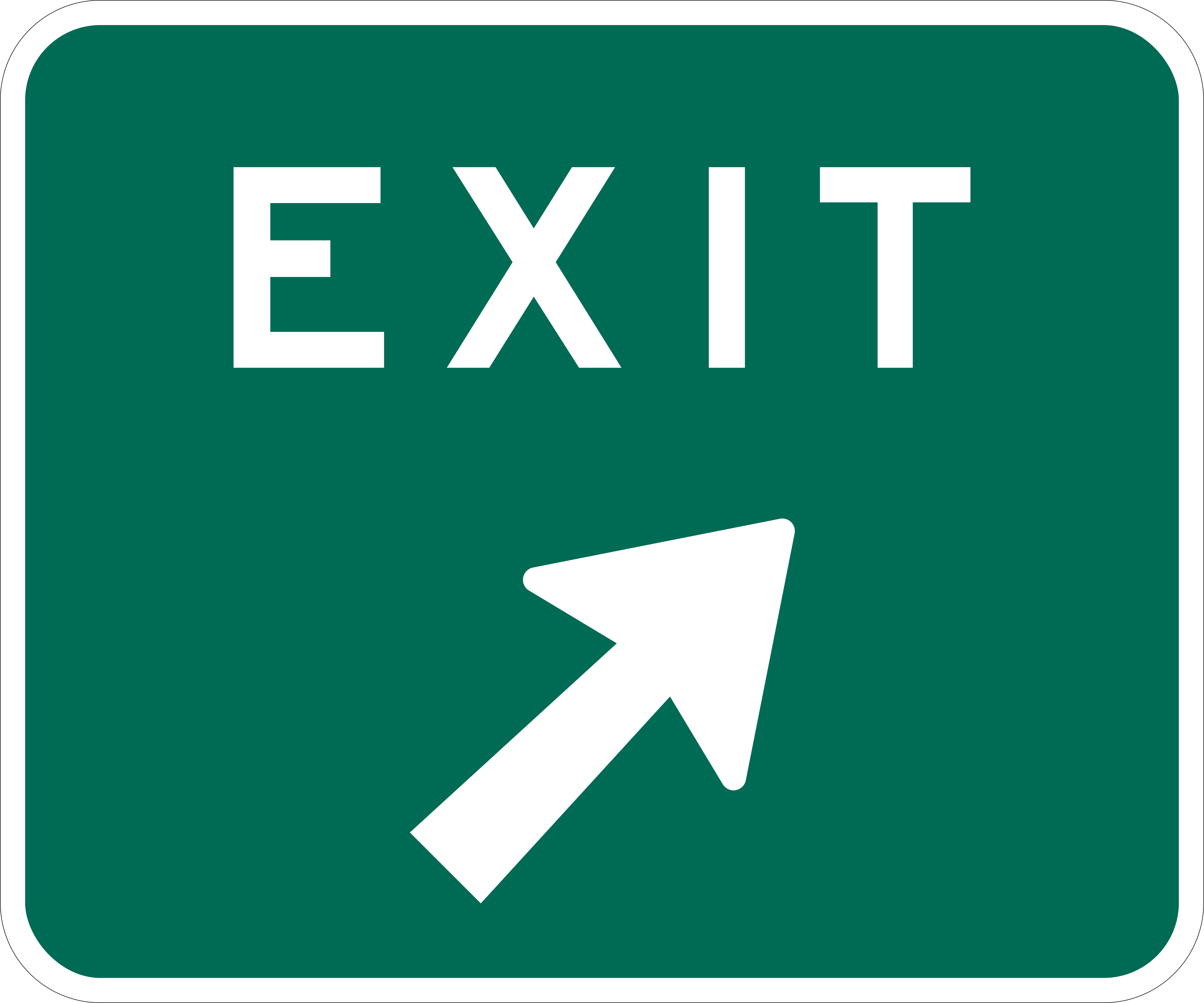 Exit Gore sign
 Freeway Entrance
 Bike Route
From the Manual on Uniform Traffic Control Devices (MUTCD), 11th edition, section 2D.45. Sign image: public domain, source.