Wisconsin DMV permit practice test 10
25 questions written from the Wisconsin Motorists' Handbook (BDS126), covering licensing laws and penalties, safe and defensive driving, turns and intersections, hazards, weather and night driving, signals and pavement markings and more. Pick an answer to see straight away whether you're right and why. The real Wisconsin DMV test has 50 questions and you need 40 right.
-
Question 1Besides passing the tests, what must a Wisconsin applicant under 18 be enrolled in to get an instruction permit?
Show answer
A: A driver education program, including the behind-the-wheel portion. Applicants under 18 must be enrolled in a driver education program, including the behind-the-wheel portion. Wisconsin Motorists' Handbook (BDS126): Section 2: Progression of Licenses — B. Instruction Permit, page 9.
-
Question 2Which group does the handbook say is at greater risk of drowsy-driving crashes?
Show answer
A: Teen and young adult drivers. Teen and young adult drivers are at greater risk of drowsy-related crashes. Wisconsin Motorists' Handbook (BDS126): Section 9: Dangerous Driving Behaviors — C. Drowsy Driving, page 54.
-
Question 3May you change lanes while you are inside a roundabout?
Show answer
A: No. Do not switch lanes while you are in the roundabout. Wisconsin Motorists' Handbook (BDS126): Section 6: Driving Situations — A. Roundabouts, page 43.
-
Question 4Your car begins to skid. What should you do with the brake and steering?
Show answer
A: Stay off the brake and steer where you want to go. In a skid, stay off the brake and turn the wheel in the direction you want to go. Wisconsin Motorists' Handbook (BDS126): Section 7: Driving Conditions — B. Severe Weather, page 49.
-
Question 5When may you cross double solid yellow lines without passing?
Show answer
A: To turn into a driveway when safe. You can cross the lines to turn into a driveway if it is safe. Wisconsin Motorists' Handbook (BDS126): Section 5: Signals, Pavement Markings and Lane Controls — B. Types of Line Markings, page 39.
-
Question 6What does a triangle-shaped sign with reflective orange markings on the back of a vehicle mean?
Show answer
A: Slow-moving vehicle that may travel 25 mph or less. The Slow Moving Vehicle emblem marks a vehicle that could travel at 25 mph or less. Wisconsin Motorists' Handbook (BDS126): Section 4: Signs — B. Regulatory, page 29.
-
Question 7When passing a large truck, what should you do about its blind spot?
Show answer
A: Get out of it quickly. If you want to pass, get out of the truck's blind spot quickly. Wisconsin Motorists' Handbook (BDS126): Section 10: Sharing the Road — F. No-Zones, page 56.
-
Question 8How much licensed driving experience must the person supervising a Wisconsin instruction permit holder have?
Show answer
C: At least two years. The accompanying driver must have at least two years of licensed driving experience and a valid regular license. Wisconsin Motorists' Handbook (BDS126): Section 2: Progression of Licenses — B. Instruction Permit, page 9.
-
Question 9Who must wear seat belts in Wisconsin?
Show answer
A: Drivers and passengers of any age. Wisconsin law requires you and your passengers to wear seat belts at any age. Wisconsin Motorists' Handbook (BDS126): Section 12: Other Important Information — D. Seat Belts (Safety Belts), page 58.
-
Question 10There is no traffic in the roundabout as you arrive. What should you do?
Show answer
A: Enter without waiting, keeping your speed low. If there is no traffic in the roundabout, you do not need to wait to enter. Wisconsin Motorists' Handbook (BDS126): Section 6: Driving Situations — A. Roundabouts, page 43.
-
Question 11Should you use cruise control on slippery winter roads?
Show answer
A: No. Do not use cruise control on slippery roads. Wisconsin Motorists' Handbook (BDS126): Section 7: Driving Conditions — C. Winter, page 49.
-
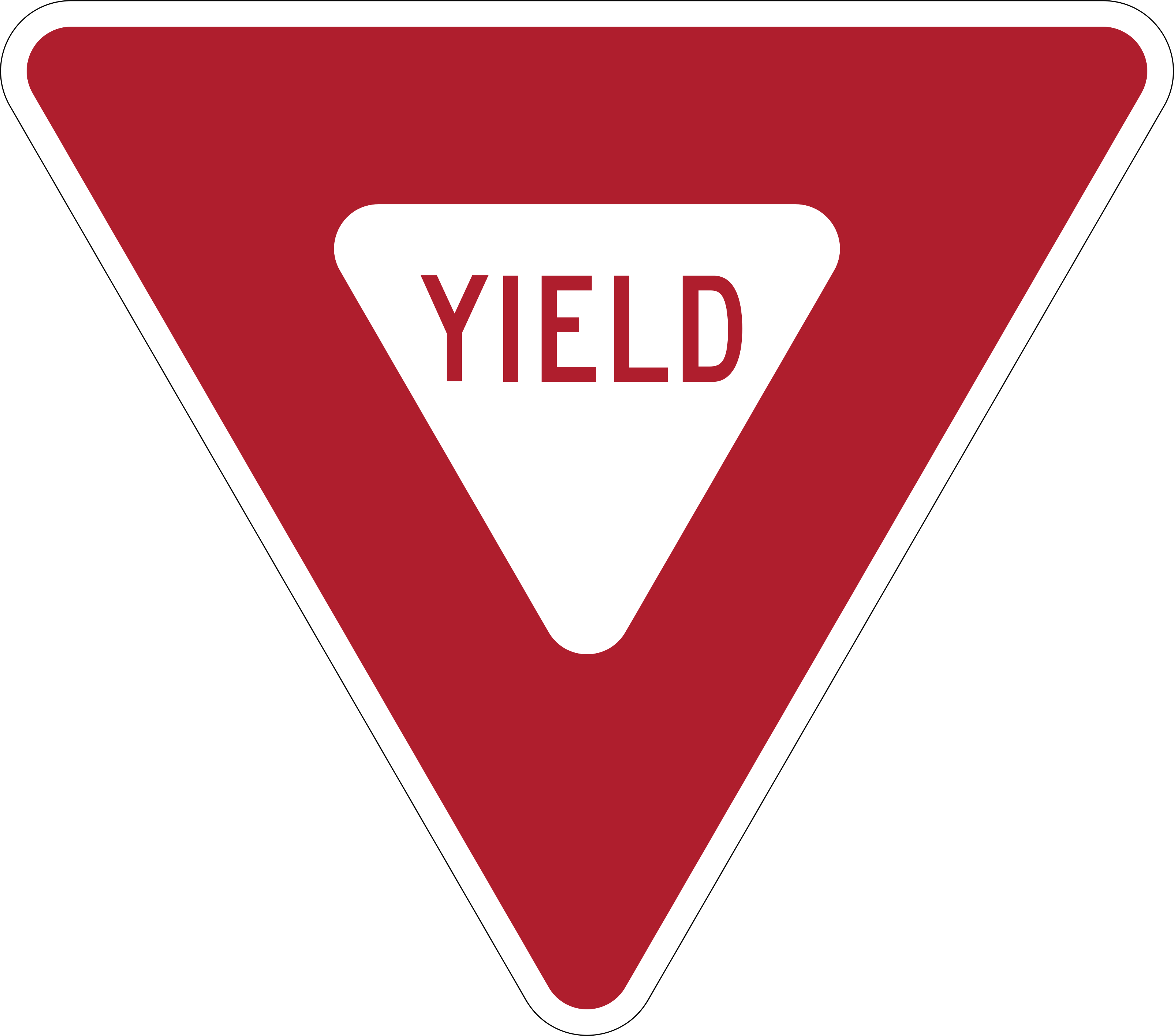
Question 12What does a downward-pointing red and white triangle mean?
Show answer
A: Yield the right-of-way to other vehicles. The Yield sign means you must yield right-of-way to other vehicles. Wisconsin Motorists' Handbook (BDS126): Section 4: Signs — B. Regulatory, page 29.
-
Question 13You pull over for an emergency vehicle that has its lights and siren on. Where should you avoid stopping?
Show answer
A: In the middle of an intersection. Pull over to the side of the road and stop until the emergency vehicle passes, but never stop in the middle of an intersection. Wisconsin Motorists' Handbook (BDS126): Section 10: Sharing the Road — B. Emergency Vehicles, page 55.
-
Question 14Which license may the supervising driver for a Wisconsin permit holder NOT hold?
Show answer
B: A probationary or occupational license. The accompanying driver must have a valid regular license; it cannot be a probationary or occupational license. Wisconsin Motorists' Handbook (BDS126): Section 2: Progression of Licenses — B. Instruction Permit, page 9.
-
Question 15How should the shoulder belt fit?
Show answer
A: Across your chest, with room for a fist between belt and chest. The shoulder belt goes across the chest; you should be able to put your fist between the belt and your chest. Wisconsin Motorists' Handbook (BDS126): Section 12: Other Important Information — D. Seat Belts (Safety Belts), page 59.
-
Question 16Before driving in winter, what should you clear of snow and ice?
Show answer
A: All windows, lamps, mirrors and license plates. Remove snow and ice from all windows, vehicle lamps, side mirrors and license plates. Wisconsin Motorists' Handbook (BDS126): Section 7: Driving Conditions — C. Winter, page 49.
-
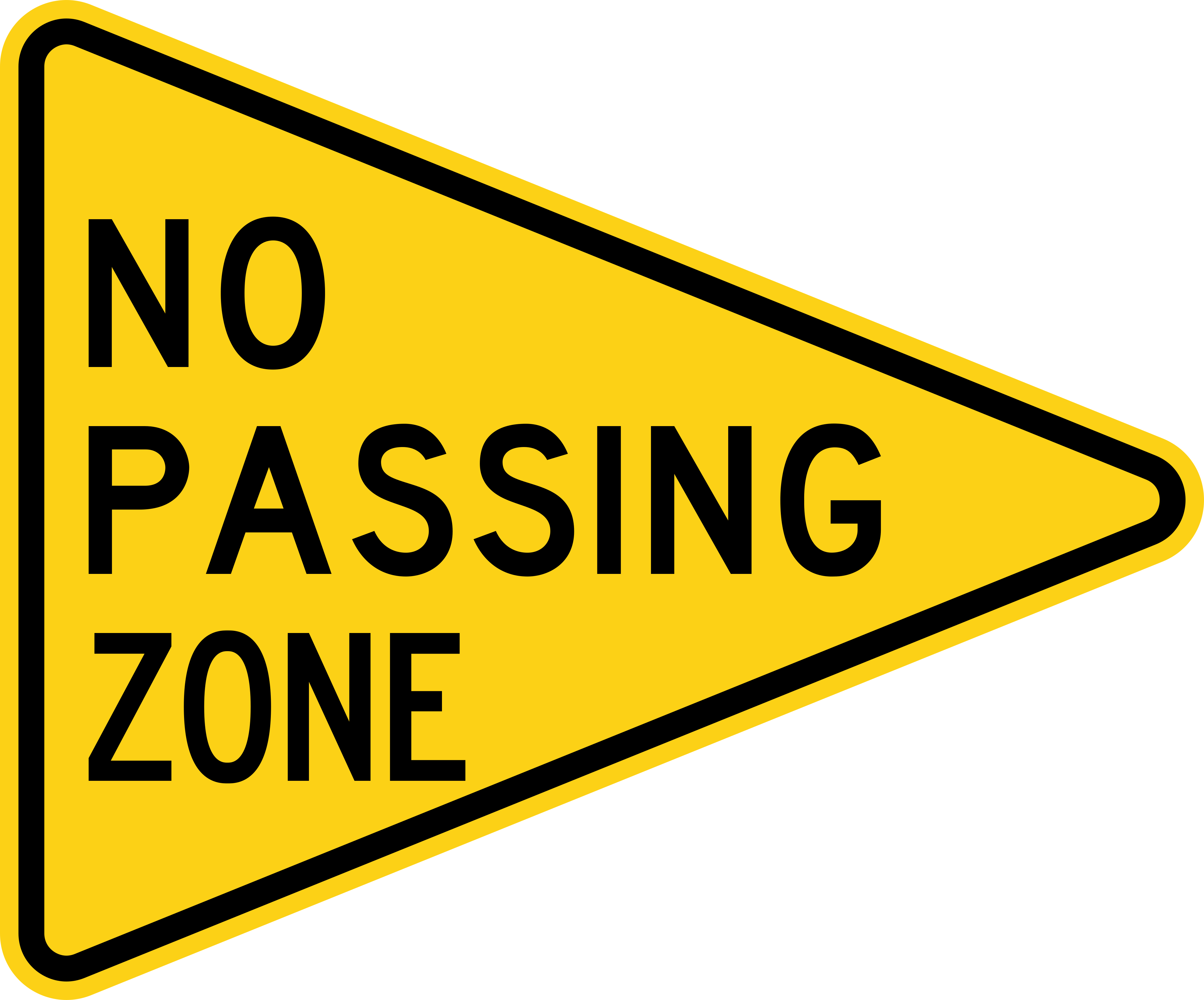
Question 17What shape and color is the No Passing Zone sign?
Show answer
A: Yellow pennant with black lettering. The No Passing Zone sign is a yellow pennant with black lettering. Wisconsin Motorists' Handbook (BDS126): Section 4: Signs — B. Regulatory, page 29.
-
Question 18A Wisconsin permit holder wants to practice with a family friend who is not a parent, guardian, spouse or instructor. How old must that friend be?
Show answer
C: 21 or older. A person other than a qualified instructor or parent, guardian or spouse must be 21 or older, and needs written authorization from the parent if the permit holder is under 18. Wisconsin Motorists' Handbook (BDS126): Section 2: Progression of Licenses — B. Instruction Permit, page 9.
-
Question 19Until what age must Wisconsin children generally ride in a child safety seat?
Show answer
B: 4. Generally, children must be in a child safety seat until age four. Wisconsin Motorists' Handbook (BDS126): Section 12: Other Important Information — D. Seat Belts (Safety Belts), page 59.
-
Question 20Is it harder to judge the distance and speed of oncoming traffic at night?
Show answer
A: Yes. At night it is harder to judge the distance and speed of oncoming traffic. Wisconsin Motorists' Handbook (BDS126): Section 7: Driving Conditions — A. Reduced Visibility, page 48.
-
Question 21What does a Reserved Parking sign for vehicles with DIS or DIS VET plates mean?
Show answer
A: Only vehicles with a valid disabled parking permit or disabled plates may park there. You may park there only with a valid disabled parking identification permit or disabled license plate. Wisconsin Motorists' Handbook (BDS126): Section 4: Signs — B. Regulatory, page 29.
-
Question 22When a Wisconsin permit holder drives during hours of darkness, who must sit beside them?
Show answer
B: A qualified instructor or a licensed person 25 or older with at least two years of experience. After dark, the person in the seat beside the permit holder must be a qualified instructor or a licensed person 25 or older with at least two years of experience. Wisconsin Motorists' Handbook (BDS126): Section 2: Progression of Licenses — B. Instruction Permit, page 9.
-
Question 23Until what age must Wisconsin children generally ride in a booster seat?
Show answer
C: 8. Children generally ride in a booster seat until age eight. Wisconsin Motorists' Handbook (BDS126): Section 12: Other Important Information — D. Seat Belts (Safety Belts), page 59.
-
Question 24What color are construction and maintenance signs?
Show answer
A: Orange with black lettering. Construction signs are orange diamonds or rectangles with black lettering and symbols. Wisconsin Motorists' Handbook (BDS126): Section 4: Signs — C. Construction, page 30.
-
Question 25A Wisconsin permit holder is at least 16. Besides the accompanying driver, who else may ride in a seat other than the front seat?
Show answer
A: One other licensed person 25 or older with at least 2 years of driving experience. At 16 or older, one other licensed person 25 or older with two years of experience may sit somewhere other than the front seat. Wisconsin Motorists' Handbook (BDS126): Section 2: Progression of Licenses — B. Instruction Permit, page 9.
Answer every question to see your score.
More Wisconsin practice tests
- Practice test 125 questions
- Practice test 225 questions
- Practice test 325 questions
- Practice test 425 questions
- Practice test 525 questions
- Practice test 625 questions
- Practice test 725 questions
- Practice test 825 questions
- Practice test 925 questions
- Practice test 1125 questions
- Practice test 1220 questions
- Exam simulatorThe real format, 50 questions
How to use these tests
Read each explanation, even when you get the question right: it tells you the rule and the handbook section, so you can look it up. Your answers are saved in this browser only, so the weak spots mode can give you more questions on the topics you miss. When you're scoring well, take the exam simulator: it uses the same number of questions and passing score as the real test.
Our own questions, written from the Wisconsin Motorists' Handbook (BDS126) and checked against it. Not affiliated with the Wisconsin Department of Transportation, Division of Motor Vehicles (WisDOT DMV). Found a mistake? Tell us.