Wisconsin DMV permit practice test 6
25 questions written from the Wisconsin Motorists' Handbook (BDS126), covering alcohol and drugs, licensing laws and penalties, right of way, following and passing, speed limits and more. Pick an answer to see straight away whether you're right and why. The real Wisconsin DMV test has 50 questions and you need 40 right.
-
Question 1What does the handbook recommend if you have been drinking?
Show answer
A: Ask a sober friend or family member for a ride, or have a bartender call a cab. Ask a sober friend or family member to give you a ride, or have a bartender call a cab. Wisconsin Motorists' Handbook (BDS126): Section 9: Dangerous Driving Behaviors — A. Alcohol, Drugs and Driving, page 53.
-
Question 2Do you need an appointment to take the Wisconsin knowledge test or the Highway Signs Test?
Show answer
B: No, neither test needs an appointment. The handbook states that no appointment is needed for either the signs test or the knowledge test. Wisconsin Motorists' Handbook (BDS126): Section 1: Driving Test Requirements — C. Knowledge Test, page 5.
-
Question 3According to the Wisconsin handbook, should you assume the vehicle on the right always goes first?
Show answer
B: No, each situation is different. The handbook warns not to assume the vehicle on the right goes first, because each situation is different. Wisconsin Motorists' Handbook (BDS126): Section 3: The Basics — A. Right-Of-Way, page 13.
-
Question 4Someone is trying to pass you. What should you do?
Show answer
A: Stay in your lane and slow down. If someone is passing you, stay in your lane and slow down. Wisconsin Motorists' Handbook (BDS126): Section 3: The Basics — H. Passing, page 21.
-
Question 5As your speed increases, what happens to the distance needed to turn, slow or stop?
Show answer
A: It increases. The faster your car is going, the more distance it takes to turn, slow or stop. Wisconsin Motorists' Handbook (BDS126): Section 3: The Basics — B. Understanding Vehicle Speed, page 15.
-
Question 6A sign reads "Buses and 4 Rider Car Pools Only, Mon-Fri 6 AM-9 AM." You are alone in your car at 7 a.m. on Tuesday. May you use the lane?
Show answer
A: No. During the posted hours the lane is only for buses and car pools with four riders. Wisconsin Motorists' Handbook (BDS126): Section 5: Signals, Pavement Markings and Lane Controls — C. Special Lanes, page 41.
-
Question 7When should parking lights be used?
Show answer
A: Only when parked and idling. Parking lights should only be used when you are parked and idling. Wisconsin Motorists' Handbook (BDS126): Section 3: The Basics — K. Communication, page 25.
-
Question 8You start a turn from the left-most of two left-turn lanes. Which lane should you end up in?
Show answer
A: The left-most lane of the new street. If you start turning from the left-most lane, you should end up in the left-most lane. Wisconsin Motorists' Handbook (BDS126): Section 3: The Basics — G. Turning, page 20.
-
Question 9When are deer most active?
Show answer
A: From sunset to sunrise. Deer are most active in the sunset to sunrise hours. Wisconsin Motorists' Handbook (BDS126): Section 6: Driving Situations — E. Watch for Deer, page 47.
-
Question 10Where may you not park?
Show answer
A: In front of a fire hydrant. Parking is not allowed in front of fire hydrants or where curbs have yellow markings. Wisconsin Motorists' Handbook (BDS126): Section 3: The Basics — J. Parking, page 22.
-
Question 11What does a flashing yellow arrow mean?
Show answer
A: You may turn after yielding; proceed with caution. A flashing yellow arrow means yield first before turning and proceed with caution. Wisconsin Motorists' Handbook (BDS126): Section 5: Signals, Pavement Markings and Lane Controls — A. Traffic Signals, page 37.
-
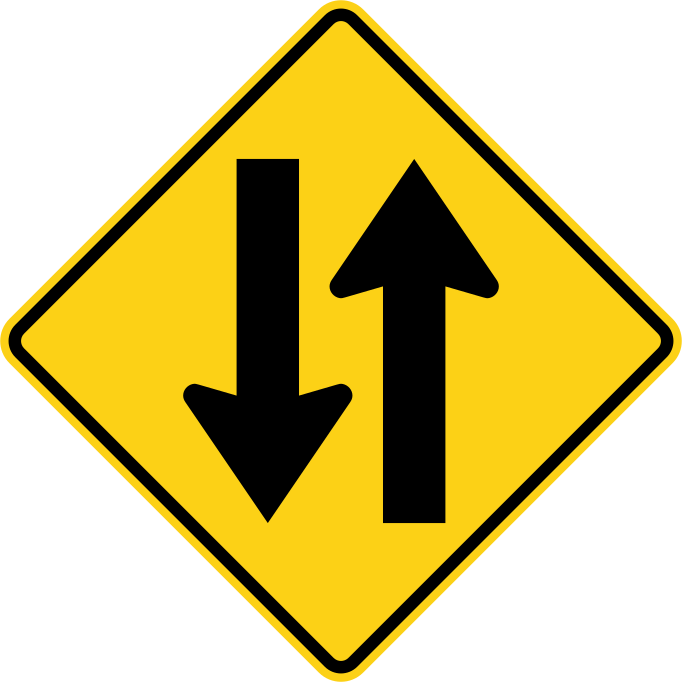
Question 12What does the 2-Way Traffic warning sign tell you?
Show answer
A: You are leaving a one-way road and entering a road with opposing traffic. The 2-Way Traffic sign appears when you leave a one-way roadway and enter one with opposing traffic. Wisconsin Motorists' Handbook (BDS126): Section 4: Signs — A. Warning, page 27.
-
Question 13How far from a stopped school bus with flashing red lights must you stop in Wisconsin?
Show answer
B: At least 20 feet. When a school bus is stopped with red lights flashing, stop at least 20 feet from it. Wisconsin Motorists' Handbook (BDS126): Section 10: Sharing the Road — C. School Buses, page 55.
-
Question 14A crash damages government property such as a guardrail. At what amount must it be reported to police?
Show answer
B: $200. Government property damage of $200 or more must be reported to police. Wisconsin Motorists' Handbook (BDS126): Section 8: Handling Emergencies — B. Crashes, page 51.
-
Question 15What does a Wisconsin prohibited alcohol concentration (PAC) test measure?
Show answer
A: Whether you have a measurable amount of alcohol, by breath or blood test. A PAC test finds whether you have a measurable amount of alcohol by a breathalyzer or blood test. Wisconsin Motorists' Handbook (BDS126): Section 9: Dangerous Driving Behaviors — A. Alcohol, Drugs and Driving, page 53.
-
Question 16Which Wisconsin test requires you to make an appointment?
Show answer
D: Skills (road) test. You must make an appointment for the skills test, also called the road or driving test. Wisconsin Motorists' Handbook (BDS126): Section 1: Driving Test Requirements — D. Skills Test, page 6.
-
Question 17You are turning left on a steady green light (no arrow). Who has the right-of-way?
Show answer
A: Oncoming traffic. On a steady green, you may turn left only when safe; oncoming traffic has the right-of-way. Wisconsin Motorists' Handbook (BDS126): Section 5: Signals, Pavement Markings and Lane Controls — A. Traffic Signals, page 37.
-
Question 18What are the areas you check by looking over your shoulder before changing lanes called?
Show answer
A: Blind spots. The areas you cannot see in your mirrors and must check over your shoulder are called blind spots. Wisconsin Motorists' Handbook (BDS126): Section 3: The Basics — H. Passing, page 21.
-
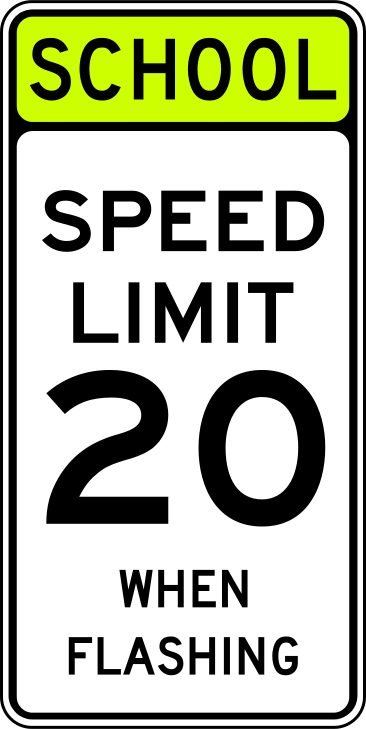
Question 19A sign reads SCHOOL SPEED LIMIT 15 WHEN CHILDREN ARE PRESENT. When does the 15 mph limit apply?
Show answer
A: When children are visible. In a school zone, when children are visible you cannot exceed the posted speed. Wisconsin Motorists' Handbook (BDS126): Section 4: Signs — B. Regulatory, page 28.
-
Question 20What is a flex lane in Wisconsin?
Show answer
A: A paved shoulder that may be used as a travel lane when signs allow. Some highways allow the paved shoulder to be used as a travel lane, called a flex lane, when signs permit. Wisconsin Motorists' Handbook (BDS126): Section 5: Signals, Pavement Markings and Lane Controls — C. Special Lanes, page 42.
-
Question 21In a Wisconsin construction zone, when may you use a cellphone?
Show answer
A: Only to report an emergency. You can only use your cellphone in a construction zone to report an emergency. Wisconsin Motorists' Handbook (BDS126): Section 4: Signs — C. Construction, page 30.
-
Question 22To turn right off a four-lane roadway, which lane must you turn from?
Show answer
A: The lane nearest the right curb or edge. To turn right off a four-lane roadway, turn from the lane nearest the right curb or edge. Wisconsin Motorists' Handbook (BDS126): Section 3: The Basics — G. Turning, page 20.
-
Question 23You see the reflection of your headlights in a deer's eyes ahead. What should you do?
Show answer
A: Slow down, use your horn and be ready to stop. If you see deer eyes, slow down, use your horn and be ready to stop. Wisconsin Motorists' Handbook (BDS126): Section 6: Driving Situations — E. Watch for Deer, page 47.
-
Question 24When parking along a road, where should your vehicle normally be?
Show answer
A: Far enough from travel lanes not to interfere with traffic, normally on the far-right side. Park far enough from any travel lane to avoid interfering with traffic, normally on the far-right side. Wisconsin Motorists' Handbook (BDS126): Section 3: The Basics — J. Parking, page 22.
-
Question 25What does a flashing yellow light mean?
Show answer
A: Slow down, check for cross traffic and proceed with caution. At a flashing yellow light, slow down, check for cross traffic and proceed with caution. Wisconsin Motorists' Handbook (BDS126): Section 5: Signals, Pavement Markings and Lane Controls — A. Traffic Signals, page 37.
Answer every question to see your score.
More Wisconsin practice tests
- Practice test 125 questions
- Practice test 225 questions
- Practice test 325 questions
- Practice test 425 questions
- Practice test 525 questions
- Practice test 725 questions
- Practice test 825 questions
- Practice test 925 questions
- Practice test 1025 questions
- Practice test 1125 questions
- Practice test 1220 questions
- Exam simulatorThe real format, 50 questions
How to use these tests
Read each explanation, even when you get the question right: it tells you the rule and the handbook section, so you can look it up. Your answers are saved in this browser only, so the weak spots mode can give you more questions on the topics you miss. When you're scoring well, take the exam simulator: it uses the same number of questions and passing score as the real test.
Our own questions, written from the Wisconsin Motorists' Handbook (BDS126) and checked against it. Not affiliated with the Wisconsin Department of Transportation, Division of Motor Vehicles (WisDOT DMV). Found a mistake? Tell us.