Wisconsin DMV permit practice test 8
25 questions written from the Wisconsin Motorists' Handbook (BDS126), covering emergencies, licensing laws and penalties, following and passing, safe and defensive driving, turns and intersections and more. Pick an answer to see straight away whether you're right and why. The real Wisconsin DMV test has 50 questions and you need 40 right.
-
Question 1A tire blows out. What should you do?
Show answer
A: Hold the wheel straight, ease off the gas and slow gradually. Hold the wheel straight, lift your foot off the gas and slow little by little, then pull off when safe. Wisconsin Motorists' Handbook (BDS126): Section 8: Handling Emergencies — C. Roadside Emergencies, page 52.
-
Question 2If you are under 18 in Wisconsin, who must sign your Driver License Application MV3001 as a sponsor?
Show answer
A: An adult sponsor such as a parent, step-parent or legal guardian. Applicants under 18 must have an adult sponsor, such as a parent, step-parent or legal guardian, sign the MV3001. Wisconsin Motorists' Handbook (BDS126): Section 2: Progression of Licenses — A. Sponsorship, page 7.
-
Question 3How many vehicles should you pass at one time?
Show answer
A: One. Pass only one vehicle at a time, on the left side. Wisconsin Motorists' Handbook (BDS126): Section 3: The Basics — H. Passing, page 22.
-
Question 4During a traffic stop, what should you do with your seat belt?
Show answer
A: Keep it on and stay in the vehicle. Stay in your vehicle and keep your seatbelt on. Wisconsin Motorists' Handbook (BDS126): Section 6: Driving Situations — D. Traffic Stops, page 47.
-
Question 5When turning at an intersection, how far before the turn should you start signaling?
Show answer
A: About 3 seconds (about 100 feet). Start signaling about three seconds, or about 100 feet, before the turn. Wisconsin Motorists' Handbook (BDS126): Section 3: The Basics — K. Communication, page 25.
-
Question 6In reduced visibility, how do other vehicles often appear?
Show answer
A: To be moving slower than they actually are. In reduced visibility, vehicles may appear to be moving slower than they actually are. Wisconsin Motorists' Handbook (BDS126): Section 7: Driving Conditions — A. Reduced Visibility, page 48.
-
Question 7What does a solid white edge line along the right side of the road mark?
Show answer
A: The right edge of the traffic lane. A solid white edge line indicates the right edge of the traffic lane. Wisconsin Motorists' Handbook (BDS126): Section 5: Signals, Pavement Markings and Lane Controls — B. Types of Line Markings, page 38.
-
Question 8What do regulatory signs tell you?
Show answer
A: The rules of the road. Regulatory signs tell you the rules of the road; they are white or red and square, rectangular or a special shape. Wisconsin Motorists' Handbook (BDS126): Section 4: Signs — B. Regulatory, page 28.
-
Question 9Why should you give extra following distance to motorcycles?
Show answer
A: They are lightweight and can stop faster than most vehicles. Motorcycles are lightweight and can stop faster than most vehicles. Wisconsin Motorists' Handbook (BDS126): Section 10: Sharing the Road — D. Motorcycles, page 55.
-
Question 10Your engine stops while driving. What should you expect and do?
Show answer
A: Steering will be hard; keep the key on and pull off when safe. Keep the key in the on position, hold the wheel and pull over; the steering will be hard to turn. Wisconsin Motorists' Handbook (BDS126): Section 8: Handling Emergencies — C. Roadside Emergencies, page 52.
-
Question 11What does an adult sponsor accept by signing a Wisconsin teen's driver license application?
Show answer
A: Liability: legal and financial responsibility for incidents caused by the minor's driving. By signing, the sponsor takes on liability: they become legally and financially responsible if the teen causes an incident while driving. Wisconsin Motorists' Handbook (BDS126): Section 2: Progression of Licenses — A. Sponsorship, page 7.
-
Question 12Must other vehicles move over to let you pass?
Show answer
B: No, they do not have to move. Other vehicles do not have to move to let you pass. Wisconsin Motorists' Handbook (BDS126): Section 3: The Basics — H. Passing, page 22.
-
Question 13What does the handbook say about headphones while driving?
Show answer
A: Do not wear headsets or headphones that cover or go in both ears. Do not drive with headsets or headphones that cover or go in both ears. Wisconsin Motorists' Handbook (BDS126): Section 9: Dangerous Driving Behaviors — B. Distracted Driving, page 53.
-
Question 14You plan to turn into a driveway just past an intersection. When should you start signaling?
Show answer
A: Once you cross the intersection. If turning after an intersection, start signaling once you cross the intersection. Wisconsin Motorists' Handbook (BDS126): Section 3: The Basics — K. Communication, page 25.
-
Question 15Which part of the road freezes first in severe weather?
Show answer
A: Bridges and overpasses. Bridges and overpasses freeze before the rest of the roadway. Wisconsin Motorists' Handbook (BDS126): Section 7: Driving Conditions — B. Severe Weather, page 48.
-
Question 16What does a yellow edge line on your left indicate?
Show answer
A: The left edge of the traffic lanes going in your direction. A solid or dashed yellow line marks the left edge of the lanes going in your direction. Wisconsin Motorists' Handbook (BDS126): Section 5: Signals, Pavement Markings and Lane Controls — B. Types of Line Markings, page 38.
-
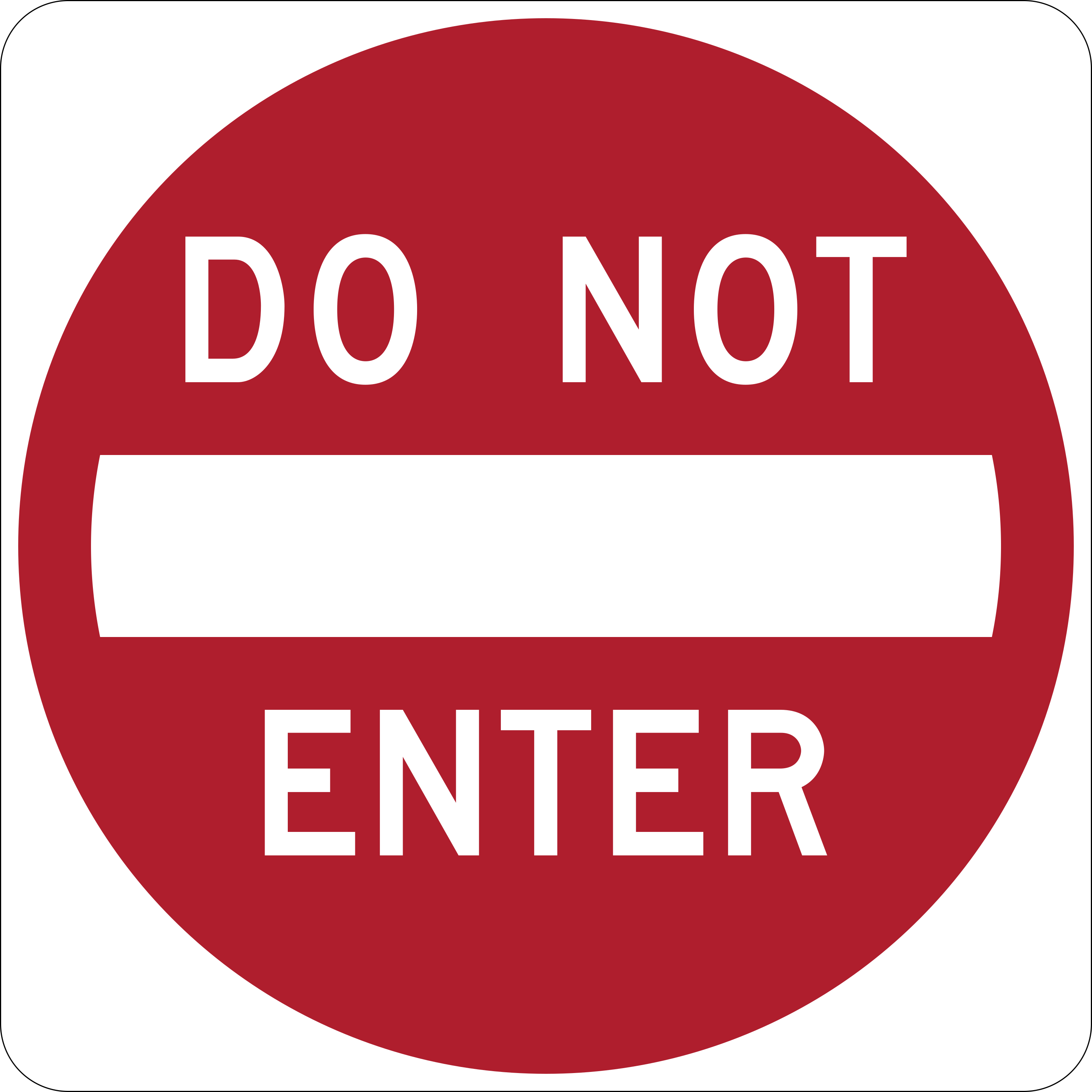
Question 17Where is a Do Not Enter sign typically used?
Show answer
A: On exit ramps going the wrong direction and on one-way streets. Do Not Enter signs are used on exit ramps going the wrong direction and on one-way streets. Wisconsin Motorists' Handbook (BDS126): Section 4: Signs — B. Regulatory, page 28.
-
Question 18How much room must you give a bicyclist when passing?
Show answer
B: At least 3 feet. Give bicyclists at least three feet of room when you pass. Wisconsin Motorists' Handbook (BDS126): Section 10: Sharing the Road — E. Bicycles, page 56.
-
Question 19Your gas pedal sticks. What should you do?
Show answer
A: Shift to neutral, pull off when safe and turn off the engine. Keep your eyes on the road, switch to neutral, pull off when safe, then turn off the engine. Wisconsin Motorists' Handbook (BDS126): Section 8: Handling Emergencies — C. Roadside Emergencies, page 52.
-
Question 20Can a Wisconsin sponsor withdraw sponsorship of a teen driver?
Show answer
A: Yes, at any time. The handbook says the sponsor may remove their sponsorship at any time. Wisconsin Motorists' Handbook (BDS126): Section 2: Progression of Licenses — A. Sponsorship, page 7.
-
Question 21On a road with double solid yellow lines, which vehicle may you pass if safe?
Show answer
A: A vehicle going less than half the speed limit, unless it is farm equipment. You can pass a vehicle going less than half the speed limit if it is safe, except farm equipment. Wisconsin Motorists' Handbook (BDS126): Section 5: Signals, Pavement Markings and Lane Controls — B. Types of Line Markings, page 39.
-
Question 22When may Wisconsin instruction permit holders use a cell phone while driving?
Show answer
A: Only to report an emergency. Instruction permit and probationary license holders can only use a cell phone to report an emergency. Wisconsin Motorists' Handbook (BDS126): Section 9: Dangerous Driving Behaviors — B. Distracted Driving, page 53.
-
Question 23In which direction does traffic move in a roundabout?
Show answer
A: Counterclockwise. Traffic in a roundabout moves counterclockwise. Wisconsin Motorists' Handbook (BDS126): Section 6: Driving Situations — A. Roundabouts, page 43.
-
Question 24Your car does not have anti-lock brakes and the road is slippery. How should you brake?
Show answer
A: Gently pump the brakes. Without ABS, gently pump the brakes to help keep from skidding. Wisconsin Motorists' Handbook (BDS126): Section 7: Driving Conditions — B. Severe Weather, page 48.
-
Question 25What do white dashed lines between lanes mean?
Show answer
A: They divide lanes going the same direction; you may cross when safe. White dashed lines divide lanes of traffic going the same direction, and you may cross them when safe. Wisconsin Motorists' Handbook (BDS126): Section 5: Signals, Pavement Markings and Lane Controls — B. Types of Line Markings, page 38.
Answer every question to see your score.
More Wisconsin practice tests
- Practice test 125 questions
- Practice test 225 questions
- Practice test 325 questions
- Practice test 425 questions
- Practice test 525 questions
- Practice test 625 questions
- Practice test 725 questions
- Practice test 925 questions
- Practice test 1025 questions
- Practice test 1125 questions
- Practice test 1220 questions
- Exam simulatorThe real format, 50 questions
How to use these tests
Read each explanation, even when you get the question right: it tells you the rule and the handbook section, so you can look it up. Your answers are saved in this browser only, so the weak spots mode can give you more questions on the topics you miss. When you're scoring well, take the exam simulator: it uses the same number of questions and passing score as the real test.
Our own questions, written from the Wisconsin Motorists' Handbook (BDS126) and checked against it. Not affiliated with the Wisconsin Department of Transportation, Division of Motor Vehicles (WisDOT DMV). Found a mistake? Tell us.