Connecticut DMV permit practice test 10
25 questions written from the Connecticut Driver's Manual, covering safe and defensive driving, sharing the road, road signs, signals and pavement markings, hazards, weather and night driving and more. Pick an answer to see straight away whether you're right and why. The real Connecticut DMV test has 25 questions and you need 20 right.
-
Question 1If you feel drowsy on a trip, how long a nap does the manual recommend in a safe parking area?
Show answer
B: 15 to 20 minutes. Find a safe parking area and take a 15 to 20 minute nap. Connecticut Driver's Manual: Fatigue: Ways to Prevent a Fatigue-Related Crash, page 30.
-
Question 2What following distance does the manual recommend behind a motorcycle?
Show answer
B: 3 to 4 seconds, more in wet conditions. When following a motorcyclist, allow a 3 to 4 second following distance, or more in wet conditions. Connecticut Driver's Manual: Motorcycles, page 20.
-
Question 3What does a DIVIDED HIGHWAY BEGINS sign tell you to do?

Show answer
A: Keep right. The highway ahead splits into two one-way roadways separated by a median; keep right. Connecticut Driver's Manual: Divided Highway Begins, page 52.
-
Question 4What is a shared center lane used for?
Show answer
D: Left turns (or U-turns where allowed) by traffic in both directions. These center lanes are reserved for left turns (or U-turns where permitted) and can be used by traffic from both directions. Connecticut Driver's Manual: Shared Center Lane, page 46.
-
Question 5At a crossing with flashing lights and gates, when must you stop?
Show answer
C: When the lights begin to flash, before the gate lowers. Stop when the lights begin to flash and before the gate lowers; stay stopped until the gates rise and lights stop flashing, and never drive around a gate. Connecticut Driver's Manual: Railroad Crossbuck, Flashing Lights and Gate, page 54.
-
Question 6Your vehicle breaks down on the highway and you have no flares. What should you do?
Show answer
A: Stand by the side of the road, safe from traffic, and wave traffic around, using a white cloth if you have one. Without flares, stand by the side of the road where you are safe and wave traffic around your vehicle, using a white cloth if you have one; never stand in the roadway. Connecticut Driver's Manual: Vehicle Emergencies: Use Emergency Signals, page 41.
-
Question 7Can a learner's permit holder drive alone to the road test location?
Show answer
B: No, a non-licensed operator cannot drive to the test location alone. A non-licensed operator cannot drive to the test location alone. Connecticut Driver's Manual: The Road Test, page 9.
-
Question 8Between which hours does the manual advise trying not to drive because of fatigue risk?
Show answer
D: Midnight and 6 a.m.. Try not to drive late at night between midnight and 6 a.m. Connecticut Driver's Manual: Fatigue: Ways to Prevent a Fatigue-Related Crash, page 30.
-
Question 9When a motorcycle is passing you, what should you do?
Show answer
D: Maintain your lane position and speed. Maintain your lane position and speed and let the motorcyclist complete the pass; never speed up or interfere. Connecticut Driver's Manual: Motorcycles, page 20.
-
Question 10What should you do when you see a SLIPPERY WHEN WET sign and the road is wet?

Show answer
C: Reduce speed, avoid hard braking or sudden turns, and increase following distance. On wet pavement reduce speed, don't brake hard or change direction suddenly, and increase your distance from the car ahead. Connecticut Driver's Manual: Slippery when Wet, page 51.
-
Question 11What does a white diamond painted on a lane mean?
Show answer
B: The lane is reserved for special use, such as HOV, bus or bicycle. Reserved lanes are marked by signs and often a white diamond on a sign or the pavement. Connecticut Driver's Manual: Reserved Lanes, page 46.
-
Question 12How can you signal that your disabled vehicle needs help?
Show answer
A: Lift the hood or tie a white cloth to the antenna, side mirror or door handle. Raise the hood or tie a white cloth to the antenna, a side mirror or a door handle to show you need help. Connecticut Driver's Manual: Vehicle Emergencies: Use Emergency Signals, page 41.
-
Question 13What is the fine if a driver or passenger is cited for not wearing a seat belt in Connecticut?
Show answer
D: $75. If either the driver or a passenger fails to wear a seat belt, each could be cited and fined $75. Connecticut Driver's Manual: Connecticut Seat Belt Laws, page 14.
-
Question 14You run over a shoulder rumble strip. What should you do?
Show answer
D: Pull off the road at a safe place and check how alert you are. Rumble strips help prevent fatigue crashes; if you run over one, pull off at a safe place immediately and check your alertness. Connecticut Driver's Manual: Fatigue, page 30.
-
Question 15What is the "No-Zone" around a truck?
Show answer
B: The danger areas around a truck, including blind spots. No-Zones are danger areas around trucks, buses and RVs where crashes are more likely, including the driver's blind spots. Connecticut Driver's Manual: Sharing the Road with Trucks: No-Zone, page 21.
-
Question 16A small plaque with a speed, posted below a curve warning sign, means what?

Show answer
C: The advisory (safe) speed for that condition. The advisory speed plaque, usually below another warning sign, shows the advisory speed for the condition. Connecticut Driver's Manual: Advisory Speed Plaque, page 51.
-
Question 17What does a bicycle sharrow (two chevrons above a bike symbol) on the road mean?
Show answer
A: The lane is shared; watch for bicycles in the lane. A sharrow marks a lane that cars and bicycles share, so expect bicyclists riding in the lane. Connecticut Driver's Manual: Other Markings, page 46.
-
Question 18How should you stop severe bleeding at a crash scene?
Show answer
D: Apply direct pressure to the wound with your hand or a cloth. Apply pressure directly on the wound with your hand or a cloth; even severe bleeding can almost always be stopped or slowed this way. Connecticut Driver's Manual: Traffic Crashes: If someone is injured, page 43.
-
Question 19What happens if your vehicle's insurance is cancelled and you do not respond to DMV's warning notice?
Show answer
B: Your registration is suspended. Connecticut requires continuous insurance on any registered vehicle; failure to respond to the DMV warning notice results in suspension of the registration. Connecticut Driver's Manual: Connecticut Insurance Laws, page 15.
-
Question 20How much more likely are people with untreated obstructive sleep apnea to fall asleep at the wheel?
Show answer
C: 7 times. The manual warns that untreated obstructive sleep apnea makes a driver about seven times as likely to doze off while driving. Connecticut Driver's Manual: Fatigue, page 30.
-
Question 21How can you tell you may be in a truck's side blind spot?
Show answer
D: You can't see the driver's face in the truck's side mirror. Truck mirrors cannot show every spot beside the trailer; if you cannot see the trucker's face in their side mirror, the trucker cannot see you. Connecticut Driver's Manual: Sharing the Road with Trucks: No-Zone, page 21.
-
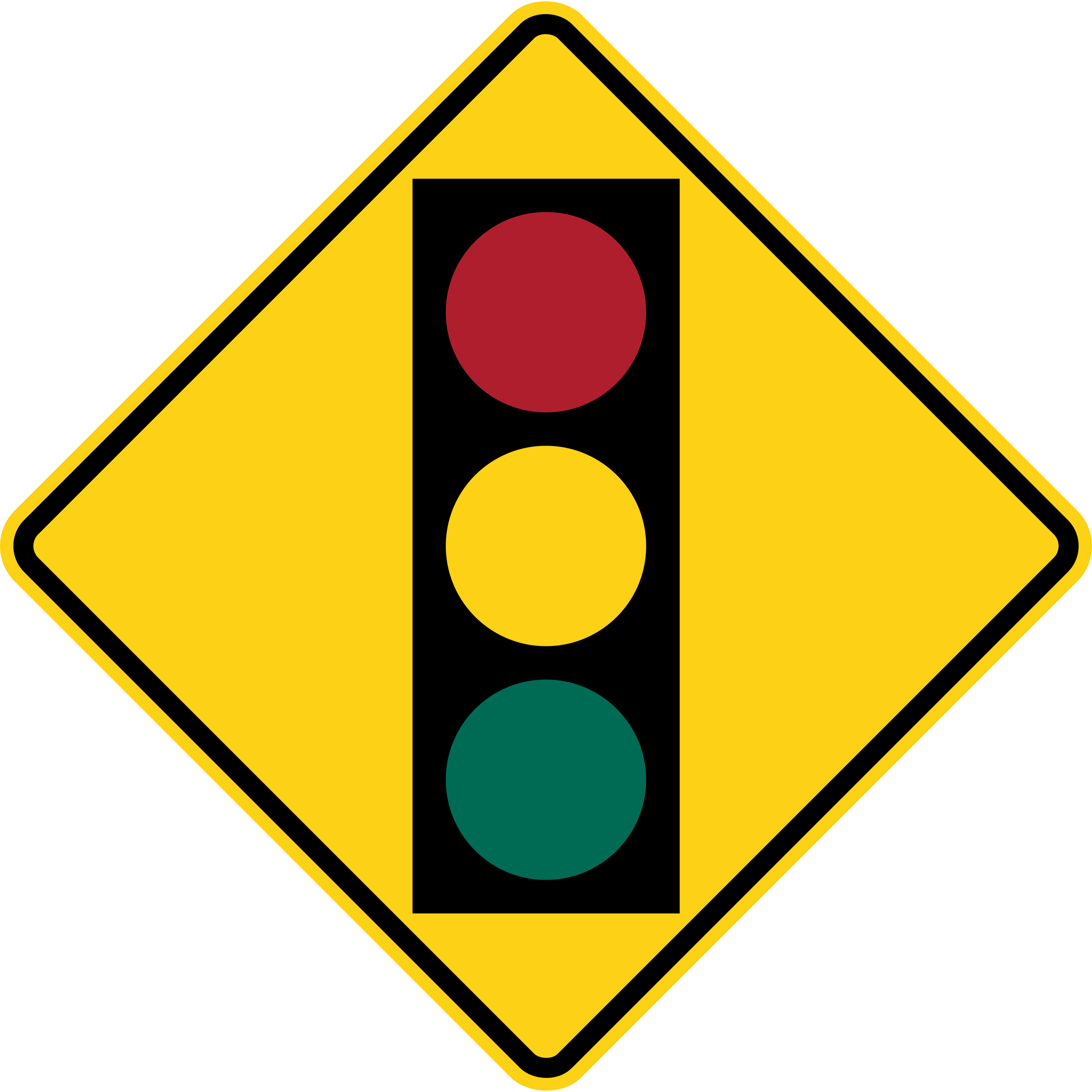
Question 22What does a black-on-yellow sign showing a traffic light mean?
Show answer
D: Traffic signals ahead; slow down and prepare to stop. The Signal Ahead sign means traffic signals are ahead; slow down and prepare to stop. Connecticut Driver's Manual: Signal Ahead, page 51.
-
Question 23When stopping for a sign or signal at a marked stop line, where must you stop?
Show answer
A: Before your vehicle reaches the stop line. When required to stop, you must stop before your vehicle reaches the stop line. Connecticut Driver's Manual: Crosswalks and Stop Lines, page 46.
-
Question 24A 16-year-old is convicted for the first time of using a cell phone while driving. What is the license penalty?
Show answer
C: 30-day suspension and $175 restoration fee. For drivers 16 and 17, a first conviction for cell phone or text messaging use brings a 30-day suspension, a $175 license restoration fee and court fines. Connecticut Driver's Manual: Other Suspensions for 16- and 17-Year-Old Drivers, page 36.
-
Question 25You are very angry after an argument. What does the manual advise before driving?
Show answer
C: Give yourself time to cool off and stay off the road until calm. If you are angry or excited, give yourself time to cool off—take a short walk or nap—and stay off the road until you have calmed down. Connecticut Driver's Manual: Emotions, page 30.
Answer every question to see your score.
More Connecticut practice tests
- Practice test 125 questions
- Practice test 225 questions
- Practice test 325 questions
- Practice test 425 questions
- Practice test 525 questions
- Practice test 625 questions
- Practice test 725 questions
- Practice test 825 questions
- Practice test 925 questions
- Practice test 1125 questions
- Practice test 1225 questions
- Exam simulatorThe real format, 25 questions
How to use these tests
Read each explanation, even when you get the question right: it tells you the rule and the handbook section, so you can look it up. Your answers are saved in this browser only, so the weak spots mode can give you more questions on the topics you miss. When you're scoring well, take the exam simulator: it uses the same number of questions and passing score as the real test.
Our own questions, written from the Connecticut Driver's Manual and checked against it. Not affiliated with the Connecticut Department of Motor Vehicles. Found a mistake? Tell us.