Connecticut DMV permit practice test 8
25 questions written from the Connecticut Driver's Manual, covering road signs, signals and pavement markings, following and passing, hazards, weather and night driving, emergencies and more. Pick an answer to see straight away whether you're right and why. The real Connecticut DMV test has 25 questions and you need 20 right.
-
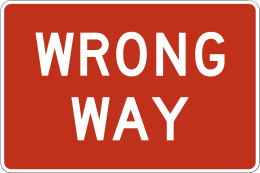
Question 1You see a WRONG WAY sign. What should you do?
Show answer
A: Do not drive past it; turn around. The Wrong Way sign identifies a one-way road or wrong side of a divided highway; do not drive past it—turn around. Connecticut Driver's Manual: Wrong Way, page 49.
-
Question 2What do white lane lines separate?
Show answer
A: Lanes of traffic moving in the same direction. White lane lines divide lanes carrying traffic in the same direction. Connecticut Driver's Manual: Lane Lines, page 45.
-
Question 3Why should you avoid driving alongside other vehicles on a multi-lane road?
Show answer
B: You may be in their blind spot and they could move into you. Someone may crowd your lane or change lanes into you; move ahead of or drop behind the other vehicle. Connecticut Driver's Manual: Space to the Side, page 24.
-
Question 4When you approach a hill or curve you cannot see past, how should you adjust your driving?
Show answer
C: Adjust your speed so you can stop if necessary. Whenever you come to a hill or curve you can't see over or around, adjust your speed so you can stop if necessary. Connecticut Driver's Manual: Lights: Hills and Curves, page 40.
-
Question 5You are about to be hit from the rear. What should you do?
Show answer
B: Press back against the seat with your head on the head restraint, ready to brake. Press yourself against the back of your seat with your head against the head restraint and be ready to brake. Connecticut Driver's Manual: Traffic Crashes: Hit From the Rear, page 43.
-
Question 6What are the curfew hours for 16- and 17-year-old drivers in Connecticut?
Show answer
B: 11 p.m. to 5 a.m.. Teen drivers may not drive from 11 p.m. to 5 a.m. unless traveling for employment, school, religious activities, medical necessity, or as an assigned Safe Ride Program driver. Connecticut Driver's Manual: Hour Restrictions (Curfew), page 10.
-
Question 7Which statement about alcohol and driving is true?
Show answer
D: Any amount of alcohol can affect your driving. No one can drink and drive safely; any amount of alcohol can affect your driving and you could be arrested. Connecticut Driver's Manual: Alcohol and You, page 35.
-
Question 8How much following distance should you give a driver who appears to be distracted?
Show answer
D: 3 to 4 seconds. Give a distracted driver plenty of room and keep a safe following distance of 3 to 4 seconds. Connecticut Driver's Manual: Driver Distractions, page 29.
-
Question 9Which is true about passing a horse on a Connecticut road?
Show answer
D: It is illegal to sound your horn or make loud noises near the horse. Slow down or stop as needed around a horse, and do not honk or make loud, startling noises; Connecticut law forbids it. Connecticut Driver's Manual: Horses, page 20.
-
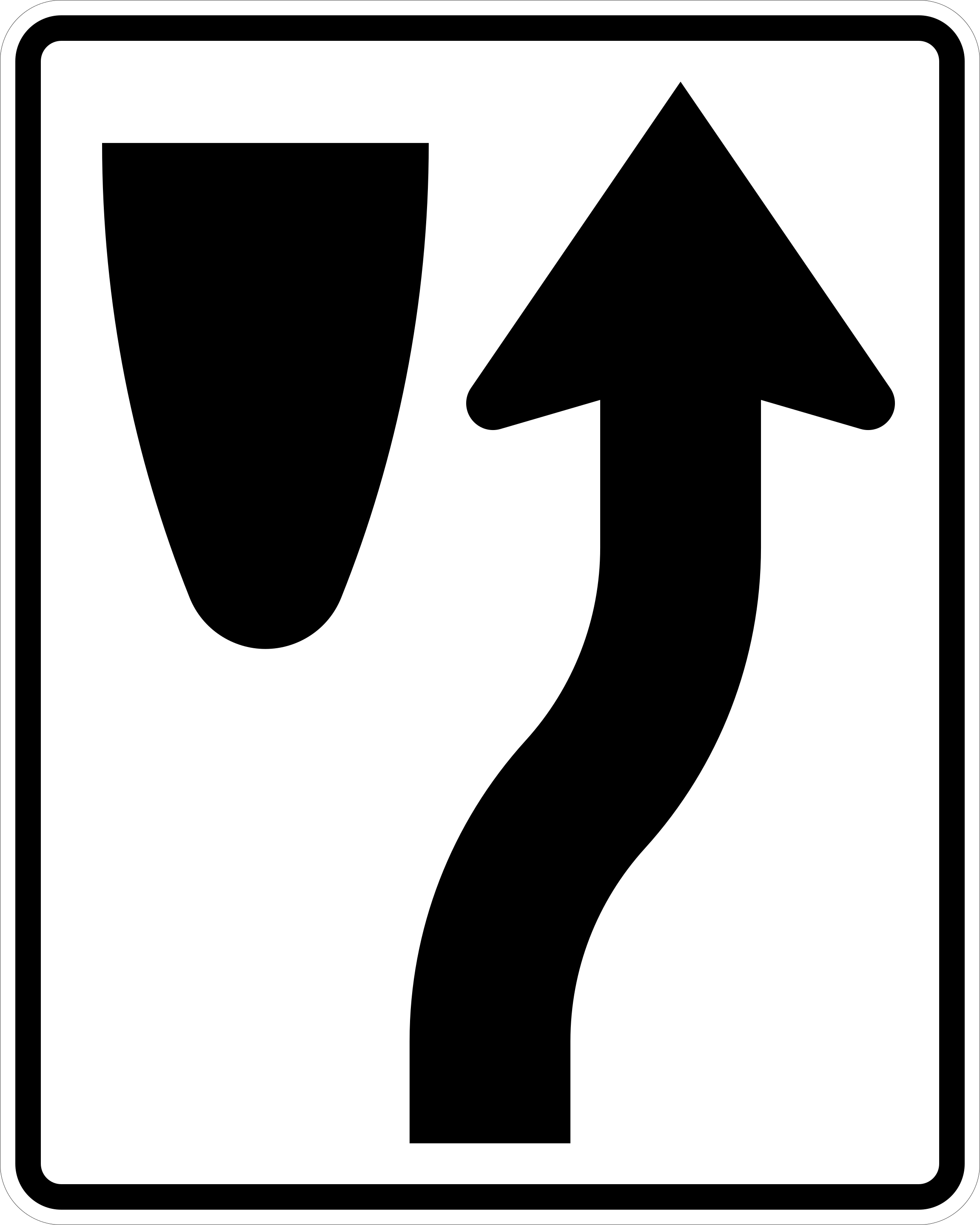
Question 10What does a KEEP RIGHT sign tell you?
Show answer
A: Drive to the right of a traffic island, median or obstruction. Keep Right signs tell you which side to drive on around islands, medians or obstructions; drive on the side the arrow shows. Connecticut Driver's Manual: Keep Right, page 50.
-
Question 11What do yellow center lines separate?
Show answer
C: Traffic moving in opposite directions. Yellow center lines divide traffic going in opposite directions. Connecticut Driver's Manual: Center Lines, page 45.
-
Question 12When you pass another vehicle, how long should you stay in its blind spot?
Show answer
B: As briefly as possible. Stay in another driver's blind spot as briefly as possible when passing, since they could drift or turn into you while you are there. Connecticut Driver's Manual: Blind Spots, page 24.
-
Question 13When should you use your headlights while driving away from a rising or setting sun?
Show answer
D: Turn them on so oncoming drivers can see you. When driving away from a rising or setting sun, turn on your headlights so oncoming drivers, who face the glare, can see you. Connecticut Driver's Manual: Lights: Use Headlights, page 40.
-
Question 14A crash from the front can't be avoided. What should you try to do?
Show answer
D: Turn so you take a glancing blow rather than a head-on hit. Try to turn so you get a glancing blow instead of being struck head-on. Connecticut Driver's Manual: Traffic Crashes: Hit From the Front, page 43.
-
Question 15A 17-year-old drives home from a part-time job at 11:45 p.m. Is this allowed under the curfew law?
Show answer
D: Yes, travel for employment is an exception. The 11 p.m. to 5 a.m. curfew has exceptions for employment, school, religious activities, medical necessity and the Safe Ride Program. Connecticut Driver's Manual: Hour Restrictions (Curfew), page 10.
-
Question 16If you are distracted and have a crash, who is responsible?
Show answer
C: You, the driver. You are completely and solely responsible for operating your vehicle safely; if you are distracted and crash, the responsibility is yours. Connecticut Driver's Manual: Driver Distractions, page 29.
-
Question 17What does an orange triangle on the back of a vehicle mean?
Show answer
D: A slow-moving vehicle, usually 25 mph or less. Farm tractors, animal-drawn and road maintenance vehicles usually go 25 mph or less and should display an orange triangle slow-moving decal. Connecticut Driver's Manual: Slow Moving Vehicles, page 20.
-
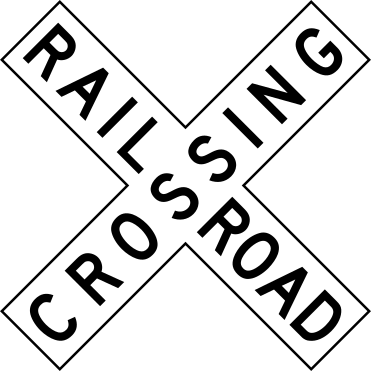
Question 18A white X-shaped railroad crossbuck has the same meaning as which sign?
Show answer
D: Yield. The crossbuck at the tracks works like a yield sign: slow down, and stop if needed so any train passes first. Connecticut Driver's Manual: Railroad Crossbuck, page 54.
-
Question 19A dashed yellow line is next to a solid yellow line on your side. What does this mean?
Show answer
B: You may not pass from your side. With a solid and a dashed yellow line side by side, only drivers on the dashed side may pass; the solid line on your side means no passing. Connecticut Driver's Manual: Center Lines, page 46.
-
Question 20What does the manual say about parking lights while driving?
Show answer
B: Never drive with only your parking lights on. Do not drive at any time with only your parking lights on; they are for parked vehicles only. Connecticut Driver's Manual: Lights, page 40.
-
Question 21When should you move an injured person at a crash scene?
Show answer
C: Only if they are in a burning vehicle or other immediate danger. Do not move the injured unless they are in a burning vehicle or in immediate danger of being hit; moving can worsen injuries. Connecticut Driver's Manual: Traffic Crashes: If someone is injured, page 43.
-
Question 22May a 17-year-old licensed driver in Connecticut use a hands-free phone while driving?
Show answer
D: No, drivers under 18 may not use any cell phone, even hands-free, except in an emergency. Learner's permit holders and 16- and 17-year-old drivers may not use a cell phone or mobile electronic device, even hands-free; emergency calls are the exception for any age. Connecticut Driver's Manual: Connecticut Cell Phone Laws, page 15.
-
Question 23On long trips, how often should you plan to take a break?
Show answer
D: About every 100 miles or 2 hours. The manual recommends planning a rest stop roughly every two hours or 100 miles on a long drive. Connecticut Driver's Manual: Fatigue: Before a Trip, page 30.
-
Question 24A bus traveling in your direction signals to pull out from a stop. What must you do?
Show answer
A: Yield the right-of-way to the bus. When a bus going your way signals to move back into traffic, Connecticut law requires you to let it in. Connecticut Driver's Manual: Slow Moving Vehicles, page 20.
-
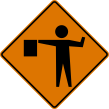
Question 25What does a warning sign showing a flag person mean?
Show answer
C: A flagger is ahead; follow their directions. The flag person sign warns that a flagger is ahead; always follow his or her directions. Connecticut Driver's Manual: Flag Person, page 53.
Answer every question to see your score.
More Connecticut practice tests
- Practice test 125 questions
- Practice test 225 questions
- Practice test 325 questions
- Practice test 425 questions
- Practice test 525 questions
- Practice test 625 questions
- Practice test 725 questions
- Practice test 925 questions
- Practice test 1025 questions
- Practice test 1125 questions
- Practice test 1225 questions
- Exam simulatorThe real format, 25 questions
How to use these tests
Read each explanation, even when you get the question right: it tells you the rule and the handbook section, so you can look it up. Your answers are saved in this browser only, so the weak spots mode can give you more questions on the topics you miss. When you're scoring well, take the exam simulator: it uses the same number of questions and passing score as the real test.
Our own questions, written from the Connecticut Driver's Manual and checked against it. Not affiliated with the Connecticut Department of Motor Vehicles. Found a mistake? Tell us.