Kansas KDOR Division of Vehicles permit practice test 10
25 questions written from the Kansas Driving Handbook (Non-Commercial Driver's Manual), covering signals and pavement markings, road signs, parking, turns and intersections, following and passing and more. Pick an answer to see straight away whether you're right and why. The real Kansas KDOR Division of Vehicles test has 25 questions and you need 20 right.
-
Question 1When leaving a gas station or store parking area onto the street, what must you do?
Show answer
B: Stop as if there were a stop sign, behind the sidewalk, and yield. Leaving a driveway, alley or building area, you must stop just as you would at a stop sign, behind the sidewalk, and yield to all pedestrians and traffic. Kansas Driving Handbook (Non-Commercial Driver's Manual): Crosswalks and Stop Lines, page 44.
-
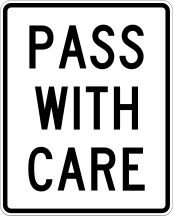
Question 2A PASS WITH CARE sign means:
Show answer
B: You are at the end of a no-passing zone; pass only when safe. Pass With Care tells you that you are at the end of a no-passing zone; pass only when safe. Kansas Driving Handbook (Non-Commercial Driver's Manual): Pass with Care, page 41.
-
Question 3Is it legal to park on the opposite side of the street facing against traffic?
Show answer
A: No. Do not park on the opposite side of the street against the traffic flow. Kansas Driving Handbook (Non-Commercial Driver's Manual): No-Parking Zones, page 54.
-
Question 4When stopped and your view of a cross street is blocked, what should you do?
Show answer
A: Edge forward slowly until you can see. If your view is blocked, edge forward slowly until you can see; crossing drivers can see your front first. Kansas Driving Handbook (Non-Commercial Driver's Manual): Intersections, page 57.
-
Question 5When following a motorcycle, scooter or moped, what following distance does the Kansas handbook advise?
Show answer
A: 3 to 4 seconds or more in wet conditions. Allow a 3 to 4 second following distance or more in wet conditions behind motorcycles, scooters and mopeds. Kansas Driving Handbook (Non-Commercial Driver's Manual): Motorcycles, Scooters and Mopeds, page 84.
-
Question 6What is the penalty range for a first drug-related DUI conviction in Kansas?
Show answer
A: $750-$1,000 plus court costs, with jail or community service and suspension. A first drug-related DUI conviction may bring a $750-$1,000 fine plus costs, at least 48 hours in jail or 100 hours of community service, and suspension. Kansas Driving Handbook (Non-Commercial Driver's Manual): Illegal Drugs, page 24.
-
Question 7A collision with a deer is inevitable. What should you do?
Show answer
A: Don't swerve; keep the vehicle under control and on the roadway. If a collision is inevitable, do not swerve; your risk may be greater if you do. Keep control and stay on the road. Kansas Driving Handbook (Non-Commercial Driver's Manual): Avoiding Collisions with Animals, page 92.
-
Question 8How big must a farm be for a Kansas farm permit?
Show answer
A: At least 20 acres used in agricultural operations. A farm is at least 20 acres used in agricultural operations. Kansas Driving Handbook (Non-Commercial Driver's Manual): Farm Permit --- K.S.A. 8-296, page 11.
-
Question 9What speed should you slow to when entering a roundabout?
Show answer
D: About 15 to 20 mph. When entering a roundabout you must negotiate a sharp curve; slow to about 15 to 20 mph. Kansas Driving Handbook (Non-Commercial Driver's Manual): Roundabouts and Traffic Circles, page 49.
-
Question 10When should you use one-hand steering?
Show answer
C: Only when backing or briefly operating vehicle controls. Use one-hand steering only when backing or operating controls that require a temporary reach. Kansas Driving Handbook (Non-Commercial Driver's Manual): Types of Steering Methods: One hand steering, page 31.
-
Question 11What is the 'Dutch Reach' method described in the Kansas handbook?
Show answer
D: Opening the driver's door with your right hand so your body turns to see traffic behind. The Dutch Reach uses your right hand to pull the door handle, turning your body to see approaching traffic and bicyclists. Kansas Driving Handbook (Non-Commercial Driver's Manual): Bicyclists: As a driver, page 82.
-
Question 12On a shared center left turn lane, what does the solid yellow outer line mean?
Show answer
B: You cannot use the center lane for passing. The solid yellow line means you cannot use the center lane for passing; the broken lines show it may be used only to turn left from either direction. Kansas Driving Handbook (Non-Commercial Driver's Manual): Shared Center Left Turn Lane, page 44.
-
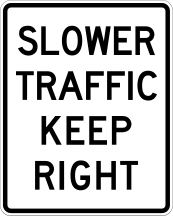
Question 13A SLOWER TRAFFIC KEEP RIGHT sign is posted where?
Show answer
A: On multilane highways, telling slower drivers to stay in the right lane. This sign is posted on multilane highways and tells slower drivers to stay in the right lane. Kansas Driving Handbook (Non-Commercial Driver's Manual): Slower Traffic Keep Right, page 41.
-
Question 14Within how many feet of a pedestrian safety zone is parking prohibited?
Show answer
A: 30 feet. Do not park within 30 feet of a pedestrian safety zone. Kansas Driving Handbook (Non-Commercial Driver's Manual): No-Parking Zones, page 54.
-
Question 15Under normal conditions, how long does it take to complete a left turn and get up to speed?
Show answer
D: 15 to 18 seconds. A right turn and pick-up of speed takes 12 to 15 seconds; a left turn takes 15 to 18 seconds. Kansas Driving Handbook (Non-Commercial Driver's Manual): Space to Cross or Enter, page 65.
-
Question 16At night, how much should you add to your following distance?
Show answer
C: At least one additional second, two on unfamiliar roads. Add at least one additional second for night driving and at least two additional seconds on unfamiliar roads at night. Kansas Driving Handbook (Non-Commercial Driver's Manual): Vision Limitations, page 77.
-
Question 17Why should you never drink alcohol while taking other drugs?
Show answer
A: The drugs could multiply alcohol's effects or add their own. Other drugs could multiply the effects of alcohol or have additional effects, possibly causing serious health problems or death. Kansas Driving Handbook (Non-Commercial Driver's Manual): Alcohol and Other Impairing Drugs, page 24.
-
Question 18How should you handle a dog chasing your car?
Show answer
D: Slow down until the dog is near, then accelerate away from it. Dogs that chase vehicles approach in a straight line; slow down until the dog is near, then accelerate away. Kansas Driving Handbook (Non-Commercial Driver's Manual): Avoiding Collisions with Animals, page 93.
-
Question 19Within how many days of moving to Kansas must you get a Kansas driver's license?
Show answer
C: 90 days. You are required to have a Kansas driver's license within 90 days of moving to Kansas. Kansas Driving Handbook (Non-Commercial Driver's Manual): About This Manual, page 11.
-
Question 20What should you do about speed when approaching a curve?
Show answer
C: Reduce speed before entering the curve. Always reduce speed before entering a curve; hard braking after entry could cause the tires to lose traction. Kansas Driving Handbook (Non-Commercial Driver's Manual): Curves, page 59.
-
Question 21Before starting a vehicle, what should be set?
Show answer
D: The parking brake. Make sure the parking brake is set before you start the vehicle. Kansas Driving Handbook (Non-Commercial Driver's Manual): Starting, page 30.
-
Question 22What are 'sharrows'?
Show answer
B: Pavement markings of a bicycle with two chevrons showing where a cyclist should ride in the lane. Sharrows are pavement markers—a bicycle with two chevrons—recommending where a bicyclist should ride in a lane. Kansas Driving Handbook (Non-Commercial Driver's Manual): Sharrows, page 82.
-
Question 23Why shouldn't you move into a shared center left turn lane too soon?
Show answer
B: The longer you stay, the more likely you'll meet someone coming the other way. Do not move into the lane too soon; the longer you stay, the more likely you will meet someone from the opposite direction. Kansas Driving Handbook (Non-Commercial Driver's Manual): Shared Center Left Turn Lane, page 44.
-
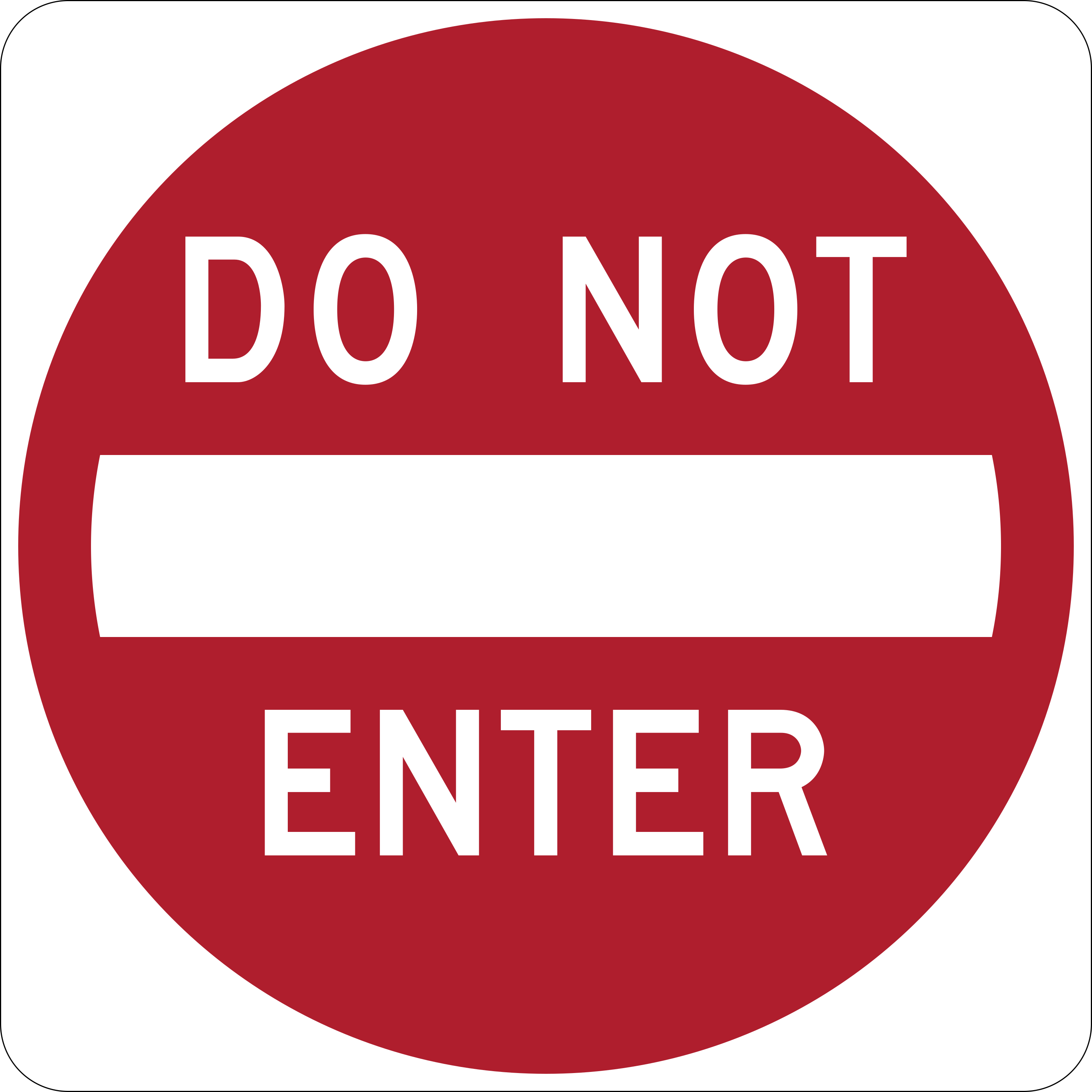
Question 24What does a DO NOT ENTER sign look like?
Show answer
D: A square sign with a white horizontal bar inside a red circle. Do Not Enter is a square sign with a white horizontal line inside a red circle. Kansas Driving Handbook (Non-Commercial Driver's Manual): Do Not Enter, page 41.
-
Question 25Where may you park in a handicapped space?
Show answer
C: Only if you have a handicap license plate, tag or sticker. Do not park in a space marked for the handicapped unless you have a handicap license plate, tag or sticker. Kansas Driving Handbook (Non-Commercial Driver's Manual): No-Parking Zones, page 54.
Answer every question to see your score.
More Kansas practice tests
- Practice test 125 questions
- Practice test 225 questions
- Practice test 325 questions
- Practice test 425 questions
- Practice test 525 questions
- Practice test 625 questions
- Practice test 725 questions
- Practice test 825 questions
- Practice test 925 questions
- Practice test 1125 questions
- Practice test 1225 questions
- Practice test 1324 questions
- Exam simulatorThe real format, 25 questions
How to use these tests
Read each explanation, even when you get the question right: it tells you the rule and the handbook section, so you can look it up. Your answers are saved in this browser only, so the weak spots mode can give you more questions on the topics you miss. When you're scoring well, take the exam simulator: it uses the same number of questions and passing score as the real test.
Our own questions, written from the Kansas Driving Handbook (Non-Commercial Driver's Manual) and checked against it. Not affiliated with the Kansas Department of Revenue, Division of Vehicles. Found a mistake? Tell us.