Kansas KDOR Division of Vehicles permit practice test 6
25 questions written from the Kansas Driving Handbook (Non-Commercial Driver's Manual), covering hazards, weather and night driving, licensing laws and penalties, speed limits, safe and defensive driving, right of way and more. Pick an answer to see straight away whether you're right and why. The real Kansas KDOR Division of Vehicles test has 25 questions and you need 20 right.
-
Question 1When should you dim your high beams for an oncoming vehicle in Kansas?
Show answer
B: Within about one block of the oncoming vehicle. Dim your high beams whenever you come within about a one-block distance of an oncoming vehicle. Kansas Driving Handbook (Non-Commercial Driver's Manual): Night Driving, page 91.
-
Question 2Where may a 15-year-old with a Kansas restricted license drive without a licensed adult?
Show answer
A: To and from work, directly to and from school on school days, and to and from religious activities. At 15: to/from work, directly to/from home and school for attendance (not school activities), and to/from religious activities; otherwise with a licensed adult. Kansas Driving Handbook (Non-Commercial Driver's Manual): Driving Restrictions 15-Year-Old, page 13.
-
Question 3With packed snow on the road, how much should you reduce your speed?
Show answer
D: By half or more. If there is packed snow on the road, reduce your speed by half or more. Kansas Driving Handbook (Non-Commercial Driver's Manual): Slippery roads, page 59.
-
Question 4How long a nap does the Kansas handbook recommend if you are drowsy while driving?
Show answer
D: 15 to 20 minutes. Find a safe parking area to take a 15 to 20-minute nap. Kansas Driving Handbook (Non-Commercial Driver's Manual): Fatigue: Ways to Prevent a Fatigue-Related Crash, page 21.
-
Question 5According to the Kansas handbook, who is given the right-of-way by law?
Show answer
C: No one; the law only says who must yield. The law says who must yield; it does not give anyone the right-of-way. You only gain it when another road user gives it to you. Kansas Driving Handbook (Non-Commercial Driver's Manual): Right-Of-Way (Section 6), page 33.
-
Question 6A pedestrian is guided by a dog or carries a white cane while crossing. What must you do?
Show answer
A: Come to a complete stop. When a pedestrian is crossing guided by a dog or carrying a white cane, you must come to a complete stop. Kansas Driving Handbook (Non-Commercial Driver's Manual): Pedestrians, page 80.
-
Question 7When you have a green arrow, what should you still watch for?
Show answer
A: Others turning right on red from the other side, and pedestrians. Oncoming or crossing traffic should yield, but be careful of others making a right turn on red and of pedestrians crossing. Kansas Driving Handbook (Non-Commercial Driver's Manual): Traffic Signals: GREEN Arrow, page 34.
-
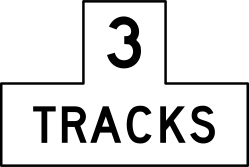
Question 8At a railroad crossing with more than one track, what sign may be posted?
Show answer
C: A sign showing the number of tracks. At crossings with more than one track, the number of tracks may be posted; not all such crossings have the sign, so always check. Kansas Driving Handbook (Non-Commercial Driver's Manual): Railroad Crossing Warning Signs, page 37.
-
Question 9What is 'double' or 'two-deep' parking?
Show answer
C: Parking alongside a vehicle already parked at the curb. Double or two-deep parking means stopping in the roadway beside a vehicle already parked at the curb, which Kansas prohibits. Kansas Driving Handbook (Non-Commercial Driver's Manual): Parking (K.S.A. 8-1571 8-1572), page 19.
-
Question 10What is the safest way to do a two-point turnabout using a driveway?
Show answer
C: Back the vehicle into the driveway. The safest way is to back into the driveway, which lets you see traffic better when leaving. Kansas Driving Handbook (Non-Commercial Driver's Manual): Two-point Turnabout, page 48.
-
Question 11When another vehicle is passing you, what should you do?
Show answer
D: Keep right in your lane and maintain a constant speed. When being passed, move to the right side of your lane and keep a constant speed; don't increase speed. Kansas Driving Handbook (Non-Commercial Driver's Manual): When being passed, page 66.
-
Question 12Before changing lanes, what gap in traffic should you identify?
Show answer
B: 4 to 5 seconds. Identify a 4 to 5 second gap in traffic, signal and look again, then steer into the lane and cancel the signal. Kansas Driving Handbook (Non-Commercial Driver's Manual): When changing lanes, page 58.
-
Question 13What share of rollovers involve no other vehicle?
Show answer
C: More than 80%. More than 80% of rollovers involve no other vehicle besides the one that rolls over. Kansas Driving Handbook (Non-Commercial Driver's Manual): Rollovers, page 76.
-
Question 14What is the only proven way to sober up?
Show answer
D: Time. Coffee, fresh air, cold showers or eating won't help; time is the only medically proven method. Kansas Driving Handbook (Non-Commercial Driver's Manual): Alcohol, page 23.
-
Question 15An oncoming driver keeps high beams on. What should you do after flashing your lights once?
Show answer
B: Look toward the right side of the road; don't retaliate with your high beams. Flash once; if they don't dim, look toward the right side of the road and don't try to 'get back' with your bright lights. Kansas Driving Handbook (Non-Commercial Driver's Manual): Night Driving, page 91.
-
Question 16May a 15-year-old with a Kansas restricted license carry a non-sibling minor passenger?
Show answer
A: No. Restricted 15-year-olds may not carry any non-sibling minor passengers. Kansas Driving Handbook (Non-Commercial Driver's Manual): Driving Restrictions 15-Year-Old, page 13.
-
Question 17Driving how much slower than the flow of traffic can be as dangerous as speeding?
Show answer
B: More than 15 mph slower. Driving more than 15 mph slower than the traffic flow can be just as dangerous as excessive speed. Kansas Driving Handbook (Non-Commercial Driver's Manual): Keeping pace with traffic, page 60.
-
Question 18Between which hours does the Kansas handbook advise against driving because of fatigue?
Show answer
B: Midnight and 6 a.m.. Try not to drive late at night between midnight and 6 a.m. Kansas Driving Handbook (Non-Commercial Driver's Manual): Fatigue: Ways to Prevent a Fatigue-Related Crash, page 21.
-
Question 19An emergency vehicle with a siren approaches. What must you do?
Show answer
C: Immediately drive to the right and stop without blocking an intersection until it passes. Immediately drive to the right and stop without blocking any intersection until the emergency vehicles have passed; never follow them. Kansas Driving Handbook (Non-Commercial Driver's Manual): Right-of-Way (Section 2), page 18.
-
Question 20Do crosswalks exist even when they aren't marked?
Show answer
D: Yes, at all intersections where a sidewalk meets the street. Crosswalks exist at all intersections where a sidewalk meets the street; not all have markings. Kansas Driving Handbook (Non-Commercial Driver's Manual): Pedestrians, page 80.
-
Question 21What color are lines that separate traffic moving in opposite directions?
Show answer
C: Yellow. Lines separating traffic moving in opposite directions are yellow. Kansas Driving Handbook (Non-Commercial Driver's Manual): Pavement Markings: Yellow Lane Markings, page 43.
-
Question 22What color and shape are work zone signs?
Show answer
A: Orange, diamond or rectangular, with black letters or symbols. Work zone signs are generally diamond or rectangular and orange with black letters or symbols. Kansas Driving Handbook (Non-Commercial Driver's Manual): Work Zone Signs, page 38.
-
Question 23When parking downhill, with or without a curb, which way should you turn your wheels?
Show answer
C: Toward the curb or road edge. Downhill, with or without a curb, turn the wheels sharply toward the curb or edge so the vehicle would roll away from traffic. Kansas Driving Handbook (Non-Commercial Driver's Manual): Parking Downhill with/without a Curb, page 52.
-
Question 24When should you choose your lane before a multiple-lane turn?
Show answer
B: At least one block before turning. At least one block before turning, identify and enter the lane from which you will turn. Kansas Driving Handbook (Non-Commercial Driver's Manual): Multiple lanes turning, page 47.
-
Question 25Should you pass if a railroad grade crossing is within the 20-to-25-second area ahead?
Show answer
B: No. You should not pass if there is a railroad grade crossing within the 20 to 25 second area ahead. Kansas Driving Handbook (Non-Commercial Driver's Manual): Space to Pass: Highway-railroad grade crossings, page 66.
Answer every question to see your score.
More Kansas practice tests
- Practice test 125 questions
- Practice test 225 questions
- Practice test 325 questions
- Practice test 425 questions
- Practice test 525 questions
- Practice test 725 questions
- Practice test 825 questions
- Practice test 925 questions
- Practice test 1025 questions
- Practice test 1125 questions
- Practice test 1225 questions
- Practice test 1324 questions
- Exam simulatorThe real format, 25 questions
How to use these tests
Read each explanation, even when you get the question right: it tells you the rule and the handbook section, so you can look it up. Your answers are saved in this browser only, so the weak spots mode can give you more questions on the topics you miss. When you're scoring well, take the exam simulator: it uses the same number of questions and passing score as the real test.
Our own questions, written from the Kansas Driving Handbook (Non-Commercial Driver's Manual) and checked against it. Not affiliated with the Kansas Department of Revenue, Division of Vehicles. Found a mistake? Tell us.