Kansas KDOR Division of Vehicles permit practice test 5
25 questions written from the Kansas Driving Handbook (Non-Commercial Driver's Manual), covering safe and defensive driving, right of way, sharing the road, signals and pavement markings, road signs and more. Pick an answer to see straight away whether you're right and why. The real Kansas KDOR Division of Vehicles test has 25 questions and you need 20 right.
-
Question 1More than half of crashes causing injury or death happen at what speeds and distance from home?
Show answer
C: Under 40 mph and within 25 miles of home. More than half of injury or fatal crashes happen at speeds under 40 mph and within 25 miles of home. Kansas Driving Handbook (Non-Commercial Driver's Manual): Using Safety Belts, page 27.
-
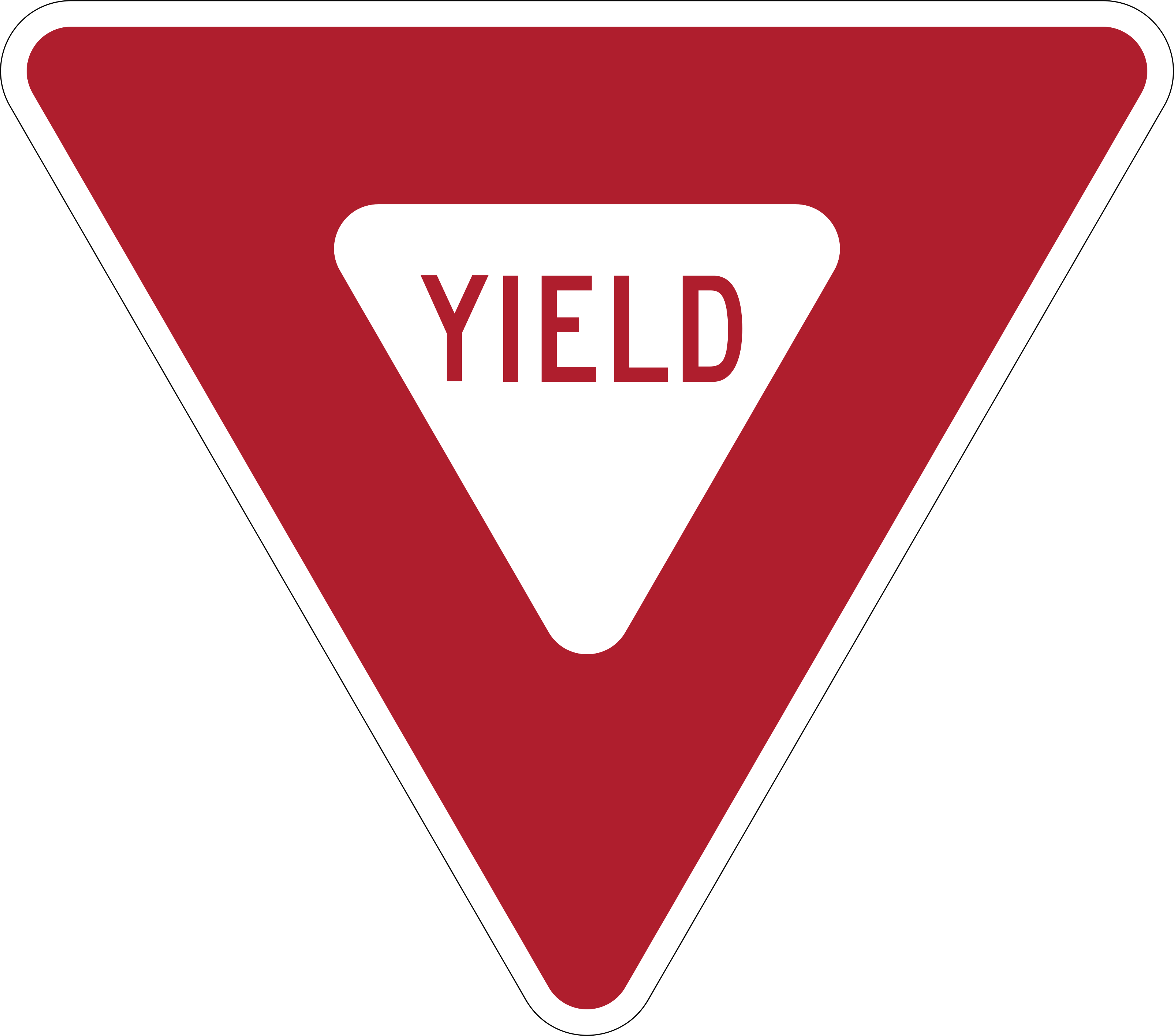
Question 2A car controlled by a YIELD sign must stop:
Show answer
C: Only when necessary to avoid interfering with traffic or pedestrians that have the right-of-way. Cars controlled by a yield sign need stop only when necessary to avoid interfering with other traffic that has the right-of-way, including pedestrians. Kansas Driving Handbook (Non-Commercial Driver's Manual): Right-of-Way (Section 2), page 18.
-
Question 3After a school bus turns off its red lights, what should you do before proceeding?
Show answer
D: Watch for children and don't proceed until they have completely left the roadway. After the lights stop and the stop arm is retracted, watch for children and do not proceed until it's safe and they have left the roadway. Kansas Driving Handbook (Non-Commercial Driver's Manual): Rules for School Buses, page 50.
-
Question 4What does a red arrow mean?
Show answer
B: Stop and do not go in the arrow's direction until a green arrow or light appears. A red arrow means stop; you may not go in the direction of the arrow until the green arrow or light returns. Kansas Driving Handbook (Non-Commercial Driver's Manual): Traffic Signals: RED Arrow, page 35.
-
Question 5What shape and color are most warning signs in Kansas?
Show answer
C: Yellow diamonds with black lettering or symbols. Warning signs are usually yellow with black lettering or symbols and diamond shaped; some school and pedestrian signs are fluorescent yellow. Kansas Driving Handbook (Non-Commercial Driver's Manual): Warning Signs, page 35.
-
Question 6How close may you park to a fire station driveway on the same side of the street?
Show answer
B: No closer than 20 feet. No parking within 20 feet of a fire station driveway on the same side, or within 75 feet of the entrance on the opposite side. Kansas Driving Handbook (Non-Commercial Driver's Manual): Parking (K.S.A. 8-1571 8-1572), page 19.
-
Question 7Which turnabout is described as the most difficult and dangerous?
Show answer
B: The three-point turnabout. The three-point turnabout is the most difficult and dangerous; use it only when the road is too narrow for a U-turn and you can't go around the block. Kansas Driving Handbook (Non-Commercial Driver's Manual): Three-Point Turnabout, page 48.
-
Question 8How many vehicles should you pass at one time, and how long can a pass take?
Show answer
D: One; a pass can take 20 to 30 seconds. As a rule, only pass one vehicle at a time; it can take as many as 20 to 30 seconds. Kansas Driving Handbook (Non-Commercial Driver's Manual): Space to Pass, page 66.
-
Question 9Why should you avoid driving next to other vehicles on multi-lane roads?
Show answer
C: Someone may crowd you or pull into your lane. Avoid driving next to other vehicles on multi-lane roads; someone may crowd your lane or pull into your lane space. Kansas Driving Handbook (Non-Commercial Driver's Manual): Space to the Side, page 64.
-
Question 10Your wheels drop off the pavement edge. To what speed should you slow before returning?
Show answer
C: 25 mph or less. Ease off the accelerator, brake gently, steer straight and slow to 25 mph or less, then turn about a quarter-turn back when clear. Kansas Driving Handbook (Non-Commercial Driver's Manual): Uneven Surface Drop-Offs, page 76.
-
Question 11About what share of fatal crashes involve alcohol and other impairing drugs?
Show answer
B: About 40%. Alcohol and other impairing drugs are involved in approximately 40% of all fatal crashes. Kansas Driving Handbook (Non-Commercial Driver's Manual): Alcohol, Other Drugs and Driving, page 22.
-
Question 12How far ahead do low beam headlights let you see clearly?
Show answer
C: About 150 to 200 feet. Low beams let you see about 150-200 feet ahead; high beams about 350-400 feet. Kansas Driving Handbook (Non-Commercial Driver's Manual): Vision Limitations, page 77.
-
Question 13How many supervised hours must a 16-year-old applicant for a restricted license have completed?
Show answer
C: 50 hours, 10 at night. 16-year-old applicants must have completed 50 hours of supervised driving with 10 at night. Kansas Driving Handbook (Non-Commercial Driver's Manual): Restricted License --- K.S.A. 8-2,101, page 12.
-
Question 14On a wet roadway, how much should you reduce your speed according to the Kansas handbook?
Show answer
D: About 10 mph below recommended speeds. On wet roads, reduce speed about 10 mph below recommended speeds; with packed snow, reduce by half or more. Kansas Driving Handbook (Non-Commercial Driver's Manual): Slippery roads, page 59.
-
Question 15On long trips, how often does the Kansas handbook suggest taking breaks?
Show answer
B: About every 100 miles or 2 hours. Schedule proper breaks about every 100 miles or 2 hours during long trips. Kansas Driving Handbook (Non-Commercial Driver's Manual): Fatigue: Before a Trip, page 21.
-
Question 16You have a green light but there is no room for your car on the other side of the intersection. What should you do?
Show answer
B: Do not enter the intersection. Do not enter an intersection, crosswalk or railroad crossing unless there is space on the other side for your vehicle, even on a green light. Kansas Driving Handbook (Non-Commercial Driver's Manual): Right-of-Way (Section 2), page 18.
-
Question 17Where should pedestrians walk when there is no sidewalk?
Show answer
A: On the left side of the street, facing oncoming traffic. If there is no sidewalk, pedestrians should walk on the left side of the street facing oncoming traffic. Kansas Driving Handbook (Non-Commercial Driver's Manual): Pedestrians, page 79.
-
Question 18What does a flashing yellow traffic light mean?
Show answer
A: Slow down and proceed with caution, ready to stop for entering traffic. A flashing yellow means slow down and proceed with caution, prepared to stop for traffic entering the intersection. Kansas Driving Handbook (Non-Commercial Driver's Manual): Traffic Signals: Flashing YELLOW Traffic Light, page 34.
-
Question 19A round yellow sign with an X and the letters RR warns you to:

Show answer
C: Slow down, look and listen for a train, and be ready to stop. The round yellow RR sign is placed before a crossing and cautions you to slow down, look and listen, and be prepared to stop. Kansas Driving Handbook (Non-Commercial Driver's Manual): Railroad Crossing Warning Signs, page 36.
-
Question 20On the side of the street opposite a fire station entrance, how close may you park?
Show answer
A: No closer than 75 feet. On the opposite side of the street, you may not park within 75 feet of the fire station entrance. Kansas Driving Handbook (Non-Commercial Driver's Manual): Parking (K.S.A. 8-1571 8-1572), page 19.
-
Question 21On what kind of road should two-point and three-point turnabouts be used?
Show answer
A: Two-lane roadways only. Both should only be used on a two-lane roadway. Kansas Driving Handbook (Non-Commercial Driver's Manual): Two-point Turnabout; Three-Point Turnabout, page 48.
-
Question 22From how far behind the vehicle to be passed should you begin your pass?
Show answer
A: At least two seconds behind. Pass from at least two seconds behind the vehicle to be passed to avoid striking its rear side. Kansas Driving Handbook (Non-Commercial Driver's Manual): Space to Pass, page 65.
-
Question 23If you must cross several lanes, how should you do it?
Show answer
D: One lane at a time. If crossing several lanes is necessary, change lanes one at a time. Kansas Driving Handbook (Non-Commercial Driver's Manual): Space to Merge, page 64.
-
Question 24How much should you turn the steering wheel to return to the pavement after a drop-off?
Show answer
A: About one quarter-turn. When there is a gap in traffic, turn the wheel about one quarter-turn to return to the pavement; do not oversteer. Kansas Driving Handbook (Non-Commercial Driver's Manual): Uneven Surface Drop-Offs, page 76.
-
Question 25How long does it take the body to get rid of one normal drink?
Show answer
D: About one hour. It takes about an hour for the body to get rid of one normal drink; four drinks means waiting four hours or more. Kansas Driving Handbook (Non-Commercial Driver's Manual): Alcohol, page 23.
Answer every question to see your score.
More Kansas practice tests
- Practice test 125 questions
- Practice test 225 questions
- Practice test 325 questions
- Practice test 425 questions
- Practice test 625 questions
- Practice test 725 questions
- Practice test 825 questions
- Practice test 925 questions
- Practice test 1025 questions
- Practice test 1125 questions
- Practice test 1225 questions
- Practice test 1324 questions
- Exam simulatorThe real format, 25 questions
How to use these tests
Read each explanation, even when you get the question right: it tells you the rule and the handbook section, so you can look it up. Your answers are saved in this browser only, so the weak spots mode can give you more questions on the topics you miss. When you're scoring well, take the exam simulator: it uses the same number of questions and passing score as the real test.
Our own questions, written from the Kansas Driving Handbook (Non-Commercial Driver's Manual) and checked against it. Not affiliated with the Kansas Department of Revenue, Division of Vehicles. Found a mistake? Tell us.